Glama
webreactiva-devs

MCP Character Counter

MCP 캐릭터 카운터

텍스트에 대한 자세한 문자 분석을 제공하는 가벼운 모델 컨텍스트 프로토콜(MCP) 서버입니다. 이 도구는 공백을 제외한 총 문자 수, 문자, 숫자, 기호를 계산합니다.

특징

  • 텍스트의 총 문자 수 세기

  • 공백을 제외한 문자 수 세기

  • 글자 세기 (az, AZ)

  • 숫자 세기 (0~9)

  • 카운트 기호(영숫자가 아닌 문자)

  • 캐릭터 유형에 대한 자세한 분석

영상

Related MCP server: File Analysis MCP Server

설치

필수 조건

설정

  1. 저장소를 복제합니다.

    지엑스피1

  2. 종속성 설치:

    npm install

Claude Desktop과 함께 사용

  1. Claude Desktop 구성을 엽니다.

    맥OS :

    code ~/Library/Application\ Support/Claude/claude_desktop_config.json

    윈도우 :

    code %APPDATA%\Claude\claude_desktop_config.json
  2. MCP 서버에 캐릭터 카운터를 추가하세요:

    {
      "mcpServers": {
        "character-counter": {
          "command": "node",
          "args": [
            "/ABSOLUTE/PATH/TO/webreactiva-devs/mcp-character-counter/mcp/character-counter.js"
          ]
        }
      }
    }

    /ABSOLUTE/PATH/TO/ 시스템의 현재 경로로 바꾸세요.

  3. 새로운 MCP 서버를 로드하려면 Claude Desktop을 다시 시작하세요.

  4. 입력 상자에서 망치 아이콘을 찾으세요. 이 아이콘은 사용 가능한 MCP 도구를 나타냅니다.

  5. 예를 들어 Claude에게 텍스트 문자 수를 분석해 달라고 요청하세요.

    • "이 문단의 글자 수를 세어 보세요"

    • "이 텍스트에는 숫자가 몇 개 있나요: '123 Main St, Apt 45B'?"

    • "내 이메일 주소의 문자 구성을 분석해 보세요"

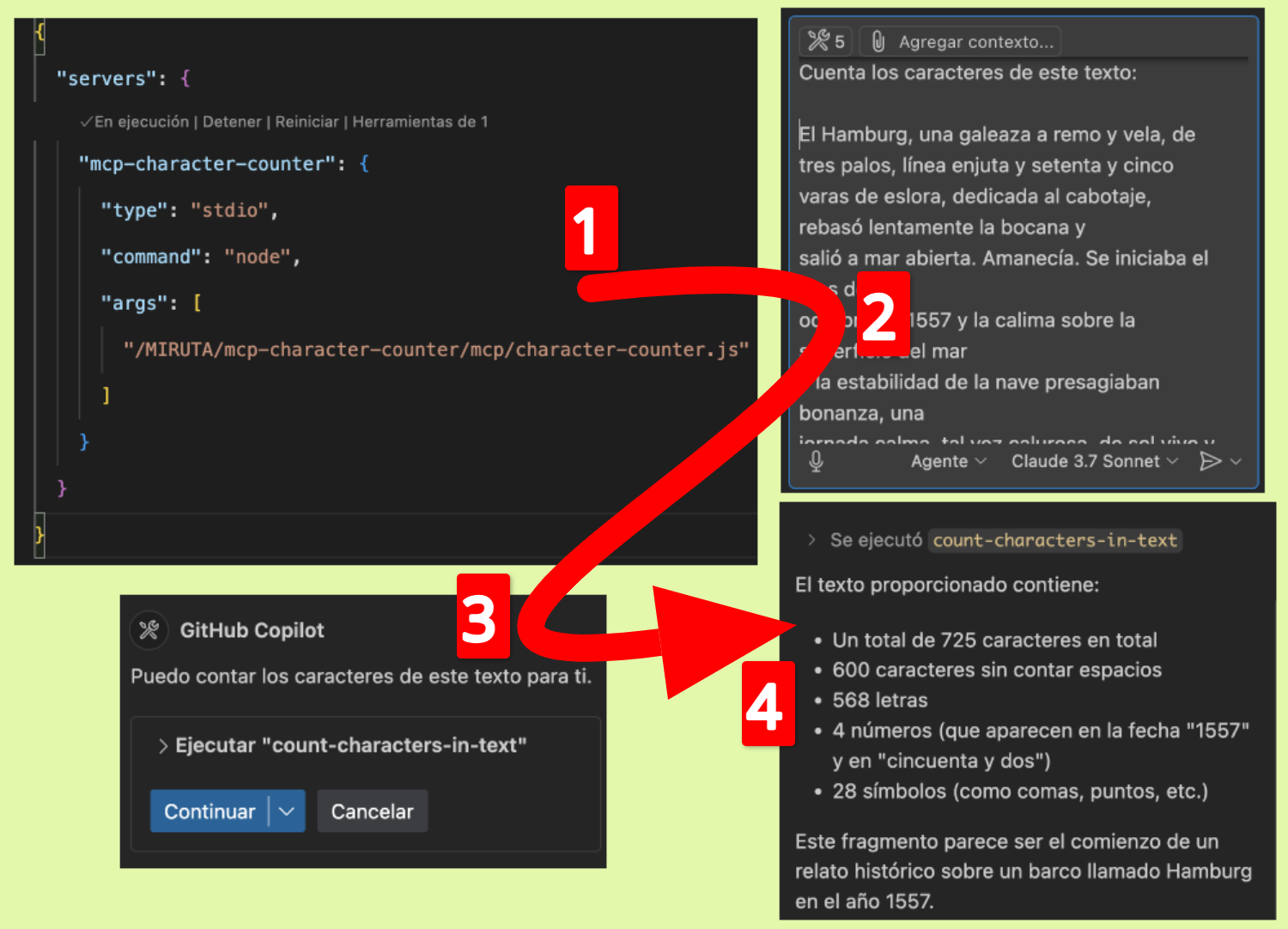
GitHub Copilot 사용

이 MCP 서버를 GitHub Copilot과 함께 사용하려면:

  1. VS Code나 다른 호환 IDE에 GitHub Copilot이 설치되어 있는지 확인하세요.

  2. VS Code 설정을 열고 "Copilot MCP"를 검색합니다.

  3. 새로운 MCP 서버 구성을 추가합니다.

    "github.copilot.advanced": {
      "mcp.servers": [
        {
          "id": "character-counter",
          "name": "Character Counter",
          "transport": "stdio",
          "command": "node",
          "args": ["/path/to/webreactiva-devs/mcp-character-counter/mcp/character-counter.js"]
        }
      ]
    }
  4. VS Code를 다시 시작합니다.

  5. 이제 다음과 같은 Copilot Chat 명령과 함께 문자 카운터를 사용할 수 있습니다.

    • /mcp count-characters-in-text This is the text I want to analyze

개발

이 MCP 서버를 수정하거나 확장하려면:

  1. character-counter.js 를 변경하세요

  2. MCP 클라이언트에서 서버를 다시 시작하세요.

작동 원리

이 MCP 서버는 텍스트 입력을 받고 문자 구성에 대한 자세한 분석을 반환하는 count-characters-in-text 라는 단일 도구를 구현합니다. 서버는 모델 컨텍스트 프로토콜을 사용하여 이 기능을 호환되는 AI 어시스턴트에 제공합니다.

특허

MIT

기여하다

기여를 환영합니다! 자유롭게 풀 리퀘스트를 제출해 주시기 바랍니다.


MCP 캐릭터 카운터

텍스트에서 자세한 문자 분석을 제공하는 가벼운 모델 컨텍스트 프로토콜(MCP) 서버입니다. 이 도구는 공백을 제외한 총 문자, 문자, 숫자, 기호를 계산합니다.

형질

  • 텍스트의 총 문자 수를 센다

  • 공백을 제외한 문자 수 세기

  • 문자 카운터(az, AZ)

  • 숫자 세기 (0~9)

  • 카운트 기호(영숫자가 아닌 문자)

  • 캐릭터 유형에 대한 자세한 분석

시설

필수 조건

구성

  1. 저장소를 복제합니다.

    git clone https://github.com/webreactiva-devs/mcp-character-counter.git
    cd mcp-character-counter
  2. 종속성을 설치합니다.

    npm install

Claude Desktop과 함께 사용

  1. Claude Desktop 설정 열기:

    맥OS :

    code ~/Library/Application\ Support/Claude/claude_desktop_config.json

    윈도우 :

    code %APPDATA%\Claude\claude_desktop_config.json
  2. MCP 서버에 캐릭터 카운터를 추가하세요:

    {
      "mcpServers": {
        "character-counter": {
          "command": "node",
          "args": [
            "/RUTA/ABSOLUTA/A/webreactiva-devs/mcp-character-counter/mcp/character-counter.js"
          ]
        }
      }
    }

    /RUTA/ABSOLUTA/A/ 시스템의 현재 경로로 바꾸세요.

  3. 새로운 MCP 서버를 로드하려면 Claude Desktop을 다시 시작하세요.

  4. 입력 상자에서 망치 아이콘을 찾으세요. 이 아이콘은 사용 가능한 MCP 도구를 나타냅니다.

  5. 예를 들어 Claude에게 텍스트의 문자 수를 분석해 달라고 요청하세요.

    • "이 문단의 글자 수를 세어 보세요"

    • "이 텍스트에는 숫자가 몇 개 있나요: '123 Calle Principal, Apto 45B'?"

    • "내 이메일 주소의 문자 집합을 분석해 주세요"

GitHub Copilot과 함께 사용

이 MCP 서버를 GitHub Copilot과 함께 사용하려면:

  1. VS Code나 다른 지원되는 IDE에 GitHub Copilot이 설치되어 있는지 확인하세요.

  2. VS Code 설정을 열고 "Copilot MCP"를 검색합니다.

  3. 새로운 MCP 서버 구성을 추가합니다.

    "github.copilot.advanced": {
      "mcp.servers": [
        {
          "id": "character-counter",
          "name": "Character Counter",
          "transport": "stdio",
          "command": "node",
          "args": ["/ruta/a/webreactiva-devs/mcp-character-counter/mcp/character-counter.js"]
        }
      ]
    }
  4. VS Code를 다시 시작합니다.

  5. 이제 다음과 같은 Copilot Chat 명령으로 문자 카운터를 사용할 수 있습니다.

    • /mcp count-characters-in-text Este es el texto que quiero analizar

개발

이 MCP 서버를 수정하거나 확장하려면:

  1. character-counter.js 를 변경하세요

  2. MCP 클라이언트에서 서버를 다시 시작하세요.

작동 원리

이 MCP 서버는 텍스트를 입력으로 받고 문자 구성에 대한 자세한 분석을 반환하는 count-characters-in-text 라는 단일 도구를 구현합니다. 서버는 모델 컨텍스트 프로토콜을 사용하여 이 기능을 호환되는 AI 어시스턴트에 제공합니다.

특허

MIT

기여하다

기여를 환영합니다! 자유롭게 풀 리퀘스트를 제출해 주시기 바랍니다.

출판사 마크

webreactiva.com의 Malandriner 커뮤니티를 위해 🧡로 제작되었습니다.

Available Tools

1 tool
count-characters-in-textC

Count characters in a text

ParametersJSON Schema
NameRequiredDescriptionDefault
textYesThe text whose characters you want to count

TDQS

C2.7/5.0
Behavior1/5

Does the description disclose side effects, auth requirements, rate limits, or destructive behavior?

No annotations are provided, so the description carries the full burden of behavioral disclosure. The description only states the basic function without mentioning any behavioral traits such as performance characteristics, error handling, or output format. This is inadequate for a tool with no annotation support.

Agents need to know what a tool does to the world before calling it. Descriptions should go beyond structured annotations to explain consequences.

Conciseness5/5

Is the description appropriately sized, front-loaded, and free of redundancy?

The description is extremely concise—a single, clear sentence that directly states the tool's purpose without any unnecessary words. It is front-loaded and efficiently communicates the core function, making it easy for an agent to parse quickly.

Shorter descriptions cost fewer tokens and are easier for agents to parse. Every sentence should earn its place.

Completeness2/5

Given the tool's complexity, does the description cover enough for an agent to succeed on first attempt?

Given the lack of annotations and output schema, the description is incomplete. It fails to address behavioral aspects, output format, or any contextual nuances. While the tool is simple, the description does not provide enough information for an agent to fully understand how to use it effectively beyond the basic function.

Complex tools with many parameters or behaviors need more documentation. Simple tools need less. This dimension scales expectations accordingly.

Parameters3/5

Does the description clarify parameter syntax, constraints, interactions, or defaults beyond what the schema provides?

Schema description coverage is 100%, with the schema fully documenting the single 'text' parameter. The description adds no additional meaning beyond what the schema provides, such as examples or edge cases. The baseline score of 3 reflects adequate coverage by the schema alone.

Input schemas describe structure but not intent. Descriptions should explain non-obvious parameter relationships and valid value ranges.

Purpose4/5

Does the description clearly state what the tool does and how it differs from similar tools?

The description 'Count characters in a text' clearly states the verb ('count') and resource ('characters in a text'), making the purpose immediately understandable. It's not a tautology since it elaborates beyond the tool name. However, with no sibling tools mentioned, there's no opportunity to differentiate from alternatives, preventing a perfect score.

Agents choose between tools based on descriptions. A clear purpose with a specific verb and resource helps agents select the right tool.

Usage Guidelines2/5

Does the description explain when to use this tool, when not to, or what alternatives exist?

The description provides no guidance on when to use this tool versus alternatives, prerequisites, or contextual constraints. It simply states what the tool does without any usage context, leaving the agent to infer applicability based solely on the tool name and description.

Agents often have multiple tools that could apply. Explicit usage guidance like "use X instead of Y when Z" prevents misuse.

Tool Schema Changelog

Recent tool additions, removals, and schema changes observed during successful MCP inspections.

  1. 1 tool updatev1.0.0
    • First observedcount-characters-in-text

TDQS

B3/5.0

Scored across 1 tool

Disambiguation5/5

With only one tool, there is no possibility of confusion or overlap between tools. The tool's purpose is singular and clearly defined, eliminating any ambiguity in selection.

Naming Consistency5/5

The single tool name follows a clear verb_noun pattern (count-characters-in-text), and with only one tool, consistency is inherently perfect as there are no other names to compare against.

Tool Count2/5

A single tool is too few for most practical server purposes, making the server feel thin and limited. While it might suffice for a trivial utility, it lacks the depth expected for broader functionality.

Completeness3/5

The tool covers its stated purpose of counting characters, but the server's scope is minimal. There are no obvious gaps for this narrow domain, but the surface is inherently limited and may not support more complex workflows.

Maintenance

ActivityInactive
ResponsivenessNo issues

Related MCP Connectors

Related MCP Servers

  • A
    license
    B
    quality
    D
    maintenance
    A Model Context Protocol server that provides tools for analyzing text documents, including counting words and characters. This server helps LLMs perform text analysis tasks by exposing simple document statistics functionality.
    1
    30 npm
    10
    Apache 2.0
  • A
    license
    Not graded
    quality
    D
    maintenance
    Provides tools for text file analysis, including metrics like word counts and character frequencies, alongside file reading and directory browsing capabilities. This server enables LLMs to interact with and process local file content securely through the Model Context Protocol.
    MIT
  • F
    license
    A
    quality
    D
    maintenance
    A lightweight MCP server providing utility tools for math, text processing, data conversion, and URL fetching. It supports both STDIO and SSE communication modes for seamless integration with Claude Desktop and remote AI agents.
    5
    1
    -
  • A
    license
    Not graded
    quality
    D
    maintenance
    Provides tools for AI models to count characters and words in text, supporting English and other space-delimited languages.
    1
    MIT