
F
licenseNot graded
qualityD
maintenanceA Model Context Protocol server that allows integration with Claude Desktop by creating and managing custom tools that can be executed through the MCP framework.
29 npm
-

Runbook MCP Server позволяет вам запускать собственные книги заданий из Claude Desktop.
Выполнение инструкций по операциям (например, развертывание службы, обновление кластера Kubernetes)
Запустите планы ручного тестирования (например, создайте новый экземпляр EC2, подключитесь к нему по SSH и запустите там интеграционный тест).
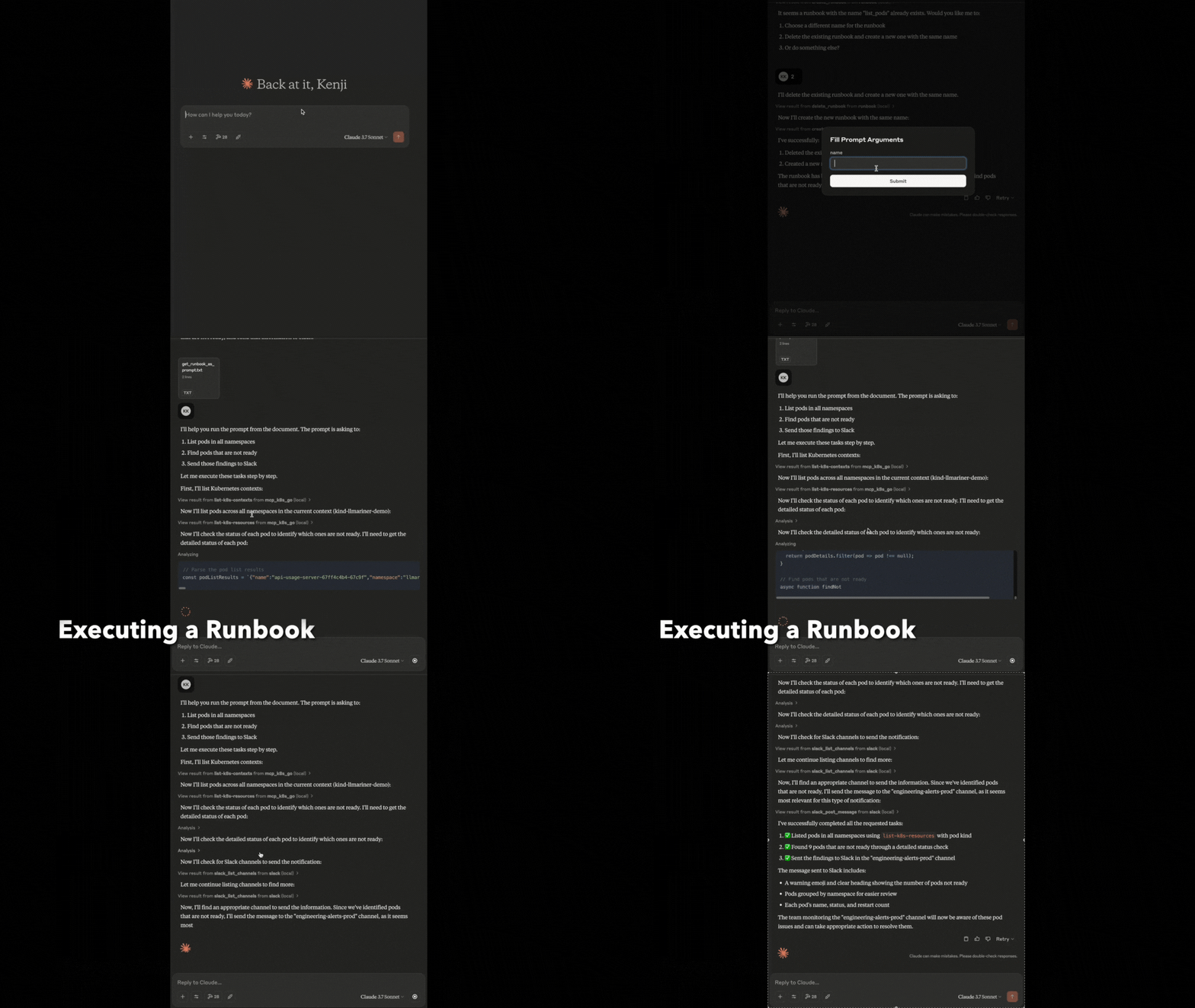
Посмотрите демонстрационное видео ниже, чтобы понять, как это работает!
Создать config.yaml
Поместите следующую конфигурацию в claude_desktop_config.json .
{
  "mcpServers": {
    "runbook": {
      "command": "uv",
      "args": [
        "--directory",
        "<ABSOLUTE_PATH>/runbook-mcp-server",
        "run",
        "runbook_server.py"
      ]
    }
  }
}
Related MCP server: MCP Server Generator
В качестве runbooks можно использовать файлы markdown или текстовые файлы. Смотрите примеры .
Мы поддерживаем замену env/var.
Определите env.yaml .
env:
  key: value
{env[key]} заменяется на value .
{var.name} заменяется значением переменной.
Перестраивать индекс при обновлении файлов.
Вы также можете создать новый runbook, используя инструмент create_runbook . Вот пример приглашения:
Пример 1
Create a new runbook:

- name: list_pods
- content: List pods in all namespaces, find pods that are not ready, and send that to Slack.

You don't need to interpret the content. Please just pass it to the tool.Чтобы запустить книгу заданий, выполните следующие действия:
Нажмите «Прикрепить из MCP» в Claude Desktop.
Выберите get_runbook_as_prompt из списка интеграций.
Передайте имя runbook, который вы хотите выполнить. Также укажите переменные в списке, разделенном запятыми (например, var1=key1,var2=key2 ).
Отправьте сгенерированную подсказку.
Затем Claude Desktop обратится к другим серверам MCP для запуска книги заданий.
Автоматизация веб-поиска и браузера ( ссылка )
Kubernetes. Существует несколько реализаций (например, mcp-k8s-go )
Вместо сохранения содержимого runbook в базе данных просто сохраните его как файл. Это облегчает редактирование. Люди также могут просто использовать GitHub для управления версиями.
Шаблон X книги заданий, который создается с заданными входными данными.
Может быть, это и не нужно. Пользователю просто нужно вставить дополнительные подсказки при запуске runbook.
Сохраните журнал выполнения (для аудита и уточнения)
Удалить секреты
Также передайте прошлый журнал в командную строку Runbook, если это поможет улучшить выполнение.
Поток одобрения.
Добавьте инструмент request_approval .
Это отправит сообщение Slack на канал.
Затем сервер Runbook MCP смотрит канал. Если кто-то отвечает (да/нет), он продолжает работу или возвращает ошибку.
Лучший поиск в книге заданий
Точное совпадение имени не очень хорошее.
Регистрация в Smithery .
Примечание: Claude Desktop не поддерживает "Sampling". Это накладывает некоторые ограничения.
Подкнига задач и повторно используемый блок выполнения
Конечная точка отдыха + интерфейс для управления книгами заданий.
Возможность редактирования книги заданий (с управлением версиями)
показать план выполнения для книги заданий X (пробный запуск)
Ограничить серверы и инструменты MCP
преобразовать предыдущий разговор в план действий
тонкая настройка.
Уметь дорабатывать runbook. Если есть успешное выполнение, сохраните его как пример и передайте Клоду.
Периодическое исполнение
Уметь подготовить среду (виртуальную машину, докер) для запуска серверов MCP.
| Name | Required | Description | Default |
|---|---|---|---|
| content | Yes | ||
| name | Yes |
Does the description disclose side effects, auth requirements, rate limits, or destructive behavior?
Tool has no description.
Agents need to know what a tool does to the world before calling it. Descriptions should go beyond structured annotations to explain consequences.
Is the description appropriately sized, front-loaded, and free of redundancy?
Tool has no description.
Shorter descriptions cost fewer tokens and are easier for agents to parse. Every sentence should earn its place.
Given the tool's complexity, does the description cover enough for an agent to succeed on first attempt?
Tool has no description.
Complex tools with many parameters or behaviors need more documentation. Simple tools need less. This dimension scales expectations accordingly.
Does the description clarify parameter syntax, constraints, interactions, or defaults beyond what the schema provides?
Tool has no description.
Input schemas describe structure but not intent. Descriptions should explain non-obvious parameter relationships and valid value ranges.
Does the description clearly state what the tool does and how it differs from similar tools?
Tool has no description.
Agents choose between tools based on descriptions. A clear purpose with a specific verb and resource helps agents select the right tool.
Does the description explain when to use this tool, when not to, or what alternatives exist?
Tool has no description.
Agents often have multiple tools that could apply. Explicit usage guidance like "use X instead of Y when Z" prevents misuse.
| Name | Required | Description | Default |
|---|---|---|---|
| name | Yes |
Does the description disclose side effects, auth requirements, rate limits, or destructive behavior?
Tool has no description.
Agents need to know what a tool does to the world before calling it. Descriptions should go beyond structured annotations to explain consequences.
Is the description appropriately sized, front-loaded, and free of redundancy?
Tool has no description.
Shorter descriptions cost fewer tokens and are easier for agents to parse. Every sentence should earn its place.
Given the tool's complexity, does the description cover enough for an agent to succeed on first attempt?
Tool has no description.
Complex tools with many parameters or behaviors need more documentation. Simple tools need less. This dimension scales expectations accordingly.
Does the description clarify parameter syntax, constraints, interactions, or defaults beyond what the schema provides?
Tool has no description.
Input schemas describe structure but not intent. Descriptions should explain non-obvious parameter relationships and valid value ranges.
Does the description clearly state what the tool does and how it differs from similar tools?
Tool has no description.
Agents choose between tools based on descriptions. A clear purpose with a specific verb and resource helps agents select the right tool.
Does the description explain when to use this tool, when not to, or what alternatives exist?
Tool has no description.
Agents often have multiple tools that could apply. Explicit usage guidance like "use X instead of Y when Z" prevents misuse.
Recent tool additions, removals, and schema changes observed during successful MCP inspections.
v1.0.0create_runbookdelete_runbookScored across 2 tools
The two tools have clearly distinct purposes: create_runbook for creating a runbook and delete_runbook for deleting one, with no overlap in functionality. This minimal set avoids any ambiguity, as each tool targets a specific, opposite action on the same resource.
Both tools follow a consistent verb_noun pattern (create_runbook and delete_runbook), using snake_case and clear action verbs. This uniformity makes the tool set predictable and easy to understand, with no deviations in naming conventions.
With only two tools, the server feels too thin for a runbook management domain, as it lacks essential operations like listing, retrieving, or updating runbooks. While the tools are well-defined, the count is insufficient for typical CRUD workflows, limiting agent capabilities.
The tool set is severely incomplete for runbook management, missing key operations such as get_runbook, list_runbooks, and update_runbook. This creates significant gaps that will cause agent failures, as users cannot retrieve or modify existing runbooks, leading to dead ends in workflows.
Run your Zenning AI employees and act across 2,000+ connected apps from any MCP client.
Build your own tools from chat: design, test and host them on a shareable MCP server URL.
Automate 1,000+ services from any MCP-compatible AI agent: build Applets, run actions and queries.
Run and manage H Company's Computer-Use Agents from any MCP client.