Glama
lsd-so
by lsd-so

LSD MCP

これはLSD用のMCPサーバーの更新版です。この更新の目的は、 SDKを使用してトリップとして定義された動的ツールを効果的に活用することです。

コンテンツ

Related MCP server: superhighway-mcp

はじめる

認証中

これは、弊社の SDKを使用して、実行中の MCP サーバーをアカウントに接続することです。

userとpassword用語を使用する理由は、接続先がpostgres 互換データベースであるためです。

設定ファイル

ホーム ディレクトリで、 .lsdという名前のファイルに、 user名とpasswordのプロパティ、メールアドレス、およびプロファイルのAPI キーを含む JSON を書き込みます。

{
  "user": "<you@email.domain>",
  "password": "<api_key>"
}

環境変数

あるいは、環境変数LSD_USERとLSD_PASSWORDを設定することもできます。

$ export LSD_USER='you@email.domain'
$ export LSD_PASSWORD='<api_key>'

**重要:**この方法を採用したときにエラーが発生した場合は、設定された環境変数が PATH または MCP クライアントが呼び出しているプロセスからアクセス可能であることを確認してください。

MCPレジストリの使用

脈

https://www.pulsemcp.com/servers/lsd-so-internetdata

すぐにさらに追加されます。

出典

  1. このリポジトリをクローンする

$ git clone https://github.com/lsd-so/mcp.git
  1. Claude デスクトップを使用している場合は、 claude_desktop_config.jsonファイルを更新します (作成ガイドはこちら)。

{
  "mcpServers": {
    // other MCP servers configured here...
    "lsd": {
      "command": "node",
      "args": [
	    "/<path>/<to>/mcp/build/index.js"
      ]
    }
  }
}

使用例

交流
lsd_research プロンプトの使用時のスクリーン録画

抽出

lsd_research プロンプトの使用時のスクリーン録画

LSDによる機能拡張

MCP クライアントに「スキル」を教えたいシナリオでは、 LSD トリップ(それは何ですか? ) を使用して行うことができます。

旅行とは何ですか?

「トリップ」とは、ローカル ブラウザーと対話することによって生成されたか、トリップを直接公開することによって生成された LSD プログラムで構成される公開モジュールです。

自転車ブラウザから

Bicycle ブラウザから、「クリック言語」を使用して LSD を派生できます。これは、右上のトランスクリプター アイコンをクリックしてアクティブ化できます。

トランスクリプターアイコンをクリックした画面の録画

または、 Command+k (Linux/Windowsの場合はCtrl+k )を押します。これで、繰り返しコンテナや関心のあるフィールドをインタラクティブに「摘み取る」ことができます。

トランスクリプターフローの画面録画

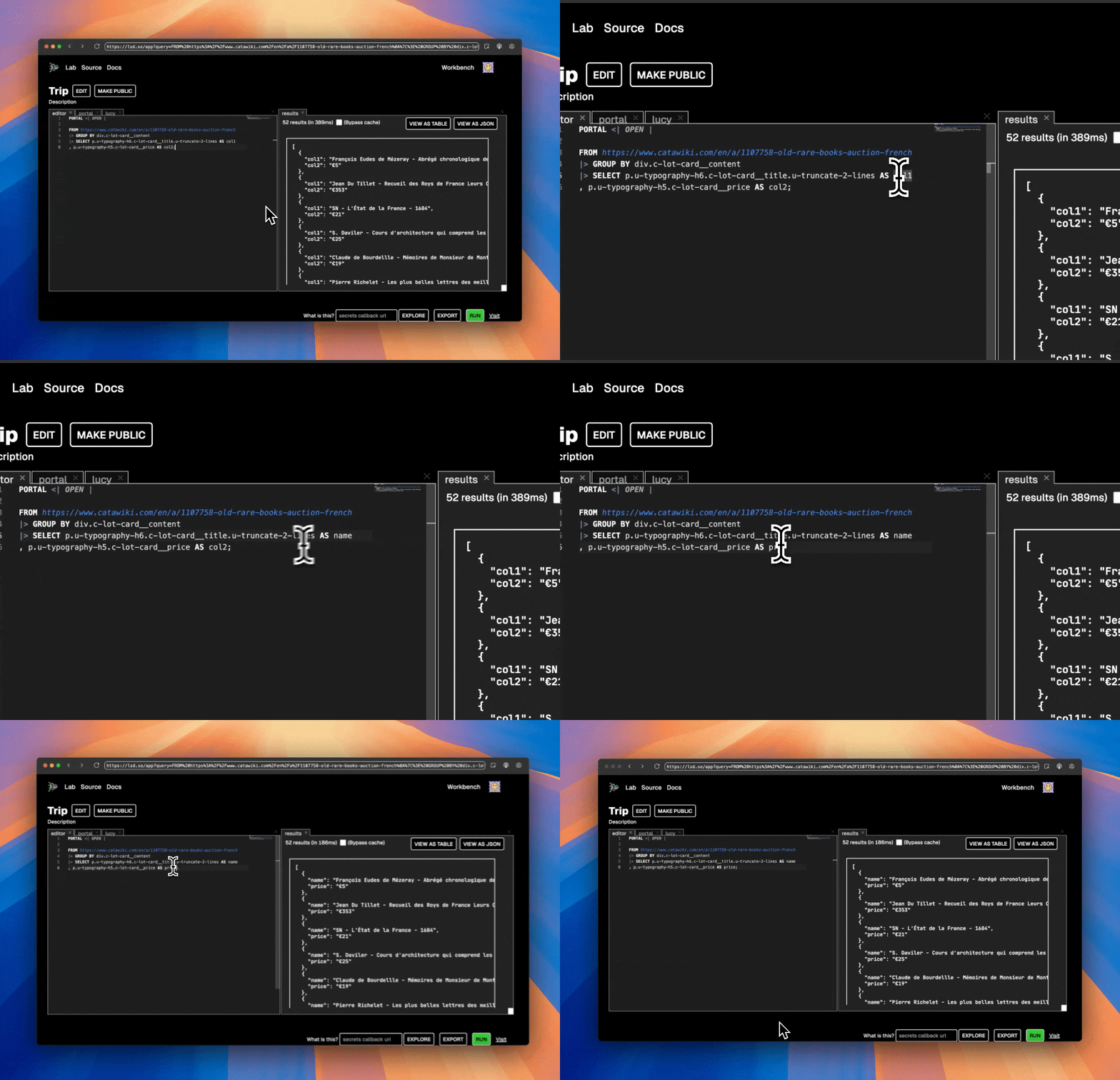
生成された LSD を使用すると、次のようにエイリアスを編集できます。

LSDコード編集の画面録画

その後、言語を使用して公開できます。

言語を使う

ワークベンチから編集するだけで、旅行を公開できます。
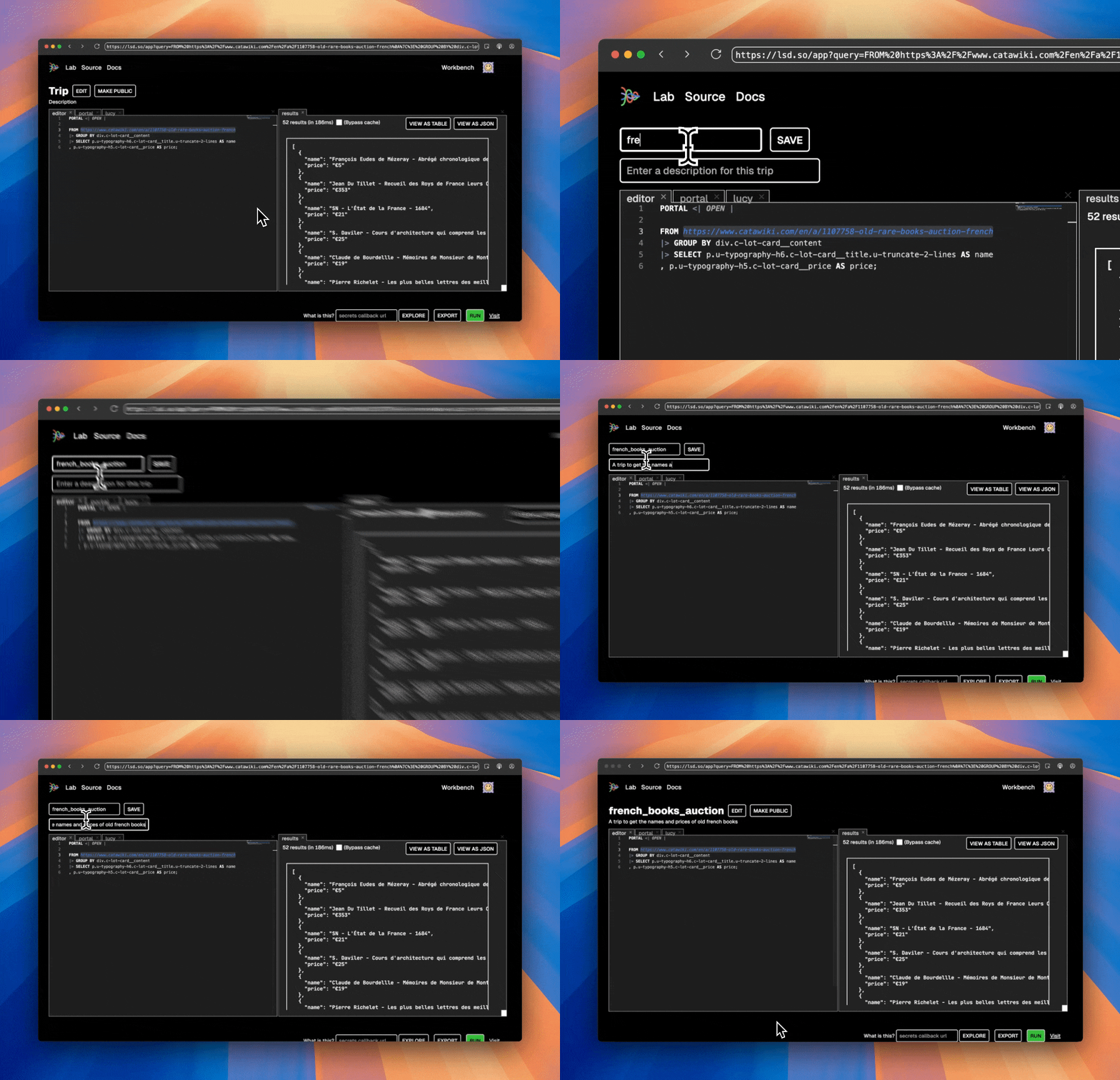
旅行の詳細を入力する画面の録画

TypeScriptによる機能拡張

ウェブとのブリッジに裏で使用されているinternetdata SDK をご確認ください。または、 create-your-internet ショートカットを使って始めることもできます。

$ yarn create your-internet

または、npmを好む場合は

$ npm create your-internet

Available Tools

3 tools
find_tripsD
ParametersJSON Schema
NameRequiredDescriptionDefault
queryYes

TDQS

D1/5.0
Behavior1/5

Does the description disclose side effects, auth requirements, rate limits, or destructive behavior?

Tool has no description.

Agents need to know what a tool does to the world before calling it. Descriptions should go beyond structured annotations to explain consequences.

Conciseness1/5

Is the description appropriately sized, front-loaded, and free of redundancy?

Tool has no description.

Shorter descriptions cost fewer tokens and are easier for agents to parse. Every sentence should earn its place.

Completeness1/5

Given the tool's complexity, does the description cover enough for an agent to succeed on first attempt?

Tool has no description.

Complex tools with many parameters or behaviors need more documentation. Simple tools need less. This dimension scales expectations accordingly.

Parameters1/5

Does the description clarify parameter syntax, constraints, interactions, or defaults beyond what the schema provides?

Tool has no description.

Input schemas describe structure but not intent. Descriptions should explain non-obvious parameter relationships and valid value ranges.

Purpose1/5

Does the description clearly state what the tool does and how it differs from similar tools?

Tool has no description.

Agents choose between tools based on descriptions. A clear purpose with a specific verb and resource helps agents select the right tool.

Usage Guidelines1/5

Does the description explain when to use this tool, when not to, or what alternatives exist?

Tool has no description.

Agents often have multiple tools that could apply. Explicit usage guidance like "use X instead of Y when Z" prevents misuse.

run_lsdD
ParametersJSON Schema
NameRequiredDescriptionDefault
codeYes

TDQS

D1/5.0
Behavior1/5

Does the description disclose side effects, auth requirements, rate limits, or destructive behavior?

Tool has no description.

Agents need to know what a tool does to the world before calling it. Descriptions should go beyond structured annotations to explain consequences.

Conciseness1/5

Is the description appropriately sized, front-loaded, and free of redundancy?

Tool has no description.

Shorter descriptions cost fewer tokens and are easier for agents to parse. Every sentence should earn its place.

Completeness1/5

Given the tool's complexity, does the description cover enough for an agent to succeed on first attempt?

Tool has no description.

Complex tools with many parameters or behaviors need more documentation. Simple tools need less. This dimension scales expectations accordingly.

Parameters1/5

Does the description clarify parameter syntax, constraints, interactions, or defaults beyond what the schema provides?

Tool has no description.

Input schemas describe structure but not intent. Descriptions should explain non-obvious parameter relationships and valid value ranges.

Purpose1/5

Does the description clearly state what the tool does and how it differs from similar tools?

Tool has no description.

Agents choose between tools based on descriptions. A clear purpose with a specific verb and resource helps agents select the right tool.

Usage Guidelines1/5

Does the description explain when to use this tool, when not to, or what alternatives exist?

Tool has no description.

Agents often have multiple tools that could apply. Explicit usage guidance like "use X instead of Y when Z" prevents misuse.

Tool Schema Changelog

Recent tool additions, removals, and schema changes observed during successful MCP inspections.

  1. 3 tool updates
    • First observedbrave_search
    • First observedfind_trips
    • First observedrun_lsd

TDQS

D1.6/5.0

Scored across 3 tools

Disambiguation2/5

The tools have unclear boundaries and overlapping purposes. 'brave_search' and 'find_trips' could both be interpreted as search tools, with the latter's lack of description making it ambiguous whether it searches for trips or performs another function. 'run_lsd' is completely opaque without a description, potentially overlapping with execution or processing roles.

Naming Consistency3/5

The naming is mixed but readable. 'brave_search' and 'find_trips' follow a verb_noun pattern, while 'run_lsd' uses a verb_prefix style. There is no chaotic mixing of cases, but the conventions are not fully consistent across all tools.

Tool Count2/5

With only 3 tools, the server feels thin for a general-purpose 'LSD MCP Server', suggesting an incomplete surface. The lack of descriptions for two tools makes it hard to assess scope, but the count is borderline too few for meaningful coverage of any substantial domain.

Completeness1/5

The server is severely incomplete. Based on the tool names, it appears to cover search and execution, but with no descriptions for 'find_trips' and 'run_lsd', there are significant gaps. It lacks any CRUD operations, lifecycle management, or clear domain coverage, making it impossible for agents to perform coherent workflows.

Maintenance

ActivityInactive
ResponsivenessNo issues

Related MCP Connectors

Related MCP Servers