Glama
lsd-so
by lsd-so

LSD MCP

Este es el servidor MCP actualizado para LSD . El objetivo de esta actualización es aprovechar al máximo las herramientas dinámicas definidas como viajes mediante nuestro SDK .

Contenido

Related MCP server: superhighway-mcp

Empezando

Autenticación

Esto es para conectar el servidor MCP en ejecución con su cuenta usando nuestro SDK .

La razón para utilizar los términos user y password es porque a lo que se está conectando es a nuestra base de datos compatible con postgres .

Archivo de configuración

En su directorio de inicio, escriba un JSON en un archivo llamado .lsd con las propiedades user y password con su correo electrónico y una clave API de su perfil .

{
  "user": "<you@email.domain>",
  "password": "<api_key>"
}

Variables de entorno

Alternativamente, puede configurar las variables de entorno LSD_USER y LSD_PASSWORD .

$ export LSD_USER='you@email.domain'
$ export LSD_PASSWORD='<api_key>'

Importante: si se producen errores al adoptar este enfoque, verifique que las variables de entorno establecidas sean accesibles desde PATH o el proceso desde el cual el cliente MCP las invoca.

Uso de un registro MCP

Legumbres

https://www.pulsemcp.com/servers/lsd-so-internetdata

Próximamente habrá más.

De la fuente

  1. Clonar este repositorio

$ git clone https://github.com/lsd-so/mcp.git
  1. Si está utilizando el escritorio Claude , actualice su archivo claude_desktop_config.json ( aquí hay una guía para crearlo).

{
  "mcpServers": {
    // other MCP servers configured here...
    "lsd": {
      "command": "node",
      "args": [
	    "/<path>/<to>/mcp/build/index.js"
      ]
    }
  }
}

Ejemplo de uso

Interacción
Grabación de pantalla del uso del indicador lsd_research

Extracción

Grabación de pantalla del uso del indicador lsd_research

Ampliación de capacidades con LSD

Para los escenarios en los que desea enseñarle al cliente MCP una "habilidad", puede hacerlo con un viaje de LSD ( ¿qué es eso? ).

¿Qué es un viaje?

Un "viaje" es un módulo publicado que consiste en un programa LSD, ya sea que se haya derivado al interactuar con nuestro navegador local o al publicar directamente un viaje .

Desde el navegador de bicicletas

Desde el navegador Bicycle puedes derivar LSD usando nuestro "lenguaje de clic", esto se puede activar haciendo clic en el ícono del transcriptor en la parte superior derecha:

Grabación de pantalla al hacer clic en el icono del transcriptor

O pulsando Command+k (o Ctrl+k para Linux/Windows). Una vez hecho esto, puede seleccionar interactivamente contenedores repetidos, así como campos de interés:

Grabación de pantalla del flujo del transcriptor

Con el LSD generado, puedes editar los alias de la siguiente manera:
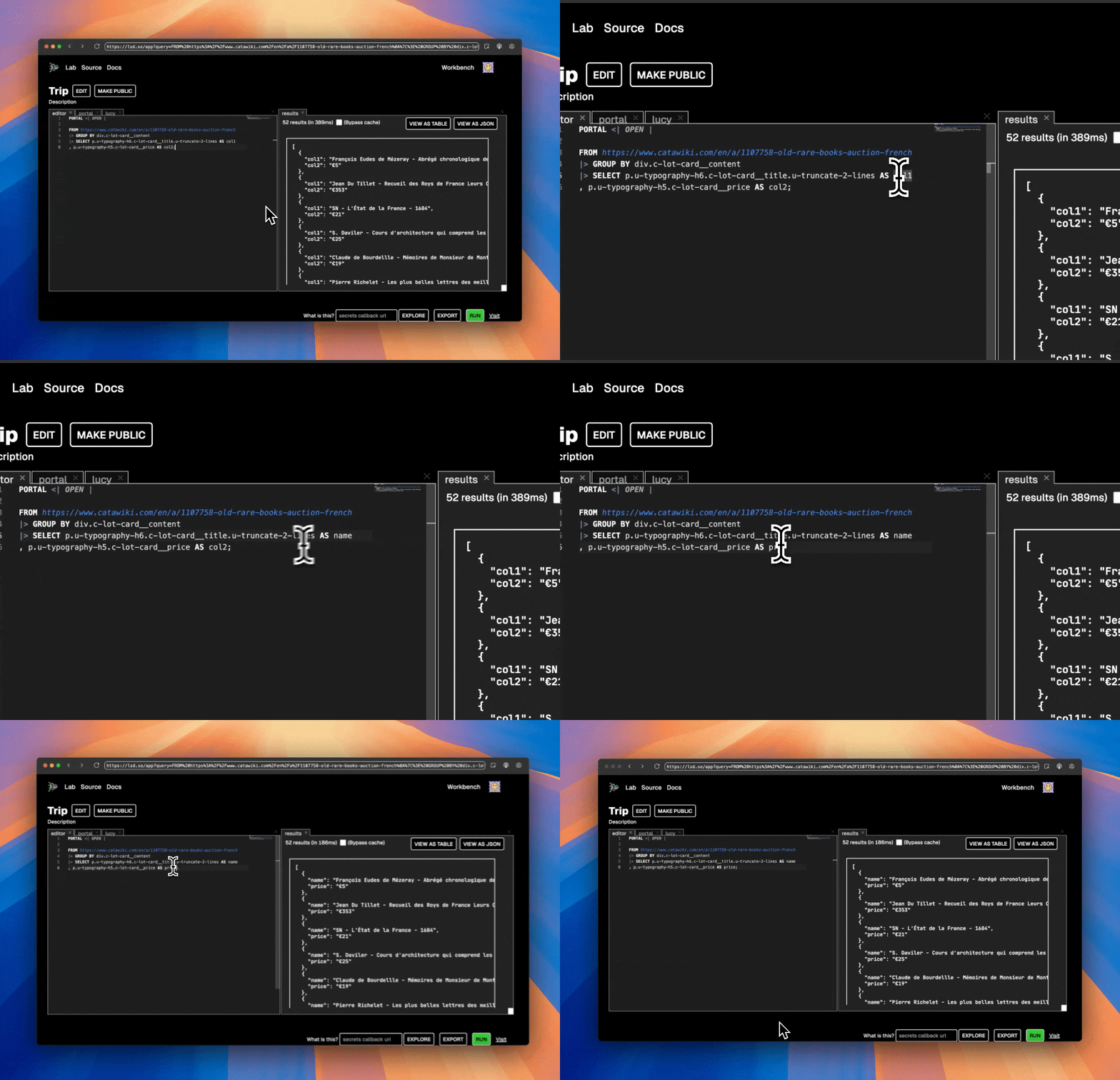
Grabación de pantalla de la edición del código LSD

Después de lo cual podrás publicar usando el idioma .

Usando el lenguaje

Desde el banco de trabajo, simplemente edite para publicar un viaje.
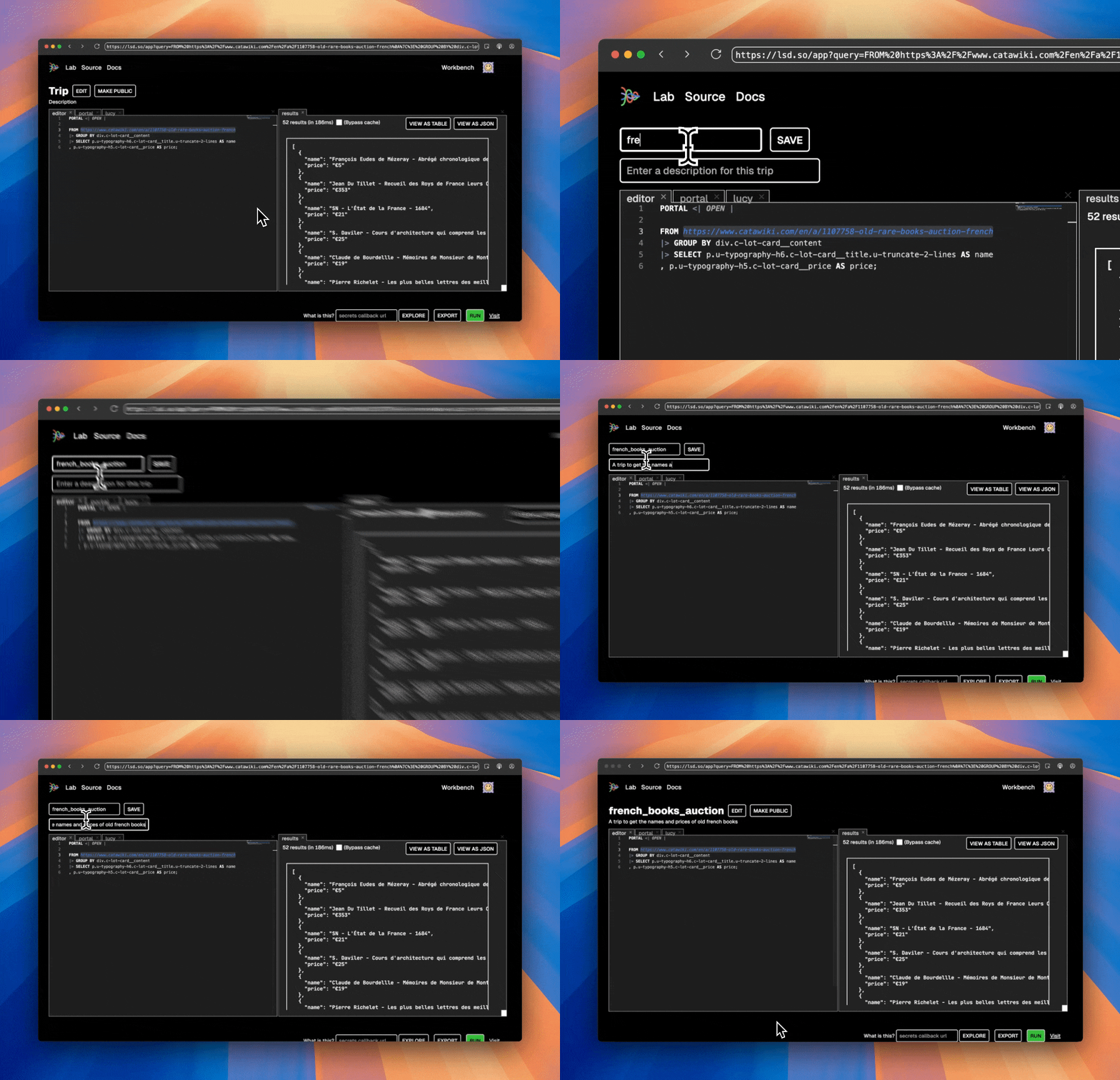
Una grabación de pantalla del llenado de los detalles del viaje.

Ampliación de capacidades con TypeScript

Consulta el SDK de internetdata que se utiliza internamente para conectar con la web. O, como alternativa, empieza a usar la abreviatura "crea tu internet" .

$ yarn create your-internet

O si prefieres npm

$ npm create your-internet

Available Tools

3 tools
find_tripsD
ParametersJSON Schema
NameRequiredDescriptionDefault
queryYes

TDQS

D1/5.0
Behavior1/5

Does the description disclose side effects, auth requirements, rate limits, or destructive behavior?

Tool has no description.

Agents need to know what a tool does to the world before calling it. Descriptions should go beyond structured annotations to explain consequences.

Conciseness1/5

Is the description appropriately sized, front-loaded, and free of redundancy?

Tool has no description.

Shorter descriptions cost fewer tokens and are easier for agents to parse. Every sentence should earn its place.

Completeness1/5

Given the tool's complexity, does the description cover enough for an agent to succeed on first attempt?

Tool has no description.

Complex tools with many parameters or behaviors need more documentation. Simple tools need less. This dimension scales expectations accordingly.

Parameters1/5

Does the description clarify parameter syntax, constraints, interactions, or defaults beyond what the schema provides?

Tool has no description.

Input schemas describe structure but not intent. Descriptions should explain non-obvious parameter relationships and valid value ranges.

Purpose1/5

Does the description clearly state what the tool does and how it differs from similar tools?

Tool has no description.

Agents choose between tools based on descriptions. A clear purpose with a specific verb and resource helps agents select the right tool.

Usage Guidelines1/5

Does the description explain when to use this tool, when not to, or what alternatives exist?

Tool has no description.

Agents often have multiple tools that could apply. Explicit usage guidance like "use X instead of Y when Z" prevents misuse.

run_lsdD
ParametersJSON Schema
NameRequiredDescriptionDefault
codeYes

TDQS

D1/5.0
Behavior1/5

Does the description disclose side effects, auth requirements, rate limits, or destructive behavior?

Tool has no description.

Agents need to know what a tool does to the world before calling it. Descriptions should go beyond structured annotations to explain consequences.

Conciseness1/5

Is the description appropriately sized, front-loaded, and free of redundancy?

Tool has no description.

Shorter descriptions cost fewer tokens and are easier for agents to parse. Every sentence should earn its place.

Completeness1/5

Given the tool's complexity, does the description cover enough for an agent to succeed on first attempt?

Tool has no description.

Complex tools with many parameters or behaviors need more documentation. Simple tools need less. This dimension scales expectations accordingly.

Parameters1/5

Does the description clarify parameter syntax, constraints, interactions, or defaults beyond what the schema provides?

Tool has no description.

Input schemas describe structure but not intent. Descriptions should explain non-obvious parameter relationships and valid value ranges.

Purpose1/5

Does the description clearly state what the tool does and how it differs from similar tools?

Tool has no description.

Agents choose between tools based on descriptions. A clear purpose with a specific verb and resource helps agents select the right tool.

Usage Guidelines1/5

Does the description explain when to use this tool, when not to, or what alternatives exist?

Tool has no description.

Agents often have multiple tools that could apply. Explicit usage guidance like "use X instead of Y when Z" prevents misuse.

Tool Schema Changelog

Recent tool additions, removals, and schema changes observed during successful MCP inspections.

  1. 3 tool updates
    • First observedbrave_search
    • First observedfind_trips
    • First observedrun_lsd

TDQS

D1.6/5.0

Scored across 3 tools

Disambiguation2/5

The tools have unclear boundaries and overlapping purposes. 'brave_search' and 'find_trips' could both be interpreted as search tools, with the latter's lack of description making it ambiguous whether it searches for trips or performs another function. 'run_lsd' is completely opaque without a description, potentially overlapping with execution or processing roles.

Naming Consistency3/5

The naming is mixed but readable. 'brave_search' and 'find_trips' follow a verb_noun pattern, while 'run_lsd' uses a verb_prefix style. There is no chaotic mixing of cases, but the conventions are not fully consistent across all tools.

Tool Count2/5

With only 3 tools, the server feels thin for a general-purpose 'LSD MCP Server', suggesting an incomplete surface. The lack of descriptions for two tools makes it hard to assess scope, but the count is borderline too few for meaningful coverage of any substantial domain.

Completeness1/5

The server is severely incomplete. Based on the tool names, it appears to cover search and execution, but with no descriptions for 'find_trips' and 'run_lsd', there are significant gaps. It lacks any CRUD operations, lifecycle management, or clear domain coverage, making it impossible for agents to perform coherent workflows.

Maintenance

ActivityInactive
ResponsivenessNo issues

Related MCP Connectors

Related MCP Servers