Glama

Figma MCP(모델 컨텍스트 프로토콜)

모델 컨텍스트 프로토콜을 사용하여 커서 에이전트를 통해 Figma 디자인을 만들고 수정하기 위한 완벽한 솔루션입니다.

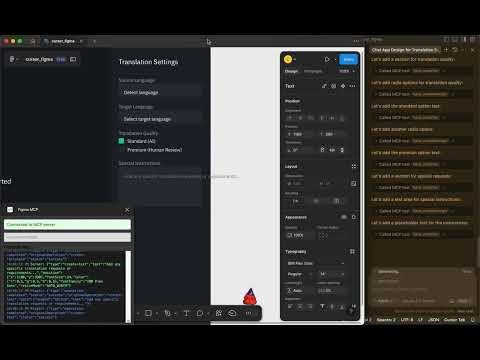
블로그: https://xflux.us/2025/04/06/ai-powered-design-automation-building-a-figma-mcp-with-cursor/ 이미지 대체 텍스트는 여기에 있습니다

개요

이 프로젝트는 Figma에서 Cursor Agent를 통해 자연어 프롬프트를 사용하여 AI 기반 디자인을 제작할 수 있도록 지원합니다. 이 프로젝트는 두 가지 주요 구성 요소로 구성됩니다.

  1. MCP 서버 : 모델 컨텍스트 프로토콜을 구현하고 WebSockets를 통해 Figma 플러그인과 통신하는 Bun + TypeScript 서버입니다.

  2. Figma 플러그인 : Figma에서 실행되고 MCP 서버의 지침에 따라 디자인 작업을 실행하는 플러그인입니다.

이 통합을 통해 자연어를 사용하여 다음을 수행할 수 있습니다.

  • 기본적인 디자인 요소(도형, 텍스트 등)를 만듭니다.

  • 여러 섹션으로 구성된 완전한 페이지 레이아웃 디자인

  • 기존 디자인 수정

Related MCP server: Figma MCP Server

저장소 구조

  • figma-mcp-server/ : MCP 서버 구현

  • figma-plugin/ : 디자인 작업을 실행하기 위한 Figma 플러그인

빠른 시작

1. MCP 서버 설정

지엑스피1

2. Figma 플러그인 설정

cd figma-plugin
npm install
npm run build

그런 다음 플러그인을 Figma로 가져옵니다.

  1. Figma 열기

  2. 플러그인 > 개발 > 매니페스트에서 플러그인 가져오기로 이동하세요.

  3. figma-plugin/manifest.json 파일을 선택하세요

3. 커서 에이전트에 연결

커서에서:

  1. 설정 > 에이전트 > MCP 서버로 이동하세요.

  2. URL: http://localhost:3000/api/mcp/schema 로 새 서버를 추가합니다.

자세한 문서

더 자세한 지침은 다음을 참조하세요.

사용 예

모든 것이 설정되면 커서 에이전트를 사용하여 다음과 같은 프롬프트로 디자인을 만들 수 있습니다.

Create a landing page with a header, hero section with heading "Our Product" and subheading "The best solution for your needs", 3 features in the features section, and a footer with contact information.

작동 원리

  1. 커서 에이전트는 자연어 프롬프트를 받습니다.

  2. MCP 서버에 구조화된 MCP 요청을 보냅니다.

  3. MCP 서버는 요청을 처리하고 WebSocket을 통해 Figma 플러그인에 지침을 보냅니다.

  4. Figma 플러그인은 Figma에서 디자인 작업을 실행합니다.

특허

MIT

Available Tools

5 tools
add_figma_fileC

Add a Figma file to your context

ParametersJSON Schema
NameRequiredDescriptionDefault
urlYesThe URL of the Figma file to add

TDQS

C2.6/5.0
Behavior2/5

Does the description disclose side effects, auth requirements, rate limits, or destructive behavior?

No annotations are provided, so the description carries the full burden of behavioral disclosure. 'Add a Figma file to your context' implies a mutation or storage action, but it doesn't clarify if this requires specific permissions, what 'context' refers to (e.g., workspace, session), whether the action is reversible, or any rate limits. The description is too vague to inform the agent adequately about behavioral traits.

Agents need to know what a tool does to the world before calling it. Descriptions should go beyond structured annotations to explain consequences.

Conciseness4/5

Is the description appropriately sized, front-loaded, and free of redundancy?

The description is a single, straightforward sentence that is front-loaded with the core action. It avoids unnecessary words and gets directly to the point. However, it could be more structured by including key details like the tool's scope or constraints, but as-is, it's efficiently concise.

Shorter descriptions cost fewer tokens and are easier for agents to parse. Every sentence should earn its place.

Completeness2/5

Given the tool's complexity, does the description cover enough for an agent to succeed on first attempt?

Given the lack of annotations and output schema, the description is incomplete for a tool that likely performs a mutation (adding a file). It doesn't explain what 'context' means, the result of the operation, or any error conditions. For a tool with one parameter but no structured behavioral hints, the description should provide more context to be fully helpful.

Complex tools with many parameters or behaviors need more documentation. Simple tools need less. This dimension scales expectations accordingly.

Parameters3/5

Does the description clarify parameter syntax, constraints, interactions, or defaults beyond what the schema provides?

The input schema has 100% description coverage, with the 'url' parameter clearly documented as 'The URL of the Figma file to add'. The description adds no additional meaning beyond this, such as URL format requirements or validation rules. With high schema coverage, the baseline score of 3 is appropriate, as the schema handles the parameter documentation effectively.

Input schemas describe structure but not intent. Descriptions should explain non-obvious parameter relationships and valid value ranges.

Purpose3/5

Does the description clearly state what the tool does and how it differs from similar tools?

The description states the action ('Add') and resource ('Figma file'), but it's vague about what 'add to your context' means operationally. It doesn't distinguish from sibling tools like 'view_node' or 'post_comment', which might involve similar resources. The purpose is understandable but lacks specificity about the tool's exact function.

Agents choose between tools based on descriptions. A clear purpose with a specific verb and resource helps agents select the right tool.

Usage Guidelines2/5

Does the description explain when to use this tool, when not to, or what alternatives exist?

No guidance is provided on when to use this tool versus alternatives. It doesn't mention prerequisites, such as needing a valid Figma URL or authentication, or how it differs from sibling tools like 'view_node' that might also interact with Figma files. The description offers no context for selection among available tools.

Agents often have multiple tools that could apply. Explicit usage guidance like "use X instead of Y when Z" prevents misuse.

post_commentC

Post a comment on a node in a Figma file

ParametersJSON Schema
NameRequiredDescriptionDefault
file_keyYesThe key of the Figma file
messageYesThe comment message
node_idNoThe ID of the node to comment on. Node ids have the format `<number>:<number>`
xYesThe x coordinate of the comment pin
yYesThe y coordinate of the comment pin

TDQS

C2.9/5.0
Behavior2/5

Does the description disclose side effects, auth requirements, rate limits, or destructive behavior?

With no annotations provided, the description carries the full burden of behavioral disclosure. It mentions the action ('Post a comment') but fails to describe critical behaviors such as whether this requires specific permissions, if comments are publicly visible or private, rate limits, error handling, or what happens on success (e.g., comment ID returned). For a mutation tool with zero annotation coverage, this is a significant gap.

Agents need to know what a tool does to the world before calling it. Descriptions should go beyond structured annotations to explain consequences.

Conciseness5/5

Is the description appropriately sized, front-loaded, and free of redundancy?

The description is a single, efficient sentence that directly states the tool's purpose without unnecessary words. It is appropriately sized and front-loaded, with every word earning its place.

Shorter descriptions cost fewer tokens and are easier for agents to parse. Every sentence should earn its place.

Completeness2/5

Given the tool's complexity, does the description cover enough for an agent to succeed on first attempt?

Given the complexity of a mutation tool (posting comments) with no annotations and no output schema, the description is incomplete. It lacks information on behavioral traits (e.g., permissions, visibility), usage context, and expected outcomes. The high schema coverage helps with parameters, but overall context is insufficient for effective tool selection and invocation.

Complex tools with many parameters or behaviors need more documentation. Simple tools need less. This dimension scales expectations accordingly.

Parameters3/5

Does the description clarify parameter syntax, constraints, interactions, or defaults beyond what the schema provides?

Schema description coverage is 100%, so the input schema already documents all 5 parameters thoroughly. The description adds no additional meaning beyond what's in the schema (e.g., it doesn't explain parameter interactions or provide examples). According to the rules, baseline is 3 when schema coverage is high (>80%) and no param info is in the description.

Input schemas describe structure but not intent. Descriptions should explain non-obvious parameter relationships and valid value ranges.

Purpose4/5

Does the description clearly state what the tool does and how it differs from similar tools?

The description clearly states the action ('Post a comment') and the target ('on a node in a Figma file'), providing a specific verb+resource combination. However, it doesn't differentiate from sibling tools like 'reply_to_comment' or 'read_comments', which would require explicit comparison to achieve a score of 5.

Agents choose between tools based on descriptions. A clear purpose with a specific verb and resource helps agents select the right tool.

Usage Guidelines2/5

Does the description explain when to use this tool, when not to, or what alternatives exist?

The description provides no guidance on when to use this tool versus alternatives like 'reply_to_comment' or 'read_comments', nor does it mention prerequisites such as file access permissions or comment visibility. It only states what the tool does without contextual usage instructions.

Agents often have multiple tools that could apply. Explicit usage guidance like "use X instead of Y when Z" prevents misuse.

read_commentsC

Get all comments on a Figma file

ParametersJSON Schema
NameRequiredDescriptionDefault
file_keyYesThe key of the Figma file

TDQS

C2.9/5.0
Behavior2/5

Does the description disclose side effects, auth requirements, rate limits, or destructive behavior?

With no annotations provided, the description carries the full burden of behavioral disclosure. While 'Get all comments' implies a read operation, it doesn't specify whether this requires authentication, rate limits, pagination behavior, or what format the comments are returned in. This leaves significant gaps for a tool that presumably interacts with an external API.

Agents need to know what a tool does to the world before calling it. Descriptions should go beyond structured annotations to explain consequences.

Conciseness5/5

Is the description appropriately sized, front-loaded, and free of redundancy?

The description is a single, efficient sentence with zero wasted words. It's appropriately sized for a simple tool and front-loads the essential information.

Shorter descriptions cost fewer tokens and are easier for agents to parse. Every sentence should earn its place.

Completeness2/5

Given the tool's complexity, does the description cover enough for an agent to succeed on first attempt?

For a tool with no annotations and no output schema, the description is insufficiently complete. It doesn't explain what 'all comments' means in practice (e.g., format, structure, limitations), nor does it address authentication requirements or error conditions that would be important for an API interaction tool.

Complex tools with many parameters or behaviors need more documentation. Simple tools need less. This dimension scales expectations accordingly.

Parameters3/5

Does the description clarify parameter syntax, constraints, interactions, or defaults beyond what the schema provides?

The description mentions 'on a Figma file' which aligns with the single 'file_key' parameter, but adds no additional semantic context beyond what the schema already provides (100% coverage). The baseline score of 3 is appropriate since the schema fully documents the parameter.

Input schemas describe structure but not intent. Descriptions should explain non-obvious parameter relationships and valid value ranges.

Purpose4/5

Does the description clearly state what the tool does and how it differs from similar tools?

The description clearly states the action ('Get all comments') and target resource ('on a Figma file'), providing a specific verb+resource combination. However, it doesn't differentiate from sibling tools like 'view_node' or 'post_comment' that might also involve Figma file interactions, so it doesn't reach the highest clarity level.

Agents choose between tools based on descriptions. A clear purpose with a specific verb and resource helps agents select the right tool.

Usage Guidelines2/5

Does the description explain when to use this tool, when not to, or what alternatives exist?

The description provides no guidance on when to use this tool versus alternatives like 'post_comment' or 'reply_to_comment'. There's no mention of prerequisites, context for retrieving comments, or any explicit when/when-not instructions.

Agents often have multiple tools that could apply. Explicit usage guidance like "use X instead of Y when Z" prevents misuse.

reply_to_commentC

Reply to an existing comment in a Figma file

ParametersJSON Schema
NameRequiredDescriptionDefault
comment_idYesThe ID of the comment to reply to. Comment ids have the format `<number>`
file_keyYesThe key of the Figma file
messageYesThe reply message

TDQS

C2.9/5.0
Behavior2/5

Does the description disclose side effects, auth requirements, rate limits, or destructive behavior?

No annotations are provided, so the description carries full burden. It states the action ('Reply to') but lacks behavioral details: it doesn't disclose required permissions, whether this is a write operation, rate limits, response format, or error conditions. For a mutation tool with zero annotation coverage, this is a significant gap in transparency.

Agents need to know what a tool does to the world before calling it. Descriptions should go beyond structured annotations to explain consequences.

Conciseness5/5

Is the description appropriately sized, front-loaded, and free of redundancy?

The description is a single, efficient sentence with zero waste. It's front-loaded with the core action and resource, making it easy to parse. Every word earns its place, and there's no redundancy or unnecessary elaboration.

Shorter descriptions cost fewer tokens and are easier for agents to parse. Every sentence should earn its place.

Completeness2/5

Given the tool's complexity, does the description cover enough for an agent to succeed on first attempt?

Given the tool's complexity (a mutation with 3 required parameters) and lack of annotations and output schema, the description is incomplete. It doesn't explain return values, error handling, or behavioral traits, leaving the agent with insufficient context to use the tool effectively beyond basic purpose.

Complex tools with many parameters or behaviors need more documentation. Simple tools need less. This dimension scales expectations accordingly.

Parameters3/5

Does the description clarify parameter syntax, constraints, interactions, or defaults beyond what the schema provides?

Schema description coverage is 100%, so parameters are fully documented in the schema. The description adds no additional meaning beyond what the schema provides (e.g., no context on comment_id format beyond schema's '<number>', no examples). Baseline 3 is appropriate as the schema does the heavy lifting, but the description doesn't compensate or enhance parameter understanding.

Input schemas describe structure but not intent. Descriptions should explain non-obvious parameter relationships and valid value ranges.

Purpose4/5

Does the description clearly state what the tool does and how it differs from similar tools?

The description clearly states the action ('Reply to') and target resource ('an existing comment in a Figma file'), making the purpose immediately understandable. It distinguishes from sibling tools like 'post_comment' (new comment) and 'read_comments' (viewing), though not explicitly. However, it doesn't specify the verb+resource combination as precisely as it could (e.g., 'post a reply' vs. 'reply to').

Agents choose between tools based on descriptions. A clear purpose with a specific verb and resource helps agents select the right tool.

Usage Guidelines2/5

Does the description explain when to use this tool, when not to, or what alternatives exist?

No guidance is provided on when to use this tool versus alternatives. The description doesn't mention prerequisites (e.g., needing an existing comment), exclusions, or comparisons with siblings like 'post_comment' for new comments or 'read_comments' for viewing. Usage is implied but not explicitly stated, leaving gaps for an agent to infer context.

Agents often have multiple tools that could apply. Explicit usage guidance like "use X instead of Y when Z" prevents misuse.

view_nodeC

Get a thumbnail for a specific node in a Figma file

ParametersJSON Schema
NameRequiredDescriptionDefault
file_keyYesThe key of the Figma file
node_idYesThe ID of the node to view. Node ids have the format `<number>:<number>`

TDQS

C2.9/5.0
Behavior2/5

Does the description disclose side effects, auth requirements, rate limits, or destructive behavior?

With no annotations provided, the description carries the full burden of behavioral disclosure. It states the tool 'Get a thumbnail,' implying a read-only operation, but doesn't clarify aspects like whether it requires authentication, has rate limits, returns image data or a URL, or handles errors. This leaves significant gaps in understanding the tool's behavior beyond its basic function.

Agents need to know what a tool does to the world before calling it. Descriptions should go beyond structured annotations to explain consequences.

Conciseness5/5

Is the description appropriately sized, front-loaded, and free of redundancy?

The description is a single, clear sentence that efficiently conveys the tool's purpose without unnecessary words. It is front-loaded with the core action and resource, making it easy to parse. Every part of the sentence contributes directly to understanding the tool's function.

Shorter descriptions cost fewer tokens and are easier for agents to parse. Every sentence should earn its place.

Completeness2/5

Given the tool's complexity, does the description cover enough for an agent to succeed on first attempt?

Given the lack of annotations and output schema, the description is incomplete for a tool that retrieves visual data. It doesn't explain what a 'thumbnail' entails (e.g., image format, size, or how it's returned), which is critical for an AI agent to use the tool effectively. The schema covers inputs well, but the output behavior remains undocumented.

Complex tools with many parameters or behaviors need more documentation. Simple tools need less. This dimension scales expectations accordingly.

Parameters3/5

Does the description clarify parameter syntax, constraints, interactions, or defaults beyond what the schema provides?

The input schema has 100% description coverage, clearly documenting both parameters (file_key and node_id) with their purposes and formats. The description adds no additional semantic information beyond what the schema provides, such as examples or edge cases. This meets the baseline score since the schema adequately covers parameter details.

Input schemas describe structure but not intent. Descriptions should explain non-obvious parameter relationships and valid value ranges.

Purpose4/5

Does the description clearly state what the tool does and how it differs from similar tools?

The description clearly states the action ('Get a thumbnail') and the target resource ('a specific node in a Figma file'), making the purpose understandable. However, it doesn't differentiate this tool from potential sibling tools that might also retrieve node information or thumbnails, as the sibling list includes file management and comment tools but no direct alternatives for viewing nodes.

Agents choose between tools based on descriptions. A clear purpose with a specific verb and resource helps agents select the right tool.

Usage Guidelines2/5

Does the description explain when to use this tool, when not to, or what alternatives exist?

The description provides no guidance on when to use this tool versus alternatives. It doesn't mention any prerequisites, such as needing the file key and node ID, or specify scenarios where this tool is appropriate over other methods for accessing node data. This lack of contextual direction limits its utility for an AI agent.

Agents often have multiple tools that could apply. Explicit usage guidance like "use X instead of Y when Z" prevents misuse.

Tool Schema Changelog

Recent tool additions, removals, and schema changes observed during successful MCP inspections.

  1. 5 tool updatesv1.0.0
    • First observedadd_figma_file
    • First observedpost_comment
    • First observedread_comments
    • First observedreply_to_comment
    • First observedview_node

TDQS

B3.4/5.0

Scored across 5 tools

Disambiguation5/5

Each tool has a clearly distinct purpose with no overlap: adding files, posting comments, reading comments, replying to comments, and viewing nodes. The descriptions make it easy to differentiate between these operations, eliminating any risk of misselection.

Naming Consistency5/5

All tool names follow a consistent verb_noun pattern using snake_case, such as 'add_figma_file', 'post_comment', and 'view_node'. This uniformity makes the tool set predictable and easy to understand at a glance.

Tool Count5/5

With 5 tools, this server is well-scoped for handling Figma files, comments, and nodes. Each tool serves a specific, necessary function without being excessive or insufficient for the domain, fitting the typical 3-15 tool range perfectly.

Completeness4/5

The tool set covers core workflows for file management and comment interactions, but there are minor gaps such as updating or deleting comments, or more advanced file operations like editing nodes. Agents can likely work around these with the provided tools.

Maintenance

ActivityInactive
ResponsivenessNo issues

Related MCP Connectors

Related MCP Servers