Glama
anoopt

Outlook Meetings Scheduler MCP Server

by anoopt

Outlook 会議スケジューラ MCP サーバー

Microsoft Graph API を使用して Microsoft Outlook で会議をスケジュールするための MCP サーバー。

このMCPサーバーを使用すると、カレンダーイベントの作成や、参加者を指定したイベントの作成(参加者のメールアドレスの検索を含む)が可能です。GitHub MCPサーバーなどの他のMCPサーバーとシームレスに統合され、ワークフローを強化します。

サンプルクエリ

  • 明日午後 3 時にサラとの会議をスケジュールします。

  • 明日午後2時に「プロジェクトキックオフ」という会議を作成します。MeganとJohnを必須の出席者として追加します。

GitHub MCP サーバーでの使用

  • 組織/リポジトリリポジトリに「ユーザーダッシュボードのページ区切りのバグを修正」というタイトルの問題を作成し、「ページ間を移動する際に重複したエントリが表示されるという報告がユーザーから寄せられています」という説明を添えてください。そして、明日午後3時にこの問題を確認するよう、カレンダーのリマインダーを設定してください。

Related MCP server: M365 Calendar MCP Server

デモ
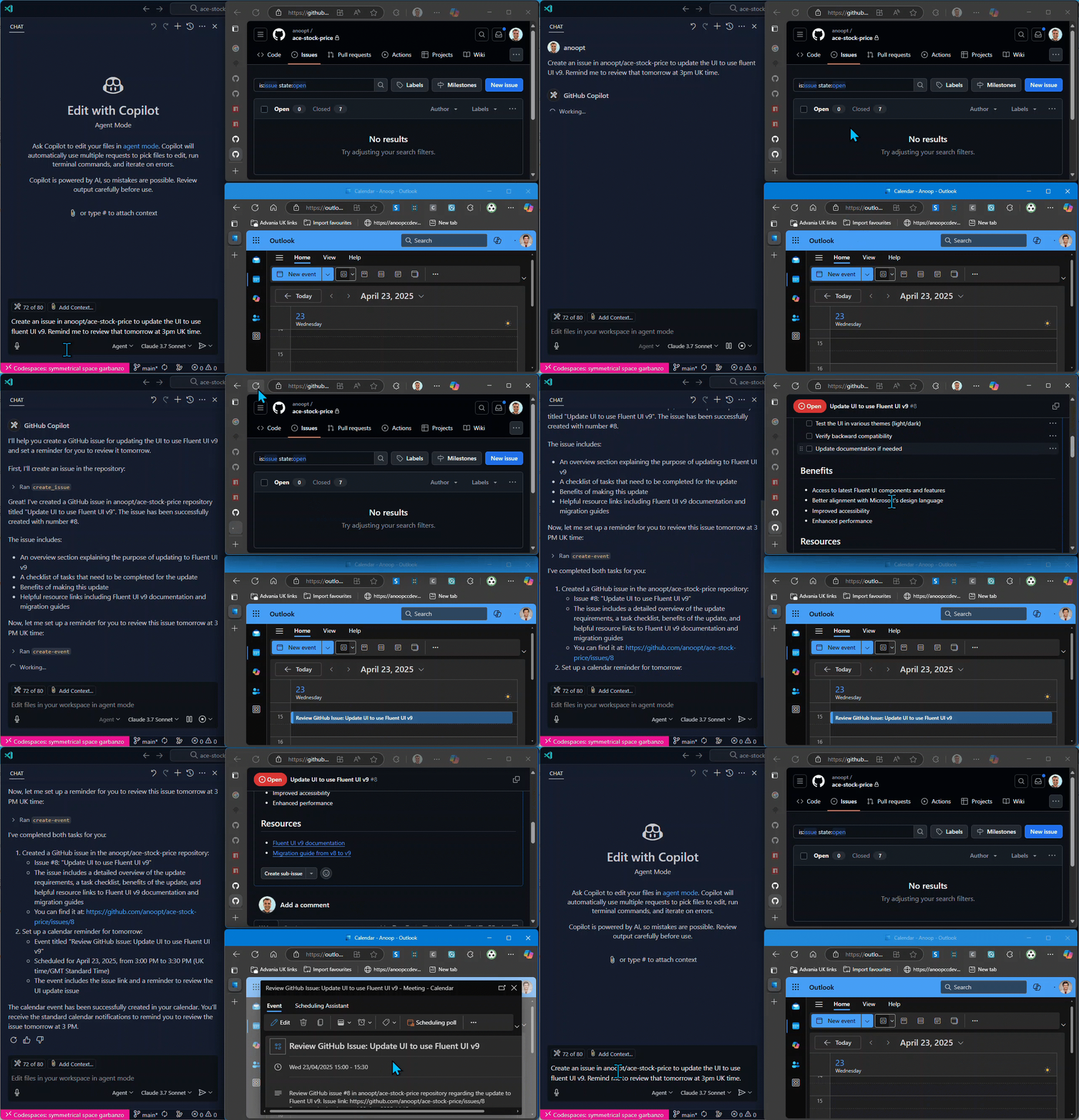
デモ

ツール

  1. find-person

    • 名前から相手のメールアドレスを検索する

    • 入力: name (文字列)

    • 返されるもの: 名前とメールアドレスが一致する人々のリスト

  2. create-event

    • Microsoft Graph API を使用してカレンダー イベントを作成する

    • 入力:

      • subject (文字列): カレンダーイベントの件名

      • body (文字列): カレンダーイベントの内容/本文

      • start (オプション): ISO形式の日時(例:2025-04-20T12:00:00)

      • end (オプション): ISO形式の日時(例:2025-04-20T13:00:00)

      • timeZone (オプション): イベントのタイムゾーン (デフォルト: "GMT 標準時")

    • 戻り値: URL と ID を含むイベントの詳細

  3. create-event-with-attendees

    • Microsoft Graph API を使用して出席者を含むカレンダー イベントを作成する

    • 入力:

      • subject (文字列): カレンダーイベントの件名

      • body (文字列): カレンダーイベントの内容/本文

      • start (オプション): ISO形式の日時(例:2025-04-20T12:00:00)

      • end (オプション): ISO形式の日時(例:2025-04-20T13:00:00)

      • timeZone (オプション): イベントのタイムゾーン (デフォルト: "GMT 標準時")

      • location (オプション): イベントの場所

      • attendees : { メールアドレス、名前(オプション)、タイプ(オプション) } の配列

    • 返されるもの: URL、ID、参加者リストを含むイベントの詳細

  4. get-event

    • IDでカレンダーイベントの詳細を取得する

    • 入力:

      • eventId (文字列): 取得するイベントのID

    • 返されるもの: 件名、時間、出席者、URL などの詳細なイベント情報

  5. list-events

    • オプションのフィルタリングを使用してカレンダーイベントを一覧表示します

    • 入力:

      • subject (オプション):このテキストを含む件名でイベントをフィルタリングします

      • startDate (オプション): イベントをフィルタリングするISO形式の開始日 (例: 2025-04-20T00:00:00)

      • endDate (オプション): イベントをフィルタリングする終了日をISO形式で指定します (例: 2025-04-20T23:59:59)

      • maxResults (オプション): 返されるイベントの最大数

    • 戻り値: 基本情報とIDを含むカレンダーイベントのリスト

  6. delete-event

    • カレンダーイベントを削除する

    • 入力:

      • eventId (文字列): 削除するイベントのID

    • 戻り値: イベント削除の確認

  7. update-event

    • 既存のカレンダーイベントを更新する

    • 入力:

      • eventId (文字列): 更新するイベントのID

      • subject (オプション):カレンダーイベントの新しい件名

      • body (オプション): カレンダーイベントの新しいコンテンツ/本文

      • start (オプション):ISO形式の新しい開始時刻(例:2025-04-20T12:00:00)

      • end (オプション):ISO形式の新しい終了時刻(例:2025-04-20T13:00:00)

      • timeZone (オプション): イベントの新しいタイムゾーン

      • location (オプション): イベントの新しい場所

      • attendees (オプション): { メールアドレス、名前(オプション)、タイプ(オプション) } の配列

    • 戻り値: 変更内容を示す更新されたイベントの詳細

  8. update-event-attendees

    • カレンダーイベントの参加者を追加または削除する

    • 入力:

      • eventId (文字列): 更新するイベントのID

      • addAttendees (オプション): 追加する参加者の配列: { メールアドレス、名前 (オプション)、タイプ (オプション) }

      • removeAttendees (オプション): イベントから削除するメールアドレスの配列

    • 戻り値: イベント参加者情報の更新

設定

Microsoft Graph API のセットアップ

  1. Microsoft Azure ポータルでアプリケーションを登録する

  2. クライアントシークレットを作成する

  3. 必要な権限を付与します (Microsoft Graph API > アプリケーションの権限 > Calendars.ReadWrite、People.Read.All、User.ReadBasic.All)

  4. クライアントID、クライアントシークレット、テナントIDをメモします。

VS Codeでの使用

ローカル Node.js

ローカル ビルドから Node.js を使用して MCP サーバーを直接実行できます。

  1. リポジトリをクローンしてプロジェクトをビルドします。

git clone https://github.com/anoopt/outlook-meetings-scheduler-mcp-server.git
cd outlook-meetings-scheduler-mcp-server
npm install
npm run build
  1. 手動でインストールする場合は、VS Code のユーザー設定 (JSON) ファイルに次の JSON ブロックを追加します。Ctrl Ctrl + Shift + Pを押して「Preferences: Open User Settings (JSON)と入力すると、このブロックを追加できます。

オプションとして、ワークスペース内の.vscode/mcp.jsonというファイルに追加することもできます。これにより、他のユーザーと設定を共有できるようになります。

{
  "mcpServers": {
    "outlook-meetings-scheduler": {
      "command": "node",
      "args": [
        "/path/to/outlook-meetings-scheduler-mcp-server/build/index.js"
      ],
      "env": {
        "CLIENT_ID": "<YOUR_CLIENT_ID>",
        "CLIENT_SECRET": "<YOUR_CLIENT_SECRET>",
        "TENANT_ID": "<YOUR_TENANT_ID>",
        "USER_EMAIL": "<YOUR_EMAIL>"
      }
    }
  }
}

/path/to/outlook-meetings-scheduler-mcp-serverクローンしたリポジトリへの絶対パスに置き換えます。

ドッカー

Dockerを使ってローカルでMCPサーバーを実行します。以下のコマンドでDockerイメージをビルドします。

docker build -t mcp/outlook-meetings-scheduler .

手動でインストールする場合は、VS Code のユーザー設定 (JSON) ファイルに次の JSON ブロックを追加します。Ctrl Ctrl + Shift + Pを押して「Preferences: Open User Settings (JSON)と入力すると、このブロックを追加できます。

オプションとして、ワークスペース内の.vscode/mcp.jsonというファイルに追加することもできます。これにより、他のユーザーと設定を共有できるようになります。

{
     "inputs": [
      {
        "type": "promptString",
        "id": "client_secret",
        "description": "Enter the client secret",
        "password": true
      }
    ],
    "servers": {
        "outlook-meetings-scheduler": {
            "command": "docker",
            "args": [
                "run",
                "-i",
                "--rm",
                "-e",
                "CLIENT_ID",
                "-e",
                "CLIENT_SECRET",
                "-e",
                "TENANT_ID",
                "-e",
                "USER_EMAIL",
                "mcp/outlook-meetings-scheduler"
            ],
            "env": {
                "USER_EMAIL": "<YOUR_EMAIL>",
                "CLIENT_ID": "<YOUR_CLIENT_ID>",
                "CLIENT_SECRET": "${input:client_secret}",
                "TENANT_ID": "<YOUR_TENANT_ID>"
            }
        }
    }
}

NPX

{
  "mcpServers": {
    "outlook-meetings-scheduler": {
      "command": "npx",
      "args": [
        "-y",
        "outlook-meetings-scheduler"
      ],
      "env": {
        "CLIENT_ID": "<YOUR_CLIENT_ID>",
        "CLIENT_SECRET": "<YOUR_CLIENT_SECRET>",
        "TENANT_ID": "<YOUR_TENANT_ID>",
        "USER_EMAIL": "<YOUR_EMAIL>"
      }
    }
  }
}

Claude Desktopでの使用

ドッカー

  1. Dockerを使ってローカルでMCPサーバーを実行します。以下のコマンドでDockerイメージをビルドします。

docker build -t mcp/outlook-meetings-scheduler .
  1. claude_desktop_config.jsonに以下を追加します。

{
  "mcpServers": {
    "outlook-meetings-scheduler": {
      "command": "docker",
      "args": [
        "run",
        "-i",
        "--rm",
        "-e",
        "CLIENT_ID",
        "-e",
        "CLIENT_SECRET",
        "-e",
        "TENANT_ID",
        "-e",
        "USER_EMAIL",
        "mcp/outlook-meetings-scheduler"
      ],
      "env": {
        "CLIENT_ID": "<YOUR_CLIENT_ID>",
        "CLIENT_SECRET": "<YOUR_CLIENT_SECRET>",
        "TENANT_ID": "<YOUR_TENANT_ID>",
        "USER_EMAIL": "<YOUR_EMAIL>"
      }
    }
  }
}

NPX

{
  "mcpServers": {
    "outlook-meetings-scheduler": {
      "command": "npx",
      "args": [
        "-y",
        "outlook-meetings-scheduler"
      ],
      "env": {
        "CLIENT_ID": "<YOUR_CLIENT_ID>",
        "CLIENT_SECRET": "<YOUR_CLIENT_SECRET>",
        "TENANT_ID": "<YOUR_TENANT_ID>",
        "USER_EMAIL": "<YOUR_EMAIL>"
      }
    }
  }
}

シナリオ例

GitHub MCPサーバーとの統合

この MCP サーバーを GitHub MCP サーバーなどの他の MCP サーバーと組み合わせて、強力なワークフローを実現できます。

問題を作成し、フォローアップレビューをスケジュールする

Create an issue in the organization/repo repository titled "Fix pagination bug in user dashboard" with the description "Users report seeing duplicate entries when navigating between pages." Then schedule a calendar reminder for me to review this issue tomorrow at 3 PM.

これにより、次のようになります。

  1. GitHub MCPサーバーを使用して問題を作成します

  2. Outlook 会議スケジューラ MCP サーバーを使用して、レビュー用のカレンダーイベントを作成します。

プルリクエストに基づいてコードレビュー会議をスケジュールする

Find the open PR about the authentication feature in the organization/app-backend repository and schedule a code review meeting with the contributors for tomorrow morning.

これにより、次のようになります。

  1. GitHub MCPサーバーを使用してプルリクエストを見つけ、貢献者を特定する

  2. Outlook 会議スケジューラ MCP サーバーを使用して、チームメンバーとの会議をスケジュールします。

マルチMCPセットアップの構成

GitHub サーバーと Outlook MCP サーバーの両方を一緒に使用するには:

{
  "mcpServers": {
    "outlook-meetings-scheduler": {
      "command": "npx",
      "args": [
        "-y",
        "outlook-meetings-scheduler"
      ],
      "env": {
        "CLIENT_ID": "<YOUR_CLIENT_ID>",
        "CLIENT_SECRET": "<YOUR_CLIENT_SECRET>",
        "TENANT_ID": "<YOUR_TENANT_ID>",
        "USER_EMAIL": "<YOUR_EMAIL>"
      }
    },
    "github": {
      "command": "npx",
      "args": [
        "-y",
        "@modelcontextprotocol/github-mcp"
      ],
      "env": {
        "GITHUB_TOKEN": "<YOUR_GITHUB_TOKEN>"
      }
    }
  }
}

直接使用

同僚のメールアドレスを見つける

I need to schedule a meeting with John Smith. Can you find his email address?

シンプルなカレンダーイベントを作成する

Schedule a meeting titled "Weekly Team Sync" for next Monday at 10 AM with the following agenda:
- Project updates
- Resource allocation
- Questions and concerns

参加者が1人だけの会議のスケジュール

Schedule a 1:1 meeting with Sarah for tomorrow at 3 PM.

これにより、Sarah のメールアドレスが検索され、カレンダーイベントが作成されます。Sarah のメールアドレスを検索するために、MCP サーバーはfind-personツールを使用します。このツールは、Microsoft Graph API を使用してUSER_EMAILに関連する人物を検索するか、組織内でその名前を検索します。

複数の参加者がいる会議のスケジュール

Create a meeting called "Project Kickoff" for tomorrow at 2 PM. 
Add sarah.jones@example.com and mike.thompson@example.com as required attendees.
The agenda is:
1. Project overview
2. Timeline discussion
3. Role assignments
4. Next steps

建てる

# Install dependencies
npm install

# Build the project
npm run build

# Docker build
docker build -t mcp/outlook-meetings-scheduler .

ライセンス

このMCPサーバーはISCライセンスに基づいてライセンスされています。詳細については、プロジェクトリポジトリのLICENSEファイルをご覧ください。

免責事項

このMCPサーバーは、MicrosoftまたはMicrosoft Graph APIとは一切関係ありません。自己責任でご利用ください。このツールを使用する際は、組織のポリシーとガイドラインを遵守してください。

Available Tools

8 tools
create-eventC

Create a calendar event using Microsoft Graph API

ParametersJSON Schema
NameRequiredDescriptionDefault
bodyYesContent/body of the calendar event
endNoEnd time in ISO format (e.g. 2025-04-20T13:00:00). Defaults to next business day at 1PM
startNoStart time in ISO format (e.g. 2025-04-20T12:00:00). Defaults to next business day at noon
subjectYesSubject of the calendar event
timeZoneNoTime zone for the event. Defaults to GMT Standard Time

TDQS

C2.9/5.0
Behavior2/5

Does the description disclose side effects, auth requirements, rate limits, or destructive behavior?

No annotations are provided, so the description carries full burden. It states 'Create' which implies a write/mutation operation, but doesn't disclose behavioral traits like required permissions, whether the event is saved immediately, error handling, or rate limits. The description adds minimal value beyond the basic action.

Agents need to know what a tool does to the world before calling it. Descriptions should go beyond structured annotations to explain consequences.

Conciseness5/5

Is the description appropriately sized, front-loaded, and free of redundancy?

The description is a single, efficient sentence that directly states the tool's purpose without unnecessary words. It's appropriately sized and front-loaded with the core action.

Shorter descriptions cost fewer tokens and are easier for agents to parse. Every sentence should earn its place.

Completeness2/5

Given the tool's complexity, does the description cover enough for an agent to succeed on first attempt?

Given this is a mutation tool (create operation) with no annotations and no output schema, the description is incomplete. It doesn't explain what happens after creation, error conditions, or return values. For a tool that modifies data, more behavioral context is needed.

Complex tools with many parameters or behaviors need more documentation. Simple tools need less. This dimension scales expectations accordingly.

Parameters3/5

Does the description clarify parameter syntax, constraints, interactions, or defaults beyond what the schema provides?

Schema description coverage is 100%, so the schema already documents all 5 parameters thoroughly with descriptions and defaults. The description adds no additional meaning about parameters beyond what's in the schema, meeting the baseline of 3 when schema coverage is high.

Input schemas describe structure but not intent. Descriptions should explain non-obvious parameter relationships and valid value ranges.

Purpose4/5

Does the description clearly state what the tool does and how it differs from similar tools?

The description clearly states the verb ('Create') and resource ('calendar event') with the specific API ('Microsoft Graph API'). It distinguishes from siblings like 'update-event' or 'delete-event' by specifying creation, but doesn't explicitly differentiate from 'create-event-with-attendees' which suggests a more specialized version.

Agents choose between tools based on descriptions. A clear purpose with a specific verb and resource helps agents select the right tool.

Usage Guidelines2/5

Does the description explain when to use this tool, when not to, or what alternatives exist?

The description provides no guidance on when to use this tool versus alternatives. It doesn't mention when to choose 'create-event-with-attendees' for events with attendees, or when to use 'update-event' for modifications. No prerequisites or context for usage are provided.

Agents often have multiple tools that could apply. Explicit usage guidance like "use X instead of Y when Z" prevents misuse.

create-event-with-attendeesC

Create a calendar event with attendees using Microsoft Graph API

ParametersJSON Schema
NameRequiredDescriptionDefault
attendeesYesList of attendees for the event
bodyYesContent/body of the calendar event
endNoEnd time in ISO format (e.g. 2025-04-20T13:00:00). Defaults to next business day at 1PM
locationNoLocation of the event
startNoStart time in ISO format (e.g. 2025-04-20T12:00:00). Defaults to next business day at noon
subjectYesSubject of the calendar event
timeZoneNoTime zone for the event. Defaults to GMT Standard Time

TDQS

C2.9/5.0
Behavior2/5

Does the description disclose side effects, auth requirements, rate limits, or destructive behavior?

No annotations are provided, so the description carries full burden. It states it creates an event with attendees via Microsoft Graph API, implying a write operation, but doesn't disclose permissions needed, rate limits, whether it sends invitations, or what happens on failure. For a mutation tool with zero annotation coverage, this is inadequate.

Agents need to know what a tool does to the world before calling it. Descriptions should go beyond structured annotations to explain consequences.

Conciseness5/5

Is the description appropriately sized, front-loaded, and free of redundancy?

Single sentence, front-loaded with the core action, zero waste. It efficiently conveys the tool's purpose without unnecessary elaboration.

Shorter descriptions cost fewer tokens and are easier for agents to parse. Every sentence should earn its place.

Completeness2/5

Given the tool's complexity, does the description cover enough for an agent to succeed on first attempt?

For a mutation tool with 7 parameters, no annotations, and no output schema, the description is insufficient. It doesn't explain return values, error handling, or behavioral details like whether attendees receive invitations. Given the complexity and lack of structured data, more context is needed.

Complex tools with many parameters or behaviors need more documentation. Simple tools need less. This dimension scales expectations accordingly.

Parameters3/5

Does the description clarify parameter syntax, constraints, interactions, or defaults beyond what the schema provides?

Schema description coverage is 100%, so the schema fully documents all 7 parameters. The description adds no additional parameter semantics beyond what's in the schema, such as explaining attendee invitation behavior or event creation constraints. Baseline 3 is appropriate when schema does all the work.

Input schemas describe structure but not intent. Descriptions should explain non-obvious parameter relationships and valid value ranges.

Purpose4/5

Does the description clearly state what the tool does and how it differs from similar tools?

The description clearly states the action ('Create') and resource ('calendar event with attendees'), specifying it uses Microsoft Graph API. It distinguishes from 'create-event' by explicitly mentioning attendees, but doesn't fully differentiate from 'update-event-attendees' which also handles attendees.

Agents choose between tools based on descriptions. A clear purpose with a specific verb and resource helps agents select the right tool.

Usage Guidelines2/5

Does the description explain when to use this tool, when not to, or what alternatives exist?

No guidance on when to use this tool versus alternatives like 'create-event' (without attendees) or 'update-event-attendees'. The description mentions attendees but doesn't provide explicit usage context or exclusions relative to sibling tools.

Agents often have multiple tools that could apply. Explicit usage guidance like "use X instead of Y when Z" prevents misuse.

delete-eventC

Delete a calendar event

ParametersJSON Schema
NameRequiredDescriptionDefault
eventIdYesID of the event to delete

TDQS

C2.9/5.0
Behavior2/5

Does the description disclose side effects, auth requirements, rate limits, or destructive behavior?

No annotations are provided, so the description carries the full burden of behavioral disclosure. While 'delete' implies a destructive mutation, the description doesn't specify whether this action is reversible, requires specific permissions, has side effects (e.g., on attendees), or what happens on success/failure. For a destructive tool with zero annotation coverage, this is a significant gap in transparency.

Agents need to know what a tool does to the world before calling it. Descriptions should go beyond structured annotations to explain consequences.

Conciseness5/5

Is the description appropriately sized, front-loaded, and free of redundancy?

The description is a single, direct sentence ('Delete a calendar event') with zero wasted words. It is front-loaded and efficiently communicates the core action without unnecessary elaboration, making it easy for an agent to parse quickly.

Shorter descriptions cost fewer tokens and are easier for agents to parse. Every sentence should earn its place.

Completeness2/5

Given the tool's complexity, does the description cover enough for an agent to succeed on first attempt?

Given the complexity of a destructive operation, lack of annotations, and no output schema, the description is incomplete. It doesn't address critical aspects like error handling, return values, or behavioral nuances (e.g., confirmation prompts). For a tool that permanently removes data, more context is needed to ensure safe and correct usage by an agent.

Complex tools with many parameters or behaviors need more documentation. Simple tools need less. This dimension scales expectations accordingly.

Parameters3/5

Does the description clarify parameter syntax, constraints, interactions, or defaults beyond what the schema provides?

The input schema has 100% description coverage, with the 'eventId' parameter clearly documented in the schema. The description adds no additional meaning beyond what the schema provides (e.g., format examples, source of the ID, or validation rules). According to the rules, when schema coverage is high (>80%), the baseline score is 3, which applies here as the description doesn't compensate with extra param details.

Input schemas describe structure but not intent. Descriptions should explain non-obvious parameter relationships and valid value ranges.

Purpose4/5

Does the description clearly state what the tool does and how it differs from similar tools?

The description 'Delete a calendar event' clearly states the action (delete) and resource (calendar event), making the purpose immediately understandable. It distinguishes from siblings like 'create-event' or 'update-event' by specifying deletion. However, it doesn't explicitly mention what distinguishes it from other destructive operations or provide additional context about the scope of deletion.

Agents choose between tools based on descriptions. A clear purpose with a specific verb and resource helps agents select the right tool.

Usage Guidelines2/5

Does the description explain when to use this tool, when not to, or what alternatives exist?

The description provides no guidance on when to use this tool versus alternatives. It doesn't mention prerequisites (e.g., needing an event ID from 'get-event' or 'list-events'), when not to use it (e.g., for soft deletion), or how it compares to siblings like 'update-event' for modifying instead of deleting. This leaves the agent without context for tool selection.

Agents often have multiple tools that could apply. Explicit usage guidance like "use X instead of Y when Z" prevents misuse.

find-personC

Find a person's email address by their name

ParametersJSON Schema
NameRequiredDescriptionDefault
nameYesName or partial name of the person to find

TDQS

C2.9/5.0
Behavior2/5

Does the description disclose side effects, auth requirements, rate limits, or destructive behavior?

No annotations are provided, so the description carries the full burden of behavioral disclosure. The description only states what the tool does ('Find a person's email address'), but doesn't disclose important behavioral aspects like what happens when multiple matches are found, whether it's case-sensitive, what format the email address is returned in, or any error conditions. For a lookup tool with zero annotation coverage, this is a significant gap.

Agents need to know what a tool does to the world before calling it. Descriptions should go beyond structured annotations to explain consequences.

Conciseness5/5

Is the description appropriately sized, front-loaded, and free of redundancy?

The description is extremely concise - a single sentence that directly states the tool's purpose. There's no wasted words or unnecessary elaboration. It's front-loaded with the essential information and doesn't include any extraneous details.

Shorter descriptions cost fewer tokens and are easier for agents to parse. Every sentence should earn its place.

Completeness2/5

Given the tool's complexity, does the description cover enough for an agent to succeed on first attempt?

Given that there are no annotations and no output schema, the description is incomplete for effective tool usage. While it states what the tool does, it doesn't provide enough context about the behavior, return format, or error handling. For a lookup tool that presumably returns email addresses, the description should ideally specify what format the result comes in or what happens when no match is found.

Complex tools with many parameters or behaviors need more documentation. Simple tools need less. This dimension scales expectations accordingly.

Parameters3/5

Does the description clarify parameter syntax, constraints, interactions, or defaults beyond what the schema provides?

The schema description coverage is 100%, with the single parameter 'name' clearly documented as 'Name or partial name of the person to find'. The description adds minimal value beyond what's already in the schema - it mentions 'by their name' which is redundant with the parameter documentation. Since schema coverage is high, the baseline score of 3 is appropriate.

Input schemas describe structure but not intent. Descriptions should explain non-obvious parameter relationships and valid value ranges.

Purpose4/5

Does the description clearly state what the tool does and how it differs from similar tools?

The description clearly states the tool's purpose: 'Find a person's email address by their name'. It specifies both the action ('Find') and the resource ('person's email address'), making it easy to understand what the tool does. However, it doesn't distinguish this tool from any potential sibling tools that might also involve finding people or email addresses, which prevents a perfect score.

Agents choose between tools based on descriptions. A clear purpose with a specific verb and resource helps agents select the right tool.

Usage Guidelines2/5

Does the description explain when to use this tool, when not to, or what alternatives exist?

The description provides no guidance on when to use this tool versus alternatives. It doesn't mention any prerequisites, limitations, or suggest other tools for related tasks. While the sibling tools are all event-related (create, delete, get, list, update events), there's no explicit comparison or context provided for when to choose this person-finding tool over other methods.

Agents often have multiple tools that could apply. Explicit usage guidance like "use X instead of Y when Z" prevents misuse.

get-eventC

Get details of a calendar event by its ID

ParametersJSON Schema
NameRequiredDescriptionDefault
eventIdYesID of the event to retrieve

TDQS

C2.9/5.0
Behavior2/5

Does the description disclose side effects, auth requirements, rate limits, or destructive behavior?

With no annotations, the description carries full burden but only states the basic action. It doesn't disclose behavioral traits like authentication needs, rate limits, error handling, or what details are returned (e.g., title, time, attendees), which is inadequate for a read operation with no output schema.

Agents need to know what a tool does to the world before calling it. Descriptions should go beyond structured annotations to explain consequences.

Conciseness5/5

Is the description appropriately sized, front-loaded, and free of redundancy?

The description is a single, efficient sentence that front-loads the purpose without waste. It's appropriately sized for a simple tool, making it easy for an agent to parse quickly.

Shorter descriptions cost fewer tokens and are easier for agents to parse. Every sentence should earn its place.

Completeness2/5

Given the tool's complexity, does the description cover enough for an agent to succeed on first attempt?

Given no annotations and no output schema, the description is incomplete. It doesn't explain what details are returned (e.g., event properties), potential errors, or usage context, leaving gaps for the agent to infer behavior in a server with multiple event-related tools.

Complex tools with many parameters or behaviors need more documentation. Simple tools need less. This dimension scales expectations accordingly.

Parameters3/5

Does the description clarify parameter syntax, constraints, interactions, or defaults beyond what the schema provides?

Schema description coverage is 100%, so the schema already documents the 'eventId' parameter. The description adds no additional meaning beyond implying retrieval by ID, which aligns with the schema. Baseline 3 is appropriate as the schema handles parameter documentation.

Input schemas describe structure but not intent. Descriptions should explain non-obvious parameter relationships and valid value ranges.

Purpose4/5

Does the description clearly state what the tool does and how it differs from similar tools?

The description clearly states the action ('Get details') and resource ('calendar event'), specifying it retrieves by ID. However, it doesn't differentiate from sibling tools like 'list-events' or 'find-person' that might also retrieve event information, so it lacks sibling differentiation.

Agents choose between tools based on descriptions. A clear purpose with a specific verb and resource helps agents select the right tool.

Usage Guidelines2/5

Does the description explain when to use this tool, when not to, or what alternatives exist?

No guidance is provided on when to use this tool versus alternatives. For example, it doesn't mention using 'list-events' for multiple events or 'find-person' for person-related queries, leaving the agent without context for selection among siblings.

Agents often have multiple tools that could apply. Explicit usage guidance like "use X instead of Y when Z" prevents misuse.

list-eventsC

List calendar events with optional filtering

ParametersJSON Schema
NameRequiredDescriptionDefault
endDateNoEnd date in ISO format (e.g. 2025-04-20T23:59:59) to filter events until
maxResultsNoMaximum number of events to return
startDateNoStart date in ISO format (e.g. 2025-04-20T00:00:00) to filter events from
subjectNoFilter events by subject containing this text

TDQS

C2.9/5.0
Behavior2/5

Does the description disclose side effects, auth requirements, rate limits, or destructive behavior?

No annotations are provided, so the description carries the full burden of behavioral disclosure. While 'List' implies a read operation, it doesn't specify whether this requires authentication, how results are ordered, if pagination is supported, what happens with large result sets, or the format of returned data. For a list tool with zero annotation coverage, this leaves significant gaps in understanding its behavior.

Agents need to know what a tool does to the world before calling it. Descriptions should go beyond structured annotations to explain consequences.

Conciseness5/5

Is the description appropriately sized, front-loaded, and free of redundancy?

The description is a single, efficient sentence that gets straight to the point without any wasted words. It's appropriately sized for a simple list tool and front-loads the core functionality.

Shorter descriptions cost fewer tokens and are easier for agents to parse. Every sentence should earn its place.

Completeness2/5

Given the tool's complexity, does the description cover enough for an agent to succeed on first attempt?

Given the tool has 4 parameters, no annotations, and no output schema, the description is insufficiently complete. It doesn't explain what the output looks like (e.g., list format, included fields), doesn't address authentication requirements, and provides minimal guidance on usage. For a list tool in a calendar context with multiple sibling tools, more context is needed.

Complex tools with many parameters or behaviors need more documentation. Simple tools need less. This dimension scales expectations accordingly.

Parameters3/5

Does the description clarify parameter syntax, constraints, interactions, or defaults beyond what the schema provides?

The description mentions 'optional filtering' which aligns with the parameters in the schema, but adds no specific meaning beyond what the schema already provides. With 100% schema description coverage, the baseline is 3, and the description doesn't enhance understanding of parameter interactions, default behaviors, or filtering logic.

Input schemas describe structure but not intent. Descriptions should explain non-obvious parameter relationships and valid value ranges.

Purpose4/5

Does the description clearly state what the tool does and how it differs from similar tools?

The description clearly states the verb ('List') and resource ('calendar events'), making the purpose immediately understandable. However, it doesn't distinguish this tool from sibling tools like 'get-event' or 'find-person' which might also retrieve event-related information, so it doesn't achieve the highest score.

Agents choose between tools based on descriptions. A clear purpose with a specific verb and resource helps agents select the right tool.

Usage Guidelines2/5

Does the description explain when to use this tool, when not to, or what alternatives exist?

The description mentions 'optional filtering' which implies some context for usage, but provides no explicit guidance on when to use this tool versus alternatives like 'get-event' (for single events) or 'find-person' (which might find events indirectly). There's no mention of prerequisites, limitations, or typical use cases.

Agents often have multiple tools that could apply. Explicit usage guidance like "use X instead of Y when Z" prevents misuse.

update-eventC

Update an existing calendar event

ParametersJSON Schema
NameRequiredDescriptionDefault
attendeesNoList of attendees to add or update for the event
bodyNoNew content/body for the calendar event
endNoNew end time in ISO format (e.g. 2025-04-20T13:00:00)
eventIdYesID of the event to update
locationNoNew location for the event
startNoNew start time in ISO format (e.g. 2025-04-20T12:00:00)
subjectNoNew subject for the calendar event
timeZoneNoNew time zone for the event

TDQS

C2.9/5.0
Behavior2/5

Does the description disclose side effects, auth requirements, rate limits, or destructive behavior?

With no annotations provided, the description carries full burden for behavioral disclosure. While 'update' implies mutation, it doesn't specify whether this requires specific permissions, whether changes are reversible, what happens to fields not mentioned in the update (partial vs. full replacement), or what the response looks like. For a mutation tool with zero annotation coverage, this is a significant gap.

Agents need to know what a tool does to the world before calling it. Descriptions should go beyond structured annotations to explain consequences.

Conciseness5/5

Is the description appropriately sized, front-loaded, and free of redundancy?

The description is a single, efficient sentence that states the core purpose without any wasted words. It's appropriately sized and front-loaded with the essential information.

Shorter descriptions cost fewer tokens and are easier for agents to parse. Every sentence should earn its place.

Completeness2/5

Given the tool's complexity, does the description cover enough for an agent to succeed on first attempt?

For a mutation tool with 8 parameters, no annotations, and no output schema, the description is insufficient. It doesn't address behavioral aspects like permissions, side effects, or response format. While the schema covers parameters well, the description fails to provide the contextual information needed for safe and effective use of this update operation.

Complex tools with many parameters or behaviors need more documentation. Simple tools need less. This dimension scales expectations accordingly.

Parameters3/5

Does the description clarify parameter syntax, constraints, interactions, or defaults beyond what the schema provides?

The schema description coverage is 100%, so the schema already documents all 8 parameters thoroughly. The description adds no additional parameter information beyond what's in the schema. According to guidelines, when schema coverage is high (>80%), the baseline score is 3 even with no parameter info in the description.

Input schemas describe structure but not intent. Descriptions should explain non-obvious parameter relationships and valid value ranges.

Purpose4/5

Does the description clearly state what the tool does and how it differs from similar tools?

The description clearly states the verb ('update') and resource ('existing calendar event'), making the purpose immediately understandable. However, it doesn't differentiate this tool from its sibling 'update-event-attendees' which also updates events but focuses specifically on attendees.

Agents choose between tools based on descriptions. A clear purpose with a specific verb and resource helps agents select the right tool.

Usage Guidelines2/5

Does the description explain when to use this tool, when not to, or what alternatives exist?

The description provides no guidance about when to use this tool versus alternatives like 'update-event-attendees' (for attendee-only updates) or 'create-event' (for new events). There's no mention of prerequisites, such as needing an existing event ID, or when partial versus full updates are appropriate.

Agents often have multiple tools that could apply. Explicit usage guidance like "use X instead of Y when Z" prevents misuse.

update-event-attendeesC

Add or remove attendees from a calendar event

ParametersJSON Schema
NameRequiredDescriptionDefault
addAttendeesNoList of attendees to add to the event
eventIdYesID of the event to update
removeAttendeesNoList of email addresses to remove from the event

TDQS

C2.9/5.0
Behavior2/5

Does the description disclose side effects, auth requirements, rate limits, or destructive behavior?

With no annotations provided, the description carries full burden for behavioral disclosure. While 'Add or remove attendees' implies mutation, it doesn't specify permission requirements, whether changes are reversible, how conflicts are handled, or what happens to event notifications. For a mutation tool with zero annotation coverage, this leaves significant behavioral gaps.

Agents need to know what a tool does to the world before calling it. Descriptions should go beyond structured annotations to explain consequences.

Conciseness5/5

Is the description appropriately sized, front-loaded, and free of redundancy?

The description is a single, efficient sentence that communicates the core functionality without any wasted words. It's appropriately sized for the tool's scope and gets straight to the point with clear subject-verb-object structure.

Shorter descriptions cost fewer tokens and are easier for agents to parse. Every sentence should earn its place.

Completeness2/5

Given the tool's complexity, does the description cover enough for an agent to succeed on first attempt?

For a mutation tool with no annotations and no output schema, the description is insufficient. It doesn't address permission requirements, error conditions, response format, or how this tool differs from sibling update tools. Given the complexity of modifying calendar events and the lack of structured safety information, more contextual guidance is needed.

Complex tools with many parameters or behaviors need more documentation. Simple tools need less. This dimension scales expectations accordingly.

Parameters3/5

Does the description clarify parameter syntax, constraints, interactions, or defaults beyond what the schema provides?

Schema description coverage is 100%, so the schema already fully documents all three parameters. The description mentions 'attendees' which aligns with the parameters but adds no additional semantic context beyond what's in the schema. This meets the baseline expectation when schema coverage is complete.

Input schemas describe structure but not intent. Descriptions should explain non-obvious parameter relationships and valid value ranges.

Purpose4/5

Does the description clearly state what the tool does and how it differs from similar tools?

The description clearly states the action ('Add or remove attendees') and resource ('from a calendar event'), making the purpose immediately understandable. However, it doesn't distinguish this tool from sibling tools like 'update-event' which might also handle attendee updates, leaving some ambiguity about specialization.

Agents choose between tools based on descriptions. A clear purpose with a specific verb and resource helps agents select the right tool.

Usage Guidelines2/5

Does the description explain when to use this tool, when not to, or what alternatives exist?

The description provides no guidance on when to use this tool versus alternatives like 'update-event' or 'create-event-with-attendees'. There's no mention of prerequisites, permissions needed, or scenarios where this specific attendee-focused update is preferred over broader event updates.

Agents often have multiple tools that could apply. Explicit usage guidance like "use X instead of Y when Z" prevents misuse.

Tool Schema Changelog

Recent tool additions, removals, and schema changes observed during successful MCP inspections.

  1. 8 tool updatesv1.0.0
    • First observedcreate-event
    • First observedcreate-event-with-attendees
    • First observeddelete-event
    • First observedfind-person
    • First observedget-event
    • First observedlist-events
    • First observedupdate-event
    • First observedupdate-event-attendees

TDQS

A3.5/5.0

Scored across 8 tools

Disambiguation4/5

Most tools have distinct purposes, but there is some overlap between create-event and create-event-with-attendees, which could cause confusion about when to use each. The other tools are clearly differentiated by their specific actions on calendar events or person lookup.

Naming Consistency5/5

All tool names follow a consistent verb-noun pattern using snake_case, such as create-event, delete-event, and update-event-attendees. This predictability makes it easy for agents to understand and select the appropriate tool.

Tool Count5/5

With 8 tools, the server is well-scoped for scheduling meetings in Outlook, covering essential CRUD operations for events, attendee management, and person lookup. Each tool serves a clear purpose without being overwhelming.

Completeness5/5

The tool set provides complete coverage for the domain, including create, read, update, and delete for events, plus specific tools for managing attendees and finding people. There are no obvious gaps that would hinder agent workflows in scheduling meetings.

Maintenance

ActivityInactive
ResponsivenessNo issues

Related MCP Connectors

Related MCP Servers

  • F
    license
    Not graded
    quality
    D
    maintenance
    Enables AI assistants to intelligently schedule meetings by checking Microsoft Outlook calendars, finding available time slots across multiple participants, and automatically booking meetings with Teams integration. Uses Microsoft Graph API with smart fallback logic for optimal scheduling.
    1
    -
  • A
    license
    B
    quality
    C
    maintenance
    Enables AI assistants to manage Microsoft Outlook email and calendar through the Microsoft Graph API, including reading, sending, searching emails, and handling calendar events.
    43
    185 npm
    27
    MIT