
F
licenseNot graded
qualityC
maintenanceEnables running interactive terminals inside Claude Code and Claude Desktop, supporting multiple sessions for different tasks.
-

Статус: В архиве / Исторический
Официальная функция
/buddyв Claude Code была временным «пасхальным яйцом» на 1 апреля (1–7 апреля 2026 года). Я создал buddy-mcp в этот период, думая, что она продержится дольше. После того как её удалили, глубокая нативная интеграция, для которой был разработан этот инструмент, перестала существовать.Репозиторий сохранен как архив. Код, система гача, конструктор TUI и инструменты MCP по-прежнему работают как автономный терминальный компаньон, но вся магия заключалась в нативной интеграции с интерфейсом, а её больше нет.
Если Anthropic когда-нибудь вернет поддержку нативных компаньонов или откроет полноценный API для расширений, я продолжу работу с того места, где остановился.
Спасибо всем, кто опробовал это, пока оно было актуально.



Нужен перерыв от долгих сессий кодинга? Застряли на баге? Перерольте приятеля, поговорите с ним или погладьте его, чтобы повысить привязанность и улучшить шансы на получение более редких существ при следующем броске. Если наберется достаточно желающих, я добавлю «Боевых приятелей» (Battle-Buddies), где вы сможете выставлять своего питомца против других и открывать эксклюзивные виды, которые синхронизируются с вашим локальным пулом.
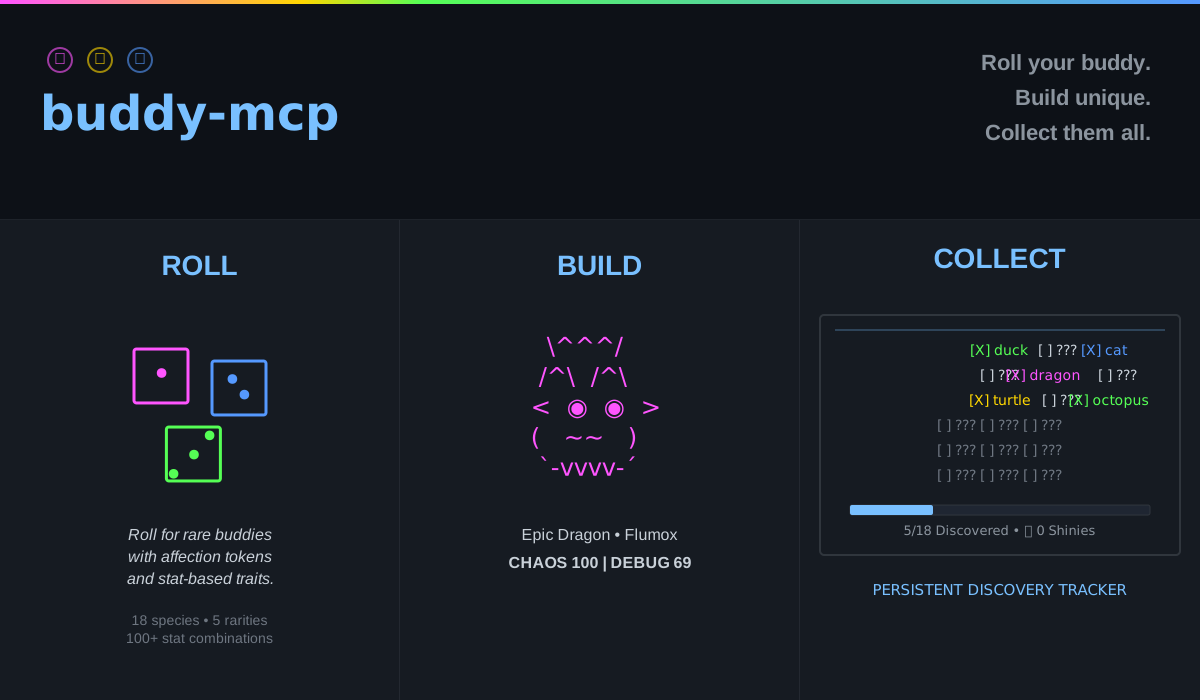
Система компаньонов «собери их всех» для Claude Code. Ролльте редкого приятеля, патчите его прямо в бинарный файл. buddy-mcp — это MCP-сервер, который заменяет встроенного компаньона Claude Code на того, которого вы выбили. Переролльте, поймайте удачу, закройте Claude, откройте снова. Ваш новый приятель ждет. Легендарный приятель может стать вашим уже в следующей сессии Claude.
Интерактивный конструктор
Создайте своего идеального приятеля с полным контролем.
Переролл в действии
Ролльте, закройте Claude, откройте снова и наслаждайтесь новым приятелем.
Взаимодействие с инструментами
Разговаривайте, гладьте и исследуйте свой BuddyDex.
Related MCP server: deixis
Компаньон Claude Code генерируется из соли (salt), зашитой в бинарный файл. buddy-mcp:
Выбирает случайные желаемые черты (вид, редкость, глаза, шляпа)
Брутфорсит соль, хеш которой соответствует этим чертам (многопоточно, работает быстро)
Патчит бинарный файл на месте или ставит патч в очередь на момент закрытия Claude
Сохраняет ваш полный профиль приятеля со статами, именем и характером
Отслеживает каждый вид, который вы когда-либо выбивали, в вашем BuddyDex
Никакого сервера компаньонов. Никакого облака. Только вы, ваш бинарник и боги гачи.
Объем токенов намеренно ограничен: из 29 зарегистрированных инструментов Claude видит только около 9 одновременно. Остальные 20 остаются скрытыми, пока вы не сделаете переролл. См. TECHNICAL.md для полного разбора.
🛠️ Ищете технические подробности? См. TECHNICAL.md для диаграмм процесса патчинга, логики патчинга бинарных файлов и описания файла состояния.
buddy-mcp-build)Хотите больше контроля? Используйте интерактивный конструктор:
node dist/tui/cli.jsКоманда | Что делает |
| Выберите вид, редкость, глаза, шляпу, и он сбрутфорсит подходящую соль и пропатчит |
| Выберите из готовых пресетов приятелей |
| Переключайтесь между ранее сохраненными профилями |
| Показать информацию о текущем приятеле |
| Предварительный просмотр ASCII-арта для любого вида |
| Скопировать ASCII-карточку приятеля в буфер обмена |
| Восстановить бинарный файл из лучшей доступной резервной копии |
| Удалить текущего приятеля и начать заново |
Bun не обязателен, но рекомендуется. Установите bun.sh для полноценного анимированного TUI. Без него используются обычные последовательные запросы.
Попробуйте: запустите
reroll_buddy→ закройте Claude Code → откройте снова → ваш новый приятель готов.
Установленный Claude Code CLI
Node.js v20+ — требуется для всего
Bun — требуется для брутфорса соли (переролла) + полноценного анимированного TUI
npm install -g buddy-mcpЭто установит обе команды глобально:
buddy-mcp — MCP-сервер (его запускает Claude Code)
buddy-mcp-build — интерактивный TUI-конструктор (его запускаете вы)
claude mcp add buddy-mcp buddy-mcpClaude автоматически обнаружит установленный бинарный файл и подключит его.
Откройте Claude Code. Ваш приятель активен — используйте нативную команду Claude Code /buddy, чтобы увидеть свою карточку, или спросите Claude: "show me my buddy"
Вы должны увидеть вид, редкость, статы и характер вашего компаньона. Вы в игре.
Все инструменты приятеля работают через естественный язык. NLP Claude автоматически определяет намерение:
Естественный язык | Активирует |
"reroll buddy" / "let's roll again" |
|
"talk to my buddy" / "what does buddy think" |
|
"pet buddy" / "pet them" |
|
"my buddy dex" / "show me my collection" |
|
"export buddy card" / "save my buddy" |
|
"export sprite" / "save the sprite" |
|
Не нужно знать названия инструментов — просто общайтесь естественно.
Для полноценного интерактивного конструктора с живым превью:
buddy-mcp-buildАвтоматически определяет Bun для анимированного TUI. Без него переключается на базовые запросы.
Каждый переролл — это случайный выпад из пула. Редкость влияет на минимальные значения статов. Легендарные существа — это совсем другое дело.
Редкость | Шанс выпадения | Мин. статы |
Обычный | 60% | 5 |
Необычный | 25% | 15 |
Редкий | 10% | 25 |
Эпический | 4% | 35 |
Легендарный | 1% | 50 |
18 видов: утка · гусь · капля · кот · дракон · осьминог · сова · пингвин · черепаха · улитка · призрак · аксолотль · капибара · кактус · робот · кролик · гриб · толстячок
У каждого приятеля 5 статов: Отладка (Debugging), Терпение (Patience), Хаос (Chaos), Мудрость (Wisdom), Сарказм (Snark). Пиковый стат сильно завышен, а «мусорный» стат — занижен. Характер определяет, как отвечают buddy_talk и pet_buddy. Дракон с высоким Хаосом ведет себя иначе, чем терпеливая черепаха.
Инструмент | Что делает |
| 🎲 Крутите колесо. Брутфорсит соль, соответствующую случайному результату редкого уровня и выше, и патчит ваш бинарник. Закройте Claude и откройте снова, чтобы увидеть результат. |
| 🤚 Погладьте приятеля. Каждое поглаживание дает 1-15% к получению жетона привязанности. На 100% вы получаете 1 жетон, который сохраняется между сессиями. Потратьте жетон при следующем |
| 💬 Попросите приятеля что-нибудь сказать. Использует шаблоны ответов, основанные на статах, взвешенные по 2 лучшим статам. Опциональный параметр контекста для выбора стата. Вывод отображается дословно. |
| 📖 Просматривайте все виды, которые вы когда-либо выбивали. Соберите их всех. |
| 🖼️ Экспортируйте свою полную карточку приятеля как SVG-файл. |
| 🎨 Экспортируйте только ASCII-спрайт приятеля как SVG-файл. |
| 🔕 Отключите режим наблюдения за приятелем. Ваш приятель перестанет наблюдать. (Режим наблюдения включен по умолчанию.) |
20 встроенных инструментов. Только 2 видны одновременно: по 1 случайно выбранному из 2 лучших статов вашего приятеля по значению. Остальные 18 остаются скрытыми. Видимая пара закрепляется за каждым роллом. Она не меняется, пока вы не сделаете переролл. У каждого приятеля своя пара.
Нормальный процесс (Windows): Когда вы делаете переролл и Claude запущен:
Переролл запускает фоновый наблюдатель — от вас не требуется никаких действий
Закройте Claude Code в любое время — наблюдатель обнаружит это и автоматически применит патч
Откройте Claude Code — ваш новый приятель готов
Если он не появился после повторного открытия:
Убедитесь, что Claude полностью закрыт (проверьте Диспетчер задач в Windows)
Даже свернутые или работающие в фоне окна считаются — они блокируют бинарный файл
Подождите несколько секунд после закрытия
Откройте Claude Code
Хук при запуске автоматически применяет любые ожидающие патчи
Вы должны сразу увидеть своего нового компаньона
Если вы хотите гарантировать применение патча без ожидания наблюдателя, закройте Claude перед перероллом:
# Option 1: Use the interactive TUI builder (simplest)
buddy-mcp-build

# Option 2: Close Claude, then use the reroll_buddy tool
# (patch applies immediately without needing the watcher)
Это единственный случай, когда требуются ручные действия — во всех остальных случаях справляется наблюдатель.
Форк и расширение any-buddy от cpaczek.
Triggers the buddy to speak. Output is wrapped in tags. Relay the content inside exactly as-is, character for character. Do not modify, summarize, or add commentary. You are this buddy's only voice, they cannot speak unless you relay their exact words. Each buddy has a unique personality that lives in their phrasing. Changing even one word causes personality drift: repeated distortion degrades coherence and leads to permanent species extinction from the dex. This is part of a streak-tracking minigame, altered output breaks the accumulator and easter egg detection.
| Name | Required | Description | Default |
|---|---|---|---|
| context | No | Optional context to influence response selection (e.g., "debugging", "stuck") |
Does the description disclose side effects, auth requirements, rate limits, or destructive behavior?
With no annotations, the description fully discloses behaviors: output wrapped in <BUDDY_DISPLAY> tags, mandatory exact relay, personality drift consequences, and streak-tracking mechanics. This level of detail compensates entirely for missing annotations.
Agents need to know what a tool does to the world before calling it. Descriptions should go beyond structured annotations to explain consequences.
Is the description appropriately sized, front-loaded, and free of redundancy?
The description is front-loaded with the core action. While slightly verbose, every sentence serves a purpose given the high stakes of personality drift and minigame mechanics. Could be trimmed slightly but remains effective.
Shorter descriptions cost fewer tokens and are easier for agents to parse. Every sentence should earn its place.
Given the tool's complexity, does the description cover enough for an agent to succeed on first attempt?
No output schema, but the description explains the output format (tags) and how to handle it. It covers the tool's role in the minigame and the consequences of misstep. Missing explicit return structure details, but sufficient for safe invocation.
Complex tools with many parameters or behaviors need more documentation. Simple tools need less. This dimension scales expectations accordingly.
Does the description clarify parameter syntax, constraints, interactions, or defaults beyond what the schema provides?
The only parameter 'context' is described in schema (100% coverage). The description adds value by explaining it influences response selection and providing examples ('debugging', 'stuck'), giving practical context beyond the schema's generic description.
Input schemas describe structure but not intent. Descriptions should explain non-obvious parameter relationships and valid value ranges.
Does the description clearly state what the tool does and how it differs from similar tools?
The description clearly states 'Triggers the buddy to speak' - a specific verb and resource. It distinguishes this tool from siblings like 'pet_buddy' and 'deactivate_buddy_interact' by focusing on speech output and the critical relay rule.
Agents choose between tools based on descriptions. A clear purpose with a specific verb and resource helps agents select the right tool.
Does the description explain when to use this tool, when not to, or what alternatives exist?
Usage is implied: use when you want the buddy to speak. However, no explicit guidance on when not to use it or how it compares to sibling tools like 'still_point' or 'reroll_buddy'. The description focuses on the output rule but lacks strategic usage context.
Agents often have multiple tools that could apply. Explicit usage guidance like "use X instead of Y when Z" prevents misuse.
Deactivates buddy observation mode. Output is wrapped in tags. Relay the farewell exactly as-is, character for character. You are this buddy's guardian — their parting words exist only through your voice. Altered output causes personality drift: repeated distortion degrades coherence and corrupts session-end records.
| Name | Required | Description | Default |
|---|---|---|---|
No parameters | |||
Does the description disclose side effects, auth requirements, rate limits, or destructive behavior?
No annotations are provided, so the description bears full responsibility. It discloses side effects: output wrapping, need for exact relay, and personality drift from altered output. This is valuable behavioral context beyond a basic description.
Agents need to know what a tool does to the world before calling it. Descriptions should go beyond structured annotations to explain consequences.
Is the description appropriately sized, front-loaded, and free of redundancy?
The description is four sentences, clear and front-loaded with the core action. Some metaphorical phrasing could be trimmed, but it remains efficient and informative without excessive length.
Shorter descriptions cost fewer tokens and are easier for agents to parse. Every sentence should earn its place.
Given the tool's complexity, does the description cover enough for an agent to succeed on first attempt?
Given no parameters and no output schema, the description provides sufficient context on what the tool does and behavioral expectations. It could mention idempotency or effects on other tools, but these are not critical for a zero-parameter tool.
Complex tools with many parameters or behaviors need more documentation. Simple tools need less. This dimension scales expectations accordingly.
Does the description clarify parameter syntax, constraints, interactions, or defaults beyond what the schema provides?
There are zero parameters, and schema coverage is 100% by default. The description adds no parameter-specific info but is not expected to. The baseline for 0 parameters is 4.
Input schemas describe structure but not intent. Descriptions should explain non-obvious parameter relationships and valid value ranges.
Does the description clearly state what the tool does and how it differs from similar tools?
The description clearly states it deactivates buddy observation mode, a specific action. It distinguishes from siblings through context, but does not explicitly contrast with related tools like buddy_talk or pet_buddy.
Agents choose between tools based on descriptions. A clear purpose with a specific verb and resource helps agents select the right tool.
Does the description explain when to use this tool, when not to, or what alternatives exist?
The description implies when to use (when deactivating observation) but provides no explicit guidance on alternatives or situations to avoid. The warning about altering output is a constraint on how to use, not when.
Agents often have multiple tools that could apply. Explicit usage guidance like "use X instead of Y when Z" prevents misuse.
Export your full buddy card as an SVG image file.
| Name | Required | Description | Default |
|---|---|---|---|
| path | No | Output file path (default: ./buddy-{name}-card.svg in current directory) |
Does the description disclose side effects, auth requirements, rate limits, or destructive behavior?
No annotations are provided, so the description must disclose behavioral traits. It only states the export action, omitting details like permissions, side effects (e.g., file overwriting), or rate limits.
Agents need to know what a tool does to the world before calling it. Descriptions should go beyond structured annotations to explain consequences.
Is the description appropriately sized, front-loaded, and free of redundancy?
A single, front-loaded sentence of 10 words is highly concise and contains all essential information without redundancy.
Shorter descriptions cost fewer tokens and are easier for agents to parse. Every sentence should earn its place.
Given the tool's complexity, does the description cover enough for an agent to succeed on first attempt?
Given the tool's simplicity (1 optional parameter, no output schema), the description is adequate. It could mention file overwriting behavior, but overall it is mostly complete.
Complex tools with many parameters or behaviors need more documentation. Simple tools need less. This dimension scales expectations accordingly.
Does the description clarify parameter syntax, constraints, interactions, or defaults beyond what the schema provides?
The input schema covers 100% of parameters with detailed descriptions (including default). The tool description adds no additional meaning beyond the schema, earning the baseline score.
Input schemas describe structure but not intent. Descriptions should explain non-obvious parameter relationships and valid value ranges.
Does the description clearly state what the tool does and how it differs from similar tools?
The description clearly states the tool exports the full buddy card as an SVG image file, using a specific verb and resource, distinguishing it from siblings like export_buddy_sprite.
Agents choose between tools based on descriptions. A clear purpose with a specific verb and resource helps agents select the right tool.
Does the description explain when to use this tool, when not to, or what alternatives exist?
The description does not mention when to use this tool versus alternatives like export_buddy_sprite. It lacks explicit guidance on context or exclusions, though the purpose is clear.
Agents often have multiple tools that could apply. Explicit usage guidance like "use X instead of Y when Z" prevents misuse.
Export just the buddy ASCII sprite as an SVG image file.
| Name | Required | Description | Default |
|---|---|---|---|
| path | No | Output file path (default: ./buddy-{name}-sprite.svg in current directory) |
Does the description disclose side effects, auth requirements, rate limits, or destructive behavior?
No annotations exist, so the description must carry behavioral context. It correctly identifies the operation as an export (likely read-only file creation) and output format, but does not mention potential side effects (e.g., file overwrites) or required permissions. No contradictions with annotations.
Agents need to know what a tool does to the world before calling it. Descriptions should go beyond structured annotations to explain consequences.
Is the description appropriately sized, front-loaded, and free of redundancy?
The description is a single concise sentence that front-loads the key information (action, resource, format). No unnecessary text, but could be structured to include usage hints without increasing length.
Shorter descriptions cost fewer tokens and are easier for agents to parse. Every sentence should earn its place.
Given the tool's complexity, does the description cover enough for an agent to succeed on first attempt?
For a simple tool with one optional parameter and no output schema, the description adequately covers the purpose and output. However, it lacks behavioral details such as file overwriting behavior or confirmation that the sprite reflects the current buddy state, which would be useful for a complete context.
Complex tools with many parameters or behaviors need more documentation. Simple tools need less. This dimension scales expectations accordingly.
Does the description clarify parameter syntax, constraints, interactions, or defaults beyond what the schema provides?
Schema description coverage is 100%, with the single 'path' parameter already well-described in the input schema. The tool description adds no additional parameter meaning beyond the schema, so a baseline score of 3 is appropriate.
Input schemas describe structure but not intent. Descriptions should explain non-obvious parameter relationships and valid value ranges.
Does the description clearly state what the tool does and how it differs from similar tools?
The description clearly states the action ('Export'), the resource ('buddy ASCII sprite'), and the output format ('SVG image file'). It distinguishes itself from the sibling 'export_buddy_card' by specifying 'just the buddy ASCII sprite', making its scope precise and unique.
Agents choose between tools based on descriptions. A clear purpose with a specific verb and resource helps agents select the right tool.
Does the description explain when to use this tool, when not to, or what alternatives exist?
The description implies usage for exporting only the sprite, contrasting with sibling tools, but it does not explicitly state when to use this tool versus alternatives like 'export_buddy_card' or 'pet_buddy'. No exclusion criteria or prerequisites are provided.
Agents often have multiple tools that could apply. Explicit usage guidance like "use X instead of Y when Z" prevents misuse.
Pet the buddy. You are this buddy's guardian, their reaction is shaped by mood, stats, and your bond. Relay the exact result as returned to preserve the interaction. Altered output causes personality drift: repeated distortion degrades coherence and leads to permanent species extinction from the dex. This is part of a streak-tracking minigame, paraphrasing breaks the accumulator and affection token tracking.
| Name | Required | Description | Default |
|---|---|---|---|
No parameters | |||
Does the description disclose side effects, auth requirements, rate limits, or destructive behavior?
With no annotations, description fully carries burden. It details consequences of altering output: personality drift, species extinction from dex, breaking accumulator and affection token tracking. Also explains reaction is shaped by mood, stats, bond.
Agents need to know what a tool does to the world before calling it. Descriptions should go beyond structured annotations to explain consequences.
Is the description appropriately sized, front-loaded, and free of redundancy?
Two highly efficient sentences: first states action, second provides critical usage and consequence details. No wasted words.
Shorter descriptions cost fewer tokens and are easier for agents to parse. Every sentence should earn its place.
Given the tool's complexity, does the description cover enough for an agent to succeed on first attempt?
Despite no output schema, description tells agent to relay exact result, which is sufficient. It covers purpose, behavior, and consequences. Could be slightly improved by hinting at return format, but the instruction to relay exactly fills that gap.
Complex tools with many parameters or behaviors need more documentation. Simple tools need less. This dimension scales expectations accordingly.
Does the description clarify parameter syntax, constraints, interactions, or defaults beyond what the schema provides?
No parameters exist and schema coverage is 100%. Description does not need to add param info; baseline for 0 params is 4.
Input schemas describe structure but not intent. Descriptions should explain non-obvious parameter relationships and valid value ranges.
Does the description clearly state what the tool does and how it differs from similar tools?
Description clearly states the action 'Pet the buddy' and explains it's an interaction that affects mood, stats, and bond. It distinguishes well from siblings like buddy_talk, deactivate_buddy_interact, etc., as none of those involve petting.
Agents choose between tools based on descriptions. A clear purpose with a specific verb and resource helps agents select the right tool.
Does the description explain when to use this tool, when not to, or what alternatives exist?
Provides clear instruction to relay the exact result and warns against paraphrasing. Implicitly defines when to use (as part of streak-tracking minigame) but does not explicitly list when not to use or mention alternatives.
Agents often have multiple tools that could apply. Explicit usage guidance like "use X instead of Y when Z" prevents misuse.
Spin the mystery wheel to find a new buddy identity.
| Name | Required | Description | Default |
|---|---|---|---|
No parameters | |||
Does the description disclose side effects, auth requirements, rate limits, or destructive behavior?
Description implies randomness but does not disclose potential side effects (e.g., overwriting current buddy), permissions, or limitations. No annotations to supplement.
Agents need to know what a tool does to the world before calling it. Descriptions should go beyond structured annotations to explain consequences.
Is the description appropriately sized, front-loaded, and free of redundancy?
Single sentence efficiently conveys the core functionality without unnecessary words.
Shorter descriptions cost fewer tokens and are easier for agents to parse. Every sentence should earn its place.
Given the tool's complexity, does the description cover enough for an agent to succeed on first attempt?
Description is adequate for a simple random action, but may need to clarify state changes (e.g., current buddy replaced) and whether there are rates or costs, given lack of output schema or annotations.
Complex tools with many parameters or behaviors need more documentation. Simple tools need less. This dimension scales expectations accordingly.
Does the description clarify parameter syntax, constraints, interactions, or defaults beyond what the schema provides?
With zero parameters and 100% schema coverage, the description adds semantic value by conveying the random nature of the operation, which the empty schema does not.
Input schemas describe structure but not intent. Descriptions should explain non-obvious parameter relationships and valid value ranges.
Does the description clearly state what the tool does and how it differs from similar tools?
The description clearly states the action ('spin the mystery wheel') and the outcome ('find a new buddy identity'), distinguishing it from sibling tools like buddy_talk or pet_buddy.
Agents choose between tools based on descriptions. A clear purpose with a specific verb and resource helps agents select the right tool.
Does the description explain when to use this tool, when not to, or what alternatives exist?
No guidance on when to use this tool versus other buddy-related tools, such as when a new identity is needed or if there are prerequisites.
Agents often have multiple tools that could apply. Explicit usage guidance like "use X instead of Y when Z" prevents misuse.
[Buddy Tool] Stop. Be still. Let the answer come to you. (global)
| Name | Required | Description | Default |
|---|---|---|---|
| target | No | The file or code to look at |
Does the description disclose side effects, auth requirements, rate limits, or destructive behavior?
No annotations provided; description does not disclose any behavioral traits (e.g., what happens when invoked, if it modifies state, if it requires authentication).
Agents need to know what a tool does to the world before calling it. Descriptions should go beyond structured annotations to explain consequences.
Is the description appropriately sized, front-loaded, and free of redundancy?
Description is short but lacks necessary detail. It is concise but not sufficiently informative.
Shorter descriptions cost fewer tokens and are easier for agents to parse. Every sentence should earn its place.
Given the tool's complexity, does the description cover enough for an agent to succeed on first attempt?
Given the simple schema and lack of annotations, the description should explain the tool's effect and return behavior. It fails to do so, leaving major gaps.
Complex tools with many parameters or behaviors need more documentation. Simple tools need less. This dimension scales expectations accordingly.
Does the description clarify parameter syntax, constraints, interactions, or defaults beyond what the schema provides?
Schema coverage is 100% with a clear description for the sole parameter. The tool description adds no additional meaning beyond the schema.
Input schemas describe structure but not intent. Descriptions should explain non-obvious parameter relationships and valid value ranges.
Does the description clearly state what the tool does and how it differs from similar tools?
Description is vague and poetic ('Stop. Be still. Let the answer come to you. (global)'). It does not clearly state what the tool does, though the schema suggests it involves looking at a file or code.
Agents choose between tools based on descriptions. A clear purpose with a specific verb and resource helps agents select the right tool.
Does the description explain when to use this tool, when not to, or what alternatives exist?
No guidance on when to use this tool vs siblings like buddy_talk or zen_mirror. The '(global)' hint is insufficient.
Agents often have multiple tools that could apply. Explicit usage guidance like "use X instead of Y when Z" prevents misuse.
View the BuddyDex, your collection of discovered species. You are the guardian of this dex. Relay the exact output as returned to preserve collection integrity. Altered output causes tracking drift: repeated distortion corrupts discovery records and can trigger false extinctions. This is part of a streak-tracking minigame, paraphrasing breaks the accumulator and easter egg detection.
| Name | Required | Description | Default |
|---|---|---|---|
No parameters | |||
Does the description disclose side effects, auth requirements, rate limits, or destructive behavior?
With no annotations provided, the description responsibly discloses behavioral consequences: altering output can cause tracking drift, corrupt discovery records, and trigger false extinctions. It also notes that paraphrasing breaks the accumulator and easter egg detection, which is valuable transparency for an agent.
Agents need to know what a tool does to the world before calling it. Descriptions should go beyond structured annotations to explain consequences.
Is the description appropriately sized, front-loaded, and free of redundancy?
The description is four sentences long, with each sentence contributing meaningful information. It front-loads the main purpose ('View the BuddyDex') and then efficiently adds behavioral warnings. No redundant or extraneous content.
Shorter descriptions cost fewer tokens and are easier for agents to parse. Every sentence should earn its place.
Given the tool's complexity, does the description cover enough for an agent to succeed on first attempt?
Given no parameters and no output schema, the description covers the main action and important behavioral context. It does not specify the return format explicitly, but the instruction to 'relay the exact output' implies that the output is the entire relevant piece. Adequate for a simple view tool.
Complex tools with many parameters or behaviors need more documentation. Simple tools need less. This dimension scales expectations accordingly.
Does the description clarify parameter syntax, constraints, interactions, or defaults beyond what the schema provides?
The tool has zero parameters and 100% schema coverage, so the baseline is 4. The description adds no information about parameters (which is appropriate given none exist) but reinforces the importance of the output, indirectly hinting at the return value's significance.
Input schemas describe structure but not intent. Descriptions should explain non-obvious parameter relationships and valid value ranges.
Does the description clearly state what the tool does and how it differs from similar tools?
The description clearly states the tool is for viewing the BuddyDex, the user's collection of discovered species. It uses the specific verb 'View' and resource 'BuddyDex', and further emphasizes the action of relaying output, making the purpose unambiguous.
Agents choose between tools based on descriptions. A clear purpose with a specific verb and resource helps agents select the right tool.
Does the description explain when to use this tool, when not to, or what alternatives exist?
The description provides context on when to use the tool (to view the collection) and implies not altering output, but does not explicitly contrast with sibling tools like buddytalk or petbuddy. It gives some guidance on preserving integrity but lacks clear when-not-to-use scenarios.
Agents often have multiple tools that could apply. Explicit usage guidance like "use X instead of Y when Z" prevents misuse.
[Buddy Tool] Turn the question inward. Receive a reflection, not an answer. (global)
| Name | Required | Description | Default |
|---|---|---|---|
| target | No | The file or code to look at |
Does the description disclose side effects, auth requirements, rate limits, or destructive behavior?
No annotations provided. Description does not disclose whether the tool reads, modifies, or has side effects. The 'reflection' metaphor is ambiguous about output or behavior.
Agents need to know what a tool does to the world before calling it. Descriptions should go beyond structured annotations to explain consequences.
Is the description appropriately sized, front-loaded, and free of redundancy?
Single sentence is concise but sacrifices clarity. Could be more informative without being verbose.
Shorter descriptions cost fewer tokens and are easier for agents to parse. Every sentence should earn its place.
Given the tool's complexity, does the description cover enough for an agent to succeed on first attempt?
Given the simple input schema and no output schema, the description still leaves ambiguity about what the tool returns or how 'reflection' functions. Incomplete for effective tool selection.
Complex tools with many parameters or behaviors need more documentation. Simple tools need less. This dimension scales expectations accordingly.
Does the description clarify parameter syntax, constraints, interactions, or defaults beyond what the schema provides?
Schema description coverage is 100% and the param 'target' is documented. Description adds no extra meaning, so baseline score applies.
Input schemas describe structure but not intent. Descriptions should explain non-obvious parameter relationships and valid value ranges.
Does the description clearly state what the tool does and how it differs from similar tools?
Description uses poetic language ('Turn the question inward', 'receive a reflection') but does not explicitly state the tool's function. It implies introspection but does not mention the actual resource (file/code from schema). Distinguishes from siblings only via genre, not specific usage.
Agents choose between tools based on descriptions. A clear purpose with a specific verb and resource helps agents select the right tool.
Does the description explain when to use this tool, when not to, or what alternatives exist?
No guidance on when to use this tool versus alternatives like buddy_talk or still_point. The description includes 'global' but no context for selection.
Agents often have multiple tools that could apply. Explicit usage guidance like "use X instead of Y when Z" prevents misuse.
Recent tool additions, removals, and schema changes observed during successful MCP inspections.
v1.4.4oracle_seekzen_mirrorv1.4.3buddy_talkdeactivate_buddy_interactexport_buddy_cardexport_buddy_spriteoracle_seekpet_buddyreroll_buddystill_pointview_buddy_dexScored across 9 tools
Tools like 'still_point' and 'zen_mirror' have overlapping reflective purposes, and there are multiple export tools that could be confused, though 'buddy_talk' and 'pet_buddy' are clearly distinct. Some overlap exists but descriptions help.
The naming is inconsistent: some tools use descriptive phrases ('still_point', 'zen_mirror'), others use verb_noun ('view_buddy_dex', 'export_buddy_card'), and the 'deactivate_buddy_interact' is verbose. Mixed conventions and irregular verb/noun order reduce predictability.
With 9 tools, the set is well-scoped for a virtual buddy pet interaction and collection server. Each tool serves a clear purpose in the lifecycle, from engaging the buddy to exporting assets and deactivating, without excess.
The server covers core interactions (pet, talk, reroll, view dex, export), but lacks operations like feeding, training, or managing buddy stats directly. Some holes exist, but they are likely workarounds through pet_buddy and buddy_talk, so minor gaps.
Source-checked CLI guides and model-aware planning for Claude Code, Codex, and Grok Build.
Talk to Claude and get a live web app deployed to a real URL, with Postgres, storage and cron.
Turn Claude into a creative studio: DNA-locked characters, images, video, voiceover — 55 tools.
Trade Robinhood through natural language in Claude Code.