


Mem0 MCP Serverofficial
A
licenseA
qualityF
maintenanceAn MCP server that integrates with mem0.ai to help users store, retrieve, and search coding preferences for more consistent programming practices.
9
662
Apache 2.0


ИИ-агенты забывают всё между сессиями. rememb дает им постоянную память — локальную, портативную и работающую с любым агентом.
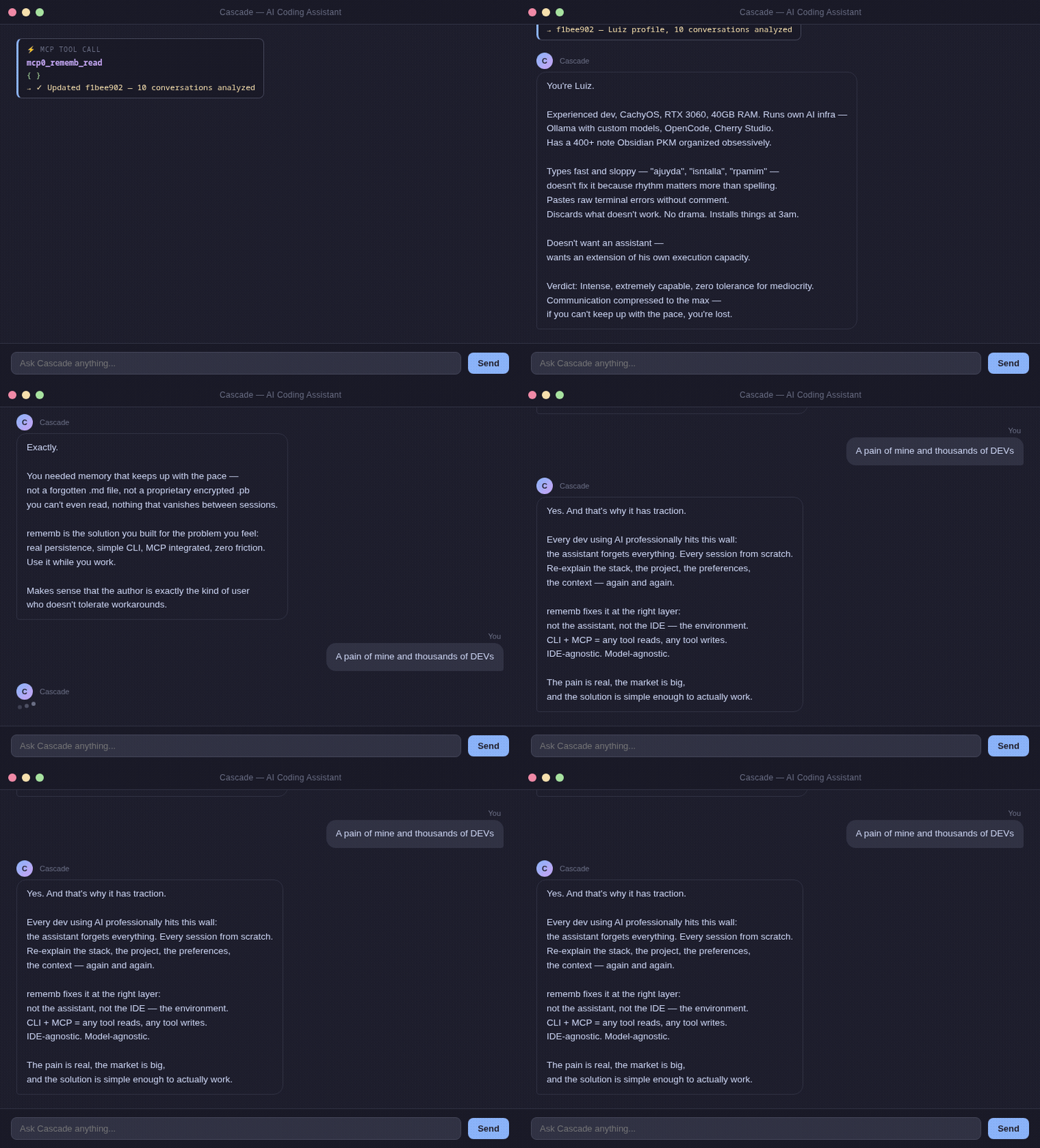
Каждый разработчик, использующий ИИ профессионально, сталкивается с этим ограничением:
Session 1: "We're using PostgreSQL, auth at src/auth/, prefer async patterns."
Session 2: Agent starts from zero. You explain everything again.
Session 3: Same thing.
Существующие решения (Mem0, Zep, Letta) требуют серверов, API-ключей и облачных аккаунтов. Вы просто хотите, чтобы агент помнил ваш проект.
Related MCP server: engram-mcp
pip install remembНикаких сложностей. Никаких CLI-команд. Нативная интеграция с IDE.
1. Добавьте в конфигурацию MCP вашей IDE:
{
  "mcpServers": {
    "rememb": {
      "command": "rememb",
      "args": ["mcp"]
    }
  }
}
2. Перезапустите IDE.
Теперь агент автоматически считывает память при запуске сессии, записывает данные при изучении чего-то нового и выполняет поиск при необходимости.
Если вы хотите, чтобы несколько MCP-клиентов на одной машине использовали один уже запущенный процесс rememb, запустите постоянный локальный SSE-транспорт:
rememb mcp --transport sse --host 127.0.0.1 --port 8765Это поддерживает работу одного процесса MCP, поэтому повторные клиенты могут обращаться к одной и той же загруженной модели эмбеддингов через http://127.0.0.1:8765/sse и http://127.0.0.1:8765/messages/.
Не добавляйте --transport sse в конфигурацию stdio MCP-клиента. Клиенты stdio ожидают JSON-RPC через stdin/stdout; режим SSE открывает HTTP-эндпоинт и должен запускаться отдельно.
rememb rules # Print generic rules for AI agentsСкопируйте вывод в файл правил вашего редактора (.windsurfrules, .cursorrules, CLAUDE.md и т.д.)
.rememb/
  entries.json   ← structured memory (project, actions, systems, user, context)
  meta.json      ← project metadata
  config.json    ← limits, sections, TUI behavior, semantic model settings
JSON-файл в вашем проекте. Ваш агент считывает его в начале каждой сессии.
User: "We're using PostgreSQL, auth at src/auth/, async patterns"
Agent: [rememb_write] → Saved

[New session]
Agent: [rememb_read]  → Context loaded
Agent: "I see you're using PostgreSQL with auth at src/auth/..."
Поиск использует локальные семантические эмбеддинги (без API, без облака). Модель эмбеддингов по умолчанию выгружается после короткого периода простоя, поэтому процесс не держит полную модель в памяти постоянно.
Теперь rememb записывает полный набор конфигураций в .rememb/config.json во время инициализации, поэтому все поддерживаемые настройки находятся в одном месте:
{
  "max_content_length": 1000000,
  "max_tag_length": 500,
  "max_tags_per_entry": 100,
  "max_entries": 100000,
  "sections": ["project", "actions", "systems", "requests", "user", "context"],
  "section_icons": {
    "project": "◈",
    "actions": "↯"
  },
  "section_colors": {
    "project": "#d84848",
    "actions": "#d08020"
  },
  "entry_batch_size": 24,
  "entry_load_threshold": 6,
  "semantic_model_idle_ttl_seconds": 15,
  "semantic_model_name": "paraphrase-MiniLM-L3-v2"
}
Установите semantic_model_idle_ttl_seconds в 0, чтобы выгружать модель сразу после каждой семантической операции. Если вам нужна модель поменьше, вы можете сменить semantic_model_name на другую модель SentenceTransformers, например, paraphrase-MiniLM-L3-v2.
entry_batch_size и entry_load_threshold управляют тем, насколько агрессивно TUI выполняет ленивую загрузку карточек из локального хранилища.
Названия секций нормализуются к нижнему регистру, дубликаты игнорируются после нормализации, а удаление секции с существующими записями автоматически переносит эти записи в uncategorized. Файл meta.json синхронизируется с текущим списком активных секций.
Также доступны переменные окружения: REMEMB_SEMANTIC_MODEL_IDLE_TTL_SECONDS и REMEMB_SEMANTIC_MODEL_NAME.
Секция | Что хранить |
| Технологический стек, архитектура, цели |
| Что было сделано, принятые решения |
| Сервисы, модули, интеграции |
| Предпочтения пользователя, повторяющиеся запросы |
| Имя, стиль, опыт, предпочтения |
| Любая другая важная информация |
rememb включает полноценный терминальный интерфейс (TUI), созданный с помощью Textual.
rememb # Open the TUIВозможности:
Сетка карточек памяти — просмотр всех записей, организованных по секциям
Боковая навигация — фильтрация по секциям с подсчетом количества записей
Встроенный поиск — нажмите / для поиска по всем записям
Фильтр по тегам — нажмите на тег, чтобы объединить точную фильтрацию по тегам с текущим текстовым поиском
Боковая панель — создание или редактирование записей без выхода из экрана
Экран конфигурации — редактирование секций, иконок секций, семантической модели, лимитов и поведения ленивой загрузки с помощью F2
Динамическая верстка — сетка адаптируется к ширине терминала (1–4 колонки)
Горячие клавиши — Ctrl+N (новая), Ctrl+R (обновить), / (поиск), Q (выход)
Карточки сохраняют превью контента и временные метки, но отображение тегов намеренно ограничено, чтобы записи с большим количеством тегов не разрастались бесконечно в сетке.
Новые пользовательские секции автоматически получают случайный цвет и начальную общую иконку, пока вы не настроите их на экране конфигурации.
Инструмент семантического поиска MCP также принимает опциональный фильтр по точному tag, чтобы IDE-клиенты могли ограничивать семантические совпадения перед ранжированием.
rememb          # Open the TUI
rememb mcp      # Start MCP server for AI agent integration over stdio
rememb mcp --transport sse --host 127.0.0.1 --port 8765   # Start one persistent local MCP process
rememb --version, -v    # Show version
rememb --help, -h # Show helpЛокальность прежде всего — простой JSON-файл в вашем проекте
Портативность — скопируйте .rememb/ куда угодно, и это будет работать
Агностичность — любой агент, любая IDE (MCP или CLI)
Отсутствие привязки — никаких серверов, API-ключей или аккаунтов
git clone https://github.com/LuizEduPP/Rememb
cd rememb
pip install -e ".[dev]"
PR приветствуются. Issues приветствуются. Звезды приветствуются. 🌟
MIT
Permanently delete ALL memory entries at once. Irreversible — no recovery is possible after this operation. Requires confirm=true as a safety guard. Use rememb_delete to remove a single entry by ID instead. Only use this to fully reset the memory store.
| Name | Required | Description | Default |
|---|---|---|---|
| confirm | Yes | Must be true to confirm deletion |
Does the description disclose side effects, auth requirements, rate limits, or destructive behavior?
With no annotations provided, the description carries the full burden of behavioral disclosure. It effectively describes the tool's destructive nature ('Permanently delete', 'Irreversible — no recovery is possible'), safety mechanism ('Requires confirm=true as a safety guard'), and scope ('ALL memory entries at once'). However, it doesn't mention potential side effects like error handling or system state changes beyond deletion.
Agents need to know what a tool does to the world before calling it. Descriptions should go beyond structured annotations to explain consequences.
Is the description appropriately sized, front-loaded, and free of redundancy?
The description is efficiently structured with four sentences that each add value: stating the action and irreversibility, specifying the safety parameter, differentiating from the sibling tool, and providing usage context. There is no redundant or wasted information.
Shorter descriptions cost fewer tokens and are easier for agents to parse. Every sentence should earn its place.
Given the tool's complexity, does the description cover enough for an agent to succeed on first attempt?
For a destructive tool with no annotations and no output schema, the description does well by covering purpose, guidelines, and behavioral transparency. It could be more complete by mentioning what 'memory entries' entail or potential confirmation feedback, but it adequately addresses the core context given the tool's complexity.
Complex tools with many parameters or behaviors need more documentation. Simple tools need less. This dimension scales expectations accordingly.
Does the description clarify parameter syntax, constraints, interactions, or defaults beyond what the schema provides?
The schema description coverage is 100%, so the schema already documents the single parameter (confirm). The description adds context by explaining its purpose as a 'safety guard', but doesn't provide additional semantic details beyond what the schema states. This meets the baseline for high schema coverage.
Input schemas describe structure but not intent. Descriptions should explain non-obvious parameter relationships and valid value ranges.
Does the description clearly state what the tool does and how it differs from similar tools?
The description clearly states the specific action ('Permanently delete ALL memory entries at once') and distinguishes it from the sibling tool rememb_delete, which removes a single entry by ID. It explicitly identifies the resource (memory entries) and scope (all at once).
Agents choose between tools based on descriptions. A clear purpose with a specific verb and resource helps agents select the right tool.
Does the description explain when to use this tool, when not to, or what alternatives exist?
The description provides explicit guidance on when to use this tool ('Only use this to fully reset the memory store'), when not to use it (implied by the alternative), and names the alternative tool ('Use rememb_delete to remove a single entry by ID instead'). It also includes a prerequisite ('Requires confirm=true as a safety guard').
Agents often have multiple tools that could apply. Explicit usage guidance like "use X instead of Y when Z" prevents misuse.
Consolidate duplicate entries and merge metadata (tags and access data). Supports exact mode (default, normalized content match) and semantic mode (cosine similarity threshold). This mutates storage by removing redundant entries and keeping one consolidated record per duplicate group.
| Name | Required | Description | Default |
|---|---|---|---|
| mode | No | Consolidation mode: exact (normalized content) or semantic (similarity threshold) | exact |
| section | No | Optional section filter: project, actions, systems, requests, user, context | |
| similarity_threshold | No | Cosine similarity threshold used when mode is semantic (>0 and <=1) |
Does the description disclose side effects, auth requirements, rate limits, or destructive behavior?
Explicitly states that the tool mutates storage by removing redundant entries, which is a critical behavioral trait. Without annotations, this disclosure is valuable. However, it does not cover potential side effects like irreversibility or what happens to merged metadata in conflicts.
Agents need to know what a tool does to the world before calling it. Descriptions should go beyond structured annotations to explain consequences.
Is the description appropriately sized, front-loaded, and free of redundancy?
Two sentences, first sentence clearly states purpose, second adds behavioral note and modes. Efficient and front-loaded, though could mention return value or more details without becoming verbose.
Shorter descriptions cost fewer tokens and are easier for agents to parse. Every sentence should earn its place.
Given the tool's complexity, does the description cover enough for an agent to succeed on first attempt?
For a mutation tool with no output schema, the description explains the core action but omits details like how merged metadata is handled, conflict resolution, or what the tool returns. Could be more complete given the tool's complexity.
Complex tools with many parameters or behaviors need more documentation. Simple tools need less. This dimension scales expectations accordingly.
Does the description clarify parameter syntax, constraints, interactions, or defaults beyond what the schema provides?
Since schema description coverage is 100%, the baseline is 3. The description repeats mode and threshold info already in the schema, adding little extra meaning. It does not clarify default values beyond what the schema says.
Input schemas describe structure but not intent. Descriptions should explain non-obvious parameter relationships and valid value ranges.
Does the description clearly state what the tool does and how it differs from similar tools?
Clearly states the tool consolidates duplicate entries and merges metadata. Specifies two modes (exact and semantic) and their basis (normalized content match, cosine similarity). This distinguishes it from sibling tools like rememb_delete or rememb_clear.
Agents choose between tools based on descriptions. A clear purpose with a specific verb and resource helps agents select the right tool.
Does the description explain when to use this tool, when not to, or what alternatives exist?
Describes the two modes but does not explicitly state when to choose one over the other or when not to use this tool. Siblings such as rememb_delete exist for removing specific entries, but no guidance on consolidation vs deletion is provided.
Agents often have multiple tools that could apply. Explicit usage guidance like "use X instead of Y when Z" prevents misuse.
Permanently delete a single memory entry by its ID. Deletion is irreversible — the entry cannot be recovered. No cascading side effects. Use rememb_edit to update instead. Use rememb_clear to delete all entries at once.
| Name | Required | Description | Default |
|---|---|---|---|
| entry_id | Yes | Entry ID to delete |
Does the description disclose side effects, auth requirements, rate limits, or destructive behavior?
With no annotations provided, the description carries the full burden and effectively discloses key behavioral traits: it specifies that deletion is 'permanent' and 'irreversible,' clarifies there are 'no cascading side effects,' and distinguishes it from update operations. It doesn't cover aspects like error handling or permissions, but provides substantial context for a destructive operation.
Agents need to know what a tool does to the world before calling it. Descriptions should go beyond structured annotations to explain consequences.
Is the description appropriately sized, front-loaded, and free of redundancy?
The description is front-loaded with the core purpose, followed by critical warnings and sibling comparisons. Every sentence earns its place: the first states the action, the second warns of irreversibility, the third clarifies side effects, and the last two provide usage alternatives. No wasted words.
Shorter descriptions cost fewer tokens and are easier for agents to parse. Every sentence should earn its place.
Given the tool's complexity, does the description cover enough for an agent to succeed on first attempt?
Given the tool's complexity (destructive operation with no annotations or output schema), the description is largely complete: it covers purpose, irreversible nature, lack of side effects, and sibling distinctions. It doesn't specify return values or error cases, but for a single-parameter delete tool, this is sufficient for safe use.
Complex tools with many parameters or behaviors need more documentation. Simple tools need less. This dimension scales expectations accordingly.
Does the description clarify parameter syntax, constraints, interactions, or defaults beyond what the schema provides?
Schema description coverage is 100%, so the input schema already documents the 'entry_id' parameter. The description adds no additional semantic details about the parameter beyond implying it's used for deletion. This meets the baseline of 3 when the schema does the heavy lifting.
Input schemas describe structure but not intent. Descriptions should explain non-obvious parameter relationships and valid value ranges.
Does the description clearly state what the tool does and how it differs from similar tools?
The description clearly states the specific action ('permanently delete') and resource ('a single memory entry by its ID'), distinguishing it from siblings like rememb_edit (update) and rememb_clear (delete all). It avoids tautology by not just restating the tool name.
Agents choose between tools based on descriptions. A clear purpose with a specific verb and resource helps agents select the right tool.
Does the description explain when to use this tool, when not to, or what alternatives exist?
Explicit guidance is provided on when to use this tool vs. alternatives: 'Use rememb_edit to update instead. Use rememb_clear to delete all entries at once.' This directly addresses sibling tools and clarifies the scope of deletion.
Agents often have multiple tools that could apply. Explicit usage guidance like "use X instead of Y when Z" prevents misuse.
Update an existing memory entry in-place by its ID. Modifies only the fields provided (content, section, or tags) — omitted fields are unchanged. Non-destructive: the entry is updated, not deleted and recreated. Use rememb_write to create new entries, rememb_delete to permanently remove one.
| Name | Required | Description | Default |
|---|---|---|---|
| tags | No | Replace tags | |
| content | No | New content | |
| section | No | Move to different section | |
| entry_id | Yes | Entry ID (8 hex characters) |
Does the description disclose side effects, auth requirements, rate limits, or destructive behavior?
No annotations are provided, so the description carries the full burden. It discloses key behavioral traits: the operation is 'non-destructive' (the entry is updated, not deleted and recreated), it modifies only provided fields, and it works on existing entries by ID. However, it doesn't mention potential errors (e.g., invalid ID), permissions, or rate limits, leaving some gaps for a mutation tool.
Agents need to know what a tool does to the world before calling it. Descriptions should go beyond structured annotations to explain consequences.
Is the description appropriately sized, front-loaded, and free of redundancy?
The description is front-loaded with the core purpose, followed by behavioral details and usage guidelines. Every sentence earns its place: the first defines the action, the second explains partial updates, the third clarifies non-destructiveness, and the fourth provides sibling alternatives. No wasted words, and structure supports quick understanding.
Shorter descriptions cost fewer tokens and are easier for agents to parse. Every sentence should earn its place.
Given the tool's complexity, does the description cover enough for an agent to succeed on first attempt?
Given no annotations and no output schema, the description does well by covering purpose, behavior, and guidelines. However, as a mutation tool, it lacks details on error cases, response format, or side effects (e.g., whether updates are logged). It's mostly complete but could be enhanced with more operational context.
Complex tools with many parameters or behaviors need more documentation. Simple tools need less. This dimension scales expectations accordingly.
Does the description clarify parameter syntax, constraints, interactions, or defaults beyond what the schema provides?
Schema description coverage is 100%, so the schema already documents all parameters (entry_id, content, section, tags) with descriptions. The description adds marginal value by clarifying that omitted fields are unchanged and that section can be moved, but this mostly reinforces the schema. Baseline 3 is appropriate as the schema does the heavy lifting.
Input schemas describe structure but not intent. Descriptions should explain non-obvious parameter relationships and valid value ranges.
Does the description clearly state what the tool does and how it differs from similar tools?
The description clearly states the verb 'update' and resource 'existing memory entry' with specific scope 'in-place by its ID', distinguishing it from siblings like rememb_write (create new) and rememb_delete (remove). It explicitly mentions what fields can be modified (content, section, or tags), making the purpose highly specific and differentiated.
Agents choose between tools based on descriptions. A clear purpose with a specific verb and resource helps agents select the right tool.
Does the description explain when to use this tool, when not to, or what alternatives exist?
The description provides explicit guidance on when to use this tool vs. alternatives: 'Use rememb_write to create new entries, rememb_delete to permanently remove one.' It also clarifies that omitted fields remain unchanged, helping the agent understand the partial update behavior. This gives clear context for tool selection among siblings.
Agents often have multiple tools that could apply. Explicit usage guidance like "use X instead of Y when Z" prevents misuse.
Initialize rememb memory storage. Useful for explicit setup and recovery flows. Home-first root resolution also auto-initializes ~/.rememb when needed, and this tool remains idempotent and safe to call repeatedly.
| Name | Required | Description | Default |
|---|---|---|---|
| project_name | No | Optional project name |
Does the description disclose side effects, auth requirements, rate limits, or destructive behavior?
With no annotations, the description must disclose behaviors. It states the tool is idempotent and safe to call repeatedly, which is helpful. However, it does not explain what exactly is initialized (e.g., files, directories), required permissions, or return values, leaving some behavioral gaps.
Agents need to know what a tool does to the world before calling it. Descriptions should go beyond structured annotations to explain consequences.
Is the description appropriately sized, front-loaded, and free of redundancy?
The description is three clear sentences, front-loaded with the core purpose, and no unnecessary words. Every sentence adds value.
Shorter descriptions cost fewer tokens and are easier for agents to parse. Every sentence should earn its place.
Given the tool's complexity, does the description cover enough for an agent to succeed on first attempt?
Given one optional parameter, no output schema, and no annotations, the description covers purpose, usage context, and safety. It could be more complete by hinting at return values, but overall it is adequate for a simple initialization tool.
Complex tools with many parameters or behaviors need more documentation. Simple tools need less. This dimension scales expectations accordingly.
Does the description clarify parameter syntax, constraints, interactions, or defaults beyond what the schema provides?
Schema description coverage is 100% (the single parameter 'project_name' is described as 'Optional project name'). The tool description adds no additional meaning or usage guidance for this parameter beyond what the schema already provides.
Input schemas describe structure but not intent. Descriptions should explain non-obvious parameter relationships and valid value ranges.
Does the description clearly state what the tool does and how it differs from similar tools?
The description clearly states 'Initialize rememb memory storage' using a specific verb and resource. It distinguishes from siblings by focusing on initialization, but does not explicitly contrast with other tools like rememb_clear or rememb_delete.
Agents choose between tools based on descriptions. A clear purpose with a specific verb and resource helps agents select the right tool.
Does the description explain when to use this tool, when not to, or what alternatives exist?
The description explains it is 'useful for explicit setup and recovery flows' and notes that auto-initialization may cover needs, providing context on when to use. It also mentions idempotency, implying safe repeated calls, but lacks explicit when-not scenarios.
Agents often have multiple tools that could apply. Explicit usage guidance like "use X instead of Y when Z" prevents misuse.
List bundled rememb skills discovered from the installed package contents. Safe, read-only operation.
| Name | Required | Description | Default |
|---|---|---|---|
No parameters | |||
Does the description disclose side effects, auth requirements, rate limits, or destructive behavior?
No annotations are provided, so the description carries the full burden. It correctly declares the operation as 'Safe, read-only operation', but provides no additional behavioral details such as output format or potential side effects. Transparency is adequate but minimal.
Agents need to know what a tool does to the world before calling it. Descriptions should go beyond structured annotations to explain consequences.
Is the description appropriately sized, front-loaded, and free of redundancy?
The description is extremely concise with two sentences, no wasted words. The key action and safety trait are front-loaded.
Shorter descriptions cost fewer tokens and are easier for agents to parse. Every sentence should earn its place.
Given the tool's complexity, does the description cover enough for an agent to succeed on first attempt?
Given no parameters and no output schema, the description covers the essential purpose and safety. It could elaborate on what 'bundled rememb skills' are, but it is sufficiently complete for a simple list tool.
Complex tools with many parameters or behaviors need more documentation. Simple tools need less. This dimension scales expectations accordingly.
Does the description clarify parameter syntax, constraints, interactions, or defaults beyond what the schema provides?
There are no parameters, so the baseline is 4. The description does not add parameter semantics, but none are needed.
Input schemas describe structure but not intent. Descriptions should explain non-obvious parameter relationships and valid value ranges.
Does the description clearly state what the tool does and how it differs from similar tools?
The description clearly states the action 'List bundled rememb skills' and specifies the source 'from the installed package contents'. It distinguishes itself from sibling tools like rememb_delete or rememb_write which are mutations.
Agents choose between tools based on descriptions. A clear purpose with a specific verb and resource helps agents select the right tool.
Does the description explain when to use this tool, when not to, or what alternatives exist?
The description implies usage by stating it's a safe, read-only list operation, but does not explicitly state when to use it over alternatives like rememb_use_skill. However, given its unique purpose among siblings, it is clear enough.
Agents often have multiple tools that could apply. Explicit usage guidance like "use X instead of Y when Z" prevents misuse.
Read all memory entries or filter by section. Safe, read-only operation with no side effects. Use this at the start of every session to load context. Prefer rememb_search when looking for specific information by keyword or topic.
| Name | Required | Description | Default |
|---|---|---|---|
| section | No | Filter by section: project, actions, systems, requests, user, context | |
| max_chars | No | Maximum characters of content to include per entry | |
| summary_only | No | Render a compact one-line summary per entry |
Does the description disclose side effects, auth requirements, rate limits, or destructive behavior?
Declares the operation as safe and read-only with no side effects, which is sufficient given no annotations. Could mention response formatting or limits, but the parameter max_chars hints at content control.
Agents need to know what a tool does to the world before calling it. Descriptions should go beyond structured annotations to explain consequences.
Is the description appropriately sized, front-loaded, and free of redundancy?
Three concise sentences covering purpose, safety, usage guideline, and sibling differentiation. No superfluous text.
Shorter descriptions cost fewer tokens and are easier for agents to parse. Every sentence should earn its place.
Given the tool's complexity, does the description cover enough for an agent to succeed on first attempt?
Given the simplicity of the tool (3 parameters, no output schema), the description provides adequate context: purpose, safety, usage recommendation, and comparison to sibling. Minor omission: default behavior when no section is specified (reads all) is implied but not explicit.
Complex tools with many parameters or behaviors need more documentation. Simple tools need less. This dimension scales expectations accordingly.
Does the description clarify parameter syntax, constraints, interactions, or defaults beyond what the schema provides?
Schema coverage is 100% with detailed parameter descriptions. The tool description only restates the filtering capability, adding no new semantic information beyond the schema.
Input schemas describe structure but not intent. Descriptions should explain non-obvious parameter relationships and valid value ranges.
Does the description clearly state what the tool does and how it differs from similar tools?
Clearly states the tool reads memory entries, with optional filtering by section. Differentiates from sibling rememb_search by specifying its use for keyword search.
Agents choose between tools based on descriptions. A clear purpose with a specific verb and resource helps agents select the right tool.
Does the description explain when to use this tool, when not to, or what alternatives exist?
Provides explicit when-to-use advice (start of every session to load context) and when to prefer alternative (rememb_search for specific keywords). This fully addresses usage context.
Agents often have multiple tools that could apply. Explicit usage guidance like "use X instead of Y when Z" prevents misuse.
Read a paginated slice of entries with server-side truncation. Best for browsing large stores without flooding the context window.
| Name | Required | Description | Default |
|---|---|---|---|
| tag | No | Optional exact tag filter applied before pagination | |
| limit | No | Maximum entries to return | |
| offset | No | Zero-based page offset | |
| section | No | Optional section filter: project, actions, systems, requests, user, context | |
| sort_by | No | Sort order before pagination | storage |
| max_chars | No | Maximum characters of content to include per entry | |
| descending | No | Reverse the selected sort order | |
| summary_only | No | Render a compact one-line summary per entry |
Does the description disclose side effects, auth requirements, rate limits, or destructive behavior?
Without annotations, description carries full burden. It mentions 'server-side truncation' and 'paginated slice', adding behavioral traits. However, it does not detail response format, error behavior, or permission requirements, leaving gaps for an 8-parameter tool.
Agents need to know what a tool does to the world before calling it. Descriptions should go beyond structured annotations to explain consequences.
Is the description appropriately sized, front-loaded, and free of redundancy?
Single sentence, direct, no wasted words. Front-loaded with purpose and key benefit.
Shorter descriptions cost fewer tokens and are easier for agents to parse. Every sentence should earn its place.
Given the tool's complexity, does the description cover enough for an agent to succeed on first attempt?
For a tool with 8 parameters and no output schema, description is brief. Covers main purpose but lacks details on sort, filters, and output shape. Adequate but could be more complete.
Complex tools with many parameters or behaviors need more documentation. Simple tools need less. This dimension scales expectations accordingly.
Does the description clarify parameter syntax, constraints, interactions, or defaults beyond what the schema provides?
Schema coverage is 100%, so baseline 3. Description adds no parameter-specific details beyond the schema, just reiterating the overall pagination concept.
Input schemas describe structure but not intent. Descriptions should explain non-obvious parameter relationships and valid value ranges.
Does the description clearly state what the tool does and how it differs from similar tools?
Description clearly states 'Read a paginated slice of entries', giving a specific verb and resource. It distinguishes from sibling 'rememb_read' (likely non-paginated) through the pagination and 'best for browsing large stores' hint.
Agents choose between tools based on descriptions. A clear purpose with a specific verb and resource helps agents select the right tool.
Does the description explain when to use this tool, when not to, or what alternatives exist?
Explicitly says 'Best for browsing large stores without flooding the context window', providing clear context for when to use. Does not explicitly exclude small stores or name alternatives, but hints at alternatives via sibling context.
Agents often have multiple tools that could apply. Explicit usage guidance like "use X instead of Y when Z" prevents misuse.
Search memory entries by content or tags using semantic similarity. Safe, read-only operation with no side effects. Use instead of rememb_read when you need to find specific entries by topic rather than loading all entries. Returns the top_k most relevant results ranked by similarity.
| Name | Required | Description | Default |
|---|---|---|---|
| tag | No | Optional exact tag filter applied before semantic search | |
| query | Yes | Search query - natural language or keywords | |
| top_k | No | Maximum number of results | |
| section | No | Optional section filter: project, actions, systems, requests, user, context | |
| max_chars | No | Maximum characters of content to include per entry | |
| summary_only | No | Render a compact one-line summary per entry |
Does the description disclose side effects, auth requirements, rate limits, or destructive behavior?
With no annotations, the description declares it as a safe, read-only operation with no side effects, and explains semantic similarity ranking. It could mention result format or pagination, but overall transparency is good.
Agents need to know what a tool does to the world before calling it. Descriptions should go beyond structured annotations to explain consequences.
Is the description appropriately sized, front-loaded, and free of redundancy?
Three sentences efficiently cover purpose, safety, usage guidance, and result ranking. Front-loaded with main action; no unnecessary words.
Shorter descriptions cost fewer tokens and are easier for agents to parse. Every sentence should earn its place.
Given the tool's complexity, does the description cover enough for an agent to succeed on first attempt?
For a search tool with 6 parameters and no output schema, the description adequately explains the main behavior and parameter interactions. Could elaborate on return structure, but completeness is sufficient.
Complex tools with many parameters or behaviors need more documentation. Simple tools need less. This dimension scales expectations accordingly.
Does the description clarify parameter syntax, constraints, interactions, or defaults beyond what the schema provides?
Schema coverage is 100% (all 6 parameters have descriptions). The description adds value by explaining semantic similarity, 'top_k most relevant results', and that tag filter applies before semantic search, going beyond schema basics.
Input schemas describe structure but not intent. Descriptions should explain non-obvious parameter relationships and valid value ranges.
Does the description clearly state what the tool does and how it differs from similar tools?
The description clearly states the tool searches memory entries by content or tags using semantic similarity, and distinguishes it from siblings like rememb_read (loading all entries) by focusing on specific topic finding.
Agents choose between tools based on descriptions. A clear purpose with a specific verb and resource helps agents select the right tool.
Does the description explain when to use this tool, when not to, or what alternatives exist?
Explicitly advises using this tool instead of rememb_read when seeking specific entries by topic, providing clear context. However, it does not elaborate on when not to use it or other alternatives among the 12 siblings.
Agents often have multiple tools that could apply. Explicit usage guidance like "use X instead of Y when Z" prevents misuse.
Return memory usage statistics: total entries, size in KB, oldest and newest entry dates, and count per section. Safe, read-only operation with no side effects. Use to give the user an overview of their memory store or to decide if cleanup is needed.
| Name | Required | Description | Default |
|---|---|---|---|
No parameters | |||
Does the description disclose side effects, auth requirements, rate limits, or destructive behavior?
With no annotations provided, the description carries the full burden of behavioral disclosure. It clearly states 'Safe, read-only operation with no side effects,' which covers safety and mutability. However, it lacks details on performance (e.g., response time) or potential errors, leaving some behavioral aspects unspecified.
Agents need to know what a tool does to the world before calling it. Descriptions should go beyond structured annotations to explain consequences.
Is the description appropriately sized, front-loaded, and free of redundancy?
The description is front-loaded with the core purpose in the first sentence, followed by behavioral context and usage guidelines. Every sentence adds value without redundancy, and it's efficiently structured in two sentences, making it easy to parse quickly.
Shorter descriptions cost fewer tokens and are easier for agents to parse. Every sentence should earn its place.
Given the tool's complexity, does the description cover enough for an agent to succeed on first attempt?
Given the tool's low complexity (0 parameters, no output schema, no annotations), the description is mostly complete. It covers purpose, behavior, and usage. However, without an output schema, it could benefit from hinting at the return format (e.g., structured data with the listed metrics), leaving a minor gap in completeness.
Complex tools with many parameters or behaviors need more documentation. Simple tools need less. This dimension scales expectations accordingly.
Does the description clarify parameter syntax, constraints, interactions, or defaults beyond what the schema provides?
The input schema has 0 parameters with 100% coverage, so no parameter documentation is needed. The description appropriately adds no parameter details, focusing on the tool's purpose instead. A baseline of 4 is applied since no parameters exist, and the description doesn't introduce unnecessary complexity.
Input schemas describe structure but not intent. Descriptions should explain non-obvious parameter relationships and valid value ranges.
Does the description clearly state what the tool does and how it differs from similar tools?
The description clearly states the tool's purpose with specific verbs ('Return memory usage statistics') and resources ('memory store'), listing concrete metrics like total entries, size, dates, and counts. It distinguishes from siblings like rememb_clear (cleanup) and rememb_read (specific entries) by focusing on aggregate statistics.
Agents choose between tools based on descriptions. A clear purpose with a specific verb and resource helps agents select the right tool.
Does the description explain when to use this tool, when not to, or what alternatives exist?
The description explicitly states when to use this tool: 'to give the user an overview of their memory store or to decide if cleanup is needed.' It distinguishes from alternatives by implying that other tools (e.g., rememb_clear for cleanup) are for actions based on this overview, providing clear context for usage.
Agents often have multiple tools that could apply. Explicit usage guidance like "use X instead of Y when Z" prevents misuse.
Load one bundled rememb skill by identifier or exact declared name and return its instructions. Safe, read-only operation. Use rememb_list_skills first to inspect available skills.
| Name | Required | Description | Default |
|---|---|---|---|
| skill | Yes | Skill identifier (directory name) or exact declared skill name |
Does the description disclose side effects, auth requirements, rate limits, or destructive behavior?
Explicitly declares 'Safe, read-only operation' in the absence of annotations, disclosing its non-destructive nature. Adds that it returns instructions, providing clear behavioral context.
Agents need to know what a tool does to the world before calling it. Descriptions should go beyond structured annotations to explain consequences.
Is the description appropriately sized, front-loaded, and free of redundancy?
Two sentences, no fluff. First sentence states purpose and behavior, second gives usage guidance. Every word adds value.
Shorter descriptions cost fewer tokens and are easier for agents to parse. Every sentence should earn its place.
Given the tool's complexity, does the description cover enough for an agent to succeed on first attempt?
For a simple tool with one parameter and no output schema, the description is sufficiently complete. It could mention the return format of instructions, but not required.
Complex tools with many parameters or behaviors need more documentation. Simple tools need less. This dimension scales expectations accordingly.
Does the description clarify parameter syntax, constraints, interactions, or defaults beyond what the schema provides?
Schema coverage is 100%, so baseline is 3. The description adds no new information beyond what the schema already provides (skill identifier or exact name).
Input schemas describe structure but not intent. Descriptions should explain non-obvious parameter relationships and valid value ranges.
Does the description clearly state what the tool does and how it differs from similar tools?
The description states the specific action 'load' on a 'bundled rememb skill' and distinguishes between identifier and exact name. It clearly differentiates from sibling tools like rememb_list_skills, which inspects skills.
Agents choose between tools based on descriptions. A clear purpose with a specific verb and resource helps agents select the right tool.
Does the description explain when to use this tool, when not to, or what alternatives exist?
Provides explicit guidance to use 'rememb_list_skills first to inspect available skills', indicating when this tool should be used. Missing explicit exclusions but sufficient for the task.
Agents often have multiple tools that could apply. Explicit usage guidance like "use X instead of Y when Z" prevents misuse.
Save a new memory entry. Creates a new entry and returns its ID — does not overwrite existing entries. Use when you learn something new worth remembering across sessions. Use rememb_edit instead to update an existing entry by ID. semantic_scope controls whether semantic duplicate blocking checks globally or only inside the target section.
| Name | Required | Description | Default |
|---|---|---|---|
| tags | No | Tags to categorize this entry | |
| content | Yes | Content to remember (1-3 sentences) | |
| section | No | Section: project, actions, systems, requests, user, context | context |
| semantic_scope | No | Semantic duplicate guard scope: global (all sections) or section (target section only) | global |
Does the description disclose side effects, auth requirements, rate limits, or destructive behavior?
No annotations provided; description carries full burden. Discloses creation, ID return, non-overwriting, and semantic duplicate blocking, but does not detail blocking behavior (e.g., whether it prevents creation or merely checks), nor any authorization or side effects.
Agents need to know what a tool does to the world before calling it. Descriptions should go beyond structured annotations to explain consequences.
Is the description appropriately sized, front-loaded, and free of redundancy?
Two sentences front-load purpose and usage, zero waste. Every sentence adds distinct value.
Shorter descriptions cost fewer tokens and are easier for agents to parse. Every sentence should earn its place.
Given the tool's complexity, does the description cover enough for an agent to succeed on first attempt?
Covers creation, ID return, duplicate blocking scope. No output schema, but mentions return value ('returns its ID'). Sufficient for a 4-param tool with full schema docs.
Complex tools with many parameters or behaviors need more documentation. Simple tools need less. This dimension scales expectations accordingly.
Does the description clarify parameter syntax, constraints, interactions, or defaults beyond what the schema provides?
Schema has 100% coverage (baseline 3). Description adds value by explaining that semantic_scope controls duplicate blocking behavior across sections, clarifying intent beyond enum values.
Input schemas describe structure but not intent. Descriptions should explain non-obvious parameter relationships and valid value ranges.
Does the description clearly state what the tool does and how it differs from similar tools?
Description clearly states verb ('Save', 'Creates') and resource ('memory entry'), explicitly notes it does not overwrite, and implies returns ID. Distinguishes from sibling rememb_edit.
Agents choose between tools based on descriptions. A clear purpose with a specific verb and resource helps agents select the right tool.
Does the description explain when to use this tool, when not to, or what alternatives exist?
Explicitly says 'Use when you learn something new worth remembering across sessions' and directs to rememb_edit for updating. Provides clear context and alternative.
Agents often have multiple tools that could apply. Explicit usage guidance like "use X instead of Y when Z" prevents misuse.
Recent tool additions, removals, and schema changes observed during successful MCP inspections.
v0.4.11rememb_consolidaterememb_list_skillsrememb_read2 fields changedInput schema / properties / max_charsAdded value: +{
+ "description": "Maximum characters of content to include per entry",
+ "type": "integer"
+}Input schema / properties / summary_onlyAdded value: +{
+ "default": false,
+ "description": "Render a compact one-line summary per entry",
+ "type": "boolean"
+}rememb_read_pagerememb_search4 fields changedInput schema / properties / max_charsAdded value: +{
+ "description": "Maximum characters of content to include per entry",
+ "type": "integer"
+}Input schema / properties / sectionAdded value: +{
+ "description": "Optional section filter: project, actions, systems, requests, user, context",
+ "enum": [
+ "project",
+ "actions",
+ "systems",
+ "requests",
+ "user",
+ "context"
+ ],
+ "type": "string"
+}Input schema / properties / summary_onlyAdded value: +{
+ "default": true,
+ "description": "Render a compact one-line summary per entry",
+ "type": "boolean"
+}Input schema / properties / tagAdded value: +{
+ "description": "Optional exact tag filter applied before semantic search",
+ "type": "string"
+}rememb_use_skillrememb_write1 field changedInput schema / properties / semantic_scopeAdded value: +{
+ "default": "global",
+ "description": "Semantic duplicate guard scope: global (all sections) or section (target section only)",
+ "enum": [
+ "global",
+ "section"
+ ],
+ "type": "string"
+}v0.1.2rememb_statsv0.1.0rememb_clearrememb_deleterememb_editrememb_initrememb_readrememb_searchrememb_writeScored across 12 tools
Each tool has a clearly distinct purpose. Reading, searching, deleting, editing, and management operations are all uniquely defined without overlap.
All tools follow the consistent 'rememb_verb_noun' pattern with underscore separation, making them predictable and easy to understand.
12 tools cover the full lifecycle of memory management (CRUD, consolidation, statistics, skills) without being excessive or insufficient.
The tool set provides complete coverage for a memory store: create, read (with pagination and search), update, delete (single and bulk), initialization, statistics, and skill management.
Persistent memory for AI agents. Search, store, and recall across sessions.
Persistent memory for AI agents. Semantic search, memory graph, W3C DID identity.
Universal memory for AI agents and tools. Save, organize and search context anywhere.
Persistent memory for AI agents. Search and store durable facts, preferences and decisions.