An MCP server that lets an AI assistant manage your Keenetic router in plain language — list connected devices, pin static DHCP leases, rename devices, check WAN status, and reboot.
An MCP server for source-grounded, page-cited evidence retrieval tailored for embedded and firmware development, returning verbatim snippets with exact citations or 'no match' to prevent fabrications.
Check 22,000+ devices with open firmware or open protocols (OpenWrt, LineageOS, coreboot, Zigbee2MQTT, Tasmota…) before reverse engineering one; claim a device while you work on it and publish your findings when done.
An MCP server that provides AI coding assistants with access to official ARM CMSIS SVD hardware register definitions for microcontrollers. It enables precise querying of register names, bit positions, and addresses to prevent hallucinations during embedded systems development.
Exposes CAN bus debugging as MCP tools so AI agents can send, receive, monitor, and periodically transmit frames on real hardware without touching vendor GUI software. Structured JSON output and a shared CLI core let agents run end-to-end bus bring-up, diagnosis, and validation, with ZLG USBCAN-2E-U verified and other adapters registrable.
An MCP server for Nordic nRF Connect SDK development that enables users to list, read, and search documentation and sample code from the nrfconnect/sdk-nrf repository. It provides Claude with specialized tools to navigate SDK resources, source files, and configuration examples directly through the GitHub API.
Reverse engineer Windows-only USB gadgets: capture vendor-app traffic, infer the protocol with frame-level evidence, and generate an open Python/pyusb driver. Replay needs human confirmation.
An MCP server that lets AI tools drive Keil uVision debugging sessions for ARM Cortex-M targets, enabling expression/variable reads, memory access, run control, breakpoints, and trace capture.
Enables lossless parsing, inspection, validation, simulation, and creation or editing of FATEK .ldr ladder-logic files through local stdio MCP tools, including a user-import-verified start/stop template. New files are written to an artifacts directory so existing files and original samples are never overwritten.
An MCP server for the Pebble smartwatch ecosystem, offering appstore search, a 64-color design toolkit, and build-emulator-screenshot development workflows as typed tools.
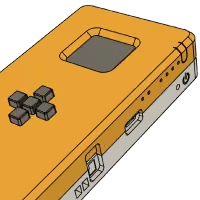
An MCP server that turns the Game Boy Pan Docs into precise, citable lookups for registers, opcodes, memory, cartridges, and CPU behavior, enabling decompilation work.
Agentic Hardware-in-the-Loop (Agentic HIL) lets coding agents develop firmware on real embedded boards: flash, reset, read UART and exchange CAN traffic, diagnose and fix. Local, policy-gated MCP tools support OpenOCD, pyOCD and STM32CubeProgrammer, with pytest for CI.
Provides an MCP knowledge base and tools for porting LuneOS to Android devices, covering kernel porting, boot images, GSI building, Yocto bring-up, nyx-modules, and a staged debugging playbook.
Enables MCP clients to discover connected gadgets, read their state and events, and route commands to them over versioned device contracts on local USB and TCP transports. Ships with a configurable software simulator so device interactions can be exercised without physical hardware.
Enables Claude to create, update, and manage LED patterns on a PixelBlaze controller, including setting brightness and reading device info, through a set of tools that interact with the device's API.
Enables searching and retrieving native EMS registers, SunSpec models and points, and closed-loop control recipes for Wattsonic MATIC hybrid inverters, validating planned Modbus writes against the documentation, and generating client code. It provides documentation only and never connects to an inverter.
An MCP server that enables AI agents to operate an oscilloscope through high-level tools like signal capture and measurement, abstracting vendor-specific SCPI commands.
AI-driven USB oscilloscope control via FastMCP, enabling waveform capture, CSV export, and frequency measurements on PicoScope, Hantek, or a built-in simulator.
An MCP server that lets AI agents control an RS PRO RS-3005P/RS-6005P programmable DC power supply over USB/RS232, enabling voltage/current control, measurements, output switching, and memory operations.
Enables coding agents to upload trained .tflite or .onnx models to a hosted optimizer, check chip fit, shrink models for edge devices within an accuracy limit, and unpack TensorFlow Lite Micro models and C sources into the project.
Enables AI agents to control an ESP32 board's relays, GPIO pins and analog sensors over a small HTTP API on the local network, with no cloud service in the middle.
Enables AI agents to control and display real-time notifications, telemetry, and custom apps on Ulanzi TC001 and compatible pixel clocks running Awtrix Light, including device management and declarative YAML-based metric polling.
Debug microcontrollers directly from Claude. This is an MCP server that drives OpenOCD, letting Claude flash firmware, control execution, and inspect a running target — and read your variables and peripheral registers by name instead of raw addresses.
An OpenOCD debug MCP server that manages debugging targets and sessions by reusing VS Code launch configurations. It enables firmware flashing, GDB command execution, and real-time status monitoring of embedded systems.
An MCP server that enables AI assistants to control Siglent SDS oscilloscopes over a local network using SCPI commands. It allows users to measure signals, configure channel and acquisition settings, and capture waveforms or screenshots through natural language.
Enables AI coding agents to run a SystemVerilog LSP for linting, formatting, navigation, rename, RTL hierarchy inspection, and automated RTL code actions on real projects.
A stateful Bluetooth Low Energy (BLE) MCP server that enables AI agents to scan, connect, read/write characteristics, and subscribe to notifications on BLE devices.
Enables agents to discover and manage Raspberry Pis and other SSH devices on a LAN, including authentication, command execution, file and directory operations, reboots, and ctrlPi API installation.
Enables an AI agent to control one or more remote GPIO agents through a conversation by proxying tool calls to their REST APIs. It supports API-key authentication, LAN discovery, and both stdio and Streamable HTTP transports.
Provides AI assistants with a complete FPGA toolchain for HDL linting, simulation, synthesis, and place-and-route across various hardware targets. It features a GitHub-backed IP core registry that enables users to search for and import MIT-licensed cores directly through their chat interface.
Enables agents to observe a desktop and perform mouse and keyboard actions through ESP32-based BLE or USB HID hardware, with local action translation and no second model in the MCP path.
An MCP server that enables AI agents to read serial output from devices by buffering lines in the background and allowing polling for new output, preventing blocking on long-running serial monitors.
Enables an AI agent to build, inspect, simulate, and program FPGA designs through a unified tool interface, with per-family add-ons for Xilinx ISE and Gowin toolchains.
Enables MCP-speaking coding agents to talk directly to Home Assistant and the ESPHome dashboard: discovering entities and areas, reading live states, history and logs, rendering Jinja templates, calling services, and creating, editing or triggering automations and dashboards. Also allows ESPHome device configs to be read, validated, compiled and flashed, with all write operations off by default behind an explicit safety policy.
Enables MCP-capable agents to drive a real FPGA toolchain end to end—simulating, asserting, synthesizing, scanning JTAG, capturing on-chip waveforms, and configuring real silicon behind confirmation gates.
Exposes ISO 14229 Unified Diagnostic Services as MCP tools, letting any MCP client run session control, DID reads and writes, DTC queries, routine control, security access and raw requests against a real ECU on a CAN bus or against a built-in simulator. A claim/release access model lets multiple clients safely share one device under test, with hardware-free simulation for offline test-plan development.
Enables safe mock-first diagnostics and explicitly gated, receive-only I/Q control with bounded sample reads for an operator-managed STEMlab 125-14, plus optional fixed read-only SSH checks and no transmit path.
The server provides an AI assistant with complete technical documentation, schematics, and part lists for a PTV water jet cutting installation. This enables natural language-based support for troubleshooting, electrical modifications, and maintenance planning.
Enables an MCP client to configure a Saleae Logic MSO mixed-signal oscilloscope, run timed or edge-triggered captures, and retrieve measurements, decimated waveforms, and digital transitions directly from chat, with captures saved to disk for later re-analysis.
Enables Claude Code to program, diagnose, and document Siemens TIA Portal V17 projects (S7-1200/1500) through TIA Openness, covering Ladder and SCL block creation, UDTs, PID_Compact configuration, PROFINET device/IP/subnet setup, tag organization, compilation, cross-references, call trees, and typical-fault diagnostics. It works only on project copies, never going online or downloading to the PLC.
ChannelTerm is an open-source MCP server that enables humans and AI agents to share live serial and SSH terminal sessions for embedded systems development and debugging. It allows AI agents to read device output, execute commands, assist with GDB debugging, and transfer files while keeping developers in control.
Enables agents to discover installed Arduino boards and dependencies, safely edit saved sketches, compile for specified boards, upload locally approved builds, and collect serial output on Windows.
Enables AI agents to observe and control a browser-based 2D robot simulator, including driving, configuring sensors and modules, running programs, and generating wiring, firmware, and parts lists for ESP32, Arduino Uno, or Raspberry Pi.
Enables AI agents to debug STM32 firmware on real hardware by driving GDB with OpenOCD/ST-Link/J-Link to flash, set breakpoints, inspect memory, registers and RTOS state, triage HardFaults, and profile. Returns decoded, structured evidence and suggested next actions instead of raw GDB text, with composite tools that collapse multi-step debug loops into single calls.
Automates Arduino CLI workflows including dependency checks, compile/upload, serial monitoring, and safety preflight checks, all running locally on your machine.
Gives AI agents direct hands-on access to physical hardware and host OS resources over local stdio: serial monitoring with crash-dump detection, firmware compile/flash via arduino-cli, PlatformIO, ESP-IDF and esptool, direct GPIO/I2C/SPI over FTDI bridges, BLE GATT operations, webcam or microscope snapshots, logic analyzer captures, audio recording and test tones, GUI screenshots and hotkeys, and Android ADB commands. It also helps diagnose toolchain and serial-permission problems and identify or terminate processes that lock a port.
Talk to your Flipper Zero from Claude Code — or any MCP client. Storage, app deployment, screen capture, button automation, JavaScript execution on the device, and honest answers about what is nearby.
An MCP server that enables AI agents to inspect, plan, validate, and apply STM32CubeMX .ioc configuration changes, and generate STM32CubeIDE projects, ensuring safe and testable embedded-system workflows.
An MCP server that exposes WLAN Pi capabilities like device info, Wi-Fi scanning, service management, and VLANs to AI assistants via the wlanpi-core REST API.
Enables an AI agent to discover connected hardware, inspect host-exposed interfaces, communicate through generic transport operations, and retain per-device knowledge between connections.
Let an AI agent drive up to 12 hobby servos on an open-hardware USB-C controller (Pololu Maestro compatible): moves, named poses, sequences, on-board scripts and rail current/voltage readout, with per-channel travel limits and overcurrent guardrails. Includes a --mock emulator, so it runs without the board.
Enables read-only diagnosis of QNX 8.0 targets over verified SSH/SFTP, exposing system information, process and IPC state, system logs, and bounded file reads to an MCP client. It helps distinguish idle receivers from real IPC dependency cycles using structured QNX evidence.
An MCP server that judges hardware behavior against timing or serial contracts, returning pass/marginal/fail verdicts for coding agents to iterate on real signal measurements.
Lets MCP clients such as Codex control an ESP32 face through semantic expressions, status and capability reads, and neutral resets over a local STDIO or loopback HTTP interface.
Enables an AI agent to reason about Kconfig trees (Linux, Zephyr, U-Boot, Buildroot) by explaining with file:line why a symbol can't be enabled, then returning the smallest change set that unlocks it, verified by applying it to the real tree. Also supports symbol inspection, select/imply tracing, regex search, config diffing and saving.