Searches UniProt by protein name to find accession numbers and retrieves detailed protein structure information from AlphaFold, including direct links to 3D structural predictions.
An MCP server that enables language models to fetch protein information from the UniProt database, including protein details, sequences, functions, and structures.
Enables querying and retrieving cell line records from the Cellosaurus knowledge base via its REST API, including searching, fetching by accession, and accessing release information.
Enables AI agents to retrieve cited pharmacogenomic and gene-variant information, including drug–gene guidance from CPIC/DPWG and rsID lookups, so responses can quote curated sources instead of relying on memory. A local package also lets users read raw DNA files on their own computer without sending the file data to the remote service.
Enables querying the WormBase database for C. elegans and nematode genomics data, including gene information, protein sequences, phenotypes, interactions, and expression patterns through natural language.
Enables AI assistants to search and retrieve bacterial strain details, taxonomy, culture media, 16S rRNA sequences, and genome information from the BacDive database through MCP tools.
Provides AI assistants with access to microbial type strain genome data, including species information, 16S rDNA sequences, functional annotations, statistics, and citation/usage guidance.
A Model Context Protocol server providing LLMs with access to the Ensembl genomics database, enabling AI assistants to query gene information, sequences, variants, and other genomic data across multiple species.
Enables interaction with MGnify metagenomics resources and tools through the Model Context Protocol. Provides access to MGnify's API for querying and analyzing metagenomic datasets and related biological information.
A Model Context Protocol (MCP) server that provides access to the Protein Data Bank (PDB) - the worldwide repository of information about the 3D structures of proteins, nucleic acids, and complex assemblies.
Enables AI assistants to search and retrieve prokaryotic names, taxon details, full classifications, and rank-based browsing from the List of Prokaryotic names with Standing in Nomenclature in real time, plus read related information pages.
Provides a programmatic interface to the Genome Aggregation Database (gnomAD) API across versions v2.1.1, v3.1.2, and v4.1.0. It enables users to query gene metadata, variant information, population frequencies, and ClinVar data through a unified schema.
Intelligent Genomic Data Server
Provides high-quality gene information queries, homologous gene analysis, and evolutionary research functions via the MCP protocol.
Enables AI assistants to access protein information directly from UniProt, allowing retrieval of protein names, functions, sequences, and organism data by accession number.
An MCP server that provides standardized access to biomedical knowledge bases and resources, enabling AI systems to retrieve verified information from sources like bioRxiv, EuropePMC, and various protein/gene databases.
Enables comprehensive access to PubChem's chemical database with over 110 million compounds. Supports chemical searches, structure analysis, bioactivity data, safety information, and molecular property calculations through 30 specialized tools.
Enables AI assistants to query genetic variant data, gene constraints, and population genetics information from the gnomAD (Genome Aggregation Database) through its GraphQL API. Supports searching for genes and variants, retrieving constraint scores, analyzing population frequencies, and accessing genomic coverage data.
A server that enables AI assistants to interact with cancer genomics data from cBioPortal, allowing users to explore cancer studies, access genomic data, and retrieve mutations and clinical information.
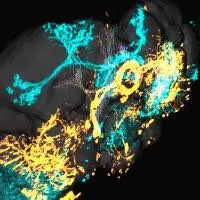
Enables LLM clients to query Virtual Fly Brain data — Drosophila neuroanatomy, connectomics, gene expression and reagent information — through tools for term search, metadata lookup, connectivity queries, neurotransmitter prediction, hierarchy traversal and cross-reference resolution. It can be used as a hosted HTTP service requiring no installation or API key, or run locally.
Enables AI agents to resolve marine species names to OBIS taxon records, retrieve georeferenced ocean occurrence records with optional date filtering, and pull aggregate statistics such as record counts, contributing datasets, and observed year ranges. Queries the Ocean Biodiversity Information System keylessly over the Pipeworx gateway or as a local stdio server.
Enables looking up drug and molecule data — identifiers such as InChIKey, SMILES, CAS, and ChEMBL IDs, plus measured and computed properties and drug information — across PubChem, ChEMBL, and Wikidata. Every returned value carries its cited source, and it covers small molecules, peptides (including modified and cyclic forms), and conjugates such as antibody–drug conjugates.
A unified MCP server for biomedical research that connects AI systems to resources like Ensembl, EuropePMC, STRING, and more, enabling retrieval of verified domain-specific information.
An advanced integrated MCP server platform that combines 600+ tools and multiple biomedical databases to enable comprehensive information retrieval across molecules, proteins, genes, and diseases for accelerating therapeutic research.