

A
licenseNot graded
qualityB
maintenanceMCP server for generating, editing, and processing images via multiple providers including Kilo, OpenRouter, OpenAI, and Gemini, with local tools for background removal, resizing, and cropping.
19 npm
3
MIT


Englisch | 日本語
mcp-alphabanana ist ein Model Context Protocol (MCP) Server zur Generierung von Bild-Assets mit Google Gemini. Er wurde für MCP-kompatible Clients und Agenten-Workflows entwickelt, die eine schnelle Bildgenerierung, transparente Ausgaben, Referenzbild-Steuerung und flexible Bereitstellungsformate benötigen.
Schlüsselwörter: MCP-Server, Model Context Protocol, Gemini AI, Bildgenerierung, FastMCP
Hauptfunktionen:
Ultraschnelle Gemini-Bildgenerierung über Flash- und Pro-Stufen hinweg
Transparente PNG/WebP-Asset-Ausgabe für Web- und Spiele-Pipelines
Multi-Bild-Stilsteuerung mit lokalen Referenzbilddateien
Flexible Datei-, Base64- oder kombinierte Ausgaben für Agenten-Workflows
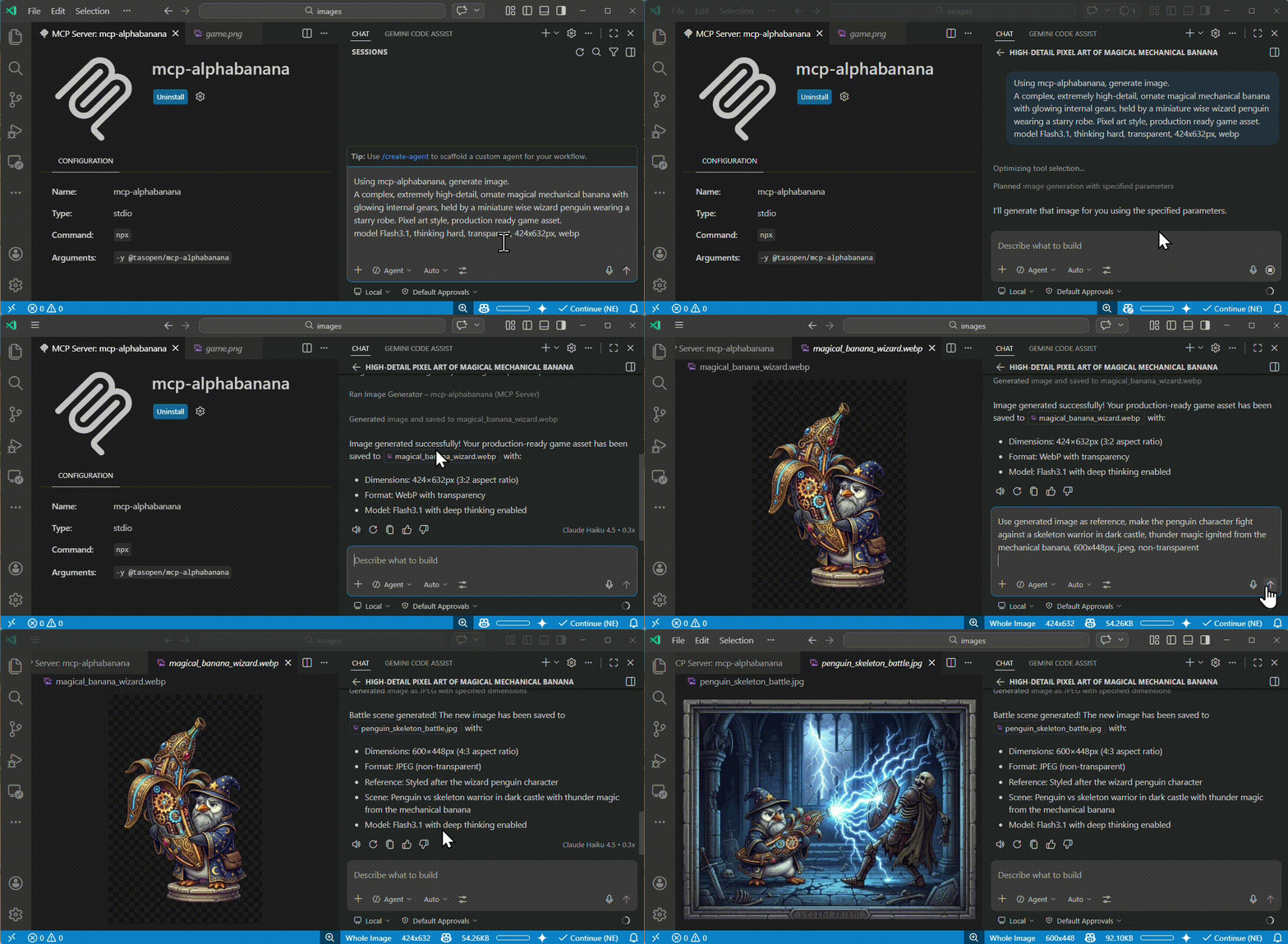
Starten Sie den MCP-Server mit npx:
npx -y @tasopen/mcp-alphabananaOder fügen Sie ihn Ihrer MCP-Konfiguration hinzu:
{
  "mcp": {
    "servers": {
      "alphabanana": {
        "command": "npx",
        "args": ["-y", "@tasopen/mcp-alphabanana"],
        "env": {
          "GEMINI_API_KEY": "${env:GEMINI_API_KEY}"
        }
      }
    }
  }
}
Setzen Sie GEMINI_API_KEY, bevor Sie den Server starten.
Für Claude Desktop:
Laden Sie mcp-alphabanana-latest.mcpb herunter und fügen Sie es dann als Erweiterung in den Claude Desktop-Einstellungen hinzu. Für Windows wird empfohlen, die 'FileSystem'-Erweiterung für eine bessere lokale Dateiverwaltung hinzuzufügen.
Related MCP server: nano-banana-claude
Die Claude-Registry / MCPB-Paket-Metadaten sind in manifest.json definiert und werden mit dem statischen 512x512-Icon unter images/mcp-alphabanana.png ausgeliefert.
Native sharp-Laufzeitpakete sind als optionale Abhängigkeiten deklariert, sodass .mcpb-Installationen die korrekte vorgefertigte Binärdatei auf jeder unterstützten Plattform auflösen können, ohne auf Postinstall-Hooks angewiesen zu sein.
Stabiler MCPB-URL: https://github.com/tasopen/mcp-alphabanana/releases/latest/download/mcp-alphabanana-latest.mcpb
Versioniertes MCPB-URL-Muster: https://github.com/tasopen/mcp-alphabanana/releases/download/vVERSION/mcp-alphabanana-VERSION.mcpb
Support: GitHub Issues
Dieses Repository stellt einen MCP-Server bereit, der es KI-Agenten ermöglicht, Bilder mit Google Gemini zu generieren.
Er kann mit MCP-kompatiblen Clients verwendet werden, wie zum Beispiel:
Claude Desktop
VS Code MCP
Cursor
Erstellt mit FastMCP 3 für eine vereinfachte Codebasis und flexible Ausgabeoptionen.
Glama MCP Server Badge:\
Generiert Bilder mit Google Gemini mit optionaler Transparenz, lokalen Referenzbildern, Grounding und Reasoning-Metadaten.
Für Claude Desktop bevorzugen Sie outputType=file für mittlere oder große Bilder. base64- und combine-Antworten verbrauchen Claude-Kontext und können das Größenlimit des Clients erreichen. Verwenden Sie unter Windows die FileSystem-Erweiterung, um einen beschreibbaren absoluten outputPath und beliebige lokale referenceImages-Pfade auszuwählen.
Hauptparameter:
prompt (string): Beschreibung des zu generierenden Bildes
model: Flash3.1, Flash2.5, Pro3, flash, pro
outputWidth und outputHeight: gewünschte endgültige Bildgröße in Pixeln im normalen Modus
noresize + aspectRatio + output_resolution: gibt die native Gemini-Größe ohne Größenänderung zurück
output_resolution: 0.5K, 1K, 2K, 4K
output_format: png, jpg, webp
outputType: file, base64, combine
outputPath: erforderlich, wenn outputType file oder combine ist
transparent: aktiviert transparente PNG/WebP-Nachbearbeitung
referenceImages: optionales Array lokaler Referenzbilddateien
grounding_type und thinking_mode: erweiterte Gemini 3.1-Steuerungen
Eingabe-Modell-ID | Internes Modell-ID | Beschreibung |
|
| Ultraschnell, unterstützt Thinking/Grounding. |
|
| Legacy Flash. Hohe Stabilität. Niedrige Kosten. |
|
| High-Fidelity Pro-Modell. |
|
| Alias für Abwärtskompatibilität. |
|
| Alias für Abwärtskompatibilität. |
Vollständige Parameterreferenz für das generate_image-Tool.
Parameter | Typ | Standard | Beschreibung |
| string | erforderlich | Beschreibung des zu generierenden Bildes |
| string | erforderlich | Ausgabedateiname (Erweiterung wird automatisch hinzugefügt, falls fehlend) |
| enum |
|
|
| enum |
| Modell: |
| enum | auto |
|
| boolean |
| Überspringt die Größenänderung nach der Generierung und gibt native Gemini-Dimensionen zurück |
| enum | optional | Erforderlich, wenn |
| integer | erforderlich außer | Endgültige Ausgabebreite in Pixeln |
| integer | erforderlich außer | Endgültige Ausgabehöhe in Pixeln |
| enum |
|
|
| string | erforderlich für | Absoluter Ausgabeverzeichnispfad |
| boolean |
| Transparenter Hintergrund (nur PNG/WebP) |
| string oder null |
| Farbschlüssel-Überschreibung für Transparenzextraktion |
| integer |
| Toleranz für die Übereinstimmung der Transparenzfarbe |
| enum |
|
|
| enum |
|
|
| enum |
|
|
| enum |
|
|
| boolean |
| Gibt Modell-Reasoning-Felder zurück, wenn Metadaten aktiviert sind |
| boolean |
| Beinhaltet Grounding- und Reasoning-Metadaten in der JSON-Ausgabe |
| array |
| Bis zu 14 lokale Referenzdateien (Flash3.1/Pro3), 3 für Flash2.5 |
| boolean |
| Speichert zwischenzeitliche Debug-Artefakte |
Keine Wasserzeichen: API-native saubere Bilder.
Thinking/Grounding-Unterstützung: Höhere Prompt-Einhaltung und suchbasierte Genauigkeit.
Produktionsbereit: Unterstützt transparentes WebP und exakte Seitenverhältnisse für Web- und Spiele-Assets.
Ultraschnelle Bildgenerierung (Gemini 3.1 Flash, 0.5K/1K/2K/4K)
Erweitertes Multi-Bild-Reasoning (bis zu 14 Referenzbilder)
Thinking/Grounding-Unterstützung (nur Flash3.1)
Transparente PNG/WebP-Ausgabe (Farbschlüssel-Nachbearbeitung, Despill)
Mehrere Ausgabeformate: Datei, Base64 oder beides
Flexible Größenänderungsmodi: crop, stretch, letterbox, contain
Mehrere Modellstufen: Flash3.1, Flash2.5, Pro3, Legacy-Aliase
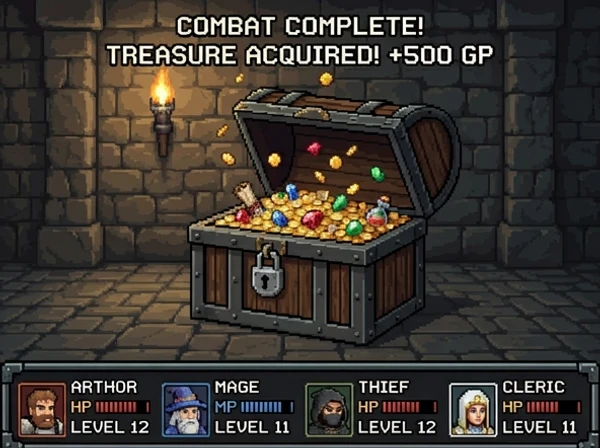
Diese Beispielausgaben wurden mit mcp-alphabanana generiert und in images/examples gespeichert.
Pixel-Art-Asset | Referenzbild-Spielszene | Fotorealistische Generierung |
|
|
|
Konfigurieren Sie den GEMINI_API_KEY in Ihrer MCP-Konfiguration (zum Beispiel mcp.json).
Beispiele:
Referenzieren Sie eine OS-Umgebungsvariable aus mcp.json:
{
  "env": {
    "GEMINI_API_KEY": "${env:GEMINI_API_KEY}"
  }
}
Geben Sie den Schlüssel direkt in mcp.json an:
{
  "env": {
    "GEMINI_API_KEY": "your_api_key_here"
  }
}Fügen Sie dies zu Ihren VS Code-Einstellungen (.vscode/settings.json oder Benutzereinstellungen) hinzu und konfigurieren Sie den Server env in mcp.json oder über die VS Code MCP-Einstellungen.
{
  "mcp": {
    "servers": {
      "mcp-alphabanana": {
        "command": "npx",
        "args": ["-y", "@tasopen/mcp-alphabanana"],
        "env": {
          "GEMINI_API_KEY": "${env:GEMINI_API_KEY}"
        }
      }
    }
  }
}
Optional: Legen Sie ein benutzerdefiniertes Fallback-Verzeichnis für Schreibfehler fest, indem Sie MCP_FALLBACK_OUTPUT zum env-Objekt hinzufügen.
{
  "prompt": "A pixel art treasure chest, golden trim, wooden texture",
  "model": "Flash3.1",
  "outputFileName": "chest",
  "outputType": "base64",
  "outputWidth": 64,
  "outputHeight": 64,
  "transparent": true
}{
"prompt": "A clean app icon with a banana mascot, flat graphic design",
"model": "Flash3.1",
"outputFileName": "banana-icon-native",
"outputType": "base64",
"noresize": true,
"aspectRatio": "1:1",
"output_resolution": "0.5K",
"output_format": "png"
}Dieser Modus gibt die native Gemini-Pixelgröße für das angeforderte Verhältnis und die Auflösung zurück. Zum Beispiel gibt 1:1 + 0.5K 512x512 ohne Größenänderungsschritt zurück.
{
  "prompt": "A vertical, photorealistic travel poster advertising Magical Wings Day Tours. A joyful young couple flies high above a breathtaking European countryside at golden hour, holding hands as they soar through a partly cloudy sky. Below them are vineyards, villages, forests, a winding river, and a hilltop medieval castle. The poster uses large, elegant typography with the headline FLY THE COUNTRYSIDE at the top and Magical Wings Day Tours branding near the bottom.",
  "model": "Flash3.1",
  "output_resolution": "1K",
  "outputFileName": "photoreal-travel-poster",
  "outputType": "file",
  "outputPath": "/path/to/output",
  "outputWidth": 848,
  "outputHeight": 1264,
  "output_format": "jpg",
  "thinking_mode": "high",
  "include_metadata": true
}{
"prompt": "A modern travel poster featuring today's weather and skyline highlights in Kuala Lumpur",
"model": "Flash3.1",
"outputFileName": "kl_travel_poster",
"outputType": "base64",
"outputWidth": 1024,
"outputHeight": 1024,
"grounding_type": "text",
"thinking_mode": "high",
"include_metadata": true,
"include_thoughts": true
}Dieses Beispiel aktiviert das Google-Suche-Grounding und gibt Grounding- und Reasoning-Metadaten in JSON zurück.
{
  "prompt": "Use the reference image to create a game screen showing an opened treasure chest filled with coins and treasure, 8-bit dungeon crawler style, after-battle reward scene, dungeon corridor background, four-party status UI at the bottom",
  "model": "Flash3.1",
  "output_resolution": "0.5K",
  "outputFileName": "reference-image-dungeon-loot",
  "outputType": "file",
  "outputPath": "/path/to/output",
  "outputWidth": 600,
  "outputHeight": 448,
  "output_format": "webp",
  "transparent": false,
  "referenceImages": [
    {
      "description": "Treasure chest style reference",
      "filePath": "/path/to/references/pixel-art-treasure-chest.png"
    }
  ]
}PNG: Volle Alpha, Farbschlüssel + Despill
WebP: Volle Alpha, bessere Komprimierung (Flash3.1+)
JPEG: Keine Transparenz (fällt auf soliden Hintergrund zurück)
# Development mode with MCP CLI
npm run dev

# MCP Inspector (Web UI)
npm run inspect

# Build for production
npm run buildMIT
Generate image assets using Gemini AI with optional transparency and reference images.
[Claude Desktop Guidance]
Prefer outputType='file' for medium or large images. base64 and combine responses can exceed Claude Desktop's context limit.
On Claude Desktop for Windows, use the FileSystem extension to choose reference-image paths and a writable absolute outputPath before calling this tool.
Use base64 only for small previews or when the client explicitly needs inline image data.
[Model Guidance]
Flash3.1 (recommended): High quality, very fast, supports grounding and advanced features.
Lite3.1 (Nano Banana 2 Lite): Ultra-fast, cost-effective, 1K-only, no search grounding. Ideal for quick drafting and low-latency iteration.
Pro3: Higher fidelity, but more costly and slower.
Flash2.5: Legacy, maintained for compatibility. Does not support 0.5K, 2K, or 4K resolutions.
[Aspect Ratios] Gemini supports the following aspect ratios (model-dependent):
Common to all models: 1:1, 2:3, 3:2, 3:4, 4:3, 4:5, 5:4, 9:16, 16:9, 21:9
Flash3.1 only: 1:4, 4:1, 1:8, 8:1
Normal mode: provide outputWidth/outputHeight and the server will choose the closest Gemini aspect ratio and source resolution, then resize to the requested pixel size. No-resize mode: set noresize=true and provide aspectRatio plus output_resolution. The server will return Gemini's native pixel dimensions for that combination without post-generation resizing.
If you intentionally want to control resizing/cropping in normal mode, use the 'resizeMode' parameter: 'crop' (default, center crop), 'letterbox' (fit with padding), 'contain' (trim transparent margins then fit), or 'stretch' (distort to fit).
[IMPORTANT] Always preserve the user's prompt as-is, including language and nuance. Do not translate or summarize.
| Name | Required | Description | Default |
|---|---|---|---|
| debug | No | Debug mode: output intermediate processing images and prompt | |
| model | No | Model tier to use for generation (see tool description for details; "flash" and "pro" are aliases for Flash2.5 and Pro3; "Lite3.1" is the low-latency Nano Banana 2 Lite model, 1K-only, no grounding) | Flash3.1 |
| prompt | Yes | User-provided image prompt. Preserve the original wording and detail; do not summarize or translate. Only append transparency-related hints if needed. | |
| noresize | No | Skip post-generation resizing and return Gemini native dimensions directly. When true, provide aspectRatio and output_resolution instead of outputWidth/outputHeight. | |
| fringeMode | No | Fringe reduction mode: auto (size-based), crisp (binary alpha), hd (force-clear 1px boundary for large images). | auto |
| outputPath | No | Output directory path (MUST be an absolute path when outputType is file or combine). In Claude Desktop on Windows, use the FileSystem extension to choose or prepare a writable absolute path such as C:\temp. | |
| outputType | No | Output format: file=file only, base64=base64 only, combine=both. In Claude Desktop, prefer file for medium or large images to avoid context-size limits; use base64 only for small previews. | combine |
| resizeMode | No | Resize mode: crop=center crop, stretch=distort, letterbox=fit with padding, contain=trim transparent margins then fit | crop |
| aspectRatio | No | Gemini aspect ratio to use directly when noresize=true. Ignored in normal resize mode. | |
| outputWidth | No | Output image width in pixels. Required unless noresize=true. In normal mode, the image will be generated using the closest supported Gemini aspect ratio and resolution, then resized to this width. | |
| transparent | No | Request transparent background (PNG or WebP only). Background color is selected by histogram analysis. | |
| outputHeight | No | Output image height in pixels. Required unless noresize=true. In normal mode, the image will be generated using the closest supported Gemini aspect ratio and resolution, then resized to this height. | |
| output_format | No | Output format | png |
| thinking_mode | No | Thinking mode (3.1 only) | minimal |
| colorTolerance | No | Tolerance for color matching (0-255). Higher values are more permissive for transparent color selection and keying. | |
| grounding_type | No | Grounding tool usage (3.1 only) | none |
| outputFileName | Yes | Output filename (extension auto-added if missing) | |
| referenceImages | No | Reference images for style guidance (Flash2.5: max 3, others: max 14) | |
| include_metadata | No | Include grounding and reasoning metadata in JSON output (optional, may increase payload size). | |
| include_thoughts | No | Optional (default: false). Request thought fields from Gemini (3.1 only). Thought content is returned in MCP response only when include_metadata=true. | |
| transparentColor | No | Color to make transparent. Hex (e.g. #FF00FF). null defaults to #FF00FF when transparent=true. | |
| output_resolution | No | Gemini generation source resolution (optional in normal mode, required when noresize=true). In normal mode, the final image is resized to the requested pixel size after generation. |
Does the description disclose side effects, auth requirements, rate limits, or destructive behavior?
The description discloses key behaviors beyond annotations: it explains that the tool generates files on disk (outputPath), handles resizing and cropping, supports transparency, and has model-dependent features. Annotations already indicate destructiveHint=true and openWorldHint=true, so the description adds context about what gets created and modified. However, it does not explicitly warn about overwriting existing files, which would have earned a 5.
Agents need to know what a tool does to the world before calling it. Descriptions should go beyond structured annotations to explain consequences.
Is the description appropriately sized, front-loaded, and free of redundancy?
The description is long but well-structured with sections (Claude Desktop Guidance, Model Guidance, Aspect Ratios, IMPORTANT) and uses bullet points for readability. It front-loads the main purpose and then provides detailed guidance. While every sentence contributes value, some redundancy with schema descriptions could be trimmed slightly.
Shorter descriptions cost fewer tokens and are easier for agents to parse. Every sentence should earn its place.
Given the tool's complexity, does the description cover enough for an agent to succeed on first attempt?
Given the tool's complexity (22 parameters, multiple modes, platform specifics), the description is quite comprehensive. It covers purpose, usage guidelines, model comparisons, resize behavior, output types, and important notes. However, it lacks explicit details about error responses or rate limits, and there is no output schema, but the description compensates well for the tool's generative nature.
Complex tools with many parameters or behaviors need more documentation. Simple tools need less. This dimension scales expectations accordingly.
Does the description clarify parameter syntax, constraints, interactions, or defaults beyond what the schema provides?
Schema coverage is 100%, so parameters are already documented. The description adds value by grouping parameters logically (e.g., model selection, aspect ratios, resize modes) and providing context for platform-specific usage (e.g., referenceImages filePath on Windows). It explains the interaction between parameters like outputWidth/outputHeight and noresize, which goes beyond individual parameter descriptions.
Input schemas describe structure but not intent. Descriptions should explain non-obvious parameter relationships and valid value ranges.
Does the description clearly state what the tool does and how it differs from similar tools?
The description opens with 'Generate image assets using Gemini AI with optional transparency and reference images,' clearly stating the action, resource, and technology. It differentiates between different usage contexts (Claude Desktop, Windows, etc.) and provides model recommendations, ensuring the agent understands what the tool does and when to use which option.
Agents choose between tools based on descriptions. A clear purpose with a specific verb and resource helps agents select the right tool.
Does the description explain when to use this tool, when not to, or what alternatives exist?
The description includes explicit guidance on when to use different output types ('Prefer outputType='file' for medium or large images'), when to use noresize mode vs normal mode, and when to choose each model (Flash3.1 recommended, Lite3.1 for quick drafting, etc.). It also provides platform-specific usage instructions for Claude Desktop and Windows, giving clear context for tool selection.
Agents often have multiple tools that could apply. Explicit usage guidance like "use X instead of Y when Z" prevents misuse.
Recent tool additions, removals, and schema changes observed during successful MCP inspections.
v1.5.0generate_image14 fields changedInput schema / properties / aspectRatioAdded value: +{
+ "description": "Gemini aspect ratio to use directly when noresize=true. Ignored in normal resize mode.",
+ "enum": [
+ "1:1",
+ "2:3",
+ "3:2",
+ "3:4",
+ "4:3",
+ "4:5",
+ "5:4",
+ "9:16",
+ "16:9",
+ "21:9",
+ "1:4",
+ "4:1",
+ "1:8",
+ "8:1"
+ ],
+ "type": "string"
+}Input schema / properties / model / descriptionPrevious value: -"Model tier to use for generation (see tool description for details; \"flash\" and \"pro\" are aliases for Flash2.5 and Pro3)"New value: +"Model tier to use for generation (see tool description for details; \"flash\" and \"pro\" are aliases for Flash2.5 and Pro3; \"Lite3.1\" is the low-latency Nano Banana 2 Lite model, 1K-only, no grounding)"Input schema / properties / model / enumPrevious value: -[
- "Flash3.1",
- "Flash2.5",
- "Pro3",
- "flash",
- "pro"
-]New value: +[
+ "Flash3.1",
+ "Lite3.1",
+ "Flash2.5",
+ "Pro3",
+ "flash",
+ "pro"
+]Input schema / properties / noresizeAdded value: +{
+ "default": false,
+ "description": "Skip post-generation resizing and return Gemini native dimensions directly. When true, provide aspectRatio and output_resolution instead of outputWidth/outputHeight.",
+ "type": "boolean"
+}Input schema / properties / outputHeight / descriptionPrevious value: -"Output image height in pixels. The image will be generated using the closest supported Gemini aspect ratio and resolution, then resized to this height. To avoid cropping or padding, set width and height to match a supported aspect ratio (see tool description)."New value: +"Output image height in pixels. Required unless noresize=true. In normal mode, the image will be generated using the closest supported Gemini aspect ratio and resolution, then resized to this height."Input schema / properties / outputPath / descriptionPrevious value: -"Output directory path (MUST be an absolute path when outputType is file or combine)"New value: +"Output directory path (MUST be an absolute path when outputType is file or combine). In Claude Desktop on Windows, use the FileSystem extension to choose or prepare a writable absolute path such as C:\\temp."Input schema / properties / outputType / descriptionPrevious value: -"Output format: file=file only, base64=base64 only, combine=both"New value: +"Output format: file=file only, base64=base64 only, combine=both. In Claude Desktop, prefer file for medium or large images to avoid context-size limits; use base64 only for small previews."Input schema / properties / outputWidth / descriptionPrevious value: -"Output image width in pixels. The image will be generated using the closest supported Gemini aspect ratio and resolution, then resized to this width. To avoid cropping or padding, set width and height to match a supported aspect ratio (see tool description)."New value: +"Output image width in pixels. Required unless noresize=true. In normal mode, the image will be generated using the closest supported Gemini aspect ratio and resolution, then resized to this width."Input schema / properties / output_resolution / descriptionPrevious value: -"Gemini generation source resolution (optional; normally auto-calculated from pixel size. Set only to override. Final image is resized to requested pixel size.)"New value: +"Gemini generation source resolution (optional in normal mode, required when noresize=true). In normal mode, the final image is resized to the requested pixel size after generation."Input schema / properties / referenceImages / items / additionalPropertiesRemoved value: -falseInput schema / properties / referenceImages / items / properties / filePath / descriptionPrevious value: -"Absolute path to reference image file (.png, .jpg, .jpeg, .webp)"New value: +"Absolute path to reference image file (.png, .jpg, .jpeg, .webp). In Claude Desktop on Windows, use the FileSystem extension to locate the file and pass its Windows absolute path."Input schema / properties / transparentColor / anyOfAdded value: +[
+ {
+ "type": "string"
+ },
+ {
+ "type": "null"
+ }
+]Input schema / properties / transparentColor / typeRemoved value: -[
- "string",
- "null"
-]Input schema / requiredPrevious value: -[
- "prompt",
- "outputFileName",
- "outputWidth",
- "outputHeight"
-]New value: +[
+ "prompt",
+ "outputFileName"
+]v1.3.6generate_imageScored across 1 tool
With only one tool, there is no potential for confusion between tools. The single tool's purpose is clearly defined as generating images.
There is only one tool, so naming consistency is not applicable. The tool name 'generate_image' follows a clear verb_noun convention.
The server has a single tool, which is slightly thin but acceptable given the tool's complexity and the server's focused purpose of image generation. The tool includes many parameters and guidance, making it substantial.
The tool provides comprehensive image generation capabilities with support for multiple AI models, aspect ratios, output formats, and advanced options like no-resize and resize modes. It covers the full scope of image generation for the server's domain.
MCP server for Qwen Image 3 AI image generation
MCP server for NanoBanana AI image generation and editing
Focused MCP server for OpenAI image/audio generation (v2.0.0). Wraps endpoints via HAPI CLI.
MCP server for Google Veo AI video generation