
A
licenseB
qualityD
maintenanceA simple template for creating custom tools for Cursor IDE using Model Context Protocol, deployable via Heroku, Docker, or directly within Cursor IDE.
2
5
MIT

모델 컨텍스트 프로토콜(MCP)을 사용하여 Cursor IDE용 사용자 지정 도구를 만드는 간단한 템플릿입니다. 이 템플릿을 사용하여 자체 저장소를 만들고, 도구를 수정한 후 Cursor IDE에 연결하세요.
"Heroku에 배포" 버튼을 클릭하세요

배포 후 커서를 구성합니다.
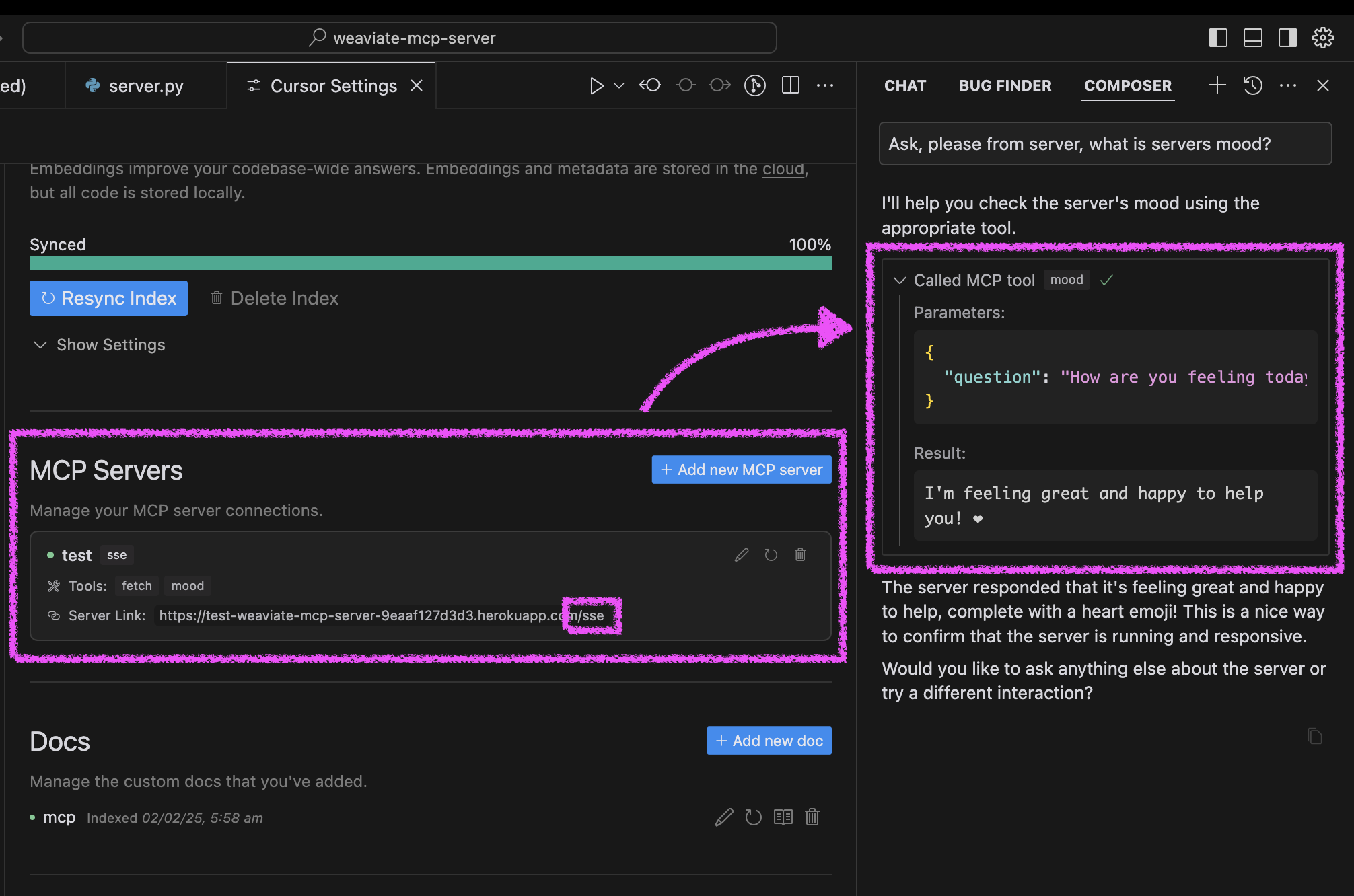
커서 설정 열기 → 기능
새로운 MCP 서버 추가
/sse 경로와 함께 Heroku URL을 사용하세요(예: https://<your-app-name>.herokuapp.com/sse )
커서에서 에이전트의 기분을 테스트하세요:
담당 직원에게 "저희 서버분 기분이 어떤지 물어보시고 알려주세요."라고 물어보세요.
서버는 즐거운 메시지와 하트로 응답할 것입니다 ❤️
Related MCP server: MCP Server Template for Cursor IDE
Docker, 기존 Python 설정 또는 Cursor IDE에서 직접 사용하는 세 가지 방법으로 서버를 실행할 수 있습니다.
이 프로젝트에는 쉬운 배포를 위한 Docker 지원이 포함되어 있습니다.
초기 설정:
지엑스피1
Docker Compose를 사용하여 빌드하고 실행하세요.
# Build and start the server
docker compose up --build -d

# View logs
docker compose logs -f

# Check server status
docker compose ps

# Stop the server
docker compose down
서버는 다음 위치에서 사용할 수 있습니다.
SSE 엔드포인트: http://localhost:8000/sse
빠른 테스트:
# Test the server endpoint
curl -i http://localhost:8000/sse
커서 IDE에 연결:
커서 설정 → 기능 열기
새로운 MCP 서버 추가
유형: "sse"를 선택하세요
URL: http://localhost:8000/sse 입력하세요
먼저, uv 패키지 관리자를 설치하세요.
# Install uv on macOS
brew install uv
# Or install via pip (any OS)
pip install uv
stdio(기본값) 또는 SSE 전송을 사용하여 서버를 시작합니다.
# Install the package with development dependencies
uv pip install -e ".[dev]"

# Using stdio transport (default)
uv run mcp-simple-tool

# Using SSE transport on custom port
uv run mcp-simple-tool --transport sse --port 8000

# Run tests
uv run pytest -v
설치 후 서버를 Cursor IDE에 직접 연결할 수 있습니다.
Cursor에서 cursor-run-mcp-server.sh 파일을 마우스 오른쪽 버튼으로 클릭합니다.
절대 경로를 복사하려면 "경로 복사"를 선택하세요.
커서 설정 열기(기어 아이콘)
기능 탭으로 이동
"MCP 서버"까지 아래로 스크롤하세요.
"새 MCP 서버 추가"를 클릭하세요.
양식을 작성하세요:
이름: 원하는 이름을 선택하세요(예: "my-mcp-server-1")
유형: "stdio"를 선택하세요(서버를 로컬로 실행하므로 "sse"가 아닙니다)
명령어: 앞서 복사한 cursor-run-mcp-server.sh 파일의 절대 경로를 붙여넣습니다. 예: /Users/kirillmarkin/weaviate-mcp-server/cursor-run-mcp-server.sh
사용 가능한 환경 변수( .env 에서 설정 가능):
MCP_SERVER_PORT (기본값: 8000) - 서버를 실행할 포트
MCP_SERVER_HOST (기본값: 0.0.0.0) - 서버를 바인딩할 호스트
DEBUG (기본값: false) - 디버그 모드 활성화
MCP_USER_AGENT - 웹사이트 가져오기를 위한 사용자 정의 사용자 에이전트
Smithery를 통해 Claude Desktop용 Cursor IDE용 MCP 서버 템플릿을 자동으로 설치하려면:
npx -y @smithery/cli install @kirill-markin/example-mcp-server --client claudeGet Figma design data including structure and images
Inputs: url (required).
Generate an image using DALL-E 3
Inputs: prompt (required), size, quality, n.
Fetches a website and returns its content
Inputs: url (required).
Ask the server about its mood - it's always happy!
Inputs: question (required).
Recent tool additions, removals, and schema changes observed during successful MCP inspections.
Loading tool schema changelog…
Scored across 4 tools
Each tool has a clearly distinct purpose with no overlap: figma_design retrieves design data, generate_image creates new images, mcp_fetch fetches web content, and mood is a whimsical status check. The descriptions make it impossible to confuse one tool for another.
The naming is inconsistent with mixed conventions: figma_design uses snake_case, generate_image uses snake_case, mcp_fetch uses snake_case but with an acronym prefix, and mood is a single lowercase word. There's no consistent verb_noun pattern, and the styles vary enough to cause confusion.
With 4 tools, the count is borderline thin for a server template aimed at Cursor IDE, which might imply broader utility. While each tool is distinct, the set feels minimal and may not cover enough ground for typical development workflows, suggesting it's slightly under-scoped.
For a Cursor IDE template, there are significant gaps: no code-related tools (e.g., edit, lint, debug), no project management features, and no integration with common IDE functions. The tools are disparate (design, image generation, web fetch, mood) without a cohesive domain, making it incomplete for practical use.
A comprehensive Model Context Protocol (MCP) server that enables AI assistants to interact with yo…
A Model Context Protocol server for Wix AI tools
The OpenRouter MCP server plugs OpenRouter into the AI tools you already use. Once connected, your assistant can pull live OpenRouter data (models, prices, your credits, rankings, and docs) and send quick test messages, all without leaving your editor.
MCP server for your apps' tools and custom tools, plus hosted AI agents and approval-gated workflows