F
licenseA
qualityD
maintenanceA TypeScript-based MCP server that enables AI assistants to interact with CouchDB databases through a simple interface, providing tools for creating, reading, and querying databases and documents.
5
5
-

ArangoDB 用のモデルコンテキストプロトコルサーバー
これはTypeScriptベースのMCPサーバーで、ArangoDBを介してデータベースとの連携機能を提供します。コアとなるデータベース操作を実装し、MCPツールを介してArangoDBとのシームレスな統合を可能にします。Claudeアプリや、ClineなどのMCPと連携するVSCode拡張機能でも使用できます。
arango_query - AQLクエリを実行する
必須パラメータとしてAQLクエリ文字列を受け取ります
オプションでパラメータ化されたクエリのバインド変数を受け入れる
クエリ結果をJSONとして返します
arango_insert - コレクションにドキュメントを挿入する
コレクション名とドキュメントオブジェクトを必須パラメータとして受け取ります
提供されていない場合はドキュメントキーを自動的に生成します
作成されたドキュメントのメタデータを返します
arango_update - 既存のドキュメントを更新する
コレクション名、ドキュメントキー、更新オブジェクトを必須パラメータとして受け取ります
更新されたドキュメントのメタデータを返します
arango_remove - コレクションからドキュメントを削除する
コレクション名とドキュメントキーを必須パラメータとして受け取ります
削除されたドキュメントのメタデータを返します
arango_backup - すべてのコレクションをJSONファイルにバックアップします
出力ディレクトリのパスを必須パラメータとして受け取ります
現在のデータを含む各コレクションのJSONファイルを作成します
データのバックアップや移行に役立ちます
arango_list_collections - データベース内のすべてのコレクションを一覧表示する
名前、ID、タイプを含むコレクション情報の配列を返します
arango_create_collection - データベースに新しいコレクションを作成する
コレクション名を必須パラメータとして受け取ります
オプションでコレクションタイプ(ドキュメントまたはエッジコレクション)を指定します
書き込み操作の waitForSync 動作を構成する
名前、タイプ、ステータスなどのコレクション情報を返します
Related MCP server: SQL MCP Server
NPM 経由でarango-serverをグローバルにインストールするには、次のコマンドを実行します。
npm install -g arango-serverインストールせずにarango-serverを直接実行するには、次のコマンドを使用します。
npx arango-serverVSCode Copilot エージェントでarango-serverを使用するには、少なくともVSCode 1.99.0 がインストールされており、次の手順に従う必要があります。
MCP 構成ファイルを作成または編集します。
次の構成を追加します。
{
    "servers": {
        "arango-mcp": {
            "type": "stdio",
            "command": "npx",
            "args": ["arango-server"],
            "env": {
                "ARANGO_URL": "http://localhost:8529",
                "ARANGO_DB": "v20",
                "ARANGO_USERNAME": "app",
                "ARANGO_PASSWORD": "75Sab@MYa3Dj8Fc"
            }
        }
    }
}
MCP サーバーを起動します。
VSCode でコマンド パレットを開きます (Mac の場合はCtrl+Shift+P 、 Cmd+Shift+P )。
コマンドMCP: Start Serverを実行し、リストからarango-mcpを選択します。
サーバーを検証します:
VSCode でチャット ビューを開き、エージェント モードに切り替えます。
Toolsボタンを使用してarango-serverツールが利用可能であることを確認します。
Smithery経由で Claude Desktop 用の ArangoDB を自動的にインストールするには:
npx -y @smithery/cli install @ravenwits/mcp-server-arangodb --client claudeSettings > Developer > Edit Configまたは
MacOS: ~/Library/Application Support/Claude/claude_desktop_config.json
Windows: %APPDATA%/Claude/claude_desktop_config.json
Cline Extension > MCP Servers > Edit Configurationまたは
MacOS: ~/Library/Application Support/Code/User/globalStorage/cline.cline/config.json
Windows: %APPDATA%/Code/User/globalStorage/cline.cline/config.json
mcpServersセクションに次の構成を追加します。
{
	"mcpServers": {
		"arango": {
			"command": "node",
			"args": ["/path/to/arango-server/build/index.js"],
			"env": {
				"ARANGO_URL": "your_database_url",
				"ARANGO_DB": "your_database_name",
				"ARANGO_USERNAME": "your_username",
				"ARANGO_PASSWORD": "your_password"
			}
		}
	}
}サーバーには次の環境変数が必要です。
ARANGO_URL - ArangoDB サーバーの URL (注: 8529 はローカル開発用の ArangoDB のデフォルト ポートです)
ARANGO_DB - データベース名
ARANGO_USERNAME - データベースユーザー
ARANGO_PASSWORD - データベースパスワード
意味のあるプロンプトであれば何でも提供でき、Claude は適切な機能を実行しようとします。
いくつかの例のプロンプト:
「データベース内のすべてのコレクションを一覧表示する」
「すべてのユーザーを照会する」
「「John Doe」という名前の新しいドキュメントを挿入し、「 john@example.com 」を「users」コレクションにメールで送信します」
「キー「123456」または名前「Jane Doe」でドキュメントを更新して、年齢を48歳に変更します」
「「products」という名前の新しいコレクションを作成します」
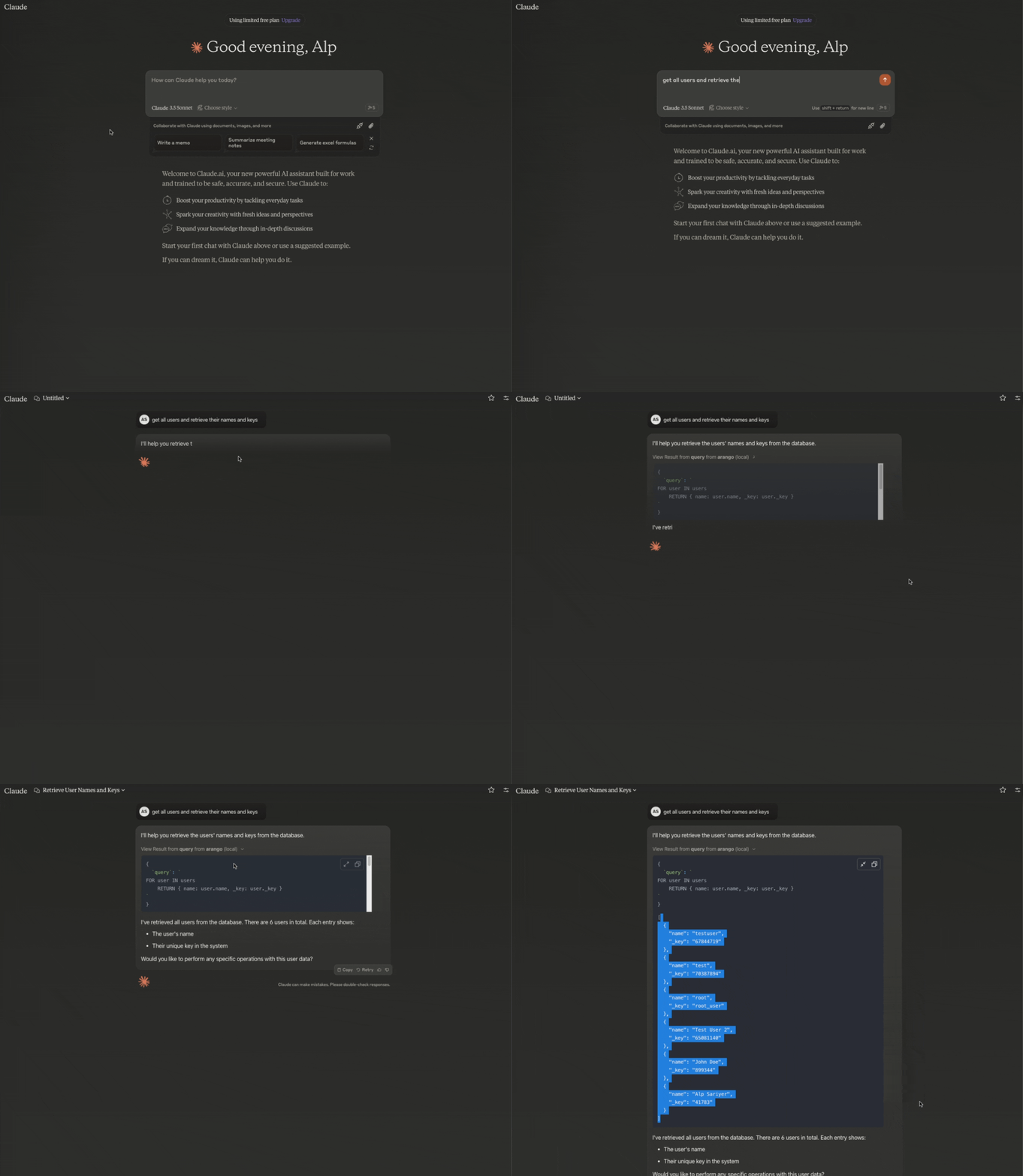
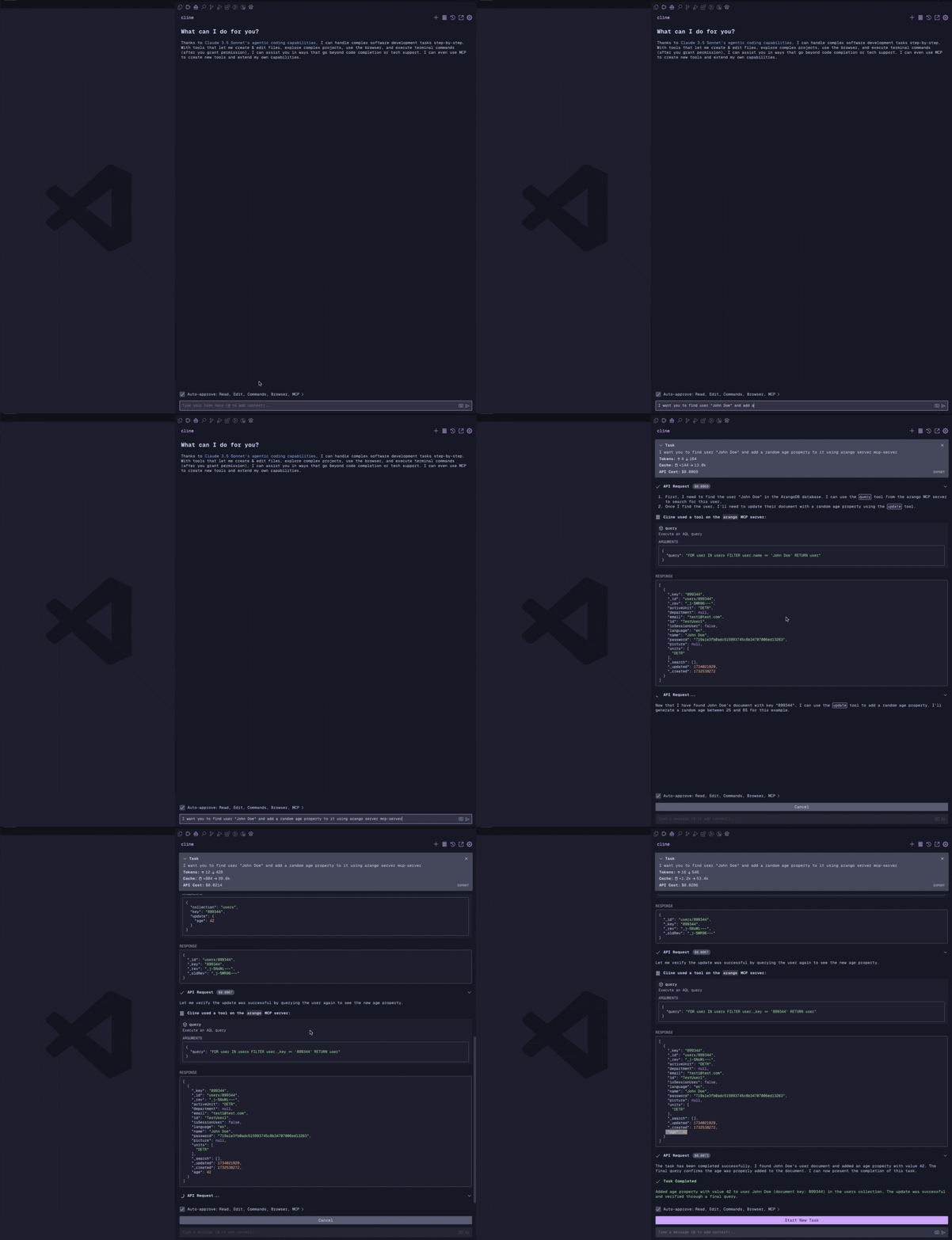
すべてのユーザーを照会:
{
  "query": "FOR user IN users RETURN user"
}
新しいドキュメントを挿入します:
{
  "collection": "users",
  "document": {
    "name": "John Doe",
    "email": "john@example.com"
  }
}
ドキュメントを更新します。
{
  "collection": "users",
  "key": "123456",
  "update": {
    "name": "Jane Doe"
  }
}
ドキュメントを削除します。
{
  "collection": "users",
  "key": "123456"
}
すべてのコレクションを一覧表示します:
{
} // No parameters required
バックアップ データベース コレクション:
{
  "outputDir": "./backup" // Specify an absolute output directory path for the backup files (optional)
  "collection": "users" // Specify a collection name to backup (optional) If no collection name is provided, all collections will be backed up
  "docLimit": 1000 // Specify the maximum number of documents to backup per collection (optional), if not provided, all documents will be backed up (not having a limit might cause timeout for large collections)
}
新しいコレクションを作成します。
{
  "name": "products",
  "type": "document", // "document" or "edge" (optional, defaults to "document")
  "waitForSync": false // Optional, defaults to false
}
注: サーバーはデータベース構造に依存せず、ArangoDB のドキュメントおよびエッジ コレクション モデルに従っている限り、任意のコレクション名または構造で動作します。
このツールはローカル開発環境専用です。技術的には本番データベースへの接続も可能ですが、重大なセキュリティリスクが生じるため、推奨されません。本番環境データの保護と懸念事項の分離を維持するため、本ツールは開発データベースでのみ使用しています。
リポジトリをクローンする
依存関係をインストールします:
npm run build自動リビルドを使用した開発の場合:
npm run watchMCP サーバーは stdio 経由で通信するため、デバッグが困難になる場合があります。開発にはMCP Inspectorを使用してデバッグを行うことをお勧めします。
npm run inspectorインスペクターは、ブラウザでデバッグ ツールにアクセスするための URL を提供します。
このプロジェクトは MIT ライセンスに基づいてライセンスされています - 詳細についてはLICENSEファイルを参照してください。
Backup collections to JSON files.
| Name | Required | Description | Default |
|---|---|---|---|
| outputDir | Yes | An absolute directory path to store backup files | ./backup |
| collection | No | Collection name to backup. If not provided, backs up all collections. | |
| docLimit | No | Limit the number of documents to backup. If not provided, backs up all documents. |
Does the description disclose side effects, auth requirements, rate limits, or destructive behavior?
Annotations declare readOnlyHint=true, indicating a safe read operation. The description adds context about creating backup files (output behavior) but doesn't detail side effects like file system changes, performance impact, or error handling. With annotations covering safety, it adds some value but lacks rich behavioral context.
Agents need to know what a tool does to the world before calling it. Descriptions should go beyond structured annotations to explain consequences.
Is the description appropriately sized, front-loaded, and free of redundancy?
The description is a single, efficient sentence with zero waste. It's appropriately sized and front-loaded, directly stating the tool's purpose without unnecessary elaboration.
Shorter descriptions cost fewer tokens and are easier for agents to parse. Every sentence should earn its place.
Given the tool's complexity, does the description cover enough for an agent to succeed on first attempt?
For a backup tool with readOnlyHint annotation and no output schema, the description is minimally adequate. It covers the core action but lacks details on output format, error scenarios, or integration with sibling tools. Given the complexity and annotation coverage, it's complete enough but with clear gaps.
Complex tools with many parameters or behaviors need more documentation. Simple tools need less. This dimension scales expectations accordingly.
Does the description clarify parameter syntax, constraints, interactions, or defaults beyond what the schema provides?
Schema description coverage is 100%, so parameters are fully documented in the schema. The description mentions 'collections' and 'JSON files' but doesn't add syntax, format, or usage details beyond what the schema provides. Baseline 3 is appropriate when schema does the heavy lifting.
Input schemas describe structure but not intent. Descriptions should explain non-obvious parameter relationships and valid value ranges.
Does the description clearly state what the tool does and how it differs from similar tools?
The description clearly states the action ('Backup') and target ('collections to JSON files'), providing a specific verb+resource combination. However, it doesn't explicitly differentiate from sibling tools like 'arango_list_collections' or 'arango_query' which might also involve collection data retrieval, though the backup purpose is distinct.
Agents choose between tools based on descriptions. A clear purpose with a specific verb and resource helps agents select the right tool.
Does the description explain when to use this tool, when not to, or what alternatives exist?
The description provides no guidance on when to use this tool versus alternatives. It doesn't mention prerequisites, timing considerations, or compare it to sibling tools like 'arango_query' for data extraction. Usage is implied by the name but not explicitly stated.
Agents often have multiple tools that could apply. Explicit usage guidance like "use X instead of Y when Z" prevents misuse.
Create a new collection in the database
| Name | Required | Description | Default |
|---|---|---|---|
| name | Yes | Name of the collection to create | |
| type | No | Type of collection to create ("document" or "edge") | document |
| waitForSync | No | If true, wait for data to be synchronized to disk before returning |
Does the description disclose side effects, auth requirements, rate limits, or destructive behavior?
Annotations provide destructiveHint=true, indicating this is a mutation operation. The description adds minimal context by implying a write action ('Create'), but doesn't elaborate on behavioral aspects like permissions required, idempotency, error handling, or system impact beyond what annotations cover. No contradiction with annotations exists.
Agents need to know what a tool does to the world before calling it. Descriptions should go beyond structured annotations to explain consequences.
Is the description appropriately sized, front-loaded, and free of redundancy?
The description is a single, efficient sentence that directly states the tool's purpose without unnecessary words. It's front-loaded and wastes no space, making it easy to parse quickly while conveying the essential action.
Shorter descriptions cost fewer tokens and are easier for agents to parse. Every sentence should earn its place.
Given the tool's complexity, does the description cover enough for an agent to succeed on first attempt?
For a destructive creation tool with no output schema, the description is minimally adequate. It covers the basic action but lacks details on return values, error conditions, or integration with sibling tools. Given the annotations handle safety profiling, the description meets a bare minimum but doesn't provide rich contextual guidance.
Complex tools with many parameters or behaviors need more documentation. Simple tools need less. This dimension scales expectations accordingly.
Does the description clarify parameter syntax, constraints, interactions, or defaults beyond what the schema provides?
Schema description coverage is 100%, with all parameters (name, type, waitForSync) well-documented in the schema. The description adds no additional meaning about parameters, such as explaining collection naming rules, implications of 'document' vs 'edge' types, or performance effects of waitForSync. Baseline score of 3 is appropriate given the schema does the heavy lifting.
Input schemas describe structure but not intent. Descriptions should explain non-obvious parameter relationships and valid value ranges.
Does the description clearly state what the tool does and how it differs from similar tools?
The description clearly states the action ('Create') and resource ('new collection in the database'), making the purpose immediately understandable. However, it doesn't explicitly differentiate from siblings like 'arango_list_collections' (which lists rather than creates) or 'arango_insert' (which inserts data rather than creating structures), missing full sibling distinction.
Agents choose between tools based on descriptions. A clear purpose with a specific verb and resource helps agents select the right tool.
Does the description explain when to use this tool, when not to, or what alternatives exist?
The description provides no guidance on when to use this tool versus alternatives. It doesn't mention prerequisites (e.g., needing database access), compare to siblings like 'arango_list_collections' for checking existing collections, or specify scenarios where collection creation is appropriate versus other operations.
Agents often have multiple tools that could apply. Explicit usage guidance like "use X instead of Y when Z" prevents misuse.
Insert a document into a collection
| Name | Required | Description | Default |
|---|---|---|---|
| collection | Yes | Collection name | |
| document | Yes | Document to insert |
Does the description disclose side effects, auth requirements, rate limits, or destructive behavior?
Annotations provide destructiveHint=true, indicating this is a write operation. The description adds minimal context by specifying 'Insert a document,' which aligns with the destructive nature but doesn't elaborate on behavioral traits like error handling, permissions needed, or idempotency. It neither contradicts nor significantly enriches the annotations.
Agents need to know what a tool does to the world before calling it. Descriptions should go beyond structured annotations to explain consequences.
Is the description appropriately sized, front-loaded, and free of redundancy?
The description is a single, direct sentence with zero waste, front-loading the core action. It's appropriately sized for a simple tool, avoiding unnecessary elaboration while clearly stating the purpose.
Shorter descriptions cost fewer tokens and are easier for agents to parse. Every sentence should earn its place.
Given the tool's complexity, does the description cover enough for an agent to succeed on first attempt?
Given the tool's complexity (simple insertion with 2 parameters), annotations cover destructive behavior, and schema fully documents inputs. However, without an output schema, the description doesn't explain return values or success/failure responses, leaving gaps in completeness for a mutation tool.
Complex tools with many parameters or behaviors need more documentation. Simple tools need less. This dimension scales expectations accordingly.
Does the description clarify parameter syntax, constraints, interactions, or defaults beyond what the schema provides?
Schema description coverage is 100%, with clear parameter descriptions in the schema. The description doesn't add meaning beyond the schema, such as explaining document structure constraints or collection naming rules. Baseline 3 is appropriate as the schema handles parameter documentation adequately.
Input schemas describe structure but not intent. Descriptions should explain non-obvious parameter relationships and valid value ranges.
Does the description clearly state what the tool does and how it differs from similar tools?
The description clearly states the action ('Insert') and target ('a document into a collection'), providing a specific verb+resource combination. However, it doesn't differentiate from sibling tools like arango_update or arango_remove, which also modify collections, leaving room for improvement in distinguishing its specific role.
Agents choose between tools based on descriptions. A clear purpose with a specific verb and resource helps agents select the right tool.
Does the description explain when to use this tool, when not to, or what alternatives exist?
The description offers no guidance on when to use this tool versus alternatives like arango_update or arango_remove, nor does it mention prerequisites such as collection existence. It lacks explicit context for usage decisions, relying solely on the tool name and basic purpose.
Agents often have multiple tools that could apply. Explicit usage guidance like "use X instead of Y when Z" prevents misuse.
List all collections in the database
| Name | Required | Description | Default |
|---|---|---|---|
No parameters | |||
Does the description disclose side effects, auth requirements, rate limits, or destructive behavior?
Annotations indicate readOnlyHint=true, which the description aligns with by implying a read operation ('List'). The description adds minimal behavioral context beyond this, such as not specifying if it returns system collections or pagination details. No contradiction exists, but with annotations covering safety, the description offers limited extra value.
Agents need to know what a tool does to the world before calling it. Descriptions should go beyond structured annotations to explain consequences.
Is the description appropriately sized, front-loaded, and free of redundancy?
The description is a single, clear sentence with no wasted words. It front-loads the essential information ('List all collections'), making it highly efficient and easy to parse, which is ideal for a simple tool.
Shorter descriptions cost fewer tokens and are easier for agents to parse. Every sentence should earn its place.
Given the tool's complexity, does the description cover enough for an agent to succeed on first attempt?
For a zero-parameter read tool with annotations, the description is minimally adequate. However, it lacks output details (no schema provided) and doesn't address potential complexities like collection types or ordering. It meets basic needs but could be more informative given the tool's role among siblings.
Complex tools with many parameters or behaviors need more documentation. Simple tools need less. This dimension scales expectations accordingly.
Does the description clarify parameter syntax, constraints, interactions, or defaults beyond what the schema provides?
The input schema has 0 parameters with 100% coverage, so no parameter documentation is needed. The description appropriately omits parameter details, focusing on the tool's purpose without redundancy. A baseline of 4 is applied since no parameters exist to explain.
Input schemas describe structure but not intent. Descriptions should explain non-obvious parameter relationships and valid value ranges.
Does the description clearly state what the tool does and how it differs from similar tools?
The description clearly states the action ('List') and resource ('all collections in the database'), making the tool's purpose immediately understandable. However, it doesn't explicitly differentiate from siblings like 'arango_query' which might also list collections, though the verb 'List' suggests a straightforward retrieval operation.
Agents choose between tools based on descriptions. A clear purpose with a specific verb and resource helps agents select the right tool.
Does the description explain when to use this tool, when not to, or what alternatives exist?
The description provides no guidance on when to use this tool versus alternatives. It doesn't mention prerequisites, compare to siblings like 'arango_query' for more complex queries, or specify contexts where listing collections is appropriate, leaving usage decisions ambiguous.
Agents often have multiple tools that could apply. Explicit usage guidance like "use X instead of Y when Z" prevents misuse.
Execute an AQL query
| Name | Required | Description | Default |
|---|---|---|---|
| query | Yes | AQL query string | |
| bindVars | No | Query bind variables |
Does the description disclose side effects, auth requirements, rate limits, or destructive behavior?
Annotations indicate readOnlyHint: false, implying potential mutations, but the description doesn't disclose behavioral traits beyond this. It doesn't explain that AQL queries can be read-only or include writes, what permissions are needed, potential side effects, or error handling. With annotations covering only the read/write hint, the description adds minimal context, leaving significant gaps in understanding the tool's behavior.
Agents need to know what a tool does to the world before calling it. Descriptions should go beyond structured annotations to explain consequences.
Is the description appropriately sized, front-loaded, and free of redundancy?
The description is extremely concise with a single sentence, 'Execute an AQL query', which is front-loaded and wastes no words. Every part of the sentence is necessary to convey the core purpose, making it efficient and well-structured for its brevity.
Shorter descriptions cost fewer tokens and are easier for agents to parse. Every sentence should earn its place.
Given the tool's complexity, does the description cover enough for an agent to succeed on first attempt?
Given the complexity of executing arbitrary AQL queries, the lack of output schema, and minimal annotations, the description is incomplete. It doesn't explain return values, error cases, or how results are structured, which is critical for a query tool. With no output schema and only basic annotations, the description should provide more context to be fully helpful.
Complex tools with many parameters or behaviors need more documentation. Simple tools need less. This dimension scales expectations accordingly.
Does the description clarify parameter syntax, constraints, interactions, or defaults beyond what the schema provides?
Schema description coverage is 100%, with clear documentation for 'query' and 'bindVars' parameters. The description adds no additional meaning beyond what the schema provides, such as examples of AQL syntax or how bindVars are used. Since the schema does the heavy lifting, the baseline score of 3 is appropriate, as the description doesn't compensate but also doesn't detract.
Input schemas describe structure but not intent. Descriptions should explain non-obvious parameter relationships and valid value ranges.
Does the description clearly state what the tool does and how it differs from similar tools?
The description 'Execute an AQL query' states the action (execute) and resource (AQL query), making the purpose clear. However, it doesn't differentiate from sibling tools like arango_insert or arango_update, which also execute database operations but with different intents. The description is vague about what type of execution this involves (e.g., read vs. write queries).
Agents choose between tools based on descriptions. A clear purpose with a specific verb and resource helps agents select the right tool.
Does the description explain when to use this tool, when not to, or what alternatives exist?
The description provides no guidance on when to use this tool versus alternatives. It doesn't mention that this is for arbitrary AQL queries, while siblings like arango_insert or arango_update are for specific operations, or that it might be preferred for complex queries. There are no explicit when/when-not instructions or named alternatives.
Agents often have multiple tools that could apply. Explicit usage guidance like "use X instead of Y when Z" prevents misuse.
Remove a document from a collection
| Name | Required | Description | Default |
|---|---|---|---|
| collection | Yes | Collection name | |
| key | Yes | Document key |
Does the description disclose side effects, auth requirements, rate limits, or destructive behavior?
The annotations already declare 'destructiveHint: true', indicating this is a destructive operation. The description adds minimal value by confirming it's a removal action, but it does not disclose additional behavioral traits such as whether the removal is permanent, if it requires specific permissions, or what happens on failure (e.g., error handling). With annotations covering the destructive nature, a baseline score is appropriate, as the description provides some context but not rich behavioral details.
Agents need to know what a tool does to the world before calling it. Descriptions should go beyond structured annotations to explain consequences.
Is the description appropriately sized, front-loaded, and free of redundancy?
The description is a single, direct sentence ('Remove a document from a collection') that efficiently conveys the core action without unnecessary words. It is front-loaded and wastes no space, making it easy for an agent to parse quickly and understand the tool's intent at a glance.
Shorter descriptions cost fewer tokens and are easier for agents to parse. Every sentence should earn its place.
Given the tool's complexity, does the description cover enough for an agent to succeed on first attempt?
Given the tool's complexity (a destructive operation with 2 parameters), the annotations cover the destructive hint, but there is no output schema to explain return values. The description is minimal and does not address what the tool returns (e.g., success confirmation, error details) or other contextual aspects like rate limits or side effects. It is adequate as a basic description but lacks completeness for effective agent use without additional inference.
Complex tools with many parameters or behaviors need more documentation. Simple tools need less. This dimension scales expectations accordingly.
Does the description clarify parameter syntax, constraints, interactions, or defaults beyond what the schema provides?
The input schema has 100% description coverage, clearly documenting both parameters ('collection' and 'key') with their types and purposes. The description does not add any semantic details beyond what the schema provides, such as examples or constraints (e.g., format of the key). Since the schema does the heavy lifting, a baseline score of 3 is justified, as the description neither compensates nor enhances parameter understanding.
Input schemas describe structure but not intent. Descriptions should explain non-obvious parameter relationships and valid value ranges.
Does the description clearly state what the tool does and how it differs from similar tools?
The description clearly states the action ('Remove') and the resource ('a document from a collection'), making the purpose immediately understandable. However, it does not differentiate this tool from its sibling 'arango_update' (which might also modify documents) or specify what type of removal occurs (e.g., permanent deletion vs. soft delete), leaving room for improvement in sibling distinction.
Agents choose between tools based on descriptions. A clear purpose with a specific verb and resource helps agents select the right tool.
Does the description explain when to use this tool, when not to, or what alternatives exist?
The description provides no guidance on when to use this tool versus alternatives like 'arango_update' for modifying documents or 'arango_query' for retrieving them. It lacks context about prerequisites (e.g., needing an existing document key) or exclusions, leaving the agent to infer usage from the tool name and parameters alone.
Agents often have multiple tools that could apply. Explicit usage guidance like "use X instead of Y when Z" prevents misuse.
Update a document in a collection
| Name | Required | Description | Default |
|---|---|---|---|
| collection | Yes | Collection name | |
| key | Yes | Document key | |
| update | Yes | Update object |
Does the description disclose side effects, auth requirements, rate limits, or destructive behavior?
Annotations already declare destructiveHint=true, indicating this is a mutation operation. The description adds minimal context by specifying it updates a document, but doesn't elaborate on behavioral traits like whether updates are partial/complete, if it returns the updated document, error handling, or permissions required. With annotations covering the destructive nature, it earns a baseline score for not contradicting them.
Agents need to know what a tool does to the world before calling it. Descriptions should go beyond structured annotations to explain consequences.
Is the description appropriately sized, front-loaded, and free of redundancy?
The description is a single, efficient sentence with zero wasted words. It's front-loaded with the core action, making it easy to parse quickly, which is ideal for conciseness in tool descriptions.
Shorter descriptions cost fewer tokens and are easier for agents to parse. Every sentence should earn its place.
Given the tool's complexity, does the description cover enough for an agent to succeed on first attempt?
Given the tool's complexity (mutation with 3 params, no output schema) and annotations only covering destructiveness, the description is incomplete. It lacks details on return values, error cases, or how it differs from siblings, leaving gaps for an agent to understand full usage context.
Complex tools with many parameters or behaviors need more documentation. Simple tools need less. This dimension scales expectations accordingly.
Does the description clarify parameter syntax, constraints, interactions, or defaults beyond what the schema provides?
Schema description coverage is 100%, so the schema fully documents all three parameters (collection, key, update). The description adds no additional meaning beyond what's in the schema, such as examples or constraints on the update object. This meets the baseline for high schema coverage without extra param info.
Input schemas describe structure but not intent. Descriptions should explain non-obvious parameter relationships and valid value ranges.
Does the description clearly state what the tool does and how it differs from similar tools?
The description clearly states the verb ('Update') and resource ('a document in a collection'), making the purpose immediately understandable. However, it doesn't differentiate from sibling tools like arango_insert or arango_remove, which also operate on documents, so it misses full sibling differentiation.
Agents choose between tools based on descriptions. A clear purpose with a specific verb and resource helps agents select the right tool.
Does the description explain when to use this tool, when not to, or what alternatives exist?
The description provides no guidance on when to use this tool versus alternatives. It doesn't mention prerequisites (e.g., needing an existing document key), exclusions, or comparisons to siblings like arango_insert (for creation) or arango_remove (for deletion), leaving the agent with no contextual usage cues.
Agents often have multiple tools that could apply. Explicit usage guidance like "use X instead of Y when Z" prevents misuse.
Recent tool additions, removals, and schema changes observed during successful MCP inspections.
arango_backuparango_create_collectionarango_insertarango_list_collectionsarango_queryarango_removearango_updateScored across 7 tools
Each tool has a clearly distinct purpose targeting specific operations in ArangoDB: backup, collection creation, document insertion, listing collections, query execution, document removal, and document update. There is no overlap or ambiguity between these functions.
All tools follow a consistent 'arango_verb_noun' pattern with snake_case, such as arango_backup, arango_create_collection, and arango_query. This predictable naming makes it easy to understand and navigate the tool set.
With 7 tools, this server is well-scoped for database operations, covering essential CRUD actions, querying, and backup. Each tool earns its place without feeling too sparse or bloated.
The tool set provides strong coverage for core database operations, including CRUD for documents, collection management, and querying. A minor gap is the lack of tools for more advanced features like index management or user administration, but agents can handle basic workflows effectively.
A comprehensive Model Context Protocol (MCP) server that enables AI assistants to interact with yo…
A Model Context Protocol server for Wix AI tools
Hosted MCP server for AI-driven data ops. Create apps, manage schemas, and CRUD structured data.
Xata MCP server lets AI agents interact with your Xata projects, and Postgres database branches.