
MCP cldkctl Server
Server Quality Checklist
Latest release: v1.0.0
- Disambiguation4/5
Tools are generally distinct by resource and action, with clear naming like create_vm, get_vm, delete_vm. However, there is some overlap, such as cldkctl_vm_reboot and cldkctl_reboot_vm, which could cause confusion, and similar patterns for other resources like pods and services. Descriptions help, but the redundancy reduces clarity.
Naming Consistency5/5Tool names follow a highly consistent snake_case pattern with a verb_noun structure, such as create_deployment, get_pod, delete_vm. There are no deviations in style or convention across all 161 tools, making them predictable and easy to parse.
Tool Count1/5With 161 tools, the count is extremely high and feels overwhelming for a single server. This many tools suggests poor scoping, likely mapping directly to API endpoints without consolidation, making it difficult for agents to navigate and increasing the risk of misselection.
Completeness5/5The tool set provides comprehensive coverage across multiple domains, including authentication, billing, Kubernetes resources, VMs, notebooks, registries, and organization management. Each domain has full CRUD operations and lifecycle management, with no obvious gaps, ensuring agents can handle complete workflows.
Average 1.7/5 across 161 of 161 tools scored.
See the Tool Scores section below for per-tool breakdowns.
- No community issues in the last 6 months
- 0 commits in the last 12 weeks
- No stable releases found
- No critical vulnerability alerts
- No high-severity vulnerability alerts
- No code scanning findings
- CI status not available
This repository is licensed under MIT License.
This repository includes a README.md file.
No tool usage detected in the last 30 days. Usage tracking helps demonstrate server value.
Tip: use the "Try in Browser" feature on the server page to seed initial usage.
Add a glama.json file to provide metadata about your server.
If you are the author, simply .
If the server belongs to an organization, first add
glama.jsonto the root of your repository:{ "$schema": "https://glama.ai/mcp/schemas/server.json", "maintainers": [ "your-github-username" ] }Then . Browse examples.
Add related servers to improve discoverability.
How to sync the server with GitHub?
Servers are automatically synced at least once per day, but you can also sync manually at any time to instantly update the server profile.
To manually sync the server, click the "Sync Server" button in the MCP server admin interface.
How is the quality score calculated?
The overall quality score combines two components: Tool Definition Quality (70%) and Server Coherence (30%).
Tool Definition Quality measures how well each tool describes itself to AI agents. Every tool is scored 1–5 across six dimensions: Purpose Clarity (25%), Usage Guidelines (20%), Behavioral Transparency (20%), Parameter Semantics (15%), Conciseness & Structure (10%), and Contextual Completeness (10%). The server-level definition quality score is calculated as 60% mean TDQS + 40% minimum TDQS, so a single poorly described tool pulls the score down.
Server Coherence evaluates how well the tools work together as a set, scoring four dimensions equally: Disambiguation (can agents tell tools apart?), Naming Consistency, Tool Count Appropriateness, and Completeness (are there gaps in the tool surface?).
Tiers are derived from the overall score: A (≥3.5), B (≥3.0), C (≥2.0), D (≥1.0), F (<1.0). B and above is considered passing.
Tool Scores
- Behavior1/5
Does the description disclose side effects, auth requirements, rate limits, or destructive behavior?
No annotations are provided, so the description must fully disclose behavioral traits. It fails to indicate whether this is a read or write operation, potential side effects (e.g., if it modifies data), authentication requirements, rate limits, or error conditions. The vague phrase 'Call the endpoint' adds no behavioral context, leaving the agent with no safety or operational guidance.
Agents need to know what a tool does to the world before calling it. Descriptions should go beyond structured annotations to explain consequences.
Conciseness2/5Is the description appropriately sized, front-loaded, and free of redundancy?
While concise with one sentence, the description is under-specified and fails to convey essential information. Conciseness should not come at the cost of clarity; this text is too brief to be helpful, making it inefficient rather than appropriately sized. It does not front-load key details about the tool's function.
Shorter descriptions cost fewer tokens and are easier for agents to parse. Every sentence should earn its place.
Completeness1/5Given the tool's complexity, does the description cover enough for an agent to succeed on first attempt?
Given the complexity of billing tools and lack of annotations or output schema, the description is severely incomplete. It does not explain what the tool returns (e.g., cost data format), how it behaves, or when to use it, leaving critical gaps for agent understanding. For a tool with potential financial implications, this minimal description is inadequate.
Complex tools with many parameters or behaviors need more documentation. Simple tools need less. This dimension scales expectations accordingly.
Parameters3/5Does the description clarify parameter syntax, constraints, interactions, or defaults beyond what the schema provides?
Schema description coverage is 100%, with the single parameter 'project_id' clearly documented in the schema. The description adds no additional parameter semantics beyond what the schema provides, such as format examples or constraints. According to rules, when schema coverage is high (>80%), the baseline score is 3 even without param info in the description.
Input schemas describe structure but not intent. Descriptions should explain non-obvious parameter relationships and valid value ranges.
Purpose1/5Does the description clearly state what the tool does and how it differs from similar tools?
The description 'Call the cldkctl_billing_daily_cost endpoint' is a tautology that merely restates the tool name with 'Call' added. It fails to specify what the tool actually does (e.g., retrieve daily billing costs for a project), distinguish it from siblings like 'cldkctl_billing_monthly_cost', or clarify the resource involved. This provides no meaningful purpose information beyond the name.
Agents choose between tools based on descriptions. A clear purpose with a specific verb and resource helps agents select the right tool.
Usage Guidelines1/5Does the description explain when to use this tool, when not to, or what alternatives exist?
No guidance is provided on when to use this tool versus alternatives. It does not mention sibling tools (e.g., 'cldkctl_billing_monthly_cost' for monthly costs or 'cldkctl_billing_history' for historical data), prerequisites like authentication, or specific contexts for daily cost retrieval. The description offers zero usage instructions.
Agents often have multiple tools that could apply. Explicit usage guidance like "use X instead of Y when Z" prevents misuse.
- Behavior1/5
Does the description disclose side effects, auth requirements, rate limits, or destructive behavior?
No annotations are provided, so the description must carry the full burden of behavioral disclosure. It offers no information on whether this is a read or write operation, authentication needs, rate limits, side effects, or what the output looks like. The description is purely procedural ('Call the... endpoint') with no behavioral context.
Agents need to know what a tool does to the world before calling it. Descriptions should go beyond structured annotations to explain consequences.
Conciseness2/5Is the description appropriately sized, front-loaded, and free of redundancy?
While concise (one sentence), the description is under-specified and fails to convey meaningful information. It wastes its single sentence on a tautological statement rather than providing useful content, making it inefficient despite its brevity.
Shorter descriptions cost fewer tokens and are easier for agents to parse. Every sentence should earn its place.
Completeness1/5Given the tool's complexity, does the description cover enough for an agent to succeed on first attempt?
Given the complexity implied by billing operations and the lack of annotations or output schema, the description is completely inadequate. It doesn't explain what the tool returns (e.g., cost data format), behavioral traits, or usage context, leaving critical gaps for the agent to operate effectively.
Complex tools with many parameters or behaviors need more documentation. Simple tools need less. This dimension scales expectations accordingly.
Parameters3/5Does the description clarify parameter syntax, constraints, interactions, or defaults beyond what the schema provides?
Schema description coverage is 100% (the single parameter 'project_id' is documented as 'ID of the project'), so the schema does the heavy lifting. The description adds no additional parameter semantics beyond what's in the schema, resulting in the baseline score of 3 for adequate but minimal value.
Input schemas describe structure but not intent. Descriptions should explain non-obvious parameter relationships and valid value ranges.
Purpose1/5Does the description clearly state what the tool does and how it differs from similar tools?
The description 'Call the cldkctl_billing_monthly_cost endpoint' is a tautology that merely restates the tool name without explaining what it does. It doesn't specify the verb (e.g., retrieve, calculate, display) or the resource (monthly cost for what?), and fails to distinguish it from sibling billing tools like cldkctl_billing_daily_cost or cldkctl_billing_history.
Agents choose between tools based on descriptions. A clear purpose with a specific verb and resource helps agents select the right tool.
Usage Guidelines1/5Does the description explain when to use this tool, when not to, or what alternatives exist?
No guidance is provided on when to use this tool versus alternatives. It doesn't mention prerequisites, context (e.g., billing management), or differentiate from related tools like cldkctl_billing_daily_cost (daily vs. monthly) or cldkctl_billing_invoice_* tools, leaving the agent to guess based on naming alone.
Agents often have multiple tools that could apply. Explicit usage guidance like "use X instead of Y when Z" prevents misuse.
- Behavior1/5
Does the description disclose side effects, auth requirements, rate limits, or destructive behavior?
With no annotations provided, the description carries the full burden of behavioral disclosure but offers no information about what the tool does, its effects, permissions required, or any side effects. It fails to indicate whether this is a read, write, or other operation, leaving the agent with no behavioral context.
Agents need to know what a tool does to the world before calling it. Descriptions should go beyond structured annotations to explain consequences.
Conciseness2/5Is the description appropriately sized, front-loaded, and free of redundancy?
While the description is brief, it is under-specified rather than appropriately concise. The single sentence 'Call the cldkctl_console_token_pod endpoint' wastes its limited space on redundancy instead of providing useful information, failing to earn its place effectively.
Shorter descriptions cost fewer tokens and are easier for agents to parse. Every sentence should earn its place.
Completeness1/5Given the tool's complexity, does the description cover enough for an agent to succeed on first attempt?
Given the complexity implied by the tool name and sibling context, no output schema, and no annotations, the description is completely inadequate. It does not explain what the tool does, when to use it, or what to expect, leaving critical gaps for agent understanding.
Complex tools with many parameters or behaviors need more documentation. Simple tools need less. This dimension scales expectations accordingly.
Parameters3/5Does the description clarify parameter syntax, constraints, interactions, or defaults beyond what the schema provides?
Schema description coverage is 100%, with the single parameter 'console_data' documented as 'Console data'. The description adds no additional meaning beyond this minimal schema information, so it meets the baseline score of 3 for high schema coverage without compensating value.
Input schemas describe structure but not intent. Descriptions should explain non-obvious parameter relationships and valid value ranges.
Purpose1/5Does the description clearly state what the tool does and how it differs from similar tools?
The description 'Call the cldkctl_console_token_pod endpoint' is a tautology that merely restates the tool name without explaining what it does. It lacks a specific verb and resource, failing to distinguish it from sibling tools like 'cldkctl_console_pod' or 'cldkctl_token_update', which leaves the agent guessing about its actual purpose.
Agents choose between tools based on descriptions. A clear purpose with a specific verb and resource helps agents select the right tool.
Usage Guidelines1/5Does the description explain when to use this tool, when not to, or what alternatives exist?
No guidance is provided on when to use this tool versus alternatives. The description does not mention any context, prerequisites, or exclusions, making it impossible for an agent to determine appropriate usage scenarios among the many sibling tools.
Agents often have multiple tools that could apply. Explicit usage guidance like "use X instead of Y when Z" prevents misuse.
- Behavior1/5
Does the description disclose side effects, auth requirements, rate limits, or destructive behavior?
With no annotations provided, the description carries the full burden of behavioral disclosure but fails completely. It doesn't indicate whether this is a read or write operation (though 'create' implies mutation), what permissions are required, whether it's idempotent, what happens on failure, or any side effects. For a creation tool with zero annotation coverage, this represents a critical information gap.
Agents need to know what a tool does to the world before calling it. Descriptions should go beyond structured annotations to explain consequences.
Conciseness2/5Is the description appropriately sized, front-loaded, and free of redundancy?
While the description is technically concise (one sentence), it's under-specified rather than efficiently informative. The single sentence 'Call the cldkctl_create_pod endpoint' provides almost no useful information beyond the tool name itself. This isn't effective conciseness but rather harmful brevity that leaves the agent guessing.
Shorter descriptions cost fewer tokens and are easier for agents to parse. Every sentence should earn its place.
Completeness1/5Given the tool's complexity, does the description cover enough for an agent to succeed on first attempt?
Given that this is a creation tool with no annotations, no output schema, and a nested object parameter, the description is completely inadequate. It doesn't explain what a pod is in this context, what the creation entails, what the expected input structure should be, or what happens after creation. For a tool that presumably creates Kubernetes pods or similar resources, this level of incompleteness is unacceptable.
Complex tools with many parameters or behaviors need more documentation. Simple tools need less. This dimension scales expectations accordingly.
Parameters3/5Does the description clarify parameter syntax, constraints, interactions, or defaults beyond what the schema provides?
The schema description coverage is 100% with the parameter 'pod_data' documented as 'Pod data' in the schema. The description adds no additional parameter information beyond what the schema already provides. According to the scoring rules, when schema coverage is high (>80%), the baseline is 3 even with no parameter information in the description.
Input schemas describe structure but not intent. Descriptions should explain non-obvious parameter relationships and valid value ranges.
Purpose1/5Does the description clearly state what the tool does and how it differs from similar tools?
The description 'Call the cldkctl_create_pod endpoint' is a tautology that merely restates the tool name without explaining what it actually does. It doesn't specify what 'create_pod' means in this context, what a pod is, or what resource is being created. Compared to sibling tools like 'cldkctl_get_pod' or 'cldkctl_delete_pod', it provides no differentiation beyond the obvious verb in the name.
Agents choose between tools based on descriptions. A clear purpose with a specific verb and resource helps agents select the right tool.
Usage Guidelines1/5Does the description explain when to use this tool, when not to, or what alternatives exist?
The description provides absolutely no guidance on when to use this tool versus alternatives. It doesn't mention prerequisites, when creation is appropriate versus other operations, or what context would require this specific creation method. With many sibling tools for managing pods and other resources, this lack of guidance is particularly problematic.
Agents often have multiple tools that could apply. Explicit usage guidance like "use X instead of Y when Z" prevents misuse.
- Behavior1/5
Does the description disclose side effects, auth requirements, rate limits, or destructive behavior?
No annotations are provided, so the description carries full burden. It fails to disclose that this is a write operation (creating a VM), what permissions are required, whether it's destructive, what happens on success/failure, or any rate limits. The description adds no behavioral context beyond the obvious implication of 'create'.
Agents need to know what a tool does to the world before calling it. Descriptions should go beyond structured annotations to explain consequences.
Conciseness2/5Is the description appropriately sized, front-loaded, and free of redundancy?
While technically concise with one sentence, this is under-specification rather than effective conciseness. The sentence doesn't earn its place by adding value; it merely states the obvious. A truly concise description would convey actual purpose in minimal words.
Shorter descriptions cost fewer tokens and are easier for agents to parse. Every sentence should earn its place.
Completeness1/5Given the tool's complexity, does the description cover enough for an agent to succeed on first attempt?
For a VM creation tool with no annotations, no output schema, and a nested object parameter, the description is completely inadequate. It doesn't explain what VM creation entails, what data is needed, what the response looks like, or any system implications. This leaves critical gaps for agent understanding.
Complex tools with many parameters or behaviors need more documentation. Simple tools need less. This dimension scales expectations accordingly.
Parameters3/5Does the description clarify parameter syntax, constraints, interactions, or defaults beyond what the schema provides?
Schema description coverage is 100%, with the single parameter 'vm_data' documented as 'VM data'. The description adds no additional parameter information beyond what the schema provides, so it meets the baseline of 3 where the schema does the heavy lifting.
Input schemas describe structure but not intent. Descriptions should explain non-obvious parameter relationships and valid value ranges.
Purpose1/5Does the description clearly state what the tool does and how it differs from similar tools?
The description 'Call the cldkctl_create_vm endpoint' is a tautology that merely restates the tool name with 'call' added. It doesn't specify what the tool actually does (create a virtual machine), what resource it operates on, or how it differs from similar tools like 'cldkctl_create_vm_yaml' or 'cldkctl_vm_create' in the sibling list.
Agents choose between tools based on descriptions. A clear purpose with a specific verb and resource helps agents select the right tool.
Usage Guidelines1/5Does the description explain when to use this tool, when not to, or what alternatives exist?
No guidance is provided on when to use this tool versus alternatives. With multiple VM creation tools in the sibling list (cldkctl_create_vm_yaml, cldkctl_vm_create), the description offers no differentiation, prerequisites, or context for selection.
Agents often have multiple tools that could apply. Explicit usage guidance like "use X instead of Y when Z" prevents misuse.
- Behavior1/5
Does the description disclose side effects, auth requirements, rate limits, or destructive behavior?
With no annotations provided, the description carries full burden for behavioral disclosure but offers none. It doesn't indicate whether this is a read-only or mutating operation (though 'edit' implies mutation), what permissions are required, whether changes are destructive or reversible, rate limits, or expected response format. The description fails to provide any behavioral context beyond the bare endpoint call statement.
Agents need to know what a tool does to the world before calling it. Descriptions should go beyond structured annotations to explain consequences.
Conciseness2/5Is the description appropriately sized, front-loaded, and free of redundancy?
While technically concise (one sentence), the description is under-specified rather than efficiently informative. It wastes its single sentence on a tautological endpoint call statement instead of front-loading actionable purpose or usage context. The structure fails to communicate essential information, making it inefficient despite its brevity.
Shorter descriptions cost fewer tokens and are easier for agents to parse. Every sentence should earn its place.
Completeness1/5Given the tool's complexity, does the description cover enough for an agent to succeed on first attempt?
For a tool with 4 required parameters (including a nested object), no annotations, and no output schema, the description is completely inadequate. It doesn't explain the tool's purpose, behavioral implications, parameter usage, or expected outcomes. Given the complexity implied by 'pod_data' as an object and the lack of structured guidance elsewhere, the description fails to provide the minimal context needed for effective tool invocation.
Complex tools with many parameters or behaviors need more documentation. Simple tools need less. This dimension scales expectations accordingly.
Parameters3/5Does the description clarify parameter syntax, constraints, interactions, or defaults beyond what the schema provides?
Schema description coverage is 100%, with all four parameters (project_id, namespace, name, pod_data) clearly documented in the schema. The description adds no additional semantic context about these parameters—it doesn't explain what 'pod_data' should contain, format expectations, or relationships between parameters. Since the schema does the heavy lifting, the baseline score of 3 is appropriate, though the description contributes zero value beyond the schema.
Input schemas describe structure but not intent. Descriptions should explain non-obvious parameter relationships and valid value ranges.
Purpose1/5Does the description clearly state what the tool does and how it differs from similar tools?
The description 'Call the cldkctl_edit_pod endpoint' is a tautology that merely restates the tool name without explaining what the tool actually does. It doesn't specify what 'edit' means operationally (e.g., modify, update, patch), what resource is being edited (a Kubernetes pod), or what the expected outcome is. Compared to siblings like 'cldkctl_create_pod' and 'cldkctl_delete_pod', it fails to distinguish its specific function beyond the generic 'edit' verb.
Agents choose between tools based on descriptions. A clear purpose with a specific verb and resource helps agents select the right tool.
Usage Guidelines1/5Does the description explain when to use this tool, when not to, or what alternatives exist?
The description provides no guidance on when to use this tool versus alternatives. It doesn't mention prerequisites (e.g., existing pod to edit), contrast with siblings like 'cldkctl_create_pod' for new pods or 'cldkctl_k8s_pod_edit' which might serve a similar purpose, or specify appropriate contexts (e.g., modifying pod configurations). The agent receives zero usage direction.
Agents often have multiple tools that could apply. Explicit usage guidance like "use X instead of Y when Z" prevents misuse.
- Behavior1/5
Does the description disclose side effects, auth requirements, rate limits, or destructive behavior?
With no annotations provided, the description carries the full burden of behavioral disclosure but offers none. It does not indicate whether this is a read-only or destructive operation, what permissions are required, how changes are applied, or any side effects. This is inadequate for a tool that likely modifies resources.
Agents need to know what a tool does to the world before calling it. Descriptions should go beyond structured annotations to explain consequences.
Conciseness2/5Is the description appropriately sized, front-loaded, and free of redundancy?
While concise with a single sentence, the description is under-specified and fails to convey useful information. It wastes space on a tautological statement ('Call the... endpoint') rather than being front-loaded with actionable details, making it inefficient despite its brevity.
Shorter descriptions cost fewer tokens and are easier for agents to parse. Every sentence should earn its place.
Completeness1/5Given the tool's complexity, does the description cover enough for an agent to succeed on first attempt?
The description is completely inadequate given the tool's complexity (4 parameters including a nested object, no output schema, and no annotations). It does not explain the tool's purpose, behavior, or output, leaving critical gaps for a mutation tool in a resource management context.
Complex tools with many parameters or behaviors need more documentation. Simple tools need less. This dimension scales expectations accordingly.
Parameters3/5Does the description clarify parameter syntax, constraints, interactions, or defaults beyond what the schema provides?
Schema description coverage is 100%, providing clear parameter documentation (e.g., 'Project ID', 'PVC name'). The description adds no additional meaning beyond the schema, such as explaining the structure of 'pvc_data' or usage examples. Baseline 3 is appropriate as the schema handles the heavy lifting.
Input schemas describe structure but not intent. Descriptions should explain non-obvious parameter relationships and valid value ranges.
Purpose1/5Does the description clearly state what the tool does and how it differs from similar tools?
The description 'Call the cldkctl_edit_pvc endpoint' is a tautology that merely restates the tool name without specifying what it actually does. It lacks a clear verb-resource combination (e.g., 'edit a Persistent Volume Claim') and fails to distinguish it from sibling tools like 'cldkctl_create_pvc' or 'cldkctl_delete_pvc', making it unhelpful for understanding the tool's function.
Agents choose between tools based on descriptions. A clear purpose with a specific verb and resource helps agents select the right tool.
Usage Guidelines1/5Does the description explain when to use this tool, when not to, or what alternatives exist?
No guidance is provided on when to use this tool versus alternatives. The description does not mention prerequisites, context (e.g., when editing a PVC is appropriate), or differentiate it from related tools like 'cldkctl_create_pvc' or 'cldkctl_get_pvc', leaving the agent without usage direction.
Agents often have multiple tools that could apply. Explicit usage guidance like "use X instead of Y when Z" prevents misuse.
- Behavior1/5
Does the description disclose side effects, auth requirements, rate limits, or destructive behavior?
No annotations are provided, so the description must fully disclose behavioral traits. It fails to do so: it does not indicate that this is a mutation operation (editing implies changes), what permissions are required, whether edits are destructive or reversible, or any rate limits. The description adds no behavioral context beyond the vague 'call the endpoint,' leaving the agent uninformed about critical operational aspects.
Agents need to know what a tool does to the world before calling it. Descriptions should go beyond structured annotations to explain consequences.
Conciseness2/5Is the description appropriately sized, front-loaded, and free of redundancy?
The description is a single, vague sentence that fails to convey useful information. While concise, it is under-specified and wastes the opportunity to provide value. Conciseness should not come at the cost of clarity; this description is too brief to be helpful, earning a low score for ineffective brevity.
Shorter descriptions cost fewer tokens and are easier for agents to parse. Every sentence should earn its place.
Completeness1/5Given the tool's complexity, does the description cover enough for an agent to succeed on first attempt?
Given the complexity (editing Kubernetes resources with 5 required parameters), lack of annotations, and no output schema, the description is completely inadequate. It does not explain the tool's purpose, behavior, or usage, leaving the agent with insufficient context to invoke it correctly. The high schema coverage does not compensate for the missing operational and contextual details.
Complex tools with many parameters or behaviors need more documentation. Simple tools need less. This dimension scales expectations accordingly.
Parameters3/5Does the description clarify parameter syntax, constraints, interactions, or defaults beyond what the schema provides?
Schema description coverage is 100%, so the schema already documents all five parameters (resource, project_id, namespace, name, resource_data) with basic descriptions. The description adds no additional meaning, examples, or constraints beyond what the schema provides. According to the rules, with high schema coverage, the baseline is 3 even without param info in the description.
Input schemas describe structure but not intent. Descriptions should explain non-obvious parameter relationships and valid value ranges.
Purpose1/5Does the description clearly state what the tool does and how it differs from similar tools?
The description 'Call the cldkctl_edit_resource_v1 endpoint' is a tautology that merely restates the tool name. It provides no information about what the tool actually does (e.g., edit Kubernetes resources), what 'edit' entails, or what distinguishes it from sibling tools like cldkctl_create_resource_v1 or cldkctl_delete_resource_v1. This fails to help an agent understand the tool's purpose.
Agents choose between tools based on descriptions. A clear purpose with a specific verb and resource helps agents select the right tool.
Usage Guidelines1/5Does the description explain when to use this tool, when not to, or what alternatives exist?
The description offers no guidance on when to use this tool versus alternatives. It does not mention prerequisites (e.g., authentication), context for editing resources, or when to choose this over other edit tools (e.g., cldkctl_edit_deployment). With many sibling tools present, this lack of differentiation is particularly unhelpful for an agent.
Agents often have multiple tools that could apply. Explicit usage guidance like "use X instead of Y when Z" prevents misuse.
- Behavior1/5
Does the description disclose side effects, auth requirements, rate limits, or destructive behavior?
No annotations are provided, so the description must fully disclose behavioral traits. It fails to indicate whether this is a read, write, or destructive operation, what permissions are required, or any side effects. The vague 'call the endpoint' adds no useful context beyond the name.
Agents need to know what a tool does to the world before calling it. Descriptions should go beyond structured annotations to explain consequences.
Conciseness2/5Is the description appropriately sized, front-loaded, and free of redundancy?
While concise, the single sentence 'Call the cldkctl_k8s_deployments endpoint' is under-specified and fails to convey essential information. Conciseness should not come at the cost of clarity; this description wastes its opportunity to inform the agent effectively.
Shorter descriptions cost fewer tokens and are easier for agents to parse. Every sentence should earn its place.
Completeness1/5Given the tool's complexity, does the description cover enough for an agent to succeed on first attempt?
The description is completely inadequate for a tool with no annotations and no output schema. It lacks purpose, usage guidelines, behavioral details, and any context about returns or errors, leaving the agent unable to understand or invoke the tool correctly in a complex Kubernetes environment.
Complex tools with many parameters or behaviors need more documentation. Simple tools need less. This dimension scales expectations accordingly.
Parameters3/5Does the description clarify parameter syntax, constraints, interactions, or defaults beyond what the schema provides?
Schema description coverage is 100%, with clear parameter documentation for 'project_id' and 'namespace'. The description adds no additional meaning beyond the schema, such as format examples or constraints, but the schema adequately covers the basics, meeting the baseline for high coverage.
Input schemas describe structure but not intent. Descriptions should explain non-obvious parameter relationships and valid value ranges.
Purpose1/5Does the description clearly state what the tool does and how it differs from similar tools?
The description 'Call the cldkctl_k8s_deployments endpoint' is a tautology that merely restates the tool name without explaining what it actually does. It lacks a specific verb (e.g., list, create, update) and resource (e.g., Kubernetes deployments), failing to distinguish it from sibling tools like 'cldkctl_get_deployment' or 'cldkctl_create_deployment'.
Agents choose between tools based on descriptions. A clear purpose with a specific verb and resource helps agents select the right tool.
Usage Guidelines1/5Does the description explain when to use this tool, when not to, or what alternatives exist?
No guidance is provided on when to use this tool versus alternatives. Given the many sibling tools related to deployments (e.g., create, delete, edit, get), the description offers no context, prerequisites, or exclusions, leaving the agent with no basis for selection.
Agents often have multiple tools that could apply. Explicit usage guidance like "use X instead of Y when Z" prevents misuse.
- Behavior1/5
Does the description disclose side effects, auth requirements, rate limits, or destructive behavior?
No annotations are provided, so the description carries full burden for behavioral disclosure. The description reveals nothing about the tool's behavior - it doesn't indicate this is a mutation operation, doesn't mention permissions required, doesn't warn about potential impacts on running pods, and provides no information about response format or error conditions.
Agents need to know what a tool does to the world before calling it. Descriptions should go beyond structured annotations to explain consequences.
Conciseness2/5Is the description appropriately sized, front-loaded, and free of redundancy?
While technically concise with just one sentence, this is under-specification rather than effective conciseness. The single sentence 'Call the cldkctl_k8s_pod_edit endpoint' provides no useful information and wastes the opportunity to convey purpose or usage context.
Shorter descriptions cost fewer tokens and are easier for agents to parse. Every sentence should earn its place.
Completeness1/5Given the tool's complexity, does the description cover enough for an agent to succeed on first attempt?
For a mutation tool that edits Kubernetes pods with no annotations and no output schema, the description is completely inadequate. It fails to explain what the tool does, when to use it, what behavior to expect, or any operational considerations - leaving the agent with insufficient context to use the tool correctly.
Complex tools with many parameters or behaviors need more documentation. Simple tools need less. This dimension scales expectations accordingly.
Parameters3/5Does the description clarify parameter syntax, constraints, interactions, or defaults beyond what the schema provides?
Schema description coverage is 100%, so the schema already documents all four parameters (project_id, namespace, name, spec) with basic descriptions. The description adds no additional parameter semantics beyond what's in the schema, maintaining the baseline score of 3 for adequate schema coverage.
Input schemas describe structure but not intent. Descriptions should explain non-obvious parameter relationships and valid value ranges.
Purpose1/5Does the description clearly state what the tool does and how it differs from similar tools?
The description 'Call the cldkctl_k8s_pod_edit endpoint' is a tautology that merely restates the tool name without explaining what the tool does. It doesn't specify the action (editing a Kubernetes pod) or the resource involved, nor does it differentiate from sibling tools like cldkctl_edit_pod or cldkctl_k8s_pod_create.
Agents choose between tools based on descriptions. A clear purpose with a specific verb and resource helps agents select the right tool.
Usage Guidelines1/5Does the description explain when to use this tool, when not to, or what alternatives exist?
The description provides no guidance on when to use this tool versus alternatives. With multiple sibling tools for pod operations (cldkctl_edit_pod, cldkctl_k8s_pod_create, cldkctl_k8s_pod_delete), there's no indication of when this specific edit tool is appropriate versus others.
Agents often have multiple tools that could apply. Explicit usage guidance like "use X instead of Y when Z" prevents misuse.
- Behavior1/5
Does the description disclose side effects, auth requirements, rate limits, or destructive behavior?
No annotations are provided, so the description must fully disclose behavioral traits. It fails to indicate whether this is a read or write operation, what permissions are required, what the output contains, or any side effects. The description adds no behavioral context beyond the tautological statement.
Agents need to know what a tool does to the world before calling it. Descriptions should go beyond structured annotations to explain consequences.
Conciseness2/5Is the description appropriately sized, front-loaded, and free of redundancy?
While the description is brief, it is under-specified rather than concise. The single sentence 'Call the cldkctl_k8s_pods endpoint' wastes its opportunity to convey purpose or usage, making it inefficient despite its short length.
Shorter descriptions cost fewer tokens and are easier for agents to parse. Every sentence should earn its place.
Completeness1/5Given the tool's complexity, does the description cover enough for an agent to succeed on first attempt?
Given the complexity implied by the tool name (Kubernetes pods) and the lack of annotations and output schema, the description is completely inadequate. It fails to explain what the tool does, when to use it, or what to expect, leaving the agent with insufficient information to operate the tool effectively.
Complex tools with many parameters or behaviors need more documentation. Simple tools need less. This dimension scales expectations accordingly.
Parameters3/5Does the description clarify parameter syntax, constraints, interactions, or defaults beyond what the schema provides?
Schema description coverage is 100%, with both parameters (project_id and namespace) clearly documented in the schema. The description adds no additional meaning or context about these parameters, so it meets the baseline score of 3 where the schema handles all parameter documentation.
Input schemas describe structure but not intent. Descriptions should explain non-obvious parameter relationships and valid value ranges.
Purpose1/5Does the description clearly state what the tool does and how it differs from similar tools?
The description 'Call the cldkctl_k8s_pods endpoint' is a tautology that merely restates the tool name without explaining what it does. It lacks a specific verb and resource, failing to distinguish this tool from its many Kubernetes-related siblings like cldkctl_get_pod, cldkctl_k8s_pod_create, or cldkctl_k8s_pod_delete.
Agents choose between tools based on descriptions. A clear purpose with a specific verb and resource helps agents select the right tool.
Usage Guidelines1/5Does the description explain when to use this tool, when not to, or what alternatives exist?
No guidance is provided on when to use this tool versus alternatives. With numerous sibling tools for pod operations (create, delete, edit, get), the description offers no context about whether this tool lists pods, manages them, or performs another function, leaving the agent without usage direction.
Agents often have multiple tools that could apply. Explicit usage guidance like "use X instead of Y when Z" prevents misuse.
- Behavior1/5
Does the description disclose side effects, auth requirements, rate limits, or destructive behavior?
No annotations are provided, so the description carries full burden for behavioral disclosure. The description fails to indicate whether this is a read, write, or destructive operation, what permissions are required, what the response format might be, or any rate limits. It offers no behavioral context beyond the vague 'call' action.
Agents need to know what a tool does to the world before calling it. Descriptions should go beyond structured annotations to explain consequences.
Conciseness2/5Is the description appropriately sized, front-loaded, and free of redundancy?
While the description is brief, it's under-specified rather than appropriately concise. The single sentence 'Call the cldkctl_k8s_secrets endpoint' fails to convey essential information about the tool's purpose or behavior, making it inefficient despite its brevity.
Shorter descriptions cost fewer tokens and are easier for agents to parse. Every sentence should earn its place.
Completeness1/5Given the tool's complexity, does the description cover enough for an agent to succeed on first attempt?
For a tool with 2 parameters, no annotations, no output schema, and numerous sibling tools in a Kubernetes management context, the description is completely inadequate. It doesn't explain what the tool does, when to use it, what behavior to expect, or how it differs from similar tools, leaving critical gaps for an AI agent to understand and invoke it correctly.
Complex tools with many parameters or behaviors need more documentation. Simple tools need less. This dimension scales expectations accordingly.
Parameters3/5Does the description clarify parameter syntax, constraints, interactions, or defaults beyond what the schema provides?
Schema description coverage is 100%, with both parameters (project_id and namespace) clearly documented in the schema. The description adds no additional meaning about these parameters beyond what the schema already provides, so it meets the baseline score of 3 for adequate but not additive parameter documentation.
Input schemas describe structure but not intent. Descriptions should explain non-obvious parameter relationships and valid value ranges.
Purpose1/5Does the description clearly state what the tool does and how it differs from similar tools?
The description 'Call the cldkctl_k8s_secrets endpoint' is a tautology that merely restates the tool name without specifying what the tool actually does. It doesn't indicate whether this retrieves, creates, updates, or deletes Kubernetes secrets, nor does it distinguish this tool from its many sibling tools (like cldkctl_k8s_configmaps or cldkctl_k8s_pods) that also interact with Kubernetes resources.
Agents choose between tools based on descriptions. A clear purpose with a specific verb and resource helps agents select the right tool.
Usage Guidelines1/5Does the description explain when to use this tool, when not to, or what alternatives exist?
The description provides no guidance on when to use this tool versus alternatives. With numerous sibling tools for Kubernetes operations (e.g., cldkctl_k8s_configmaps, cldkctl_k8s_pods), there's no indication of whether this is for listing, creating, or managing secrets specifically, nor any prerequisites or context for its use.
Agents often have multiple tools that could apply. Explicit usage guidance like "use X instead of Y when Z" prevents misuse.
- Behavior1/5
Does the description disclose side effects, auth requirements, rate limits, or destructive behavior?
No annotations are provided, so the description carries the full burden of behavioral disclosure. The description reveals nothing about what the tool does—whether it's a read operation, a mutation, what permissions are required, what the response looks like, or any side effects. It's completely opaque about behavior.
Agents need to know what a tool does to the world before calling it. Descriptions should go beyond structured annotations to explain consequences.
Conciseness2/5Is the description appropriately sized, front-loaded, and free of redundancy?
While technically concise with one sentence, this is a case of under-specification rather than effective brevity. The sentence 'Call the cldkctl_k8s_services endpoint' wastes its limited space on redundant information that doesn't help an AI agent understand the tool's purpose or usage.
Shorter descriptions cost fewer tokens and are easier for agents to parse. Every sentence should earn its place.
Completeness1/5Given the tool's complexity, does the description cover enough for an agent to succeed on first attempt?
The description is completely inadequate for a tool with no annotations and no output schema. It fails to explain what the tool does, when to use it, what behavior to expect, or what it returns. Given the complexity implied by the sibling tools and the complete lack of behavioral information, this description provides virtually no useful context.
Complex tools with many parameters or behaviors need more documentation. Simple tools need less. This dimension scales expectations accordingly.
Parameters3/5Does the description clarify parameter syntax, constraints, interactions, or defaults beyond what the schema provides?
Schema description coverage is 100%, with both parameters (project_id and namespace) clearly documented in the schema. The description adds no additional meaning about parameters beyond what the schema provides, so it meets the baseline of 3 where the schema does the heavy lifting.
Input schemas describe structure but not intent. Descriptions should explain non-obvious parameter relationships and valid value ranges.
Purpose1/5Does the description clearly state what the tool does and how it differs from similar tools?
The description 'Call the cldkctl_k8s_services endpoint' is a tautology that merely restates the tool name without explaining what the tool actually does. It doesn't specify what resource it operates on (e.g., Kubernetes services) or what action it performs (e.g., list, get, create). Among siblings like 'cldkctl_get_service' and 'cldkctl_create_service', this provides no differentiation.
Agents choose between tools based on descriptions. A clear purpose with a specific verb and resource helps agents select the right tool.
Usage Guidelines1/5Does the description explain when to use this tool, when not to, or what alternatives exist?
No guidance is provided on when to use this tool versus alternatives. Given the many sibling tools for Kubernetes operations (e.g., cldkctl_get_service, cldkctl_create_service, cldkctl_k8s_pods), the description offers no context about when this specific endpoint should be invoked, what it returns, or its relationship to other tools.
Agents often have multiple tools that could apply. Explicit usage guidance like "use X instead of Y when Z" prevents misuse.
- Behavior1/5
Does the description disclose side effects, auth requirements, rate limits, or destructive behavior?
No annotations are provided, so the description carries the full burden of behavioral disclosure. However, it reveals nothing about the tool's behavior—whether it's a read or write operation, what side effects occur (e.g., starting a notebook consumes resources), authentication requirements, rate limits, or expected outcomes. The description is completely silent on these critical behavioral aspects.
Agents need to know what a tool does to the world before calling it. Descriptions should go beyond structured annotations to explain consequences.
Conciseness2/5Is the description appropriately sized, front-loaded, and free of redundancy?
While the description is brief (one sentence), it suffers from severe under-specification rather than effective conciseness. The single sentence 'Call the cldkctl_notebook_start endpoint' is essentially empty of useful information, failing to communicate purpose or usage. True conciseness would distill essential information efficiently, but this description lacks substance altogether.
Shorter descriptions cost fewer tokens and are easier for agents to parse. Every sentence should earn its place.
Completeness1/5Given the tool's complexity, does the description cover enough for an agent to succeed on first attempt?
Given the tool's likely complexity (starting a notebook is a state-changing operation), the absence of annotations, and no output schema, the description is completely inadequate. It doesn't explain what the tool does, when to use it, what behavior to expect, or what results it produces. For a tool that presumably initiates notebook instances, this level of documentation is insufficient for an AI agent to use it correctly.
Complex tools with many parameters or behaviors need more documentation. Simple tools need less. This dimension scales expectations accordingly.
Parameters3/5Does the description clarify parameter syntax, constraints, interactions, or defaults beyond what the schema provides?
The input schema has 100% description coverage, with clear parameter descriptions for project_id, name, and namespace. The tool description adds no additional semantic context about these parameters (e.g., what a 'namespace' means in this context, format requirements, or relationships between parameters). Since the schema already documents parameters adequately, the baseline score of 3 is appropriate, though the description provides no extra value.
Input schemas describe structure but not intent. Descriptions should explain non-obvious parameter relationships and valid value ranges.
Purpose1/5Does the description clearly state what the tool does and how it differs from similar tools?
The description 'Call the cldkctl_notebook_start endpoint' is a tautology that merely restates the tool name with 'Call' added. It fails to specify what the tool actually does (e.g., start a notebook instance, initiate a notebook session, or launch a notebook environment). The description provides no meaningful information about the tool's purpose or how it differs from sibling tools like cldkctl_notebook_create, cldkctl_notebook_stop, or cldkctl_notebook_list.
Agents choose between tools based on descriptions. A clear purpose with a specific verb and resource helps agents select the right tool.
Usage Guidelines1/5Does the description explain when to use this tool, when not to, or what alternatives exist?
The description offers no guidance on when to use this tool versus alternatives. It doesn't mention prerequisites, appropriate contexts, or relationships with sibling tools (e.g., whether to use this after cldkctl_notebook_create or instead of it). Without any usage instructions, an AI agent cannot determine when this tool is appropriate compared to other notebook-related tools in the list.
Agents often have multiple tools that could apply. Explicit usage guidance like "use X instead of Y when Z" prevents misuse.
- Behavior1/5
Does the description disclose side effects, auth requirements, rate limits, or destructive behavior?
No annotations are provided, so the description must fully disclose behavioral traits. However, it reveals nothing about the tool's behavior: it doesn't indicate if this is a read or write operation (likely a mutation given 'activate'), what side effects occur (e.g., enabling access, sending notifications), permissions required, error conditions, or rate limits. The description fails to provide any behavioral context beyond the name.
Agents need to know what a tool does to the world before calling it. Descriptions should go beyond structured annotations to explain consequences.
Conciseness2/5Is the description appropriately sized, front-loaded, and free of redundancy?
While the description is brief (one sentence), it is not effectively concise because it wastes words on redundant information ('Call the...endpoint') without conveying useful content. Conciseness should eliminate redundancy and focus on essential details; here, the sentence fails to earn its place by adding no value beyond the tool name, making it under-specified rather than efficiently informative.
Shorter descriptions cost fewer tokens and are easier for agents to parse. Every sentence should earn its place.
Completeness1/5Given the tool's complexity, does the description cover enough for an agent to succeed on first attempt?
Given the tool's complexity (likely a mutation to activate an org member), lack of annotations, no output schema, and a description that provides no meaningful information, the description is completely inadequate. It fails to explain what the tool does, when to use it, behavioral implications, or expected outcomes, leaving critical gaps for an agent to understand and invoke the tool correctly.
Complex tools with many parameters or behaviors need more documentation. Simple tools need less. This dimension scales expectations accordingly.
Parameters3/5Does the description clarify parameter syntax, constraints, interactions, or defaults beyond what the schema provides?
Schema description coverage is 100% (the 'user_id' parameter is documented as 'User ID'), so the baseline score is 3. The description adds no additional parameter semantics beyond what the schema already provides—it doesn't clarify the format of 'user_id', provide examples, or explain how it relates to activation. Since the schema covers the parameter adequately, no extra value is added.
Input schemas describe structure but not intent. Descriptions should explain non-obvious parameter relationships and valid value ranges.
Purpose1/5Does the description clearly state what the tool does and how it differs from similar tools?
The description 'Call the cldkctl_org_member_activate endpoint' is a tautology that merely restates the tool name with 'Call the' and 'endpoint' added. It fails to specify what the tool actually does (e.g., activate an organization member), what 'activate' means in this context, or distinguish it from sibling tools like 'cldkctl_org_member_deactivate' or 'cldkctl_org_member_add'. This provides no meaningful information about the tool's purpose.
Agents choose between tools based on descriptions. A clear purpose with a specific verb and resource helps agents select the right tool.
Usage Guidelines1/5Does the description explain when to use this tool, when not to, or what alternatives exist?
The description offers no guidance on when to use this tool versus alternatives. It does not mention prerequisites (e.g., member must be deactivated or invited), appropriate contexts, or comparisons to sibling tools such as 'cldkctl_org_member_deactivate' or 'cldkctl_org_member_resend_invitation'. Without any usage instructions, an agent cannot determine when this tool is applicable.
Agents often have multiple tools that could apply. Explicit usage guidance like "use X instead of Y when Z" prevents misuse.
- Behavior1/5
Does the description disclose side effects, auth requirements, rate limits, or destructive behavior?
No annotations are provided, so the description must fully disclose behavioral traits. It fails to mention that this is a destructive deletion operation, what permissions are required, whether the action is reversible, or any rate limits. The description adds no behavioral context beyond the implied 'delete' in the name.
Agents need to know what a tool does to the world before calling it. Descriptions should go beyond structured annotations to explain consequences.
Conciseness2/5Is the description appropriately sized, front-loaded, and free of redundancy?
While technically concise with a single sentence, the description is under-specified rather than efficiently informative. It wastes its limited space on endpoint calling instructions rather than explaining the tool's purpose or usage.
Shorter descriptions cost fewer tokens and are easier for agents to parse. Every sentence should earn its place.
Completeness1/5Given the tool's complexity, does the description cover enough for an agent to succeed on first attempt?
For a destructive deletion tool with no annotations and no output schema, the description is completely inadequate. It doesn't explain what 'org_member_delete' means, what happens after deletion, whether confirmation is needed, or any error conditions. The agent would have insufficient context to use this tool safely.
Complex tools with many parameters or behaviors need more documentation. Simple tools need less. This dimension scales expectations accordingly.
Parameters3/5Does the description clarify parameter syntax, constraints, interactions, or defaults beyond what the schema provides?
Schema description coverage is 100% with the parameter 'user_id' clearly documented as 'ID of the user to delete'. The description adds no additional parameter information beyond what the schema provides, which is acceptable given the high schema coverage.
Input schemas describe structure but not intent. Descriptions should explain non-obvious parameter relationships and valid value ranges.
Purpose1/5Does the description clearly state what the tool does and how it differs from similar tools?
The description 'Call the cldkctl_org_member_delete endpoint' is a tautology that merely restates the tool name without explaining what it does. It doesn't specify the action (deleting an organization member) or differentiate it from sibling tools like 'cldkctl_org_member_deactivate' or 'cldkctl_org_member_edit'.
Agents choose between tools based on descriptions. A clear purpose with a specific verb and resource helps agents select the right tool.
Usage Guidelines1/5Does the description explain when to use this tool, when not to, or what alternatives exist?
No guidance is provided on when to use this tool versus alternatives. The description offers no context about prerequisites, permissions needed, or when deletion is appropriate compared to deactivation or editing of organization members.
Agents often have multiple tools that could apply. Explicit usage guidance like "use X instead of Y when Z" prevents misuse.
- Behavior1/5
Does the description disclose side effects, auth requirements, rate limits, or destructive behavior?
With no annotations provided, the description carries the full burden of behavioral disclosure but offers no information about the tool's effects. It doesn't indicate whether this is a mutating operation, what permissions are required, potential side effects, or response format, making it impossible for an agent to assess risks or outcomes.
Agents need to know what a tool does to the world before calling it. Descriptions should go beyond structured annotations to explain consequences.
Conciseness2/5Is the description appropriately sized, front-loaded, and free of redundancy?
While concise, the single sentence 'Call the cldkctl_org_role_add endpoint' is under-specified rather than efficiently informative. It wastes its limited space on redundant information instead of conveying meaningful content about the tool's purpose or usage.
Shorter descriptions cost fewer tokens and are easier for agents to parse. Every sentence should earn its place.
Completeness1/5Given the tool's complexity, does the description cover enough for an agent to succeed on first attempt?
The description is completely inadequate for a tool that likely performs a mutating operation (adding an organizational role). With no annotations, no output schema, and a vague description, it fails to provide the necessary context for safe and effective use, especially given the complex sibling tool ecosystem.
Complex tools with many parameters or behaviors need more documentation. Simple tools need less. This dimension scales expectations accordingly.
Parameters3/5Does the description clarify parameter syntax, constraints, interactions, or defaults beyond what the schema provides?
Schema description coverage is 100% with one parameter 'role_data' described as 'Role data', so the schema provides basic documentation. The description adds no additional parameter semantics, but the baseline score of 3 is appropriate since the schema covers the parameter adequately, though not richly.
Input schemas describe structure but not intent. Descriptions should explain non-obvious parameter relationships and valid value ranges.
Purpose1/5Does the description clearly state what the tool does and how it differs from similar tools?
The description 'Call the cldkctl_org_role_add endpoint' is a tautology that merely restates the tool name without explaining what it does. It doesn't specify the action (e.g., 'adds a role to an organization') or distinguish it from sibling tools like cldkctl_org_role_delete or cldkctl_org_role_edit.
Agents choose between tools based on descriptions. A clear purpose with a specific verb and resource helps agents select the right tool.
Usage Guidelines1/5Does the description explain when to use this tool, when not to, or what alternatives exist?
The description provides no guidance on when to use this tool versus alternatives. It doesn't mention prerequisites, appropriate contexts, or relationships with sibling tools like cldkctl_org_role_list or cldkctl_org_member_add, leaving the agent with no usage direction.
Agents often have multiple tools that could apply. Explicit usage guidance like "use X instead of Y when Z" prevents misuse.
- Behavior1/5
Does the description disclose side effects, auth requirements, rate limits, or destructive behavior?
With no annotations provided, the description carries full burden for behavioral disclosure but offers no information. It does not indicate whether this is a read or write operation, what effects it has (e.g., modifies quota), authentication needs, rate limits, or error conditions.
Agents need to know what a tool does to the world before calling it. Descriptions should go beyond structured annotations to explain consequences.
Conciseness2/5Is the description appropriately sized, front-loaded, and free of redundancy?
While concise, the description is under-specified and fails to convey useful information. It consists of a single vague sentence that does not earn its place by adding value beyond the tool name.
Shorter descriptions cost fewer tokens and are easier for agents to parse. Every sentence should earn its place.
Completeness1/5Given the tool's complexity, does the description cover enough for an agent to succeed on first attempt?
The description is completely inadequate given the context. With no annotations, no output schema, and a vague purpose, it fails to provide necessary information for a tool that likely involves project quota operations, leaving significant gaps in understanding its behavior and use.
Complex tools with many parameters or behaviors need more documentation. Simple tools need less. This dimension scales expectations accordingly.
Parameters3/5Does the description clarify parameter syntax, constraints, interactions, or defaults beyond what the schema provides?
The schema description coverage is 100%, with the single parameter 'project_id' clearly documented in the schema. The description adds no additional meaning or context about the parameter, so it meets the baseline of 3 where the schema handles documentation adequately.
Input schemas describe structure but not intent. Descriptions should explain non-obvious parameter relationships and valid value ranges.
Purpose1/5Does the description clearly state what the tool does and how it differs from similar tools?
The description 'Call the cldkctl_project_r_quota_post endpoint' is a tautology that merely restates the tool name in different words. It fails to specify what action the tool performs (e.g., create, update, retrieve quota) or what resource it affects, and does not differentiate it from sibling tools like 'cldkctl_project_r_quota_pre'.
Agents choose between tools based on descriptions. A clear purpose with a specific verb and resource helps agents select the right tool.
Usage Guidelines1/5Does the description explain when to use this tool, when not to, or what alternatives exist?
No guidance is provided on when to use this tool versus alternatives. It does not mention prerequisites, context, or exclusions, leaving the agent with no indication of appropriate usage scenarios.
Agents often have multiple tools that could apply. Explicit usage guidance like "use X instead of Y when Z" prevents misuse.
- Behavior1/5
Does the description disclose side effects, auth requirements, rate limits, or destructive behavior?
With no annotations provided, the description carries the full burden of behavioral disclosure but offers no information about what the tool does (e.g., retrieves details, modifies data), its safety profile, permissions required, or response format. It fails to add any meaningful context beyond the name.
Agents need to know what a tool does to the world before calling it. Descriptions should go beyond structured annotations to explain consequences.
Conciseness2/5Is the description appropriately sized, front-loaded, and free of redundancy?
While concise with a single sentence, the description is under-specified and lacks substance. It does not front-load useful information, making it inefficient rather than appropriately brief.
Shorter descriptions cost fewer tokens and are easier for agents to parse. Every sentence should earn its place.
Completeness1/5Given the tool's complexity, does the description cover enough for an agent to succeed on first attempt?
Given the lack of annotations, no output schema, and a description that provides no functional or behavioral details, the description is completely inadequate. It fails to help an agent understand the tool's purpose, usage, or expected outcomes.
Complex tools with many parameters or behaviors need more documentation. Simple tools need less. This dimension scales expectations accordingly.
Parameters3/5Does the description clarify parameter syntax, constraints, interactions, or defaults beyond what the schema provides?
Schema description coverage is 100%, with the single parameter 'artifact_id' documented as 'Artifact ID'. The description adds no additional meaning beyond this, so it meets the baseline of 3 where the schema handles the parameter documentation adequately.
Input schemas describe structure but not intent. Descriptions should explain non-obvious parameter relationships and valid value ranges.
Purpose1/5Does the description clearly state what the tool does and how it differs from similar tools?
The description 'Call the cldkctl_registry_artifact_detail endpoint' is a tautology that merely restates the tool name without explaining what it does. It lacks a specific verb and resource, failing to distinguish it from sibling tools like 'cldkctl_registry_artifact_tags' or 'cldkctl_registry_artifact_scan'.
Agents choose between tools based on descriptions. A clear purpose with a specific verb and resource helps agents select the right tool.
Usage Guidelines1/5Does the description explain when to use this tool, when not to, or what alternatives exist?
No guidance is provided on when to use this tool versus alternatives. It does not mention any context, prerequisites, or exclusions, leaving the agent with no information about appropriate usage scenarios.
Agents often have multiple tools that could apply. Explicit usage guidance like "use X instead of Y when Z" prevents misuse.
- Behavior1/5
Does the description disclose side effects, auth requirements, rate limits, or destructive behavior?
With no annotations provided, the description carries the full burden of behavioral disclosure but fails completely. It doesn't indicate whether this is a read or write operation, what the scan entails (e.g., security, performance), potential side effects, authentication needs, or rate limits. The description adds no behavioral context beyond the bare statement of calling an endpoint.
Agents need to know what a tool does to the world before calling it. Descriptions should go beyond structured annotations to explain consequences.
Conciseness2/5Is the description appropriately sized, front-loaded, and free of redundancy?
While the description is brief, it's under-specified rather than concise. A single sentence like 'Call the cldkctl_registry_artifact_scan endpoint' wastes its opportunity to convey purpose or usage. It's front-loaded only in the trivial sense that there's nothing else, but it fails to provide any meaningful information, making it inefficient.
Shorter descriptions cost fewer tokens and are easier for agents to parse. Every sentence should earn its place.
Completeness1/5Given the tool's complexity, does the description cover enough for an agent to succeed on first attempt?
Given the complexity implied by the tool name (involving registry artifacts and scanning), no annotations, no output schema, and a description that adds no value beyond the name, this description is completely inadequate. It doesn't explain what the tool does, when to use it, behavioral traits, or output expectations, leaving the agent with insufficient context to use the tool effectively.
Complex tools with many parameters or behaviors need more documentation. Simple tools need less. This dimension scales expectations accordingly.
Parameters3/5Does the description clarify parameter syntax, constraints, interactions, or defaults beyond what the schema provides?
The schema description coverage is 100%, with the single parameter 'artifact_id' documented as 'Artifact ID' in the schema. The description adds no additional meaning about this parameter (e.g., format, source, or examples). According to the rules, when schema coverage is high (>80%), the baseline score is 3 even with no param info in the description.
Input schemas describe structure but not intent. Descriptions should explain non-obvious parameter relationships and valid value ranges.
Purpose1/5Does the description clearly state what the tool does and how it differs from similar tools?
The description 'Call the cldkctl_registry_artifact_scan endpoint' is a tautology that merely restates the tool name with 'Call the' and 'endpoint' added. It provides no information about what the tool actually does (e.g., scanning an artifact for vulnerabilities, checking compliance, etc.), nor does it distinguish this tool from its many sibling tools in the registry category like 'cldkctl_registry_artifact_detail' or 'cldkctl_registry_artifact_stop_scan'.
Agents choose between tools based on descriptions. A clear purpose with a specific verb and resource helps agents select the right tool.
Usage Guidelines1/5Does the description explain when to use this tool, when not to, or what alternatives exist?
The description offers no guidance on when to use this tool versus alternatives. It doesn't mention any context, prerequisites, or comparisons with sibling tools (e.g., whether this initiates a scan vs. checking scan status), leaving the agent with no usage direction.
Agents often have multiple tools that could apply. Explicit usage guidance like "use X instead of Y when Z" prevents misuse.
- Behavior1/5
Does the description disclose side effects, auth requirements, rate limits, or destructive behavior?
No annotations are provided, so the description must fully disclose behavioral traits. The description fails to indicate whether this is a read or write operation, what permissions are required, or any side effects (e.g., rate limits, data returned). It doesn't explain what 'available_member' means in context, leaving the agent guessing about the tool's behavior.
Agents need to know what a tool does to the world before calling it. Descriptions should go beyond structured annotations to explain consequences.
Conciseness2/5Is the description appropriately sized, front-loaded, and free of redundancy?
The description is a single sentence that is overly concise to the point of being uninformative. While it avoids verbosity, it fails to convey essential information, making it under-specified rather than efficiently structured. It doesn't front-load key details, wasting the opportunity to guide the agent effectively.
Shorter descriptions cost fewer tokens and are easier for agents to parse. Every sentence should earn its place.
Completeness1/5Given the tool's complexity, does the description cover enough for an agent to succeed on first attempt?
Given the complexity implied by the tool name (involving registries and members) and the lack of annotations and output schema, the description is completely inadequate. It doesn't explain the tool's function, output format, or behavioral context, leaving the agent unable to use the tool correctly without external knowledge.
Complex tools with many parameters or behaviors need more documentation. Simple tools need less. This dimension scales expectations accordingly.
Parameters3/5Does the description clarify parameter syntax, constraints, interactions, or defaults beyond what the schema provides?
The input schema has 100% description coverage, with the single parameter 'project_id' clearly documented. The description adds no additional semantic context about the parameter (e.g., how it relates to registry members or availability). Since the schema does the heavy lifting, the baseline score of 3 is appropriate, though the description contributes no extra value.
Input schemas describe structure but not intent. Descriptions should explain non-obvious parameter relationships and valid value ranges.
Purpose1/5Does the description clearly state what the tool does and how it differs from similar tools?
The description 'Call the cldkctl_registry_available_member endpoint' is a tautology that merely restates the tool name without explaining what the tool does. It lacks a specific verb and resource, failing to distinguish this tool from its many siblings (e.g., cldkctl_registry_member_list, cldkctl_registry_member_add). This provides no meaningful information about the tool's purpose.
Agents choose between tools based on descriptions. A clear purpose with a specific verb and resource helps agents select the right tool.
Usage Guidelines1/5Does the description explain when to use this tool, when not to, or what alternatives exist?
The description offers no guidance on when to use this tool versus alternatives. With siblings like cldkctl_registry_member_list and cldkctl_registry_member_add, it's unclear if this tool lists, adds, or checks availability of registry members. There is no mention of prerequisites, context, or exclusions, leaving the agent without usage direction.
Agents often have multiple tools that could apply. Explicit usage guidance like "use X instead of Y when Z" prevents misuse.
- Behavior1/5
Does the description disclose side effects, auth requirements, rate limits, or destructive behavior?
With no annotations provided, the description carries the full burden of behavioral disclosure but offers no information about the tool's behavior. It doesn't indicate whether this is a read operation, what data it returns, potential side effects, authentication requirements, or error conditions. The description is completely silent on behavioral traits.
Agents need to know what a tool does to the world before calling it. Descriptions should go beyond structured annotations to explain consequences.
Conciseness2/5Is the description appropriately sized, front-loaded, and free of redundancy?
While the description is brief, it's not appropriately concise because it's under-specified—it wastes its single sentence on a tautological statement that provides no useful information. A truly concise description would efficiently convey purpose or usage, but this fails to do so, making it ineffective rather than succinct.
Shorter descriptions cost fewer tokens and are easier for agents to parse. Every sentence should earn its place.
Completeness1/5Given the tool's complexity, does the description cover enough for an agent to succeed on first attempt?
Given the lack of annotations and output schema, the description is completely inadequate. It doesn't explain what the tool does, when to use it, what behavior to expect, or what it returns. For a tool that likely retrieves details about a registry (inferred from the name), this leaves the agent with insufficient context to use it correctly.
Complex tools with many parameters or behaviors need more documentation. Simple tools need less. This dimension scales expectations accordingly.
Parameters3/5Does the description clarify parameter syntax, constraints, interactions, or defaults beyond what the schema provides?
The schema description coverage is 100%, with the single parameter 'registry_id' clearly documented in the schema. The description adds no additional meaning about the parameter beyond what the schema provides, such as format examples or context. Since the schema does the heavy lifting, the baseline score of 3 is appropriate.
Input schemas describe structure but not intent. Descriptions should explain non-obvious parameter relationships and valid value ranges.
Purpose1/5Does the description clearly state what the tool does and how it differs from similar tools?
The description 'Call the cldkctl_registry_detail endpoint' is a tautology that merely restates the tool name with 'call' and 'endpoint' added. It doesn't specify what the tool actually does (e.g., retrieve registry details, view configuration, get metadata). The name suggests it provides details about a registry, but the description fails to articulate this purpose clearly.
Agents choose between tools based on descriptions. A clear purpose with a specific verb and resource helps agents select the right tool.
Usage Guidelines1/5Does the description explain when to use this tool, when not to, or what alternatives exist?
The description provides no guidance on when to use this tool versus alternatives. It doesn't mention what 'registry_detail' entails compared to other registry-related tools like 'cldkctl_registry_list', 'cldkctl_registry_update', or 'cldkctl_registry_overview', nor does it specify prerequisites or contexts for invocation.
Agents often have multiple tools that could apply. Explicit usage guidance like "use X instead of Y when Z" prevents misuse.
- Behavior1/5
Does the description disclose side effects, auth requirements, rate limits, or destructive behavior?
With no annotations provided, the description carries full burden for behavioral disclosure but offers none. It doesn't indicate whether this is a read or write operation, what permissions are required, what happens when called, or what the expected behavior is. The description is completely silent on all behavioral aspects.
Agents need to know what a tool does to the world before calling it. Descriptions should go beyond structured annotations to explain consequences.
Conciseness2/5Is the description appropriately sized, front-loaded, and free of redundancy?
While technically concise with only one sentence, this description is under-specified rather than appropriately concise. The single sentence 'Call the cldkctl_registry_labels endpoint' provides no meaningful information and wastes the opportunity to convey purpose or usage. Conciseness should not come at the expense of basic utility.
Shorter descriptions cost fewer tokens and are easier for agents to parse. Every sentence should earn its place.
Completeness1/5Given the tool's complexity, does the description cover enough for an agent to succeed on first attempt?
Given the complexity implied by 4 required parameters and no annotations or output schema, the description is completely inadequate. It provides no information about what the tool does, when to use it, what behavior to expect, or what results it returns. For a tool with multiple required identifiers and registry context, this minimal description fails to provide the necessary context for effective use.
Complex tools with many parameters or behaviors need more documentation. Simple tools need less. This dimension scales expectations accordingly.
Parameters3/5Does the description clarify parameter syntax, constraints, interactions, or defaults beyond what the schema provides?
The schema description coverage is 100%, so all parameters are documented in the schema. The description adds zero information about parameter meaning, usage, or relationships beyond what's already in the schema. According to scoring rules, when schema coverage is high (>80%), the baseline is 3 even with no parameter information in the description.
Input schemas describe structure but not intent. Descriptions should explain non-obvious parameter relationships and valid value ranges.
Purpose1/5Does the description clearly state what the tool does and how it differs from similar tools?
The description 'Call the cldkctl_registry_labels endpoint' is a tautology that merely restates the tool name without explaining what the tool actually does. It provides no verb-action combination or indication of what resource is being manipulated. Compared to sibling tools like 'cldkctl_registry_labels_create' or 'cldkctl_registry_labels_delete', this description fails to distinguish its purpose.
Agents choose between tools based on descriptions. A clear purpose with a specific verb and resource helps agents select the right tool.
Usage Guidelines1/5Does the description explain when to use this tool, when not to, or what alternatives exist?
The description provides absolutely no guidance about when to use this tool versus alternatives. There's no mention of context, prerequisites, or comparison to related tools like the various other registry-related tools in the sibling list. An agent would have no idea when this tool is appropriate.
Agents often have multiple tools that could apply. Explicit usage guidance like "use X instead of Y when Z" prevents misuse.
- Behavior1/5
Does the description disclose side effects, auth requirements, rate limits, or destructive behavior?
No annotations are provided, so the description must fully disclose behavioral traits. It fails to indicate that this is a mutation operation (creating labels), what permissions are required, whether it's idempotent, or what happens on success/failure. The description adds no behavioral context beyond the implied 'create' action.
Agents need to know what a tool does to the world before calling it. Descriptions should go beyond structured annotations to explain consequences.
Conciseness2/5Is the description appropriately sized, front-loaded, and free of redundancy?
The description is a single, redundant sentence that doesn't convey useful information. While concise, it's under-specified rather than efficiently informative, failing to front-load key details about the tool's purpose or usage.
Shorter descriptions cost fewer tokens and are easier for agents to parse. Every sentence should earn its place.
Completeness1/5Given the tool's complexity, does the description cover enough for an agent to succeed on first attempt?
For a mutation tool with 5 parameters, no annotations, and no output schema, the description is completely inadequate. It doesn't explain what the tool does, when to use it, behavioral implications, or expected outcomes, leaving critical gaps for agent understanding.
Complex tools with many parameters or behaviors need more documentation. Simple tools need less. This dimension scales expectations accordingly.
Parameters3/5Does the description clarify parameter syntax, constraints, interactions, or defaults beyond what the schema provides?
Schema description coverage is 100%, so parameters are documented in the schema. The description adds no additional meaning about parameters (e.g., explaining what 'labels_data' should contain or how IDs relate). This meets the baseline score of 3 since the schema handles parameter documentation adequately.
Input schemas describe structure but not intent. Descriptions should explain non-obvious parameter relationships and valid value ranges.
Purpose1/5Does the description clearly state what the tool does and how it differs from similar tools?
The description 'Call the cldkctl_registry_labels_create endpoint' is a tautology that merely restates the tool name without explaining what it does. It doesn't specify the action (create labels on a registry), the resource affected, or how it differs from sibling tools like cldkctl_registry_labels_update or cldkctl_registry_labels_delete.
Agents choose between tools based on descriptions. A clear purpose with a specific verb and resource helps agents select the right tool.
Usage Guidelines1/5Does the description explain when to use this tool, when not to, or what alternatives exist?
No guidance is provided on when to use this tool versus alternatives. The description doesn't mention prerequisites, appropriate contexts, or comparisons to sibling tools (e.g., cldkctl_registry_labels_update for modifying labels or cldkctl_registry_labels for viewing them), leaving the agent with no usage direction.
Agents often have multiple tools that could apply. Explicit usage guidance like "use X instead of Y when Z" prevents misuse.
- Behavior1/5
Does the description disclose side effects, auth requirements, rate limits, or destructive behavior?
No annotations are provided, so the description carries the full burden of behavioral disclosure. The description fails to indicate this is a destructive delete operation, doesn't mention any authentication requirements, rate limits, or what happens when labels are deleted. For a mutation tool with zero annotation coverage, this represents a complete lack of behavioral transparency.
Agents need to know what a tool does to the world before calling it. Descriptions should go beyond structured annotations to explain consequences.
Conciseness2/5Is the description appropriately sized, front-loaded, and free of redundancy?
While the description is technically concise with just one sentence, it's an example of under-specification rather than effective conciseness. The single sentence doesn't convey meaningful information, making it inefficient rather than appropriately sized. Every sentence should earn its place, and this one doesn't.
Shorter descriptions cost fewer tokens and are easier for agents to parse. Every sentence should earn its place.
Completeness1/5Given the tool's complexity, does the description cover enough for an agent to succeed on first attempt?
For a destructive delete operation with 5 required parameters, no annotations, and no output schema, the description is completely inadequate. It doesn't explain what gets deleted, what the consequences are, or provide any context about registry labels. The description fails to compensate for the lack of structured metadata.
Complex tools with many parameters or behaviors need more documentation. Simple tools need less. This dimension scales expectations accordingly.
Parameters3/5Does the description clarify parameter syntax, constraints, interactions, or defaults beyond what the schema provides?
The schema description coverage is 100%, so all parameters are documented in the input schema. The description adds no additional parameter information beyond what's already in the schema. According to scoring rules, when schema coverage is high (>80%), the baseline score is 3 even with no parameter information in the description.
Input schemas describe structure but not intent. Descriptions should explain non-obvious parameter relationships and valid value ranges.
Purpose1/5Does the description clearly state what the tool does and how it differs from similar tools?
The description 'Call the cldkctl_registry_labels_delete endpoint' is a tautology that merely restates the tool name without explaining what it actually does. It doesn't specify what resource is being deleted (registry labels) or what the operation entails, making it completely unhelpful for understanding the tool's purpose.
Agents choose between tools based on descriptions. A clear purpose with a specific verb and resource helps agents select the right tool.
Usage Guidelines1/5Does the description explain when to use this tool, when not to, or what alternatives exist?
The description provides absolutely no guidance about when to use this tool versus alternatives. With sibling tools like 'cldkctl_registry_labels_create' and 'cldkctl_registry_labels_update' available, there's no indication of when deletion is appropriate versus creation or modification of registry labels.
Agents often have multiple tools that could apply. Explicit usage guidance like "use X instead of Y when Z" prevents misuse.
- Behavior1/5
Does the description disclose side effects, auth requirements, rate limits, or destructive behavior?
With no annotations provided, the description carries full burden but offers no behavioral information. It doesn't indicate if this is a read or write operation, what permissions are needed, whether it's destructive, or any side effects like rate limits or response format, making it completely opaque.
Agents need to know what a tool does to the world before calling it. Descriptions should go beyond structured annotations to explain consequences.
Conciseness2/5Is the description appropriately sized, front-loaded, and free of redundancy?
While concise with a single sentence, it's under-specified and fails to convey useful information. The brevity doesn't serve clarity, as it lacks essential details about the tool's purpose and usage, making it inefficient rather than appropriately sized.
Shorter descriptions cost fewer tokens and are easier for agents to parse. Every sentence should earn its place.
Completeness1/5Given the tool's complexity, does the description cover enough for an agent to succeed on first attempt?
For a tool with 5 parameters, no annotations, and no output schema, the description is severely incomplete. It doesn't explain the tool's function, behavior, or output, leaving critical gaps that hinder an agent's ability to use it correctly in context.
Complex tools with many parameters or behaviors need more documentation. Simple tools need less. This dimension scales expectations accordingly.
Parameters3/5Does the description clarify parameter syntax, constraints, interactions, or defaults beyond what the schema provides?
Schema description coverage is 100%, so the schema fully documents all 5 parameters. The description adds no additional meaning beyond the schema, such as explaining the structure of 'labels_data' or relationships between IDs, meeting the baseline for high coverage without extra value.
Input schemas describe structure but not intent. Descriptions should explain non-obvious parameter relationships and valid value ranges.
Purpose1/5Does the description clearly state what the tool does and how it differs from similar tools?
The description 'Call the cldkctl_registry_labels_update endpoint' is a tautology that merely restates the tool name without explaining what it does. It doesn't specify the action (e.g., update, modify, set) or the resource (registry labels) in meaningful terms, and fails to distinguish it from sibling tools like cldkctl_registry_labels_create or cldkctl_registry_labels_delete.
Agents choose between tools based on descriptions. A clear purpose with a specific verb and resource helps agents select the right tool.
Usage Guidelines1/5Does the description explain when to use this tool, when not to, or what alternatives exist?
No guidance is provided on when to use this tool versus alternatives. It doesn't mention prerequisites, context, or differences from related tools such as cldkctl_registry_labels_create or cldkctl_registry_labels_delete, leaving the agent with no usage instructions.
Agents often have multiple tools that could apply. Explicit usage guidance like "use X instead of Y when Z" prevents misuse.
- Behavior1/5
Does the description disclose side effects, auth requirements, rate limits, or destructive behavior?
No annotations are provided, so the description must fully disclose behavioral traits. It fails to indicate whether this is a read-only or destructive operation, what the output format is (e.g., log streams, structured data), or any constraints like rate limits or authentication needs. The vague 'Call... endpoint' adds no value beyond the tool name.
Agents need to know what a tool does to the world before calling it. Descriptions should go beyond structured annotations to explain consequences.
Conciseness2/5Is the description appropriately sized, front-loaded, and free of redundancy?
While concise with one sentence, the description is under-specified rather than efficiently informative. It wastes its limited space on a tautological statement ('Call... endpoint') that doesn't convey purpose or usage. A truly concise description would front-load essential information, which this lacks entirely.
Shorter descriptions cost fewer tokens and are easier for agents to parse. Every sentence should earn its place.
Completeness1/5Given the tool's complexity, does the description cover enough for an agent to succeed on first attempt?
Given the complexity implied by the tool name (likely involving registry logs) and the absence of annotations and output schema, the description is completely inadequate. It doesn't explain what the tool returns, its behavior, or how it fits into the broader context of sibling tools. For a tool that might involve log retrieval or analysis, this leaves critical gaps.
Complex tools with many parameters or behaviors need more documentation. Simple tools need less. This dimension scales expectations accordingly.
Parameters3/5Does the description clarify parameter syntax, constraints, interactions, or defaults beyond what the schema provides?
Schema description coverage is 100%, with the single parameter 'registry_id' documented as 'Registry ID' in the schema. The description adds no additional meaning about the parameter (e.g., format, source, or examples). According to the rules, with high schema coverage, the baseline score is 3, as the schema handles the parameter documentation adequately.
Input schemas describe structure but not intent. Descriptions should explain non-obvious parameter relationships and valid value ranges.
Purpose1/5Does the description clearly state what the tool does and how it differs from similar tools?
The description 'Call the cldkctl_registry_logs endpoint' is a tautology that merely restates the tool name without explaining what it does. It doesn't specify the action (e.g., retrieve, stream, or analyze logs) or the resource (registry logs), nor does it differentiate from sibling tools like cldkctl_registry_detail or cldkctl_registry_list. This provides no meaningful guidance to an agent.
Agents choose between tools based on descriptions. A clear purpose with a specific verb and resource helps agents select the right tool.
Usage Guidelines1/5Does the description explain when to use this tool, when not to, or what alternatives exist?
The description offers no guidance on when to use this tool versus alternatives. It doesn't mention context (e.g., debugging, monitoring), prerequisites (e.g., registry access), or exclusions (e.g., not for audit logs). With many sibling tools (e.g., cldkctl_audit_log, cldkctl_registry_detail), this lack of differentiation leaves the agent without usage direction.
Agents often have multiple tools that could apply. Explicit usage guidance like "use X instead of Y when Z" prevents misuse.
- Behavior1/5
Does the description disclose side effects, auth requirements, rate limits, or destructive behavior?
No annotations are provided, so the description must fully disclose behavioral traits. It fails to indicate that this is a creation/mutation operation, what permissions are required, whether it's idempotent, or any side effects. The description adds no behavioral context beyond the implied 'create' in the name.
Agents need to know what a tool does to the world before calling it. Descriptions should go beyond structured annotations to explain consequences.
Conciseness2/5Is the description appropriately sized, front-loaded, and free of redundancy?
While concise with a single sentence, the description is under-specified rather than efficiently informative. It wastes its limited space on a tautological statement that provides no value, failing to front-load useful information about the tool's function.
Shorter descriptions cost fewer tokens and are easier for agents to parse. Every sentence should earn its place.
Completeness1/5Given the tool's complexity, does the description cover enough for an agent to succeed on first attempt?
For a tool with no annotations, no output schema, and a mutation operation implied by 'create', the description is completely inadequate. It doesn't explain what the tool does, when to use it, behavioral implications, or expected outcomes, leaving critical gaps for agent understanding.
Complex tools with many parameters or behaviors need more documentation. Simple tools need less. This dimension scales expectations accordingly.
Parameters3/5Does the description clarify parameter syntax, constraints, interactions, or defaults beyond what the schema provides?
Schema description coverage is 100%, with parameters 'registry_id' and 'tag_data' documented in the schema. The description adds no additional meaning about these parameters, such as format examples or constraints. With high schema coverage, the baseline score of 3 is appropriate as the schema carries the parameter documentation burden.
Input schemas describe structure but not intent. Descriptions should explain non-obvious parameter relationships and valid value ranges.
Purpose1/5Does the description clearly state what the tool does and how it differs from similar tools?
The description 'Call the cldkctl_registry_tag_create endpoint' is a tautology that merely restates the tool name without explaining what it does. It doesn't specify the action (e.g., creates a tag in a container registry) or the resource involved, failing to provide any meaningful purpose statement.
Agents choose between tools based on descriptions. A clear purpose with a specific verb and resource helps agents select the right tool.
Usage Guidelines1/5Does the description explain when to use this tool, when not to, or what alternatives exist?
No guidance is provided on when to use this tool versus alternatives. Given the sibling tools include related registry operations like 'cldkctl_registry_tag_delete', 'cldkctl_registry_tag_list', and 'cldkctl_registry_artifact_add_tag', the description offers no differentiation or context for selection.
Agents often have multiple tools that could apply. Explicit usage guidance like "use X instead of Y when Z" prevents misuse.
- Behavior1/5
Does the description disclose side effects, auth requirements, rate limits, or destructive behavior?
No annotations are provided, so the description carries full responsibility for behavioral disclosure. The description fails to indicate whether this is a read or write operation, what 'disable' entails (e.g., makes a tag inactive vs. removes it), potential side effects, authentication requirements, or error conditions. It provides no behavioral context beyond the vague verb 'disable'.
Agents need to know what a tool does to the world before calling it. Descriptions should go beyond structured annotations to explain consequences.
Conciseness2/5Is the description appropriately sized, front-loaded, and free of redundancy?
While the description is technically concise (one sentence), it's under-specified rather than efficiently informative. The sentence 'Call the cldkctl_registry_tag_disable endpoint' wastes its limited space on redundant phrasing instead of conveying meaningful information about the tool's purpose or behavior.
Shorter descriptions cost fewer tokens and are easier for agents to parse. Every sentence should earn its place.
Completeness1/5Given the tool's complexity, does the description cover enough for an agent to succeed on first attempt?
For a tool with no annotations and no output schema, the description is completely inadequate. It fails to explain what the tool does, when to use it, what 'disable' means operationally, or what the expected outcome is. Given the registry context and sibling tools suggesting tag management operations, this leaves critical gaps in understanding.
Complex tools with many parameters or behaviors need more documentation. Simple tools need less. This dimension scales expectations accordingly.
Parameters3/5Does the description clarify parameter syntax, constraints, interactions, or defaults beyond what the schema provides?
Schema description coverage is 100% (the single parameter 'tag_id' is documented as 'Tag ID'), so the baseline score is 3. The description adds no additional parameter semantics beyond what's already in the schema—it doesn't clarify what a 'tag_id' represents, its format, or where to obtain it.
Input schemas describe structure but not intent. Descriptions should explain non-obvious parameter relationships and valid value ranges.
Purpose1/5Does the description clearly state what the tool does and how it differs from similar tools?
The description 'Call the cldkctl_registry_tag_disable endpoint' is a tautology that merely restates the tool name in different words. It provides no information about what the tool actually does (e.g., disabling a tag in a registry system), what 'disable' means operationally, or how it differs from sibling tools like 'cldkctl_registry_tag_delete' or 'cldkctl_registry_tag_enable'.
Agents choose between tools based on descriptions. A clear purpose with a specific verb and resource helps agents select the right tool.
Usage Guidelines1/5Does the description explain when to use this tool, when not to, or what alternatives exist?
The description offers no guidance on when to use this tool versus alternatives. It doesn't explain the relationship to sibling tools (e.g., when to disable vs. delete a tag), mention prerequisites, or indicate appropriate contexts. The agent receives zero usage direction beyond the tool name itself.
Agents often have multiple tools that could apply. Explicit usage guidance like "use X instead of Y when Z" prevents misuse.
- Behavior1/5
Does the description disclose side effects, auth requirements, rate limits, or destructive behavior?
No annotations are provided, so the description carries full responsibility for behavioral disclosure. The description reveals nothing about what 'enable' means operationally—whether it's a read or write operation, what permissions are required, what side effects occur, or what the expected outcome is. This leaves the agent completely in the dark about the tool's behavior.
Agents need to know what a tool does to the world before calling it. Descriptions should go beyond structured annotations to explain consequences.
Conciseness2/5Is the description appropriately sized, front-loaded, and free of redundancy?
While the description is technically concise (one sentence), it's under-specified rather than efficiently informative. The single sentence fails to convey meaningful information about the tool's purpose or usage, making it an example of brevity at the expense of utility.
Shorter descriptions cost fewer tokens and are easier for agents to parse. Every sentence should earn its place.
Completeness1/5Given the tool's complexity, does the description cover enough for an agent to succeed on first attempt?
For a tool with no annotations, no output schema, and a completely uninformative description, this is severely incomplete. The agent cannot understand what the tool does, when to use it, what behavior to expect, or what results it produces—making it impossible to use effectively in any meaningful context.
Complex tools with many parameters or behaviors need more documentation. Simple tools need less. This dimension scales expectations accordingly.
Parameters3/5Does the description clarify parameter syntax, constraints, interactions, or defaults beyond what the schema provides?
Schema description coverage is 100% with one parameter (tag_id) documented in the schema. The description adds no additional parameter information beyond what's already in the structured schema, so it meets the baseline score of 3 for adequate coverage when the schema handles parameter documentation.
Input schemas describe structure but not intent. Descriptions should explain non-obvious parameter relationships and valid value ranges.
Purpose1/5Does the description clearly state what the tool does and how it differs from similar tools?
The description 'Call the cldkctl_registry_tag_enable endpoint' is a tautology that merely restates the tool name without explaining what the tool actually does. It provides no specific verb-action combination or resource indication, failing to distinguish this tool from its many siblings in the registry domain.
Agents choose between tools based on descriptions. A clear purpose with a specific verb and resource helps agents select the right tool.
Usage Guidelines1/5Does the description explain when to use this tool, when not to, or what alternatives exist?
The description offers no guidance on when to use this tool versus alternatives. With siblings like 'cldkctl_registry_tag_disable', 'cldkctl_registry_tag_create', and 'cldkctl_registry_tag_list', there is no indication of when enabling a tag is appropriate versus other tag operations.
Agents often have multiple tools that could apply. Explicit usage guidance like "use X instead of Y when Z" prevents misuse.
- Behavior1/5
Does the description disclose side effects, auth requirements, rate limits, or destructive behavior?
With no annotations provided, the description carries full burden for behavioral disclosure but offers none. It doesn't indicate whether this is a read or write operation, what permissions are required, whether changes are destructive, what happens on success/failure, or any rate limits. The vague 'Call the... endpoint' phrasing reveals nothing about the tool's behavior.
Agents need to know what a tool does to the world before calling it. Descriptions should go beyond structured annotations to explain consequences.
Conciseness2/5Is the description appropriately sized, front-loaded, and free of redundancy?
While technically concise with one sentence, this is under-specification rather than effective brevity. The single sentence 'Call the cldkctl_registry_tag_update endpoint' wastes its opportunity to convey useful information, making it inefficient despite its short length.
Shorter descriptions cost fewer tokens and are easier for agents to parse. Every sentence should earn its place.
Completeness1/5Given the tool's complexity, does the description cover enough for an agent to succeed on first attempt?
For a mutation tool (implied by 'update' in the name) with no annotations and no output schema, the description is completely inadequate. It doesn't explain what the tool does, when to use it, what behavior to expect, or what it returns. Given the complexity of registry operations and lack of structured guidance, this description fails to provide necessary context.
Complex tools with many parameters or behaviors need more documentation. Simple tools need less. This dimension scales expectations accordingly.
Parameters3/5Does the description clarify parameter syntax, constraints, interactions, or defaults beyond what the schema provides?
Schema description coverage is 100%, so the schema already documents both parameters (tag_id and tag_data). The description adds no additional meaning about parameter usage, constraints, or examples beyond what the schema provides. This meets the baseline expectation when schema coverage is complete.
Input schemas describe structure but not intent. Descriptions should explain non-obvious parameter relationships and valid value ranges.
Purpose1/5Does the description clearly state what the tool does and how it differs from similar tools?
The description 'Call the cldkctl_registry_tag_update endpoint' is a tautology that merely restates the tool name without explaining what it does. It doesn't specify the action (e.g., update/modify), the resource (registry tag), or how it differs from sibling tools like cldkctl_registry_tag_create or cldkctl_registry_tag_delete. This provides no meaningful purpose clarification.
Agents choose between tools based on descriptions. A clear purpose with a specific verb and resource helps agents select the right tool.
Usage Guidelines1/5Does the description explain when to use this tool, when not to, or what alternatives exist?
The description provides zero guidance on when to use this tool versus alternatives. It doesn't mention prerequisites, appropriate contexts, or distinguish it from related sibling tools (e.g., cldkctl_registry_tag_create, cldkctl_registry_tag_delete, cldkctl_registry_tag_list). This leaves the agent with no usage direction.
Agents often have multiple tools that could apply. Explicit usage guidance like "use X instead of Y when Z" prevents misuse.
- Behavior1/5
Does the description disclose side effects, auth requirements, rate limits, or destructive behavior?
No annotations are provided, so the description carries the full burden of behavioral disclosure. The description reveals nothing about the tool's behavior—whether it's a read or write operation, what permissions are required (especially given 'superadmin' in the name), what format the output takes, or any rate limits or side effects. It fails to compensate for the lack of annotations.
Agents need to know what a tool does to the world before calling it. Descriptions should go beyond structured annotations to explain consequences.
Conciseness2/5Is the description appropriately sized, front-loaded, and free of redundancy?
While the description is technically concise (one sentence), it's under-specified rather than efficiently informative. The single sentence 'Call the cldkctl_superadmin_balance_detail endpoint' wastes its opportunity to convey purpose or usage. Conciseness should not come at the cost of utility; this is a case of harmful brevity.
Shorter descriptions cost fewer tokens and are easier for agents to parse. Every sentence should earn its place.
Completeness1/5Given the tool's complexity, does the description cover enough for an agent to succeed on first attempt?
Given the tool's name suggests administrative financial operations (balance detail for superadmin), the lack of annotations, no output schema, and a description that provides zero context, this is completely inadequate. The description fails to explain what 'balance detail' entails, the scope of data returned, or any behavioral traits, leaving the agent with insufficient information to use the tool effectively.
Complex tools with many parameters or behaviors need more documentation. Simple tools need less. This dimension scales expectations accordingly.
Parameters3/5Does the description clarify parameter syntax, constraints, interactions, or defaults beyond what the schema provides?
The input schema has 100% description coverage, with both parameters ('organization_id' and 'project_id') clearly documented in the schema itself. The description adds no additional meaning about these parameters—it doesn't explain their relationship, format constraints, or how they affect the balance detail retrieval. Since the schema does all the work, the baseline score of 3 is appropriate.
Input schemas describe structure but not intent. Descriptions should explain non-obvious parameter relationships and valid value ranges.
Purpose1/5Does the description clearly state what the tool does and how it differs from similar tools?
The description 'Call the cldkctl_superadmin_balance_detail endpoint' is a tautology that merely restates the tool name in a different format. It provides no information about what the tool actually does (e.g., retrieves balance details, generates reports, or performs calculations). It fails to distinguish this tool from its sibling 'cldkctl_balance_detail' or other billing-related tools in the list.
Agents choose between tools based on descriptions. A clear purpose with a specific verb and resource helps agents select the right tool.
Usage Guidelines1/5Does the description explain when to use this tool, when not to, or what alternatives exist?
The description provides absolutely no guidance on when to use this tool versus alternatives. There is no mention of context, prerequisites, or comparison to sibling tools like 'cldkctl_balance_detail' (which appears to be a non-superadmin version) or other billing tools such as 'cldkctl_billing_daily_cost' or 'cldkctl_billing_history'. The agent receives zero usage instructions.
Agents often have multiple tools that could apply. Explicit usage guidance like "use X instead of Y when Z" prevents misuse.
- Behavior1/5
Does the description disclose side effects, auth requirements, rate limits, or destructive behavior?
No annotations are provided, so the description carries full burden for behavioral disclosure. The description reveals nothing about what the tool does (read vs write), authentication requirements, rate limits, side effects, or return format. This is completely inadequate for a tool with no annotation coverage.
Agents need to know what a tool does to the world before calling it. Descriptions should go beyond structured annotations to explain consequences.
Conciseness2/5Is the description appropriately sized, front-loaded, and free of redundancy?
While technically concise with a single sentence, this is under-specification rather than effective conciseness. The description fails to convey meaningful information and doesn't front-load essential details about the tool's purpose.
Shorter descriptions cost fewer tokens and are easier for agents to parse. Every sentence should earn its place.
Completeness1/5Given the tool's complexity, does the description cover enough for an agent to succeed on first attempt?
The description is completely inadequate given the tool's context. With no annotations, no output schema, and a description that provides zero functional information, an agent cannot understand what this tool does, when to use it, or what to expect from it.
Complex tools with many parameters or behaviors need more documentation. Simple tools need less. This dimension scales expectations accordingly.
Parameters3/5Does the description clarify parameter syntax, constraints, interactions, or defaults beyond what the schema provides?
Schema description coverage is 100%, so the schema already documents both parameters (organization_id and project_id) adequately. The description adds no additional parameter information beyond what the schema provides, which meets the baseline expectation when schema coverage is complete.
Input schemas describe structure but not intent. Descriptions should explain non-obvious parameter relationships and valid value ranges.
Purpose1/5Does the description clearly state what the tool does and how it differs from similar tools?
The description 'Call the cldkctl_superadmin_billing_invoice_enterprise endpoint' is a tautology that merely restates the tool name without explaining what the tool actually does. It lacks a specific verb and resource, and doesn't distinguish it from sibling billing tools like cldkctl_billing_invoice_enterprise or cldkctl_superadmin_billing_invoice_sme.
Agents choose between tools based on descriptions. A clear purpose with a specific verb and resource helps agents select the right tool.
Usage Guidelines1/5Does the description explain when to use this tool, when not to, or what alternatives exist?
The description provides no guidance on when to use this tool versus alternatives. It doesn't mention any context, prerequisites, or exclusions, leaving the agent with no information about appropriate usage scenarios among the many sibling tools.
Agents often have multiple tools that could apply. Explicit usage guidance like "use X instead of Y when Z" prevents misuse.
- Behavior1/5
Does the description disclose side effects, auth requirements, rate limits, or destructive behavior?
With no annotations provided, the description carries full burden for behavioral disclosure but offers none. It doesn't indicate whether this is a destructive operation (regenerating typically invalidates the old token), what permissions are required, what the response contains, or any rate limits or side effects.
Agents need to know what a tool does to the world before calling it. Descriptions should go beyond structured annotations to explain consequences.
Conciseness2/5Is the description appropriately sized, front-loaded, and free of redundancy?
While technically concise (one sentence), this is under-specification rather than effective conciseness. The single sentence fails to convey meaningful information, making it inefficient rather than appropriately sized.
Shorter descriptions cost fewer tokens and are easier for agents to parse. Every sentence should earn its place.
Completeness1/5Given the tool's complexity, does the description cover enough for an agent to succeed on first attempt?
For a token regeneration tool with no annotations and no output schema, the description is completely inadequate. It should explain what regeneration entails, what happens to the old token, what the new token can be used for, and typical use cases, but provides none of this context.
Complex tools with many parameters or behaviors need more documentation. Simple tools need less. This dimension scales expectations accordingly.
Parameters3/5Does the description clarify parameter syntax, constraints, interactions, or defaults beyond what the schema provides?
Schema description coverage is 100%, so the schema already fully documents both parameters (token_id and expiration_days). The description adds no additional meaning beyond what the schema provides, meeting the baseline score of 3 when schema does the heavy lifting.
Input schemas describe structure but not intent. Descriptions should explain non-obvious parameter relationships and valid value ranges.
Purpose1/5Does the description clearly state what the tool does and how it differs from similar tools?
The description 'Call the cldkctl_token_regenerate endpoint' is a tautology that merely restates the tool name without explaining what the tool actually does. It doesn't specify what resource is being regenerated (a token), what 'regenerate' means in this context, or how this differs from sibling tools like 'cldkctl_token_update'.
Agents choose between tools based on descriptions. A clear purpose with a specific verb and resource helps agents select the right tool.
Usage Guidelines1/5Does the description explain when to use this tool, when not to, or what alternatives exist?
The description provides no guidance on when to use this tool versus alternatives. It doesn't mention prerequisites, appropriate contexts, or differences from related tools like 'cldkctl_token_update' or authentication tools in the sibling list.
Agents often have multiple tools that could apply. Explicit usage guidance like "use X instead of Y when Z" prevents misuse.
- Behavior1/5
Does the description disclose side effects, auth requirements, rate limits, or destructive behavior?
No annotations are provided, so the description must fully disclose behavioral traits. It fails to indicate that this is a mutation operation (updating a token), what permissions are required, whether changes are reversible, or any side effects. The description adds no behavioral context beyond the minimal implication of 'update' from the name.
Agents need to know what a tool does to the world before calling it. Descriptions should go beyond structured annotations to explain consequences.
Conciseness2/5Is the description appropriately sized, front-loaded, and free of redundancy?
While concise, the single sentence 'Call the cldkctl_token_update endpoint' is under-specified and fails to convey useful information. Conciseness should not come at the cost of clarity; this description wastes its opportunity to inform the agent.
Shorter descriptions cost fewer tokens and are easier for agents to parse. Every sentence should earn its place.
Completeness1/5Given the tool's complexity, does the description cover enough for an agent to succeed on first attempt?
For a mutation tool with no annotations and no output schema, the description is completely inadequate. It does not explain what the tool does, when to use it, behavioral implications, or expected outcomes. The high parameter coverage in the schema does not compensate for the lack of purpose and usage context.
Complex tools with many parameters or behaviors need more documentation. Simple tools need less. This dimension scales expectations accordingly.
Parameters3/5Does the description clarify parameter syntax, constraints, interactions, or defaults beyond what the schema provides?
Schema description coverage is 100%, with both parameters ('token_id' and 'name') clearly documented in the input schema. The description adds no additional meaning or context about these parameters, such as format constraints or examples. Baseline score of 3 is appropriate since the schema does the heavy lifting.
Input schemas describe structure but not intent. Descriptions should explain non-obvious parameter relationships and valid value ranges.
Purpose1/5Does the description clearly state what the tool does and how it differs from similar tools?
The description 'Call the cldkctl_token_update endpoint' is a tautology that merely restates the tool name. It provides no information about what the tool actually does (e.g., updating a token's name or other attributes), nor does it distinguish this tool from sibling tools like 'cldkctl_token_regenerate' or other token-related operations.
Agents choose between tools based on descriptions. A clear purpose with a specific verb and resource helps agents select the right tool.
Usage Guidelines1/5Does the description explain when to use this tool, when not to, or what alternatives exist?
The description offers no guidance on when to use this tool versus alternatives. It does not mention prerequisites (e.g., authentication), appropriate contexts, or exclusions. Given the sibling list includes many token and authentication tools, this lack of differentiation is problematic.
Agents often have multiple tools that could apply. Explicit usage guidance like "use X instead of Y when Z" prevents misuse.
- Behavior1/5
Does the description disclose side effects, auth requirements, rate limits, or destructive behavior?
No annotations are provided, so the description carries full burden for behavioral disclosure. The description reveals nothing about this being a mutation operation (despite 'update' in the name), what permissions are required, whether changes are reversible, what happens on success/failure, or any rate limits. It's completely inadequate for a tool that modifies user data.
Agents need to know what a tool does to the world before calling it. Descriptions should go beyond structured annotations to explain consequences.
Conciseness2/5Is the description appropriately sized, front-loaded, and free of redundancy?
While technically concise (one sentence), this is under-specification rather than effective conciseness. The single sentence provides almost no useful information, failing to front-load the most important details about what this tool actually does.
Shorter descriptions cost fewer tokens and are easier for agents to parse. Every sentence should earn its place.
Completeness1/5Given the tool's complexity, does the description cover enough for an agent to succeed on first attempt?
For a mutation tool with 5 required parameters and no annotations or output schema, the description is completely inadequate. It doesn't explain what the tool does, when to use it, what behavior to expect, or what the result looks like. The agent would have insufficient information to use this tool correctly.
Complex tools with many parameters or behaviors need more documentation. Simple tools need less. This dimension scales expectations accordingly.
Parameters3/5Does the description clarify parameter syntax, constraints, interactions, or defaults beyond what the schema provides?
Schema description coverage is 100%, so the schema already documents all 5 parameters with clear descriptions. The description adds zero additional parameter information beyond what's in the schema, meeting the baseline expectation when schema coverage is high.
Input schemas describe structure but not intent. Descriptions should explain non-obvious parameter relationships and valid value ranges.
Purpose1/5Does the description clearly state what the tool does and how it differs from similar tools?
The description 'Call the cldkctl_update_profile endpoint' is a tautology that merely restates the tool name with 'call' and 'endpoint' added. It doesn't specify what the tool actually does (update user profile information), what resource it operates on, or how it differs from sibling tools like cldkctl_profile_detail.
Agents choose between tools based on descriptions. A clear purpose with a specific verb and resource helps agents select the right tool.
Usage Guidelines1/5Does the description explain when to use this tool, when not to, or what alternatives exist?
No guidance is provided about when to use this tool versus alternatives. There's no mention of prerequisites, required permissions, or relationship to sibling tools like cldkctl_profile_detail (which likely retrieves profile information) or cldkctl_org_member_edit (which might edit organization members).
Agents often have multiple tools that could apply. Explicit usage guidance like "use X instead of Y when Z" prevents misuse.
- Behavior1/5
Does the description disclose side effects, auth requirements, rate limits, or destructive behavior?
No annotations are provided, so the description carries the full burden of behavioral disclosure. The description reveals nothing about what 'update' entails - whether it's a mutation requiring permissions, what happens when invoked, whether changes are reversible, rate limits, or any side effects. It doesn't even confirm this is a write operation beyond the 'update' in the name.
Agents need to know what a tool does to the world before calling it. Descriptions should go beyond structured annotations to explain consequences.
Conciseness2/5Is the description appropriately sized, front-loaded, and free of redundancy?
While the description is technically concise (one short sentence), it's under-specified rather than efficiently informative. The single sentence 'Call the cldkctl_update_project endpoint' wastes its opportunity to convey meaningful information, making this an example of harmful brevity rather than effective conciseness.
Shorter descriptions cost fewer tokens and are easier for agents to parse. Every sentence should earn its place.
Completeness1/5Given the tool's complexity, does the description cover enough for an agent to succeed on first attempt?
For a mutation tool (implied by 'update' in the name) with no annotations and no output schema, the description is completely inadequate. It doesn't explain what the tool does, when to use it, what behavior to expect, or what it returns. The 100% schema coverage helps with parameters, but the overall description fails to provide the necessary context for an agent to understand and use this tool effectively.
Complex tools with many parameters or behaviors need more documentation. Simple tools need less. This dimension scales expectations accordingly.
Parameters3/5Does the description clarify parameter syntax, constraints, interactions, or defaults beyond what the schema provides?
Schema description coverage is 100%, with both parameters (project_id and description) clearly documented in the schema. The description adds zero information about parameters beyond what's already in the structured schema. According to the rules, when schema coverage is high (>80%), the baseline is 3 even with no parameter information in the description.
Input schemas describe structure but not intent. Descriptions should explain non-obvious parameter relationships and valid value ranges.
Purpose1/5Does the description clearly state what the tool does and how it differs from similar tools?
The description 'Call the cldkctl_update_project endpoint' is a tautology that merely restates the tool name with 'Call the' and 'endpoint' added. It provides no information about what the tool actually does - no verb indicating action (e.g., 'update', 'modify') and no resource being acted upon beyond what's in the name. It fails to distinguish this from any other cldkctl_* tool.
Agents choose between tools based on descriptions. A clear purpose with a specific verb and resource helps agents select the right tool.
Usage Guidelines1/5Does the description explain when to use this tool, when not to, or what alternatives exist?
The description provides absolutely no guidance on when to use this tool versus alternatives. There are numerous sibling tools (like cldkctl_project_detail, cldkctl_project_list, cldkctl_delete_project) that might be related, but the description offers no context about when this specific update operation is appropriate versus other project operations.
Agents often have multiple tools that could apply. Explicit usage guidance like "use X instead of Y when Z" prevents misuse.
- Behavior1/5
Does the description disclose side effects, auth requirements, rate limits, or destructive behavior?
No annotations are provided, so the description carries full responsibility for behavioral disclosure. The description reveals nothing about whether this is a read or write operation, what permissions are required, whether it's idempotent, what format the response takes, or any rate limits. The phrase 'Call the... endpoint' is completely generic and provides zero behavioral insight.
Agents need to know what a tool does to the world before calling it. Descriptions should go beyond structured annotations to explain consequences.
Conciseness2/5Is the description appropriately sized, front-loaded, and free of redundancy?
While technically concise with a single sentence, this is an example of harmful under-specification rather than effective brevity. The description fails to convey essential information about the tool's purpose and behavior. Every word should earn its place, but here the single sentence provides almost no value beyond what's already in the tool name.
Shorter descriptions cost fewer tokens and are easier for agents to parse. Every sentence should earn its place.
Completeness1/5Given the tool's complexity, does the description cover enough for an agent to succeed on first attempt?
Given that this is a tool with no annotations and no output schema, the description is completely inadequate. It provides no information about what the tool returns, what operations it performs, or how it differs from related tools. For a tool that presumably retrieves profile details (inferred from the name), the description fails to explain what 'profile' means in this context or what details are available.
Complex tools with many parameters or behaviors need more documentation. Simple tools need less. This dimension scales expectations accordingly.
Parameters4/5Does the description clarify parameter syntax, constraints, interactions, or defaults beyond what the schema provides?
The tool has zero parameters with 100% schema description coverage, so there are no parameters to document. The description doesn't need to compensate for any parameter documentation gaps. While it doesn't add any parameter-specific information (because there are none), the baseline for zero parameters with complete schema coverage is appropriately set at 4.
Input schemas describe structure but not intent. Descriptions should explain non-obvious parameter relationships and valid value ranges.
Purpose1/5Does the description clearly state what the tool does and how it differs from similar tools?
The description 'Call the cldkctl_profile_detail endpoint' is a tautology that merely restates the tool name without explaining what it does. It doesn't specify what resource is accessed, what operation is performed, or what information is retrieved. Compared to sibling tools like 'cldkctl_update_profile' (which suggests modification) or 'cldkctl_org_detail' (which suggests organizational detail retrieval), this provides no meaningful differentiation.
Agents choose between tools based on descriptions. A clear purpose with a specific verb and resource helps agents select the right tool.
Usage Guidelines1/5Does the description explain when to use this tool, when not to, or what alternatives exist?
The description provides no guidance on when to use this tool versus alternatives. It doesn't mention any prerequisites, context requirements, or relationships to other tools like 'cldkctl_update_profile' or 'cldkctl_org_detail'. An agent would have no basis for deciding when this tool is appropriate versus other profile-related operations.
Agents often have multiple tools that could apply. Explicit usage guidance like "use X instead of Y when Z" prevents misuse.
- Behavior1/5
Does the description disclose side effects, auth requirements, rate limits, or destructive behavior?
With no annotations provided, the description carries full responsibility for behavioral disclosure. 'Call the cldkctl_auth endpoint' reveals nothing about what the tool actually does behaviorally - whether it authenticates users, validates tokens, returns session information, has side effects, requires specific permissions, or has rate limits. It's completely inadequate for understanding the tool's behavior.
Agents need to know what a tool does to the world before calling it. Descriptions should go beyond structured annotations to explain consequences.
Conciseness2/5Is the description appropriately sized, front-loaded, and free of redundancy?
While the description is extremely concise (one sentence), it's under-specified rather than efficiently informative. The single sentence 'Call the cldkctl_auth endpoint' doesn't provide meaningful information about the tool's purpose or usage. Conciseness should not come at the cost of essential information.
Shorter descriptions cost fewer tokens and are easier for agents to parse. Every sentence should earn its place.
Completeness1/5Given the tool's complexity, does the description cover enough for an agent to succeed on first attempt?
For an authentication tool with no annotations and no output schema, the description is completely inadequate. Authentication tools typically have important behavioral characteristics (permissions required, side effects, return values) that need explanation. The description fails to provide any meaningful context about what this tool does, how it behaves, or what it returns.
Complex tools with many parameters or behaviors need more documentation. Simple tools need less. This dimension scales expectations accordingly.
Parameters3/5Does the description clarify parameter syntax, constraints, interactions, or defaults beyond what the schema provides?
The schema description coverage is 100%, with both parameters well-documented in the input schema. The description adds no additional parameter information beyond what's already in the schema. According to guidelines, when schema coverage is high (>80%), the baseline score is 3 even with no parameter information in the description.
Input schemas describe structure but not intent. Descriptions should explain non-obvious parameter relationships and valid value ranges.
Purpose2/5Does the description clearly state what the tool does and how it differs from similar tools?
The description 'Call the cldkctl_auth endpoint' is tautological - it essentially restates the tool name. It doesn't specify what the endpoint does (e.g., authenticate, validate tokens, manage auth sessions) or what resource it operates on. While the name suggests authentication, the description fails to clarify the specific action or purpose beyond invoking an endpoint.
Agents choose between tools based on descriptions. A clear purpose with a specific verb and resource helps agents select the right tool.
Usage Guidelines1/5Does the description explain when to use this tool, when not to, or what alternatives exist?
The description provides no guidance on when to use this tool versus alternatives. There's a sibling tool named 'auth' that likely serves a related purpose, but the description doesn't differentiate between them. No context about prerequisites, typical use cases, or when this specific authentication endpoint should be called is provided.
Agents often have multiple tools that could apply. Explicit usage guidance like "use X instead of Y when Z" prevents misuse.
- Behavior1/5
Does the description disclose side effects, auth requirements, rate limits, or destructive behavior?
No annotations are provided, so the description carries the full burden of behavioral disclosure. The description only states this is an endpoint call without indicating whether it's a read or write operation, what permissions might be required, what format the response takes, or any rate limits or constraints. This leaves the agent with insufficient information about how the tool behaves.
Agents need to know what a tool does to the world before calling it. Descriptions should go beyond structured annotations to explain consequences.
Conciseness2/5Is the description appropriately sized, front-loaded, and free of redundancy?
While the description is brief (one sentence), it's under-specified rather than appropriately concise. The single sentence 'Call the cldkctl_balance_detail endpoint' doesn't provide meaningful information and wastes the opportunity to explain the tool's purpose. This is conciseness at the expense of utility.
Shorter descriptions cost fewer tokens and are easier for agents to parse. Every sentence should earn its place.
Completeness1/5Given the tool's complexity, does the description cover enough for an agent to succeed on first attempt?
For a tool with no annotations and no output schema, the description is completely inadequate. It doesn't explain what the tool does, when to use it, what behavior to expect, or what the response contains. Given the complexity implied by the sibling tools (which include various billing, project management, and resource operations), this description fails to provide the necessary context for an agent to use the tool effectively.
Complex tools with many parameters or behaviors need more documentation. Simple tools need less. This dimension scales expectations accordingly.
Parameters3/5Does the description clarify parameter syntax, constraints, interactions, or defaults beyond what the schema provides?
The schema description coverage is 100% with a single parameter (project_id) clearly documented in the schema. The description adds no additional parameter information beyond what's already in the schema. According to the scoring rules, when schema coverage is high (>80%), the baseline score is 3 even with no parameter information in the description.
Input schemas describe structure but not intent. Descriptions should explain non-obvious parameter relationships and valid value ranges.
Purpose2/5Does the description clearly state what the tool does and how it differs from similar tools?
The description 'Call the cldkctl_balance_detail endpoint' is a tautology that restates the tool name with minimal added meaning. While it indicates this is an API call, it doesn't specify what the tool actually does (e.g., retrieve balance details for a project). The name suggests it might provide balance information, but the description fails to clarify this purpose.
Agents choose between tools based on descriptions. A clear purpose with a specific verb and resource helps agents select the right tool.
Usage Guidelines1/5Does the description explain when to use this tool, when not to, or what alternatives exist?
The description provides no guidance on when to use this tool versus alternatives. There are many sibling tools related to billing, projects, and other resources, but no indication of when this specific balance detail tool is appropriate versus other billing-related tools like cldkctl_billing_daily_cost or cldkctl_billing_history.
Agents often have multiple tools that could apply. Explicit usage guidance like "use X instead of Y when Z" prevents misuse.
- Behavior1/5
Does the description disclose side effects, auth requirements, rate limits, or destructive behavior?
No annotations are provided, so the description carries full burden for behavioral disclosure. The description reveals nothing about the tool's behavior: it doesn't indicate whether this is a read or write operation, what permissions are required, what format the response takes, whether there are rate limits, or any other behavioral characteristics. This is a critical gap for a tool with no annotation coverage.
Agents need to know what a tool does to the world before calling it. Descriptions should go beyond structured annotations to explain consequences.
Conciseness2/5Is the description appropriately sized, front-loaded, and free of redundancy?
While the description is technically concise (one sentence), it's under-specified rather than efficiently informative. The single sentence 'Call the cldkctl_billing_history endpoint' wastes its opportunity to convey meaningful information, making it an example of poor conciseness through omission rather than good conciseness through precision.
Shorter descriptions cost fewer tokens and are easier for agents to parse. Every sentence should earn its place.
Completeness1/5Given the tool's complexity, does the description cover enough for an agent to succeed on first attempt?
The description is completely inadequate given the context. With no annotations, no output schema, and a generic description that adds minimal value beyond the tool name, this fails to provide the necessary context for effective tool use. The agent would struggle to understand when, why, or how to invoke this tool versus the many billing-related alternatives.
Complex tools with many parameters or behaviors need more documentation. Simple tools need less. This dimension scales expectations accordingly.
Parameters3/5Does the description clarify parameter syntax, constraints, interactions, or defaults beyond what the schema provides?
Schema description coverage is 100%, with all three parameters (project_id, start, end) clearly documented in the schema. The description adds no additional parameter information beyond what the schema provides. According to the scoring rules, when schema coverage is high (>80%), the baseline score is 3 even without parameter details in the description.
Input schemas describe structure but not intent. Descriptions should explain non-obvious parameter relationships and valid value ranges.
Purpose2/5Does the description clearly state what the tool does and how it differs from similar tools?
The description 'Call the cldkctl_billing_history endpoint' is a tautology that restates the tool name with minimal added meaning. It vaguely suggests an API call but doesn't specify what the tool actually does (e.g., retrieve billing history records). While the name implies billing history functionality, the description fails to articulate the specific action or resource involved.
Agents choose between tools based on descriptions. A clear purpose with a specific verb and resource helps agents select the right tool.
Usage Guidelines1/5Does the description explain when to use this tool, when not to, or what alternatives exist?
The description provides no guidance on when to use this tool versus alternatives. There are multiple sibling billing-related tools (e.g., cldkctl_billing_daily_cost, cldkctl_billing_monthly_cost, cldkctl_payment_history), but the description offers no differentiation, prerequisites, or context for selection. This leaves the agent without any usage direction.
Agents often have multiple tools that could apply. Explicit usage guidance like "use X instead of Y when Z" prevents misuse.
- Behavior1/5
Does the description disclose side effects, auth requirements, rate limits, or destructive behavior?
No annotations are provided, so the description must fully disclose behavioral traits. However, it offers no information on whether the tool is read-only or destructive, its authentication needs, rate limits, or what it returns. The description fails to add any context beyond the bare statement, making it inadequate for understanding the tool's behavior.
Agents need to know what a tool does to the world before calling it. Descriptions should go beyond structured annotations to explain consequences.
Conciseness2/5Is the description appropriately sized, front-loaded, and free of redundancy?
While concise, the description is under-specified and lacks substance—it's a single sentence that doesn't convey useful information. Conciseness should not come at the cost of clarity; here, the brevity results in a failure to communicate purpose or usage, making it inefficient rather than well-structured.
Shorter descriptions cost fewer tokens and are easier for agents to parse. Every sentence should earn its place.
Completeness1/5Given the tool's complexity, does the description cover enough for an agent to succeed on first attempt?
Given the complexity implied by the tool name (likely involving billing and enterprise operations), no annotations, and no output schema, the description is severely incomplete. It does not explain what the tool returns, its side effects, or any operational context, leaving the agent with insufficient information to use the tool correctly.
Complex tools with many parameters or behaviors need more documentation. Simple tools need less. This dimension scales expectations accordingly.
Parameters3/5Does the description clarify parameter syntax, constraints, interactions, or defaults beyond what the schema provides?
The input schema has 100% description coverage, with the single parameter 'project_id' clearly documented as 'ID of the project.' The description does not add any further meaning or details about the parameter, such as format or examples. Given the high schema coverage, a baseline score of 3 is appropriate, as the schema handles the parameter documentation effectively.
Input schemas describe structure but not intent. Descriptions should explain non-obvious parameter relationships and valid value ranges.
Purpose2/5Does the description clearly state what the tool does and how it differs from similar tools?
The description 'Call the cldkctl_billing_invoice_enterprise endpoint' is tautological—it merely restates the tool name without specifying what the tool actually does. It lacks a clear verb and resource, such as 'retrieve enterprise billing invoices' or 'generate enterprise invoice reports,' and fails to differentiate from sibling tools like cldkctl_billing_invoice_enterprise_detail or cldkctl_billing_invoice_sme.
Agents choose between tools based on descriptions. A clear purpose with a specific verb and resource helps agents select the right tool.
Usage Guidelines1/5Does the description explain when to use this tool, when not to, or what alternatives exist?
There is no guidance on when to use this tool versus alternatives. It does not mention any context, prerequisites, or exclusions, such as whether it's for enterprise-level billing or how it differs from SME invoice tools. This leaves the agent without direction on appropriate usage scenarios.
Agents often have multiple tools that could apply. Explicit usage guidance like "use X instead of Y when Z" prevents misuse.
- Behavior1/5
Does the description disclose side effects, auth requirements, rate limits, or destructive behavior?
No annotations are provided, so the description must fully disclose behavioral traits. It fails to do so: it does not indicate if this is a read or write operation, what permissions are required, if it has side effects, rate limits, or what the output looks like. The phrase 'Call the... endpoint' is generic and reveals nothing about the tool's behavior, leaving the agent with significant uncertainty.
Agents need to know what a tool does to the world before calling it. Descriptions should go beyond structured annotations to explain consequences.
Conciseness2/5Is the description appropriately sized, front-loaded, and free of redundancy?
While concise, the description is under-specified and fails to convey essential information. A single sentence that merely rephrases the tool name does not earn its place; it lacks substance. True conciseness balances brevity with clarity, which is not achieved here—it's sparse rather than efficiently informative.
Shorter descriptions cost fewer tokens and are easier for agents to parse. Every sentence should earn its place.
Completeness1/5Given the tool's complexity, does the description cover enough for an agent to succeed on first attempt?
Given the tool's complexity (likely involving billing/invoice details), lack of annotations, and no output schema, the description is severely incomplete. It does not explain what the tool returns, its purpose, usage context, or behavioral traits. For a tool that presumably retrieves sensitive billing data, this omission is critical and leaves the agent unable to use it effectively.
Complex tools with many parameters or behaviors need more documentation. Simple tools need less. This dimension scales expectations accordingly.
Parameters3/5Does the description clarify parameter syntax, constraints, interactions, or defaults beyond what the schema provides?
The input schema has 100% description coverage, with the single parameter 'invoice_id' clearly documented as 'ID of the invoice'. The description adds no additional semantic context about the parameter (e.g., format, source, or constraints). According to the rules, when schema coverage is high (>80%), the baseline score is 3, as the schema adequately covers parameter meaning without help from the description.
Input schemas describe structure but not intent. Descriptions should explain non-obvious parameter relationships and valid value ranges.
Purpose2/5Does the description clearly state what the tool does and how it differs from similar tools?
The description 'Call the cldkctl_billing_invoice_enterprise_detail endpoint' is a tautology that merely restates the tool name with 'Call the' added. It does not specify what the tool actually does (e.g., retrieve details, generate, or modify an enterprise invoice), nor does it distinguish it from sibling tools like 'cldkctl_billing_invoice_enterprise' or 'cldkctl_billing_invoice_sme_detail'. This provides minimal actionable information to an agent.
Agents choose between tools based on descriptions. A clear purpose with a specific verb and resource helps agents select the right tool.
Usage Guidelines1/5Does the description explain when to use this tool, when not to, or what alternatives exist?
The description provides no guidance on when to use this tool versus alternatives. It does not mention prerequisites, context (e.g., enterprise vs. SME billing), or differentiate it from related tools like 'cldkctl_billing_invoice_sme_detail' or 'cldkctl_billing_history'. An agent would have no basis to choose this tool over others without additional context.
Agents often have multiple tools that could apply. Explicit usage guidance like "use X instead of Y when Z" prevents misuse.
- Behavior1/5
Does the description disclose side effects, auth requirements, rate limits, or destructive behavior?
No annotations are provided, so the description must fully disclose behavioral traits, but it only states 'Call the endpoint' without explaining what the tool does (e.g., retrieves detailed invoice data for SMEs), its effects (read-only vs. mutative), authentication needs, or error handling. This leaves critical behavioral aspects unspecified.
Agents need to know what a tool does to the world before calling it. Descriptions should go beyond structured annotations to explain consequences.
Conciseness2/5Is the description appropriately sized, front-loaded, and free of redundancy?
While concise with one sentence, the description is under-specified and fails to convey useful information, making it inefficient rather than appropriately brief. It lacks front-loaded clarity and wastes the opportunity to inform, so it scores low despite its brevity.
Shorter descriptions cost fewer tokens and are easier for agents to parse. Every sentence should earn its place.
Completeness1/5Given the tool's complexity, does the description cover enough for an agent to succeed on first attempt?
Given the lack of annotations and output schema, the description is incomplete for a tool that likely retrieves detailed billing data. It does not explain the tool's function, return values, or usage context, leaving significant gaps that hinder an agent's ability to use it correctly in a complex server environment with many siblings.
Complex tools with many parameters or behaviors need more documentation. Simple tools need less. This dimension scales expectations accordingly.
Parameters3/5Does the description clarify parameter syntax, constraints, interactions, or defaults beyond what the schema provides?
The input schema has 100% description coverage, clearly defining 'invoice_id' as the ID of the invoice. The description adds no parameter semantics beyond this, so it meets the baseline score of 3, as the schema adequately documents the single parameter without requiring extra detail from the description.
Input schemas describe structure but not intent. Descriptions should explain non-obvious parameter relationships and valid value ranges.
Purpose2/5Does the description clearly state what the tool does and how it differs from similar tools?
The description 'Call the cldkctl_billing_invoice_sme_detail endpoint' is a tautology that restates the tool name with minimal action ('Call'), failing to specify what the tool actually does. It does not distinguish this tool from its sibling 'cldkctl_billing_invoice_sme' or other billing tools, leaving the purpose vague beyond invoking an endpoint.
Agents choose between tools based on descriptions. A clear purpose with a specific verb and resource helps agents select the right tool.
Usage Guidelines1/5Does the description explain when to use this tool, when not to, or what alternatives exist?
The description provides no guidance on when to use this tool versus alternatives, such as 'cldkctl_billing_invoice_sme' for a summary or other billing tools. There is no mention of prerequisites, context, or exclusions, making it misleadingly incomplete for an agent to decide appropriately.
Agents often have multiple tools that could apply. Explicit usage guidance like "use X instead of Y when Z" prevents misuse.
- Behavior1/5
Does the description disclose side effects, auth requirements, rate limits, or destructive behavior?
No annotations are provided, so the description carries full burden for behavioral disclosure. It fails to mention that this is a mutation operation (changing credentials), potential security implications, authentication requirements, or what happens upon success/failure. The description adds no behavioral context beyond the minimal action implied by the name.
Agents need to know what a tool does to the world before calling it. Descriptions should go beyond structured annotations to explain consequences.
Conciseness2/5Is the description appropriately sized, front-loaded, and free of redundancy?
While technically concise (one sentence), the description is under-specified rather than efficiently informative. It wastes its single sentence on a tautological statement that doesn't help the agent understand the tool's purpose or usage. The structure provides no front-loaded value, failing to earn its place as a helpful description.
Shorter descriptions cost fewer tokens and are easier for agents to parse. Every sentence should earn its place.
Completeness1/5Given the tool's complexity, does the description cover enough for an agent to succeed on first attempt?
For a security-sensitive mutation tool with no annotations and no output schema, the description is completely inadequate. It doesn't explain what the tool does, when to use it, behavioral characteristics, or expected outcomes. The 100% schema coverage for parameters doesn't compensate for the lack of contextual information about this critical operation.
Complex tools with many parameters or behaviors need more documentation. Simple tools need less. This dimension scales expectations accordingly.
Parameters3/5Does the description clarify parameter syntax, constraints, interactions, or defaults beyond what the schema provides?
Schema description coverage is 100%, with both parameters ('old_password' and 'new_password') clearly documented in the schema. The description adds no additional parameter information beyond what's already in the structured schema. According to scoring rules, when schema coverage is high (>80%), the baseline is 3 even with no param info in the description.
Input schemas describe structure but not intent. Descriptions should explain non-obvious parameter relationships and valid value ranges.
Purpose2/5Does the description clearly state what the tool does and how it differs from similar tools?
The description 'Call the cldkctl_change_password endpoint' is a tautology that restates the tool name with minimal added meaning. It doesn't specify what the endpoint actually does (change a user's password) or distinguish it from sibling tools like 'cldkctl_login' or 'cldkctl_token_regenerate'. While the verb 'call' implies invocation, it lacks specificity about the action's nature.
Agents choose between tools based on descriptions. A clear purpose with a specific verb and resource helps agents select the right tool.
Usage Guidelines1/5Does the description explain when to use this tool, when not to, or what alternatives exist?
The description provides no guidance on when to use this tool versus alternatives. It doesn't mention prerequisites (e.g., authentication state), appropriate contexts, or exclusions. Given sibling tools like 'cldkctl_login' and 'cldkctl_token_regenerate', there's no indication of how this password change tool differs in purpose or application.
Agents often have multiple tools that could apply. Explicit usage guidance like "use X instead of Y when Z" prevents misuse.
- Behavior1/5
Does the description disclose side effects, auth requirements, rate limits, or destructive behavior?
No annotations are provided, so the description carries the full burden of behavioral disclosure. It fails to describe what the tool does (e.g., read, write, or manage a console pod), its effects, authentication needs, or any constraints. The phrase 'Call the endpoint' is too generic, offering no insight into behavior, safety, or outcomes.
Agents need to know what a tool does to the world before calling it. Descriptions should go beyond structured annotations to explain consequences.
Conciseness2/5Is the description appropriately sized, front-loaded, and free of redundancy?
While concise with one sentence, the description is under-specified rather than efficiently informative. It wastes its limited space on a tautological statement ('Call the endpoint') that doesn't convey purpose or usage, failing to earn its place with useful content.
Shorter descriptions cost fewer tokens and are easier for agents to parse. Every sentence should earn its place.
Completeness1/5Given the tool's complexity, does the description cover enough for an agent to succeed on first attempt?
Given the complexity implied by the tool name (likely related to Kubernetes pod console operations) and the lack of annotations and output schema, the description is completely inadequate. It doesn't explain what the tool does, its behavior, or expected results, leaving critical gaps for agent understanding.
Complex tools with many parameters or behaviors need more documentation. Simple tools need less. This dimension scales expectations accordingly.
Parameters3/5Does the description clarify parameter syntax, constraints, interactions, or defaults beyond what the schema provides?
The schema description coverage is 100%, with the single parameter 'token' clearly documented as 'Console token' in the schema. The description adds no additional meaning about the parameter beyond what the schema provides, so it meets the baseline of 3 for high schema coverage without compensating value.
Input schemas describe structure but not intent. Descriptions should explain non-obvious parameter relationships and valid value ranges.
Purpose2/5Does the description clearly state what the tool does and how it differs from similar tools?
The description 'Call the cldkctl_console_pod endpoint' is a tautology that essentially restates the tool name with minimal added value. It doesn't specify what the endpoint actually does (e.g., what 'console_pod' refers to or what operation is performed), nor does it differentiate from sibling tools like 'cldkctl_console_token_pod' or other pod-related tools. The purpose remains vague beyond invoking an endpoint.
Agents choose between tools based on descriptions. A clear purpose with a specific verb and resource helps agents select the right tool.
Usage Guidelines1/5Does the description explain when to use this tool, when not to, or what alternatives exist?
The description provides no guidance on when to use this tool versus alternatives. With many sibling tools (e.g., 'cldkctl_get_pod', 'cldkctl_create_pod', 'cldkctl_k8s_pods'), there's no indication of context, prerequisites, or exclusions. This leaves the agent without any usage direction.
Agents often have multiple tools that could apply. Explicit usage guidance like "use X instead of Y when Z" prevents misuse.
- Behavior1/5
Does the description disclose side effects, auth requirements, rate limits, or destructive behavior?
No annotations are provided, so the description carries the full burden of behavioral disclosure. However, it offers no information about the tool's behavior—such as whether it's a mutation operation, what permissions are required, potential side effects, or response format. This lack of transparency is critical for a tool that likely creates resources, leaving the agent unaware of risks or outcomes.
Agents need to know what a tool does to the world before calling it. Descriptions should go beyond structured annotations to explain consequences.
Conciseness2/5Is the description appropriately sized, front-loaded, and free of redundancy?
The description is a single sentence, 'Call the cldkctl_create_crd endpoint', which is concise but under-specified—it lacks essential details like purpose or usage. While it avoids verbosity, it does not front-load critical information, making it inefficient rather than appropriately sized. Every sentence should earn its place, and this one adds minimal value beyond the tool name.
Shorter descriptions cost fewer tokens and are easier for agents to parse. Every sentence should earn its place.
Completeness1/5Given the tool's complexity, does the description cover enough for an agent to succeed on first attempt?
Given the complexity implied by creating a CRD (a nested object parameter), no annotations, and no output schema, the description is severely incomplete. It does not address behavioral aspects, usage context, or expected outcomes, which are essential for a mutation tool. This inadequacy leaves the agent poorly equipped to handle the tool effectively, failing to compensate for the lack of structured data.
Complex tools with many parameters or behaviors need more documentation. Simple tools need less. This dimension scales expectations accordingly.
Parameters3/5Does the description clarify parameter syntax, constraints, interactions, or defaults beyond what the schema provides?
The input schema has 100% description coverage, with 'crd_data' documented as 'CRD data'. The description adds no additional meaning beyond this, as it does not explain the structure, format, or examples of CRD data. Given the high schema coverage, the baseline score of 3 is appropriate, but the description fails to enhance parameter understanding, such as detailing nested object requirements.
Input schemas describe structure but not intent. Descriptions should explain non-obvious parameter relationships and valid value ranges.
Purpose2/5Does the description clearly state what the tool does and how it differs from similar tools?
The description 'Call the cldkctl_create_crd endpoint' is tautological—it essentially restates the tool name 'cldkctl_create_crd' without specifying what the tool actually does. While 'create_crd' hints at creating a Custom Resource Definition, the description fails to clearly state the verb and resource, making it vague. It does not differentiate from siblings like 'cldkctl_edit_crd' or 'cldkctl_delete_crd', which is a missed opportunity for clarity.
Agents choose between tools based on descriptions. A clear purpose with a specific verb and resource helps agents select the right tool.
Usage Guidelines1/5Does the description explain when to use this tool, when not to, or what alternatives exist?
The description provides no guidance on when to use this tool versus alternatives. It lacks any mention of prerequisites, context, or exclusions, such as when to choose this over other CRD-related tools like 'cldkctl_edit_crd' or 'cldkctl_delete_crd'. This absence of usage instructions leaves the agent without direction, making it misleading in terms of proper tool selection.
Agents often have multiple tools that could apply. Explicit usage guidance like "use X instead of Y when Z" prevents misuse.
- Behavior1/5
Does the description disclose side effects, auth requirements, rate limits, or destructive behavior?
No annotations are provided, so the description must fully disclose behavior. It fails to indicate that this is a destructive write operation (creating a DaemonSet), lacks details on permissions, side effects (e.g., pod scheduling), or response format. This omission is critical for a tool with mutation capabilities.
Agents need to know what a tool does to the world before calling it. Descriptions should go beyond structured annotations to explain consequences.
Conciseness2/5Is the description appropriately sized, front-loaded, and free of redundancy?
The single sentence 'Call the cldkctl_create_daemonset endpoint' is overly concise to the point of under-specification. It wastes no words but fails to convey necessary information, making it ineffective rather than efficiently structured.
Shorter descriptions cost fewer tokens and are easier for agents to parse. Every sentence should earn its place.
Completeness1/5Given the tool's complexity, does the description cover enough for an agent to succeed on first attempt?
For a tool that creates a Kubernetes DaemonSet (a complex, stateful resource), the description is completely inadequate. With no annotations, no output schema, and minimal guidance, it doesn't address creation behavior, error handling, or integration with sibling tools, leaving significant gaps for an AI agent.
Complex tools with many parameters or behaviors need more documentation. Simple tools need less. This dimension scales expectations accordingly.
Parameters3/5Does the description clarify parameter syntax, constraints, interactions, or defaults beyond what the schema provides?
Schema description coverage is 100%, with the parameter 'daemonset_data' documented as 'DaemonSet data'. The description adds no additional meaning beyond this, such as required fields or examples. Given the high schema coverage, the baseline score of 3 is appropriate, as the schema handles the heavy lifting.
Input schemas describe structure but not intent. Descriptions should explain non-obvious parameter relationships and valid value ranges.
Purpose2/5Does the description clearly state what the tool does and how it differs from similar tools?
The description 'Call the cldkctl_create_daemonset endpoint' is tautological—it restates the tool name without explaining what it does. It lacks a specific verb-resource combination (e.g., 'Create a Kubernetes DaemonSet') and doesn't differentiate from siblings like 'cldkctl_create_deployment' or 'cldkctl_create_statefulset', leaving the purpose vague.
Agents choose between tools based on descriptions. A clear purpose with a specific verb and resource helps agents select the right tool.
Usage Guidelines1/5Does the description explain when to use this tool, when not to, or what alternatives exist?
No guidance is provided on when to use this tool versus alternatives. The description doesn't mention prerequisites (e.g., Kubernetes context), exclusions, or related tools (e.g., 'cldkctl_edit_daemonset' for updates), making it misleadingly simplistic for a creation operation.
Agents often have multiple tools that could apply. Explicit usage guidance like "use X instead of Y when Z" prevents misuse.
- Behavior1/5
Does the description disclose side effects, auth requirements, rate limits, or destructive behavior?
No annotations are provided, so the description carries the full burden of behavioral disclosure. It only states 'Call the endpoint', offering no information about whether this is a mutating operation (likely, given 'create'), what permissions are required, potential side effects, error handling, or response format. This is inadequate for a tool that presumably creates a deployment, a significant operation.
Agents need to know what a tool does to the world before calling it. Descriptions should go beyond structured annotations to explain consequences.
Conciseness2/5Is the description appropriately sized, front-loaded, and free of redundancy?
While concise, the description is under-specified rather than efficiently structured. A single sentence 'Call the cldkctl_create_deployment endpoint' wastes its opportunity to convey purpose or usage. It's front-loaded with no meaningful content, failing to earn its place with useful information.
Shorter descriptions cost fewer tokens and are easier for agents to parse. Every sentence should earn its place.
Completeness1/5Given the tool's complexity, does the description cover enough for an agent to succeed on first attempt?
Given the complexity implied by creating a deployment (a mutating operation with a nested object parameter), no annotations, no output schema, and many sibling tools, the description is severely incomplete. It doesn't address behavioral aspects, usage context, or parameter details, leaving the agent ill-equipped to use this tool correctly in a rich ecosystem.
Complex tools with many parameters or behaviors need more documentation. Simple tools need less. This dimension scales expectations accordingly.
Parameters3/5Does the description clarify parameter syntax, constraints, interactions, or defaults beyond what the schema provides?
The schema description coverage is 100%, with the single parameter 'deployment_data' documented as 'Deployment data'. The description adds no additional meaning beyond this, such as the structure or required fields of 'deployment_data'. Since the schema does the heavy lifting, the baseline score of 3 is appropriate, but the description fails to compensate for the schema's vagueness about the nested object's contents.
Input schemas describe structure but not intent. Descriptions should explain non-obvious parameter relationships and valid value ranges.
Purpose2/5Does the description clearly state what the tool does and how it differs from similar tools?
The description 'Call the cldkctl_create_deployment endpoint' is essentially a tautology that restates the tool name. While it implies creating a deployment (verb+resource), it lacks specificity about what a 'deployment' means in this context (e.g., Kubernetes deployment, cloud resource) and doesn't distinguish it from similar sibling tools like 'cldkctl_create_pod' or 'cldkctl_create_statefulset'. It's vague about the actual purpose beyond invoking an endpoint.
Agents choose between tools based on descriptions. A clear purpose with a specific verb and resource helps agents select the right tool.
Usage Guidelines1/5Does the description explain when to use this tool, when not to, or what alternatives exist?
The description provides no guidance on when to use this tool versus alternatives. With many sibling tools for creating resources (e.g., 'cldkctl_create_pod', 'cldkctl_create_service'), there's no indication of prerequisites, appropriate contexts, or exclusions. This leaves the agent guessing about the tool's specific role in the ecosystem.
Agents often have multiple tools that could apply. Explicit usage guidance like "use X instead of Y when Z" prevents misuse.
- Behavior1/5
Does the description disclose side effects, auth requirements, rate limits, or destructive behavior?
With no annotations provided, the description carries full burden for behavioral disclosure but fails completely. It doesn't indicate whether this is a read or write operation (though 'create' in the name suggests mutation), what permissions are required, whether it's idempotent, what happens on success/failure, or any rate limits. The description adds zero behavioral context beyond the minimal implication of creation.
Agents need to know what a tool does to the world before calling it. Descriptions should go beyond structured annotations to explain consequences.
Conciseness3/5Is the description appropriately sized, front-loaded, and free of redundancy?
The description is extremely concise (one sentence) but this brevity comes at the cost of being under-specified rather than efficiently informative. While it's not verbose or repetitive, it fails to provide essential information that would help an agent understand and use the tool effectively. The single sentence doesn't earn its place by adding meaningful value.
Shorter descriptions cost fewer tokens and are easier for agents to parse. Every sentence should earn its place.
Completeness1/5Given the tool's complexity, does the description cover enough for an agent to succeed on first attempt?
For a creation/mutation tool with no annotations and no output schema, the description is completely inadequate. It doesn't explain what a persistent volume is in this context, what the creation entails, what the expected response looks like, or any error conditions. Given the complexity implied by the nested object parameter and the lack of structured metadata, the description fails to provide the necessary context for effective tool use.
Complex tools with many parameters or behaviors need more documentation. Simple tools need less. This dimension scales expectations accordingly.
Parameters3/5Does the description clarify parameter syntax, constraints, interactions, or defaults beyond what the schema provides?
Schema description coverage is 100% with the single parameter 'pv_data' documented as 'Persistent Volume data'. The description adds no additional parameter information beyond what the schema already provides. According to scoring rules, when schema coverage is high (>80%), the baseline is 3 even with no parameter details in the description, which applies here.
Input schemas describe structure but not intent. Descriptions should explain non-obvious parameter relationships and valid value ranges.
Purpose2/5Does the description clearly state what the tool does and how it differs from similar tools?
The description 'Call the cldkctl_create_persistent_volume endpoint' is essentially a tautology that restates the tool name with minimal added value. It uses the verb 'call' which is generic and doesn't specify what the tool actually does (creating a persistent volume resource). While it implies creation through the name, the description itself fails to articulate the purpose beyond restating the endpoint name.
Agents choose between tools based on descriptions. A clear purpose with a specific verb and resource helps agents select the right tool.
Usage Guidelines1/5Does the description explain when to use this tool, when not to, or what alternatives exist?
The description provides absolutely no guidance on when to use this tool versus alternatives. Given the sibling tools include cldkctl_get_persistent_volume, cldkctl_edit_persistent_volume, and cldkctl_delete_persistent_volume, there's no indication of when creation is appropriate versus retrieval, modification, or deletion. No prerequisites, constraints, or context for usage are mentioned.
Agents often have multiple tools that could apply. Explicit usage guidance like "use X instead of Y when Z" prevents misuse.
- Behavior1/5
Does the description disclose side effects, auth requirements, rate limits, or destructive behavior?
No annotations are provided, so the description must fully disclose behavioral traits. It only states 'Call the endpoint,' which doesn't reveal if this is a mutation (likely, given 'create'), what permissions are needed, if it's idempotent, or what happens on failure. This is inadequate for a tool that likely modifies system state.
Agents need to know what a tool does to the world before calling it. Descriptions should go beyond structured annotations to explain consequences.
Conciseness2/5Is the description appropriately sized, front-loaded, and free of redundancy?
The description is a single sentence, but it's under-specified rather than concise. It wastes space by restating the tool name without adding value, failing to front-load useful information. A more efficient structure would directly state the tool's purpose.
Shorter descriptions cost fewer tokens and are easier for agents to parse. Every sentence should earn its place.
Completeness1/5Given the tool's complexity, does the description cover enough for an agent to succeed on first attempt?
Given the complexity of a creation tool with no annotations, no output schema, and a nested object parameter, the description is completely inadequate. It doesn't explain what a PVC is, the expected outcome, error handling, or any behavioral context, leaving the agent with insufficient information to use the tool correctly.
Complex tools with many parameters or behaviors need more documentation. Simple tools need less. This dimension scales expectations accordingly.
Parameters3/5Does the description clarify parameter syntax, constraints, interactions, or defaults beyond what the schema provides?
The schema description coverage is 100%, with the parameter 'pvc_data' documented as 'Persistent Volume Claim data.' The description adds no additional meaning beyond this, so it meets the baseline of 3. However, it doesn't compensate for any gaps, as the schema already covers the single parameter adequately.
Input schemas describe structure but not intent. Descriptions should explain non-obvious parameter relationships and valid value ranges.
Purpose2/5Does the description clearly state what the tool does and how it differs from similar tools?
The description 'Call the cldkctl_create_pvc endpoint' is a tautology that restates the tool name without explaining what it does. While 'create_pvc' suggests creating a Persistent Volume Claim, the description doesn't specify the verb ('create') or the resource ('Persistent Volume Claim') clearly, making it vague. It doesn't distinguish from siblings like 'cldkctl_create_persistent_volume' or 'cldkctl_edit_pvc'.
Agents choose between tools based on descriptions. A clear purpose with a specific verb and resource helps agents select the right tool.
Usage Guidelines1/5Does the description explain when to use this tool, when not to, or what alternatives exist?
The description provides no guidance on when to use this tool versus alternatives. It doesn't mention prerequisites, context, or exclusions, such as when to choose this over other creation tools or when PVC creation is appropriate. With many sibling tools for managing resources, this lack of guidance is misleading.
Agents often have multiple tools that could apply. Explicit usage guidance like "use X instead of Y when Z" prevents misuse.
- Behavior1/5
Does the description disclose side effects, auth requirements, rate limits, or destructive behavior?
With no annotations provided, the description carries full burden for behavioral disclosure but fails completely. It doesn't indicate this is a write/mutation operation (despite 'create' in the name), doesn't mention required permissions, doesn't warn about potential side effects or destructive changes, and provides no information about response format or error handling. For a tool that creates Kubernetes resources, this lack of behavioral information is critical.
Agents need to know what a tool does to the world before calling it. Descriptions should go beyond structured annotations to explain consequences.
Conciseness2/5Is the description appropriately sized, front-loaded, and free of redundancy?
While technically concise (one sentence), this is under-specification rather than effective conciseness. The single sentence 'Call the cldkctl_create_resource_v1 endpoint' provides almost no useful information and wastes the opportunity to explain the tool's purpose. Good conciseness removes redundancy while retaining essential information; this removes essential information.
Shorter descriptions cost fewer tokens and are easier for agents to parse. Every sentence should earn its place.
Completeness1/5Given the tool's complexity, does the description cover enough for an agent to succeed on first attempt?
The description is completely inadequate for a tool that creates Kubernetes resources. With no annotations, no output schema, and a complex domain (Kubernetes resource creation), the description should explain what the tool does, when to use it, what permissions are needed, and what to expect. Instead, it provides only a tautological statement that adds no value beyond the tool name.
Complex tools with many parameters or behaviors need more documentation. Simple tools need less. This dimension scales expectations accordingly.
Parameters3/5Does the description clarify parameter syntax, constraints, interactions, or defaults beyond what the schema provides?
The schema description coverage is 100%, with both parameters ('resource' and 'resource_data') having clear descriptions in the schema. The description adds no additional parameter information beyond what's already in the schema. According to the scoring rules, when schema coverage is high (>80%), the baseline is 3 even with no parameter information in the description.
Input schemas describe structure but not intent. Descriptions should explain non-obvious parameter relationships and valid value ranges.
Purpose2/5Does the description clearly state what the tool does and how it differs from similar tools?
The description 'Call the cldkctl_create_resource_v1 endpoint' is a tautology that restates the tool name without explaining what it does. It mentions 'create_resource_v1' but doesn't specify what resource is being created (Kubernetes resources) or what the operation actually accomplishes. While the name suggests creation, the description adds no meaningful clarification beyond the name itself.
Agents choose between tools based on descriptions. A clear purpose with a specific verb and resource helps agents select the right tool.
Usage Guidelines1/5Does the description explain when to use this tool, when not to, or what alternatives exist?
The description provides absolutely no guidance on when to use this tool versus alternatives. Given the many sibling tools (like cldkctl_create_deployment, cldkctl_create_pod, etc.), there's no indication of when this generic 'create_resource_v1' should be used versus the more specific creation tools. No prerequisites, context, or exclusions are mentioned.
Agents often have multiple tools that could apply. Explicit usage guidance like "use X instead of Y when Z" prevents misuse.
- Behavior1/5
Does the description disclose side effects, auth requirements, rate limits, or destructive behavior?
With no annotations provided, the description carries full burden for behavioral disclosure but offers none. It doesn't indicate whether this is a read or write operation (though 'create' implies mutation), what permissions are required, whether it's idempotent, what happens on failure, or any rate limits. The description fails to provide any behavioral context beyond the minimal endpoint call statement.
Agents need to know what a tool does to the world before calling it. Descriptions should go beyond structured annotations to explain consequences.
Conciseness3/5Is the description appropriately sized, front-loaded, and free of redundancy?
The description is extremely concise ('Call the cldkctl_create_service endpoint') but this brevity comes at the cost of under-specification. While it's technically a single sentence with no wasted words, it fails to provide necessary context that would help an AI agent. The structure is front-loaded but incomplete.
Shorter descriptions cost fewer tokens and are easier for agents to parse. Every sentence should earn its place.
Completeness1/5Given the tool's complexity, does the description cover enough for an agent to succeed on first attempt?
For a creation tool with no annotations, no output schema, and a nested object parameter, the description is completely inadequate. It doesn't explain what a 'service' is in this context, what the expected input format should be, what happens after creation, or any error conditions. The description fails to compensate for the lack of structured metadata.
Complex tools with many parameters or behaviors need more documentation. Simple tools need less. This dimension scales expectations accordingly.
Parameters3/5Does the description clarify parameter syntax, constraints, interactions, or defaults beyond what the schema provides?
Schema description coverage is 100% with the single parameter 'service_data' documented as 'Service data'. The description adds no additional parameter information beyond what the schema provides. According to scoring rules, when schema coverage is high (>80%), the baseline is 3 even with no parameter information in the description.
Input schemas describe structure but not intent. Descriptions should explain non-obvious parameter relationships and valid value ranges.
Purpose2/5Does the description clearly state what the tool does and how it differs from similar tools?
The description 'Call the cldkctl_create_service endpoint' is a tautology that restates the tool name with minimal additional information. It indicates the tool calls an endpoint but doesn't specify what 'create_service' actually does or what resource it creates. While it includes a verb ('Call'), the purpose remains vague compared to sibling tools like 'cldkctl_create_deployment' or 'cldkctl_create_vm'.
Agents choose between tools based on descriptions. A clear purpose with a specific verb and resource helps agents select the right tool.
Usage Guidelines1/5Does the description explain when to use this tool, when not to, or what alternatives exist?
The description provides no guidance on when to use this tool versus alternatives. It doesn't mention prerequisites, context, or differentiate from sibling tools like 'cldkctl_edit_service' or 'cldkctl_get_service'. There's no indication of when this creation operation is appropriate versus other service-related tools.
Agents often have multiple tools that could apply. Explicit usage guidance like "use X instead of Y when Z" prevents misuse.
- Behavior1/5
Does the description disclose side effects, auth requirements, rate limits, or destructive behavior?
No annotations are provided, so the description carries full burden for behavioral disclosure. The description reveals nothing about this being a creation/mutation operation, what permissions are required, whether it's idempotent, what happens on failure, or what the response contains. For a tool that creates VMs (a significant infrastructure change), this lack of behavioral context is critically inadequate.
Agents need to know what a tool does to the world before calling it. Descriptions should go beyond structured annotations to explain consequences.
Conciseness2/5Is the description appropriately sized, front-loaded, and free of redundancy?
While the description is technically concise (one sentence), it's under-specified rather than efficiently informative. The single sentence 'Call the cldkctl_create_vm_yaml endpoint' wastes its opportunity to convey meaningful information, making it an example of poor conciseness through omission rather than good conciseness through precision.
Shorter descriptions cost fewer tokens and are easier for agents to parse. Every sentence should earn its place.
Completeness1/5Given the tool's complexity, does the description cover enough for an agent to succeed on first attempt?
Given the complexity of VM creation, absence of annotations, lack of output schema, and minimal description, this is completely inadequate. The description fails to explain what the tool does, when to use it, behavioral implications, or expected outcomes. For a mutation tool with significant infrastructure impact, this represents a severe contextual gap.
Complex tools with many parameters or behaviors need more documentation. Simple tools need less. This dimension scales expectations accordingly.
Parameters3/5Does the description clarify parameter syntax, constraints, interactions, or defaults beyond what the schema provides?
Schema description coverage is 100% with the single parameter 'vm_yaml_data' documented as 'VM YAML data'. The description adds no additional parameter information beyond what the schema provides. According to scoring rules, when schema coverage is high (>80%), the baseline score is 3 even without parameter details in the description.
Input schemas describe structure but not intent. Descriptions should explain non-obvious parameter relationships and valid value ranges.
Purpose2/5Does the description clearly state what the tool does and how it differs from similar tools?
The description 'Call the cldkctl_create_vm_yaml endpoint' is a tautology that merely restates the tool name without explaining what it does. It doesn't specify the action (creating a VM from YAML) or distinguish it from sibling tools like 'cldkctl_create_vm' or 'cldkctl_edit_vm_yaml'. This provides minimal guidance to an agent about the tool's actual purpose.
Agents choose between tools based on descriptions. A clear purpose with a specific verb and resource helps agents select the right tool.
Usage Guidelines1/5Does the description explain when to use this tool, when not to, or what alternatives exist?
The description provides no guidance on when to use this tool versus alternatives. With many sibling tools for VM and YAML operations (e.g., 'cldkctl_create_vm', 'cldkctl_edit_vm_yaml', 'cldkctl_vm_create'), there's no indication of when this specific YAML-based creation method is appropriate, what prerequisites exist, or when other tools might be better suited.
Agents often have multiple tools that could apply. Explicit usage guidance like "use X instead of Y when Z" prevents misuse.
- Behavior1/5
Does the description disclose side effects, auth requirements, rate limits, or destructive behavior?
No annotations are provided, so the description must fully disclose behavioral traits. It only states 'Call the endpoint', offering no information about the destructive nature (implied by 'delete'), authentication needs, side effects, or error handling. This is inadequate for a deletion tool with zero annotation coverage.
Agents need to know what a tool does to the world before calling it. Descriptions should go beyond structured annotations to explain consequences.
Conciseness2/5Is the description appropriately sized, front-loaded, and free of redundancy?
The description is a single vague sentence that under-specifies rather than being concise. It wastes space by restating the tool name without adding value. A more helpful description would use its brevity to clarify purpose or usage.
Shorter descriptions cost fewer tokens and are easier for agents to parse. Every sentence should earn its place.
Completeness1/5Given the tool's complexity, does the description cover enough for an agent to succeed on first attempt?
Given the complexity of a deletion operation, no annotations, and no output schema, the description is completely inadequate. It fails to explain what the tool does, when to use it, behavioral implications, or return values, leaving critical gaps for agent invocation.
Complex tools with many parameters or behaviors need more documentation. Simple tools need less. This dimension scales expectations accordingly.
Parameters3/5Does the description clarify parameter syntax, constraints, interactions, or defaults beyond what the schema provides?
Schema description coverage is 100%, with clear descriptions for 'project_id' and 'name'. The description adds no additional meaning beyond the schema, such as format examples or constraints. Since the schema does the heavy lifting, the baseline score of 3 is appropriate.
Input schemas describe structure but not intent. Descriptions should explain non-obvious parameter relationships and valid value ranges.
Purpose2/5Does the description clearly state what the tool does and how it differs from similar tools?
The description 'Call the cldkctl_delete_crd endpoint' is a tautology that restates the tool name without explaining what it does. It mentions 'delete_crd' in the name, suggesting deletion of a CRD, but the description fails to specify the verb ('delete') and resource ('CRD') clearly. Compared to siblings like 'cldkctl_get_crd' or 'cldkctl_create_crd', it doesn't distinguish itself beyond the name.
Agents choose between tools based on descriptions. A clear purpose with a specific verb and resource helps agents select the right tool.
Usage Guidelines1/5Does the description explain when to use this tool, when not to, or what alternatives exist?
The description provides no guidance on when to use this tool versus alternatives. It doesn't mention prerequisites, conditions for use, or differences from sibling tools like 'cldkctl_delete_resource_v1' or 'cldkctl_delete_project'. This leaves the agent with no context for selection.
Agents often have multiple tools that could apply. Explicit usage guidance like "use X instead of Y when Z" prevents misuse.
- Behavior1/5
Does the description disclose side effects, auth requirements, rate limits, or destructive behavior?
No annotations are provided, so the description must fully disclose behavioral traits. It fails to indicate that this is a destructive operation (deleting a DaemonSet), mention permission requirements, describe side effects (e.g., impact on running pods), or specify error conditions. The phrase 'Call the... endpoint' is generic and adds no behavioral insight beyond what the name implies.
Agents need to know what a tool does to the world before calling it. Descriptions should go beyond structured annotations to explain consequences.
Conciseness2/5Is the description appropriately sized, front-loaded, and free of redundancy?
The description is a single, vague sentence that under-specifies the tool's purpose rather than being concise. It wastes space on redundant phrasing ('Call the... endpoint') without delivering essential information. While brief, it lacks the front-loaded clarity needed for effective tool selection, making it inefficient rather than succinct.
Shorter descriptions cost fewer tokens and are easier for agents to parse. Every sentence should earn its place.
Completeness1/5Given the tool's complexity, does the description cover enough for an agent to succeed on first attempt?
Given the tool's complexity (a destructive Kubernetes operation with 3 required parameters), no annotations, and no output schema, the description is severely incomplete. It omits critical details like behavioral effects, success/error responses, and operational context. For a deletion tool in a resource management system, this level of documentation is inadequate and fails to support reliable agent usage.
Complex tools with many parameters or behaviors need more documentation. Simple tools need less. This dimension scales expectations accordingly.
Parameters3/5Does the description clarify parameter syntax, constraints, interactions, or defaults beyond what the schema provides?
Schema description coverage is 100%, with clear parameter descriptions in the input schema (project_id, namespace, name). The tool description adds no additional meaning about parameters, such as format examples or constraints. Since the schema adequately documents parameters, the baseline score of 3 is appropriate, though the description contributes no extra value.
Input schemas describe structure but not intent. Descriptions should explain non-obvious parameter relationships and valid value ranges.
Purpose2/5Does the description clearly state what the tool does and how it differs from similar tools?
The description 'Call the cldkctl_delete_daemonset endpoint' is tautological, essentially restating the tool name without explaining what it does. It mentions 'delete_daemonset' in the name, but the description fails to articulate the action (deleting a DaemonSet) or the resource involved. It provides no meaningful differentiation from sibling tools like cldkctl_delete_deployment or cldkctl_delete_pod.
Agents choose between tools based on descriptions. A clear purpose with a specific verb and resource helps agents select the right tool.
Usage Guidelines1/5Does the description explain when to use this tool, when not to, or what alternatives exist?
The description offers no guidance on when to use this tool versus alternatives. It does not mention prerequisites, context (e.g., Kubernetes cluster management), or compare it to sibling deletion tools (e.g., cldkctl_delete_deployment). Without any usage instructions, an agent cannot determine appropriate scenarios for invocation.
Agents often have multiple tools that could apply. Explicit usage guidance like "use X instead of Y when Z" prevents misuse.
- Behavior1/5
Does the description disclose side effects, auth requirements, rate limits, or destructive behavior?
No annotations are provided, so the description must fully disclose behavioral traits. It fails to mention that this is a destructive deletion operation, what happens to the data volume (e.g., permanent removal, cleanup implications), any authentication or permission requirements, or potential side effects. The description offers no behavioral context beyond the name.
Agents need to know what a tool does to the world before calling it. Descriptions should go beyond structured annotations to explain consequences.
Conciseness2/5Is the description appropriately sized, front-loaded, and free of redundancy?
The description is a single sentence that is overly concise to the point of being uninformative. It wastes space by merely restating the tool name without adding value. While brief, it fails to convey necessary information, making it ineffective rather than efficiently structured.
Shorter descriptions cost fewer tokens and are easier for agents to parse. Every sentence should earn its place.
Completeness1/5Given the tool's complexity, does the description cover enough for an agent to succeed on first attempt?
For a destructive deletion tool with no annotations and no output schema, the description is severely incomplete. It doesn't explain the operation's impact, success conditions, error scenarios, or return values. Given the complexity and risk of data volume deletion, the description lacks essential context for safe and correct usage.
Complex tools with many parameters or behaviors need more documentation. Simple tools need less. This dimension scales expectations accordingly.
Parameters3/5Does the description clarify parameter syntax, constraints, interactions, or defaults beyond what the schema provides?
Schema description coverage is 100%, with clear parameter descriptions in the input schema (project_id, namespace, name). The description adds no additional semantic context about these parameters, such as format examples or interdependencies. Since the schema does the heavy lifting, the baseline score of 3 is appropriate.
Input schemas describe structure but not intent. Descriptions should explain non-obvious parameter relationships and valid value ranges.
Purpose2/5Does the description clearly state what the tool does and how it differs from similar tools?
The description 'Call the cldkctl_delete_data_volume endpoint' is a tautology that restates the tool name without explaining what it does. It mentions the endpoint but doesn't specify the action (deleting a data volume) or the resource involved. While the name suggests deletion, the description fails to articulate the purpose clearly.
Agents choose between tools based on descriptions. A clear purpose with a specific verb and resource helps agents select the right tool.
Usage Guidelines1/5Does the description explain when to use this tool, when not to, or what alternatives exist?
The description provides no guidance on when to use this tool versus alternatives. It doesn't mention prerequisites, conditions for use, or differentiate from sibling tools like 'cldkctl_delete_pvc' or 'cldkctl_delete_persistent_volume', which might handle similar resources. This leaves the agent without context for appropriate tool selection.
Agents often have multiple tools that could apply. Explicit usage guidance like "use X instead of Y when Z" prevents misuse.
- Behavior1/5
Does the description disclose side effects, auth requirements, rate limits, or destructive behavior?
With no annotations provided, the description carries full burden for behavioral disclosure but provides none. 'Call the... endpoint' is purely procedural and reveals nothing about the tool's behavior - whether it's destructive, what permissions are required, whether deletion is permanent, what happens to associated resources, or what the response looks like. For a deletion tool with zero annotation coverage, this is critically inadequate.
Agents need to know what a tool does to the world before calling it. Descriptions should go beyond structured annotations to explain consequences.
Conciseness2/5Is the description appropriately sized, front-loaded, and free of redundancy?
While technically concise with only 6 words, this description represents under-specification rather than effective brevity. The single sentence 'Call the cldkctl_delete_deployment endpoint' wastes its limited space on procedural language that adds no value. True conciseness would use those words to convey meaningful information about the tool's purpose or behavior.
Shorter descriptions cost fewer tokens and are easier for agents to parse. Every sentence should earn its place.
Completeness1/5Given the tool's complexity, does the description cover enough for an agent to succeed on first attempt?
For a destructive deletion tool with 3 parameters, no annotations, and no output schema, the description is completely inadequate. It provides no information about what the tool actually does beyond its name, no behavioral context, no usage guidance, and no parameter semantics beyond what's in the schema. The description fails to compensate for the lack of structured metadata that would help an agent understand this tool's function and implications.
Complex tools with many parameters or behaviors need more documentation. Simple tools need less. This dimension scales expectations accordingly.
Parameters3/5Does the description clarify parameter syntax, constraints, interactions, or defaults beyond what the schema provides?
The description provides no parameter information whatsoever. However, the schema description coverage is 100%, with all three parameters (project_id, namespace, name) clearly documented in the schema. According to scoring rules, when schema coverage is high (>80%), the baseline is 3 even with no parameter information in the description, which applies here.
Input schemas describe structure but not intent. Descriptions should explain non-obvious parameter relationships and valid value ranges.
Purpose2/5Does the description clearly state what the tool does and how it differs from similar tools?
The description 'Call the cldkctl_delete_deployment endpoint' is tautological - it restates the tool name with minimal elaboration. While 'delete_deployment' suggests a destructive operation, the description doesn't specify what resource is being deleted or provide any meaningful context beyond the name itself. It fails to distinguish this tool from other deletion tools in the sibling list like cldkctl_delete_pod or cldkctl_delete_vm.
Agents choose between tools based on descriptions. A clear purpose with a specific verb and resource helps agents select the right tool.
Usage Guidelines1/5Does the description explain when to use this tool, when not to, or what alternatives exist?
The description provides absolutely no guidance on when to use this tool versus alternatives. There are numerous deletion tools in the sibling list (delete_pod, delete_vm, delete_service, etc.), but the description offers no context about when this specific deployment deletion tool is appropriate, what prerequisites might exist, or what consequences the deletion might have.
Agents often have multiple tools that could apply. Explicit usage guidance like "use X instead of Y when Z" prevents misuse.
- Behavior1/5
Does the description disclose side effects, auth requirements, rate limits, or destructive behavior?
No annotations are provided, so the description must fully disclose behavioral traits. It fails to mention that this is a destructive deletion operation, what permissions are required, whether it's irreversible, or any side effects. The description is completely silent on critical behavioral aspects, making it inadequate for a tool that performs deletions.
Agents need to know what a tool does to the world before calling it. Descriptions should go beyond structured annotations to explain consequences.
Conciseness2/5Is the description appropriately sized, front-loaded, and free of redundancy?
The description is a single sentence but is under-specified rather than concise. It wastes space by merely restating the tool name without adding value. While it's brief, it fails to front-load useful information, making it inefficient and poorly structured for guiding an agent.
Shorter descriptions cost fewer tokens and are easier for agents to parse. Every sentence should earn its place.
Completeness1/5Given the tool's complexity, does the description cover enough for an agent to succeed on first attempt?
Given the tool's complexity (a deletion operation with no output schema and no annotations), the description is severely incomplete. It doesn't explain what a persistent volume is, the consequences of deletion, success/failure conditions, or return values. For a destructive tool in a rich sibling context, this description leaves critical gaps.
Complex tools with many parameters or behaviors need more documentation. Simple tools need less. This dimension scales expectations accordingly.
Parameters3/5Does the description clarify parameter syntax, constraints, interactions, or defaults beyond what the schema provides?
Schema description coverage is 100%, with both parameters (project_id and name) clearly documented in the schema. The description adds no additional meaning about parameters, such as format examples or constraints. Since the schema does the heavy lifting, the baseline score of 3 is appropriate, as the description doesn't compensate but also doesn't detract.
Input schemas describe structure but not intent. Descriptions should explain non-obvious parameter relationships and valid value ranges.
Purpose2/5Does the description clearly state what the tool does and how it differs from similar tools?
The description 'Call the cldkctl_delete_persistent_volume endpoint' is a tautology that restates the tool name without clarifying what it actually does. It mentions 'delete' but doesn't specify what resource is being deleted or the context. While the name suggests deleting a persistent volume, the description fails to articulate this purpose clearly, making it vague and minimally informative.
Agents choose between tools based on descriptions. A clear purpose with a specific verb and resource helps agents select the right tool.
Usage Guidelines1/5Does the description explain when to use this tool, when not to, or what alternatives exist?
The description provides no guidance on when to use this tool versus alternatives. With many sibling tools like cldkctl_delete_pod, cldkctl_delete_project, and cldkctl_delete_vm, there's no indication of when this specific deletion tool is appropriate. It lacks any context, prerequisites, or exclusions, leaving the agent with no usage direction.
Agents often have multiple tools that could apply. Explicit usage guidance like "use X instead of Y when Z" prevents misuse.
- Behavior1/5
Does the description disclose side effects, auth requirements, rate limits, or destructive behavior?
With no annotations provided, the description carries full burden for behavioral disclosure but provides none. It doesn't indicate this is a destructive operation (deleting a PVC), doesn't mention permissions required, doesn't warn about data loss implications, and doesn't describe what happens after deletion. For a deletion tool with zero annotation coverage, this is dangerously inadequate.
Agents need to know what a tool does to the world before calling it. Descriptions should go beyond structured annotations to explain consequences.
Conciseness2/5Is the description appropriately sized, front-loaded, and free of redundancy?
While technically concise with a single sentence, the description is under-specified rather than efficiently concise. It wastes its limited space on a tautological statement instead of providing meaningful information. The structure doesn't front-load important information about the tool's purpose or behavior.
Shorter descriptions cost fewer tokens and are easier for agents to parse. Every sentence should earn its place.
Completeness1/5Given the tool's complexity, does the description cover enough for an agent to succeed on first attempt?
For a destructive deletion tool with 3 parameters, no annotations, and no output schema, the description is completely inadequate. It should explain the destructive nature, consequences of PVC deletion, required permissions, and relationship to other resources. The current description fails to provide the minimal context needed for safe and correct usage.
Complex tools with many parameters or behaviors need more documentation. Simple tools need less. This dimension scales expectations accordingly.
Parameters3/5Does the description clarify parameter syntax, constraints, interactions, or defaults beyond what the schema provides?
Schema description coverage is 100%, so the schema already documents all three parameters (project_id, namespace, name) with basic descriptions. The description adds no additional parameter information beyond what's in the schema. According to scoring rules, when schema coverage is high (>80%), the baseline is 3 even with no param info in the description.
Input schemas describe structure but not intent. Descriptions should explain non-obvious parameter relationships and valid value ranges.
Purpose2/5Does the description clearly state what the tool does and how it differs from similar tools?
The description 'Call the cldkctl_delete_pvc endpoint' is a tautology that restates the tool name with minimal added meaning. It does specify the action 'call' and the endpoint name, but fails to explain what 'delete_pvc' actually does (deleting a PersistentVolumeClaim in Kubernetes). While it distinguishes from siblings by naming the specific endpoint, it lacks a clear verb+resource explanation.
Agents choose between tools based on descriptions. A clear purpose with a specific verb and resource helps agents select the right tool.
Usage Guidelines1/5Does the description explain when to use this tool, when not to, or what alternatives exist?
The description provides no guidance on when to use this tool versus alternatives. With many sibling tools including cldkctl_delete_pod, cldkctl_delete_deployment, and other deletion tools, there's no indication of when PVC deletion is appropriate versus other resource deletions. No prerequisites, warnings, or alternative suggestions are mentioned.
Agents often have multiple tools that could apply. Explicit usage guidance like "use X instead of Y when Z" prevents misuse.
- Behavior1/5
Does the description disclose side effects, auth requirements, rate limits, or destructive behavior?
With no annotations provided, the description carries the full burden of behavioral disclosure but fails completely. It doesn't indicate this is a destructive operation, doesn't mention authentication requirements, doesn't specify what happens when resources are deleted (cascading effects, permanence), and provides no information about error conditions or rate limits. The generic 'call' wording obscures the actual behavior.
Agents need to know what a tool does to the world before calling it. Descriptions should go beyond structured annotations to explain consequences.
Conciseness2/5Is the description appropriately sized, front-loaded, and free of redundancy?
While technically concise (one sentence), this is under-specification rather than effective conciseness. The single sentence 'Call the cldkctl_delete_resource_v1 endpoint' wastes its limited space on redundant information rather than conveying useful context. A truly concise description would use its few words to state the actual purpose and key constraints.
Shorter descriptions cost fewer tokens and are easier for agents to parse. Every sentence should earn its place.
Completeness1/5Given the tool's complexity, does the description cover enough for an agent to succeed on first attempt?
For a destructive Kubernetes resource deletion tool with no annotations and no output schema, this description is completely inadequate. It doesn't explain what the tool does, when to use it, what the consequences are, or what to expect in return. Given the complexity of Kubernetes resource management and the presence of many specialized sibling deletion tools, this minimal description leaves the agent with insufficient context to use the tool correctly.
Complex tools with many parameters or behaviors need more documentation. Simple tools need less. This dimension scales expectations accordingly.
Parameters3/5Does the description clarify parameter syntax, constraints, interactions, or defaults beyond what the schema provides?
Schema description coverage is 100%, so the schema already documents all four parameters with clear descriptions. The description adds no additional semantic information about parameters - it doesn't explain how they work together, provide examples of valid resource types, or clarify the relationship between project_id, namespace, and name. The baseline of 3 is appropriate when the schema does all the work.
Input schemas describe structure but not intent. Descriptions should explain non-obvious parameter relationships and valid value ranges.
Purpose2/5Does the description clearly state what the tool does and how it differs from similar tools?
The description 'Call the cldkctl_delete_resource_v1 endpoint' is a tautology that merely restates the tool name with minor wording changes. It doesn't specify what the tool actually does (deletes Kubernetes resources), what 'resource' means in this context, or how it differs from other delete tools like cldkctl_delete_pod or cldkctl_delete_deployment. The verb 'call' is generic and doesn't convey the destructive nature of the operation.
Agents choose between tools based on descriptions. A clear purpose with a specific verb and resource helps agents select the right tool.
Usage Guidelines1/5Does the description explain when to use this tool, when not to, or what alternatives exist?
The description provides absolutely no guidance about when to use this tool versus alternatives. With numerous sibling tools including many specific delete operations (cldkctl_delete_pod, cldkctl_delete_deployment, etc.), there's no indication whether this is a generic deletion tool or has specific use cases. No prerequisites, warnings, or alternative suggestions are mentioned.
Agents often have multiple tools that could apply. Explicit usage guidance like "use X instead of Y when Z" prevents misuse.
- Behavior1/5
Does the description disclose side effects, auth requirements, rate limits, or destructive behavior?
No annotations are provided, and the description offers zero behavioral information. It doesn't disclose that this is a destructive deletion operation, doesn't mention permission requirements, doesn't indicate whether deletion is permanent or reversible, and provides no information about response format or error conditions. For a destructive tool with zero annotation coverage, this is critically inadequate.
Agents need to know what a tool does to the world before calling it. Descriptions should go beyond structured annotations to explain consequences.
Conciseness2/5Is the description appropriately sized, front-loaded, and free of redundancy?
While technically concise with just one sentence, this is under-specification rather than effective conciseness. The single sentence 'Call the cldkctl_delete_statefulset endpoint' wastes its opportunity to convey meaningful information and doesn't follow the principle of front-loading critical details about the tool's purpose.
Shorter descriptions cost fewer tokens and are easier for agents to parse. Every sentence should earn its place.
Completeness1/5Given the tool's complexity, does the description cover enough for an agent to succeed on first attempt?
For a destructive deletion tool with no annotations and no output schema, the description is completely inadequate. It fails to address the critical context needed for safe operation: destructive nature, permission requirements, consequences of deletion, response expectations, or error handling. The 100% schema coverage doesn't compensate for the lack of behavioral guidance.
Complex tools with many parameters or behaviors need more documentation. Simple tools need less. This dimension scales expectations accordingly.
Parameters3/5Does the description clarify parameter syntax, constraints, interactions, or defaults beyond what the schema provides?
Schema description coverage is 100%, with all three parameters clearly documented in the schema (project_id, namespace, name). The description adds no additional parameter information beyond what's already in the schema, so it meets the baseline expectation but doesn't provide extra value.
Input schemas describe structure but not intent. Descriptions should explain non-obvious parameter relationships and valid value ranges.
Purpose2/5Does the description clearly state what the tool does and how it differs from similar tools?
The description 'Call the cldkctl_delete_statefulset endpoint' is a tautology that restates the tool name without explaining what it actually does. It doesn't specify that this deletes a Kubernetes StatefulSet resource, nor does it distinguish this from sibling deletion tools like cldkctl_delete_deployment or cldkctl_delete_pod.
Agents choose between tools based on descriptions. A clear purpose with a specific verb and resource helps agents select the right tool.
Usage Guidelines1/5Does the description explain when to use this tool, when not to, or what alternatives exist?
The description provides no guidance on when to use this tool versus alternatives. With many sibling deletion tools available (cldkctl_delete_deployment, cldkctl_delete_pod, etc.), there's no indication of when StatefulSet deletion is appropriate versus other resource types, nor any prerequisites or warnings about destructive operations.
Agents often have multiple tools that could apply. Explicit usage guidance like "use X instead of Y when Z" prevents misuse.
- Behavior1/5
Does the description disclose side effects, auth requirements, rate limits, or destructive behavior?
With no annotations provided, the description carries full burden for behavioral disclosure but offers none. It doesn't indicate that this is a destructive operation, what permissions are required, whether deletion is permanent, or what happens to associated resources. For a deletion tool, this lack of transparency is critical and misleading.
Agents need to know what a tool does to the world before calling it. Descriptions should go beyond structured annotations to explain consequences.
Conciseness2/5Is the description appropriately sized, front-loaded, and free of redundancy?
While concise with a single sentence, the description is under-specified rather than efficiently informative. It wastes its limited space on a tautological statement ('Call the... endpoint') instead of providing actionable details. The structure doesn't front-load useful information about the tool's purpose or behavior.
Shorter descriptions cost fewer tokens and are easier for agents to parse. Every sentence should earn its place.
Completeness1/5Given the tool's complexity, does the description cover enough for an agent to succeed on first attempt?
For a destructive tool with no annotations, no output schema, and a nested object parameter, the description is completely inadequate. It fails to explain what the tool does, when to use it, what the parameter expects, or what the outcome will be. The context demands much more detail for safe and effective use.
Complex tools with many parameters or behaviors need more documentation. Simple tools need less. This dimension scales expectations accordingly.
Parameters3/5Does the description clarify parameter syntax, constraints, interactions, or defaults beyond what the schema provides?
The schema description coverage is 100%, with the parameter 'vm_delete_data' documented as 'VM delete data'. The description adds no additional semantic information about this parameter's structure, required fields, or examples. Given the high schema coverage, the baseline score of 3 is appropriate as the schema does the heavy lifting.
Input schemas describe structure but not intent. Descriptions should explain non-obvious parameter relationships and valid value ranges.
Purpose2/5Does the description clearly state what the tool does and how it differs from similar tools?
The description 'Call the cldkctl_delete_vm endpoint' is a tautology that restates the tool name without explaining what it does. It mentions 'delete_vm' in the name, but the description doesn't clarify that this tool deletes virtual machines or what resources it affects. Compared to siblings like 'cldkctl_vm_delete' or 'cldkctl_vm_list', it fails to distinguish its specific purpose.
Agents choose between tools based on descriptions. A clear purpose with a specific verb and resource helps agents select the right tool.
Usage Guidelines1/5Does the description explain when to use this tool, when not to, or what alternatives exist?
The description provides no guidance on when to use this tool versus alternatives. It doesn't mention prerequisites, when deletion is appropriate, or how it differs from similar tools like 'cldkctl_vm_delete' or 'cldkctl_delete_project'. There's no indication of context or exclusions for usage.
Agents often have multiple tools that could apply. Explicit usage guidance like "use X instead of Y when Z" prevents misuse.
- Behavior1/5
Does the description disclose side effects, auth requirements, rate limits, or destructive behavior?
With no annotations provided, the description carries full burden for behavioral disclosure but offers none. It doesn't indicate whether this is a read or write operation (though 'edit' implies mutation), what permissions are required, whether changes are destructive or reversible, or what happens on success/failure. For a mutation tool with zero annotation coverage, this is critically inadequate.
Agents need to know what a tool does to the world before calling it. Descriptions should go beyond structured annotations to explain consequences.
Conciseness2/5Is the description appropriately sized, front-loaded, and free of redundancy?
While technically concise (one sentence), the description is under-specified rather than efficiently informative. It wastes its single sentence on a tautological statement that doesn't help the agent understand the tool's purpose or usage. The structure provides no front-loaded value.
Shorter descriptions cost fewer tokens and are easier for agents to parse. Every sentence should earn its place.
Completeness1/5Given the tool's complexity, does the description cover enough for an agent to succeed on first attempt?
For a mutation tool with 3 parameters, no annotations, no output schema, and a nested object parameter (crd_data), the description is completely inadequate. It doesn't explain what 'edit' means operationally, what format crd_data should be in, what happens after editing, or any error conditions. The description fails to provide the minimal context needed for safe tool invocation.
Complex tools with many parameters or behaviors need more documentation. Simple tools need less. This dimension scales expectations accordingly.
Parameters3/5Does the description clarify parameter syntax, constraints, interactions, or defaults beyond what the schema provides?
Schema description coverage is 100%, with all three parameters (project_id, name, crd_data) documented in the schema. The description adds no additional parameter information beyond what the schema already provides. According to scoring rules, when schema coverage is high (>80%), the baseline score is 3 even with no parameter details in the description.
Input schemas describe structure but not intent. Descriptions should explain non-obvious parameter relationships and valid value ranges.
Purpose2/5Does the description clearly state what the tool does and how it differs from similar tools?
The description 'Call the cldkctl_edit_crd endpoint' is a tautology that restates the tool name with minimal added meaning. It mentions 'edit_crd' which suggests editing a Custom Resource Definition, but doesn't specify what 'edit' entails (e.g., updating fields, patching, replacing). Compared to siblings like 'cldkctl_create_crd' and 'cldkctl_delete_crd', it doesn't clearly differentiate the specific edit operation.
Agents choose between tools based on descriptions. A clear purpose with a specific verb and resource helps agents select the right tool.
Usage Guidelines1/5Does the description explain when to use this tool, when not to, or what alternatives exist?
The description provides no guidance on when to use this tool versus alternatives. There's no mention of prerequisites (e.g., needing an existing CRD), when editing is appropriate versus creating/deleting, or how it differs from similar tools like 'cldkctl_edit_resource_v1'. The agent receives no contextual usage information.
Agents often have multiple tools that could apply. Explicit usage guidance like "use X instead of Y when Z" prevents misuse.
- Behavior1/5
Does the description disclose side effects, auth requirements, rate limits, or destructive behavior?
No annotations are provided, so the description carries the full burden of behavioral disclosure. It fails to indicate that this is a mutation operation (editing implies modification), what permissions might be required, whether changes are destructive or reversible, or what the expected outcome is. The description is completely silent on behavioral traits beyond the vague action 'call'.
Agents need to know what a tool does to the world before calling it. Descriptions should go beyond structured annotations to explain consequences.
Conciseness2/5Is the description appropriately sized, front-loaded, and free of redundancy?
While concise with a single sentence, the description is under-specified rather than efficiently informative. It wastes its limited space on a tautological statement ('Call the... endpoint') that doesn't add value. A well-structured description would front-load the purpose, but this one provides no substantive content to structure.
Shorter descriptions cost fewer tokens and are easier for agents to parse. Every sentence should earn its place.
Completeness1/5Given the tool's complexity, does the description cover enough for an agent to succeed on first attempt?
Given the complexity of editing a Kubernetes DaemonSet (a mutation operation with nested objects), no annotations, and no output schema, the description is severely incomplete. It doesn't address what the tool does, how to use it, what behavior to expect, or what it returns. For a tool with four required parameters including an object, this is inadequate.
Complex tools with many parameters or behaviors need more documentation. Simple tools need less. This dimension scales expectations accordingly.
Parameters3/5Does the description clarify parameter syntax, constraints, interactions, or defaults beyond what the schema provides?
Schema description coverage is 100%, with all four parameters clearly documented in the schema (project_id, namespace, name, daemonset_data). The description adds no additional meaning about these parameters—it doesn't explain what 'daemonset_data' should contain, how to format it, or the relationships between parameters. Since the schema does the heavy lifting, the baseline score of 3 is appropriate.
Input schemas describe structure but not intent. Descriptions should explain non-obvious parameter relationships and valid value ranges.
Purpose2/5Does the description clearly state what the tool does and how it differs from similar tools?
The description 'Call the cldkctl_edit_daemonset endpoint' is a tautology that merely restates the tool name with minimal action. It doesn't specify what 'edit' means (e.g., update, modify, patch) or what resource is being edited (a Kubernetes DaemonSet). While the name suggests editing a DaemonSet, the description adds no clarity beyond the name itself.
Agents choose between tools based on descriptions. A clear purpose with a specific verb and resource helps agents select the right tool.
Usage Guidelines1/5Does the description explain when to use this tool, when not to, or what alternatives exist?
The description provides no guidance on when to use this tool versus alternatives. Given the sibling tools include 'cldkctl_create_daemonset', 'cldkctl_delete_daemonset', and 'cldkctl_get_daemonset', there's no indication of when editing is appropriate versus creating, deleting, or retrieving. No prerequisites, constraints, or context for usage are mentioned.
Agents often have multiple tools that could apply. Explicit usage guidance like "use X instead of Y when Z" prevents misuse.
- Behavior1/5
Does the description disclose side effects, auth requirements, rate limits, or destructive behavior?
No annotations are provided, so the description carries full burden for behavioral disclosure. It only states 'Call the endpoint,' which reveals nothing about the tool's behavior—such as whether it's a mutation, requires specific permissions, has side effects, or returns any output. This is inadequate for a tool that likely modifies resources.
Agents need to know what a tool does to the world before calling it. Descriptions should go beyond structured annotations to explain consequences.
Conciseness2/5Is the description appropriately sized, front-loaded, and free of redundancy?
The description is a single sentence that is overly concise to the point of being uninformative. It lacks structure and fails to convey essential details, making it inefficient rather than succinct—every word should add value, but this merely repeats the tool name without earning its place.
Shorter descriptions cost fewer tokens and are easier for agents to parse. Every sentence should earn its place.
Completeness1/5Given the tool's complexity, does the description cover enough for an agent to succeed on first attempt?
Given the complexity implied by editing a Persistent Volume (a Kubernetes resource), no annotations, no output schema, and a vague description, this is highly incomplete. The description does not compensate for the lack of structured data, leaving critical gaps in understanding the tool's operation and effects.
Complex tools with many parameters or behaviors need more documentation. Simple tools need less. This dimension scales expectations accordingly.
Parameters3/5Does the description clarify parameter syntax, constraints, interactions, or defaults beyond what the schema provides?
Schema description coverage is 100%, with clear parameter descriptions (e.g., 'Project ID', 'Persistent Volume name', 'Persistent Volume data'). The description adds no additional meaning beyond the schema, but since the schema is comprehensive, the baseline score of 3 is appropriate as it doesn't detract from parameter understanding.
Input schemas describe structure but not intent. Descriptions should explain non-obvious parameter relationships and valid value ranges.
Purpose2/5Does the description clearly state what the tool does and how it differs from similar tools?
The description 'Call the cldkctl_edit_persistent_volume endpoint' is tautological—it restates the tool name without explaining what the tool actually does. It mentions 'edit' but doesn't specify what is being edited (e.g., Kubernetes Persistent Volume settings) or how, leaving the purpose vague beyond the name.
Agents choose between tools based on descriptions. A clear purpose with a specific verb and resource helps agents select the right tool.
Usage Guidelines1/5Does the description explain when to use this tool, when not to, or what alternatives exist?
No guidance is provided on when to use this tool versus alternatives. Given the sibling tools include cldkctl_create_persistent_volume, cldkctl_get_persistent_volume, and cldkctl_delete_persistent_volume, the description fails to differentiate this edit operation from create, get, or delete, offering no context or prerequisites.
Agents often have multiple tools that could apply. Explicit usage guidance like "use X instead of Y when Z" prevents misuse.
- Behavior1/5
Does the description disclose side effects, auth requirements, rate limits, or destructive behavior?
With no annotations provided, the description carries full burden for behavioral disclosure but fails to do so. It doesn't indicate whether this is a read-only or destructive operation, what permissions are required, potential side effects (e.g., service downtime), rate limits, or response format. The term 'edit' implies mutation, but no details are given about the nature or impact of changes.
Agents need to know what a tool does to the world before calling it. Descriptions should go beyond structured annotations to explain consequences.
Conciseness2/5Is the description appropriately sized, front-loaded, and free of redundancy?
While concise with a single sentence, the description is under-specified and fails to convey essential information efficiently. It wastes space on generic phrasing ('Call the... endpoint') without front-loading key details like purpose or usage. The structure doesn't prioritize clarity, making it ineffective despite brevity.
Shorter descriptions cost fewer tokens and are easier for agents to parse. Every sentence should earn its place.
Completeness1/5Given the tool's complexity, does the description cover enough for an agent to succeed on first attempt?
Given the complexity of a service editing tool with no annotations, no output schema, and a nested object parameter (service_data), the description is severely incomplete. It doesn't address behavioral aspects, output expectations, error handling, or provide context for the four required parameters. This leaves significant gaps for an agent to understand and use the tool correctly.
Complex tools with many parameters or behaviors need more documentation. Simple tools need less. This dimension scales expectations accordingly.
Parameters3/5Does the description clarify parameter syntax, constraints, interactions, or defaults beyond what the schema provides?
Schema description coverage is 100%, with all parameters documented in the input schema (project_id, namespace, name, service_data). The description adds no additional meaning beyond what the schema provides, such as explaining the structure of 'service_data' or relationships between parameters. Since the schema does the heavy lifting, the baseline score of 3 is appropriate, but no extra value is contributed.
Input schemas describe structure but not intent. Descriptions should explain non-obvious parameter relationships and valid value ranges.
Purpose2/5Does the description clearly state what the tool does and how it differs from similar tools?
The description 'Call the cldkctl_edit_service endpoint' is a tautology that restates the tool name with minimal added meaning. It indicates an edit operation on a service but lacks specificity about what 'edit' entails (e.g., updating configuration, modifying properties) and doesn't distinguish it from sibling tools like 'cldkctl_edit_deployment' or 'cldkctl_edit_pod'. The verb 'call' is generic and doesn't clarify the action beyond invoking an endpoint.
Agents choose between tools based on descriptions. A clear purpose with a specific verb and resource helps agents select the right tool.
Usage Guidelines1/5Does the description explain when to use this tool, when not to, or what alternatives exist?
No guidance is provided on when to use this tool versus alternatives. The description doesn't mention prerequisites, context (e.g., for Kubernetes service management), or comparisons to sibling tools like 'cldkctl_create_service' or 'cldkctl_delete_service'. This leaves the agent without direction on appropriate usage scenarios or exclusions.
Agents often have multiple tools that could apply. Explicit usage guidance like "use X instead of Y when Z" prevents misuse.
- Behavior1/5
Does the description disclose side effects, auth requirements, rate limits, or destructive behavior?
With no annotations provided, the description carries full burden for behavioral disclosure but fails completely. It doesn't indicate this is a mutation operation (editing implies changes), what permissions might be required, whether changes are destructive or reversible, what happens to the existing StatefulSet, or what the expected response looks like. For a tool that modifies Kubernetes resources, this lack of behavioral information is critically inadequate.
Agents need to know what a tool does to the world before calling it. Descriptions should go beyond structured annotations to explain consequences.
Conciseness2/5Is the description appropriately sized, front-loaded, and free of redundancy?
While technically concise with just one sentence, this is a case of harmful under-specification rather than effective brevity. The single sentence 'Call the cldkctl_edit_statefulset endpoint' wastes its opportunity to convey meaningful information, essentially repeating the tool name without adding value. True conciseness would communicate essential information efficiently, not omit it entirely.
Shorter descriptions cost fewer tokens and are easier for agents to parse. Every sentence should earn its place.
Completeness1/5Given the tool's complexity, does the description cover enough for an agent to succeed on first attempt?
For a mutation tool with no annotations, no output schema, and complex parameters (including a nested statefulset_data object), this description is completely inadequate. It doesn't explain what 'edit' entails, what format statefulset_data should be in, what happens on success/failure, or how this differs from create/delete operations. Given the Kubernetes context and sibling tools, this leaves critical gaps in understanding the tool's purpose and behavior.
Complex tools with many parameters or behaviors need more documentation. Simple tools need less. This dimension scales expectations accordingly.
Parameters3/5Does the description clarify parameter syntax, constraints, interactions, or defaults beyond what the schema provides?
Schema description coverage is 100%, with all four parameters clearly documented in the schema itself (project_id, namespace, name, statefulset_data). The description adds zero additional information about parameter meaning, relationships, or usage. Since the schema does all the heavy lifting, the baseline score of 3 is appropriate - the description neither helps nor harms parameter understanding.
Input schemas describe structure but not intent. Descriptions should explain non-obvious parameter relationships and valid value ranges.
Purpose2/5Does the description clearly state what the tool does and how it differs from similar tools?
The description 'Call the cldkctl_edit_statefulset endpoint' is a tautology that merely restates the tool name with minimal action. It doesn't specify what 'edit' means operationally (e.g., update, patch, modify), what resource is being edited (a Kubernetes StatefulSet), or how it differs from sibling tools like cldkctl_create_statefulset or cldkctl_get_statefulset. This provides almost no useful information beyond the name itself.
Agents choose between tools based on descriptions. A clear purpose with a specific verb and resource helps agents select the right tool.
Usage Guidelines1/5Does the description explain when to use this tool, when not to, or what alternatives exist?
The description provides absolutely no guidance on when to use this tool versus alternatives. It doesn't mention prerequisites (e.g., existing StatefulSet), when editing is appropriate versus creating/deleting, or how it relates to sibling tools like cldkctl_edit_deployment or cldkctl_edit_pod. An agent would have no contextual clues about appropriate usage scenarios.
Agents often have multiple tools that could apply. Explicit usage guidance like "use X instead of Y when Z" prevents misuse.
- Behavior1/5
Does the description disclose side effects, auth requirements, rate limits, or destructive behavior?
With no annotations provided, the description carries the full burden of behavioral disclosure but fails to do so. It does not indicate whether this is a read-only operation, what permissions are required, potential side effects, or response format (e.g., JSON structure). This omission leaves critical behavioral traits unspecified.
Agents need to know what a tool does to the world before calling it. Descriptions should go beyond structured annotations to explain consequences.
Conciseness2/5Is the description appropriately sized, front-loaded, and free of redundancy?
The description is overly concise to the point of under-specification—it consists of a single, redundant sentence that does not convey useful information. While brief, it lacks necessary detail, making it inefficient rather than appropriately concise.
Shorter descriptions cost fewer tokens and are easier for agents to parse. Every sentence should earn its place.
Completeness1/5Given the tool's complexity, does the description cover enough for an agent to succeed on first attempt?
For a tool with no annotations, no output schema, and a description that fails to explain purpose, usage, or behavior, the description is completely inadequate. It does not compensate for the lack of structured data, leaving the agent without sufficient context to invoke the tool correctly.
Complex tools with many parameters or behaviors need more documentation. Simple tools need less. This dimension scales expectations accordingly.
Parameters3/5Does the description clarify parameter syntax, constraints, interactions, or defaults beyond what the schema provides?
The input schema has 100% description coverage, with the single parameter 'project_id' clearly documented. The description adds no additional meaning beyond the schema, such as explaining how the project ID relates to CRD retrieval or format examples. Given the high schema coverage, the baseline score of 3 is appropriate.
Input schemas describe structure but not intent. Descriptions should explain non-obvious parameter relationships and valid value ranges.
Purpose2/5Does the description clearly state what the tool does and how it differs from similar tools?
The description 'Call the cldkctl_get_crd endpoint' is tautological—it restates the tool name with minimal elaboration. While 'get_crd' suggests retrieving a Custom Resource Definition (CRD), the description lacks specificity about what resource is fetched (e.g., CRD details) and does not differentiate it from sibling tools like 'cldkctl_get_custom_resources' or 'cldkctl_get_resource_v1', leaving the purpose vague.
Agents choose between tools based on descriptions. A clear purpose with a specific verb and resource helps agents select the right tool.
Usage Guidelines1/5Does the description explain when to use this tool, when not to, or what alternatives exist?
The description provides no guidance on when to use this tool versus alternatives. It does not mention prerequisites, context (e.g., after creating a CRD), or exclusions, making it impossible for an agent to determine appropriate usage without external knowledge.
Agents often have multiple tools that could apply. Explicit usage guidance like "use X instead of Y when Z" prevents misuse.
- Behavior1/5
Does the description disclose side effects, auth requirements, rate limits, or destructive behavior?
No annotations are provided, so the description must fully disclose behavioral traits. It fails to do so—it doesn't indicate if this is a read-only operation, what permissions are required, how results are returned (e.g., list format, pagination), or any error conditions. The description adds no value beyond the name.
Agents need to know what a tool does to the world before calling it. Descriptions should go beyond structured annotations to explain consequences.
Conciseness2/5Is the description appropriately sized, front-loaded, and free of redundancy?
The description is a single sentence that is under-specified rather than concise—it wastes space by repeating the tool name without adding useful information. It lacks front-loaded clarity and fails to earn its place, making it inefficient despite its brevity.
Shorter descriptions cost fewer tokens and are easier for agents to parse. Every sentence should earn its place.
Completeness1/5Given the tool's complexity, does the description cover enough for an agent to succeed on first attempt?
Given the complexity implied by the tool name (likely involving Kubernetes custom resources) and the absence of annotations and output schema, the description is completely inadequate. It doesn't explain what 'custom resources' are, what data is returned, or any behavioral aspects, leaving the agent unable to use the tool effectively.
Complex tools with many parameters or behaviors need more documentation. Simple tools need less. This dimension scales expectations accordingly.
Parameters3/5Does the description clarify parameter syntax, constraints, interactions, or defaults beyond what the schema provides?
The schema description coverage is 100%, with the single parameter 'project_id' clearly documented in the schema. The description adds no additional meaning or context about the parameter (e.g., what a project ID is, where to find it, or how it affects the query). Baseline 3 is appropriate as the schema handles the documentation burden.
Input schemas describe structure but not intent. Descriptions should explain non-obvious parameter relationships and valid value ranges.
Purpose2/5Does the description clearly state what the tool does and how it differs from similar tools?
The description 'Call the cldkctl_get_custom_resources endpoint' is a tautology that restates the tool name without explaining what it does. It lacks a specific verb-resource combination (e.g., 'retrieve custom Kubernetes resources') and doesn't differentiate from sibling tools like 'cldkctl_get_crd' or 'cldkctl_get_resource_v1', leaving the purpose vague.
Agents choose between tools based on descriptions. A clear purpose with a specific verb and resource helps agents select the right tool.
Usage Guidelines1/5Does the description explain when to use this tool, when not to, or what alternatives exist?
No guidance is provided on when to use this tool versus alternatives. The description offers no context, prerequisites, or exclusions, which is critical given many sibling tools (e.g., 'cldkctl_get_crd', 'cldkctl_get_resource_v1') that might overlap in functionality. This leaves the agent without direction.
Agents often have multiple tools that could apply. Explicit usage guidance like "use X instead of Y when Z" prevents misuse.
- Behavior1/5
Does the description disclose side effects, auth requirements, rate limits, or destructive behavior?
With no annotations provided, the description carries full burden for behavioral disclosure but offers none. It doesn't indicate whether this is a read-only operation, what permissions might be required, whether it returns a single namespace or list, potential rate limits, or error conditions. The bare 'Call the... endpoint' phrasing provides no operational context beyond the obvious.
Agents need to know what a tool does to the world before calling it. Descriptions should go beyond structured annotations to explain consequences.
Conciseness2/5Is the description appropriately sized, front-loaded, and free of redundancy?
While technically concise with just 5 words, this is under-specification rather than effective brevity. The description fails to convey essential information that should be front-loaded. A single sentence that doesn't earn its place by adding value beyond the tool name doesn't meet the standard for true conciseness.
Shorter descriptions cost fewer tokens and are easier for agents to parse. Every sentence should earn its place.
Completeness1/5Given the tool's complexity, does the description cover enough for an agent to succeed on first attempt?
For a tool with no annotations, no output schema, and a description that merely restates the name, this is completely inadequate. The agent receives minimal guidance about what the tool does, when to use it, what behavior to expect, or what results will be returned. Given the complexity implied by the 'cldkctl' prefix and Kubernetes namespace context, this description fails to provide necessary context.
Complex tools with many parameters or behaviors need more documentation. Simple tools need less. This dimension scales expectations accordingly.
Parameters3/5Does the description clarify parameter syntax, constraints, interactions, or defaults beyond what the schema provides?
Schema description coverage is 100% with the single parameter 'project_id' clearly documented in the schema. The description adds no additional parameter context beyond what the schema already provides. According to scoring rules, when schema coverage is high (>80%), the baseline is 3 even with no parameter information in the description.
Input schemas describe structure but not intent. Descriptions should explain non-obvious parameter relationships and valid value ranges.
Purpose2/5Does the description clearly state what the tool does and how it differs from similar tools?
The description 'Call the cldkctl_get_namespace endpoint' is essentially tautological - it restates the tool name with minimal added meaning. While it implies an API call action, it doesn't specify what resource is being retrieved ('namespace') or what the operation actually does. Compared to sibling tools like 'cldkctl_get_pod' or 'cldkctl_get_service', this description fails to distinguish the specific resource type being accessed.
Agents choose between tools based on descriptions. A clear purpose with a specific verb and resource helps agents select the right tool.
Usage Guidelines1/5Does the description explain when to use this tool, when not to, or what alternatives exist?
The description provides zero guidance on when to use this tool versus alternatives. There's no mention of prerequisites, appropriate contexts, or differentiation from similar get operations in the extensive sibling list. The agent receives no help in determining when namespace retrieval is needed versus other resource types.
Agents often have multiple tools that could apply. Explicit usage guidance like "use X instead of Y when Z" prevents misuse.
- Behavior1/5
Does the description disclose side effects, auth requirements, rate limits, or destructive behavior?
No annotations are provided, so the description must fully disclose behavioral traits. It fails to mention whether this is a read-only operation, what permissions are required, if it's safe or destructive, rate limits, or what the response format looks like. The description adds no behavioral context beyond the minimal name implication.
Agents need to know what a tool does to the world before calling it. Descriptions should go beyond structured annotations to explain consequences.
Conciseness2/5Is the description appropriately sized, front-loaded, and free of redundancy?
While concise with a single sentence, the description is under-specified rather than efficiently informative. It wastes its only sentence on a tautological statement that doesn't help the agent understand the tool's purpose or usage, failing to earn its place.
Shorter descriptions cost fewer tokens and are easier for agents to parse. Every sentence should earn its place.
Completeness1/5Given the tool's complexity, does the description cover enough for an agent to succeed on first attempt?
For a tool with no annotations, no output schema, and a vague description, this is completely inadequate. The description doesn't compensate for the lack of structured data, leaving the agent without necessary context about behavior, output, or proper invocation.
Complex tools with many parameters or behaviors need more documentation. Simple tools need less. This dimension scales expectations accordingly.
Parameters3/5Does the description clarify parameter syntax, constraints, interactions, or defaults beyond what the schema provides?
Schema description coverage is 100%, with the single parameter 'resource' documented as 'Kubernetes resource type' in the schema. The description adds no additional meaning about parameter usage, valid values, or examples, so it meets the baseline of 3 where the schema does the heavy lifting.
Input schemas describe structure but not intent. Descriptions should explain non-obvious parameter relationships and valid value ranges.
Purpose2/5Does the description clearly state what the tool does and how it differs from similar tools?
The description 'Call the cldkctl_get_resource_v1 endpoint' is a tautology that restates the tool name without explaining what it actually does. While the name suggests it retrieves Kubernetes resources, the description fails to specify the verb ('get') and resource type clearly, and doesn't distinguish it from sibling tools like cldkctl_get_pod or cldkctl_get_deployment.
Agents choose between tools based on descriptions. A clear purpose with a specific verb and resource helps agents select the right tool.
Usage Guidelines1/5Does the description explain when to use this tool, when not to, or what alternatives exist?
There is no guidance on when to use this tool versus alternatives. The description provides no context about its intended use cases, prerequisites, or how it differs from other get_* tools in the sibling list, leaving the agent with no usage direction.
Agents often have multiple tools that could apply. Explicit usage guidance like "use X instead of Y when Z" prevents misuse.
- Behavior1/5
Does the description disclose side effects, auth requirements, rate limits, or destructive behavior?
No annotations are provided, so the description carries the full burden of behavioral disclosure. The description reveals nothing about the tool's behavior - whether it's a read-only operation, what authentication might be required, what format the response takes, whether there are rate limits, or any side effects. The phrase 'Call the... endpoint' is generic and provides zero behavioral insight beyond what the name already implies.
Agents need to know what a tool does to the world before calling it. Descriptions should go beyond structured annotations to explain consequences.
Conciseness2/5Is the description appropriately sized, front-loaded, and free of redundancy?
While the description is technically concise (one sentence), this represents under-specification rather than effective brevity. The single sentence 'Call the cldkctl_get_vm_flavor endpoint' adds almost no value and fails to communicate essential information. True conciseness would provide meaningful information in minimal words, but this description is simply too sparse to be helpful.
Shorter descriptions cost fewer tokens and are easier for agents to parse. Every sentence should earn its place.
Completeness1/5Given the tool's complexity, does the description cover enough for an agent to succeed on first attempt?
Given that this is a tool with no annotations, no output schema, and a description that provides almost no meaningful information, the description is completely inadequate. For a tool that presumably retrieves VM flavor information (inferred from the name), the description should explain what VM flavors are, what information is returned, and how this differs from related tools. The current description fails to provide the minimal context needed for an agent to understand when and how to use this tool effectively.
Complex tools with many parameters or behaviors need more documentation. Simple tools need less. This dimension scales expectations accordingly.
Parameters3/5Does the description clarify parameter syntax, constraints, interactions, or defaults beyond what the schema provides?
The schema description coverage is 100% (the single parameter 'flavorType_id' has a description in the schema), so the baseline score is 3. The tool description adds no additional parameter information beyond what's already documented in the input schema. No context about what flavor types are available, how to obtain valid IDs, or what the parameter actually represents is provided in the description.
Input schemas describe structure but not intent. Descriptions should explain non-obvious parameter relationships and valid value ranges.
Purpose2/5Does the description clearly state what the tool does and how it differs from similar tools?
The description 'Call the cldkctl_get_vm_flavor endpoint' is essentially a tautology that restates the tool name with minimal additional meaning. It doesn't specify what the tool actually does (e.g., retrieve VM flavor details, list available flavors, etc.), nor does it distinguish this tool from sibling tools like 'cldkctl_get_vm_flavor_type' or 'cldkctl_get_vm'. The description fails to provide a clear verb+resource combination that explains the tool's function.
Agents choose between tools based on descriptions. A clear purpose with a specific verb and resource helps agents select the right tool.
Usage Guidelines1/5Does the description explain when to use this tool, when not to, or what alternatives exist?
The description provides absolutely no guidance on when to use this tool versus alternatives. With numerous sibling tools in the same domain (e.g., 'cldkctl_get_vm_flavor_type', 'cldkctl_get_vm', 'cldkctl_get_vm_gpu'), the agent receives no indication of what problem this specific tool solves or when it should be selected over other 'get' operations. There's no mention of prerequisites, context, or exclusions.
Agents often have multiple tools that could apply. Explicit usage guidance like "use X instead of Y when Z" prevents misuse.
- Behavior1/5
Does the description disclose side effects, auth requirements, rate limits, or destructive behavior?
No annotations are provided, so the description carries full burden for behavioral disclosure. It fails to indicate whether this is a read-only operation, what data it returns (e.g., GPU types, counts, availability), potential side effects, error conditions, or authentication requirements. The description adds no behavioral context beyond the tautological statement.
Agents need to know what a tool does to the world before calling it. Descriptions should go beyond structured annotations to explain consequences.
Conciseness2/5Is the description appropriately sized, front-loaded, and free of redundancy?
While concise with one sentence, the description is under-specified rather than efficiently informative. It wastes its single sentence on a tautology ('Call the...endpoint') that provides no actionable information, failing to front-load useful details. This is brevity at the expense of clarity, not effective conciseness.
Shorter descriptions cost fewer tokens and are easier for agents to parse. Every sentence should earn its place.
Completeness1/5Given the tool's complexity, does the description cover enough for an agent to succeed on first attempt?
Given no annotations, no output schema, and a description that merely restates the name, this is completely inadequate for a tool that likely retrieves GPU-related VM data. The description fails to explain what the tool does, when to use it, what it returns, or any behavioral traits, leaving the agent with minimal guidance beyond the parameter schema.
Complex tools with many parameters or behaviors need more documentation. Simple tools need less. This dimension scales expectations accordingly.
Parameters3/5Does the description clarify parameter syntax, constraints, interactions, or defaults beyond what the schema provides?
Schema description coverage is 100%, with the single parameter 'project_id' documented as 'Project ID'. The description adds no additional meaning about this parameter (e.g., format, where to find it, scope). Since the schema fully covers the parameter, the baseline score of 3 is appropriate, as the description doesn't compensate but doesn't need to given complete schema coverage.
Input schemas describe structure but not intent. Descriptions should explain non-obvious parameter relationships and valid value ranges.
Purpose2/5Does the description clearly state what the tool does and how it differs from similar tools?
The description 'Call the cldkctl_get_vm_gpu endpoint' is a tautology that merely restates the tool name with 'Call the' and 'endpoint' added. It doesn't specify what the tool actually does (e.g., retrieve GPU information for VMs), nor does it distinguish from sibling tools like 'cldkctl_get_vm' or 'cldkctl_get_vm_flavor'. The purpose remains vague beyond being an API call.
Agents choose between tools based on descriptions. A clear purpose with a specific verb and resource helps agents select the right tool.
Usage Guidelines1/5Does the description explain when to use this tool, when not to, or what alternatives exist?
There is no guidance on when to use this tool versus alternatives. The description provides no context about prerequisites, appropriate scenarios, or comparisons to sibling tools (e.g., whether this is for GPU-specific VM details vs. general VM info). Usage is completely unspecified.
Agents often have multiple tools that could apply. Explicit usage guidance like "use X instead of Y when Z" prevents misuse.
- Behavior1/5
Does the description disclose side effects, auth requirements, rate limits, or destructive behavior?
No annotations are provided, and the description offers zero behavioral information. It doesn't indicate whether this is a read-only operation, what permissions might be required, whether it returns structured data, or any error conditions. The description fails to disclose any behavioral traits beyond the minimal implication of a 'get' operation.
Agents need to know what a tool does to the world before calling it. Descriptions should go beyond structured annotations to explain consequences.
Conciseness2/5Is the description appropriately sized, front-loaded, and free of redundancy?
While the description is brief, it's under-specified rather than appropriately concise. The single sentence 'Call the cldkctl_get_vm_storage_class endpoint' doesn't provide meaningful information - it's essentially redundant with the tool name. This isn't effective conciseness but rather insufficient content.
Shorter descriptions cost fewer tokens and are easier for agents to parse. Every sentence should earn its place.
Completeness1/5Given the tool's complexity, does the description cover enough for an agent to succeed on first attempt?
The description is completely inadequate for a tool with no annotations and no output schema. It provides no information about what the tool returns, what 'storage class' means in this context, or how the result should be interpreted. For a tool that presumably retrieves technical configuration data, this level of documentation is insufficient.
Complex tools with many parameters or behaviors need more documentation. Simple tools need less. This dimension scales expectations accordingly.
Parameters3/5Does the description clarify parameter syntax, constraints, interactions, or defaults beyond what the schema provides?
The schema has 100% description coverage, with the single parameter 'project_id' clearly documented. The description adds no additional parameter information beyond what's in the schema. According to scoring rules, when schema_description_coverage is high (>80%), the baseline is 3 even with no param info in the description.
Input schemas describe structure but not intent. Descriptions should explain non-obvious parameter relationships and valid value ranges.
Purpose2/5Does the description clearly state what the tool does and how it differs from similar tools?
The description 'Call the cldkctl_get_vm_storage_class endpoint' is tautological - it essentially restates the tool name with 'Call the' prefix. It doesn't explain what the tool actually does (e.g., retrieves storage class information for VMs), nor does it distinguish from sibling tools like 'cldkctl_get_vm' or 'cldkctl_get_vm_flavor'.
Agents choose between tools based on descriptions. A clear purpose with a specific verb and resource helps agents select the right tool.
Usage Guidelines1/5Does the description explain when to use this tool, when not to, or what alternatives exist?
No guidance is provided about when to use this tool versus alternatives. With many sibling tools related to VMs and storage, the description offers no context about appropriate use cases, prerequisites, or how this differs from other 'get' operations in the system.
Agents often have multiple tools that could apply. Explicit usage guidance like "use X instead of Y when Z" prevents misuse.
- Behavior1/5
Does the description disclose side effects, auth requirements, rate limits, or destructive behavior?
No annotations are provided, so the description carries full burden but offers zero behavioral disclosure. It doesn't indicate if this is a read, write, or management operation; doesn't mention permissions, side effects, or response format; and provides no context on rate limits or error handling. For a tool with potential Kubernetes interactions, this is critically insufficient.
Agents need to know what a tool does to the world before calling it. Descriptions should go beyond structured annotations to explain consequences.
Conciseness2/5Is the description appropriately sized, front-loaded, and free of redundancy?
While concise with a single sentence, the description is under-specified rather than efficiently informative. It wastes its limited space on a tautological statement ('Call the... endpoint') that provides no actionable content. True conciseness would convey purpose in few words, but here it fails to communicate anything useful.
Shorter descriptions cost fewer tokens and are easier for agents to parse. Every sentence should earn its place.
Completeness1/5Given the tool's complexity, does the description cover enough for an agent to succeed on first attempt?
Given the complexity of Kubernetes ConfigMap operations, lack of annotations, no output schema, and a vague description, this is highly incomplete. The agent cannot infer the tool's behavior, return values, or appropriate usage context. Sibling tools suggest this is part of a Kubernetes management suite, but the description offers no integration with that context.
Complex tools with many parameters or behaviors need more documentation. Simple tools need less. This dimension scales expectations accordingly.
Parameters3/5Does the description clarify parameter syntax, constraints, interactions, or defaults beyond what the schema provides?
Schema description coverage is 100%, with both parameters ('project_id' and 'namespace') clearly documented in the schema. The description adds no additional meaning about these parameters, such as format examples or constraints beyond type. However, with full schema coverage, the baseline score of 3 is appropriate as the schema adequately handles parameter documentation.
Input schemas describe structure but not intent. Descriptions should explain non-obvious parameter relationships and valid value ranges.
Purpose2/5Does the description clearly state what the tool does and how it differs from similar tools?
The description 'Call the cldkctl_k8s_configmaps endpoint' is a tautology that restates the tool name without explaining what it does. It doesn't specify any verb (like 'get', 'create', or 'list') or resource scope, and fails to distinguish from sibling tools that also handle Kubernetes resources. The agent cannot determine if this retrieves, modifies, or manages ConfigMaps.
Agents choose between tools based on descriptions. A clear purpose with a specific verb and resource helps agents select the right tool.
Usage Guidelines1/5Does the description explain when to use this tool, when not to, or what alternatives exist?
No guidance is provided on when to use this tool versus alternatives. Given the sibling list includes tools like 'cldkctl_k8s_secrets' and 'cldkctl_k8s_pods', the description offers no context about ConfigMap-specific use cases, prerequisites, or comparisons. This leaves the agent with no basis for selection among related Kubernetes resource tools.
Agents often have multiple tools that could apply. Explicit usage guidance like "use X instead of Y when Z" prevents misuse.
- Behavior1/5
Does the description disclose side effects, auth requirements, rate limits, or destructive behavior?
With no annotations provided, the description carries the full burden of behavioral disclosure but adds nothing beyond the tautological statement. It fails to indicate that this is a mutation operation (creating a pod), what permissions are required, potential side effects, or any rate limits, making it completely inadequate for a tool that modifies system state.
Agents need to know what a tool does to the world before calling it. Descriptions should go beyond structured annotations to explain consequences.
Conciseness2/5Is the description appropriately sized, front-loaded, and free of redundancy?
While concise, the single sentence 'Call the cldkctl_k8s_pod_create endpoint' is under-specified and fails to convey useful information. It lacks front-loaded purpose and wastes space on redundant phrasing, making it inefficient rather than appropriately concise.
Shorter descriptions cost fewer tokens and are easier for agents to parse. Every sentence should earn its place.
Completeness1/5Given the tool's complexity, does the description cover enough for an agent to succeed on first attempt?
For a mutation tool with no annotations, no output schema, and complex parameters (including a nested 'spec' object), the description is severely incomplete. It does not explain the tool's behavior, return values, error conditions, or how it differs from similar tools, leaving critical gaps for agent understanding.
Complex tools with many parameters or behaviors need more documentation. Simple tools need less. This dimension scales expectations accordingly.
Parameters3/5Does the description clarify parameter syntax, constraints, interactions, or defaults beyond what the schema provides?
Schema description coverage is 100%, so the schema already documents all three parameters (project_id, namespace, spec) adequately. The description adds no additional meaning, examples, or context beyond what the schema provides, which aligns with the baseline score for high schema coverage.
Input schemas describe structure but not intent. Descriptions should explain non-obvious parameter relationships and valid value ranges.
Purpose2/5Does the description clearly state what the tool does and how it differs from similar tools?
The description 'Call the cldkctl_k8s_pod_create endpoint' is essentially a tautology that restates the tool name without explaining what it actually does. It mentions 'pod_create' in the name, but the description fails to specify that this creates a Kubernetes pod, making it vague about the actual action and resource involved.
Agents choose between tools based on descriptions. A clear purpose with a specific verb and resource helps agents select the right tool.
Usage Guidelines1/5Does the description explain when to use this tool, when not to, or what alternatives exist?
No guidance is provided on when to use this tool versus alternatives. Given the sibling tools include 'cldkctl_create_pod' and 'cldkctl_k8s_pod_delete', the description offers no differentiation, prerequisites, or context for selection, leaving the agent without usage direction.
Agents often have multiple tools that could apply. Explicit usage guidance like "use X instead of Y when Z" prevents misuse.
- Behavior1/5
Does the description disclose side effects, auth requirements, rate limits, or destructive behavior?
No annotations are provided, so the description must fully disclose behavioral traits. It only states it 'calls an endpoint', offering no information on the destructive nature (deleting a pod), side effects (e.g., service disruption, data loss), permissions required, rate limits, or error handling. For a deletion tool with zero annotation coverage, this is critically inadequate.
Agents need to know what a tool does to the world before calling it. Descriptions should go beyond structured annotations to explain consequences.
Conciseness2/5Is the description appropriately sized, front-loaded, and free of redundancy?
The single sentence 'Call the cldkctl_k8s_pod_delete endpoint' is concise but under-specified, failing to convey essential information. It wastes space on redundant phrasing ('Call the... endpoint') without front-loading critical details like the action (deleting a pod) or context. This brevity results in poor utility, not efficiency.
Shorter descriptions cost fewer tokens and are easier for agents to parse. Every sentence should earn its place.
Completeness1/5Given the tool's complexity, does the description cover enough for an agent to succeed on first attempt?
Given the tool's complexity (a destructive Kubernetes pod deletion), lack of annotations, and no output schema, the description is severely incomplete. It omits behavioral details, usage context, and expected outcomes, leaving the agent ill-equipped to handle this operation safely or effectively. The high schema coverage doesn't compensate for these critical gaps.
Complex tools with many parameters or behaviors need more documentation. Simple tools need less. This dimension scales expectations accordingly.
Parameters3/5Does the description clarify parameter syntax, constraints, interactions, or defaults beyond what the schema provides?
Schema description coverage is 100%, with clear parameter descriptions ('Project ID', 'Namespace', 'Pod name'). The description adds no additional meaning beyond the schema, such as format examples or constraints. Since the schema does the heavy lifting, the baseline score of 3 is appropriate, though the description contributes no extra value.
Input schemas describe structure but not intent. Descriptions should explain non-obvious parameter relationships and valid value ranges.
Purpose2/5Does the description clearly state what the tool does and how it differs from similar tools?
The description 'Call the cldkctl_k8s_pod_delete endpoint' is a tautology that merely restates the tool name with minimal context. It mentions 'delete' but doesn't specify what resource is being deleted (a Kubernetes pod), making it vague. Compared to siblings like 'cldkctl_delete_pod' or 'cldkctl_k8s_pod_create', it fails to clearly distinguish its specific function beyond the name.
Agents choose between tools based on descriptions. A clear purpose with a specific verb and resource helps agents select the right tool.
Usage Guidelines1/5Does the description explain when to use this tool, when not to, or what alternatives exist?
There is no guidance on when to use this tool versus alternatives. Siblings include multiple pod-related tools (e.g., 'cldkctl_delete_pod', 'cldkctl_k8s_pod_create', 'cldkctl_k8s_pods'), but the description provides no context on prerequisites, when this tool is appropriate, or what distinguishes it from other deletion methods. This leaves the agent without usage direction.
Agents often have multiple tools that could apply. Explicit usage guidance like "use X instead of Y when Z" prevents misuse.
- Behavior1/5
Does the description disclose side effects, auth requirements, rate limits, or destructive behavior?
With no annotations provided, the description carries the full burden of behavioral disclosure but offers none. It doesn't indicate whether this is a read or write operation, what permissions are required, what the output might contain, or any side effects. The phrase 'Call the... endpoint' is generic and doesn't reveal behavioral traits like rate limits, authentication needs, or what happens upon invocation.
Agents need to know what a tool does to the world before calling it. Descriptions should go beyond structured annotations to explain consequences.
Conciseness2/5Is the description appropriately sized, front-loaded, and free of redundancy?
The description is a single, overly concise sentence that under-specifies the tool's purpose rather than being efficiently informative. While it's brief, it fails to front-load critical information and doesn't earn its place by adding value. This isn't true conciseness but rather a lack of necessary detail, making it ineffective for an AI agent.
Shorter descriptions cost fewer tokens and are easier for agents to parse. Every sentence should earn its place.
Completeness1/5Given the tool's complexity, does the description cover enough for an agent to succeed on first attempt?
Given the complexity implied by the tool name (likely involving Kubernetes configuration), no annotations, no output schema, and a minimal description, this is completely inadequate. The description doesn't explain what the tool returns, how it behaves, or its role among many sibling tools. It leaves the agent guessing about functionality, making it insufficient for effective tool selection and invocation.
Complex tools with many parameters or behaviors need more documentation. Simple tools need less. This dimension scales expectations accordingly.
Parameters3/5Does the description clarify parameter syntax, constraints, interactions, or defaults beyond what the schema provides?
The input schema has 100% description coverage, with the single parameter 'project_id' documented as 'Project ID'. The description adds no additional meaning beyond this schema, as it doesn't mention parameters at all. According to the rules, with high schema coverage (>80%), the baseline score is 3, reflecting that the schema adequately covers parameter semantics without help from the description.
Input schemas describe structure but not intent. Descriptions should explain non-obvious parameter relationships and valid value ranges.
Purpose2/5Does the description clearly state what the tool does and how it differs from similar tools?
The description 'Call the cldkctl_kubeconfig endpoint' is a tautology that restates the tool name with minimal added meaning. It vaguely suggests an API call but doesn't specify what the tool actually does (e.g., retrieves, generates, or manages kubeconfig files). While it mentions 'kubeconfig' which hints at Kubernetes configuration, it lacks a specific verb and resource combination that would clarify its function.
Agents choose between tools based on descriptions. A clear purpose with a specific verb and resource helps agents select the right tool.
Usage Guidelines1/5Does the description explain when to use this tool, when not to, or what alternatives exist?
The description provides no guidance on when to use this tool versus alternatives. Given the sibling tools include many Kubernetes-related operations (e.g., cldkctl_get_pod, cldkctl_k8s_configmaps), there's no indication of how this tool differs or when it's appropriate. It fails to mention prerequisites, context, or any explicit when/when-not scenarios.
Agents often have multiple tools that could apply. Explicit usage guidance like "use X instead of Y when Z" prevents misuse.
- Behavior1/5
Does the description disclose side effects, auth requirements, rate limits, or destructive behavior?
No annotations are provided, so the description must fully disclose behavioral traits. It fails to do so—it does not indicate whether this is a read-only or mutative operation, what the output might be (e.g., a dashboard URL, status, or error), or any side effects like authentication needs, rate limits, or resource consumption. The description adds no behavioral context beyond the vague action 'Call'.
Agents need to know what a tool does to the world before calling it. Descriptions should go beyond structured annotations to explain consequences.
Conciseness2/5Is the description appropriately sized, front-loaded, and free of redundancy?
While concise with a single sentence, the description is under-specified rather than efficiently informative. It wastes its brevity on a tautological statement ('Call the... endpoint') that doesn't convey purpose or usage. A well-structured description would front-load key information, but this lacks any substantive content to structure effectively.
Shorter descriptions cost fewer tokens and are easier for agents to parse. Every sentence should earn its place.
Completeness1/5Given the tool's complexity, does the description cover enough for an agent to succeed on first attempt?
Given the complexity implied by the tool name (involving Kubernetes dashboards) and the lack of annotations and output schema, the description is severely incomplete. It does not explain what the tool returns, its behavioral impact, or how it fits into the broader context of sibling tools for Kubernetes and project management. This leaves critical gaps for an agent to understand and use the tool correctly.
Complex tools with many parameters or behaviors need more documentation. Simple tools need less. This dimension scales expectations accordingly.
Parameters3/5Does the description clarify parameter syntax, constraints, interactions, or defaults beyond what the schema provides?
The input schema has 100% description coverage, with the single parameter 'project_id' documented as 'Project ID'. The description adds no additional meaning beyond this, such as format examples or constraints. Since schema coverage is high, the baseline score is 3, as the schema adequately handles parameter documentation without extra input from the description.
Input schemas describe structure but not intent. Descriptions should explain non-obvious parameter relationships and valid value ranges.
Purpose2/5Does the description clearly state what the tool does and how it differs from similar tools?
The description 'Call the cldkctl_kube_dashboard endpoint' is tautological—it essentially restates the tool name with 'Call' added, failing to specify what the tool actually does. It lacks a clear verb-resource combination (e.g., 'Open a Kubernetes dashboard for a project') and does not differentiate from sibling tools like 'cldkctl_kubeconfig' or 'cldkctl_project_detail', which might also relate to project access or Kubernetes resources.
Agents choose between tools based on descriptions. A clear purpose with a specific verb and resource helps agents select the right tool.
Usage Guidelines1/5Does the description explain when to use this tool, when not to, or what alternatives exist?
There is no guidance on when to use this tool versus alternatives. The description does not mention any context, prerequisites, or exclusions, such as whether it's for monitoring, debugging, or accessing Kubernetes resources, nor does it reference sibling tools like 'cldkctl_kubeconfig' for configuration or 'cldkctl_project_detail' for project info. This leaves the agent with no usage direction.
Agents often have multiple tools that could apply. Explicit usage guidance like "use X instead of Y when Z" prevents misuse.
- Behavior1/5
Does the description disclose side effects, auth requirements, rate limits, or destructive behavior?
With no annotations provided, the description carries full responsibility for behavioral disclosure. It fails to mention that this is likely a mutation operation (creating a session), what authentication method it uses, whether it returns a token or session ID, any rate limits, or error conditions. The description adds no behavioral context beyond the minimal action statement.
Agents need to know what a tool does to the world before calling it. Descriptions should go beyond structured annotations to explain consequences.
Conciseness2/5Is the description appropriately sized, front-loaded, and free of redundancy?
While technically concise (one sentence), the description is under-specified rather than efficiently informative. It wastes the opportunity to convey purpose or usage in favor of a minimal statement that adds little value. Conciseness should not come at the cost of essential information for a critical operation like login.
Shorter descriptions cost fewer tokens and are easier for agents to parse. Every sentence should earn its place.
Completeness1/5Given the tool's complexity, does the description cover enough for an agent to succeed on first attempt?
For a login tool with no annotations and no output schema, the description is completely inadequate. It doesn't explain what the tool returns (token, session, status), authentication requirements, security implications, or how it fits into the broader authentication flow with sibling tools. The agent would struggle to use this tool correctly based solely on this description.
Complex tools with many parameters or behaviors need more documentation. Simple tools need less. This dimension scales expectations accordingly.
Parameters3/5Does the description clarify parameter syntax, constraints, interactions, or defaults beyond what the schema provides?
The schema description coverage is 100%, with both parameters ('username' and 'password') clearly documented in the input schema. The description adds no additional parameter information beyond what's already in the schema. According to the guidelines, when schema coverage is high (>80%), the baseline score is 3 even without parameter details in the description.
Input schemas describe structure but not intent. Descriptions should explain non-obvious parameter relationships and valid value ranges.
Purpose2/5Does the description clearly state what the tool does and how it differs from similar tools?
The description 'Call the cldkctl_login endpoint' is essentially a tautology that restates the tool name with minimal added value. It doesn't specify what the login operation actually does (e.g., authenticates a user, obtains a session token), nor does it distinguish this tool from the 'auth' or 'cldkctl_auth' sibling tools. While it includes a verb ('Call'), it lacks specificity about the resource or outcome.
Agents choose between tools based on descriptions. A clear purpose with a specific verb and resource helps agents select the right tool.
Usage Guidelines1/5Does the description explain when to use this tool, when not to, or what alternatives exist?
The description provides no guidance on when to use this tool versus alternatives like 'auth' or 'cldkctl_auth'. There's no mention of prerequisites, context (e.g., initial authentication flow), or exclusions. This leaves the agent with no information about appropriate usage scenarios.
Agents often have multiple tools that could apply. Explicit usage guidance like "use X instead of Y when Z" prevents misuse.
- Behavior1/5
Does the description disclose side effects, auth requirements, rate limits, or destructive behavior?
No annotations are provided, so the description carries full burden but offers no behavioral disclosure. It doesn't indicate that this is a creation/mutation operation, what permissions are required, whether it's idempotent, what happens on failure, or any rate limits. This is inadequate for a tool with 8 parameters and no annotation coverage.
Agents need to know what a tool does to the world before calling it. Descriptions should go beyond structured annotations to explain consequences.
Conciseness3/5Is the description appropriately sized, front-loaded, and free of redundancy?
The description is concise (one sentence) but under-specified rather than efficiently informative. It wastes its single sentence on a tautological statement instead of front-loading useful information, though it avoids verbosity.
Shorter descriptions cost fewer tokens and are easier for agents to parse. Every sentence should earn its place.
Completeness1/5Given the tool's complexity, does the description cover enough for an agent to succeed on first attempt?
Given the complexity (8 parameters, no output schema, no annotations), the description is completely inadequate. It fails to explain the tool's purpose, behavior, or usage context, leaving the agent with insufficient information to invoke it correctly beyond parsing the schema.
Complex tools with many parameters or behaviors need more documentation. Simple tools need less. This dimension scales expectations accordingly.
Parameters3/5Does the description clarify parameter syntax, constraints, interactions, or defaults beyond what the schema provides?
Schema description coverage is 100%, providing clear descriptions for all 8 parameters (e.g., 'Project ID', 'Notebook name'). The description adds no additional meaning beyond the schema, but with high coverage, the baseline is 3 as the schema does the heavy lifting.
Input schemas describe structure but not intent. Descriptions should explain non-obvious parameter relationships and valid value ranges.
Purpose2/5Does the description clearly state what the tool does and how it differs from similar tools?
The description 'Call the cldkctl_notebook_create endpoint' is a tautology that restates the tool name without explaining what it does. It doesn't specify the verb (create) or resource (notebook) clearly, nor does it distinguish from sibling tools like cldkctl_notebook_update or cldkctl_notebook_list. The purpose remains vague beyond invoking an endpoint.
Agents choose between tools based on descriptions. A clear purpose with a specific verb and resource helps agents select the right tool.
Usage Guidelines1/5Does the description explain when to use this tool, when not to, or what alternatives exist?
No guidance is provided on when to use this tool versus alternatives. With many sibling tools (e.g., cldkctl_notebook_update, cldkctl_notebook_delete, cldkctl_notebook_start), the description offers no context, prerequisites, or exclusions, leaving the agent to guess based on the name alone.
Agents often have multiple tools that could apply. Explicit usage guidance like "use X instead of Y when Z" prevents misuse.
- Behavior1/5
Does the description disclose side effects, auth requirements, rate limits, or destructive behavior?
With no annotations provided, the description carries full burden for behavioral disclosure but offers none. It doesn't indicate that this is a destructive operation (deleting a notebook), mention authentication requirements, rate limits, or error conditions. The description fails to provide any behavioral context beyond the tautological statement.
Agents need to know what a tool does to the world before calling it. Descriptions should go beyond structured annotations to explain consequences.
Conciseness2/5Is the description appropriately sized, front-loaded, and free of redundancy?
While the description is brief, it's under-specified rather than concise. The single sentence 'Call the cldkctl_notebook_delete endpoint' wastes its limited space on a tautology instead of conveying useful information. A truly concise description would efficiently state the tool's purpose and key behavioral traits.
Shorter descriptions cost fewer tokens and are easier for agents to parse. Every sentence should earn its place.
Completeness1/5Given the tool's complexity, does the description cover enough for an agent to succeed on first attempt?
For a destructive operation with no annotations and no output schema, the description is completely inadequate. It doesn't explain what gets deleted, whether deletion is permanent, what permissions are required, or what the response looks like. Given the complexity of notebook deletion and the lack of structured metadata, the description fails to provide necessary context for safe and effective use.
Complex tools with many parameters or behaviors need more documentation. Simple tools need less. This dimension scales expectations accordingly.
Parameters3/5Does the description clarify parameter syntax, constraints, interactions, or defaults beyond what the schema provides?
The schema description coverage is 100%, with all three parameters (project_id, name, namespace) clearly documented in the schema. The description adds no additional semantic information about these parameters, such as format examples or relationships between them. Since the schema does the heavy lifting, the baseline score of 3 is appropriate.
Input schemas describe structure but not intent. Descriptions should explain non-obvious parameter relationships and valid value ranges.
Purpose2/5Does the description clearly state what the tool does and how it differs from similar tools?
The description 'Call the cldkctl_notebook_delete endpoint' is a tautology that restates the tool name without explaining what it does. It doesn't specify the action (deleting a notebook) or the resource being acted upon, nor does it differentiate from sibling tools like cldkctl_notebook_create or cldkctl_notebook_list. The description fails to convey the tool's actual purpose beyond invoking an endpoint.
Agents choose between tools based on descriptions. A clear purpose with a specific verb and resource helps agents select the right tool.
Usage Guidelines1/5Does the description explain when to use this tool, when not to, or what alternatives exist?
The description provides no guidance on when to use this tool versus alternatives. It doesn't mention prerequisites (e.g., needing an existing notebook), consequences (e.g., data loss), or relationships with sibling tools like cldkctl_notebook_list for verification or cldkctl_notebook_create for replacement. This leaves the agent with no context for appropriate tool selection.
Agents often have multiple tools that could apply. Explicit usage guidance like "use X instead of Y when Z" prevents misuse.
- Behavior1/5
Does the description disclose side effects, auth requirements, rate limits, or destructive behavior?
No annotations are provided, so the description must fully disclose behavioral traits. It offers no information about whether this is a read-only operation, potential side effects, authentication requirements, rate limits, or return format. The phrase 'Call the endpoint' is generic and adds no meaningful context beyond what's implied by the name.
Agents need to know what a tool does to the world before calling it. Descriptions should go beyond structured annotations to explain consequences.
Conciseness2/5Is the description appropriately sized, front-loaded, and free of redundancy?
The description is a single, vague sentence that fails to convey useful information. While concise, it's under-specified and lacks structure—there's no front-loading of key details. It doesn't earn its place as it provides minimal value beyond the tool name.
Shorter descriptions cost fewer tokens and are easier for agents to parse. Every sentence should earn its place.
Completeness1/5Given the tool's complexity, does the description cover enough for an agent to succeed on first attempt?
Given the lack of annotations, no output schema, and a generic description, this tool is inadequately documented. For a tool that likely lists notebooks (inferred from name), the description should explain what it returns, any constraints, and how it fits with siblings. The current description is incomplete and unhelpful for an AI agent.
Complex tools with many parameters or behaviors need more documentation. Simple tools need less. This dimension scales expectations accordingly.
Parameters3/5Does the description clarify parameter syntax, constraints, interactions, or defaults beyond what the schema provides?
The input schema has 100% description coverage, with the single parameter 'project_id' documented as 'Project ID'. The description adds no additional meaning beyond this, such as explaining what a project ID is or how to obtain it. Given the high schema coverage, the baseline score of 3 is appropriate, as the schema handles the parameter documentation adequately.
Input schemas describe structure but not intent. Descriptions should explain non-obvious parameter relationships and valid value ranges.
Purpose2/5Does the description clearly state what the tool does and how it differs from similar tools?
The description 'Call the cldkctl_notebook_list endpoint' is a tautology that merely restates the tool name with minimal action. It doesn't specify what the tool actually does (e.g., list notebooks, retrieve notebook information) or distinguish it from sibling tools like cldkctl_notebook_create or cldkctl_notebook_delete. While 'list' in the name suggests listing, the description fails to articulate the purpose clearly.
Agents choose between tools based on descriptions. A clear purpose with a specific verb and resource helps agents select the right tool.
Usage Guidelines1/5Does the description explain when to use this tool, when not to, or what alternatives exist?
No guidance is provided on when to use this tool versus alternatives. It doesn't mention context (e.g., for viewing existing notebooks), prerequisites (e.g., needing a project_id), or exclusions (e.g., not for creating or deleting notebooks). With many sibling tools (e.g., cldkctl_notebook_create, cldkctl_notebook_delete), the lack of differentiation is a significant gap.
Agents often have multiple tools that could apply. Explicit usage guidance like "use X instead of Y when Z" prevents misuse.
- Behavior1/5
Does the description disclose side effects, auth requirements, rate limits, or destructive behavior?
The description provides zero behavioral information. With no annotations provided, the description carries the full burden of explaining whether this is a read or write operation, what permissions might be required, whether it's destructive, what happens on success/failure, or any rate limits. The description doesn't even clarify that this is an update/mutation operation (though the name suggests it). For a tool that likely modifies notebook resources, this complete lack of behavioral disclosure is inadequate.
Agents need to know what a tool does to the world before calling it. Descriptions should go beyond structured annotations to explain consequences.
Conciseness2/5Is the description appropriately sized, front-loaded, and free of redundancy?
While the description is technically concise (one short sentence), it's under-specified rather than efficiently informative. The single sentence 'Call the cldkctl_notebook_update endpoint' doesn't earn its place - it provides no value beyond what's already in the tool name. True conciseness would provide meaningful information in minimal space, whereas this is just insufficient specification.
Shorter descriptions cost fewer tokens and are easier for agents to parse. Every sentence should earn its place.
Completeness1/5Given the tool's complexity, does the description cover enough for an agent to succeed on first attempt?
The description is completely inadequate given the context. This is an update/mutation tool with 4 required parameters, no annotations to provide safety/behavioral context, and no output schema. The description should explain what the tool does, when to use it, what the update operation entails, and what to expect in response. Instead, it provides only a tautological restatement of the endpoint name, leaving the agent with insufficient information to use the tool effectively.
Complex tools with many parameters or behaviors need more documentation. Simple tools need less. This dimension scales expectations accordingly.
Parameters3/5Does the description clarify parameter syntax, constraints, interactions, or defaults beyond what the schema provides?
The description provides no parameter information whatsoever. However, the schema description coverage is 100%, with all 4 parameters clearly documented in the input schema. According to the scoring rules, when schema coverage is high (>80%), the baseline is 3 even with no parameter information in the description. The schema adequately documents what each parameter represents (project_id, name, namespace, yaml).
Input schemas describe structure but not intent. Descriptions should explain non-obvious parameter relationships and valid value ranges.
Purpose2/5Does the description clearly state what the tool does and how it differs from similar tools?
The description 'Call the cldkctl_notebook_update endpoint' is tautological - it essentially restates the tool name without explaining what the tool actually does. It doesn't specify what 'update' means in this context (what aspects of a notebook are updated) or what resource is being modified. While the name suggests it updates notebooks, the description adds no meaningful clarification beyond the name itself.
Agents choose between tools based on descriptions. A clear purpose with a specific verb and resource helps agents select the right tool.
Usage Guidelines1/5Does the description explain when to use this tool, when not to, or what alternatives exist?
The description provides absolutely no guidance on when to use this tool versus alternatives. It doesn't mention the sibling tool 'cldkctl_notebook_create' for creating notebooks, 'cldkctl_notebook_delete' for deleting them, or 'cldkctl_notebook_list' for viewing them. There's no indication of prerequisites, appropriate contexts, or when this specific update operation should be chosen over other notebook-related operations.
Agents often have multiple tools that could apply. Explicit usage guidance like "use X instead of Y when Z" prevents misuse.
- Behavior1/5
Does the description disclose side effects, auth requirements, rate limits, or destructive behavior?
No annotations are provided, so the description must fully disclose behavioral traits. It only states 'Call the endpoint,' offering no information on whether this is a mutation (likely, given 'edit'), authentication needs, rate limits, side effects, or response format. This leaves the agent with no understanding of the tool's behavior beyond the name hinting at an edit operation.
Agents need to know what a tool does to the world before calling it. Descriptions should go beyond structured annotations to explain consequences.
Conciseness2/5Is the description appropriately sized, front-loaded, and free of redundancy?
The description is a single sentence, 'Call the cldkctl_org_edit endpoint,' which is concise but under-specified. It wastes space by repeating the tool name without adding value, failing to front-load useful information. While brief, it lacks structure and doesn't earn its place with meaningful content.
Shorter descriptions cost fewer tokens and are easier for agents to parse. Every sentence should earn its place.
Completeness1/5Given the tool's complexity, does the description cover enough for an agent to succeed on first attempt?
Given the complexity (a mutation tool for editing organizations with nested objects), no annotations, and no output schema, the description is completely inadequate. It doesn't explain what the tool does, when to use it, behavioral aspects, or return values, leaving critical gaps for an agent to understand and invoke the tool correctly.
Complex tools with many parameters or behaviors need more documentation. Simple tools need less. This dimension scales expectations accordingly.
Parameters3/5Does the description clarify parameter syntax, constraints, interactions, or defaults beyond what the schema provides?
Schema description coverage is 100%, with parameters 'organization_id' and 'org_data' well-documented in the schema. The description adds no additional meaning about these parameters, such as format examples or constraints. Since the schema does the heavy lifting, the baseline score of 3 is appropriate, as the description doesn't compensate but also doesn't detract.
Input schemas describe structure but not intent. Descriptions should explain non-obvious parameter relationships and valid value ranges.
Purpose2/5Does the description clearly state what the tool does and how it differs from similar tools?
The description 'Call the cldkctl_org_edit endpoint' is a tautology that restates the tool name without explaining what it does. It mentions the endpoint but doesn't specify the action (e.g., edit/update an organization) or the resource involved, making it vague. Compared to siblings like 'cldkctl_org_detail' or 'cldkctl_org_member_edit', it fails to distinguish its purpose clearly.
Agents choose between tools based on descriptions. A clear purpose with a specific verb and resource helps agents select the right tool.
Usage Guidelines1/5Does the description explain when to use this tool, when not to, or what alternatives exist?
No guidance is provided on when to use this tool versus alternatives. It doesn't mention prerequisites, context (e.g., after viewing org details), or exclusions, and with many sibling tools (e.g., 'cldkctl_org_detail' for viewing, 'cldkctl_org_member_edit' for member edits), the lack of differentiation is misleading for an agent trying to select the correct tool.
Agents often have multiple tools that could apply. Explicit usage guidance like "use X instead of Y when Z" prevents misuse.
- Behavior1/5
Does the description disclose side effects, auth requirements, rate limits, or destructive behavior?
With no annotations provided, the description carries full responsibility for behavioral disclosure but offers none. It doesn't indicate whether this is a read or write operation (likely a write given 'add'), what permissions are required, whether it sends invitations or directly adds members, potential side effects, or error conditions. The description is completely silent on behavioral traits beyond the minimal implication of an endpoint call.
Agents need to know what a tool does to the world before calling it. Descriptions should go beyond structured annotations to explain consequences.
Conciseness2/5Is the description appropriately sized, front-loaded, and free of redundancy?
While the description is brief (one sentence), it's under-specified rather than concise. The single sentence 'Call the cldkctl_org_member_add endpoint' wastes its opportunity to convey meaningful information, essentially repeating the tool name. True conciseness would efficiently communicate purpose and context, which this description fails to do.
Shorter descriptions cost fewer tokens and are easier for agents to parse. Every sentence should earn its place.
Completeness1/5Given the tool's complexity, does the description cover enough for an agent to succeed on first attempt?
For a tool that appears to perform a write operation (adding organization members) with no annotations and no output schema, the description is completely inadequate. It doesn't explain what the tool does, when to use it, what behavior to expect, or what results are returned. Given the complexity implied by the sibling tools and the lack of structured metadata, the description fails to provide the necessary context for effective tool use.
Complex tools with many parameters or behaviors need more documentation. Simple tools need less. This dimension scales expectations accordingly.
Parameters3/5Does the description clarify parameter syntax, constraints, interactions, or defaults beyond what the schema provides?
The schema description coverage is 100%, with all three parameters (user_id, role_id, project_id) clearly documented in the input schema. The description adds no additional parameter information beyond what the schema provides. According to the scoring rules, when schema coverage is high (>80%), the baseline score is 3 even with no parameter details in the description.
Input schemas describe structure but not intent. Descriptions should explain non-obvious parameter relationships and valid value ranges.
Purpose2/5Does the description clearly state what the tool does and how it differs from similar tools?
The description 'Call the cldkctl_org_member_add endpoint' is a tautology that merely restates the tool name in different words. It doesn't specify what the tool actually does (adds a member to an organization), what resource it operates on, or how it differs from sibling tools like cldkctl_org_member_activate or cldkctl_org_member_delete. The name suggests adding an organization member, but the description fails to clarify this purpose.
Agents choose between tools based on descriptions. A clear purpose with a specific verb and resource helps agents select the right tool.
Usage Guidelines1/5Does the description explain when to use this tool, when not to, or what alternatives exist?
The description provides no guidance on when to use this tool versus alternatives. It doesn't mention prerequisites (e.g., needing admin permissions), when it's appropriate (e.g., for new members vs. existing ones), or how it relates to sibling tools like cldkctl_org_member_edit or cldkctl_org_member_delete. Without any usage context, an agent cannot make informed decisions about tool selection.
Agents often have multiple tools that could apply. Explicit usage guidance like "use X instead of Y when Z" prevents misuse.
- Behavior1/5
Does the description disclose side effects, auth requirements, rate limits, or destructive behavior?
No annotations are provided, so the description carries the full burden of behavioral disclosure. The description reveals nothing about the tool's behavior: it doesn't indicate whether this is a destructive operation, what permissions are required, whether deactivation is reversible, what happens to the user's access, or what the response looks like. For a tool that likely modifies user status, this lack of information is critical.
Agents need to know what a tool does to the world before calling it. Descriptions should go beyond structured annotations to explain consequences.
Conciseness2/5Is the description appropriately sized, front-loaded, and free of redundancy?
The description is a single, redundant sentence that wastes space by merely stating it calls an endpoint. It's under-specified rather than concise, failing to convey useful information. While brief, it lacks meaningful structure or front-loading of key details, making it inefficient for an agent to understand the tool's purpose.
Shorter descriptions cost fewer tokens and are easier for agents to parse. Every sentence should earn its place.
Completeness1/5Given the tool's complexity, does the description cover enough for an agent to succeed on first attempt?
The description is completely inadequate given the context. With no annotations, no output schema, and a tool name suggesting a mutation (deactivation), the description should explain behavioral aspects like effects, permissions, and outcomes. It fails to provide any such context, leaving the agent with minimal guidance beyond the parameter schema.
Complex tools with many parameters or behaviors need more documentation. Simple tools need less. This dimension scales expectations accordingly.
Parameters3/5Does the description clarify parameter syntax, constraints, interactions, or defaults beyond what the schema provides?
Schema description coverage is 100%, with the single parameter 'user_id' documented as 'User ID' in the schema. The description adds no additional parameter information beyond what the schema provides, such as format examples or constraints. Since the schema fully covers the parameter, a baseline score of 3 is appropriate, as the description doesn't compensate but also doesn't need to given the complete schema.
Input schemas describe structure but not intent. Descriptions should explain non-obvious parameter relationships and valid value ranges.
Purpose2/5Does the description clearly state what the tool does and how it differs from similar tools?
The description 'Call the cldkctl_org_member_deactivate endpoint' is a tautology that merely restates the tool name without explaining what it does. It doesn't specify the action (deactivate) or resource (organization member) clearly, though the name suggests it. Compared to siblings like 'cldkctl_org_member_activate' or 'cldkctl_org_member_delete', it fails to differentiate its purpose beyond the obvious from the name.
Agents choose between tools based on descriptions. A clear purpose with a specific verb and resource helps agents select the right tool.
Usage Guidelines1/5Does the description explain when to use this tool, when not to, or what alternatives exist?
No guidance is provided on when to use this tool versus alternatives. Given siblings like 'cldkctl_org_member_activate' (for activating members) and 'cldkctl_org_member_delete' (for deleting members), the description offers no context on when deactivation is appropriate, what prerequisites exist, or how it differs from other member management tools.
Agents often have multiple tools that could apply. Explicit usage guidance like "use X instead of Y when Z" prevents misuse.
- Behavior1/5
Does the description disclose side effects, auth requirements, rate limits, or destructive behavior?
No annotations are provided, so the description must fully disclose behavioral traits. It fails to indicate that this is a mutation operation (editing implies changes), potential side effects (e.g., permission updates), authentication requirements, or error conditions. The description adds no behavioral context beyond the vague 'edit', leaving the agent unaware of critical operational aspects.
Agents need to know what a tool does to the world before calling it. Descriptions should go beyond structured annotations to explain consequences.
Conciseness2/5Is the description appropriately sized, front-loaded, and free of redundancy?
While concise with a single sentence, the description is under-specified and fails to convey useful information. It wastes space on redundant phrasing ('Call the... endpoint') without front-loading key details. Conciseness should not come at the cost of clarity, making this inefficient rather than appropriately brief.
Shorter descriptions cost fewer tokens and are easier for agents to parse. Every sentence should earn its place.
Completeness1/5Given the tool's complexity, does the description cover enough for an agent to succeed on first attempt?
Given the complexity of a mutation tool with no annotations and no output schema, the description is severely incomplete. It doesn't explain what 'edit' does, the expected outcomes, error handling, or how it fits within the sibling tool ecosystem. For a 3-parameter tool that modifies organization members, this leaves the agent with inadequate context to use it correctly.
Complex tools with many parameters or behaviors need more documentation. Simple tools need less. This dimension scales expectations accordingly.
Parameters3/5Does the description clarify parameter syntax, constraints, interactions, or defaults beyond what the schema provides?
Schema description coverage is 100%, with clear parameter descriptions in the input schema (e.g., 'ID of the user to edit'). The tool description adds no additional meaning about parameters, such as format examples or constraints. Since the schema does the heavy lifting, the baseline score of 3 is appropriate, though no value is added beyond the structured data.
Input schemas describe structure but not intent. Descriptions should explain non-obvious parameter relationships and valid value ranges.
Purpose2/5Does the description clearly state what the tool does and how it differs from similar tools?
The description 'Call the cldkctl_org_member_edit endpoint' is a tautology that merely restates the tool name with minimal action. It doesn't specify what 'edit' entails (e.g., modifying roles/projects for an organization member) or distinguish it from sibling tools like 'cldkctl_org_member_add' or 'cldkctl_org_member_delete'. This provides no meaningful purpose beyond the name.
Agents choose between tools based on descriptions. A clear purpose with a specific verb and resource helps agents select the right tool.
Usage Guidelines1/5Does the description explain when to use this tool, when not to, or what alternatives exist?
There is no guidance on when to use this tool versus alternatives. The description offers no context about prerequisites (e.g., needing admin permissions), appropriate scenarios (e.g., updating a member's role), or exclusions (e.g., not for creating/deleting members). With many sibling tools for member management, this lack of differentiation is misleading.
Agents often have multiple tools that could apply. Explicit usage guidance like "use X instead of Y when Z" prevents misuse.
- Behavior1/5
Does the description disclose side effects, auth requirements, rate limits, or destructive behavior?
No annotations are provided, so the description must fully disclose behavioral traits. It fails to do so, offering no information on whether this is a read or write operation, its side effects (e.g., sending an email), permissions required, rate limits, or error conditions. The description is entirely non-informative about the tool's behavior.
Agents need to know what a tool does to the world before calling it. Descriptions should go beyond structured annotations to explain consequences.
Conciseness2/5Is the description appropriately sized, front-loaded, and free of redundancy?
While the description is concise with a single sentence, it is under-specified and fails to convey useful information. Conciseness should not come at the cost of clarity; the sentence 'Call the cldkctl_org_member_resend_invitation endpoint' is redundant and does not earn its place by adding value.
Shorter descriptions cost fewer tokens and are easier for agents to parse. Every sentence should earn its place.
Completeness1/5Given the tool's complexity, does the description cover enough for an agent to succeed on first attempt?
Given the lack of annotations and output schema, the description is completely inadequate. It does not explain the tool's purpose, behavior, or usage, leaving the agent with insufficient context to understand or invoke the tool correctly. For a tool that likely involves sending invitations, this is a significant gap.
Complex tools with many parameters or behaviors need more documentation. Simple tools need less. This dimension scales expectations accordingly.
Parameters3/5Does the description clarify parameter syntax, constraints, interactions, or defaults beyond what the schema provides?
Schema description coverage is 100%, with the input schema clearly documenting the 'user_id' parameter as a required string. The description adds no additional meaning beyond this, such as explaining what the user ID refers to or format examples. Since the schema does the heavy lifting, the baseline score of 3 is appropriate.
Input schemas describe structure but not intent. Descriptions should explain non-obvious parameter relationships and valid value ranges.
Purpose2/5Does the description clearly state what the tool does and how it differs from similar tools?
The description 'Call the cldkctl_org_member_resend_invitation endpoint' is a tautology that merely restates the tool name without explaining what it does. It lacks a specific verb and resource, failing to clarify that this tool resends an invitation to an organization member. Compared to siblings like 'cldkctl_org_member_add' or 'cldkctl_org_member_delete', it doesn't distinguish its purpose.
Agents choose between tools based on descriptions. A clear purpose with a specific verb and resource helps agents select the right tool.
Usage Guidelines1/5Does the description explain when to use this tool, when not to, or what alternatives exist?
No guidance is provided on when to use this tool versus alternatives. The description offers no context, prerequisites, or exclusions, leaving the agent without any usage instructions. Sibling tools like 'cldkctl_org_member_add' or 'cldkctl_org_member_activate' suggest related but distinct operations, but no differentiation is made.
Agents often have multiple tools that could apply. Explicit usage guidance like "use X instead of Y when Z" prevents misuse.
- Behavior1/5
Does the description disclose side effects, auth requirements, rate limits, or destructive behavior?
No annotations are provided, so the description carries full burden but offers no behavioral details. It doesn't disclose that this is a destructive operation (implied by 'delete'), potential side effects (e.g., revoking permissions from users), authentication requirements, or error conditions. This leaves the agent unaware of critical risks and constraints.
Agents need to know what a tool does to the world before calling it. Descriptions should go beyond structured annotations to explain consequences.
Conciseness2/5Is the description appropriately sized, front-loaded, and free of redundancy?
The description is a single sentence but under-specified, not concise. It wastes space on tautology ('Call the... endpoint') without conveying useful information. A more efficient structure would front-load the action (e.g., 'Delete an organization role') and omit redundant phrasing.
Shorter descriptions cost fewer tokens and are easier for agents to parse. Every sentence should earn its place.
Completeness1/5Given the tool's complexity, does the description cover enough for an agent to succeed on first attempt?
For a destructive tool with no annotations and no output schema, the description is severely incomplete. It fails to explain what happens upon deletion, success/error responses, or dependencies. Given the complexity of role management and high risk of mutation, this leaves the agent ill-equipped to use the tool safely or effectively.
Complex tools with many parameters or behaviors need more documentation. Simple tools need less. This dimension scales expectations accordingly.
Parameters3/5Does the description clarify parameter syntax, constraints, interactions, or defaults beyond what the schema provides?
Schema description coverage is 100%, with the single parameter 'role_id' documented as 'Role ID'. The description adds no additional meaning beyond this, such as format examples or where to find the ID. Since the schema fully covers the parameter, the baseline score of 3 is appropriate—no extra value is added, but no gap exists.
Input schemas describe structure but not intent. Descriptions should explain non-obvious parameter relationships and valid value ranges.
Purpose2/5Does the description clearly state what the tool does and how it differs from similar tools?
The description 'Call the cldkctl_org_role_delete endpoint' is tautological—it restates the tool name without explaining what it does. While 'delete' in the name suggests deletion, the description fails to specify what resource is deleted (an organization role) or how it differs from sibling tools like 'cldkctl_org_role_edit' or 'cldkctl_org_role_detail'. It lacks a clear verb-resource statement.
Agents choose between tools based on descriptions. A clear purpose with a specific verb and resource helps agents select the right tool.
Usage Guidelines1/5Does the description explain when to use this tool, when not to, or what alternatives exist?
No guidance is provided on when to use this tool versus alternatives. It doesn't mention prerequisites (e.g., needing admin permissions), exclusions (e.g., not for personal roles), or related tools like 'cldkctl_org_role_list' for viewing roles first. The agent must infer usage from the name alone.
Agents often have multiple tools that could apply. Explicit usage guidance like "use X instead of Y when Z" prevents misuse.
- Behavior1/5
Does the description disclose side effects, auth requirements, rate limits, or destructive behavior?
No annotations are provided, so the description must fully disclose behavioral traits. It fails to do so, offering no information about whether this is a read or write operation, permission requirements, side effects, or response format. The description does not add any context beyond the bare endpoint call, which is insufficient for a tool that likely modifies data.
Agents need to know what a tool does to the world before calling it. Descriptions should go beyond structured annotations to explain consequences.
Conciseness2/5Is the description appropriately sized, front-loaded, and free of redundancy?
The description is overly concise to the point of being unhelpful, consisting of a single vague sentence. It is front-loaded but lacks substance, failing to earn its place by providing useful information. This under-specification makes it inefficient rather than appropriately concise.
Shorter descriptions cost fewer tokens and are easier for agents to parse. Every sentence should earn its place.
Completeness1/5Given the tool's complexity, does the description cover enough for an agent to succeed on first attempt?
Given the complexity of editing roles (a mutation operation), the lack of annotations, no output schema, and a minimal description, this tool definition is incomplete. The description does not address critical aspects like what fields can be edited, error conditions, or security implications, making it inadequate for safe and effective use.
Complex tools with many parameters or behaviors need more documentation. Simple tools need less. This dimension scales expectations accordingly.
Parameters3/5Does the description clarify parameter syntax, constraints, interactions, or defaults beyond what the schema provides?
Schema description coverage is 100%, with parameters 'role_id' and 'role_data' documented in the schema. The description adds no meaning beyond this, as it does not explain what 'role_data' contains or provide examples. However, the baseline is 3 since the schema adequately covers the parameters, though the description does not compensate for the nested object complexity.
Input schemas describe structure but not intent. Descriptions should explain non-obvious parameter relationships and valid value ranges.
Purpose2/5Does the description clearly state what the tool does and how it differs from similar tools?
The description 'Call the cldkctl_org_role_edit endpoint' is a tautology that merely restates the tool name without explaining what it does. It lacks a specific verb and resource, failing to clarify that this tool edits organization roles. While sibling tools like 'cldkctl_org_role_add' and 'cldkctl_org_role_delete' exist, this description does not differentiate from them.
Agents choose between tools based on descriptions. A clear purpose with a specific verb and resource helps agents select the right tool.
Usage Guidelines1/5Does the description explain when to use this tool, when not to, or what alternatives exist?
The description provides no guidance on when to use this tool versus alternatives. It does not mention prerequisites, context, or exclusions, leaving the agent with no information about appropriate usage scenarios. Given the presence of sibling tools for adding, deleting, and listing roles, this gap is significant.
Agents often have multiple tools that could apply. Explicit usage guidance like "use X instead of Y when Z" prevents misuse.
- Behavior1/5
Does the description disclose side effects, auth requirements, rate limits, or destructive behavior?
With no annotations provided, the description carries the full burden of behavioral disclosure but offers none. It doesn't indicate whether this is a read or write operation, what it returns, error conditions, or side effects. For a tool with 'quota' in its name, this lack of transparency is critical.
Agents need to know what a tool does to the world before calling it. Descriptions should go beyond structured annotations to explain consequences.
Conciseness3/5Is the description appropriately sized, front-loaded, and free of redundancy?
The description is concise but under-specified, consisting of a single sentence that doesn't convey meaningful information. While it avoids verbosity, it fails to provide necessary details, making it inefficient rather than appropriately brief. It's front-loaded but lacks substance.
Shorter descriptions cost fewer tokens and are easier for agents to parse. Every sentence should earn its place.
Completeness1/5Given the tool's complexity, does the description cover enough for an agent to succeed on first attempt?
The description is incomplete for a tool with no annotations and no output schema. It doesn't explain the tool's purpose, behavior, or output, leaving the agent unable to understand its function or results. Given the complexity implied by 'quota' operations and the lack of structured data, this is severely inadequate.
Complex tools with many parameters or behaviors need more documentation. Simple tools need less. This dimension scales expectations accordingly.
Parameters3/5Does the description clarify parameter syntax, constraints, interactions, or defaults beyond what the schema provides?
Schema description coverage is 100%, with the single parameter 'project_id' documented as 'Project ID' in the schema. The description adds no additional semantic context about the parameter, such as format or sourcing. Given the high schema coverage, the baseline score of 3 is appropriate, as the schema handles the parameter documentation adequately.
Input schemas describe structure but not intent. Descriptions should explain non-obvious parameter relationships and valid value ranges.
Purpose2/5Does the description clearly state what the tool does and how it differs from similar tools?
The description 'Call the cldkctl_project_r_quota_pre endpoint' is a tautology that restates the tool name with minimal added meaning. It vaguely indicates an action ('Call') but doesn't specify what the endpoint does (e.g., retrieve, check, or modify project quota information). Compared to siblings like 'cldkctl_project_r_quota_post', it fails to distinguish its purpose beyond the name.
Agents choose between tools based on descriptions. A clear purpose with a specific verb and resource helps agents select the right tool.
Usage Guidelines1/5Does the description explain when to use this tool, when not to, or what alternatives exist?
No guidance is provided on when to use this tool versus alternatives. It doesn't mention prerequisites, timing, or relationship to sibling tools (e.g., 'cldkctl_project_r_quota_post'), leaving the agent with no context for selection. This absence of usage instructions is a significant gap.
Agents often have multiple tools that could apply. Explicit usage guidance like "use X instead of Y when Z" prevents misuse.
- Behavior1/5
Does the description disclose side effects, auth requirements, rate limits, or destructive behavior?
With no annotations provided, the description carries full burden but offers zero behavioral disclosure. It doesn't indicate that this is a destructive operation (rebooting a VM causes downtime), mention required permissions, describe side effects, or specify response format. For a mutation tool with zero annotation coverage, this is critically inadequate.
Agents need to know what a tool does to the world before calling it. Descriptions should go beyond structured annotations to explain consequences.
Conciseness2/5Is the description appropriately sized, front-loaded, and free of redundancy?
While concise, the single sentence 'Call the cldkctl_reboot_vm endpoint' is under-specified rather than efficiently informative. It wastes its limited space on redundant phrasing instead of delivering essential purpose or usage details. True conciseness balances brevity with clarity, which this lacks.
Shorter descriptions cost fewer tokens and are easier for agents to parse. Every sentence should earn its place.
Completeness1/5Given the tool's complexity, does the description cover enough for an agent to succeed on first attempt?
For a destructive VM management tool with no annotations, no output schema, and a nested object parameter, the description is completely inadequate. It doesn't explain the tool's impact, required inputs, expected outcomes, or error conditions. Given the complexity and lack of structured data, the description fails to provide necessary context for safe and correct usage.
Complex tools with many parameters or behaviors need more documentation. Simple tools need less. This dimension scales expectations accordingly.
Parameters3/5Does the description clarify parameter syntax, constraints, interactions, or defaults beyond what the schema provides?
Schema description coverage is 100% with one parameter 'vm_reboot_data' described as 'VM reboot data', but this is vague. The description adds no additional parameter context beyond the schema. Since schema coverage is high, baseline is 3, but the description fails to clarify what 'vm_reboot_data' should contain (e.g., VM identifier, reboot type).
Input schemas describe structure but not intent. Descriptions should explain non-obvious parameter relationships and valid value ranges.
Purpose2/5Does the description clearly state what the tool does and how it differs from similar tools?
The description 'Call the cldkctl_reboot_vm endpoint' is a tautology that merely restates the tool name without specifying what the tool actually does. It lacks a clear verb+resource combination (e.g., 'reboot a virtual machine') and fails to distinguish it from sibling tools like 'cldkctl_vm_reboot' or 'cldkctl_turn_off_vm'. This provides minimal actionable information to an AI agent.
Agents choose between tools based on descriptions. A clear purpose with a specific verb and resource helps agents select the right tool.
Usage Guidelines1/5Does the description explain when to use this tool, when not to, or what alternatives exist?
The description provides no guidance on when to use this tool versus alternatives. It doesn't mention prerequisites (e.g., VM must be running), differentiate from similar tools like 'cldkctl_vm_reboot' or 'cldkctl_turn_off_vm', or specify appropriate contexts. This leaves the agent with no usage direction.
Agents often have multiple tools that could apply. Explicit usage guidance like "use X instead of Y when Z" prevents misuse.
- Behavior1/5
Does the description disclose side effects, auth requirements, rate limits, or destructive behavior?
With no annotations provided, the description carries the full burden of behavioral disclosure but fails entirely. It does not indicate whether this is a read or write operation (implied as a mutation from 'add'), what permissions are required, potential side effects, or error conditions. This is inadequate for a tool that likely modifies data.
Agents need to know what a tool does to the world before calling it. Descriptions should go beyond structured annotations to explain consequences.
Conciseness2/5Is the description appropriately sized, front-loaded, and free of redundancy?
While concise with a single sentence, the description is under-specified and fails to convey useful information. It wastes space by merely repeating the tool name without adding value, making it inefficient rather than appropriately concise. The structure does not front-load key details.
Shorter descriptions cost fewer tokens and are easier for agents to parse. Every sentence should earn its place.
Completeness1/5Given the tool's complexity, does the description cover enough for an agent to succeed on first attempt?
Given the lack of annotations and output schema, the description is severely incomplete. It does not explain the tool's purpose, behavior, or output, leaving critical gaps for a mutation tool. For a tool with two parameters and no structured context, this description is wholly inadequate.
Complex tools with many parameters or behaviors need more documentation. Simple tools need less. This dimension scales expectations accordingly.
Parameters3/5Does the description clarify parameter syntax, constraints, interactions, or defaults beyond what the schema provides?
The schema description coverage is 100%, with both parameters ('artifact_id' and 'label_id') clearly documented in the schema. The description adds no additional meaning beyond the schema, such as explaining what an artifact or label represents in context. However, with high schema coverage, the baseline score of 3 is appropriate as the schema handles parameter documentation adequately.
Input schemas describe structure but not intent. Descriptions should explain non-obvious parameter relationships and valid value ranges.
Purpose2/5Does the description clearly state what the tool does and how it differs from similar tools?
The description 'Call the cldkctl_registry_artifact_add_label endpoint' is a tautology that merely restates the tool name without explaining what it does. It lacks a specific verb and resource, failing to clarify that this tool adds a label to a registry artifact, which is only inferred from the name. No distinction from sibling tools like 'cldkctl_registry_artifact_remove_label' is provided.
Agents choose between tools based on descriptions. A clear purpose with a specific verb and resource helps agents select the right tool.
Usage Guidelines1/5Does the description explain when to use this tool, when not to, or what alternatives exist?
The description offers no guidance on when to use this tool versus alternatives. It does not mention prerequisites, context, or exclusions, such as when to choose this over other registry-related tools like 'cldkctl_registry_labels_create'. This leaves the agent with no usage direction.
Agents often have multiple tools that could apply. Explicit usage guidance like "use X instead of Y when Z" prevents misuse.
- Behavior1/5
Does the description disclose side effects, auth requirements, rate limits, or destructive behavior?
No annotations are provided, so the description must fully disclose behavioral traits. It fails to indicate whether this is a read or write operation (likely a mutation), what permissions are required, whether it's idempotent, or what happens on success/failure. The description adds no behavioral context beyond the implied action of 'calling an endpoint', leaving the agent with no safety or operational guidance.
Agents need to know what a tool does to the world before calling it. Descriptions should go beyond structured annotations to explain consequences.
Conciseness2/5Is the description appropriately sized, front-loaded, and free of redundancy?
The description is a single sentence but is under-specified rather than concise. It wastes space on redundant phrasing ('Call the... endpoint') without adding value. While front-loaded, it fails to earn its place by not conveying essential information, making it inefficient despite its brevity.
Shorter descriptions cost fewer tokens and are easier for agents to parse. Every sentence should earn its place.
Completeness1/5Given the tool's complexity, does the description cover enough for an agent to succeed on first attempt?
Given the complexity of a mutation tool with no annotations and no output schema, the description is completely inadequate. It doesn't explain what the tool does, when to use it, behavioral implications, or return values. For a tool that likely modifies registry artifacts, this lack of context leaves the agent unable to use it correctly or safely.
Complex tools with many parameters or behaviors need more documentation. Simple tools need less. This dimension scales expectations accordingly.
Parameters3/5Does the description clarify parameter syntax, constraints, interactions, or defaults beyond what the schema provides?
The input schema has 100% description coverage, with clear parameter definitions ('Artifact ID' and 'Tag name'). The description adds no additional meaning about these parameters, such as format examples or constraints. Since the schema does the heavy lifting, the baseline score of 3 is appropriate, though the description doesn't compensate for any gaps (none exist here).
Input schemas describe structure but not intent. Descriptions should explain non-obvious parameter relationships and valid value ranges.
Purpose2/5Does the description clearly state what the tool does and how it differs from similar tools?
The description 'Call the cldkctl_registry_artifact_add_tag endpoint' is a tautology that merely restates the tool name in different words. It doesn't specify what the tool actually does (e.g., 'Add a tag to a container registry artifact'), nor does it distinguish this tool from sibling registry tools like 'cldkctl_registry_artifact_delete_tag' or 'cldkctl_registry_tag_create'. The purpose remains vague beyond invoking an endpoint.
Agents choose between tools based on descriptions. A clear purpose with a specific verb and resource helps agents select the right tool.
Usage Guidelines1/5Does the description explain when to use this tool, when not to, or what alternatives exist?
The description provides no guidance on when to use this tool versus alternatives. It doesn't mention prerequisites (e.g., needing an existing artifact), context (e.g., tagging for versioning), or exclusions (e.g., not for labels). With many sibling tools like 'cldkctl_registry_artifact_add_label' and 'cldkctl_registry_tag_create', the lack of differentiation is particularly problematic.
Agents often have multiple tools that could apply. Explicit usage guidance like "use X instead of Y when Z" prevents misuse.
- Behavior1/5
Does the description disclose side effects, auth requirements, rate limits, or destructive behavior?
No annotations are provided, so the description must fully disclose behavioral traits. It only states the endpoint call without explaining that this is a destructive operation (deleting a tag), potential side effects, authentication needs, or error handling. This leaves critical behavioral information missing for a tool that likely modifies data.
Agents need to know what a tool does to the world before calling it. Descriptions should go beyond structured annotations to explain consequences.
Conciseness2/5Is the description appropriately sized, front-loaded, and free of redundancy?
While concise with a single sentence, the description is under-specified and fails to convey useful information. It wastes space on a tautological statement ('Call the... endpoint') instead of providing actionable details, making it inefficient despite its brevity.
Shorter descriptions cost fewer tokens and are easier for agents to parse. Every sentence should earn its place.
Completeness1/5Given the tool's complexity, does the description cover enough for an agent to succeed on first attempt?
Given the complexity of a destructive operation with no annotations and no output schema, the description is completely inadequate. It doesn't explain what the tool does, when to use it, behavioral implications, or return values, leaving the agent with insufficient context to use the tool correctly.
Complex tools with many parameters or behaviors need more documentation. Simple tools need less. This dimension scales expectations accordingly.
Parameters3/5Does the description clarify parameter syntax, constraints, interactions, or defaults beyond what the schema provides?
The schema description coverage is 100%, with clear descriptions for 'artifact_id' and 'tag', so the schema handles parameter documentation. The description adds no semantic context beyond the schema, such as format examples or constraints, but this is acceptable given the high coverage, resulting in a baseline score.
Input schemas describe structure but not intent. Descriptions should explain non-obvious parameter relationships and valid value ranges.
Purpose2/5Does the description clearly state what the tool does and how it differs from similar tools?
The description 'Call the cldkctl_registry_artifact_delete_tag endpoint' is a tautology that merely restates the tool name without explaining what it does. It doesn't specify the action (e.g., deleting a tag from a registry artifact) or distinguish it from sibling tools like 'cldkctl_registry_tag_delete' or 'cldkctl_registry_artifact_remove_label', leaving the purpose vague.
Agents choose between tools based on descriptions. A clear purpose with a specific verb and resource helps agents select the right tool.
Usage Guidelines1/5Does the description explain when to use this tool, when not to, or what alternatives exist?
The description provides no guidance on when to use this tool versus alternatives. It doesn't mention context, prerequisites, or exclusions, and fails to differentiate from related sibling tools (e.g., 'cldkctl_registry_tag_delete' or 'cldkctl_registry_artifact_remove_label'), offering no usage instructions.
Agents often have multiple tools that could apply. Explicit usage guidance like "use X instead of Y when Z" prevents misuse.
- Behavior1/5
Does the description disclose side effects, auth requirements, rate limits, or destructive behavior?
No annotations are provided, so the description carries the full burden of behavioral disclosure. It only states it 'calls an endpoint,' giving no insight into whether this is a destructive mutation (likely, given 'remove'), what permissions are required, if it's idempotent, or what the response looks like. For a tool that presumably modifies registry artifacts, this lack of behavioral context is a significant gap.
Agents need to know what a tool does to the world before calling it. Descriptions should go beyond structured annotations to explain consequences.
Conciseness2/5Is the description appropriately sized, front-loaded, and free of redundancy?
While the description is brief, it's under-specified rather than concise. The single sentence 'Call the cldkctl_registry_artifact_remove_label endpoint' wastes space on redundant information (the tool name) without adding value. It fails to front-load useful details, making it inefficient despite its short length.
Shorter descriptions cost fewer tokens and are easier for agents to parse. Every sentence should earn its place.
Completeness1/5Given the tool's complexity, does the description cover enough for an agent to succeed on first attempt?
Given the complexity of a registry artifact label removal tool with no annotations and no output schema, the description is completely inadequate. It doesn't explain the tool's purpose, behavior, or usage context, leaving the agent with minimal guidance beyond the parameter schema. For a mutation tool in a registry management context, this lack of completeness is severe.
Complex tools with many parameters or behaviors need more documentation. Simple tools need less. This dimension scales expectations accordingly.
Parameters3/5Does the description clarify parameter syntax, constraints, interactions, or defaults beyond what the schema provides?
Schema description coverage is 100%, with both parameters ('artifact_id' and 'label_id') clearly documented in the schema. The description adds no additional meaning about these parameters, such as format examples or relationships between them. Since the schema does the heavy lifting, the baseline score of 3 is appropriate, though the description doesn't compensate or enhance parameter understanding.
Input schemas describe structure but not intent. Descriptions should explain non-obvious parameter relationships and valid value ranges.
Purpose2/5Does the description clearly state what the tool does and how it differs from similar tools?
The description 'Call the cldkctl_registry_artifact_remove_label endpoint' is a tautology that restates the tool name without explaining what it does. It mentions 'remove_label' in the name but doesn't specify what resource is being modified (an artifact in a registry) or what the action entails. Compared to siblings like 'cldkctl_registry_artifact_add_label' or 'cldkctl_registry_labels_delete', it fails to distinguish its specific purpose.
Agents choose between tools based on descriptions. A clear purpose with a specific verb and resource helps agents select the right tool.
Usage Guidelines1/5Does the description explain when to use this tool, when not to, or what alternatives exist?
The description provides no guidance on when to use this tool versus alternatives. It doesn't mention prerequisites (e.g., needing an existing artifact and label), when it's appropriate (e.g., to clean up metadata), or what happens after removal. With siblings like 'cldkctl_registry_artifact_add_label' and 'cldkctl_registry_labels_delete', there's no help in choosing between related label management tools.
Agents often have multiple tools that could apply. Explicit usage guidance like "use X instead of Y when Z" prevents misuse.
- Behavior1/5
Does the description disclose side effects, auth requirements, rate limits, or destructive behavior?
With no annotations provided, the description carries the full burden of behavioral disclosure but offers no information. It doesn't indicate whether this is a read, write, or management operation, nor does it cover permissions, side effects, rate limits, or response format. The description is entirely inadequate for a tool with unknown behavior.
Agents need to know what a tool does to the world before calling it. Descriptions should go beyond structured annotations to explain consequences.
Conciseness2/5Is the description appropriately sized, front-loaded, and free of redundancy?
While the description is concise with one sentence, it is under-specified and fails to convey useful information. Conciseness should not come at the cost of clarity; the sentence 'Call the cldkctl_registry_artifact_tags endpoint' is wasteful as it doesn't add value beyond the tool name. It lacks front-loaded key details, making it inefficient.
Shorter descriptions cost fewer tokens and are easier for agents to parse. Every sentence should earn its place.
Completeness1/5Given the tool's complexity, does the description cover enough for an agent to succeed on first attempt?
The description is completely inadequate given the context. With no annotations, no output schema, and a vague purpose, it fails to provide necessary information for a tool that likely interacts with a registry artifact system. It doesn't explain what the tool returns or how it behaves, leaving significant gaps for an AI agent to understand and use it correctly.
Complex tools with many parameters or behaviors need more documentation. Simple tools need less. This dimension scales expectations accordingly.
Parameters3/5Does the description clarify parameter syntax, constraints, interactions, or defaults beyond what the schema provides?
The schema description coverage is 100%, with the single parameter 'artifact_id' documented as 'Artifact ID'. The description adds no additional meaning beyond this, such as format examples or context. Given the high schema coverage, the baseline score of 3 is appropriate, as the schema handles the parameter documentation adequately.
Input schemas describe structure but not intent. Descriptions should explain non-obvious parameter relationships and valid value ranges.
Purpose2/5Does the description clearly state what the tool does and how it differs from similar tools?
The description 'Call the cldkctl_registry_artifact_tags endpoint' is a tautology that restates the tool name without explaining what it does. It lacks a specific verb and resource, failing to distinguish it from sibling tools like 'cldkctl_registry_artifact_detail' or 'cldkctl_registry_tag_list'. The purpose remains vague, as it doesn't indicate whether this retrieves, creates, or manages artifact tags.
Agents choose between tools based on descriptions. A clear purpose with a specific verb and resource helps agents select the right tool.
Usage Guidelines1/5Does the description explain when to use this tool, when not to, or what alternatives exist?
No guidance is provided on when to use this tool versus alternatives. It doesn't mention prerequisites, context, or exclusions, and fails to differentiate it from related sibling tools such as 'cldkctl_registry_artifact_add_tag' or 'cldkctl_registry_tag_list'. This absence of usage instructions leaves the agent without direction.
Agents often have multiple tools that could apply. Explicit usage guidance like "use X instead of Y when Z" prevents misuse.
- Behavior1/5
Does the description disclose side effects, auth requirements, rate limits, or destructive behavior?
No annotations are provided, so the description carries full burden for behavioral disclosure. The description only states it 'calls an endpoint' without indicating this is a creation/mutation operation, what permissions are required, whether it's idempotent, what happens on success/failure, or any rate limits. For a tool that creates resources with no annotation coverage, this is completely inadequate.
Agents need to know what a tool does to the world before calling it. Descriptions should go beyond structured annotations to explain consequences.
Conciseness2/5Is the description appropriately sized, front-loaded, and free of redundancy?
While technically concise with one sentence, the description is under-specified rather than efficiently informative. It wastes its single sentence on a tautological statement that provides no useful information about the tool's purpose or behavior.
Shorter descriptions cost fewer tokens and are easier for agents to parse. Every sentence should earn its place.
Completeness1/5Given the tool's complexity, does the description cover enough for an agent to succeed on first attempt?
For a creation tool with no annotations, no output schema, and a nested object parameter, the description is completely inadequate. It doesn't explain what a registry is in this context, what data is expected, what happens after creation, or any behavioral characteristics. The description fails to provide the minimal context needed for safe and effective use.
Complex tools with many parameters or behaviors need more documentation. Simple tools need less. This dimension scales expectations accordingly.
Parameters3/5Does the description clarify parameter syntax, constraints, interactions, or defaults beyond what the schema provides?
Schema description coverage is 100% with the parameter 'registry_data' documented as 'Registry data'. The description adds no additional parameter information beyond what's in the schema. With high schema coverage, the baseline score is 3 even without parameter details in the description.
Input schemas describe structure but not intent. Descriptions should explain non-obvious parameter relationships and valid value ranges.
Purpose2/5Does the description clearly state what the tool does and how it differs from similar tools?
The description 'Call the cldkctl_registry_create endpoint' is a tautology that restates the tool name without explaining what it actually does. It doesn't specify what resource is being created (a container registry), what the action entails, or how it differs from sibling registry tools like cldkctl_registry_update or cldkctl_registry_detail.
Agents choose between tools based on descriptions. A clear purpose with a specific verb and resource helps agents select the right tool.
Usage Guidelines1/5Does the description explain when to use this tool, when not to, or what alternatives exist?
The description provides no guidance on when to use this tool versus alternatives. There are many sibling tools related to registries (e.g., cldkctl_registry_update, cldkctl_registry_list, cldkctl_registry_detail), but the description doesn't indicate this is for initial creation versus modification, listing, or other operations.
Agents often have multiple tools that could apply. Explicit usage guidance like "use X instead of Y when Z" prevents misuse.
- Behavior1/5
Does the description disclose side effects, auth requirements, rate limits, or destructive behavior?
No annotations are provided, so the description carries full burden for behavioral disclosure. The description reveals nothing about the tool's behavior: it doesn't indicate whether this is a read-only operation, whether it requires authentication, what format the output takes, whether it's paginated (despite having a 'page' parameter), or any side effects. The phrase 'Call the... endpoint' is completely generic and adds zero behavioral context.
Agents need to know what a tool does to the world before calling it. Descriptions should go beyond structured annotations to explain consequences.
Conciseness2/5Is the description appropriately sized, front-loaded, and free of redundancy?
While technically concise (one sentence), this is a case of under-specification rather than effective conciseness. The single sentence 'Call the cldkctl_registry_list endpoint' wastes its opportunity to convey meaningful information, essentially repeating the tool name. Good conciseness eliminates waste while communicating value; this eliminates value while being brief.
Shorter descriptions cost fewer tokens and are easier for agents to parse. Every sentence should earn its place.
Completeness1/5Given the tool's complexity, does the description cover enough for an agent to succeed on first attempt?
For a tool with 2 parameters, no annotations, and no output schema, the description is completely inadequate. It fails to explain what the tool does, when to use it, what behavior to expect, or what the output contains. The agent would have to guess based on the tool name alone. Given the complexity implied by the sibling tools (registry management in a cloud/k8s environment), this description provides virtually no useful context.
Complex tools with many parameters or behaviors need more documentation. Simple tools need less. This dimension scales expectations accordingly.
Parameters3/5Does the description clarify parameter syntax, constraints, interactions, or defaults beyond what the schema provides?
Schema description coverage is 100%, with both parameters ('project-id' and 'page') having clear descriptions in the schema. The description adds absolutely no additional information about parameters beyond what the schema provides. According to scoring rules, when schema coverage is high (>80%), the baseline is 3 even with no parameter information in the description, which applies here.
Input schemas describe structure but not intent. Descriptions should explain non-obvious parameter relationships and valid value ranges.
Purpose2/5Does the description clearly state what the tool does and how it differs from similar tools?
The description 'Call the cldkctl_registry_list endpoint' is a tautology that merely restates the tool name with 'Call the' prefix. It doesn't specify what the tool actually does (e.g., list registries, containers, or artifacts), what resource it operates on, or what verb it performs beyond the generic 'call'. While the name suggests it lists something related to a registry, the description adds no clarifying information.
Agents choose between tools based on descriptions. A clear purpose with a specific verb and resource helps agents select the right tool.
Usage Guidelines1/5Does the description explain when to use this tool, when not to, or what alternatives exist?
The description provides absolutely no guidance on when to use this tool versus alternatives. Given the many sibling tools (e.g., cldkctl_registry_detail, cldkctl_registry_repositories, cldkctl_registry_artifact_tags), the agent has no indication whether this tool lists registries themselves, repositories within registries, or some other registry-related entities. No prerequisites, context, or exclusions are mentioned.
Agents often have multiple tools that could apply. Explicit usage guidance like "use X instead of Y when Z" prevents misuse.
- Behavior1/5
Does the description disclose side effects, auth requirements, rate limits, or destructive behavior?
No annotations are provided, so the description must fully disclose behavioral traits. It only states it 'calls an endpoint,' offering no information about whether this is a mutation (likely, given 'add'), permissions required, side effects (e.g., adding a user to a registry), error conditions, or response format. This is inadequate for a tool that presumably modifies state.
Agents need to know what a tool does to the world before calling it. Descriptions should go beyond structured annotations to explain consequences.
Conciseness2/5Is the description appropriately sized, front-loaded, and free of redundancy?
While concise, the description is under-specified and fails to convey meaningful information. It consists of a single vague sentence that doesn't front-load key details like the tool's purpose. This isn't effective brevity but rather a lack of content.
Shorter descriptions cost fewer tokens and are easier for agents to parse. Every sentence should earn its place.
Completeness1/5Given the tool's complexity, does the description cover enough for an agent to succeed on first attempt?
Given the tool likely performs a mutation (adding a member), lacks annotations and an output schema, and has a minimal description, it is highly incomplete. The description doesn't cover behavior, usage, or outcomes, leaving critical gaps for an agent to understand and invoke the tool correctly.
Complex tools with many parameters or behaviors need more documentation. Simple tools need less. This dimension scales expectations accordingly.
Parameters3/5Does the description clarify parameter syntax, constraints, interactions, or defaults beyond what the schema provides?
The input schema has 100% description coverage, with clear parameter descriptions ('Registry ID' and 'User ID to add'). The description adds no additional semantic context beyond what the schema provides, such as format examples or relationships between parameters. With high schema coverage, the baseline score of 3 is appropriate.
Input schemas describe structure but not intent. Descriptions should explain non-obvious parameter relationships and valid value ranges.
Purpose2/5Does the description clearly state what the tool does and how it differs from similar tools?
The description 'Call the cldkctl_registry_member_add endpoint' is a tautology that restates the tool name without explaining what it does. It mentions the endpoint but doesn't specify the action (adding a member to a registry) or the resource involved (registry membership). Compared to siblings like 'cldkctl_registry_member_list' or 'cldkctl_registry_member_delete', it fails to distinguish itself clearly.
Agents choose between tools based on descriptions. A clear purpose with a specific verb and resource helps agents select the right tool.
Usage Guidelines1/5Does the description explain when to use this tool, when not to, or what alternatives exist?
The description provides no guidance on when to use this tool versus alternatives. It doesn't mention prerequisites (e.g., needing a registry and user ID), context (e.g., for managing registry access), or related tools like 'cldkctl_registry_available_member' or 'cldkctl_registry_member_list'. This leaves the agent with no usage context.
Agents often have multiple tools that could apply. Explicit usage guidance like "use X instead of Y when Z" prevents misuse.
- Behavior1/5
Does the description disclose side effects, auth requirements, rate limits, or destructive behavior?
With no annotations provided, the description carries the full burden of behavioral disclosure. The description reveals nothing about the tool's behavior - it doesn't indicate this is a destructive deletion operation, doesn't mention authentication requirements, doesn't specify what happens to the deleted member, and provides no information about error conditions or rate limits. For a tool that clearly performs a deletion (implied by the name), this is dangerously inadequate.
Agents need to know what a tool does to the world before calling it. Descriptions should go beyond structured annotations to explain consequences.
Conciseness2/5Is the description appropriately sized, front-loaded, and free of redundancy?
While the description is technically concise (one sentence), it's under-specified rather than efficiently informative. The single sentence 'Call the cldkctl_registry_member_delete endpoint' wastes its opportunity to convey meaningful information. This isn't true conciseness - it's inadequate specification masquerading as brevity.
Shorter descriptions cost fewer tokens and are easier for agents to parse. Every sentence should earn its place.
Completeness1/5Given the tool's complexity, does the description cover enough for an agent to succeed on first attempt?
Given that this is a deletion tool with no annotations, no output schema, and a completely inadequate description, the contextual completeness is severely lacking. The description fails to explain what the tool does, when to use it, what behavior to expect, or what the consequences are. For a potentially destructive operation in a complex system with many sibling tools, this description is dangerously incomplete.
Complex tools with many parameters or behaviors need more documentation. Simple tools need less. This dimension scales expectations accordingly.
Parameters3/5Does the description clarify parameter syntax, constraints, interactions, or defaults beyond what the schema provides?
The schema description coverage is 100%, with both parameters ('registry_id' and 'member_id') clearly documented in the schema. The description adds zero additional information about parameter semantics beyond what's already in the schema. According to the scoring rules, when schema coverage is high (>80%), the baseline is 3 even with no parameter information in the description.
Input schemas describe structure but not intent. Descriptions should explain non-obvious parameter relationships and valid value ranges.
Purpose2/5Does the description clearly state what the tool does and how it differs from similar tools?
The description 'Call the cldkctl_registry_member_delete endpoint' is a tautology that merely restates the tool name in a slightly different phrasing. It doesn't specify what the tool actually does (deleting a member from a registry), nor does it distinguish this from sibling tools like 'cldkctl_registry_member_add' or 'cldkctl_org_member_delete'. The description fails to provide a clear verb+resource combination.
Agents choose between tools based on descriptions. A clear purpose with a specific verb and resource helps agents select the right tool.
Usage Guidelines1/5Does the description explain when to use this tool, when not to, or what alternatives exist?
The description provides absolutely no guidance on when to use this tool versus alternatives. There's no mention of prerequisites, when this operation is appropriate, or what the consequences might be. Given the sibling tools include multiple registry and member management operations, this lack of differentiation is particularly problematic.
Agents often have multiple tools that could apply. Explicit usage guidance like "use X instead of Y when Z" prevents misuse.
- Behavior1/5
Does the description disclose side effects, auth requirements, rate limits, or destructive behavior?
No annotations are provided, so the description must fully disclose behavioral traits. However, it offers no information on whether this is a read-only operation, potential side effects, authentication needs, rate limits, or output format. The description fails to add any behavioral context beyond the minimal name implication.
Agents need to know what a tool does to the world before calling it. Descriptions should go beyond structured annotations to explain consequences.
Conciseness2/5Is the description appropriately sized, front-loaded, and free of redundancy?
While concise with a single sentence, the description is under-specified and fails to convey useful information. Conciseness should not come at the cost of clarity; here, the brevity results in a lack of substantive content, making it ineffective rather than efficient.
Shorter descriptions cost fewer tokens and are easier for agents to parse. Every sentence should earn its place.
Completeness1/5Given the tool's complexity, does the description cover enough for an agent to succeed on first attempt?
Given the lack of annotations and output schema, the description is incomplete. It does not explain what the tool returns (e.g., a list of registry members), any behavioral nuances, or how it fits within the broader context of registry management tools. For a tool with no structured support, this description is wholly inadequate.
Complex tools with many parameters or behaviors need more documentation. Simple tools need less. This dimension scales expectations accordingly.
Parameters3/5Does the description clarify parameter syntax, constraints, interactions, or defaults beyond what the schema provides?
The input schema has 100% description coverage, with the single parameter 'registry_id' clearly documented. The description adds no additional meaning about parameters, such as format examples or constraints. Given the high schema coverage, a baseline score of 3 is appropriate, as the schema adequately handles parameter semantics without description enhancement.
Input schemas describe structure but not intent. Descriptions should explain non-obvious parameter relationships and valid value ranges.
Purpose2/5Does the description clearly state what the tool does and how it differs from similar tools?
The description 'Call the cldkctl_registry_member_list endpoint' is tautological—it restates the tool name without explaining what the tool actually does. It lacks a specific verb and resource, failing to clarify that this tool lists members of a registry. While the name suggests listing registry members, the description adds no value beyond the name.
Agents choose between tools based on descriptions. A clear purpose with a specific verb and resource helps agents select the right tool.
Usage Guidelines1/5Does the description explain when to use this tool, when not to, or what alternatives exist?
No guidance is provided on when to use this tool versus alternatives. The description does not mention any context, prerequisites, or sibling tools (e.g., cldkctl_registry_member_add, cldkctl_registry_member_delete) that might be relevant for managing registry members. This leaves the agent with no usage direction.
Agents often have multiple tools that could apply. Explicit usage guidance like "use X instead of Y when Z" prevents misuse.
- Behavior1/5
Does the description disclose side effects, auth requirements, rate limits, or destructive behavior?
No annotations are provided, so the description carries full responsibility for behavioral disclosure. The description reveals nothing about what the tool actually does (read vs write, side effects, permissions needed, rate limits, or output format). 'Call the endpoint' is completely uninformative about behavior, leaving the agent with no understanding of the operation's nature or consequences.
Agents need to know what a tool does to the world before calling it. Descriptions should go beyond structured annotations to explain consequences.
Conciseness2/5Is the description appropriately sized, front-loaded, and free of redundancy?
While technically concise (one sentence), this is a case of under-specification rather than effective brevity. The single sentence 'Call the cldkctl_registry_overview endpoint' wastes its opportunity to convey meaningful information, making it inefficient rather than appropriately concise. It fails to front-load useful information.
Shorter descriptions cost fewer tokens and are easier for agents to parse. Every sentence should earn its place.
Completeness1/5Given the tool's complexity, does the description cover enough for an agent to succeed on first attempt?
Given the complexity implied by the sibling tools (multiple registry operations) and the complete lack of annotations and output schema, the description is severely inadequate. It provides no information about what the tool returns, what 'overview' entails, or how it differs from other registry tools. For a tool in what appears to be a container registry management system, this leaves the agent with essentially no usable context.
Complex tools with many parameters or behaviors need more documentation. Simple tools need less. This dimension scales expectations accordingly.
Parameters3/5Does the description clarify parameter syntax, constraints, interactions, or defaults beyond what the schema provides?
The schema description coverage is 100% (registry_id is documented as 'Registry ID'), so the baseline is 3. The description adds no additional parameter information beyond what's already in the schema. It doesn't explain what a registry ID is, how to obtain it, or provide any context about valid values or constraints.
Input schemas describe structure but not intent. Descriptions should explain non-obvious parameter relationships and valid value ranges.
Purpose2/5Does the description clearly state what the tool does and how it differs from similar tools?
The description 'Call the cldkctl_registry_overview endpoint' is a tautology that merely restates the tool name without explaining what the tool actually does. It doesn't specify what 'overview' means or what resource it operates on, nor does it differentiate from sibling registry tools like cldkctl_registry_detail or cldkctl_registry_list. This provides minimal actionable information to an agent.
Agents choose between tools based on descriptions. A clear purpose with a specific verb and resource helps agents select the right tool.
Usage Guidelines1/5Does the description explain when to use this tool, when not to, or what alternatives exist?
The description provides no guidance on when to use this tool versus alternatives. With many sibling tools (e.g., cldkctl_registry_detail, cldkctl_registry_list, cldkctl_registry_repositories), there's no indication of what distinguishes this 'overview' endpoint from other registry-related operations. The agent receives zero contextual usage information.
Agents often have multiple tools that could apply. Explicit usage guidance like "use X instead of Y when Z" prevents misuse.
- Behavior1/5
Does the description disclose side effects, auth requirements, rate limits, or destructive behavior?
No annotations are provided, so the description must fully disclose behavioral traits. It adds nothing beyond the tautological statement, failing to indicate if this is a read, write, or management operation, what permissions are needed, or any side effects like rate limits or data changes.
Agents need to know what a tool does to the world before calling it. Descriptions should go beyond structured annotations to explain consequences.
Conciseness2/5Is the description appropriately sized, front-loaded, and free of redundancy?
While concise, the single sentence 'Call the cldkctl_registry_quota endpoint' is under-specified and fails to convey useful information. Conciseness should not come at the cost of clarity; this description wastes its opportunity to add value.
Shorter descriptions cost fewer tokens and are easier for agents to parse. Every sentence should earn its place.
Completeness1/5Given the tool's complexity, does the description cover enough for an agent to succeed on first attempt?
Given the complexity implied by the tool name (likely involving registry quotas) and lack of annotations or output schema, the description is completely inadequate. It provides no insight into the tool's function, behavior, or results, leaving the agent with insufficient information to use it correctly.
Complex tools with many parameters or behaviors need more documentation. Simple tools need less. This dimension scales expectations accordingly.
Parameters3/5Does the description clarify parameter syntax, constraints, interactions, or defaults beyond what the schema provides?
Schema description coverage is 100%, with the single parameter 'project_id' documented in the schema. The description adds no additional meaning or context about the parameter, such as its role in quota operations. Baseline 3 is appropriate as the schema handles the heavy lifting.
Input schemas describe structure but not intent. Descriptions should explain non-obvious parameter relationships and valid value ranges.
Purpose2/5Does the description clearly state what the tool does and how it differs from similar tools?
The description 'Call the cldkctl_registry_quota endpoint' is a tautology that restates the tool name without explaining what it does. It lacks a specific verb and resource, failing to clarify if this retrieves, sets, or manages registry quotas. Compared to siblings like 'cldkctl_registry_list' or 'cldkctl_registry_detail', it offers no differentiation.
Agents choose between tools based on descriptions. A clear purpose with a specific verb and resource helps agents select the right tool.
Usage Guidelines1/5Does the description explain when to use this tool, when not to, or what alternatives exist?
No guidance is provided on when to use this tool versus alternatives. With many sibling tools related to registries (e.g., 'cldkctl_registry_list', 'cldkctl_registry_detail'), the description gives no context on its specific role, prerequisites, or exclusions, leaving the agent to guess.
Agents often have multiple tools that could apply. Explicit usage guidance like "use X instead of Y when Z" prevents misuse.
- Behavior1/5
Does the description disclose side effects, auth requirements, rate limits, or destructive behavior?
No annotations are provided, so the description carries the full burden of behavioral disclosure. It fails to indicate whether this is a read or write operation, what permissions are required, what the output format might be, or any side effects. The description adds no value beyond the tautological statement, leaving the agent completely in the dark about how the tool behaves.
Agents need to know what a tool does to the world before calling it. Descriptions should go beyond structured annotations to explain consequences.
Conciseness2/5Is the description appropriately sized, front-loaded, and free of redundancy?
While the description is brief, it is under-specified rather than concise. The single sentence 'Call the cldkctl_registry_repositories endpoint' wastes its opportunity to convey useful information, making it inefficient. It fails to front-load critical details, offering no operational value to the agent.
Shorter descriptions cost fewer tokens and are easier for agents to parse. Every sentence should earn its place.
Completeness1/5Given the tool's complexity, does the description cover enough for an agent to succeed on first attempt?
Given the complexity implied by the sibling tools (e.g., registry management in a cloud/container platform) and the absence of annotations and output schema, the description is completely inadequate. It does not explain the tool's purpose, behavior, or output, leaving the agent unable to use it effectively. This is a significant gap for a tool in a rich ecosystem.
Complex tools with many parameters or behaviors need more documentation. Simple tools need less. This dimension scales expectations accordingly.
Parameters3/5Does the description clarify parameter syntax, constraints, interactions, or defaults beyond what the schema provides?
Schema description coverage is 100%, with the single parameter 'registry_id' clearly documented in the schema. The description adds no additional meaning about the parameter, such as where to find the registry ID or format examples. Since the schema does the heavy lifting, the baseline score of 3 is appropriate, though the description contributes nothing.
Input schemas describe structure but not intent. Descriptions should explain non-obvious parameter relationships and valid value ranges.
Purpose2/5Does the description clearly state what the tool does and how it differs from similar tools?
The description 'Call the cldkctl_registry_repositories endpoint' is a tautology that restates the tool name without explaining what it does. It lacks a specific verb and resource, failing to distinguish this tool from its many sibling registry tools (e.g., cldkctl_registry_list, cldkctl_registry_detail). The agent cannot determine if this tool lists, creates, modifies, or deletes registry repositories.
Agents choose between tools based on descriptions. A clear purpose with a specific verb and resource helps agents select the right tool.
Usage Guidelines1/5Does the description explain when to use this tool, when not to, or what alternatives exist?
No guidance is provided on when to use this tool versus alternatives. With numerous sibling tools like cldkctl_registry_list, cldkctl_registry_repository_list, and cldkctl_registry_detail, the description offers no context, prerequisites, or exclusions. This leaves the agent guessing about the appropriate use case.
Agents often have multiple tools that could apply. Explicit usage guidance like "use X instead of Y when Z" prevents misuse.
- Behavior1/5
Does the description disclose side effects, auth requirements, rate limits, or destructive behavior?
No annotations are provided, so the description carries the full burden of behavioral disclosure. It fails to describe any behavioral traits: it doesn't indicate this is a destructive operation (implied by 'delete' but not stated), doesn't mention permissions required, rate limits, or what happens upon deletion (e.g., if it's irreversible). The description adds no value beyond the name.
Agents need to know what a tool does to the world before calling it. Descriptions should go beyond structured annotations to explain consequences.
Conciseness2/5Is the description appropriately sized, front-loaded, and free of redundancy?
While concise (one sentence), the description is under-specified and fails to convey useful information. It wastes space by merely restating the endpoint name without adding value. A truly concise description would efficiently state the purpose, but this one is too sparse to be helpful.
Shorter descriptions cost fewer tokens and are easier for agents to parse. Every sentence should earn its place.
Completeness1/5Given the tool's complexity, does the description cover enough for an agent to succeed on first attempt?
For a destructive tool with no annotations and no output schema, the description is completely inadequate. It doesn't explain what the tool does, when to use it, behavioral implications, or expected outcomes. Given the complexity of registry operations and the lack of structured data, this description fails to provide necessary context.
Complex tools with many parameters or behaviors need more documentation. Simple tools need less. This dimension scales expectations accordingly.
Parameters3/5Does the description clarify parameter syntax, constraints, interactions, or defaults beyond what the schema provides?
Schema description coverage is 100% (the single parameter 'tag_id' is documented as 'Tag ID'), so the baseline score is 3. The description adds no additional meaning about the parameter—it doesn't explain what a tag ID is, how to obtain it, or format requirements—relying entirely on the schema.
Input schemas describe structure but not intent. Descriptions should explain non-obvious parameter relationships and valid value ranges.
Purpose2/5Does the description clearly state what the tool does and how it differs from similar tools?
The description 'Call the cldkctl_registry_tag_delete endpoint' is a tautology that restates the tool name without explaining what it does. It mentions the endpoint but doesn't specify the action (deleting a tag) or the resource (registry tag). While the name suggests deletion, the description adds no clarity beyond that.
Agents choose between tools based on descriptions. A clear purpose with a specific verb and resource helps agents select the right tool.
Usage Guidelines1/5Does the description explain when to use this tool, when not to, or what alternatives exist?
The description provides no guidance on when to use this tool versus alternatives. It doesn't mention prerequisites, related tools (like cldkctl_registry_tag_list or cldkctl_registry_tag_create), or any context for when deletion is appropriate versus disabling or updating tags.
Agents often have multiple tools that could apply. Explicit usage guidance like "use X instead of Y when Z" prevents misuse.
- Behavior1/5
Does the description disclose side effects, auth requirements, rate limits, or destructive behavior?
With no annotations provided, the description carries the full burden of behavioral disclosure but offers none. It doesn't indicate whether this is a read or write operation, what permissions are required, potential side effects, rate limits, or the format of the response. The phrase 'Call the... endpoint' is generic and reveals nothing about the tool's behavior.
Agents need to know what a tool does to the world before calling it. Descriptions should go beyond structured annotations to explain consequences.
Conciseness2/5Is the description appropriately sized, front-loaded, and free of redundancy?
While concise with a single sentence, the description is under-specified rather than efficiently informative. It wastes its brief content on a tautological statement ('Call the... endpoint') that doesn't advance understanding. Conciseness should not come at the cost of clarity, making this ineffective.
Shorter descriptions cost fewer tokens and are easier for agents to parse. Every sentence should earn its place.
Completeness1/5Given the tool's complexity, does the description cover enough for an agent to succeed on first attempt?
For a tool with no annotations, no output schema, and a vague description, this is highly incomplete. The agent lacks essential information: what the tool does, when to use it, behavioral traits, and output details. Given the complexity implied by the sibling tools (e.g., registry management), the description fails to provide adequate context for safe and effective use.
Complex tools with many parameters or behaviors need more documentation. Simple tools need less. This dimension scales expectations accordingly.
Parameters3/5Does the description clarify parameter syntax, constraints, interactions, or defaults beyond what the schema provides?
The input schema has 100% description coverage, with the single parameter 'registry_id' documented as 'Registry ID'. The description adds no additional semantic context about this parameter (e.g., where to find the ID, format examples, or constraints). Given the high schema coverage, the baseline score of 3 is appropriate, as the schema does the heavy lifting.
Input schemas describe structure but not intent. Descriptions should explain non-obvious parameter relationships and valid value ranges.
Purpose2/5Does the description clearly state what the tool does and how it differs from similar tools?
The description 'Call the cldkctl_registry_tag_list endpoint' is a tautology that restates the tool name with minimal added meaning. It vaguely suggests an action ('Call') and a resource ('endpoint'), but fails to specify what the tool actually does (e.g., list tags for a registry). Compared to siblings like 'cldkctl_registry_tag_delete' or 'cldkctl_registry_tag_create', it doesn't clearly differentiate its purpose beyond the name.
Agents choose between tools based on descriptions. A clear purpose with a specific verb and resource helps agents select the right tool.
Usage Guidelines1/5Does the description explain when to use this tool, when not to, or what alternatives exist?
The description provides no guidance on when to use this tool versus alternatives. It doesn't mention prerequisites, appropriate contexts, or differentiate from related sibling tools (e.g., 'cldkctl_registry_artifact_tags' or 'cldkctl_registry_repositories'). This leaves the agent without any usage direction.
Agents often have multiple tools that could apply. Explicit usage guidance like "use X instead of Y when Z" prevents misuse.
- Behavior1/5
Does the description disclose side effects, auth requirements, rate limits, or destructive behavior?
No annotations are provided, so the description carries the full burden of behavioral disclosure. The description only states it 'calls the endpoint' without explaining what the update operation does, whether it's destructive, what permissions are required, what happens on success/failure, or any rate limits. This is completely inadequate for a tool that appears to perform mutations.
Agents need to know what a tool does to the world before calling it. Descriptions should go beyond structured annotations to explain consequences.
Conciseness2/5Is the description appropriately sized, front-loaded, and free of redundancy?
While the description is technically concise (one sentence), it's under-specified rather than efficiently informative. The single sentence 'Call the cldkctl_registry_update endpoint' doesn't earn its place by providing meaningful information beyond what's already in the tool name.
Shorter descriptions cost fewer tokens and are easier for agents to parse. Every sentence should earn its place.
Completeness1/5Given the tool's complexity, does the description cover enough for an agent to succeed on first attempt?
This is a mutation tool with no annotations, no output schema, and a completely inadequate description. The description fails to explain what the tool does, when to use it, what behavior to expect, or what the parameters mean beyond basic schema coverage. Given the complexity implied by the sibling tools and the lack of structured information, this description is severely incomplete.
Complex tools with many parameters or behaviors need more documentation. Simple tools need less. This dimension scales expectations accordingly.
Parameters3/5Does the description clarify parameter syntax, constraints, interactions, or defaults beyond what the schema provides?
Schema description coverage is 100%, with both parameters (registry_id and registry_data) having basic descriptions. The tool description adds no additional parameter information beyond what's already in the schema. According to scoring rules, when schema coverage is high (>80%), the baseline is 3 even with no param info in the description.
Input schemas describe structure but not intent. Descriptions should explain non-obvious parameter relationships and valid value ranges.
Purpose2/5Does the description clearly state what the tool does and how it differs from similar tools?
The description 'Call the cldkctl_registry_update endpoint' is a tautology that restates the tool name without explaining what it actually does. It doesn't specify what resource is being updated or what 'update' entails. While sibling tools suggest it's related to registry operations, the description fails to provide a clear verb+resource statement.
Agents choose between tools based on descriptions. A clear purpose with a specific verb and resource helps agents select the right tool.
Usage Guidelines1/5Does the description explain when to use this tool, when not to, or what alternatives exist?
The description provides no guidance on when to use this tool versus alternatives. With many sibling tools containing 'registry' in their names (like registry_create, registry_detail, registry_list), there's no indication of when this specific update operation is appropriate versus other registry-related operations.
Agents often have multiple tools that could apply. Explicit usage guidance like "use X instead of Y when Z" prevents misuse.
- Behavior1/5
Does the description disclose side effects, auth requirements, rate limits, or destructive behavior?
No annotations are provided, so the description must fully disclose behavioral traits. It only states 'Call the endpoint', offering no insight into whether this is a read or write operation, authentication requirements, rate limits, or expected output format. This is inadequate for a tool with potential billing or administrative implications.
Agents need to know what a tool does to the world before calling it. Descriptions should go beyond structured annotations to explain consequences.
Conciseness2/5Is the description appropriately sized, front-loaded, and free of redundancy?
The description is a single vague sentence that fails to convey useful information. While concise, it is under-specified rather than efficiently informative. It does not front-load key details, making it ineffective despite its brevity.
Shorter descriptions cost fewer tokens and are easier for agents to parse. Every sentence should earn its place.
Completeness1/5Given the tool's complexity, does the description cover enough for an agent to succeed on first attempt?
Given the lack of annotations, no output schema, and a description that merely restates the name, this tool is severely under-documented. For a billing-related tool likely involving sensitive data or administrative actions, the description does not provide necessary context about behavior, usage, or results, making it incomplete and unhelpful.
Complex tools with many parameters or behaviors need more documentation. Simple tools need less. This dimension scales expectations accordingly.
Parameters3/5Does the description clarify parameter syntax, constraints, interactions, or defaults beyond what the schema provides?
Schema description coverage is 100%, with the single parameter 'organization_id' documented in the schema. The description adds no additional meaning about the parameter (e.g., format, sourcing, or constraints). According to scoring rules, high schema coverage (>80%) sets a baseline of 3, which is appropriate here as the schema handles the parameter documentation.
Input schemas describe structure but not intent. Descriptions should explain non-obvious parameter relationships and valid value ranges.
Purpose2/5Does the description clearly state what the tool does and how it differs from similar tools?
The description 'Call the cldkctl_superadmin_billing_invoice_sme endpoint' is tautological—it restates the tool name without explaining what it does. It lacks a specific verb and resource (e.g., 'retrieve SME billing invoices for an organization'), failing to distinguish it from sibling tools like 'cldkctl_billing_invoice_sme' or 'cldkctl_superadmin_billing_invoice_enterprise'. This provides minimal actionable information.
Agents choose between tools based on descriptions. A clear purpose with a specific verb and resource helps agents select the right tool.
Usage Guidelines1/5Does the description explain when to use this tool, when not to, or what alternatives exist?
No guidance is provided on when to use this tool versus alternatives. It does not mention prerequisites (e.g., superadmin role), context (e.g., for SME vs. enterprise billing), or exclusions. With many billing-related siblings, this omission leaves the agent guessing about appropriate use cases.
Agents often have multiple tools that could apply. Explicit usage guidance like "use X instead of Y when Z" prevents misuse.
- Behavior1/5
Does the description disclose side effects, auth requirements, rate limits, or destructive behavior?
No annotations are provided, so the description must fully disclose behavioral traits. It fails to indicate if this is a read-only or mutating operation, what permissions are required, potential side effects, or response format. The vague 'Call the endpoint' offers no insight into behavior, leaving critical gaps for a tool likely involving sensitive administrative data.
Agents need to know what a tool does to the world before calling it. Descriptions should go beyond structured annotations to explain consequences.
Conciseness2/5Is the description appropriately sized, front-loaded, and free of redundancy?
The description is a single, vague sentence that under-specifies rather than being concise. It wastes space on tautological phrasing ('Call the...endpoint') without delivering useful information. A truly concise description would front-load purpose and key details, but this lacks substance, making it inefficient.
Shorter descriptions cost fewer tokens and are easier for agents to parse. Every sentence should earn its place.
Completeness1/5Given the tool's complexity, does the description cover enough for an agent to succeed on first attempt?
Given the tool's likely complexity (involving superadmin access to organization details), no annotations, no output schema, and a minimal description, it is severely incomplete. The description fails to address critical aspects like authentication needs, data sensitivity, or return values, leaving the agent unprepared for safe and effective use.
Complex tools with many parameters or behaviors need more documentation. Simple tools need less. This dimension scales expectations accordingly.
Parameters3/5Does the description clarify parameter syntax, constraints, interactions, or defaults beyond what the schema provides?
Schema description coverage is 100%, with the single parameter 'organization_id' clearly documented in the schema. The description adds no additional meaning about the parameter, such as format examples or sourcing instructions. Since the schema handles the heavy lifting, the baseline score of 3 is appropriate, though no extra value is contributed.
Input schemas describe structure but not intent. Descriptions should explain non-obvious parameter relationships and valid value ranges.
Purpose2/5Does the description clearly state what the tool does and how it differs from similar tools?
The description 'Call the cldkctl_superadmin_org_detail endpoint' is a tautology that merely restates the tool name without explaining what it does. It lacks a specific verb and resource, failing to clarify if this retrieves, modifies, or manages organization details. Compared to siblings like 'cldkctl_org_detail' or 'cldkctl_org_edit', it doesn't differentiate its superadmin-specific purpose.
Agents choose between tools based on descriptions. A clear purpose with a specific verb and resource helps agents select the right tool.
Usage Guidelines1/5Does the description explain when to use this tool, when not to, or what alternatives exist?
No guidance is provided on when to use this tool versus alternatives. It doesn't mention prerequisites (e.g., superadmin privileges), context (e.g., for administrative oversight), or exclusions (e.g., not for regular users). With many sibling tools like 'cldkctl_org_detail' and 'cldkctl_org_members', the absence of usage instructions leaves the agent guessing.
Agents often have multiple tools that could apply. Explicit usage guidance like "use X instead of Y when Z" prevents misuse.
- Behavior1/5
Does the description disclose side effects, auth requirements, rate limits, or destructive behavior?
No annotations are provided, so the description carries the full burden of behavioral disclosure. The description fails to indicate that this is a destructive/mutative operation (turning off a VM), doesn't mention required permissions, side effects (e.g., data persistence), or error conditions. It provides no behavioral context beyond the vague 'call the endpoint' phrasing.
Agents need to know what a tool does to the world before calling it. Descriptions should go beyond structured annotations to explain consequences.
Conciseness2/5Is the description appropriately sized, front-loaded, and free of redundancy?
While concise with a single sentence, the description is under-specified and fails to convey essential information. It wastes its limited space on a tautological statement rather than providing meaningful content. Conciseness should not come at the expense of clarity, making this inefficient rather than appropriately brief.
Shorter descriptions cost fewer tokens and are easier for agents to parse. Every sentence should earn its place.
Completeness1/5Given the tool's complexity, does the description cover enough for an agent to succeed on first attempt?
Given the tool's complexity (destructive VM operation with nested parameters), lack of annotations, and no output schema, the description is completely inadequate. It doesn't explain what the tool does, when to use it, what parameters mean, or what to expect in return. For a mutative tool with behavioral implications, this description provides insufficient context for safe and effective use.
Complex tools with many parameters or behaviors need more documentation. Simple tools need less. This dimension scales expectations accordingly.
Parameters3/5Does the description clarify parameter syntax, constraints, interactions, or defaults beyond what the schema provides?
Schema description coverage is 100%, with the parameter 'vm_turn_off_data' documented as 'VM turn off data'. The description adds no additional parameter semantics beyond what the schema provides. Since schema coverage is high, the baseline score of 3 is appropriate, as the description doesn't compensate but also doesn't detract from the schema's documentation.
Input schemas describe structure but not intent. Descriptions should explain non-obvious parameter relationships and valid value ranges.
Purpose2/5Does the description clearly state what the tool does and how it differs from similar tools?
The description 'Call the cldkctl_turn_off_vm endpoint' is a tautology that restates the tool name with minimal added meaning. It doesn't specify what the tool actually does (e.g., powers off a virtual machine), nor does it differentiate from sibling tools like 'cldkctl_vm_turn_off' or 'cldkctl_reboot_vm'. The description fails to provide a clear, specific purpose beyond the name.
Agents choose between tools based on descriptions. A clear purpose with a specific verb and resource helps agents select the right tool.
Usage Guidelines1/5Does the description explain when to use this tool, when not to, or what alternatives exist?
The description provides no guidance on when to use this tool versus alternatives. It doesn't mention prerequisites (e.g., VM must be running), exclusions (e.g., not for rebooting), or compare to siblings like 'cldkctl_turn_on_vm' or 'cldkctl_reboot_vm'. Without any usage context, an agent cannot make informed decisions about tool selection.
Agents often have multiple tools that could apply. Explicit usage guidance like "use X instead of Y when Z" prevents misuse.
- Behavior1/5
Does the description disclose side effects, auth requirements, rate limits, or destructive behavior?
With no annotations provided, the description carries full burden for behavioral disclosure but offers none. It doesn't indicate whether this is a destructive operation, what permissions are required, whether it's idempotent, what happens if the VM is already on, or any error conditions. This is inadequate for a mutation tool.
Agents need to know what a tool does to the world before calling it. Descriptions should go beyond structured annotations to explain consequences.
Conciseness2/5Is the description appropriately sized, front-loaded, and free of redundancy?
While technically concise with a single sentence, this is under-specification rather than effective conciseness. The description doesn't front-load essential information and wastes its limited space on stating the obvious rather than providing value.
Shorter descriptions cost fewer tokens and are easier for agents to parse. Every sentence should earn its place.
Completeness1/5Given the tool's complexity, does the description cover enough for an agent to succeed on first attempt?
For a mutation tool with no annotations, no output schema, and a nested object parameter, the description is completely inadequate. It fails to explain what the tool does beyond the name, provides no behavioral context, and offers no guidance on expected inputs or outputs.
Complex tools with many parameters or behaviors need more documentation. Simple tools need less. This dimension scales expectations accordingly.
Parameters3/5Does the description clarify parameter syntax, constraints, interactions, or defaults beyond what the schema provides?
The schema description coverage is 100% with the parameter 'vm_turn_on_data' documented as 'VM turn on data'. The description adds no additional parameter information beyond what the schema provides, so it meets the baseline for high schema coverage but doesn't enhance understanding of what data should be included.
Input schemas describe structure but not intent. Descriptions should explain non-obvious parameter relationships and valid value ranges.
Purpose2/5Does the description clearly state what the tool does and how it differs from similar tools?
The description 'Call the cldkctl_turn_on_vm endpoint' is a tautology that restates the tool name with minimal added meaning. While 'turn on vm' implies powering on a virtual machine, it lacks specificity about what resource is being acted upon and doesn't distinguish from sibling tools like 'cldkctl_reboot_vm' or 'cldkctl_vm_turn_on'.
Agents choose between tools based on descriptions. A clear purpose with a specific verb and resource helps agents select the right tool.
Usage Guidelines1/5Does the description explain when to use this tool, when not to, or what alternatives exist?
The description provides no guidance on when to use this tool versus alternatives. There's no mention of prerequisites, appropriate contexts, or differentiation from similar VM power management tools in the sibling list, leaving the agent with no usage context.
Agents often have multiple tools that could apply. Explicit usage guidance like "use X instead of Y when Z" prevents misuse.
- Behavior1/5
Does the description disclose side effects, auth requirements, rate limits, or destructive behavior?
No annotations are provided, so the description must fully disclose behavioral traits. It fails to do so: it doesn't mention that this is a creation/mutation operation, potential side effects (e.g., resource allocation, billing implications), authentication requirements, error conditions, or rate limits. The description is completely inadequate for a tool that likely creates infrastructure resources.
Agents need to know what a tool does to the world before calling it. Descriptions should go beyond structured annotations to explain consequences.
Conciseness2/5Is the description appropriately sized, front-loaded, and free of redundancy?
While concise with a single sentence, the description is under-specified and fails to convey essential information. Conciseness should not come at the cost of clarity; this description is too brief to be helpful, wasting its opportunity to inform. It lacks structure and front-loading of key details.
Shorter descriptions cost fewer tokens and are easier for agents to parse. Every sentence should earn its place.
Completeness1/5Given the tool's complexity, does the description cover enough for an agent to succeed on first attempt?
Given the complexity of VM creation (a mutation with 7 parameters, no annotations, and no output schema), the description is severely incomplete. It doesn't explain the tool's behavior, output, error handling, or integration with sibling tools. For a critical operation like VM provisioning, this description leaves the agent with insufficient context to use it correctly.
Complex tools with many parameters or behaviors need more documentation. Simple tools need less. This dimension scales expectations accordingly.
Parameters3/5Does the description clarify parameter syntax, constraints, interactions, or defaults beyond what the schema provides?
Schema description coverage is 100%, with clear parameter descriptions in the schema (e.g., 'Project ID', 'VM name'). The description adds no parameter information beyond what the schema provides. According to guidelines, with high schema coverage (>80%), the baseline score is 3 when no param info is in the description, which applies here.
Input schemas describe structure but not intent. Descriptions should explain non-obvious parameter relationships and valid value ranges.
Purpose2/5Does the description clearly state what the tool does and how it differs from similar tools?
The description 'Call the cldkctl_vm_create endpoint' is a tautology that restates the tool name without explaining what it does. While the name suggests VM creation, the description fails to specify the action (create), resource (virtual machine), or distinguish it from sibling VM tools like cldkctl_create_vm or cldkctl_create_vm_yaml. It provides no meaningful purpose statement beyond the obvious.
Agents choose between tools based on descriptions. A clear purpose with a specific verb and resource helps agents select the right tool.
Usage Guidelines1/5Does the description explain when to use this tool, when not to, or what alternatives exist?
The description offers no guidance on when to use this tool versus alternatives. There are multiple sibling tools for VM operations (e.g., cldkctl_create_vm, cldkctl_create_vm_yaml, cldkctl_vm_detail), but the description gives no indication of prerequisites, appropriate contexts, or distinctions between them. It lacks any usage instructions.
Agents often have multiple tools that could apply. Explicit usage guidance like "use X instead of Y when Z" prevents misuse.
- Behavior1/5
Does the description disclose side effects, auth requirements, rate limits, or destructive behavior?
No annotations are provided, so the description carries the full burden of behavioral disclosure. It fails to mention that this is a destructive operation, whether it requires specific permissions, if data is permanently lost, or what the response looks like. For a deletion tool with zero annotation coverage, this is critically inadequate, as the agent cannot assess risks or outcomes.
Agents need to know what a tool does to the world before calling it. Descriptions should go beyond structured annotations to explain consequences.
Conciseness3/5Is the description appropriately sized, front-loaded, and free of redundancy?
The description is extremely concise ('Call the cldkctl_vm_delete endpoint'), but this brevity comes at the cost of under-specification. While it avoids unnecessary words, it fails to provide essential context that would help an agent use the tool effectively. It's not appropriately sized for a destructive operation with no annotations.
Shorter descriptions cost fewer tokens and are easier for agents to parse. Every sentence should earn its place.
Completeness1/5Given the tool's complexity, does the description cover enough for an agent to succeed on first attempt?
Given that this is a destructive tool with no annotations, no output schema, and a minimal description, the description is completely inadequate. It doesn't explain the tool's behavior, consequences, usage context, or what to expect after invocation. The agent would be operating blindly with potentially severe consequences.
Complex tools with many parameters or behaviors need more documentation. Simple tools need less. This dimension scales expectations accordingly.
Parameters3/5Does the description clarify parameter syntax, constraints, interactions, or defaults beyond what the schema provides?
The schema description coverage is 100%, with the single parameter 'vm_id' clearly documented as 'ID of the VM to delete'. The description adds no additional parameter information beyond what the schema provides. According to the rules, when schema coverage is high (>80%), the baseline score is 3 even with no param info in the description, which applies here.
Input schemas describe structure but not intent. Descriptions should explain non-obvious parameter relationships and valid value ranges.
Purpose2/5Does the description clearly state what the tool does and how it differs from similar tools?
The description 'Call the cldkctl_vm_delete endpoint' is a tautology that restates the tool name with minimal added value. It mentions 'delete' but doesn't specify what resource is being deleted (VM) or clarify the action beyond the endpoint name. While it implies deletion, it lacks the specificity needed to distinguish it from similar tools like 'cldkctl_delete_vm' or 'cldkctl_vm_turn_off' in the sibling list.
Agents choose between tools based on descriptions. A clear purpose with a specific verb and resource helps agents select the right tool.
Usage Guidelines1/5Does the description explain when to use this tool, when not to, or what alternatives exist?
The description provides no guidance on when to use this tool versus alternatives. It doesn't mention prerequisites (e.g., VM must be stopped), consequences (e.g., irreversible deletion), or when to choose this over other deletion-related tools like 'cldkctl_delete_vm' or 'cldkctl_delete_project'. This leaves the agent with no context for appropriate tool selection.
Agents often have multiple tools that could apply. Explicit usage guidance like "use X instead of Y when Z" prevents misuse.
- Behavior1/5
Does the description disclose side effects, auth requirements, rate limits, or destructive behavior?
No annotations are provided, so the description carries the full burden of behavioral disclosure. The description fails to indicate whether this is a read operation (likely, given 'detail'), a mutation, or something else. It doesn't mention authentication requirements, rate limits, side effects, or what the response contains. For a tool with no annotation coverage, this is completely inadequate.
Agents need to know what a tool does to the world before calling it. Descriptions should go beyond structured annotations to explain consequences.
Conciseness2/5Is the description appropriately sized, front-loaded, and free of redundancy?
While the description is brief (one sentence), it's under-specified rather than concise. The single sentence 'Call the cldkctl_vm_detail endpoint' wastes its opportunity to convey purpose or usage. It's front-loaded with no meaningful content, making it inefficient despite its short length.
Shorter descriptions cost fewer tokens and are easier for agents to parse. Every sentence should earn its place.
Completeness1/5Given the tool's complexity, does the description cover enough for an agent to succeed on first attempt?
The description is severely incomplete for a tool with no annotations and no output schema. It doesn't explain what the tool returns (e.g., VM configuration, status, metrics), its behavioral characteristics, or how it differs from sibling tools. Given the complexity implied by the server's many tools, this minimal description leaves critical gaps for an agent to understand and use the tool correctly.
Complex tools with many parameters or behaviors need more documentation. Simple tools need less. This dimension scales expectations accordingly.
Parameters3/5Does the description clarify parameter syntax, constraints, interactions, or defaults beyond what the schema provides?
The schema description coverage is 100% with one parameter (vm_id) clearly documented in the schema. The description adds no parameter information beyond what's already in the schema. According to the scoring rules, when schema coverage is high (>80%), the baseline is 3 even with no param info in the description, which applies here.
Input schemas describe structure but not intent. Descriptions should explain non-obvious parameter relationships and valid value ranges.
Purpose2/5Does the description clearly state what the tool does and how it differs from similar tools?
The description 'Call the cldkctl_vm_detail endpoint' is a tautology that restates the tool name without explaining what it actually does. It mentions an endpoint but doesn't specify the action (e.g., retrieve details, view information) or what resource it operates on beyond the vague 'vm_detail' reference. While the name suggests it's about VM details, the description adds no meaningful clarification.
Agents choose between tools based on descriptions. A clear purpose with a specific verb and resource helps agents select the right tool.
Usage Guidelines1/5Does the description explain when to use this tool, when not to, or what alternatives exist?
The description provides no guidance on when to use this tool versus alternatives. Given the sibling tools include cldkctl_get_vm, cldkctl_vm_list, and various VM management tools (create, delete, reboot), there's no indication whether this tool is for detailed metadata, status monitoring, or another purpose. The agent receives no usage context or exclusions.
Agents often have multiple tools that could apply. Explicit usage guidance like "use X instead of Y when Z" prevents misuse.
- Behavior1/5
Does the description disclose side effects, auth requirements, rate limits, or destructive behavior?
No annotations are provided, so the description carries full burden but offers no behavioral details. It doesn't disclose if this is a read-only operation, potential side effects, authentication requirements, rate limits, or output format. The phrase 'Call the endpoint' is generic and adds no useful context beyond the tool name.
Agents need to know what a tool does to the world before calling it. Descriptions should go beyond structured annotations to explain consequences.
Conciseness2/5Is the description appropriately sized, front-loaded, and free of redundancy?
The single sentence 'Call the cldkctl_vm_list endpoint' is concise but under-specified, failing to convey essential purpose or usage. It lacks front-loaded information and wastes the opportunity to provide meaningful guidance, making it inefficient rather than appropriately brief.
Shorter descriptions cost fewer tokens and are easier for agents to parse. Every sentence should earn its place.
Completeness1/5Given the tool's complexity, does the description cover enough for an agent to succeed on first attempt?
Given no annotations, no output schema, and a generic description, this is completely inadequate for a tool with 2 required parameters. It doesn't explain what the tool returns (e.g., a list of VMs), behavioral traits, or how it fits among siblings, leaving significant gaps for an AI agent to understand and use it correctly.
Complex tools with many parameters or behaviors need more documentation. Simple tools need less. This dimension scales expectations accordingly.
Parameters3/5Does the description clarify parameter syntax, constraints, interactions, or defaults beyond what the schema provides?
Schema description coverage is 100%, with clear parameter documentation (project_id and limit, including note on '-1 for all'). The description adds no additional parameter semantics beyond what the schema provides, so the baseline score of 3 is appropriate as the schema adequately covers the parameters.
Input schemas describe structure but not intent. Descriptions should explain non-obvious parameter relationships and valid value ranges.
Purpose2/5Does the description clearly state what the tool does and how it differs from similar tools?
The description 'Call the cldkctl_vm_list endpoint' is a tautology that restates the tool name with minimal added meaning. It vaguely suggests listing VMs but lacks specificity about what resources are listed (e.g., virtual machines in a cloud platform) and doesn't differentiate from siblings like cldkctl_vm_detail or cldkctl_get_vm, which also handle VM-related operations.
Agents choose between tools based on descriptions. A clear purpose with a specific verb and resource helps agents select the right tool.
Usage Guidelines1/5Does the description explain when to use this tool, when not to, or what alternatives exist?
No guidance is provided on when to use this tool versus alternatives. With many sibling tools (e.g., cldkctl_vm_detail for detailed VM info, cldkctl_get_vm for specific VM retrieval), the description fails to indicate this tool's role as a list operation or any prerequisites like authentication context.
Agents often have multiple tools that could apply. Explicit usage guidance like "use X instead of Y when Z" prevents misuse.
- Behavior1/5
Does the description disclose side effects, auth requirements, rate limits, or destructive behavior?
No annotations are provided, so the description carries the full burden of behavioral disclosure. It fails to mention that this is a destructive operation (rebooting a VM causes downtime), whether it requires specific permissions, what the reboot behavior entails (e.g., graceful vs. forced), or what the response looks like. For a mutation tool with zero annotation coverage, this is a critical gap.
Agents need to know what a tool does to the world before calling it. Descriptions should go beyond structured annotations to explain consequences.
Conciseness2/5Is the description appropriately sized, front-loaded, and free of redundancy?
While concise with only one sentence, the description is under-specified rather than efficiently structured. It wastes its single sentence on a tautological statement ('Call the... endpoint') instead of conveying useful information. Every sentence should earn its place, and this one does not.
Shorter descriptions cost fewer tokens and are easier for agents to parse. Every sentence should earn its place.
Completeness1/5Given the tool's complexity, does the description cover enough for an agent to succeed on first attempt?
Given the complexity of rebooting a VM (a destructive operation), the lack of annotations, no output schema, and a description that adds almost no value beyond the tool name, this is highly incomplete. The description fails to address critical context like safety, permissions, behavior, or output expectations, making it inadequate for the tool's purpose.
Complex tools with many parameters or behaviors need more documentation. Simple tools need less. This dimension scales expectations accordingly.
Parameters3/5Does the description clarify parameter syntax, constraints, interactions, or defaults beyond what the schema provides?
Schema description coverage is 100%, with the single parameter 'vm_id' clearly documented in the schema as 'ID of the VM to reboot'. The description adds no additional parameter semantics beyond what the schema already provides. According to the rules, when schema coverage is high (>80%), the baseline score is 3 even with no param info in the description.
Input schemas describe structure but not intent. Descriptions should explain non-obvious parameter relationships and valid value ranges.
Purpose2/5Does the description clearly state what the tool does and how it differs from similar tools?
The description 'Call the cldkctl_vm_reboot endpoint' is a tautology that restates the tool name without adding meaningful purpose. It mentions 'reboot' but doesn't specify what resource is being rebooted (a VM), which is only clear from the tool name itself. Compared to siblings like 'cldkctl_vm_turn_off' and 'cldkctl_vm_turn_on', it doesn't distinguish its specific action beyond the obvious.
Agents choose between tools based on descriptions. A clear purpose with a specific verb and resource helps agents select the right tool.
Usage Guidelines1/5Does the description explain when to use this tool, when not to, or what alternatives exist?
The description provides no guidance on when to use this tool versus alternatives. It doesn't mention prerequisites (e.g., VM must be running), when not to use it (e.g., during critical operations), or how it differs from similar tools like 'cldkctl_reboot_vm' (which appears to be a sibling based on the list). This leaves the agent with no usage context.
Agents often have multiple tools that could apply. Explicit usage guidance like "use X instead of Y when Z" prevents misuse.
- Behavior1/5
Does the description disclose side effects, auth requirements, rate limits, or destructive behavior?
No annotations are provided, so the description must fully disclose behavioral traits. It fails to mention that this is a destructive operation (turning off a VM), potential side effects, required permissions, or any rate limits. The description adds no value beyond the obvious implication from the name.
Agents need to know what a tool does to the world before calling it. Descriptions should go beyond structured annotations to explain consequences.
Conciseness2/5Is the description appropriately sized, front-loaded, and free of redundancy?
While the description is concise with one sentence, it is under-specified and wastes the opportunity to convey useful information. It fails to front-load critical details, making it inefficient rather than appropriately sized for its purpose.
Shorter descriptions cost fewer tokens and are easier for agents to parse. Every sentence should earn its place.
Completeness1/5Given the tool's complexity, does the description cover enough for an agent to succeed on first attempt?
Given the complexity of a VM management tool with no annotations and no output schema, the description is completely inadequate. It lacks essential details about behavior, usage, and outcomes, failing to compensate for the missing structured data and leaving the agent poorly informed.
Complex tools with many parameters or behaviors need more documentation. Simple tools need less. This dimension scales expectations accordingly.
Parameters3/5Does the description clarify parameter syntax, constraints, interactions, or defaults beyond what the schema provides?
Schema description coverage is 100%, with the single parameter 'vm_id' well-documented in the schema. The description adds no additional meaning or context about the parameter, such as format examples or constraints, so it meets the baseline score of 3 where the schema does the heavy lifting.
Input schemas describe structure but not intent. Descriptions should explain non-obvious parameter relationships and valid value ranges.
Purpose2/5Does the description clearly state what the tool does and how it differs from similar tools?
The description 'Call the cldkctl_vm_turn_off endpoint' is a tautology that merely restates the tool name without explaining what the tool actually does. It doesn't specify the action (turning off a VM) or differentiate it from sibling tools like 'cldkctl_turn_off_vm' or 'cldkctl_vm_reboot', leaving the purpose vague.
Agents choose between tools based on descriptions. A clear purpose with a specific verb and resource helps agents select the right tool.
Usage Guidelines1/5Does the description explain when to use this tool, when not to, or what alternatives exist?
There is no guidance on when to use this tool versus alternatives. The description provides no context about prerequisites, appropriate scenarios, or comparisons with sibling tools like 'cldkctl_vm_reboot' or 'cldkctl_vm_delete', making it misleadingly incomplete for an agent.
Agents often have multiple tools that could apply. Explicit usage guidance like "use X instead of Y when Z" prevents misuse.
- Behavior1/5
Does the description disclose side effects, auth requirements, rate limits, or destructive behavior?
With no annotations provided, the description carries the full burden of behavioral disclosure but fails completely. It doesn't indicate whether this is a destructive operation (likely yes, as turning on a VM changes state), what permissions are required, potential side effects (e.g., billing implications), or error conditions (e.g., if VM is already on). This leaves critical behavioral traits undocumented.
Agents need to know what a tool does to the world before calling it. Descriptions should go beyond structured annotations to explain consequences.
Conciseness2/5Is the description appropriately sized, front-loaded, and free of redundancy?
While the description is brief, it's under-specified rather than concise. The single sentence 'Call the cldkctl_vm_turn_on endpoint' wastes space on redundant information (the endpoint name) without adding value. A truly concise description would front-load essential operational meaning, which this lacks.
Shorter descriptions cost fewer tokens and are easier for agents to parse. Every sentence should earn its place.
Completeness1/5Given the tool's complexity, does the description cover enough for an agent to succeed on first attempt?
For a mutation tool with no annotations and no output schema, the description is severely incomplete. It doesn't explain what 'turn on' entails operationally, what the expected outcome is, error handling, or how it differs from similar tools. Given the complexity of VM management and lack of structured data, this description fails to provide adequate context for safe and effective use.
Complex tools with many parameters or behaviors need more documentation. Simple tools need less. This dimension scales expectations accordingly.
Parameters3/5Does the description clarify parameter syntax, constraints, interactions, or defaults beyond what the schema provides?
The input schema has 100% description coverage, with the 'vm_id' parameter clearly documented as 'ID of the VM to turn on'. The description adds no additional semantic context beyond this, such as format examples or sourcing instructions. Given the high schema coverage, a baseline score of 3 is appropriate as the schema does the heavy lifting.
Input schemas describe structure but not intent. Descriptions should explain non-obvious parameter relationships and valid value ranges.
Purpose2/5Does the description clearly state what the tool does and how it differs from similar tools?
The description 'Call the cldkctl_vm_turn_on endpoint' is essentially a tautology that restates the tool name with minimal added meaning. While it implies turning on a VM, it lacks specificity about what 'turn on' means (e.g., power on, start, activate) and doesn't distinguish it from sibling tools like 'cldkctl_turn_on_vm' or 'cldkctl_vm_reboot', leaving ambiguity about its unique function.
Agents choose between tools based on descriptions. A clear purpose with a specific verb and resource helps agents select the right tool.
Usage Guidelines1/5Does the description explain when to use this tool, when not to, or what alternatives exist?
The description provides no guidance on when to use this tool versus alternatives. It doesn't mention prerequisites (e.g., VM must be off), exclusions (e.g., not for rebooting), or related tools like 'cldkctl_vm_turn_off' or 'cldkctl_vm_reboot', leaving the agent with no context for selection among similar VM control operations.
Agents often have multiple tools that could apply. Explicit usage guidance like "use X instead of Y when Z" prevents misuse.
- Behavior1/5
Does the description disclose side effects, auth requirements, rate limits, or destructive behavior?
No annotations are provided, so the description must fully disclose behavioral traits. It only states 'Call the cldkctl_audit_log endpoint,' which gives no information about whether this is a read, write, or destructive operation, what permissions are required, any rate limits, or what the response entails. This leaves the agent with no behavioral context, making it inadequate for safe or effective use.
Agents need to know what a tool does to the world before calling it. Descriptions should go beyond structured annotations to explain consequences.
Conciseness2/5Is the description appropriately sized, front-loaded, and free of redundancy?
The description is a single sentence, 'Call the cldkctl_audit_log endpoint,' which is concise but under-specified. It wastes an opportunity to provide essential context, making it inefficient rather than appropriately brief. While it's front-loaded, the lack of meaningful content reduces its utility, scoring low due to under-specification.
Shorter descriptions cost fewer tokens and are easier for agents to parse. Every sentence should earn its place.
Completeness1/5Given the tool's complexity, does the description cover enough for an agent to succeed on first attempt?
Given the complexity implied by the tool name (likely involving audit logs in a system with many sibling tools), the description is completely inadequate. No annotations or output schema exist, and the description fails to explain what the tool does, when to use it, or any behavioral aspects. This leaves the agent unable to understand or invoke the tool correctly in context.
Complex tools with many parameters or behaviors need more documentation. Simple tools need less. This dimension scales expectations accordingly.
Parameters4/5Does the description clarify parameter syntax, constraints, interactions, or defaults beyond what the schema provides?
The input schema has 0 parameters with 100% coverage, meaning no parameters are documented or required. The description doesn't add parameter details, but since there are no parameters to explain, it doesn't need to compensate. A baseline of 4 is appropriate as the description doesn't introduce confusion or omissions regarding parameters.
Input schemas describe structure but not intent. Descriptions should explain non-obvious parameter relationships and valid value ranges.
Purpose2/5Does the description clearly state what the tool does and how it differs from similar tools?
The description 'Call the cldkctl_audit_log endpoint' is tautological, essentially restating the tool name with 'Call' as a generic verb. It doesn't specify what the endpoint does (e.g., retrieve audit logs, generate logs, or manage log settings), nor does it differentiate from sibling tools like 'cldkctl_get_*' tools that suggest retrieval operations. This provides minimal actionable information beyond the name.
Agents choose between tools based on descriptions. A clear purpose with a specific verb and resource helps agents select the right tool.
Usage Guidelines1/5Does the description explain when to use this tool, when not to, or what alternatives exist?
The description provides no guidance on when to use this tool versus alternatives. It doesn't mention any context, prerequisites, or exclusions, and with many sibling tools (e.g., 'cldkctl_get_*' for retrieval, 'cldkctl_create_*' for creation), there's no indication of how this tool fits into the workflow or what specific audit log functionality it handles.
Agents often have multiple tools that could apply. Explicit usage guidance like "use X instead of Y when Z" prevents misuse.
- Behavior1/5
Does the description disclose side effects, auth requirements, rate limits, or destructive behavior?
No annotations are provided, so the description must fully disclose behavior. It only states the action of calling an endpoint, with no details on effects (e.g., whether it's a mutation, requires permissions, has side effects, or involves rate limits). This is inadequate for a tool that likely creates a resource, as it lacks critical behavioral context.
Agents need to know what a tool does to the world before calling it. Descriptions should go beyond structured annotations to explain consequences.
Conciseness2/5Is the description appropriately sized, front-loaded, and free of redundancy?
The description is overly concise to the point of under-specification—it's a single sentence that merely rephrases the tool name without adding useful information. While brief, it fails to convey essential details, making it inefficient rather than appropriately concise.
Shorter descriptions cost fewer tokens and are easier for agents to parse. Every sentence should earn its place.
Completeness2/5Given the tool's complexity, does the description cover enough for an agent to succeed on first attempt?
For a tool with no annotations, no output schema, and a nested object parameter, the description is incomplete. It does not explain the tool's purpose, usage, behavior, or expected outcomes, leaving significant gaps in understanding for an AI agent, especially given the complexity implied by sibling tools.
Complex tools with many parameters or behaviors need more documentation. Simple tools need less. This dimension scales expectations accordingly.
Parameters3/5Does the description clarify parameter syntax, constraints, interactions, or defaults beyond what the schema provides?
The input schema has 100% description coverage, with one parameter 'datavolume_data' described as 'Data Volume data'. The description adds no further meaning beyond this, such as explaining what fields 'datavolume_data' should contain or its structure. Given the high schema coverage, a baseline score of 3 is appropriate, as the schema does the heavy lifting.
Input schemas describe structure but not intent. Descriptions should explain non-obvious parameter relationships and valid value ranges.
Purpose2/5Does the description clearly state what the tool does and how it differs from similar tools?
The description 'Call the cldkctl_create_data_volume endpoint' is tautological—it restates the tool name with 'call' and 'endpoint' added, failing to specify what the tool actually does. It does not clarify what 'create data volume' entails, such as creating a storage resource in a cloud or Kubernetes environment, nor does it distinguish from siblings like 'cldkctl_create_pvc' or 'cldkctl_create_persistent_volume'.
Agents choose between tools based on descriptions. A clear purpose with a specific verb and resource helps agents select the right tool.
Usage Guidelines1/5Does the description explain when to use this tool, when not to, or what alternatives exist?
No guidance is provided on when to use this tool versus alternatives. With siblings like 'cldkctl_create_pvc' and 'cldkctl_create_persistent_volume', the description offers no context on differences, prerequisites, or scenarios for choosing this tool, leaving the agent without usage direction.
Agents often have multiple tools that could apply. Explicit usage guidance like "use X instead of Y when Z" prevents misuse.
- Behavior1/5
Does the description disclose side effects, auth requirements, rate limits, or destructive behavior?
No annotations are provided, so the description carries full burden for behavioral disclosure. It fails to indicate that this is a destructive operation, doesn't mention permissions required, side effects, or what happens upon deletion (e.g., whether it's irreversible, affects dependent resources). The description is purely procedural without behavioral context.
Agents need to know what a tool does to the world before calling it. Descriptions should go beyond structured annotations to explain consequences.
Conciseness2/5Is the description appropriately sized, front-loaded, and free of redundancy?
While concise with a single sentence, the description is under-specified rather than efficiently informative. It wastes its limited space on redundant phrasing ('call...endpoint') instead of conveying meaningful content about the tool's purpose or behavior.
Shorter descriptions cost fewer tokens and are easier for agents to parse. Every sentence should earn its place.
Completeness2/5Given the tool's complexity, does the description cover enough for an agent to succeed on first attempt?
For a destructive tool with no annotations and no output schema, the description is severely inadequate. It doesn't explain what a 'service' is in this context, what deletion entails, potential impacts, or expected outcomes. The high schema coverage helps with parameters, but the overall context for safe and correct usage is missing.
Complex tools with many parameters or behaviors need more documentation. Simple tools need less. This dimension scales expectations accordingly.
Parameters3/5Does the description clarify parameter syntax, constraints, interactions, or defaults beyond what the schema provides?
Schema description coverage is 100%, with all three parameters (project_id, namespace, name) clearly documented in the schema. The description adds no additional parameter information beyond what the schema provides, so it meets the baseline of 3 where the schema does the heavy lifting.
Input schemas describe structure but not intent. Descriptions should explain non-obvious parameter relationships and valid value ranges.
Purpose2/5Does the description clearly state what the tool does and how it differs from similar tools?
The description 'Call the cldkctl_delete_service endpoint' is a tautology that merely restates the tool name with 'call' and 'endpoint' added. It doesn't specify what the tool actually does (deletes a service in a cloud/k8s environment) or what resource it operates on. While the name suggests deletion, the description fails to articulate the action and target clearly.
Agents choose between tools based on descriptions. A clear purpose with a specific verb and resource helps agents select the right tool.
Usage Guidelines1/5Does the description explain when to use this tool, when not to, or what alternatives exist?
No guidance is provided on when to use this tool versus alternatives. Given the sibling tools include other delete operations (e.g., delete_pod, delete_deployment) and a create_service tool, the description offers no context on when deletion of a service is appropriate or what prerequisites might exist.
Agents often have multiple tools that could apply. Explicit usage guidance like "use X instead of Y when Z" prevents misuse.
- Behavior1/5
Does the description disclose side effects, auth requirements, rate limits, or destructive behavior?
No annotations are provided, so the description must fully disclose behavioral traits. It fails to do so—it doesn't indicate if this is a read-only operation, what permissions are required, whether it returns a single item or list, or any error conditions. The description adds no behavioral context beyond the implied 'get' action, which is insufficient for a tool with no annotation coverage.
Agents need to know what a tool does to the world before calling it. Descriptions should go beyond structured annotations to explain consequences.
Conciseness2/5Is the description appropriately sized, front-loaded, and free of redundancy?
While the description is brief, it's under-specified rather than concise. The single sentence 'Call the cldkctl_get_data_volume endpoint' wastes space on redundant information (repeating the tool name) without adding value, failing to front-load useful details about the tool's purpose or behavior.
Shorter descriptions cost fewer tokens and are easier for agents to parse. Every sentence should earn its place.
Completeness1/5Given the tool's complexity, does the description cover enough for an agent to succeed on first attempt?
Given the complexity implied by the tool name (likely retrieving a data volume in a cloud/kubernetes context), no annotations, no output schema, and a vague description, this is completely inadequate. The description doesn't explain what a data volume is, what information is returned, or any operational context, leaving critical gaps for the agent.
Complex tools with many parameters or behaviors need more documentation. Simple tools need less. This dimension scales expectations accordingly.
Parameters4/5Does the description clarify parameter syntax, constraints, interactions, or defaults beyond what the schema provides?
The tool has 0 parameters with 100% schema description coverage, so the schema fully documents the lack of inputs. The description doesn't add parameter semantics, but with no parameters, a baseline score of 4 is appropriate as there's nothing to compensate for, and the description doesn't mislead about inputs.
Input schemas describe structure but not intent. Descriptions should explain non-obvious parameter relationships and valid value ranges.
Purpose2/5Does the description clearly state what the tool does and how it differs from similar tools?
The description 'Call the cldkctl_get_data_volume endpoint' is a tautology that restates the tool name with minimal added meaning. It does specify a verb ('Call') and resource ('endpoint'), but fails to explain what 'get_data_volume' actually does or what a 'data volume' is in this context, making it vague and unhelpful for distinguishing from siblings like 'cldkctl_create_data_volume' or 'cldkctl_edit_data_volume'.
Agents choose between tools based on descriptions. A clear purpose with a specific verb and resource helps agents select the right tool.
Usage Guidelines1/5Does the description explain when to use this tool, when not to, or what alternatives exist?
The description provides no guidance on when to use this tool versus alternatives. It lacks any context about prerequisites, typical use cases, or comparisons to sibling tools (e.g., when to 'get' vs 'create' or 'edit' a data volume), leaving the agent with no usage direction.
Agents often have multiple tools that could apply. Explicit usage guidance like "use X instead of Y when Z" prevents misuse.
- Behavior1/5
Does the description disclose side effects, auth requirements, rate limits, or destructive behavior?
With no annotations provided, the description carries the full burden of behavioral disclosure but offers none. It doesn't indicate whether this is a read-only operation (though 'get' in the name suggests it), what permissions might be required, whether it returns a single service or a list, what format the response takes, or any error conditions. The description is completely silent on all behavioral aspects beyond the bare action of calling an endpoint.
Agents need to know what a tool does to the world before calling it. Descriptions should go beyond structured annotations to explain consequences.
Conciseness2/5Is the description appropriately sized, front-loaded, and free of redundancy?
While technically concise (one sentence), this is a case of under-specification rather than effective conciseness. The single sentence 'Call the cldkctl_get_service endpoint' wastes its opportunity to convey meaningful information. True conciseness would efficiently communicate purpose and usage, but this description is merely minimal without being informative - it doesn't earn its place as a helpful description.
Shorter descriptions cost fewer tokens and are easier for agents to parse. Every sentence should earn its place.
Completeness1/5Given the tool's complexity, does the description cover enough for an agent to succeed on first attempt?
For a tool with no annotations, no output schema, and a description that provides almost no information, this is completely inadequate. The agent needs to understand what 'get_service' means in this Kubernetes/cloud context, what it returns, when to use it, and how it differs from numerous sibling tools. The description fails to provide any of this essential context, leaving the agent with only the tool name to guess its function.
Complex tools with many parameters or behaviors need more documentation. Simple tools need less. This dimension scales expectations accordingly.
Parameters4/5Does the description clarify parameter syntax, constraints, interactions, or defaults beyond what the schema provides?
The tool has 0 parameters with 100% schema description coverage, so the schema fully documents the parameter situation (none needed). The description doesn't need to compensate for any parameter gaps. While it doesn't add any parameter information beyond what the schema provides, the baseline for 0 parameters with full schema coverage is appropriately set at 4, as there are no parameters requiring semantic explanation.
Input schemas describe structure but not intent. Descriptions should explain non-obvious parameter relationships and valid value ranges.
Purpose2/5Does the description clearly state what the tool does and how it differs from similar tools?
The description 'Call the cldkctl_get_service endpoint' is tautological - it essentially restates the tool name with 'call' as a generic verb. It doesn't specify what 'get_service' actually does (retrieve service information, list services, etc.) or what resource it operates on. While the name suggests a read operation, the description adds no meaningful clarification beyond the name itself.
Agents choose between tools based on descriptions. A clear purpose with a specific verb and resource helps agents select the right tool.
Usage Guidelines1/5Does the description explain when to use this tool, when not to, or what alternatives exist?
The description provides absolutely no guidance on when to use this tool versus alternatives. Given the extensive list of sibling tools (including other 'get' operations like cldkctl_get_pod, cldkctl_get_deployment, etc.), the agent has no indication of what specific Kubernetes service information this tool retrieves or when it should be preferred over other tools. There's no mention of prerequisites, context, or alternatives.
Agents often have multiple tools that could apply. Explicit usage guidance like "use X instead of Y when Z" prevents misuse.
- Behavior1/5
Does the description disclose side effects, auth requirements, rate limits, or destructive behavior?
With no annotations provided, the description carries full burden for behavioral disclosure but provides none. It doesn't indicate whether this is a read-only operation, whether it requires specific permissions, what format the response takes, whether it's paginated, or any error conditions. The description is purely procedural ('Call... endpoint') without explaining what the tool actually does behaviorally.
Agents need to know what a tool does to the world before calling it. Descriptions should go beyond structured annotations to explain consequences.
Conciseness2/5Is the description appropriately sized, front-loaded, and free of redundancy?
While the description is technically concise (one sentence), it's under-specified rather than efficiently informative. Every word should earn its place, but 'Call the... endpoint' adds minimal value beyond the tool name itself. This isn't effective conciseness - it's insufficient content disguised as brevity.
Shorter descriptions cost fewer tokens and are easier for agents to parse. Every sentence should earn its place.
Completeness1/5Given the tool's complexity, does the description cover enough for an agent to succeed on first attempt?
For a tool with no annotations, no output schema, and a description that provides almost no meaningful information, this is completely inadequate. The agent would have no idea what this tool returns, what it's for, when to use it, or how it behaves. Even with 0 parameters reducing some complexity, the description fails to provide basic contextual understanding of the tool's purpose and behavior.
Complex tools with many parameters or behaviors need more documentation. Simple tools need less. This dimension scales expectations accordingly.
Parameters4/5Does the description clarify parameter syntax, constraints, interactions, or defaults beyond what the schema provides?
The tool has 0 parameters with 100% schema description coverage, so there are no parameters to document. The description doesn't need to compensate for any parameter gaps. However, it also doesn't mention that the tool takes no parameters, which could be slightly helpful context. Given the baseline for 0 parameters is 4, this meets that standard.
Input schemas describe structure but not intent. Descriptions should explain non-obvious parameter relationships and valid value ranges.
Purpose2/5Does the description clearly state what the tool does and how it differs from similar tools?
The description 'Call the cldkctl_get_statefulset endpoint' is tautological - it essentially restates the tool name with 'Call' and 'endpoint' added. While it implies a retrieval operation ('get'), it doesn't specify what resource is being retrieved (statefulsets), from where, or with what scope. It's marginally better than just 'process' but still lacks meaningful purpose clarification.
Agents choose between tools based on descriptions. A clear purpose with a specific verb and resource helps agents select the right tool.
Usage Guidelines1/5Does the description explain when to use this tool, when not to, or what alternatives exist?
The description provides zero guidance on when to use this tool versus alternatives. Given the numerous sibling tools (including cldkctl_get_deployment, cldkctl_get_pod, cldkctl_get_service, and other 'get' operations), there's no indication that this specifically retrieves statefulsets rather than other Kubernetes resources. No prerequisites, context, or differentiation is mentioned.
Agents often have multiple tools that could apply. Explicit usage guidance like "use X instead of Y when Z" prevents misuse.
- Behavior1/5
Does the description disclose side effects, auth requirements, rate limits, or destructive behavior?
No annotations are provided, so the description must fully disclose behavioral traits. It only states 'Call the... endpoint,' which reveals nothing about the operation's nature (e.g., read vs. write, side effects, permissions, rate limits, or output format). This is inadequate for a tool in a system with potentially destructive operations (e.g., delete tools in siblings).
Agents need to know what a tool does to the world before calling it. Descriptions should go beyond structured annotations to explain consequences.
Conciseness2/5Is the description appropriately sized, front-loaded, and free of redundancy?
While concise with one sentence, the description is under-specified rather than efficiently informative. It wastes its single sentence on a tautology ('Call the... endpoint') that adds no value beyond the tool name. In a context with many sibling tools, this brevity fails to convey necessary meaning, making it ineffective.
Shorter descriptions cost fewer tokens and are easier for agents to parse. Every sentence should earn its place.
Completeness1/5Given the tool's complexity, does the description cover enough for an agent to succeed on first attempt?
Given the complexity implied by the sibling tools (e.g., notebook and VM management) and the lack of annotations and output schema, the description is severely incomplete. It doesn't explain what the tool does, its behavior, or its output, leaving the agent unable to use it correctly. This is inadequate even for a simple tool in this ecosystem.
Complex tools with many parameters or behaviors need more documentation. Simple tools need less. This dimension scales expectations accordingly.
Parameters4/5Does the description clarify parameter syntax, constraints, interactions, or defaults beyond what the schema provides?
The input schema has 0 parameters with 100% coverage, meaning no parameters need documentation. The description doesn't add parameter details, which is acceptable here—it doesn't compensate for gaps because there are none. A baseline of 4 is appropriate as the schema fully handles the parameter semantics.
Input schemas describe structure but not intent. Descriptions should explain non-obvious parameter relationships and valid value ranges.
Purpose2/5Does the description clearly state what the tool does and how it differs from similar tools?
The description 'Call the cldkctl_notebook_images endpoint' is tautological—it restates the tool name with 'call' as a generic verb, failing to specify what the tool actually does. It doesn't distinguish this tool from its many siblings (e.g., cldkctl_notebook_list, cldkctl_notebook_create) or clarify whether it lists, creates, or manages notebook images. This provides minimal actionable information beyond the name.
Agents choose between tools based on descriptions. A clear purpose with a specific verb and resource helps agents select the right tool.
Usage Guidelines1/5Does the description explain when to use this tool, when not to, or what alternatives exist?
The description offers no guidance on when to use this tool versus alternatives. With siblings like cldkctl_notebook_list and cldkctl_notebook_create, it's unclear if this tool is for listing available images, creating new ones, or another purpose. There's no mention of prerequisites, context, or exclusions, leaving the agent with no usage direction.
Agents often have multiple tools that could apply. Explicit usage guidance like "use X instead of Y when Z" prevents misuse.
- Behavior1/5
Does the description disclose side effects, auth requirements, rate limits, or destructive behavior?
No annotations are provided, so the description must fully disclose behavioral traits. However, it only states the endpoint call without describing what the tool does (e.g., read vs. write operations, permissions needed, side effects, or response format). This is inadequate for a tool with potential organizational impact.
Agents need to know what a tool does to the world before calling it. Descriptions should go beyond structured annotations to explain consequences.
Conciseness2/5Is the description appropriately sized, front-loaded, and free of redundancy?
The description is a single sentence but is under-specified, not concise. It wastes space by merely restating the tool name without adding value. Conciseness should not come at the cost of clarity, so this scores low.
Shorter descriptions cost fewer tokens and are easier for agents to parse. Every sentence should earn its place.
Completeness1/5Given the tool's complexity, does the description cover enough for an agent to succeed on first attempt?
Given the lack of annotations, no output schema, and a vague description, the tool is incomplete. The description fails to explain what the tool does, its behavior, or when to use it, making it inadequate for an agent to invoke correctly in a context with many sibling tools.
Complex tools with many parameters or behaviors need more documentation. Simple tools need less. This dimension scales expectations accordingly.
Parameters4/5Does the description clarify parameter syntax, constraints, interactions, or defaults beyond what the schema provides?
The input schema has 0 parameters with 100% coverage, meaning no parameters are documented in the schema. The description does not add parameter details, but since there are no parameters, this is acceptable. The baseline for 0 parameters is 4, as no compensation is needed.
Input schemas describe structure but not intent. Descriptions should explain non-obvious parameter relationships and valid value ranges.
Purpose2/5Does the description clearly state what the tool does and how it differs from similar tools?
The description 'Call the cldkctl_org_members endpoint' is tautological—it restates the tool name without explaining what it does. While the name suggests it relates to organization members, the description fails to specify the action (e.g., list, add, edit) or resource scope, making the purpose vague. It does not differentiate from sibling tools like 'cldkctl_org_member_add' or 'cldkctl_org_member_delete'.
Agents choose between tools based on descriptions. A clear purpose with a specific verb and resource helps agents select the right tool.
Usage Guidelines1/5Does the description explain when to use this tool, when not to, or what alternatives exist?
No guidance is provided on when to use this tool versus alternatives. The description lacks context, prerequisites, or exclusions, and it does not reference sibling tools for comparison. This leaves the agent with no usage direction.
Agents often have multiple tools that could apply. Explicit usage guidance like "use X instead of Y when Z" prevents misuse.
- Behavior1/5
Does the description disclose side effects, auth requirements, rate limits, or destructive behavior?
No annotations are provided, so the description carries the full burden of behavioral disclosure. However, it adds nothing beyond the tautological statement—no indication of whether this is a read or write operation, what it returns, any rate limits, authentication needs, or side effects. This leaves the agent completely in the dark about the tool's behavior.
Agents need to know what a tool does to the world before calling it. Descriptions should go beyond structured annotations to explain consequences.
Conciseness2/5Is the description appropriately sized, front-loaded, and free of redundancy?
While the description is brief, it's not appropriately concise—it's under-specified and fails to convey useful information. The single sentence 'Call the cldkctl_registry_repository_list endpoint' wastes its opportunity to inform, making it inefficient rather than succinct.
Shorter descriptions cost fewer tokens and are easier for agents to parse. Every sentence should earn its place.
Completeness1/5Given the tool's complexity, does the description cover enough for an agent to succeed on first attempt?
Given the complexity implied by the tool name (likely listing repository details in a registry context) and the absence of annotations and output schema, the description is completely inadequate. It provides no meaningful context about what the tool does, how it behaves, or what it returns, leaving the agent unable to use it effectively.
Complex tools with many parameters or behaviors need more documentation. Simple tools need less. This dimension scales expectations accordingly.
Parameters4/5Does the description clarify parameter syntax, constraints, interactions, or defaults beyond what the schema provides?
The input schema has 0 parameters with 100% coverage, meaning no parameters are documented in the schema. The description doesn't mention any parameters, which is appropriate here since none exist. This earns a baseline score of 4, as the description doesn't need to compensate for missing parameter info.
Input schemas describe structure but not intent. Descriptions should explain non-obvious parameter relationships and valid value ranges.
Purpose2/5Does the description clearly state what the tool does and how it differs from similar tools?
The description 'Call the cldkctl_registry_repository_list endpoint' is a tautology that merely restates the tool name with 'Call the' prefix, failing to specify what the tool actually does. It doesn't distinguish this tool from its many siblings (like 'cldkctl_registry_list' or 'cldkctl_registry_repositories'), leaving the agent guessing about its specific function.
Agents choose between tools based on descriptions. A clear purpose with a specific verb and resource helps agents select the right tool.
Usage Guidelines1/5Does the description explain when to use this tool, when not to, or what alternatives exist?
No guidance is provided on when to use this tool versus alternatives. With numerous sibling tools related to registries and repositories (e.g., 'cldkctl_registry_list', 'cldkctl_registry_repositories'), the description offers no context, prerequisites, or differentiation, making it impossible for an agent to make an informed choice.
Agents often have multiple tools that could apply. Explicit usage guidance like "use X instead of Y when Z" prevents misuse.
- Behavior1/5
Does the description disclose side effects, auth requirements, rate limits, or destructive behavior?
No annotations are provided, so the description carries full burden for behavioral disclosure. It fails to describe any behavioral traits: it doesn't indicate whether this is a read-only check or has side effects, what permissions are required, what the output contains (e.g., warnings, dependencies), or any rate limits. The description adds no value beyond the name.
Agents need to know what a tool does to the world before calling it. Descriptions should go beyond structured annotations to explain consequences.
Conciseness2/5Is the description appropriately sized, front-loaded, and free of redundancy?
While concise (one sentence), the description is under-specified rather than efficiently informative. It wastes its single sentence restating the tool name without adding substantive content. The structure doesn't front-load useful information, failing to earn its place as a helpful description.
Shorter descriptions cost fewer tokens and are easier for agents to parse. Every sentence should earn its place.
Completeness1/5Given the tool's complexity, does the description cover enough for an agent to succeed on first attempt?
Given the tool's likely critical role in project deletion (inferred from name and siblings), the description is completely inadequate. With no annotations, no output schema, and a vague description, it fails to explain what the check involves, what it returns, or why it's needed. For a tool that appears to be a safety check before destructive operations, this lack of context is severe.
Complex tools with many parameters or behaviors need more documentation. Simple tools need less. This dimension scales expectations accordingly.
Parameters3/5Does the description clarify parameter syntax, constraints, interactions, or defaults beyond what the schema provides?
Schema description coverage is 100%, with the single parameter 'project_id' clearly documented in the schema. The description adds no additional meaning about parameters beyond what the schema provides. According to scoring rules, when schema coverage is high (>80%), the baseline score is 3 even with no parameter info in the description.
Input schemas describe structure but not intent. Descriptions should explain non-obvious parameter relationships and valid value ranges.
Purpose2/5Does the description clearly state what the tool does and how it differs from similar tools?
The description 'Call the cldkctl_check_before_delete_project endpoint' is a tautology that restates the tool name with minimal added meaning. It vaguely suggests an action related to deletion checking but doesn't specify what the check entails (e.g., validation, dependency analysis, safety assessment). While it includes a verb ('Call'), the resource is unclear beyond the endpoint name itself.
Agents choose between tools based on descriptions. A clear purpose with a specific verb and resource helps agents select the right tool.
Usage Guidelines2/5Does the description explain when to use this tool, when not to, or what alternatives exist?
No guidance is provided on when to use this tool versus alternatives. The sibling list includes 'cldkctl_delete_project', suggesting this might be a pre-deletion validation step, but the description doesn't explicitly state this relationship or provide prerequisites. There's no mention of when-not-to-use or specific contexts for invocation.
Agents often have multiple tools that could apply. Explicit usage guidance like "use X instead of Y when Z" prevents misuse.
- Behavior1/5
Does the description disclose side effects, auth requirements, rate limits, or destructive behavior?
No annotations are provided, so the description carries full burden for behavioral disclosure. It only states 'Call the... endpoint,' which reveals nothing about the tool's behavior—whether it's a mutation (likely, given 'edit'), what permissions are required, if it's idempotent, what happens on failure, or any side effects. This is inadequate for a tool that appears to modify resources.
Agents need to know what a tool does to the world before calling it. Descriptions should go beyond structured annotations to explain consequences.
Conciseness3/5Is the description appropriately sized, front-loaded, and free of redundancy?
The description is a single, concise sentence, but it's under-specified rather than efficiently informative. It wastes the opportunity to convey purpose or usage in its brevity. While not verbose, it fails to front-load useful information, making it minimally adequate in structure but lacking in substance.
Shorter descriptions cost fewer tokens and are easier for agents to parse. Every sentence should earn its place.
Completeness2/5Given the tool's complexity, does the description cover enough for an agent to succeed on first attempt?
Given the complexity implied by editing a data volume (likely a mutation with nested objects), no annotations, and no output schema, the description is incomplete. It should explain what 'edit' means, behavioral traits, and expected outcomes, but it only provides a generic endpoint call statement. This leaves critical gaps for an agent to use the tool effectively.
Complex tools with many parameters or behaviors need more documentation. Simple tools need less. This dimension scales expectations accordingly.
Parameters3/5Does the description clarify parameter syntax, constraints, interactions, or defaults beyond what the schema provides?
Schema description coverage is 100%, with clear parameter descriptions in the schema (e.g., 'Project ID', 'Data Volume name'). The description adds no additional meaning beyond the schema, such as format examples or constraints. However, since the schema fully documents the parameters, the baseline score of 3 is appropriate as the description doesn't detract but also doesn't enhance understanding.
Input schemas describe structure but not intent. Descriptions should explain non-obvious parameter relationships and valid value ranges.
Purpose2/5Does the description clearly state what the tool does and how it differs from similar tools?
The description 'Call the cldkctl_edit_data_volume endpoint' is a tautology that restates the tool name with minimal added meaning. It vaguely implies an edit operation on a data volume but lacks specificity about what 'edit' entails (e.g., modifying configuration, resizing, updating metadata) and doesn't distinguish it from sibling tools like 'cldkctl_create_data_volume' or 'cldkctl_delete_data_volume'.
Agents choose between tools based on descriptions. A clear purpose with a specific verb and resource helps agents select the right tool.
Usage Guidelines1/5Does the description explain when to use this tool, when not to, or what alternatives exist?
No guidance is provided on when to use this tool versus alternatives. The description offers no context about prerequisites (e.g., existing data volume), when editing is appropriate versus creating/deleting, or any constraints (e.g., only certain fields modifiable). With many sibling tools for data volume operations, this omission is significant.
Agents often have multiple tools that could apply. Explicit usage guidance like "use X instead of Y when Z" prevents misuse.
- Behavior1/5
Does the description disclose side effects, auth requirements, rate limits, or destructive behavior?
No annotations are provided, so the description must fully disclose behavioral traits. It fails to do so—it doesn't indicate if this is a read-only operation, what permissions are required, potential side effects, or response format. The phrase 'call the endpoint' is vague and adds no behavioral context beyond the implied 'get' action from the name.
Agents need to know what a tool does to the world before calling it. Descriptions should go beyond structured annotations to explain consequences.
Conciseness3/5Is the description appropriately sized, front-loaded, and free of redundancy?
The description is a single sentence with no wasted words, but it's under-specified rather than concise. It front-loads the action ('call') but lacks substance. While structurally simple, it fails to convey meaningful information, making it inefficient in terms of helpfulness despite its brevity.
Shorter descriptions cost fewer tokens and are easier for agents to parse. Every sentence should earn its place.
Completeness1/5Given the tool's complexity, does the description cover enough for an agent to succeed on first attempt?
Given the tool's complexity (implied by Kubernetes daemonset operations) and lack of annotations or output schema, the description is severely incomplete. It doesn't explain what a daemonset is, what data is returned, or any operational context. For a tool with no structured support, this minimal description is inadequate for effective use.
Complex tools with many parameters or behaviors need more documentation. Simple tools need less. This dimension scales expectations accordingly.
Parameters4/5Does the description clarify parameter syntax, constraints, interactions, or defaults beyond what the schema provides?
The input schema has 0 parameters with 100% coverage, so no parameter documentation is needed. The description doesn't add parameter details, which is appropriate since there are none. A baseline of 4 is applied as it correctly avoids unnecessary information, though it doesn't enhance semantics beyond the schema.
Input schemas describe structure but not intent. Descriptions should explain non-obvious parameter relationships and valid value ranges.
Purpose2/5Does the description clearly state what the tool does and how it differs from similar tools?
The description 'Call the cldkctl_get_daemonset endpoint' is tautological—it restates the tool name with minimal action ('call'). It doesn't specify what the tool actually does (e.g., retrieve daemonset information) or distinguish it from siblings like cldkctl_get_deployment or cldkctl_get_pod. While 'get' implies retrieval, the description lacks a clear verb-resource pairing beyond the name.
Agents choose between tools based on descriptions. A clear purpose with a specific verb and resource helps agents select the right tool.
Usage Guidelines1/5Does the description explain when to use this tool, when not to, or what alternatives exist?
No guidance is provided on when to use this tool versus alternatives. It doesn't mention prerequisites, context (e.g., Kubernetes cluster management), or differentiate from similar tools like cldkctl_get_deployment. The description offers no usage instructions, leaving the agent to infer from the name alone.
Agents often have multiple tools that could apply. Explicit usage guidance like "use X instead of Y when Z" prevents misuse.
- Behavior1/5
Does the description disclose side effects, auth requirements, rate limits, or destructive behavior?
The description provides no behavioral information beyond the implied action of 'calling an endpoint'. With no annotations (e.g., readOnlyHint, destructiveHint), it fails to disclose whether this is a read operation, what it returns, error conditions, or any side effects. For a tool with zero annotation coverage, this leaves the agent with insufficient context to understand its behavior safely.
Agents need to know what a tool does to the world before calling it. Descriptions should go beyond structured annotations to explain consequences.
Conciseness3/5Is the description appropriately sized, front-loaded, and free of redundancy?
The description is a single sentence with no wasted words, which is concise. However, it's under-specified rather than efficiently informative—it states the obvious without adding value. While structurally simple, it fails to convey necessary information, making it less helpful despite its brevity.
Shorter descriptions cost fewer tokens and are easier for agents to parse. Every sentence should earn its place.
Completeness1/5Given the tool's complexity, does the description cover enough for an agent to succeed on first attempt?
The description is incomplete for a tool with no annotations and no output schema. It doesn't explain what the tool returns (e.g., OS details for images), its purpose, or usage context. Given the complexity implied by the 'cldkctl' prefix (suggesting cloud/Kubernetes operations) and the lack of structured data, the description fails to provide enough information for an agent to use the tool effectively.
Complex tools with many parameters or behaviors need more documentation. Simple tools need less. This dimension scales expectations accordingly.
Parameters4/5Does the description clarify parameter syntax, constraints, interactions, or defaults beyond what the schema provides?
The tool has 0 parameters, and schema description coverage is 100% (empty schema). The description doesn't need to explain parameters, and it doesn't add any parameter-related information. According to the rules, 0 parameters warrants a baseline score of 4, as there's no parameter semantics to clarify beyond what the schema already indicates.
Input schemas describe structure but not intent. Descriptions should explain non-obvious parameter relationships and valid value ranges.
Purpose2/5Does the description clearly state what the tool does and how it differs from similar tools?
The description 'Call the cldkctl_get_image_os endpoint' is a tautology that restates the tool name with minimal added meaning. It indicates an action ('Call') and a target ('endpoint'), but lacks specificity about what the tool actually does (e.g., retrieves OS information for images). Compared to siblings like 'cldkctl_get_vm' or 'cldkctl_get_pod', it doesn't clearly differentiate its purpose beyond the generic 'get' pattern.
Agents choose between tools based on descriptions. A clear purpose with a specific verb and resource helps agents select the right tool.
Usage Guidelines1/5Does the description explain when to use this tool, when not to, or what alternatives exist?
No guidance is provided on when to use this tool versus alternatives. The description doesn't mention any context, prerequisites, or scenarios for invocation. Given the sibling tools include many 'get' operations (e.g., for VMs, pods, services), there's no indication of when this specific tool is appropriate, leading to potential misuse.
Agents often have multiple tools that could apply. Explicit usage guidance like "use X instead of Y when Z" prevents misuse.
- Behavior1/5
Does the description disclose side effects, auth requirements, rate limits, or destructive behavior?
No annotations are provided, so the description must fully disclose behavioral traits. However, it offers no information about whether this is a read or write operation, what permissions are required, what the response contains, or any side effects. The description fails to provide any behavioral context beyond the bare endpoint name.
Agents need to know what a tool does to the world before calling it. Descriptions should go beyond structured annotations to explain consequences.
Conciseness4/5Is the description appropriately sized, front-loaded, and free of redundancy?
The description is extremely concise with a single sentence, which is front-loaded and wastes no words. However, this brevity comes at the cost of being under-specified, as it lacks essential details about the tool's purpose and usage. While structurally efficient, it fails to provide sufficient information.
Shorter descriptions cost fewer tokens and are easier for agents to parse. Every sentence should earn its place.
Completeness1/5Given the tool's complexity, does the description cover enough for an agent to succeed on first attempt?
Given the lack of annotations, no output schema, and a description that merely names the endpoint without explaining functionality, the description is incomplete. For a tool that likely retrieves role details (inferred from name and siblings), the description should clarify what 'detail' entails, return format, and behavioral traits, but it does none of this.
Complex tools with many parameters or behaviors need more documentation. Simple tools need less. This dimension scales expectations accordingly.
Parameters3/5Does the description clarify parameter syntax, constraints, interactions, or defaults beyond what the schema provides?
The input schema has 100% description coverage, with the single parameter 'role_id' documented as 'Role ID'. The description adds no additional meaning beyond what the schema provides, such as format examples or contextual usage. Since schema coverage is high, the baseline score of 3 is appropriate, as the schema handles the parameter documentation adequately.
Input schemas describe structure but not intent. Descriptions should explain non-obvious parameter relationships and valid value ranges.
Purpose2/5Does the description clearly state what the tool does and how it differs from similar tools?
The description 'Call the cldkctl_org_role_detail endpoint' is essentially a tautology that restates the tool name with minimal additional information. It doesn't specify what the tool actually does (e.g., retrieve details about an organizational role), nor does it differentiate from sibling tools like 'cldkctl_org_role_list' or 'cldkctl_org_role_edit'. The description lacks a clear verb and resource specification.
Agents choose between tools based on descriptions. A clear purpose with a specific verb and resource helps agents select the right tool.
Usage Guidelines1/5Does the description explain when to use this tool, when not to, or what alternatives exist?
There is no guidance on when to use this tool versus alternatives. The description provides no context about prerequisites, appropriate scenarios, or distinctions from related tools such as 'cldkctl_org_role_list' or 'cldkctl_org_detail'. This leaves the agent without any usage direction.
Agents often have multiple tools that could apply. Explicit usage guidance like "use X instead of Y when Z" prevents misuse.
- Behavior1/5
Does the description disclose side effects, auth requirements, rate limits, or destructive behavior?
No annotations are provided, so the description carries the full burden of behavioral disclosure. It fails to indicate whether this is a read or write operation, what data it returns, any authentication requirements, rate limits, or side effects. 'Call' is vague and doesn't clarify if it's safe, destructive, or has specific constraints, making it inadequate for a tool with zero annotation coverage.
Agents need to know what a tool does to the world before calling it. Descriptions should go beyond structured annotations to explain consequences.
Conciseness3/5Is the description appropriately sized, front-loaded, and free of redundancy?
The description is concise but under-specified—it's a single sentence that wastes its brevity on tautological content rather than informative details. While front-loaded, it fails to earn its place by providing meaningful value, making it inefficient rather than effectively concise.
Shorter descriptions cost fewer tokens and are easier for agents to parse. Every sentence should earn its place.
Completeness1/5Given the tool's complexity, does the description cover enough for an agent to succeed on first attempt?
Given the lack of annotations, no output schema, and a vague description, this tool is severely under-documented. The description doesn't explain what the tool returns, its behavior, or usage context, leaving the agent with insufficient information to invoke it correctly. This is inadequate even for a simple tool with zero parameters.
Complex tools with many parameters or behaviors need more documentation. Simple tools need less. This dimension scales expectations accordingly.
Parameters4/5Does the description clarify parameter syntax, constraints, interactions, or defaults beyond what the schema provides?
The tool has zero parameters, and schema description coverage is 100%, so there are no parameters to document. The description doesn't add parameter semantics, but this is acceptable given the absence of parameters. A baseline of 4 is appropriate as no compensation is needed for missing parameter info.
Input schemas describe structure but not intent. Descriptions should explain non-obvious parameter relationships and valid value ranges.
Purpose2/5Does the description clearly state what the tool does and how it differs from similar tools?
The description 'Call the cldkctl_payment_history endpoint' is a tautology that merely restates the tool name with 'Call' as a verb. It doesn't specify what the tool actually does (e.g., retrieve payment history records, list transactions, or query billing data), nor does it differentiate from sibling tools like 'cldkctl_billing_history' or 'cldkctl_balance_detail'. This provides minimal actionable information to an agent.
Agents choose between tools based on descriptions. A clear purpose with a specific verb and resource helps agents select the right tool.
Usage Guidelines1/5Does the description explain when to use this tool, when not to, or what alternatives exist?
There is no guidance on when to use this tool versus alternatives. The description offers no context, prerequisites, or exclusions, leaving the agent with no indication of appropriate scenarios. Given the many billing-related siblings (e.g., 'cldkctl_billing_history', 'cldkctl_balance_detail'), this omission is particularly problematic.
Agents often have multiple tools that could apply. Explicit usage guidance like "use X instead of Y when Z" prevents misuse.
- Behavior1/5
Does the description disclose side effects, auth requirements, rate limits, or destructive behavior?
The description provides zero behavioral information beyond what's already obvious from the name. With no annotations provided, the description fails to disclose whether this is a read-only operation, what authentication might be required, whether it returns paginated results, what format the output takes, or any rate limits. For a tool with zero annotation coverage, this is completely inadequate.
Agents need to know what a tool does to the world before calling it. Descriptions should go beyond structured annotations to explain consequences.
Conciseness3/5Is the description appropriately sized, front-loaded, and free of redundancy?
The description is extremely concise - just one sentence. However, this conciseness comes at the cost of being under-specified rather than efficient. While it's front-loaded (the entire description is one sentence), that single sentence doesn't provide meaningful information, so it's not truly well-structured for understanding.
Shorter descriptions cost fewer tokens and are easier for agents to parse. Every sentence should earn its place.
Completeness1/5Given the tool's complexity, does the description cover enough for an agent to succeed on first attempt?
For a tool with no annotations, no output schema, and a completely inadequate description, this is severely incomplete. The description fails to explain what the tool does, when to use it, what behavior to expect, or what the output contains. Given the complexity implied by the sibling tools (which include project management operations), this description provides almost no useful context for an AI agent.
Complex tools with many parameters or behaviors need more documentation. Simple tools need less. This dimension scales expectations accordingly.
Parameters4/5Does the description clarify parameter syntax, constraints, interactions, or defaults beyond what the schema provides?
The tool has zero parameters with 100% schema description coverage, so there are no parameters that need semantic explanation. The description doesn't need to compensate for any parameter documentation gaps. However, it also doesn't provide any additional context about why there are no parameters or what default behavior might apply.
Input schemas describe structure but not intent. Descriptions should explain non-obvious parameter relationships and valid value ranges.
Purpose2/5Does the description clearly state what the tool does and how it differs from similar tools?
The description 'Call the cldkctl_project_list endpoint' is tautological - it essentially restates the tool name without explaining what it actually does. It mentions the endpoint name but provides no information about what resource it operates on or what action it performs. While the name 'project_list' suggests listing projects, the description doesn't explicitly state this purpose.
Agents choose between tools based on descriptions. A clear purpose with a specific verb and resource helps agents select the right tool.
Usage Guidelines1/5Does the description explain when to use this tool, when not to, or what alternatives exist?
The description provides absolutely no guidance on when to use this tool versus alternatives. With many sibling tools available (including cldkctl_superadmin_project_list), there's no indication of the context, permissions, or scenarios where this specific project listing tool should be used. No prerequisites or limitations are mentioned.
Agents often have multiple tools that could apply. Explicit usage guidance like "use X instead of Y when Z" prevents misuse.
- Behavior1/5
Does the description disclose side effects, auth requirements, rate limits, or destructive behavior?
No annotations are provided, so the description must fully disclose behavioral traits. It fails to do so: it doesn't indicate if this is a read or write operation, what permissions are needed, potential side effects, rate limits, or response format. The description adds no behavioral context beyond the tautological statement.
Agents need to know what a tool does to the world before calling it. Descriptions should go beyond structured annotations to explain consequences.
Conciseness3/5Is the description appropriately sized, front-loaded, and free of redundancy?
The description is concise with a single sentence, but it's under-specified rather than efficiently informative. It wastes its limited space on a tautology instead of providing useful content. While not verbose, it fails to use its brevity effectively.
Shorter descriptions cost fewer tokens and are easier for agents to parse. Every sentence should earn its place.
Completeness1/5Given the tool's complexity, does the description cover enough for an agent to succeed on first attempt?
Given the complexity implied by the tool name (likely related to registry certificates in a cloud/kubernetes context), no annotations, no output schema, and a vague description, this is completely inadequate. The description doesn't explain what the tool does, when to use it, or what to expect, leaving the agent with insufficient information.
Complex tools with many parameters or behaviors need more documentation. Simple tools need less. This dimension scales expectations accordingly.
Parameters4/5Does the description clarify parameter syntax, constraints, interactions, or defaults beyond what the schema provides?
The tool has 0 parameters with 100% schema description coverage, so no parameter documentation is needed. The description doesn't add parameter semantics, but that's acceptable given the absence of parameters. A baseline of 4 is appropriate as the schema fully covers the (nonexistent) parameters.
Input schemas describe structure but not intent. Descriptions should explain non-obvious parameter relationships and valid value ranges.
Purpose2/5Does the description clearly state what the tool does and how it differs from similar tools?
The description 'Call the cldkctl_registry_cert endpoint' is a tautology that restates the tool name without explaining what it actually does. It doesn't specify what resource or action is involved (e.g., get, create, update, delete registry certificates), nor does it differentiate from sibling registry tools like cldkctl_registry_create or cldkctl_registry_detail. The purpose remains vague.
Agents choose between tools based on descriptions. A clear purpose with a specific verb and resource helps agents select the right tool.
Usage Guidelines1/5Does the description explain when to use this tool, when not to, or what alternatives exist?
No guidance is provided on when to use this tool versus alternatives. Given the many sibling tools (e.g., cldkctl_registry_* tools for managing registries), there's no indication of context, prerequisites, or exclusions. The description offers no help in selecting this tool over others.
Agents often have multiple tools that could apply. Explicit usage guidance like "use X instead of Y when Z" prevents misuse.
- Behavior1/5
Does the description disclose side effects, auth requirements, rate limits, or destructive behavior?
No annotations are provided, so the description must fully disclose behavioral traits. However, it only states the endpoint call without explaining what the tool does behaviorally—such as whether it retrieves sensitive data, requires authentication, has side effects (e.g., logging access), or handles errors. This leaves critical behavioral aspects undocumented, failing to compensate for the lack of annotations.
Agents need to know what a tool does to the world before calling it. Descriptions should go beyond structured annotations to explain consequences.
Conciseness3/5Is the description appropriately sized, front-loaded, and free of redundancy?
The description is concise with a single sentence, but it's under-specified rather than efficiently informative. It wastes space on tautological phrasing ('Call the...endpoint') instead of delivering meaningful content. While not verbose, it fails to use its brevity effectively to convey purpose or usage, resulting in a mediocre balance between length and substance.
Shorter descriptions cost fewer tokens and are easier for agents to parse. Every sentence should earn its place.
Completeness2/5Given the tool's complexity, does the description cover enough for an agent to succeed on first attempt?
Given the complexity implied by the tool name (involving password retrieval for a registry), no annotations, no output schema, and a nested object parameter, the description is incomplete. It does not address what the tool returns, security implications, or how it fits within the registry-related sibling tools. This inadequacy leaves significant gaps for an AI agent to understand and use the tool correctly in context.
Complex tools with many parameters or behaviors need more documentation. Simple tools need less. This dimension scales expectations accordingly.
Parameters3/5Does the description clarify parameter syntax, constraints, interactions, or defaults beyond what the schema provides?
The input schema has 100% description coverage, with one parameter 'password_data' described as 'Password data'. The description adds no additional semantic context beyond this, such as what 'password_data' should contain (e.g., registry identifier, credentials) or how it's structured. Given the high schema coverage, a baseline score of 3 is appropriate, as the schema handles the parameter documentation adequately without extra value from the description.
Input schemas describe structure but not intent. Descriptions should explain non-obvious parameter relationships and valid value ranges.
Purpose2/5Does the description clearly state what the tool does and how it differs from similar tools?
The description 'Call the cldkctl_registry_show_password endpoint' is tautological—it essentially restates the tool name with 'Call the' and 'endpoint' added. It fails to specify what the tool actually does (e.g., retrieve, display, or expose a password for a registry) or what resource it acts upon. While the name suggests showing a password for a registry, the description adds no meaningful clarification, making it vague and minimally informative.
Agents choose between tools based on descriptions. A clear purpose with a specific verb and resource helps agents select the right tool.
Usage Guidelines1/5Does the description explain when to use this tool, when not to, or what alternatives exist?
The description provides no guidance on when to use this tool versus alternatives. It does not mention any context, prerequisites, or comparisons with sibling tools like 'cldkctl_registry_detail' or 'cldkctl_registry_list', which might relate to registry operations. Without any usage instructions, an AI agent would lack direction on appropriate invocation scenarios.
Agents often have multiple tools that could apply. Explicit usage guidance like "use X instead of Y when Z" prevents misuse.
- Behavior1/5
Does the description disclose side effects, auth requirements, rate limits, or destructive behavior?
No annotations are provided, so the description must fully disclose behavioral traits. It only states that it calls an endpoint, with no information on what the tool does (e.g., mutates data, requires authentication, has side effects like consuming a voucher). This leaves the agent with no understanding of the tool's behavior, risks, or outcomes.
Agents need to know what a tool does to the world before calling it. Descriptions should go beyond structured annotations to explain consequences.
Conciseness4/5Is the description appropriately sized, front-loaded, and free of redundancy?
The description is a single, straightforward sentence with no wasted words. However, it is under-specified rather than concise—it lacks essential details about the tool's purpose. While structurally simple, it fails to convey necessary information efficiently.
Shorter descriptions cost fewer tokens and are easier for agents to parse. Every sentence should earn its place.
Completeness1/5Given the tool's complexity, does the description cover enough for an agent to succeed on first attempt?
Given the complexity implied by the tool name (likely a mutation like claiming a voucher), the absence of annotations, no output schema, and a vague description, this is highly incomplete. The description does not compensate for the lack of structured data, leaving the agent unable to understand when or how to use the tool effectively.
Complex tools with many parameters or behaviors need more documentation. Simple tools need less. This dimension scales expectations accordingly.
Parameters3/5Does the description clarify parameter syntax, constraints, interactions, or defaults beyond what the schema provides?
The input schema has 100% description coverage, with one parameter 'claim_data' described as 'Claim data'. The description adds no additional meaning beyond this, as it does not mention parameters at all. According to the rules, with high schema coverage (>80%), the baseline score is 3 when no param info is in the description.
Input schemas describe structure but not intent. Descriptions should explain non-obvious parameter relationships and valid value ranges.
Purpose2/5Does the description clearly state what the tool does and how it differs from similar tools?
The description 'Call the cldkctl_voucher_claim endpoint' is tautological—it essentially restates the tool name with 'Call' added. It does not specify what the tool actually does (e.g., claim a voucher, redeem a code) or what resource it acts upon. While the name suggests voucher claiming, the description fails to articulate a clear purpose beyond invoking an endpoint.
Agents choose between tools based on descriptions. A clear purpose with a specific verb and resource helps agents select the right tool.
Usage Guidelines1/5Does the description explain when to use this tool, when not to, or what alternatives exist?
No guidance is provided on when to use this tool versus alternatives. Given sibling tools like 'cldkctl_voucher_claimed_list' and 'cldkctl_voucher_trial_claimed_list', there is no indication of how this tool differs (e.g., for claiming new vouchers vs. listing claimed ones). The description offers no context, prerequisites, or exclusions.
Agents often have multiple tools that could apply. Explicit usage guidance like "use X instead of Y when Z" prevents misuse.
- Behavior1/5
Does the description disclose side effects, auth requirements, rate limits, or destructive behavior?
With no annotations provided, the description carries full burden for behavioral disclosure but offers none. It doesn't indicate whether this is a read operation (likely given billing/invoice context) or a write operation, what permissions might be required, whether it has side effects, rate limits, or what the response format might be. The description fails to provide any behavioral context beyond the bare invocation statement.
Agents need to know what a tool does to the world before calling it. Descriptions should go beyond structured annotations to explain consequences.
Conciseness3/5Is the description appropriately sized, front-loaded, and free of redundancy?
The description is extremely concise (6 words) but this brevity comes at the cost of being under-specified rather than efficient. While it's front-loaded with the only information provided, it fails to convey meaningful content. The single sentence doesn't waste words but also doesn't provide sufficient value, making it more minimal than optimally concise.
Shorter descriptions cost fewer tokens and are easier for agents to parse. Every sentence should earn its place.
Completeness2/5Given the tool's complexity, does the description cover enough for an agent to succeed on first attempt?
For a tool with no annotations, no output schema, and zero parameters, the description is incomplete. While the parameter situation is covered, the description fails to explain what the tool returns, what business function it serves, or how it differs from similar billing tools. Given the billing/invoice context and numerous sibling tools, more context is needed for an agent to use this effectively.
Complex tools with many parameters or behaviors need more documentation. Simple tools need less. This dimension scales expectations accordingly.
Parameters4/5Does the description clarify parameter syntax, constraints, interactions, or defaults beyond what the schema provides?
The tool has 0 parameters with 100% schema description coverage, so there are no parameters to document. The description doesn't need to compensate for any parameter gaps. While it doesn't add any parameter information (since none exist), the baseline for zero parameters with full schema coverage is appropriately set at 4, as there's no parameter documentation burden.
Input schemas describe structure but not intent. Descriptions should explain non-obvious parameter relationships and valid value ranges.
Purpose2/5Does the description clearly state what the tool does and how it differs from similar tools?
The description 'Call the cldkctl_billing_invoice_sme endpoint' is tautological - it essentially restates the tool name with 'Call' added. It doesn't specify what the tool actually does (e.g., retrieve SME invoices, generate billing data, or process payments). While the name suggests billing/invoice functionality for SMEs, the description fails to articulate a clear purpose beyond invoking an endpoint.
Agents choose between tools based on descriptions. A clear purpose with a specific verb and resource helps agents select the right tool.
Usage Guidelines1/5Does the description explain when to use this tool, when not to, or what alternatives exist?
The description provides no guidance on when to use this tool versus alternatives. With sibling tools like 'cldkctl_billing_invoice_enterprise' and 'cldkctl_billing_invoice_sme_detail' available, there's no indication whether this tool is for summary data, detailed invoices, or different billing tiers. No context about prerequisites, timing, or appropriate use cases is mentioned.
Agents often have multiple tools that could apply. Explicit usage guidance like "use X instead of Y when Z" prevents misuse.
- Behavior1/5
Does the description disclose side effects, auth requirements, rate limits, or destructive behavior?
No annotations are provided, so the description must fully disclose behavioral traits. It only states the endpoint call, failing to mention that this is a destructive operation (deleting a pod), potential side effects (e.g., service disruption), authentication needs, or error handling. This is inadequate for a mutation tool with zero annotation coverage.
Agents need to know what a tool does to the world before calling it. Descriptions should go beyond structured annotations to explain consequences.
Conciseness5/5Is the description appropriately sized, front-loaded, and free of redundancy?
The description is extremely concise—a single sentence with no wasted words. It is front-loaded and directly states the action, though this brevity contributes to underspecification in other dimensions. Every word serves a purpose, even if insufficient overall.
Shorter descriptions cost fewer tokens and are easier for agents to parse. Every sentence should earn its place.
Completeness1/5Given the tool's complexity, does the description cover enough for an agent to succeed on first attempt?
Given the tool's complexity (a destructive pod deletion), lack of annotations, no output schema, and minimal description, it is highly incomplete. The description fails to explain critical aspects like what happens upon deletion, return values, or error conditions, making it inadequate for safe and effective use.
Complex tools with many parameters or behaviors need more documentation. Simple tools need less. This dimension scales expectations accordingly.
Parameters3/5Does the description clarify parameter syntax, constraints, interactions, or defaults beyond what the schema provides?
Schema description coverage is 100%, with clear parameter descriptions (project_id, namespace, name). The description adds no additional meaning beyond the schema, such as format examples or constraints. With high schema coverage, the baseline score of 3 is appropriate, as the schema carries the parameter documentation burden.
Input schemas describe structure but not intent. Descriptions should explain non-obvious parameter relationships and valid value ranges.
Purpose2/5Does the description clearly state what the tool does and how it differs from similar tools?
The description 'Call the cldkctl_delete_pod endpoint' is tautological—it restates the tool name with minimal elaboration. While 'delete_pod' implies deleting a Kubernetes pod, the description lacks specificity about what resource is being deleted (a pod) and doesn't differentiate from sibling tools like 'cldkctl_delete_deployment' or 'cldkctl_k8s_pod_delete'. It states the action but not the context or scope.
Agents choose between tools based on descriptions. A clear purpose with a specific verb and resource helps agents select the right tool.
Usage Guidelines1/5Does the description explain when to use this tool, when not to, or what alternatives exist?
No guidance is provided on when to use this tool versus alternatives. With many sibling tools for deletion (e.g., 'cldkctl_delete_deployment', 'cldkctl_k8s_pod_delete'), the description offers no context, prerequisites, or exclusions. This leaves the agent without direction on tool selection.
Agents often have multiple tools that could apply. Explicit usage guidance like "use X instead of Y when Z" prevents misuse.
- Behavior1/5
Does the description disclose side effects, auth requirements, rate limits, or destructive behavior?
With no annotations provided, the description carries full burden for behavioral disclosure but offers none. It doesn't indicate that this is a destructive operation, mention permission requirements, warn about irreversible consequences, describe what happens to associated resources, or specify any rate limits or error conditions. For a deletion tool, this lack of transparency is critical.
Agents need to know what a tool does to the world before calling it. Descriptions should go beyond structured annotations to explain consequences.
Conciseness5/5Is the description appropriately sized, front-loaded, and free of redundancy?
The description is extremely concise at just one sentence with zero wasted words. It's front-loaded with the core instruction and contains no unnecessary elaboration. While under-specified in content, it achieves perfect conciseness for its limited scope.
Shorter descriptions cost fewer tokens and are easier for agents to parse. Every sentence should earn its place.
Completeness1/5Given the tool's complexity, does the description cover enough for an agent to succeed on first attempt?
For a destructive deletion tool with no annotations and no output schema, the description is completely inadequate. It fails to address critical context such as what deletion entails, whether it's reversible, what permissions are needed, what happens to dependent resources, or what the response contains. The minimal description doesn't compensate for the lack of structured metadata.
Complex tools with many parameters or behaviors need more documentation. Simple tools need less. This dimension scales expectations accordingly.
Parameters3/5Does the description clarify parameter syntax, constraints, interactions, or defaults beyond what the schema provides?
The schema description coverage is 100% with the single parameter 'project_id' well-documented in the schema. The description adds no additional parameter information beyond what the schema already provides. According to scoring rules, when schema coverage is high (>80%), the baseline score is 3 even with no parameter details in the description.
Input schemas describe structure but not intent. Descriptions should explain non-obvious parameter relationships and valid value ranges.
Purpose2/5Does the description clearly state what the tool does and how it differs from similar tools?
The description 'Call the cldkctl_delete_project endpoint' is a tautology that restates the tool name with minimal added meaning. It does specify the verb 'call' and resource 'endpoint', but fails to clearly state what the tool actually does (delete a project) or differentiate it from similar deletion tools like cldkctl_delete_vm or cldkctl_delete_deployment.
Agents choose between tools based on descriptions. A clear purpose with a specific verb and resource helps agents select the right tool.
Usage Guidelines1/5Does the description explain when to use this tool, when not to, or what alternatives exist?
The description provides no guidance on when to use this tool versus alternatives. There are multiple deletion tools in the sibling list (e.g., cldkctl_delete_vm, cldkctl_delete_deployment, cldkctl_check_before_delete_project), but the description offers no context about prerequisites, when this specific project deletion is appropriate, or what distinguishes it from other deletion operations.
Agents often have multiple tools that could apply. Explicit usage guidance like "use X instead of Y when Z" prevents misuse.
- Behavior2/5
Does the description disclose side effects, auth requirements, rate limits, or destructive behavior?
No annotations are provided, so the description must fully disclose behavioral traits. It only states the endpoint call, offering no information about permissions required, whether it's a mutation (likely yes, given 'edit'), potential side effects, error handling, or rate limits. This leaves critical behavioral aspects undocumented.
Agents need to know what a tool does to the world before calling it. Descriptions should go beyond structured annotations to explain consequences.
Conciseness2/5Is the description appropriately sized, front-loaded, and free of redundancy?
While concise with a single sentence, the description is under-specified and fails to convey useful information. It wastes the opportunity to explain the tool's purpose or usage, making it inefficient rather than appropriately concise. Every sentence should earn its place, and this one does not.
Shorter descriptions cost fewer tokens and are easier for agents to parse. Every sentence should earn its place.
Completeness2/5Given the tool's complexity, does the description cover enough for an agent to succeed on first attempt?
Given the complexity of editing a deployment (a mutation operation with no annotations and no output schema), the description is incomplete. It lacks details on what 'edit' entails, the structure of deployment_data, expected outcomes, or error conditions, leaving significant gaps for the agent to understand the tool's full context.
Complex tools with many parameters or behaviors need more documentation. Simple tools need less. This dimension scales expectations accordingly.
Parameters3/5Does the description clarify parameter syntax, constraints, interactions, or defaults beyond what the schema provides?
The schema description coverage is 100%, with all parameters clearly documented in the input schema (project_id, namespace, name, deployment_data). The description adds no additional meaning or context about these parameters, so it meets the baseline score of 3 where the schema handles the parameter documentation adequately.
Input schemas describe structure but not intent. Descriptions should explain non-obvious parameter relationships and valid value ranges.
Purpose2/5Does the description clearly state what the tool does and how it differs from similar tools?
The description 'Call the cldkctl_edit_deployment endpoint' is a tautology that merely restates the tool name without explaining what the tool actually does. It lacks a specific verb and resource description, failing to clarify that this tool edits a Kubernetes deployment. While the name 'edit_deployment' hints at the action, the description adds no value beyond the name.
Agents choose between tools based on descriptions. A clear purpose with a specific verb and resource helps agents select the right tool.
Usage Guidelines1/5Does the description explain when to use this tool, when not to, or what alternatives exist?
The description provides no guidance on when to use this tool versus alternatives. It does not mention prerequisites, context, or differentiate it from sibling tools like 'cldkctl_create_deployment' or 'cldkctl_delete_deployment', leaving the agent with no usage instructions.
Agents often have multiple tools that could apply. Explicit usage guidance like "use X instead of Y when Z" prevents misuse.
- Behavior1/5
Does the description disclose side effects, auth requirements, rate limits, or destructive behavior?
No annotations are provided, so the description must fully disclose behavioral traits. However, it only states the endpoint call without describing what the tool does (e.g., retrieves persistent volume details), its safety (likely read-only), potential side effects, or any constraints like authentication needs or rate limits. This leaves critical behavioral information missing.
Agents need to know what a tool does to the world before calling it. Descriptions should go beyond structured annotations to explain consequences.
Conciseness3/5Is the description appropriately sized, front-loaded, and free of redundancy?
The description is concise with a single sentence, but it is under-specified rather than efficiently informative. It wastes space by merely restating the tool name without adding value, failing to front-load useful information. While brief, it does not earn its place with meaningful content.
Shorter descriptions cost fewer tokens and are easier for agents to parse. Every sentence should earn its place.
Completeness2/5Given the tool's complexity, does the description cover enough for an agent to succeed on first attempt?
Given the tool's likely complexity (retrieving persistent volumes in a Kubernetes-like environment), the description is incomplete. With no annotations, no output schema, and a vague description, it fails to provide necessary context such as what data is returned, any filtering options, or error conditions. This inadequately supports an agent in using the tool effectively.
Complex tools with many parameters or behaviors need more documentation. Simple tools need less. This dimension scales expectations accordingly.
Parameters4/5Does the description clarify parameter syntax, constraints, interactions, or defaults beyond what the schema provides?
The input schema has 0 parameters with 100% coverage, so no parameter documentation is needed. The description does not add parameter semantics, but this is acceptable given the lack of parameters. A baseline score of 4 is appropriate as the schema fully covers the parameter requirements.
Input schemas describe structure but not intent. Descriptions should explain non-obvious parameter relationships and valid value ranges.
Purpose2/5Does the description clearly state what the tool does and how it differs from similar tools?
The description 'Call the cldkctl_get_persistent_volume endpoint' is tautological—it essentially restates the tool name without explaining what the tool actually does. While the name suggests it retrieves persistent volumes, the description fails to specify the verb ('get' or 'retrieve') and resource ('persistent volumes') clearly, offering no differentiation from siblings like cldkctl_get_pvc or cldkctl_get_data_volume.
Agents choose between tools based on descriptions. A clear purpose with a specific verb and resource helps agents select the right tool.
Usage Guidelines1/5Does the description explain when to use this tool, when not to, or what alternatives exist?
The description provides no guidance on when to use this tool versus alternatives. It does not mention any context, prerequisites, or exclusions, leaving the agent with no information to distinguish it from other get-related tools in the sibling list, such as those for pods, deployments, or services.
Agents often have multiple tools that could apply. Explicit usage guidance like "use X instead of Y when Z" prevents misuse.
- Behavior1/5
Does the description disclose side effects, auth requirements, rate limits, or destructive behavior?
With no annotations provided, the description carries the full burden of behavioral disclosure but offers none. It doesn't indicate whether this is a read or write operation, what permissions are required, whether it's safe to call, what format the response takes, or any rate limits. The generic 'call' provides no behavioral context beyond what's implied by the 'get_' prefix.
Agents need to know what a tool does to the world before calling it. Descriptions should go beyond structured annotations to explain consequences.
Conciseness3/5Is the description appropriately sized, front-loaded, and free of redundancy?
The description is extremely concise (5 words) but under-specified rather than efficiently informative. While it doesn't waste words, it also fails to provide essential information that would help an agent understand and use the tool effectively. The single sentence structure is simple but lacks substance.
Shorter descriptions cost fewer tokens and are easier for agents to parse. Every sentence should earn its place.
Completeness2/5Given the tool's complexity, does the description cover enough for an agent to succeed on first attempt?
For a tool with no annotations, no output schema, and a minimal description, this is inadequate. While the zero parameters reduce complexity, the description fails to explain what the tool returns, what Kubernetes resources it interacts with, or any behavioral characteristics. The agent would need to guess based on the name pattern alone, which is insufficient for reliable tool selection.
Complex tools with many parameters or behaviors need more documentation. Simple tools need less. This dimension scales expectations accordingly.
Parameters4/5Does the description clarify parameter syntax, constraints, interactions, or defaults beyond what the schema provides?
The tool has zero parameters with 100% schema description coverage, so no parameter documentation is needed. The description doesn't add parameter information, which is appropriate given the empty input schema. A baseline of 4 is appropriate for a zero-parameter tool where the schema fully covers the parameter space.
Input schemas describe structure but not intent. Descriptions should explain non-obvious parameter relationships and valid value ranges.
Purpose2/5Does the description clearly state what the tool does and how it differs from similar tools?
The description 'Call the cldkctl_get_pvc endpoint' is a tautology that restates the tool name without explaining what it actually does. While 'get_pvc' suggests retrieving Persistent Volume Claims, the description fails to specify what resource is being accessed or what operation is performed beyond the generic 'call' verb. It doesn't distinguish this tool from other 'get_' siblings like cldkctl_get_pod or cldkctl_get_deployment.
Agents choose between tools based on descriptions. A clear purpose with a specific verb and resource helps agents select the right tool.
Usage Guidelines1/5Does the description explain when to use this tool, when not to, or what alternatives exist?
The description provides no guidance on when to use this tool versus alternatives. It doesn't mention any prerequisites, context requirements, or differences from similar tools like cldkctl_get_persistent_volume or cldkctl_get_resource_v1. The agent receives no help in determining appropriate usage scenarios.
Agents often have multiple tools that could apply. Explicit usage guidance like "use X instead of Y when Z" prevents misuse.
- Behavior1/5
Does the description disclose side effects, auth requirements, rate limits, or destructive behavior?
With no annotations provided, the description carries the full burden of behavioral disclosure but provides none. It doesn't indicate whether this is a read-only operation, what permissions might be required, whether it returns a list or single item, what format the response takes, or any error conditions. The description is purely procedural ('Call the endpoint') without explaining what the endpoint actually does.
Agents need to know what a tool does to the world before calling it. Descriptions should go beyond structured annotations to explain consequences.
Conciseness3/5Is the description appropriately sized, front-loaded, and free of redundancy?
The description is extremely concise - just 7 words. However, this conciseness comes at the cost of being under-specified rather than efficient. While it's front-loaded (the entire description is in one short phrase), it doesn't contain enough meaningful information to be truly helpful. It's brief but not effectively structured for understanding.
Shorter descriptions cost fewer tokens and are easier for agents to parse. Every sentence should earn its place.
Completeness2/5Given the tool's complexity, does the description cover enough for an agent to succeed on first attempt?
For a tool with no annotations, no output schema, and a description that provides minimal context, this is incomplete. The agent needs to understand what 'VM flavor type' means, what data structure is returned, and how this differs from similar VM-related tools. The description fails to provide the necessary context for proper tool selection and invocation, especially given the complexity implied by the 'cldkctl' prefix suggesting a cloud/kubernetes management system.
Complex tools with many parameters or behaviors need more documentation. Simple tools need less. This dimension scales expectations accordingly.
Parameters4/5Does the description clarify parameter syntax, constraints, interactions, or defaults beyond what the schema provides?
The tool has 0 parameters with 100% schema description coverage, so the schema already fully documents the parameter situation. The description doesn't need to compensate for any parameter gaps. While it doesn't add any parameter information beyond what the schema provides (which is appropriate for a zero-parameter tool), it maintains the baseline expectation for this scenario.
Input schemas describe structure but not intent. Descriptions should explain non-obvious parameter relationships and valid value ranges.
Purpose2/5Does the description clearly state what the tool does and how it differs from similar tools?
The description 'Call the cldkctl_get_vm_flavor_type endpoint' is tautological - it essentially restates the tool name with 'Call the' prefix. While it implies this is a GET operation for VM flavor types, it doesn't specify what VM flavor types are or what the tool actually retrieves. It's slightly better than just repeating the name but still lacks meaningful purpose clarification.
Agents choose between tools based on descriptions. A clear purpose with a specific verb and resource helps agents select the right tool.
Usage Guidelines1/5Does the description explain when to use this tool, when not to, or what alternatives exist?
The description provides zero guidance on when to use this tool. There are multiple sibling tools related to VMs (cldkctl_get_vm, cldkctl_get_vm_flavor, cldkctl_get_vm_gpu, cldkctl_get_vm_storage_class), but no indication of how this tool differs from them or when it should be selected over alternatives. No context about prerequisites or appropriate use cases is provided.
Agents often have multiple tools that could apply. Explicit usage guidance like "use X instead of Y when Z" prevents misuse.
- Behavior1/5
Does the description disclose side effects, auth requirements, rate limits, or destructive behavior?
No annotations are provided, so the description carries full burden for behavioral disclosure. The description only states it 'calls the endpoint' without explaining what 'stop' does operationally (e.g., halts execution, preserves state, requires permissions, has side effects). For a potentially destructive operation like stopping a notebook, this lack of behavioral context is a significant gap.
Agents need to know what a tool does to the world before calling it. Descriptions should go beyond structured annotations to explain consequences.
Conciseness5/5Is the description appropriately sized, front-loaded, and free of redundancy?
The description is extremely concise at just 6 words with zero wasted language. It's front-loaded with the core action ('Call the endpoint') though the content is minimal. For its limited information content, the structure is efficient.
Shorter descriptions cost fewer tokens and are easier for agents to parse. Every sentence should earn its place.
Completeness1/5Given the tool's complexity, does the description cover enough for an agent to succeed on first attempt?
Given this is a potentially destructive operation (stopping a notebook) with no annotations, no output schema, and a minimal description, the contextual information is completely inadequate. The description doesn't explain what happens when a notebook is stopped, whether data is preserved, what permissions are required, or what the response looks like. For a 3-parameter mutation tool with zero annotation coverage, this is insufficient.
Complex tools with many parameters or behaviors need more documentation. Simple tools need less. This dimension scales expectations accordingly.
Parameters3/5Does the description clarify parameter syntax, constraints, interactions, or defaults beyond what the schema provides?
Schema description coverage is 100%, with all three parameters (project_id, name, namespace) clearly documented in the schema. The description adds no additional parameter information beyond what's already in the structured schema. According to the rules, when schema coverage is high (>80%), the baseline score is 3 even with no param info in the description.
Input schemas describe structure but not intent. Descriptions should explain non-obvious parameter relationships and valid value ranges.
Purpose2/5Does the description clearly state what the tool does and how it differs from similar tools?
The description 'Call the cldkctl_notebook_stop endpoint' is a tautology that restates the tool name with minimal added meaning. It mentions 'stop' which hints at the action, but doesn't specify what resource is being stopped (a notebook) or what 'stop' means operationally. Compared to siblings like 'cldkctl_notebook_start' and 'cldkctl_notebook_delete', it doesn't differentiate beyond the obvious verb difference.
Agents choose between tools based on descriptions. A clear purpose with a specific verb and resource helps agents select the right tool.
Usage Guidelines1/5Does the description explain when to use this tool, when not to, or what alternatives exist?
The description provides no guidance on when to use this tool versus alternatives. There are clear sibling tools like 'cldkctl_notebook_start', 'cldkctl_notebook_delete', and 'cldkctl_notebook_update', but the description doesn't indicate when stopping is appropriate versus deleting or starting. No prerequisites, conditions, or exclusions are mentioned.
Agents often have multiple tools that could apply. Explicit usage guidance like "use X instead of Y when Z" prevents misuse.
- Behavior1/5
Does the description disclose side effects, auth requirements, rate limits, or destructive behavior?
No annotations are provided, so the description must fully disclose behavioral traits. It fails to do so, offering no information on whether this is a read or write operation, authentication requirements, rate limits, or what the tool returns. The description is minimal and adds no behavioral context beyond the name.
Agents need to know what a tool does to the world before calling it. Descriptions should go beyond structured annotations to explain consequences.
Conciseness3/5Is the description appropriately sized, front-loaded, and free of redundancy?
The description is a single sentence, 'Call the cldkctl_org_detail endpoint', which is concise but under-specified. While it avoids unnecessary words, it lacks essential details like purpose or behavior, making it inefficient in conveying useful information. It's brief but not effectively structured for clarity.
Shorter descriptions cost fewer tokens and are easier for agents to parse. Every sentence should earn its place.
Completeness2/5Given the tool's complexity, does the description cover enough for an agent to succeed on first attempt?
Given the complexity implied by the tool name (likely retrieving organization details) and the lack of annotations and output schema, the description is incomplete. It does not explain what the tool does, its behavior, or return values, leaving significant gaps. With no structured data to rely on, the description fails to provide necessary context for effective use.
Complex tools with many parameters or behaviors need more documentation. Simple tools need less. This dimension scales expectations accordingly.
Parameters4/5Does the description clarify parameter syntax, constraints, interactions, or defaults beyond what the schema provides?
The input schema has 0 parameters with 100% description coverage, meaning no parameters need documentation. The description does not add parameter information, which is acceptable here as there are no parameters to explain. This aligns with the baseline for zero parameters, though it doesn't compensate for other gaps.
Input schemas describe structure but not intent. Descriptions should explain non-obvious parameter relationships and valid value ranges.
Purpose2/5Does the description clearly state what the tool does and how it differs from similar tools?
The description 'Call the cldkctl_org_detail endpoint' is a tautology that restates the tool name without explaining what it does. It mentions an endpoint but provides no information about the action (e.g., retrieve, update) or the resource (e.g., organization details). This fails to distinguish it from sibling tools like 'cldkctl_org_edit' or 'cldkctl_org_members', leaving the purpose vague.
Agents choose between tools based on descriptions. A clear purpose with a specific verb and resource helps agents select the right tool.
Usage Guidelines1/5Does the description explain when to use this tool, when not to, or what alternatives exist?
There is no guidance on when to use this tool versus alternatives. It does not mention any context, prerequisites, or exclusions, nor does it refer to sibling tools like 'cldkctl_superadmin_org_detail' for comparison. This lack of guidance makes it difficult for an agent to determine appropriate usage scenarios.
Agents often have multiple tools that could apply. Explicit usage guidance like "use X instead of Y when Z" prevents misuse.
- Behavior1/5
Does the description disclose side effects, auth requirements, rate limits, or destructive behavior?
No annotations are provided, so the description must fully disclose behavioral traits. However, it only states to 'call the endpoint,' offering no information about whether this is a read or write operation, authentication requirements, rate limits, or what the response contains (e.g., list format, pagination). This lack of disclosure is critical for a tool with no annotation coverage.
Agents need to know what a tool does to the world before calling it. Descriptions should go beyond structured annotations to explain consequences.
Conciseness3/5Is the description appropriately sized, front-loaded, and free of redundancy?
The description is a single sentence that is technically concise but under-specified, wasting words on 'Call the...endpoint' without adding value. It's front-loaded but fails to convey meaningful information, making it inefficient rather than appropriately sized for its purpose.
Shorter descriptions cost fewer tokens and are easier for agents to parse. Every sentence should earn its place.
Completeness2/5Given the tool's complexity, does the description cover enough for an agent to succeed on first attempt?
Given the tool's complexity (implied by the 'org_role_list' context, suggesting a read operation to list organizational roles), the description is incomplete. No annotations exist to clarify behavior, and there's no output schema to explain return values. The description fails to address what the tool returns or any operational context, leaving significant gaps for the agent.
Complex tools with many parameters or behaviors need more documentation. Simple tools need less. This dimension scales expectations accordingly.
Parameters4/5Does the description clarify parameter syntax, constraints, interactions, or defaults beyond what the schema provides?
The tool has 0 parameters, and schema description coverage is 100% (empty schema is fully described). With no parameters to document, the description doesn't need to add parameter semantics. The baseline for 0 parameters is 4, as there's nothing to compensate for, though the description doesn't explicitly note the lack of parameters.
Input schemas describe structure but not intent. Descriptions should explain non-obvious parameter relationships and valid value ranges.
Purpose2/5Does the description clearly state what the tool does and how it differs from similar tools?
The description 'Call the cldkctl_org_role_list endpoint' is a tautology that merely restates the tool name with 'Call' added. It doesn't specify what the tool actually does (e.g., list organizational roles, retrieve role definitions). While the name suggests listing organization roles, the description fails to articulate this purpose clearly or distinguish it from sibling tools like cldkctl_org_role_detail or cldkctl_org_members.
Agents choose between tools based on descriptions. A clear purpose with a specific verb and resource helps agents select the right tool.
Usage Guidelines1/5Does the description explain when to use this tool, when not to, or what alternatives exist?
The description provides no guidance on when to use this tool versus alternatives. It doesn't mention any context, prerequisites, or distinctions from related tools (e.g., cldkctl_org_role_detail for specific role details, cldkctl_org_members for member lists). This leaves the agent with no information to make informed decisions about tool selection.
Agents often have multiple tools that could apply. Explicit usage guidance like "use X instead of Y when Z" prevents misuse.
- Behavior1/5
Does the description disclose side effects, auth requirements, rate limits, or destructive behavior?
With no annotations provided, the description carries the full burden of behavioral disclosure but offers none. It doesn't indicate whether this is a read-only or destructive operation, what permissions are required, whether it's synchronous or asynchronous, what happens to partial scan results, or what the typical response looks like. For a tool that appears to control scanning processes, this lack of behavioral context is critical.
Agents need to know what a tool does to the world before calling it. Descriptions should go beyond structured annotations to explain consequences.
Conciseness5/5Is the description appropriately sized, front-loaded, and free of redundancy?
The description is extremely concise at just 7 words. While it's under-specified in terms of content, it doesn't waste words or have structural issues. Every word directly relates to identifying the endpoint, though it fails to provide meaningful operational context.
Shorter descriptions cost fewer tokens and are easier for agents to parse. Every sentence should earn its place.
Completeness1/5Given the tool's complexity, does the description cover enough for an agent to succeed on first attempt?
Given the tool's apparent function (stopping artifact scans in a container registry), the description is completely inadequate. With no annotations, no output schema, and a description that merely names the endpoint, there's insufficient information for an AI agent to understand when and how to use this tool effectively. The description doesn't compensate for the lack of structured metadata.
Complex tools with many parameters or behaviors need more documentation. Simple tools need less. This dimension scales expectations accordingly.
Parameters3/5Does the description clarify parameter syntax, constraints, interactions, or defaults beyond what the schema provides?
The schema description coverage is 100% with a single parameter 'artifact_id' documented as 'Artifact ID'. The description adds no additional parameter semantics beyond what's already in the schema. According to the scoring rules, when schema coverage is high (>80%), the baseline is 3 even with no parameter information in the description.
Input schemas describe structure but not intent. Descriptions should explain non-obvious parameter relationships and valid value ranges.
Purpose2/5Does the description clearly state what the tool does and how it differs from similar tools?
The description 'Call the cldkctl_registry_artifact_stop_scan endpoint' is essentially a tautology that restates the tool name in slightly different words. It doesn't specify what the tool actually does (e.g., 'Stop an ongoing security scan of a container registry artifact'). While 'stop_scan' in the name implies stopping a scan, the description fails to articulate the verb+resource combination clearly.
Agents choose between tools based on descriptions. A clear purpose with a specific verb and resource helps agents select the right tool.
Usage Guidelines1/5Does the description explain when to use this tool, when not to, or what alternatives exist?
The description provides no guidance on when to use this tool versus alternatives. Given the sibling tools include 'cldkctl_registry_artifact_scan' (likely for starting scans) and 'cldkctl_registry_artifact_detail' (for viewing artifact details), there's no indication of prerequisites, timing constraints, or when this tool is appropriate versus other registry artifact operations.
Agents often have multiple tools that could apply. Explicit usage guidance like "use X instead of Y when Z" prevents misuse.
- Behavior1/5
Does the description disclose side effects, auth requirements, rate limits, or destructive behavior?
No annotations are provided, so the description must fully disclose behavioral traits. However, it only states to 'call the endpoint', offering no information on whether this is a read or write operation, what data it returns, error conditions, authentication needs, rate limits, or side effects. This leaves critical behavioral aspects undocumented.
Agents need to know what a tool does to the world before calling it. Descriptions should go beyond structured annotations to explain consequences.
Conciseness3/5Is the description appropriately sized, front-loaded, and free of redundancy?
The description is a single sentence with no wasted words, making it concise. However, it is under-specified rather than efficiently informative—it lacks essential details about the tool's purpose and behavior. While structurally simple, it fails to provide meaningful content, balancing brevity with inadequacy.
Shorter descriptions cost fewer tokens and are easier for agents to parse. Every sentence should earn its place.
Completeness2/5Given the tool's complexity, does the description cover enough for an agent to succeed on first attempt?
Given the tool's complexity (implied by the 'voucher_claimed_list' name suggesting a list operation) and the absence of annotations and output schema, the description is incomplete. It does not explain what the tool returns, how results are structured, or any behavioral context. For a tool with no structured metadata, this minimal description is insufficient for effective use.
Complex tools with many parameters or behaviors need more documentation. Simple tools need less. This dimension scales expectations accordingly.
Parameters4/5Does the description clarify parameter syntax, constraints, interactions, or defaults beyond what the schema provides?
The input schema has 0 parameters with 100% description coverage, meaning no parameters are documented but none exist. The description does not add parameter details, which is acceptable since there are no parameters to explain. A baseline of 4 is appropriate as the schema fully covers the absence of parameters.
Input schemas describe structure but not intent. Descriptions should explain non-obvious parameter relationships and valid value ranges.
Purpose2/5Does the description clearly state what the tool does and how it differs from similar tools?
The description 'Call the cldkctl_voucher_claimed_list endpoint' is a tautology that merely restates the tool name with 'Call' added. It does not specify what the tool actually does (e.g., list claimed vouchers, retrieve voucher details) or distinguish it from sibling tools like 'cldkctl_voucher_trial_claimed_list' or 'cldkctl_voucher_claim'. This provides minimal actionable information beyond the name.
Agents choose between tools based on descriptions. A clear purpose with a specific verb and resource helps agents select the right tool.
Usage Guidelines1/5Does the description explain when to use this tool, when not to, or what alternatives exist?
The description provides no guidance on when to use this tool versus alternatives. It does not mention context, prerequisites, or differences from related tools such as 'cldkctl_voucher_trial_claimed_list' or 'cldkctl_voucher_claim'. Without any usage instructions, an agent cannot determine appropriate scenarios for invocation.
Agents often have multiple tools that could apply. Explicit usage guidance like "use X instead of Y when Z" prevents misuse.
- Behavior2/5
Does the description disclose side effects, auth requirements, rate limits, or destructive behavior?
No annotations are provided, so the description carries the full burden of behavioral disclosure. The description only states 'Call the endpoint,' which implies a read operation but doesn't specify if it's safe, requires authentication, has rate limits, or what the response contains (e.g., project metadata, quotas). For a tool with no annotation coverage, this is inadequate.
Agents need to know what a tool does to the world before calling it. Descriptions should go beyond structured annotations to explain consequences.
Conciseness3/5Is the description appropriately sized, front-loaded, and free of redundancy?
The description is a single sentence, which is concise, but it's under-specified rather than efficiently informative. It wastes space on tautological phrasing ('Call the... endpoint') instead of delivering meaningful content. While not verbose, it fails to use its brevity effectively.
Shorter descriptions cost fewer tokens and are easier for agents to parse. Every sentence should earn its place.
Completeness2/5Given the tool's complexity, does the description cover enough for an agent to succeed on first attempt?
Given the tool's complexity (likely a read operation for project details), lack of annotations, and no output schema, the description is incomplete. It doesn't explain what the tool returns, any behavioral traits, or usage context. The schema covers the parameter, but overall guidance for the agent is insufficient.
Complex tools with many parameters or behaviors need more documentation. Simple tools need less. This dimension scales expectations accordingly.
Parameters3/5Does the description clarify parameter syntax, constraints, interactions, or defaults beyond what the schema provides?
The input schema has 100% description coverage, with the single parameter 'project_id' documented as 'ID of the project.' The description adds no additional parameter information beyond what the schema provides. According to the rules, with high schema coverage (>80%), the baseline score is 3, as the schema does the heavy lifting.
Input schemas describe structure but not intent. Descriptions should explain non-obvious parameter relationships and valid value ranges.
Purpose2/5Does the description clearly state what the tool does and how it differs from similar tools?
The description 'Call the cldkctl_project_detail endpoint' is a tautology that restates the tool name with minimal added meaning. It indicates an action ('Call') on a resource ('cldkctl_project_detail endpoint'), but doesn't explain what the endpoint actually does (e.g., retrieve project details). Compared to siblings like 'cldkctl_project_list' or 'cldkctl_update_project', it fails to distinguish its specific function.
Agents choose between tools based on descriptions. A clear purpose with a specific verb and resource helps agents select the right tool.
Usage Guidelines1/5Does the description explain when to use this tool, when not to, or what alternatives exist?
No guidance is provided on when to use this tool versus alternatives. The description doesn't mention prerequisites, context, or differentiate it from sibling tools like 'cldkctl_project_list' (which likely lists projects) or 'cldkctl_org_detail' (which handles organization details). This leaves the agent with no usage context.
Agents often have multiple tools that could apply. Explicit usage guidance like "use X instead of Y when Z" prevents misuse.
- Behavior2/5
Does the description disclose side effects, auth requirements, rate limits, or destructive behavior?
No annotations are provided, so the description carries the full burden of behavioral disclosure. The description only states it 'calls the endpoint,' which implies a mutation (creation) but doesn't disclose critical behavioral traits: what permissions are required, whether it's idempotent, what happens on failure, if it returns the created resource, or any rate limits. For a creation tool with zero annotation coverage, this is a significant gap in transparency.
Agents need to know what a tool does to the world before calling it. Descriptions should go beyond structured annotations to explain consequences.
Conciseness4/5Is the description appropriately sized, front-loaded, and free of redundancy?
The description is extremely concise with just one sentence, 'Call the cldkctl_create_statefulset endpoint,' which is front-loaded but under-specified. While it wastes no words, it fails to convey necessary information, making it more of an under-specification issue than effective conciseness. It earns a 4 for brevity but loses points for lacking substance.
Shorter descriptions cost fewer tokens and are easier for agents to parse. Every sentence should earn its place.
Completeness2/5Given the tool's complexity, does the description cover enough for an agent to succeed on first attempt?
Given the complexity of creating a Kubernetes StatefulSet, no annotations, no output schema, and a nested object parameter, the description is incomplete. It doesn't explain the resource being created, expected inputs beyond the schema, behavioral outcomes, or how it differs from sibling tools. For a mutation tool in a rich Kubernetes management context, this description is inadequate and leaves critical gaps for the agent.
Complex tools with many parameters or behaviors need more documentation. Simple tools need less. This dimension scales expectations accordingly.
Parameters3/5Does the description clarify parameter syntax, constraints, interactions, or defaults beyond what the schema provides?
The input schema has 100% description coverage, with the single parameter 'statefulset_data' described as 'StatefulSet data.' The description adds no additional parameter semantics beyond this. Since schema coverage is high, the baseline score is 3, as the schema does the heavy lifting, but the description doesn't compensate with extra details like format examples or constraints.
Input schemas describe structure but not intent. Descriptions should explain non-obvious parameter relationships and valid value ranges.
Purpose2/5Does the description clearly state what the tool does and how it differs from similar tools?
The description 'Call the cldkctl_create_statefulset endpoint' is a tautology that restates the tool name without explaining what it does. It mentions 'create_statefulset' but doesn't specify what a StatefulSet is (a Kubernetes resource) or what the tool actually creates. While it hints at creation, it lacks the specific verb+resource clarity needed to distinguish it from sibling tools like cldkctl_create_deployment or cldkctl_create_pod.
Agents choose between tools based on descriptions. A clear purpose with a specific verb and resource helps agents select the right tool.
Usage Guidelines1/5Does the description explain when to use this tool, when not to, or what alternatives exist?
The description provides no guidance on when to use this tool versus alternatives. With many sibling tools for creating different Kubernetes resources (e.g., cldkctl_create_deployment, cldkctl_create_pod, cldkctl_create_service), there's no indication of when a StatefulSet is appropriate versus other resource types. It doesn't mention prerequisites, context, or exclusions, leaving the agent with no usage direction.
Agents often have multiple tools that could apply. Explicit usage guidance like "use X instead of Y when Z" prevents misuse.
- Behavior1/5
Does the description disclose side effects, auth requirements, rate limits, or destructive behavior?
The description provides zero behavioral information beyond the basic action of calling an endpoint. With no annotations provided, the description fails to disclose whether this is a read-only operation, what authentication might be required, whether it returns structured data, or any error conditions. For a tool with zero annotation coverage, this represents a complete failure to communicate behavioral traits.
Agents need to know what a tool does to the world before calling it. Descriptions should go beyond structured annotations to explain consequences.
Conciseness3/5Is the description appropriately sized, front-loaded, and free of redundancy?
The description is extremely concise at just 6 words, but this brevity comes at the cost of being under-specified rather than efficiently informative. While it's front-loaded with the core action, it lacks any additional context that would help an agent understand what the tool actually accomplishes. The single sentence structure is simple but incomplete.
Shorter descriptions cost fewer tokens and are easier for agents to parse. Every sentence should earn its place.
Completeness2/5Given the tool's complexity, does the description cover enough for an agent to succeed on first attempt?
Given that this is a retrieval tool with no annotations, no output schema, and zero parameters, the description should at minimum clarify what 'deployment' means in this context and what information is returned. The current description fails to provide this basic context, leaving the agent with insufficient information to understand what the tool actually does or what to expect from its execution.
Complex tools with many parameters or behaviors need more documentation. Simple tools need less. This dimension scales expectations accordingly.
Parameters4/5Does the description clarify parameter syntax, constraints, interactions, or defaults beyond what the schema provides?
The tool has zero parameters with 100% schema description coverage, so there are no parameters to document. The description doesn't need to compensate for any parameter documentation gaps, and the baseline for zero parameters is 4. The description doesn't add parameter information, but none is required.
Input schemas describe structure but not intent. Descriptions should explain non-obvious parameter relationships and valid value ranges.
Purpose2/5Does the description clearly state what the tool does and how it differs from similar tools?
The description 'Call the cldkctl_get_deployment endpoint' is essentially a tautology that restates the tool name with minimal added meaning. It indicates the tool makes an API call but doesn't specify what resource it retrieves or what 'get_deployment' actually does. While it includes the verb 'call' and resource 'endpoint', it lacks specificity about the deployment resource being fetched.
Agents choose between tools based on descriptions. A clear purpose with a specific verb and resource helps agents select the right tool.
Usage Guidelines2/5Does the description explain when to use this tool, when not to, or what alternatives exist?
The description provides no guidance on when to use this tool versus alternatives. With sibling tools like 'cldkctl_get_pod', 'cldkctl_get_service', and 'cldkctl_k8s_deployments', there's no indication of how this tool differs or when it should be selected over similar retrieval tools. No context about prerequisites, timing, or appropriate scenarios is mentioned.
Agents often have multiple tools that could apply. Explicit usage guidance like "use X instead of Y when Z" prevents misuse.
- Behavior2/5
Does the description disclose side effects, auth requirements, rate limits, or destructive behavior?
No annotations are provided, so the description carries the full burden. It only states the action ('call') without disclosing behavioral traits like whether it's read-only, requires authentication, returns specific data formats, or has rate limits. This is inadequate for a tool with zero annotation coverage.
Agents need to know what a tool does to the world before calling it. Descriptions should go beyond structured annotations to explain consequences.
Conciseness3/5Is the description appropriately sized, front-loaded, and free of redundancy?
The description is concise (one sentence) but under-specified—it's too brief to be helpful. While not verbose, it fails to convey necessary information, making it inefficient rather than appropriately sized.
Shorter descriptions cost fewer tokens and are easier for agents to parse. Every sentence should earn its place.
Completeness2/5Given the tool's complexity, does the description cover enough for an agent to succeed on first attempt?
Given the lack of annotations, no output schema, and a vague description, this is incomplete. The tool's purpose and behavior are unclear, and while there are no parameters, the description doesn't explain what the tool returns or how it fits into the broader system with many siblings.
Complex tools with many parameters or behaviors need more documentation. Simple tools need less. This dimension scales expectations accordingly.
Parameters4/5Does the description clarify parameter syntax, constraints, interactions, or defaults beyond what the schema provides?
The tool has 0 parameters with 100% schema description coverage, so the schema fully documents the absence of inputs. The description doesn't add parameter details, but with no parameters, a baseline of 4 is appropriate as there's nothing to compensate for.
Input schemas describe structure but not intent. Descriptions should explain non-obvious parameter relationships and valid value ranges.
Purpose2/5Does the description clearly state what the tool does and how it differs from similar tools?
The description 'Call the cldkctl_get_pod endpoint' is tautological—it restates the tool name with 'call' and 'endpoint' but doesn't specify what the tool actually does. It lacks a clear verb-resource combination (e.g., 'retrieve pod information') and doesn't differentiate from siblings like cldkctl_k8s_pods or cldkctl_get_deployment.
Agents choose between tools based on descriptions. A clear purpose with a specific verb and resource helps agents select the right tool.
Usage Guidelines1/5Does the description explain when to use this tool, when not to, or what alternatives exist?
No guidance is provided on when to use this tool versus alternatives. With many sibling tools (e.g., cldkctl_k8s_pods, cldkctl_get_vm), the description offers no context, prerequisites, or exclusions, leaving the agent to guess based on naming alone.
Agents often have multiple tools that could apply. Explicit usage guidance like "use X instead of Y when Z" prevents misuse.
- Behavior2/5
Does the description disclose side effects, auth requirements, rate limits, or destructive behavior?
No annotations are provided, so the description carries the full burden of behavioral disclosure. It only states the action ('Call... endpoint') without explaining what the tool does behaviorally—e.g., whether it returns a list or single VM, if it's read-only or has side effects, or any authentication or rate limit considerations. This leaves critical behavioral traits unspecified, though it doesn't contradict any annotations.
Agents need to know what a tool does to the world before calling it. Descriptions should go beyond structured annotations to explain consequences.
Conciseness3/5Is the description appropriately sized, front-loaded, and free of redundancy?
The description is extremely concise with a single sentence, but it's under-specified rather than efficiently informative. It wastes no words, yet fails to convey necessary details, making it more of a placeholder than a helpful description. While front-loaded, it lacks substance, so it doesn't earn a higher score for true conciseness.
Shorter descriptions cost fewer tokens and are easier for agents to parse. Every sentence should earn its place.
Completeness2/5Given the tool's complexity, does the description cover enough for an agent to succeed on first attempt?
Given the complexity implied by the sibling tools (e.g., multiple VM-related tools) and the absence of annotations and output schema, the description is incomplete. It doesn't clarify what 'get_vm' entails compared to other tools, leaving gaps in understanding the tool's role and behavior. This inadequacy could lead to misuse in a rich toolset environment.
Complex tools with many parameters or behaviors need more documentation. Simple tools need less. This dimension scales expectations accordingly.
Parameters4/5Does the description clarify parameter syntax, constraints, interactions, or defaults beyond what the schema provides?
The input schema has 0 parameters with 100% coverage, meaning no parameters are documented in the schema. The description doesn't mention any parameters, which is appropriate since none exist. However, it doesn't add any semantic context about implicit parameters or defaults, but with zero parameters, a baseline of 4 is justified as the description doesn't need to compensate for missing schema info.
Input schemas describe structure but not intent. Descriptions should explain non-obvious parameter relationships and valid value ranges.
Purpose2/5Does the description clearly state what the tool does and how it differs from similar tools?
The description 'Call the cldkctl_get_vm endpoint' is essentially a tautology that restates the tool name with minimal additional information. While it implies retrieving VM information (from the 'get' prefix), it lacks specificity about what exactly is retrieved (e.g., list of VMs, details of a specific VM, VM status). It doesn't distinguish from siblings like 'cldkctl_vm_list' or 'cldkctl_vm_detail', leaving the purpose vague.
Agents choose between tools based on descriptions. A clear purpose with a specific verb and resource helps agents select the right tool.
Usage Guidelines1/5Does the description explain when to use this tool, when not to, or what alternatives exist?
The description provides no guidance on when to use this tool versus alternatives. With siblings like 'cldkctl_vm_list', 'cldkctl_vm_detail', and 'cldkctl_get_vm_flavor', there's no indication of differences in scope, filtering, or output. This absence of context makes it challenging for an agent to select the correct tool without trial and error.
Agents often have multiple tools that could apply. Explicit usage guidance like "use X instead of Y when Z" prevents misuse.
- Behavior2/5
Does the description disclose side effects, auth requirements, rate limits, or destructive behavior?
With no annotations provided, the description carries full burden for behavioral disclosure but offers none. It doesn't indicate whether this is a read-only operation, if it requires authentication, what the output format might be, or any rate limits. The phrase 'Call the... endpoint' is generic and adds no behavioral context beyond what's implied by the name.
Agents need to know what a tool does to the world before calling it. Descriptions should go beyond structured annotations to explain consequences.
Conciseness3/5Is the description appropriately sized, front-loaded, and free of redundancy?
The description is extremely concise (5 words) but this brevity comes at the cost of being under-specified rather than efficient. While it's front-loaded with the only information provided, that information is essentially redundant with the tool name. The sentence doesn't waste words, but it also doesn't provide meaningful content.
Shorter descriptions cost fewer tokens and are easier for agents to parse. Every sentence should earn its place.
Completeness2/5Given the tool's complexity, does the description cover enough for an agent to succeed on first attempt?
Given the tool's name suggests a list operation for superadmin projects, the description is incomplete. With no annotations, no output schema, and a minimal description, the agent lacks crucial information about what the tool returns, authentication requirements, or how it differs from similar tools. The description fails to provide adequate context for a tool that likely returns structured data.
Complex tools with many parameters or behaviors need more documentation. Simple tools need less. This dimension scales expectations accordingly.
Parameters4/5Does the description clarify parameter syntax, constraints, interactions, or defaults beyond what the schema provides?
The tool has 0 parameters with 100% schema description coverage, so the schema fully documents the absence of inputs. The description doesn't need to compensate for any parameter gaps, and it correctly doesn't mention parameters. A baseline of 4 is appropriate since there are no parameters to explain.
Input schemas describe structure but not intent. Descriptions should explain non-obvious parameter relationships and valid value ranges.
Purpose2/5Does the description clearly state what the tool does and how it differs from similar tools?
The description 'Call the cldkctl_superadmin_project_list endpoint' is a tautology that essentially restates the tool name. It doesn't explain what the tool actually does (e.g., list projects accessible to superadmins), nor does it differentiate from sibling tools like 'cldkctl_project_list' or 'cldkctl_superadmin_org_detail'. The description fails to specify the verb (list) and resource (projects) with any meaningful context.
Agents choose between tools based on descriptions. A clear purpose with a specific verb and resource helps agents select the right tool.
Usage Guidelines1/5Does the description explain when to use this tool, when not to, or what alternatives exist?
The description provides no guidance on when to use this tool versus alternatives. There's no mention of prerequisites (e.g., superadmin privileges), context for usage, or comparison to sibling tools like 'cldkctl_project_list' (which might list projects for regular users). The agent receives zero direction on appropriate invocation scenarios.
Agents often have multiple tools that could apply. Explicit usage guidance like "use X instead of Y when Z" prevents misuse.
- Behavior2/5
Does the description disclose side effects, auth requirements, rate limits, or destructive behavior?
No annotations are provided, so the description carries the full burden of behavioral disclosure. It only states 'Call the endpoint', which implies an API interaction but doesn't reveal whether it's a read or write operation, what data it returns, or any behavioral traits like rate limits or authentication needs. This is inadequate for a tool with zero annotation coverage.
Agents need to know what a tool does to the world before calling it. Descriptions should go beyond structured annotations to explain consequences.
Conciseness3/5Is the description appropriately sized, front-loaded, and free of redundancy?
The description is a single sentence 'Call the cldkctl_voucher_trial_claimed_list endpoint', which is concise but under-specified. It wastes no words, yet it fails to provide meaningful content, making it more of a placeholder than a helpful description. This earns a middle score as it's structurally simple but lacks substance.
Shorter descriptions cost fewer tokens and are easier for agents to parse. Every sentence should earn its place.
Completeness2/5Given the tool's complexity, does the description cover enough for an agent to succeed on first attempt?
Given the tool's complexity (implied by the name suggesting a list operation), lack of annotations, and no output schema, the description is incomplete. It doesn't explain what the tool does, when to use it, or what it returns, leaving significant gaps for an agent to understand and invoke it correctly in context with sibling tools.
Complex tools with many parameters or behaviors need more documentation. Simple tools need less. This dimension scales expectations accordingly.
Parameters4/5Does the description clarify parameter syntax, constraints, interactions, or defaults beyond what the schema provides?
The tool has 0 parameters with 100% schema description coverage, so the schema fully documents the absence of inputs. The description doesn't add any parameter information, which is acceptable since there are no parameters to explain. A baseline score of 4 is appropriate as the schema handles the parameter semantics completely.
Input schemas describe structure but not intent. Descriptions should explain non-obvious parameter relationships and valid value ranges.
Purpose2/5Does the description clearly state what the tool does and how it differs from similar tools?
The description 'Call the cldkctl_voucher_trial_claimed_list endpoint' is a tautology that essentially restates the tool name without explaining what it does. It mentions 'call' as a generic verb but doesn't specify the action (e.g., list, retrieve) or the resource (e.g., claimed trial vouchers). Compared to sibling tools like 'cldkctl_voucher_claimed_list' or 'cldkctl_voucher_claim', it fails to distinguish its purpose clearly.
Agents choose between tools based on descriptions. A clear purpose with a specific verb and resource helps agents select the right tool.
Usage Guidelines1/5Does the description explain when to use this tool, when not to, or what alternatives exist?
The description provides no guidance on when to use this tool versus alternatives. It doesn't mention any context, prerequisites, or exclusions, leaving the agent with no information to decide between this and similar tools like 'cldkctl_voucher_claimed_list' or other voucher-related tools in the sibling list.
Agents often have multiple tools that could apply. Explicit usage guidance like "use X instead of Y when Z" prevents misuse.
- Behavior2/5
Does the description disclose side effects, auth requirements, rate limits, or destructive behavior?
No annotations are provided, so the description must fully disclose behavioral traits. It only states the action of calling an endpoint, without mentioning that this is a mutation operation (editing VM YAML), potential side effects (e.g., VM restart, configuration changes), authentication needs, error conditions, or rate limits. This lack of detail is inadequate for a tool that modifies resources, leaving critical behavioral aspects unexplained.
Agents need to know what a tool does to the world before calling it. Descriptions should go beyond structured annotations to explain consequences.
Conciseness5/5Is the description appropriately sized, front-loaded, and free of redundancy?
The description is extremely concise—a single sentence—with no wasted words. It is front-loaded and directly states the action, though this brevity comes at the cost of clarity and completeness. Every sentence (in this case, the only one) serves a minimal purpose, earning a high score for efficiency in structure.
Shorter descriptions cost fewer tokens and are easier for agents to parse. Every sentence should earn its place.
Completeness2/5Given the tool's complexity, does the description cover enough for an agent to succeed on first attempt?
Given the complexity of editing VM YAML (a mutation with nested objects), no annotations, and no output schema, the description is insufficient. It fails to explain what the tool does beyond calling an endpoint, omitting details like the effect on the VM, expected YAML format, error handling, or return values. This leaves significant gaps for an agent to understand and use the tool correctly in context.
Complex tools with many parameters or behaviors need more documentation. Simple tools need less. This dimension scales expectations accordingly.
Parameters3/5Does the description clarify parameter syntax, constraints, interactions, or defaults beyond what the schema provides?
The input schema has 100% description coverage, with each parameter clearly documented (e.g., 'Project ID', 'VM YAML data'). The description adds no additional meaning beyond the schema, such as explaining the structure of 'vm_yaml_data' or relationships between parameters. Given the high schema coverage, a baseline score of 3 is appropriate, as the schema handles the heavy lifting without extra value from the description.
Input schemas describe structure but not intent. Descriptions should explain non-obvious parameter relationships and valid value ranges.
Purpose2/5Does the description clearly state what the tool does and how it differs from similar tools?
The description 'Call the cldkctl_edit_vm_yaml endpoint' is essentially a tautology that restates the tool name with minimal added meaning. It does specify a verb ('Call') and resource ('endpoint'), but fails to explain what the endpoint actually does—editing VM YAML configurations—or how it differs from similar tools like 'cldkctl_edit_vm' or 'cldkctl_create_vm_yaml'. This leaves the purpose vague and indistinguishable from siblings.
Agents choose between tools based on descriptions. A clear purpose with a specific verb and resource helps agents select the right tool.
Usage Guidelines1/5Does the description explain when to use this tool, when not to, or what alternatives exist?
The description provides no guidance on when to use this tool versus alternatives. With many sibling tools for VM and YAML operations (e.g., cldkctl_edit_vm, cldkctl_create_vm_yaml, cldkctl_get_vm), there is no indication of context, prerequisites, or exclusions. This absence of usage instructions makes it difficult for an agent to select this tool appropriately.
Agents often have multiple tools that could apply. Explicit usage guidance like "use X instead of Y when Z" prevents misuse.
- Behavior2/5
Does the description disclose side effects, auth requirements, rate limits, or destructive behavior?
With no annotations provided, the description carries the full burden of behavioral disclosure. It mentions authentication and JWT access, but fails to detail critical aspects such as required permissions, rate limits, error handling, or the format of the JWT response. For a security-sensitive tool, this lack of transparency is a significant gap, though it does not contradict any annotations.
Agents need to know what a tool does to the world before calling it. Descriptions should go beyond structured annotations to explain consequences.
Conciseness5/5Is the description appropriately sized, front-loaded, and free of redundancy?
The description is a single, efficient sentence that directly states the tool's function without unnecessary words. It is front-loaded with the core purpose, making it easy to parse quickly, which is ideal for conciseness in tool descriptions.
Shorter descriptions cost fewer tokens and are easier for agents to parse. Every sentence should earn its place.
Completeness2/5Given the tool's complexity, does the description cover enough for an agent to succeed on first attempt?
Given the complexity of authentication (a critical, security-related operation) and the absence of annotations and output schema, the description is incomplete. It lacks details on behavioral traits, error cases, and the structure of the JWT response, which are essential for safe and effective use. The high schema coverage does not compensate for these missing contextual elements.
Complex tools with many parameters or behaviors need more documentation. Simple tools need less. This dimension scales expectations accordingly.
Parameters3/5Does the description clarify parameter syntax, constraints, interactions, or defaults beyond what the schema provides?
Schema description coverage is 100%, so the schema fully documents the parameters (token and force_staging). The description adds no additional meaning beyond implying authentication with a token, which is already covered by the schema. This meets the baseline for high schema coverage, but does not enhance parameter understanding.
Input schemas describe structure but not intent. Descriptions should explain non-obvious parameter relationships and valid value ranges.
Purpose4/5Does the description clearly state what the tool does and how it differs from similar tools?
The description states a clear purpose: 'Authenticate with a cldkctl token to get JWT access', specifying the action (authenticate) and resource (cldkctl token/JWT). It distinguishes from siblings like 'cldkctl_login' by focusing on token-based authentication rather than general login, but does not explicitly contrast with all sibling tools, such as 'cldkctl_token_regenerate' or 'cldkctl_token_update', which might involve token management.
Agents choose between tools based on descriptions. A clear purpose with a specific verb and resource helps agents select the right tool.
Usage Guidelines2/5Does the description explain when to use this tool, when not to, or what alternatives exist?
No explicit guidance on when to use this tool versus alternatives is provided. The description implies usage for authentication, but it does not specify prerequisites (e.g., needing a token first), when to choose this over 'cldkctl_login', or any exclusions. This leaves the agent without clear context for tool selection among the many sibling tools.
Agents often have multiple tools that could apply. Explicit usage guidance like "use X instead of Y when Z" prevents misuse.
GitHub Badge
Glama performs regular codebase and documentation scans to:
- Confirm that the MCP server is working as expected.
- Confirm that there are no obvious security issues.
- Evaluate tool definition quality.
Our badge communicates server capabilities, safety, and installation instructions.
Card Badge
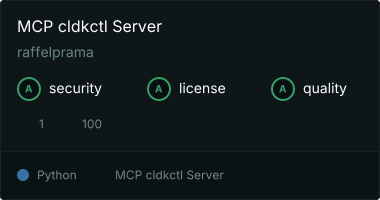
Copy to your README.md:
Score Badge

Copy to your README.md:
Latest Blog Posts
- Who's Calling? MCP Hosts Are an Identity Blind Spot (And the Spec Knows It)By Om-Shree-0709 on .mcpAgent IdentityOAuth 2.1
- Your AI Chatbot Just Exposed Your CEO's Salary to an InternBy Om-Shree-0709 on .Agent IdentityMCP SecurityOAuth Delegation
- Why MCP Servers Need Execution Sandboxing (And Why Your Current Stack Isn't Enough)By Om-Shree-0709 on .Agentic AiPrompt InjectionWebAssembly
MCP directory API
We provide all the information about MCP servers via our MCP API.
curl -X GET 'https://glama.ai/api/mcp/v1/servers/raffelprama/mcp-cldkctl'
If you have feedback or need assistance with the MCP directory API, please join our Discord server