Glama

ライトハウスMCP

ClaudeがLighthouse.oneのポートフォリオデータと連携できるようにするモデルコンテキストプロトコル(MCP)サーバー。この統合により、Claudeから直接暗号資産ポートフォリオのクエリと分析が可能になります。

特徴

  • 認証: 転送トークン URL を使用して Lighthouse で安全に認証します

  • ポートフォリオの概要: 以下の内容を含むポートフォリオの詳細な内訳を取得します。

    • ポートフォリオ総額

    • 資産タイプの分布

    • 主要保有資産(1,000ドル以上)

    • 接続されているウォレット/アカウントのリスト

  • 資産詳細: ポートフォリオ内の特定の資産に関する詳細情報を表示します

  • 取引履歴: ウォレット間の取引履歴にアクセスします

  • パフォーマンス分析: ポートフォリオのパフォーマンスを時間の経過とともに把握します

パフォーマンス、アセットの配布などについて、自然言語であらゆる形式の質問を Claude に尋ねることができ、Claude は適切なツールを呼び出して回答を生成するよう最善を尽くします。

Related MCP server: Chronos MCP Server

Claude Desktopでの使用

注意:このMCPサーバーを使用するには、少なくともNode LTSがインストールされている必要があります。N -Installを使って、システムにNodeを素早くインストールしてみてください。

これをclaude_desktop_config.jsonに追加します:

{
  "mcpServers": {
    "lighthouse": {
      "command": "npx",
      "args": ["-y", "mcp-lighthouse"]
    }
  }
}

その後、Claudeアプリを再起動してください。起動時にエラーが表示されない場合は、MCPサーバーは正常に動作しています。

認証のウォークスルー

認証URLの入力を求められます。取得するには、以下の手順に従ってください。

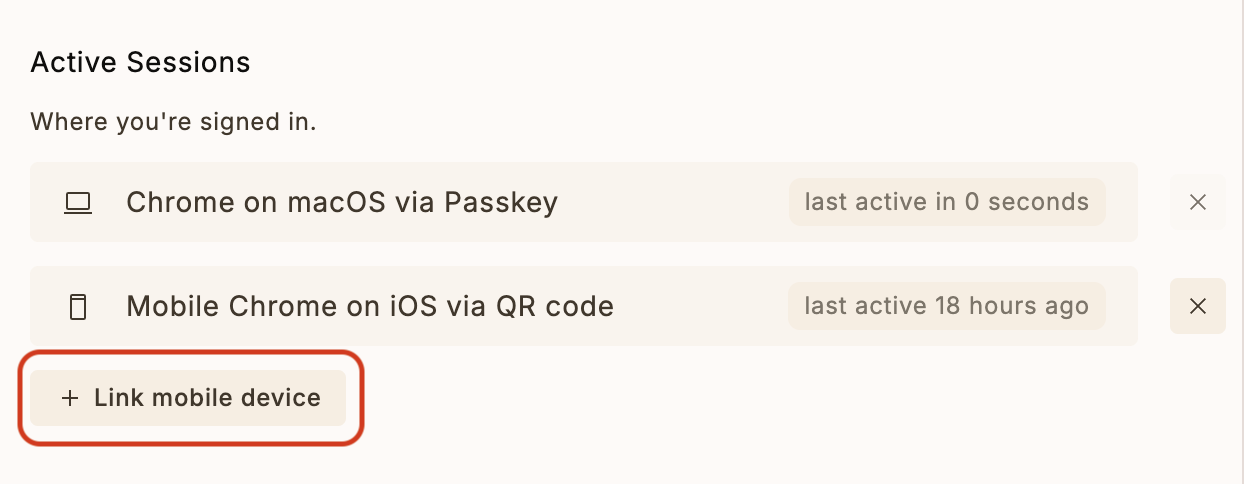
  1. Lighthouse.oneの設定ページに移動します

  2. 「モバイルデバイスをリンク」オプションをクリックします

ライトハウスリンクモバイルデバイス

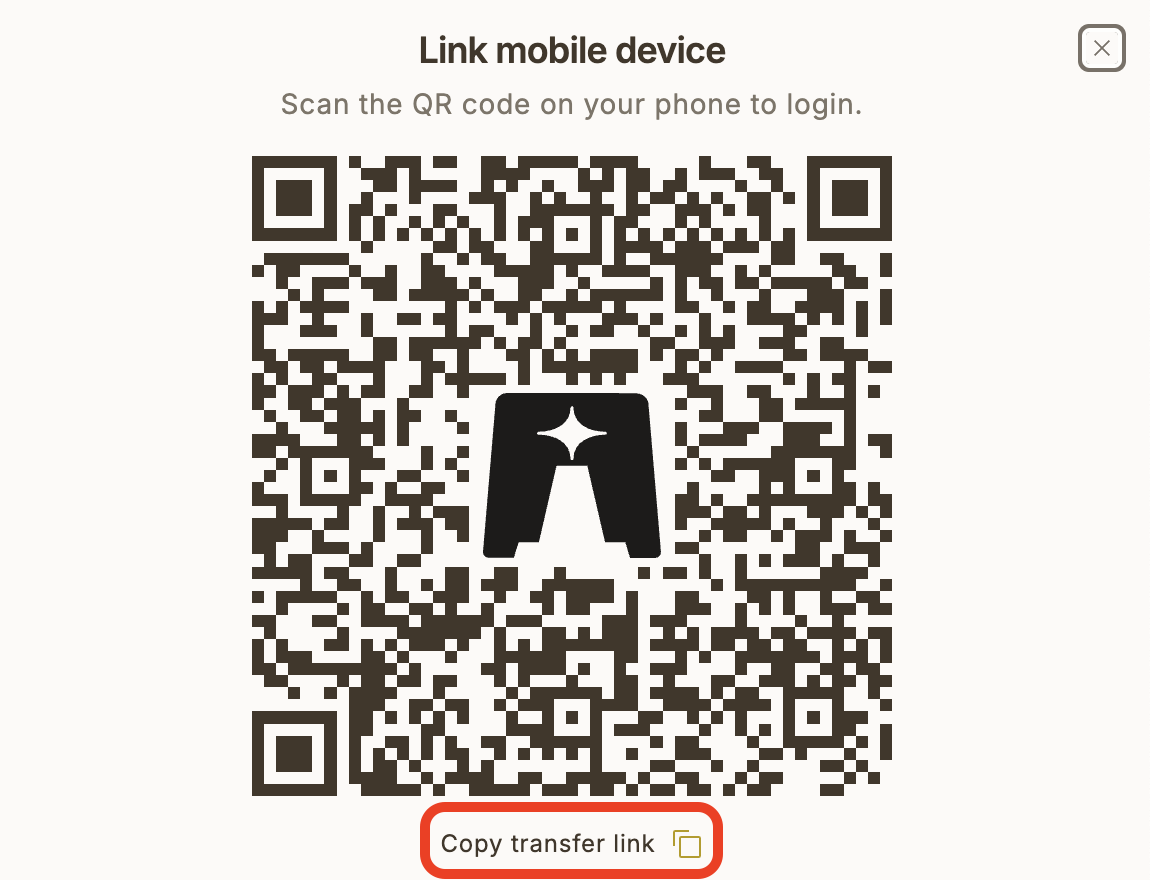
  1. 「転送リンクをコピー」をクリックします

モバイル転送コード

注: URL は、Claude がセッションの認証に使用できる Lighthouse 転送トークン URL の形式になります。

利用可能なコマンド

接続すると、Claude で次のコマンドを使用できます。

  1. 認証

    Use the authenticate command with a Lighthouse transfer token URL to log in.
  2. ポートフォリオの一覧

    Use the listLighthousePortfolios command to see all your portfolios and their total values.
  3. ポートフォリオの概要を取得する

    Use the getLighthousePortfolio command to view your current portfolio status with detailed breakdowns.
  4. 利回りデータを取得する

    Use the getLighthouseYieldData command to see yield information for your portfolio.
  5. パフォーマンスデータを取得する

    Use the getLighthousePerformanceData command to analyze your portfolio's performance over time.

セッション管理

  • サーバーは認証を保持するためにセッションファイル( .lighthouse_session )を維持します。

  • 明示的にログアウトするかセッションが期限切れにならない限り、認証は1回だけ必要です。

  • セッションデータはローカルマシンに安全に保存されます

注: セッション キーは、Lighthouse ダッシュボードからいつでも取り消すことができます。

セキュリティに関する注意事項

このMCPサーバーはあなたのマシン上でローカルに実行され、LighthouseのAPIと直接通信します。認証情報はClaudeやサードパーティのサービスと共有されることはありません。

ローカルで実行

  1. プロジェクトをビルドします。

npm install

npm run build
  1. ClaudeにMCPサーバーを追加する

このJSONをClaudeアプリの開発設定に貼り付けてください。正しいビルド出力を指定していることを確認してください。

{
  "mcpServers": {
    "lighthouse": {
      "command": "path/to/node/installation",
      "args": ["path/to/this/folder/mcp-lighthouse/dist/index.js"]
    }
  }
}

発達

このプロジェクトはTypeScriptで構築されており、MCPサーバーの実装にはFastMCPフレームワークを使用しています。機能を変更または拡張するには、以下の手順に従ってください。

  1. index.tsに変更を加える

  2. プロジェクトをリビルドします: npm run build

  3. サーバーを再起動します

要件

  • Node.js 16以上

  • npmまたはyarn

  • Lighthouse.oneアカウント

Available Tools

5 tools
authenticateC

Authenticate with Lighthouse using a transfer token URL

ParametersJSON Schema
NameRequiredDescriptionDefault
urlYes

TDQS

C2.8/5.0
Behavior2/5

Does the description disclose side effects, auth requirements, rate limits, or destructive behavior?

With no annotations provided, the description carries full burden for behavioral disclosure. It states this is an authentication operation but doesn't describe what happens after authentication (e.g., session establishment, token storage, duration), whether it's idempotent, what errors might occur, or any rate limits. 'Authenticate' implies a state-changing operation, but the behavioral implications are underspecified.

Agents need to know what a tool does to the world before calling it. Descriptions should go beyond structured annotations to explain consequences.

Conciseness5/5

Is the description appropriately sized, front-loaded, and free of redundancy?

The description is a single, efficient sentence with zero wasted words. It's front-loaded with the core purpose and includes the essential detail about the authentication method. Every element earns its place.

Shorter descriptions cost fewer tokens and are easier for agents to parse. Every sentence should earn its place.

Completeness2/5

Given the tool's complexity, does the description cover enough for an agent to succeed on first attempt?

For an authentication tool with no annotations, no output schema, and 0% schema description coverage, the description is inadequate. Authentication is a critical, state-changing operation that requires clear behavioral disclosure about what happens after authentication, error conditions, and session management. The description provides only the basic purpose without addressing these complexities.

Complex tools with many parameters or behaviors need more documentation. Simple tools need less. This dimension scales expectations accordingly.

Parameters2/5

Does the description clarify parameter syntax, constraints, interactions, or defaults beyond what the schema provides?

Schema description coverage is 0%, so the description must compensate. It mentions 'transfer token URL' which provides some semantic context for the single 'url' parameter, but doesn't explain what format this URL should have, where to obtain it, or what constitutes a valid transfer token. The description adds minimal value beyond the bare parameter name.

Input schemas describe structure but not intent. Descriptions should explain non-obvious parameter relationships and valid value ranges.

Purpose4/5

Does the description clearly state what the tool does and how it differs from similar tools?

The description clearly states the verb ('Authenticate') and resource ('with Lighthouse'), specifying the action and target system. It distinguishes from sibling tools which are all data retrieval operations, but doesn't explicitly contrast with them. The mention of 'using a transfer token URL' adds specificity about the authentication method.

Agents choose between tools based on descriptions. A clear purpose with a specific verb and resource helps agents select the right tool.

Usage Guidelines2/5

Does the description explain when to use this tool, when not to, or what alternatives exist?

No explicit guidance on when to use this tool versus alternatives is provided. The description implies this is for initial authentication, but doesn't state prerequisites, when authentication is required, or how this relates to the sibling data retrieval tools that presumably require authentication first.

Agents often have multiple tools that could apply. Explicit usage guidance like "use X instead of Y when Z" prevents misuse.

getLighthousePerformanceDataC

Get performance data for a Lighthouse portfolio

ParametersJSON Schema
NameRequiredDescriptionDefault
portfolioNoOptional portfolio name
startDateNoOptional start date. Formatted as YYYY-MM-DD

TDQS

C2.9/5.0
Behavior2/5

Does the description disclose side effects, auth requirements, rate limits, or destructive behavior?

With no annotations provided, the description carries the full burden of behavioral disclosure but only states the basic action. It doesn't describe whether this is a read-only operation, what the return format looks like (e.g., structured data, metrics), potential rate limits, or error conditions. This leaves significant gaps in understanding how the tool behaves beyond its simple purpose.

Agents need to know what a tool does to the world before calling it. Descriptions should go beyond structured annotations to explain consequences.

Conciseness5/5

Is the description appropriately sized, front-loaded, and free of redundancy?

The description is a single, efficient sentence that directly states the tool's purpose without unnecessary words. It's appropriately sized for a simple data retrieval tool and front-loaded with the core action, making it easy to parse quickly.

Shorter descriptions cost fewer tokens and are easier for agents to parse. Every sentence should earn its place.

Completeness2/5

Given the tool's complexity, does the description cover enough for an agent to succeed on first attempt?

Given the lack of annotations and output schema, the description is incomplete for a data retrieval tool. It doesn't explain what 'performance data' entails (e.g., metrics, time series, aggregated results) or how results are structured, which is critical for an agent to interpret outputs. The simplicity of the tool (2 optional parameters) doesn't compensate for these missing behavioral details.

Complex tools with many parameters or behaviors need more documentation. Simple tools need less. This dimension scales expectations accordingly.

Parameters3/5

Does the description clarify parameter syntax, constraints, interactions, or defaults beyond what the schema provides?

The input schema has 100% description coverage, clearly documenting both optional parameters ('portfolio' and 'startDate') with formatting details for the date. The description adds no additional parameter semantics beyond what the schema provides, so it meets the baseline of 3 where the schema does the heavy lifting without compensating for any gaps.

Input schemas describe structure but not intent. Descriptions should explain non-obvious parameter relationships and valid value ranges.

Purpose4/5

Does the description clearly state what the tool does and how it differs from similar tools?

The description clearly states the action ('Get performance data') and target resource ('for a Lighthouse portfolio'), making the purpose understandable. However, it doesn't differentiate this tool from its sibling 'getLighthouseYieldData' which suggests another type of portfolio data, leaving some ambiguity about what specifically distinguishes 'performance data' from 'yield data'.

Agents choose between tools based on descriptions. A clear purpose with a specific verb and resource helps agents select the right tool.

Usage Guidelines2/5

Does the description explain when to use this tool, when not to, or what alternatives exist?

The description provides no guidance on when to use this tool versus alternatives like 'getLighthouseYieldData' or 'getLighthousePortfolio'. It doesn't mention prerequisites (e.g., whether authentication is required via the 'authenticate' sibling tool) or context for selecting this specific data retrieval method, leaving the agent to infer usage from tool names alone.

Agents often have multiple tools that could apply. Explicit usage guidance like "use X instead of Y when Z" prevents misuse.

getLighthousePortfolioC

Fetch and display a detailed summary of a Lighthouse portfolio with breakdown by asset types and major holdings.

ParametersJSON Schema
NameRequiredDescriptionDefault
portfolioNoOptional portfolio name to select a specific portfolio to display a summary for

TDQS

C2.9/5.0
Behavior2/5

Does the description disclose side effects, auth requirements, rate limits, or destructive behavior?

No annotations are provided, so the description carries the full burden of behavioral disclosure. It states the tool fetches and displays data, implying a read-only operation, but doesn't address key aspects like authentication requirements, rate limits, error conditions, or response format. The description lacks details on what 'detailed summary' entails beyond asset types and holdings, leaving behavioral traits unclear.

Agents need to know what a tool does to the world before calling it. Descriptions should go beyond structured annotations to explain consequences.

Conciseness4/5

Is the description appropriately sized, front-loaded, and free of redundancy?

The description is a single, well-structured sentence that efficiently conveys the core action and output. It avoids redundancy and front-loads key information. However, it could be slightly more concise by merging 'fetch and display' into a single verb like 'retrieve', but this is minor.

Shorter descriptions cost fewer tokens and are easier for agents to parse. Every sentence should earn its place.

Completeness2/5

Given the tool's complexity, does the description cover enough for an agent to succeed on first attempt?

Given no annotations and no output schema, the description is incomplete for a tool that fetches detailed data. It mentions 'detailed summary' but doesn't specify what that includes beyond asset types and holdings, leaving gaps in understanding the return value. For a read operation with potential complexity, more context on output structure or behavior is needed.

Complex tools with many parameters or behaviors need more documentation. Simple tools need less. This dimension scales expectations accordingly.

Parameters3/5

Does the description clarify parameter syntax, constraints, interactions, or defaults beyond what the schema provides?

Schema description coverage is 100%, with the single parameter 'portfolio' documented as an optional string for selecting a specific portfolio. The description adds no additional parameter semantics beyond what the schema provides, such as default behavior if omitted or examples of portfolio names. Baseline score of 3 is appropriate since the schema adequately covers the parameter.

Input schemas describe structure but not intent. Descriptions should explain non-obvious parameter relationships and valid value ranges.

Purpose4/5

Does the description clearly state what the tool does and how it differs from similar tools?

The description clearly states the tool's purpose with specific verbs ('fetch and display') and resources ('detailed summary of a Lighthouse portfolio'), including what information is provided ('breakdown by asset types and major holdings'). It distinguishes from siblings like 'listLighthousePortfolios' by focusing on detailed summaries rather than listing portfolio names. However, it doesn't explicitly contrast with performance or yield data tools, preventing a perfect score.

Agents choose between tools based on descriptions. A clear purpose with a specific verb and resource helps agents select the right tool.

Usage Guidelines2/5

Does the description explain when to use this tool, when not to, or what alternatives exist?

The description provides no guidance on when to use this tool versus alternatives like 'getLighthousePerformanceData' or 'getLighthouseYieldData'. It mentions fetching a 'detailed summary' but doesn't clarify if this should be used for overviews versus those tools for specific metrics. No prerequisites, exclusions, or explicit alternatives are stated.

Agents often have multiple tools that could apply. Explicit usage guidance like "use X instead of Y when Z" prevents misuse.

getLighthouseYieldDataC

Get yield data for a Lighthouse portfolio

ParametersJSON Schema
NameRequiredDescriptionDefault
portfolioNoOptional portfolio name to select a specific portfolio to display a summary for

TDQS

C2.9/5.0
Behavior2/5

Does the description disclose side effects, auth requirements, rate limits, or destructive behavior?

With no annotations provided, the description carries the full burden of behavioral disclosure but only states what the tool does without details on permissions, rate limits, data format, or response behavior. It doesn't add meaningful context beyond the basic purpose, leaving gaps in understanding how the tool behaves.

Agents need to know what a tool does to the world before calling it. Descriptions should go beyond structured annotations to explain consequences.

Conciseness5/5

Is the description appropriately sized, front-loaded, and free of redundancy?

The description is a single, efficient sentence that directly states the tool's purpose without unnecessary words. It's appropriately sized and front-loaded, making it easy to parse quickly.

Shorter descriptions cost fewer tokens and are easier for agents to parse. Every sentence should earn its place.

Completeness2/5

Given the tool's complexity, does the description cover enough for an agent to succeed on first attempt?

Given the lack of annotations and output schema, the description is incomplete. It doesn't explain what 'yield data' entails, the return format, or any behavioral traits, making it inadequate for a tool that likely returns financial data without further context.

Complex tools with many parameters or behaviors need more documentation. Simple tools need less. This dimension scales expectations accordingly.

Parameters3/5

Does the description clarify parameter syntax, constraints, interactions, or defaults beyond what the schema provides?

Schema description coverage is 100%, so the schema already documents the 'portfolio' parameter as optional for selecting a specific portfolio. The description doesn't add any extra meaning or context about the parameter beyond what's in the schema, meeting the baseline for high coverage.

Input schemas describe structure but not intent. Descriptions should explain non-obvious parameter relationships and valid value ranges.

Purpose4/5

Does the description clearly state what the tool does and how it differs from similar tools?

The description clearly states the action ('Get') and resource ('yield data for a Lighthouse portfolio'), making the purpose understandable. However, it doesn't differentiate from sibling tools like 'getLighthousePerformanceData' or 'getLighthousePortfolio', which likely retrieve different types of portfolio information, so it misses full sibling distinction.

Agents choose between tools based on descriptions. A clear purpose with a specific verb and resource helps agents select the right tool.

Usage Guidelines2/5

Does the description explain when to use this tool, when not to, or what alternatives exist?

No guidance is provided on when to use this tool versus alternatives. The description lacks context about when yield data is needed compared to performance data or portfolio details, and there's no mention of prerequisites or exclusions, leaving usage unclear.

Agents often have multiple tools that could apply. Explicit usage guidance like "use X instead of Y when Z" prevents misuse.

listLighthousePortfoliosA

List all Lighthouse portfolios, their total portfolio value, the wallets within each portfolio and their total value

ParametersJSON Schema
NameRequiredDescriptionDefault

No parameters

TDQS

A3.6/5.0
Behavior2/5

Does the description disclose side effects, auth requirements, rate limits, or destructive behavior?

With no annotations provided, the description carries the full burden of behavioral disclosure. It describes what data is returned but lacks critical behavioral details: whether this is a read-only operation, if it requires authentication (implied by sibling 'authenticate'), pagination or rate limits, or error conditions. The description is insufficient for a tool with zero annotation coverage.

Agents need to know what a tool does to the world before calling it. Descriptions should go beyond structured annotations to explain consequences.

Conciseness5/5

Is the description appropriately sized, front-loaded, and free of redundancy?

The description is a single, efficient sentence that front-loads the core action ('List all Lighthouse portfolios') and specifies the exact data returned. Every word adds value with zero waste or redundancy.

Shorter descriptions cost fewer tokens and are easier for agents to parse. Every sentence should earn its place.

Completeness2/5

Given the tool's complexity, does the description cover enough for an agent to succeed on first attempt?

Given no annotations, no output schema, and a read operation that likely requires authentication (based on sibling tools), the description is incomplete. It covers what data is returned but omits behavioral context like authentication requirements, response format, or error handling, which are essential for proper tool invocation.

Complex tools with many parameters or behaviors need more documentation. Simple tools need less. This dimension scales expectations accordingly.

Parameters4/5

Does the description clarify parameter syntax, constraints, interactions, or defaults beyond what the schema provides?

The tool has 0 parameters with 100% schema description coverage (empty schema), so no parameter documentation is needed. The description appropriately focuses on output semantics, establishing a baseline of 4 for zero-parameter tools that describe their purpose clearly.

Input schemas describe structure but not intent. Descriptions should explain non-obvious parameter relationships and valid value ranges.

Purpose5/5

Does the description clearly state what the tool does and how it differs from similar tools?

The description clearly states the verb 'List' and the resource 'Lighthouse portfolios', specifying exactly what data is returned: portfolios, their total value, wallets within each, and wallet values. It distinguishes from siblings like getLighthousePortfolio (singular) and getLighthousePerformanceData (performance metrics).

Agents choose between tools based on descriptions. A clear purpose with a specific verb and resource helps agents select the right tool.

Usage Guidelines3/5

Does the description explain when to use this tool, when not to, or what alternatives exist?

The description implies usage for retrieving portfolio lists with values, but provides no explicit guidance on when to use this versus alternatives like getLighthousePortfolio (for a single portfolio) or getLighthousePerformanceData (for performance data). No exclusions or prerequisites are mentioned.

Agents often have multiple tools that could apply. Explicit usage guidance like "use X instead of Y when Z" prevents misuse.

Tool Schema Changelog

Recent tool additions, removals, and schema changes observed during successful MCP inspections.

  1. 5 tool updatesv1.0.0
    • First observedauthenticate
    • First observedgetLighthousePerformanceData
    • First observedgetLighthousePortfolio
    • First observedgetLighthouseYieldData
    • First observedlistLighthousePortfolios

TDQS

B3.3/5.0

Scored across 5 tools

Disambiguation5/5

Each tool has a clearly distinct purpose: authentication, listing portfolios, getting portfolio details, and retrieving performance and yield data. There is no overlap in functionality, making it easy for an agent to select the correct tool for each task.

Naming Consistency3/5

The naming is mixed with inconsistent patterns: 'authenticate' uses a verb only, while others use a verb_noun format (e.g., 'getLighthousePerformanceData'). However, all names are readable and follow a general descriptive style, though they lack a uniform convention.

Tool Count5/5

With 5 tools, the server is well-scoped for managing Lighthouse portfolios. Each tool serves a specific and necessary function, from authentication to data retrieval, without being overly sparse or bloated.

Completeness4/5

The toolset covers core operations for portfolio management, including authentication, listing, and detailed data retrieval. A minor gap exists in update or delete operations for portfolios, but the provided tools support essential workflows effectively.

Maintenance

ActivityInactive
ResponsivenessNo issues

Related MCP Connectors

Related MCP Servers

  • A
    license
    B
    quality
    D
    maintenance
    A Model Context Protocol server for integrating AI assistants like Claude Desktop with the Stellar blockchain, enabling wallet connections, token listings, balance queries, and fund transfers.
    4
    8 npm
    JavaScript
    MIT
  • F
    license
    Not graded
    quality
    D
    maintenance
    A Model Context Protocol server that enables Claude AI to interact with the Solana blockchain, allowing it to execute transactions, query accounts, manage wallets, get price predictions, trade tokens, and access various blockchain data sources.
    4
    -
  • A
    license
    Not graded
    quality
    C
    maintenance
    A Model Context Protocol server that provides AI assistants like Claude with secure, read-only access to MoneyWiz financial data for natural language queries and financial analytics.
    13
    MIT