Glama
aytzey
by aytzey

Paper Pilot

Paper Pilot

AIのためのリサーチコパイロット。

あなたが「リサーチ」と言うとき、AIはGoogle検索をするだけかもしれません。Paper Pilotは、実際の学術データベースを検索し、PDFをダウンロードして隅々まで読み込み、引用付きのエビデンスを提供します。


CI PyPI License: MIT Python 3.11+ GitHub stars


Demo

クイックスタート

uvx paper-pilot

以上です。または、以下のようにインストールしてください:

pip install paper-pilot

Related MCP server: Research MCP

仕組み

graph LR
    A[Prompt] --> B[Search 6 databases]
    B --> C[Resolve OA PDFs]
    C --> D[Download & read]
    D --> E[Extract evidence]
    E --> F[Render figures]
    F --> G[Markdown report]
    G --> H[Zotero sync]

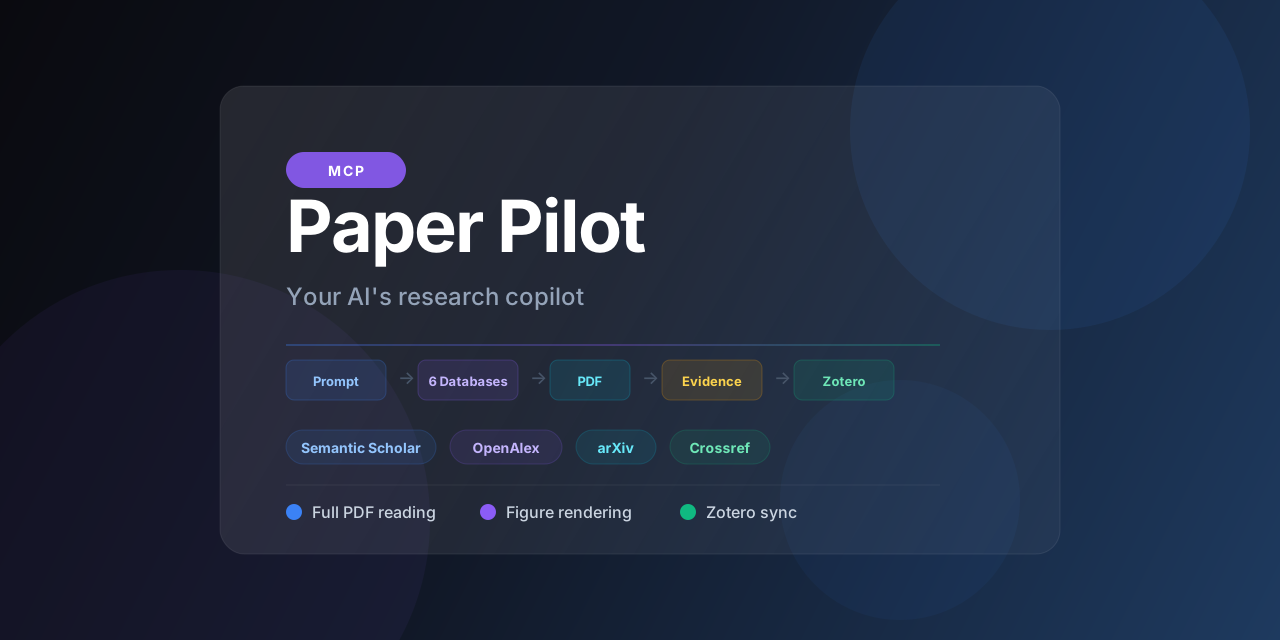
1つのプロンプト。6つの学術データベース。本物のPDF。本物の引用。

Research retrieval-augmented generation, deep-read the top papers, and compare the methods.

AIは以下のことを行います:

  1. Semantic ScholarOpenAlexarXivCrossrefEurope PMCを検索

  2. アブストラクトだけでなく、オープンアクセスのPDFを見つける

  3. PDFをダウンロードして隅々まで読み込む

  4. ソースを明記したエビデンスのチャンクを抽出する

  5. 特定のページをレンダリングして、図表を視覚的に確認できるようにする

  6. 構造化されたMarkdownレポートを作成する

  7. すべてをZoteroライブラリに保存する


代替ツールとの比較

ChatGPT Deep Research

Gemini Deep Research

Perplexity Pro

Paper Pilot

実際のPDFを読み込む

Web要約のみ

Web要約のみ

Web要約のみ

全文抽出

図表の扱い

テキストのみ

テキストのみ

テキストのみ

PNGへのページレンダリング

ライブラリ管理

UI内に固定

Google内に固定

Perplexity内に固定

Zoteroと同期

ソース

一般的なWeb検索

一般的なWeb検索

Web検索

6つの学術データベース

コスト

月額200ドル

月額20ドル

月額20ドル

無料、MITライセンス

データ管理

クラウド上

クラウド上

クラウド上

ローカル環境

オープンソース

いいえ

いいえ

いいえ

はい


MCPクライアントの設定

Claude Desktop

claude_desktop_config.json に以下を追加してください:

{
  "mcpServers": {
    "paper-pilot": {
      "command": "uv",
      "args": ["--directory", "/path/to/paper-pilot", "run", "paper-pilot"],
      "env": {
        "OPENALEX_EMAIL": "you@example.com",
        "UNPAYWALL_EMAIL": "you@example.com",
        "ZOTERO_LOCAL": "true",
        "SCIHUB_ENABLED": "false"
      }
    }
  }
}

Claude Code

claude mcp add --scope user paper-pilot -- uv --directory /path/to/paper-pilot run paper-pilot

Codex

~/.codex/config.toml に以下を追加してください:

[mcp_servers.paper_pilot]
command = "uv"
args = ["--directory", "/path/to/paper-pilot", "run", "paper-pilot"]

[mcp_servers.paper_pilot.env]
OPENALEX_EMAIL = "you@example.com"
ZOTERO_LOCAL = "true"

ストリーミング可能なHTTPモード

paper-pilot --transport streamable-http --host 127.0.0.1 --port 8000

ツール

ツール

機能

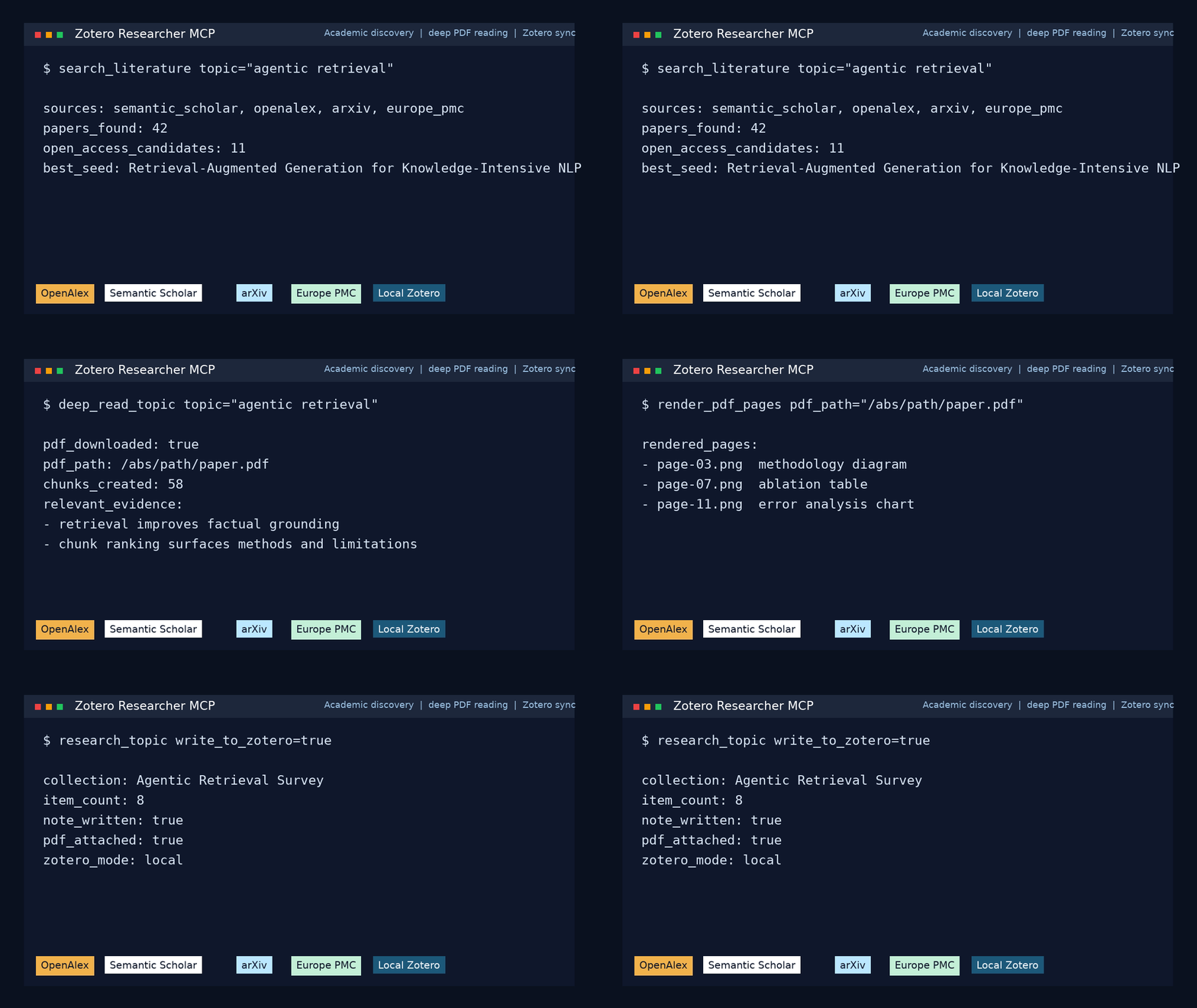
research_topic

フルパイプライン:検索、ダウンロード、レポート作成、Zotero同期

deep_read_topic

上記すべて + エビデンスチャンク付きの全文抽出

render_pdf_pages

図表確認のためのPDFページからPNGへの変換

search_literature

高精度なマルチソース学術検索

find_similar_papers

シード論文に基づく関連研究の拡張

inspect_open_access_pdf

OAの利用可能性チェックとPDFプレビュー

extract_local_pdf_text

ローカルPDFからのテキスト抽出

search_scihub

DOI、タイトル、キーワードによるSci-Hub検索(オプトイン)

download_scihub_paper

DOIによるSci-Hub経由の論文ダウンロード(オプトイン)

search_libgen

補完的なシャドウライブラリ検索

healthcheck

すべての接続状態の確認


Sci-Hub統合(オプトイン)

Sci-Hubへのアクセスはデフォルトで無効になっています。有効にするには:

SCIHUB_ENABLED=true

有効化後は、search_scihubdownload_scihub_paper を直接使用するか、research_topic / deep_read_topicinclude_scihub=True を渡すことで自動フォールバックが可能です。

免責事項: Sci-Hub統合は、教育および研究目的でのみ提供されています。適用される法律および機関のポリシーへの準拠については、ユーザーが単独で責任を負うものとします。


利用対象者

博士課程の学生: 文献レビューに1週間も費やしたくない方。論文のトピックを指定すれば、実際の引用とZoteroに保存済みのPDFを含む構造化された比較レポートが返ってきます。

研究ラボ: 毎週プレプリントをスキャンして自動整理したい方。research_topic をスケジュール実行して、グループライブラリを常に最新の状態に保てます。

AI開発者: Webスクレイピングの断片ではなく、実際の学術論文を扱うエージェントを構築したい方。


設定

OPENALEX_EMAIL=you@example.com        # Required for polite API access
UNPAYWALL_EMAIL=you@example.com       # Required for OA resolution
SEMANTIC_SCHOLAR_API_KEY=             # Optional, higher rate limits

# Local Zotero
ZOTERO_LOCAL=true
ZOTERO_LIBRARY_TYPE=user

# Web Zotero API (alternative)
ZOTERO_LIBRARY_ID=
ZOTERO_API_KEY=

# Sci-Hub (disabled by default)
SCIHUB_ENABLED=false

# Storage
PAPER_PILOT_DATA_DIR=./data

# Institutional networks
HTTP_PROXY=
HTTPS_PROXY=
SSL_CERT_FILE=

プロジェクト構造

src/paper_pilot/
  server.py              MCP tools and pipeline orchestration
  config.py              Environment and settings
  services/
    academic.py          Multi-source scholarly search
    open_access.py       OA resolution and PDF downloads
    scihub.py            Sci-Hub paper resolution (opt-in)
    deep_read.py         Full-text extraction and page rendering
    zotero.py            Local and web Zotero integration
    reporting.py         Markdown report generation
    libgen.py            Supplementary LibGen support

アーキテクチャの詳細: docs/ARCHITECTURE.md


AIエージェント向け


貢献

プルリクエストを歓迎します。特に以下の分野での貢献を期待しています:

  • 新しい学術ソースアダプターの追加

  • OA解決ロジックの改善

  • PDF解析の向上

  • MCPクライアント設定の追加

CONTRIBUTING.md を参照してください。


免責事項

本ツールは学術研究および教育目的でのみ設計されています。オープンアクセス機能は、合法かつ公開されているソースのみを使用します。Sci-HubおよびLibGenの統合はデフォルトで無効であり、オプトイン機能として提供されています。


ライセンス

MIT。自由に使用してください。

もしこのツールが研究の役に立ったなら、リポジトリにスターを付け、同僚に紹介してください。

Available Tools

16 tools
deep_read_topicA

Search, download, extract full text, and return evidence chunks plus local PDF paths for direct inspection.

By default the result is just [result_dict]: it carries every downloaded PDF's local path in pdf_paths (and in deep_reads[].pdf_path / downloads[].pdf_path), so a client can open the files when needed without any base64 in the payload. Opt in to inline content when your client benefits: render_top_pages=True appends the top paper's relevant pages as images (vision models); attach_top_pdf=True embeds its PDF as an application/pdf resource (Claude API style). include_scihub=True adds a Sci-Hub fallback; write_graph=True also renders a citation graph (path in graph_path).

ParametersJSON Schema
NameRequiredDescriptionDefault
topicYes
research_questionNo
limit_per_sourceNo
related_limitNo
download_top_nNo
top_chunks_per_paperNo
chunk_size_charsNo
chunk_overlap_charsNo
include_scihubNo
scihub_fallback_limitNo
from_yearNo
to_yearNo
open_access_onlyNo
write_to_zoteroNo
existing_collection_keyNo
existing_collection_nameNo
create_collection_nameNo
attach_pdfsNo
write_graphNo
render_top_pagesNo
max_render_pagesNo
render_scaleNo
attach_top_pdfNo
attach_pdf_max_mbNo
attach_pdf_max_pagesNo

TDQS

A3.8/5.0
Behavior4/5

Does the description disclose side effects, auth requirements, rate limits, or destructive behavior?

No annotations are present, so the description carries the full burden. It explains default behavior (result dict with pdf_paths), side effects (write_graph, write_to_zotero), fallback (include_scihub), and output format details (local paths, no base64). This provides substantial transparency, though it could mention rate limits or authentication requirements if applicable.

Agents need to know what a tool does to the world before calling it. Descriptions should go beyond structured annotations to explain consequences.

Conciseness4/5

Is the description appropriately sized, front-loaded, and free of redundancy?

The description is divided into two focused paragraphs: the first states the high-level purpose, and the second details optional behaviors. Every sentence provides useful information, though it could be slightly shortened without losing key details. The structure supports quick scanning.

Shorter descriptions cost fewer tokens and are easier for agents to parse. Every sentence should earn its place.

Completeness3/5

Given the tool's complexity, does the description cover enough for an agent to succeed on first attempt?

Given the tool's complexity (25 parameters, no output schema, no annotations), the description covers the main output structure and key options but omits explanations for many parameters. It provides enough context for basic usage but may leave agents uncertain about lower-level settings. Return values beyond paths are not detailed.

Complex tools with many parameters or behaviors need more documentation. Simple tools need less. This dimension scales expectations accordingly.

Parameters3/5

Does the description clarify parameter syntax, constraints, interactions, or defaults beyond what the schema provides?

Schema description coverage is 0%, so the description must add meaning. It explains several key parameters (render_top_pages, attach_top_pdf, include_scihub, write_graph, etc.) and their effects. However, many parameters (e.g., limit_per_source, related_limit, download_top_n, chunk settings) are not described, leaving gaps. The description adds value but incompletely compensates for the lack of schema descriptions.

Input schemas describe structure but not intent. Descriptions should explain non-obvious parameter relationships and valid value ranges.

Purpose5/5

Does the description clearly state what the tool does and how it differs from similar tools?

The description starts with a clear verb and resource: 'Search, download, extract full text, and return evidence chunks plus local PDF paths for direct inspection.' It distinguishes itself from sibling tools like research_topic or search_literature by emphasizing local file paths and optional inline content, making its unique value proposition evident.

Agents choose between tools based on descriptions. A clear purpose with a specific verb and resource helps agents select the right tool.

Usage Guidelines3/5

Does the description explain when to use this tool, when not to, or what alternatives exist?

The description provides guidance on when to opt into inline content (e.g., 'when your client benefits: render_top_pages=True appends top paper's relevant pages as images...'), but it does not explicitly state when to prefer this tool over its siblings (e.g., research_topic, search_literature) or when to avoid it. The usage context is partially clear but lacks comparative guidance.

Agents often have multiple tools that could apply. Explicit usage guidance like "use X instead of Y when Z" prevents misuse.

download_scihub_paperA

Download a paper PDF via Sci-Hub using its DOI. Returns local path and text preview. Requires SCIHUB_ENABLED=true.

ParametersJSON Schema
NameRequiredDescriptionDefault
doiYes
topic_hintNoscihub

TDQS

A3.7/5.0
Behavior3/5

Does the description disclose side effects, auth requirements, rate limits, or destructive behavior?

No annotations are provided, so the description carries the full burden. It discloses the download action and output format, but does not mention potential failures, network dependencies, or the scope of the text preview. The information is adequate but not exhaustive.

Agents need to know what a tool does to the world before calling it. Descriptions should go beyond structured annotations to explain consequences.

Conciseness4/5

Is the description appropriately sized, front-loaded, and free of redundancy?

The description is two sentences with no redundant information. It is concise and front-loaded, effectively communicating the essential purpose and prerequisite.

Shorter descriptions cost fewer tokens and are easier for agents to parse. Every sentence should earn its place.

Completeness3/5

Given the tool's complexity, does the description cover enough for an agent to succeed on first attempt?

Given no output schema, the description mentions the return type (local path and text preview) adequately. However, it lacks details on error handling, file naming, or the length of the preview, leaving some gaps for a complete understanding.

Complex tools with many parameters or behaviors need more documentation. Simple tools need less. This dimension scales expectations accordingly.

Parameters2/5

Does the description clarify parameter syntax, constraints, interactions, or defaults beyond what the schema provides?

The description explains the 'doi' parameter by stating 'using its DOI', which provides context. However, the 'topic_hint' parameter is not explained at all, leaving its purpose unclear. With 0% schema description coverage, the description should compensate more fully.

Input schemas describe structure but not intent. Descriptions should explain non-obvious parameter relationships and valid value ranges.

Purpose5/5

Does the description clearly state what the tool does and how it differs from similar tools?

The description clearly states the action (download), the resource (paper PDF), the method (via Sci-Hub using DOI), and the output (local path and text preview). It effectively distinguishes from siblings like search_scihub and read_pdf_document.

Agents choose between tools based on descriptions. A clear purpose with a specific verb and resource helps agents select the right tool.

Usage Guidelines4/5

Does the description explain when to use this tool, when not to, or what alternatives exist?

The description includes a prerequisite (SCIHUB_ENABLED=true) and implies the use case (having a DOI for a paper). It does not explicitly state when not to use or name alternatives, but the context is clear enough.

Agents often have multiple tools that could apply. Explicit usage guidance like "use X instead of Y when Z" prevents misuse.

extract_local_pdf_textC

Extract full text from a local PDF, save a text sidecar, and return top matching chunks.

ParametersJSON Schema
NameRequiredDescriptionDefault
pdf_pathYes
title_hintNo
research_questionNo
chunk_size_charsNo
chunk_overlap_charsNo
top_chunksNo

TDQS

C2.9/5.0
Behavior3/5

Does the description disclose side effects, auth requirements, rate limits, or destructive behavior?

With no annotations, the description must cover behavioral traits. It mentions saving a sidecar file (a side effect) and returning chunks, but does not disclose overwrite behavior, permissions needed, or the underlying matching mechanism. Basic transparency is present but incomplete.

Agents need to know what a tool does to the world before calling it. Descriptions should go beyond structured annotations to explain consequences.

Conciseness4/5

Is the description appropriately sized, front-loaded, and free of redundancy?

The description is a single concise sentence that front-loads the core action. It could be more structured (e.g., listing outputs), but it wastes no words and is easily scannable.

Shorter descriptions cost fewer tokens and are easier for agents to parse. Every sentence should earn its place.

Completeness2/5

Given the tool's complexity, does the description cover enough for an agent to succeed on first attempt?

The tool has 6 parameters and no output schema, yet the description omits critical details: the meaning of 'top matching chunks', how the sidecar is saved, and what the tool returns. It is insufficient for an agent to confidently invoke the tool without additional documentation.

Complex tools with many parameters or behaviors need more documentation. Simple tools need less. This dimension scales expectations accordingly.

Parameters2/5

Does the description clarify parameter syntax, constraints, interactions, or defaults beyond what the schema provides?

Schema description coverage is 0%, so the description should clarify parameters. It hints that 'research_question' and 'title_hint' drive matching, but does not explain 'chunk_size_chars', 'chunk_overlap_chars', or 'top_chunks'. The added semantic value is minimal beyond the parameter names.

Input schemas describe structure but not intent. Descriptions should explain non-obvious parameter relationships and valid value ranges.

Purpose4/5

Does the description clearly state what the tool does and how it differs from similar tools?

The description clearly states the tool's actions: extracting full text from a local PDF, saving a sidecar text file, and returning top matching chunks. It distinguishes itself from siblings like 'get_pdf_page_text' by implying chunked-based retrieval, but does not explicitly differentiate from 'read_pdf_document' or 'inspect_open_access_pdf'.

Agents choose between tools based on descriptions. A clear purpose with a specific verb and resource helps agents select the right tool.

Usage Guidelines2/5

Does the description explain when to use this tool, when not to, or what alternatives exist?

No guidance is provided on when to use this tool versus alternatives, prerequisites (e.g., file accessibility), or when not to use it. The agent must infer usage from the description alone.

Agents often have multiple tools that could apply. Explicit usage guidance like "use X instead of Y when Z" prevents misuse.

find_similar_papersC

Find similar papers starting from a seed paper title or DOI.

ParametersJSON Schema
NameRequiredDescriptionDefault
seed_titleYes
seed_doiNo
limitNo
open_access_onlyNo

TDQS

C2.9/5.0
Behavior2/5

Does the description disclose side effects, auth requirements, rate limits, or destructive behavior?

No annotations are provided, so the description must convey behavioral traits. It does not disclose error handling (e.g., if both seed_title and seed_doi are provided), rate limits, or what the output contains. The description is too brief to be transparent.

Agents need to know what a tool does to the world before calling it. Descriptions should go beyond structured annotations to explain consequences.

Conciseness4/5

Is the description appropriately sized, front-loaded, and free of redundancy?

The description is a single, concise sentence that immediately conveys the core purpose. However, it could include a brief note on the optional parameters without becoming verbose.

Shorter descriptions cost fewer tokens and are easier for agents to parse. Every sentence should earn its place.

Completeness2/5

Given the tool's complexity, does the description cover enough for an agent to succeed on first attempt?

With 4 parameters, no output schema, and no annotations, the description is insufficient. It fails to explain how the seed parameters interact, the meaning of 'limit' and 'open_access_only', or the expected output format. This leaves the agent underinformed.

Complex tools with many parameters or behaviors need more documentation. Simple tools need less. This dimension scales expectations accordingly.

Parameters2/5

Does the description clarify parameter syntax, constraints, interactions, or defaults beyond what the schema provides?

The schema has 0% description coverage, so the description must compensate. It only hints at using a seed title or DOI but does not explain 'limit' or 'open_access_only'. This adds minimal value beyond the schema itself.

Input schemas describe structure but not intent. Descriptions should explain non-obvious parameter relationships and valid value ranges.

Purpose5/5

Does the description clearly state what the tool does and how it differs from similar tools?

The description clearly states the tool's function: finding similar papers using a seed title or DOI. It uses a specific verb ('find') and resource ('similar papers'), and distinguishes from siblings like 'search_literature' which perform broader searches.

Agents choose between tools based on descriptions. A clear purpose with a specific verb and resource helps agents select the right tool.

Usage Guidelines2/5

Does the description explain when to use this tool, when not to, or what alternatives exist?

No guidance is provided on when to use this tool versus alternatives (e.g., 'search_literature', 'research_topic'). There is no mention of prerequisites, typical use cases, or when not to use it.

Agents often have multiple tools that could apply. Explicit usage guidance like "use X instead of Y when Z" prevents misuse.

get_pdf_page_textA

Return the exact extracted text of specific PDF pages (1-based) as plain JSON.

For fine-grained lookups over the wire (a single reference entry, a table, a footnote) without base64 and without filesystem/shell access. Use deep_read_topic first to get the pdf_path and the page mapping (deep_reads[*].chunk_manifest_path), then fetch the exact pages you need here.

ParametersJSON Schema
NameRequiredDescriptionDefault
pdf_pathYes
page_numbersYes

TDQS

A4.4/5.0
Behavior3/5

Does the description disclose side effects, auth requirements, rate limits, or destructive behavior?

No annotations are provided, so the description bears the full burden. It discloses that the operation is read-only (getting text) and works over the network without base64/filesystem. However, it does not explicitly state that it has no side effects or any error behavior. Given the simplicity, this is adequate but not comprehensive.

Agents need to know what a tool does to the world before calling it. Descriptions should go beyond structured annotations to explain consequences.

Conciseness5/5

Is the description appropriately sized, front-loaded, and free of redundancy?

The description is two sentences with zero wasted words. The first sentence states purpose and output; the second gives usage context and prerequisites. It is front-loaded and efficient.

Shorter descriptions cost fewer tokens and are easier for agents to parse. Every sentence should earn its place.

Completeness4/5

Given the tool's complexity, does the description cover enough for an agent to succeed on first attempt?

With no output schema, the description mentions the output is 'plain JSON' but does not detail its structure. However, for a simple text extraction tool with two parameters, the description covers the essential workflow and constraints. Minor improvement would be to specify the JSON format (e.g., mapping page numbers to text), but it's still fairly complete.

Complex tools with many parameters or behaviors need more documentation. Simple tools need less. This dimension scales expectations accordingly.

Parameters4/5

Does the description clarify parameter syntax, constraints, interactions, or defaults beyond what the schema provides?

Schema description coverage is 0%, so the description must compensate. It explains that 'pdf_path' comes from deep_read_topic and that 'page_numbers' are 1-based and 'exact pages'. This adds meaningful context beyond the schema's bare type declarations, helping the agent understand parameter origins and behavior.

Input schemas describe structure but not intent. Descriptions should explain non-obvious parameter relationships and valid value ranges.

Purpose5/5

Does the description clearly state what the tool does and how it differs from similar tools?

The description clearly states the action ('Return the exact extracted text of specific PDF pages'), the resource ('PDF pages'), and the output format ('as plain JSON'). It distinguishes itself from siblings like read_pdf_document and extract_local_pdf_text by specifying 'over the wire' and avoiding base64/filesystem access.

Agents choose between tools based on descriptions. A clear purpose with a specific verb and resource helps agents select the right tool.

Usage Guidelines5/5

Does the description explain when to use this tool, when not to, or what alternatives exist?

The description provides explicit guidance on when to use this tool ('for fine-grained lookups over the wire') and what prerequisite step is required ('Use deep_read_topic first to get the pdf_path and the page mapping'). It also contrasts with alternatives by noting it avoids base64 and shell access, making its use case clear.

Agents often have multiple tools that could apply. Explicit usage guidance like "use X instead of Y when Z" prevents misuse.

graph_topicB

Search a topic and render an interactive citation/relatedness graph as a self-contained HTML file.

Nodes are papers (size scales with citation count, color by year); edges connect papers that share keywords or a venue, plus similarity links radiating from the top result. Returns the local HTML path. Open it in a browser to explore or screenshot the landscape.

ParametersJSON Schema
NameRequiredDescriptionDefault
topicYes
limit_per_sourceNo
related_limitNo
from_yearNo
to_yearNo
open_access_onlyNo

TDQS

B3.4/5.0
Behavior3/5

Does the description disclose side effects, auth requirements, rate limits, or destructive behavior?

No annotations are provided, so the description must bear full behavioral burden. It describes node encoding (size, color) and edge logic, but omits details about failure modes (e.g., empty results), authentication, or rate limits. The behavior is mostly transparent but incomplete.

Agents need to know what a tool does to the world before calling it. Descriptions should go beyond structured annotations to explain consequences.

Conciseness5/5

Is the description appropriately sized, front-loaded, and free of redundancy?

The description is three sentences, front-loaded with the core action, and every sentence provides unique information. No redundancy or unnecessary detail.

Shorter descriptions cost fewer tokens and are easier for agents to parse. Every sentence should earn its place.

Completeness3/5

Given the tool's complexity, does the description cover enough for an agent to succeed on first attempt?

Given the complexity of a graph-generation tool and lack of output schema, the description explains the return value (HTML path) and visual encoding. However, it misses parameter explanations and does not set expectations about performance or source dependencies, leaving gaps for effective use.

Complex tools with many parameters or behaviors need more documentation. Simple tools need less. This dimension scales expectations accordingly.

Parameters1/5

Does the description clarify parameter syntax, constraints, interactions, or defaults beyond what the schema provides?

With 0% schema description coverage and 6 parameters, the description must compensate but does not. Only 'topic' is implied. No explanation is given for limit_per_source, related_limit, from_year, to_year, or open_access_only, leaving the agent without necessary guidance for parameter usage.

Input schemas describe structure but not intent. Descriptions should explain non-obvious parameter relationships and valid value ranges.

Purpose5/5

Does the description clearly state what the tool does and how it differs from similar tools?

The description clearly states the tool's purpose: searching a topic and rendering an interactive citation/relatedness graph as an HTML file. The verb 'search' and 'render' are specific, and the resource (citation graph) is distinct from siblings like search_literature or deep_read_topic.

Agents choose between tools based on descriptions. A clear purpose with a specific verb and resource helps agents select the right tool.

Usage Guidelines3/5

Does the description explain when to use this tool, when not to, or what alternatives exist?

The description implies usage for visual exploration of citation relationships but does not explicitly state when to use this tool over alternatives or provide usage exclusions. No mention of when-not to use or comparison with sibling tools.

Agents often have multiple tools that could apply. Explicit usage guidance like "use X instead of Y when Z" prevents misuse.

healthcheckA

Return current configuration summary and enabled integrations.

ParametersJSON Schema
NameRequiredDescriptionDefault

No parameters

TDQS

A4/5.0
Behavior3/5

Does the description disclose side effects, auth requirements, rate limits, or destructive behavior?

No annotations are provided, so the description carries the full burden. It describes the output but does not disclose behavioral traits like read-only nature, speed, or authentication needs. It is adequate but not rich.

Agents need to know what a tool does to the world before calling it. Descriptions should go beyond structured annotations to explain consequences.

Conciseness5/5

Is the description appropriately sized, front-loaded, and free of redundancy?

One sentence with eight words, no fluff, and no repetition. It is appropriately sized and front-loaded.

Shorter descriptions cost fewer tokens and are easier for agents to parse. Every sentence should earn its place.

Completeness4/5

Given the tool's complexity, does the description cover enough for an agent to succeed on first attempt?

Given no parameters and no output schema, the description is nearly complete. It specifies the return content. Missing a note on performance or prerequisites, but these are minor.

Complex tools with many parameters or behaviors need more documentation. Simple tools need less. This dimension scales expectations accordingly.

Parameters4/5

Does the description clarify parameter syntax, constraints, interactions, or defaults beyond what the schema provides?

No parameters exist, and the schema coverage is 100% trivially. Per guidelines, 0 parameters baseline is 4. The description adds no parameter info because none is needed.

Input schemas describe structure but not intent. Descriptions should explain non-obvious parameter relationships and valid value ranges.

Purpose5/5

Does the description clearly state what the tool does and how it differs from similar tools?

The description states a clear verb ('Return') and resource ('configuration summary and enabled integrations'), which is specific and distinguishable from sibling tools that perform research or document operations.

Agents choose between tools based on descriptions. A clear purpose with a specific verb and resource helps agents select the right tool.

Usage Guidelines3/5

Does the description explain when to use this tool, when not to, or what alternatives exist?

No explicit guidance on when to use this tool or when not to. While the purpose is clear, there is no mention of context or alternatives, though no sibling tool serves the same purpose.

Agents often have multiple tools that could apply. Explicit usage guidance like "use X instead of Y when Z" prevents misuse.

inspect_libgen_itemC

Resolve LibGen mirror links, download a PDF when possible, and return a preview.

ParametersJSON Schema
NameRequiredDescriptionDefault
mirror_1Yes
titleYes
authorNo
yearNo
extensionNopdf
publisherNo
sizeNo

TDQS

C2.3/5.0
Behavior2/5

Does the description disclose side effects, auth requirements, rate limits, or destructive behavior?

With no annotations, description must fully disclose behavior. It mentions downloading and previewing but omits important details like rate limits, network dependency, failure modes for broken links, or handling of non-PDF extensions.

Agents need to know what a tool does to the world before calling it. Descriptions should go beyond structured annotations to explain consequences.

Conciseness2/5

Is the description appropriately sized, front-loaded, and free of redundancy?

Single sentence is concise but lacks structure; parameter information is absent and necessary details are omitted. Not all sentences earn their place.

Shorter descriptions cost fewer tokens and are easier for agents to parse. Every sentence should earn its place.

Completeness1/5

Given the tool's complexity, does the description cover enough for an agent to succeed on first attempt?

For a tool with 7 parameters and no output schema, the description is severely incomplete. It fails to explain input semantics, return value format, or error handling, leaving the agent underinformed.

Complex tools with many parameters or behaviors need more documentation. Simple tools need less. This dimension scales expectations accordingly.

Parameters1/5

Does the description clarify parameter syntax, constraints, interactions, or defaults beyond what the schema provides?

Schema coverage is 0% and description adds no parameter meaning. It does not explain what 'mirror_1', 'title', or optional fields (author, year, etc.) represent or how they affect the operation.

Input schemas describe structure but not intent. Descriptions should explain non-obvious parameter relationships and valid value ranges.

Purpose4/5

Does the description clearly state what the tool does and how it differs from similar tools?

Description clearly states the tool resolves mirror links, downloads a PDF, and returns a preview, which is specific and distinguishes it from sibling tools like 'search_libgen' or 'download_scihub_paper'. However, the verb 'inspect' is vague without the description's context.

Agents choose between tools based on descriptions. A clear purpose with a specific verb and resource helps agents select the right tool.

Usage Guidelines2/5

Does the description explain when to use this tool, when not to, or what alternatives exist?

No guidance on when to use this tool versus alternatives (e.g., after searching LibGen). Lacks explicit context, exclusions, or mention of prerequisites like prior search results.

Agents often have multiple tools that could apply. Explicit usage guidance like "use X instead of Y when Z" prevents misuse.

inspect_open_access_pdfC

Download an open-access PDF and return a local preview.

ParametersJSON Schema
NameRequiredDescriptionDefault
pdf_urlYes
filename_hintNopaper

TDQS

C2.7/5.0
Behavior2/5

Does the description disclose side effects, auth requirements, rate limits, or destructive behavior?

No annotations provided, so description carries full burden. Only states download and preview, omitting side effects, prerequisites, or limitations (e.g., download location, preview persistence).

Agents need to know what a tool does to the world before calling it. Descriptions should go beyond structured annotations to explain consequences.

Conciseness4/5

Is the description appropriately sized, front-loaded, and free of redundancy?

Single sentence, very concise. Could be structured better but gets the core point across without waste.

Shorter descriptions cost fewer tokens and are easier for agents to parse. Every sentence should earn its place.

Completeness1/5

Given the tool's complexity, does the description cover enough for an agent to succeed on first attempt?

Despite low complexity, the description lacks detail on expected input format, output behavior, and error handling. Very incomplete for effective agent use.

Complex tools with many parameters or behaviors need more documentation. Simple tools need less. This dimension scales expectations accordingly.

Parameters1/5

Does the description clarify parameter syntax, constraints, interactions, or defaults beyond what the schema provides?

Schema coverage is 0%. Description adds no explanation for pdf_url or filename_hint beyond the schema itself.

Input schemas describe structure but not intent. Descriptions should explain non-obvious parameter relationships and valid value ranges.

Purpose5/5

Does the description clearly state what the tool does and how it differs from similar tools?

Clearly states the action (download) and resource (open-access PDF) and result (local preview). Distinguishes from siblings like download_scihub_paper.

Agents choose between tools based on descriptions. A clear purpose with a specific verb and resource helps agents select the right tool.

Usage Guidelines2/5

Does the description explain when to use this tool, when not to, or what alternatives exist?

No explicit guidance on when to use this tool vs alternatives, such as Sci-Hub downloaders. Implied by 'open-access' but no when-not-to-use or alternative mentions.

Agents often have multiple tools that could apply. Explicit usage guidance like "use X instead of Y when Z" prevents misuse.

list_zotero_collectionsC

List Zotero collections visible to the configured web or local Zotero integration.

ParametersJSON Schema
NameRequiredDescriptionDefault
queryNo

TDQS

C2.9/5.0
Behavior2/5

Does the description disclose side effects, auth requirements, rate limits, or destructive behavior?

No annotations are present, and the description does not disclose behavioral traits such as read-only nature, rate limits, authentication needs, or side effects. It merely states the function without further context.

Agents need to know what a tool does to the world before calling it. Descriptions should go beyond structured annotations to explain consequences.

Conciseness4/5

Is the description appropriately sized, front-loaded, and free of redundancy?

The description is extremely concise (one sentence) and front-loaded with the core action. However, it may be too brief, lacking necessary details. It is not verbose, but earns high marks for clarity without waste.

Shorter descriptions cost fewer tokens and are easier for agents to parse. Every sentence should earn its place.

Completeness3/5

Given the tool's complexity, does the description cover enough for an agent to succeed on first attempt?

Given the simplicity of the tool (one optional parameter, no output schema, no annotations), the description provides a minimal viable understanding. However, it omits details like output format, pagination, or how the query works, leaving gaps for the agent.

Complex tools with many parameters or behaviors need more documentation. Simple tools need less. This dimension scales expectations accordingly.

Parameters1/5

Does the description clarify parameter syntax, constraints, interactions, or defaults beyond what the schema provides?

The sole parameter 'query' has no description in the schema (0% coverage) and the tool description provides no explanation of its purpose, format, or effect. The agent receives no insight beyond the schema's type definition.

Input schemas describe structure but not intent. Descriptions should explain non-obvious parameter relationships and valid value ranges.

Purpose5/5

Does the description clearly state what the tool does and how it differs from similar tools?

The description clearly states the tool lists Zotero collections, specifying the scope as 'visible to the configured web or local Zotero integration.' This is a specific verb+resource combination that distinguishes it from sibling tools, which focus on papers and literature.

Agents choose between tools based on descriptions. A clear purpose with a specific verb and resource helps agents select the right tool.

Usage Guidelines2/5

Does the description explain when to use this tool, when not to, or what alternatives exist?

No guidance is provided on when to use this tool versus alternatives. There is no mention of prerequisites, when not to use it, or how it relates to other tools.

Agents often have multiple tools that could apply. Explicit usage guidance like "use X instead of Y when Z" prevents misuse.

read_pdf_documentA

Return a downloaded PDF's local path so a client can open the file when it needs it.

By default nothing is base64-inlined: the result is [metadata, resource_link] where metadata carries pdf_path / doc_id / page_count / size_bytes. The PDF stays on disk; clients that read local files (e.g. Claude Code) or fetch the paperpilot://pdf/{doc_id} resource use it without payload bloat. Set embed_base64=True to inline the PDF as an application/pdf resource for clients that read PDFs that way (Claude API integrations), bounded by max_mb / max_pages.

ParametersJSON Schema
NameRequiredDescriptionDefault
pdf_pathYes
embed_base64No
max_pagesNo
max_mbNo

TDQS

A4.6/5.0
Behavior4/5

Does the description disclose side effects, auth requirements, rate limits, or destructive behavior?

With no annotations, the description fully carries the transparency burden. It discloses default behavior (disk-only), optional inline embedding, bounds (max_mb, max_pages), and return format. It does not mention read-only safety but implies it via 'download' and 'read' context. No destructive actions are described, which is appropriate for a read tool.

Agents need to know what a tool does to the world before calling it. Descriptions should go beyond structured annotations to explain consequences.

Conciseness5/5

Is the description appropriately sized, front-loaded, and free of redundancy?

The description is two compact paragraphs with no redundant sentences. The first sentence encapsulates the core purpose, and the second provides necessary detail on optional behavior. Every sentence adds value, and the structure is front-loaded with the primary action.

Shorter descriptions cost fewer tokens and are easier for agents to parse. Every sentence should earn its place.

Completeness5/5

Given the tool's complexity, does the description cover enough for an agent to succeed on first attempt?

Given no output schema, the description sufficiently explains the return format ([metadata, resource_link] with fields). It covers default and embed modes, size limits, and client usage examples. No critical gaps are apparent for a file-access tool.

Complex tools with many parameters or behaviors need more documentation. Simple tools need less. This dimension scales expectations accordingly.

Parameters5/5

Does the description clarify parameter syntax, constraints, interactions, or defaults beyond what the schema provides?

The input schema has 0% description coverage, so the description must explain all parameters. It does so effectively: pdf_path is implied, embed_base64 is explained with client context, and max_mb/max_pages are described as bounding constraints. Every parameter receives semantic context beyond type/default.

Input schemas describe structure but not intent. Descriptions should explain non-obvious parameter relationships and valid value ranges.

Purpose5/5

Does the description clearly state what the tool does and how it differs from similar tools?

The description explicitly states the tool returns a PDF's local path or inlined content, with clear distinction between default and embed modes. It uses specific verbs ('Return', 'download') and resources ('PDF', 'local path'), and implicitly distinguishes from siblings focused on text extraction (e.g., extract_local_pdf_text) by focusing on file access rather than content parsing.

Agents choose between tools based on descriptions. A clear purpose with a specific verb and resource helps agents select the right tool.

Usage Guidelines4/5

Does the description explain when to use this tool, when not to, or what alternatives exist?

The description provides clear guidance on when to use the default vs. embed mode, including client compatibility (local readers vs. Claude API integrations) and size constraints. However, it does not explicitly compare with sibling tools or state when not to use this tool (e.g., when text extraction is needed instead of whole file access).

Agents often have multiple tools that could apply. Explicit usage guidance like "use X instead of Y when Z" prevents misuse.

render_pdf_pagesA

Render selected PDF pages to PNG and return them as images the model can see.

The result is [metadata_dict, image, image, ...]: the dict keeps pdf_path and images (local PNG paths) for path-based clients, and the trailing image blocks let a vision-capable model inspect figures, tables, and layout directly. Set include_images=False to return only the paths.

ParametersJSON Schema
NameRequiredDescriptionDefault
pdf_pathYes
page_numbersYes
scaleNo
include_imagesNo

TDQS

A3.8/5.0
Behavior4/5

Does the description disclose side effects, auth requirements, rate limits, or destructive behavior?

Describes output format as [metadata_dict, image, ...] and notes the include_images option. With no annotations, description adds useful behavioral context beyond schema, though could expand on scale effect or error handling.

Agents need to know what a tool does to the world before calling it. Descriptions should go beyond structured annotations to explain consequences.

Conciseness4/5

Is the description appropriately sized, front-loaded, and free of redundancy?

Three sentences, front-loaded with action, no fluff. Could be slightly tighter, but effectively communicates key points.

Shorter descriptions cost fewer tokens and are easier for agents to parse. Every sentence should earn its place.

Completeness4/5

Given the tool's complexity, does the description cover enough for an agent to succeed on first attempt?

Explains purpose, output format, and the include_images option. Missing details on scale, performance, or error cases, but sufficient for an AI agent to use the tool effectively given the complexity.

Complex tools with many parameters or behaviors need more documentation. Simple tools need less. This dimension scales expectations accordingly.

Parameters2/5

Does the description clarify parameter syntax, constraints, interactions, or defaults beyond what the schema provides?

With 0% schema coverage, description adds meaning only for include_images. pdf_path and page_numbers are clear from names, but scale is completely unexplained. Does not compensate adequately for missing parameter descriptions.

Input schemas describe structure but not intent. Descriptions should explain non-obvious parameter relationships and valid value ranges.

Purpose5/5

Does the description clearly state what the tool does and how it differs from similar tools?

Clearly states 'Render selected PDF pages to PNG' – specific verb and resource. Distinguishes from siblings (e.g., extract_local_pdf_text, get_pdf_page_text) which focus on text extraction.

Agents choose between tools based on descriptions. A clear purpose with a specific verb and resource helps agents select the right tool.

Usage Guidelines3/5

Does the description explain when to use this tool, when not to, or what alternatives exist?

Implied usage for visual inspection of PDF content, but no explicit guidance on when to use versus alternatives or when not to use. Missing exclusions.

Agents often have multiple tools that could apply. Explicit usage guidance like "use X instead of Y when Z" prevents misuse.

research_topicC

Run the end-to-end research workflow and optionally sync the result into Zotero. Set include_scihub=True to use Sci-Hub as a fallback for papers without open-access PDFs. Set write_graph=True to also render an interactive citation graph HTML (path returned as graph_path).

ParametersJSON Schema
NameRequiredDescriptionDefault
topicYes
limit_per_sourceNo
related_limitNo
download_top_nNo
include_libgenNo
libgen_limitNo
libgen_download_top_nNo
include_scihubNo
scihub_fallback_limitNo
from_yearNo
to_yearNo
open_access_onlyNo
write_to_zoteroNo
existing_collection_keyNo
existing_collection_nameNo
create_collection_nameNo
attach_pdfsNo
write_graphNo

TDQS

C2.9/5.0
Behavior2/5

Does the description disclose side effects, auth requirements, rate limits, or destructive behavior?

With no annotations, the description must disclose all behavioral traits. It only mentions two optional behaviors (Sci-Hub fallback, graph rendering) but fails to describe the core workflow steps, sources searched, or output format, leaving significant ambiguity.

Agents need to know what a tool does to the world before calling it. Descriptions should go beyond structured annotations to explain consequences.

Conciseness4/5

Is the description appropriately sized, front-loaded, and free of redundancy?

Three sentences, concise and front-loaded with the main purpose. No wasted words, though a bit more structure (e.g., listing key features) would improve readability.

Shorter descriptions cost fewer tokens and are easier for agents to parse. Every sentence should earn its place.

Completeness2/5

Given the tool's complexity, does the description cover enough for an agent to succeed on first attempt?

Given the tool's complexity (18 parameters, no output schema, no annotations), the description is incomplete. It omits details on the overall workflow, expected outputs, and default behavior, leaving the agent with many unknowns.

Complex tools with many parameters or behaviors need more documentation. Simple tools need less. This dimension scales expectations accordingly.

Parameters2/5

Does the description clarify parameter syntax, constraints, interactions, or defaults beyond what the schema provides?

Schema description coverage is 0%, so the description must compensate. It only explains two parameters (include_scihub, write_graph) out of 18, leaving most parameters like topic, limits, and year ranges undocumented. Parameter names are somewhat self-explanatory but insufficient.

Input schemas describe structure but not intent. Descriptions should explain non-obvious parameter relationships and valid value ranges.

Purpose4/5

Does the description clearly state what the tool does and how it differs from similar tools?

The description clearly states the tool runs an end-to-end research workflow with optional Zotero sync, which is a specific verb and resource. However, it does not differentiate from sibling tools like deep_read_topic or graph_topic, so it misses explicit distinction.

Agents choose between tools based on descriptions. A clear purpose with a specific verb and resource helps agents select the right tool.

Usage Guidelines3/5

Does the description explain when to use this tool, when not to, or what alternatives exist?

The description provides some context by mentioning optional flags (include_scihub, write_graph) but gives no explicit guidance on when to use this tool versus alternatives. It lacks when-not to use or prerequisites.

Agents often have multiple tools that could apply. Explicit usage guidance like "use X instead of Y when Z" prevents misuse.

search_libgenC

Search LibGen mirrors for supplemental research material.

ParametersJSON Schema
NameRequiredDescriptionDefault
queryYes
search_typeNotitle
limitNo
allowed_extensionsNo

TDQS

C2.3/5.0
Behavior2/5

Does the description disclose side effects, auth requirements, rate limits, or destructive behavior?

No annotations are provided, so the description must disclose behavioral traits. It only states 'Search LibGen mirrors', implying possible mirror failover or aggregation, but offers no details on error handling, result format, rate limits, or authentication needs. This is insufficient for safe invocation.

Agents need to know what a tool does to the world before calling it. Descriptions should go beyond structured annotations to explain consequences.

Conciseness2/5

Is the description appropriately sized, front-loaded, and free of redundancy?

The description is extremely short (one sentence), but conciseness is not achieved at the cost of informativeness. Key details about parameters, behavior, and context are missing, making it under-specified rather than efficiently compact.

Shorter descriptions cost fewer tokens and are easier for agents to parse. Every sentence should earn its place.

Completeness1/5

Given the tool's complexity, does the description cover enough for an agent to succeed on first attempt?

Given the tool has 4 parameters with 0% schema coverage, no output schema, and no annotations, the description is severely incomplete. It does not mention return values, pagination, error handling, or typical usage patterns, leaving a high burden on the agent to infer correct usage.

Complex tools with many parameters or behaviors need more documentation. Simple tools need less. This dimension scales expectations accordingly.

Parameters1/5

Does the description clarify parameter syntax, constraints, interactions, or defaults beyond what the schema provides?

The input schema has 0% description coverage (no titles or descriptions beyond bare names), and the tool description does not explain any of the four parameters (query, search_type, limit, allowed_extensions). The agent gets no semantic guidance beyond schema structure, which is inadequate for correct usage.

Input schemas describe structure but not intent. Descriptions should explain non-obvious parameter relationships and valid value ranges.

Purpose4/5

Does the description clearly state what the tool does and how it differs from similar tools?

The description clearly states the action ('Search') and the resource ('LibGen mirrors'), and specifies the content type as 'supplemental research material'. This differentiates it from siblings like search_scihub (which targets Sci-Hub) and search_literature (which might be broader). However, it could be more precise about what kind of material (e.g., books, papers, etc.) is found.

Agents choose between tools based on descriptions. A clear purpose with a specific verb and resource helps agents select the right tool.

Usage Guidelines2/5

Does the description explain when to use this tool, when not to, or what alternatives exist?

No guidance is given on when to use this tool versus alternatives such as search_literature or inspect_libgen_item. The description does not specify use cases, prerequisites, or exclusions, leaving the agent without decision support.

Agents often have multiple tools that could apply. Explicit usage guidance like "use X instead of Y when Z" prevents misuse.

search_literatureC

Search Semantic Scholar, OpenAlex, Europe PMC, arXiv, Crossref, and DOAJ for a topic.

ParametersJSON Schema
NameRequiredDescriptionDefault
topicYes
limit_per_sourceNo
from_yearNo
to_yearNo
open_access_onlyNo

TDQS

C2.6/5.0
Behavior2/5

Does the description disclose side effects, auth requirements, rate limits, or destructive behavior?

With no annotations, the description must disclose behavioral traits. It only states the basic action, omitting details like multi-source aggregation, rate limits, pagination, or whether searches are by title/abstract.

Agents need to know what a tool does to the world before calling it. Descriptions should go beyond structured annotations to explain consequences.

Conciseness3/5

Is the description appropriately sized, front-loaded, and free of redundancy?

The description is a single sentence, making it concise but too brief. It front-loads the core action but omits necessary details, balancing conciseness against completeness.

Shorter descriptions cost fewer tokens and are easier for agents to parse. Every sentence should earn its place.

Completeness2/5

Given the tool's complexity, does the description cover enough for an agent to succeed on first attempt?

With five parameters, no output schema, and many sibling tools, the description is insufficient. It fails to explain output structure, parameter effects, or selection criteria, leaving agents underinformed.

Complex tools with many parameters or behaviors need more documentation. Simple tools need less. This dimension scales expectations accordingly.

Parameters2/5

Does the description clarify parameter syntax, constraints, interactions, or defaults beyond what the schema provides?

Schema description coverage is 0%, so the description should explain parameters. It only mentions 'topic', ignoring limit_per_source, year filters, and open_access_only. No compensation for the lack of schema descriptions.

Input schemas describe structure but not intent. Descriptions should explain non-obvious parameter relationships and valid value ranges.

Purpose4/5

Does the description clearly state what the tool does and how it differs from similar tools?

The description clearly states the tool searches for a topic across six named academic databases, distinguishing it from siblings like research_topic or find_similar_papers. The verb 'search' and resource 'literature from specific sources' are specific, though it lacks details on what is returned.

Agents choose between tools based on descriptions. A clear purpose with a specific verb and resource helps agents select the right tool.

Usage Guidelines2/5

Does the description explain when to use this tool, when not to, or what alternatives exist?

No guidance on when to use this tool vs alternatives (e.g., research_topic, find_similar_papers). No context on prerequisites, typical use cases, or exclusions.

Agents often have multiple tools that could apply. Explicit usage guidance like "use X instead of Y when Z" prevents misuse.

search_scihubB

Search Sci-Hub for papers by DOI, title, or keyword. Use search_type='doi', 'title', or 'keyword'. Requires SCIHUB_ENABLED=true.

ParametersJSON Schema
NameRequiredDescriptionDefault
queryYes
search_typeNodoi
limitNo
check_availabilityNo

TDQS

B3.2/5.0
Behavior3/5

Does the description disclose side effects, auth requirements, rate limits, or destructive behavior?

Without annotations, the description carries the burden. It mentions searching and an environment flag, but doesn't clarify behavior if SCIHUB_ENABLED is false, error handling, or whether it's read-only.

Agents need to know what a tool does to the world before calling it. Descriptions should go beyond structured annotations to explain consequences.

Conciseness5/5

Is the description appropriately sized, front-loaded, and free of redundancy?

The description is extremely concise, just two sentences with no redundant information. It front-loads the action and required conditions.

Shorter descriptions cost fewer tokens and are easier for agents to parse. Every sentence should earn its place.

Completeness2/5

Given the tool's complexity, does the description cover enough for an agent to succeed on first attempt?

Given 4 parameters and no output schema or annotations, the description is too brief. It lacks explanation of return values, error conditions, and the check_availability parameter.

Complex tools with many parameters or behaviors need more documentation. Simple tools need less. This dimension scales expectations accordingly.

Parameters2/5

Does the description clarify parameter syntax, constraints, interactions, or defaults beyond what the schema provides?

Schema has 0% description coverage. The description explains search_type values but not query, limit, or check_availability. This is insufficient for a tool with 4 parameters.

Input schemas describe structure but not intent. Descriptions should explain non-obvious parameter relationships and valid value ranges.

Purpose4/5

Does the description clearly state what the tool does and how it differs from similar tools?

The description clearly states it searches Sci-Hub for papers by DOI, title, or keyword, and names the search_type options. However, it doesn't differentiate from sibling tools like search_libgen or search_literature.

Agents choose between tools based on descriptions. A clear purpose with a specific verb and resource helps agents select the right tool.

Usage Guidelines3/5

Does the description explain when to use this tool, when not to, or what alternatives exist?

It specifies the allowed search_type values and the prerequisite SCIHUB_ENABLED=true, but doesn't provide guidance on when to use this tool versus siblings like search_libgen or search_literature.

Agents often have multiple tools that could apply. Explicit usage guidance like "use X instead of Y when Z" prevents misuse.

Tool Schema Changelog

Recent tool additions, removals, and schema changes observed during successful MCP inspections.

  1. 6 tool updatesv0.7.0
    • Changeddeep_read_topic7 fields changed
      • addedInput schema / properties / attach_pdf_max_mb
        Added value: +{
        +  "default": 5,
        +  "title": "Attach Pdf Max Mb",
        +  "type": "number"
        +}
      • addedInput schema / properties / attach_pdf_max_pages
        Added value: +{
        +  "default": 60,
        +  "title": "Attach Pdf Max Pages",
        +  "type": "integer"
        +}
      • addedInput schema / properties / attach_top_pdf
        Added value: +{
        +  "default": false,
        +  "title": "Attach Top Pdf",
        +  "type": "boolean"
        +}
      • addedInput schema / properties / max_render_pages
        Added value: +{
        +  "default": 6,
        +  "title": "Max Render Pages",
        +  "type": "integer"
        +}
      • addedInput schema / properties / render_scale
        Added value: +{
        +  "default": 2,
        +  "title": "Render Scale",
        +  "type": "number"
        +}
      • addedInput schema / properties / render_top_pages
        Added value: +{
        +  "default": false,
        +  "title": "Render Top Pages",
        +  "type": "boolean"
        +}
      • addedInput schema / properties / write_graph
        Added value: +{
        +  "default": false,
        +  "title": "Write Graph",
        +  "type": "boolean"
        +}
    • Addedget_pdf_page_text
    • Addedgraph_topic
    • Addedread_pdf_document
    • Changedrender_pdf_pages1 field changed
      • addedInput schema / properties / include_images
        Added value: +{
        +  "default": true,
        +  "title": "Include Images",
        +  "type": "boolean"
        +}
    • Changedresearch_topic1 field changed
      • addedInput schema / properties / write_graph
        Added value: +{
        +  "default": false,
        +  "title": "Write Graph",
        +  "type": "boolean"
        +}
  2. 13 tool updatesv0.4.0
    • First observeddeep_read_topic
    • First observeddownload_scihub_paper
    • First observedextract_local_pdf_text
    • First observedfind_similar_papers
    • First observedhealthcheck
    • First observedinspect_libgen_item
    • First observedinspect_open_access_pdf
    • First observedlist_zotero_collections
    • First observedrender_pdf_pages
    • First observedresearch_topic
    • First observedsearch_libgen
    • First observedsearch_literature
    • First observedsearch_scihub

TDQS

B3.4/5.0

Scored across 16 tools

Disambiguation4/5

Most tools have distinct purposes, but there is some overlap between deep_read_topic and research_topic, and between various search/download tools. Descriptions help differentiate them.

Naming Consistency5/5

All tool names follow a consistent verb_noun pattern in snake_case, except for 'healthcheck' which is a single word but still clear. Overall very consistent.

Tool Count5/5

16 tools is well-scoped for a research assistant server covering search, download, extraction, visualization, and Zotero integration. No extraneous tools.

Completeness4/5

Covers major workflows (search, download, extraction, graphing, Zotero) but lacks tools for managing Zotero items beyond collections or batch operations. Minor gaps.

Maintenance

ActivityMaintained
ResponsivenessResponsive

Related MCP Connectors

Related MCP Servers

  • F
    license
    Not graded
    quality
    D
    maintenance
    Enables AI assistants to search across multiple academic databases (PubMed, arXiv, bioRxiv, medRxiv, Semantic Scholar) through a unified interface. Supports advanced filtering, metadata retrieval, PDF downloads, and comprehensive research workflows with citation analysis.
    5
    -
  • A
    license
    Not graded
    quality
    C
    maintenance
    Enables LLMs to search, analyze, and summarize academic research papers in real-time from arXiv, Semantic Scholar, and PubMed. Provides automatic deduplication, citation analysis, and BibTeX generation across multiple research databases.
    59 npm
    MIT
  • A
    license
    A
    quality
    C
    maintenance
    An AI-powered research assistant that integrates with Zotero to read academic papers, create intelligent annotations, and generate structured notes. It enables users to highlight findings, explain formulas, and write comprehensive summaries directly within their Zotero library through natural language commands.
    9
    19
    MIT