argocd-mcp
OfficialArgo CD MCP 서버
Argo CD 용 모델 컨텍스트 프로토콜(MCP) 서버 구현으로, AI 어시스턴트가 자연어를 통해 Argo CD 애플리케이션과 상호 작용할 수 있도록 지원합니다. 이 서버는 stdio 및 SSE(Server-Sent Events) 전송 프로토콜을 통해 Visual Studio Code 및 기타 MCP 클라이언트와 원활하게 통합됩니다.
이 프로젝트는 Argo Project의 제작자인 Akuity가 관리하고 있습니다.
Akuity는 Argo와 Kargo의 엔터프라이즈 기업으로, 쿠버네티스를 위한 엔드투엔드 GitOps를 위한 필수 플랫폼을 제공합니다. Akuity 플랫폼을 통해 기업은 관리형 Argo CD를 통해 배포하고, Kargo를 통해 원활하게 홍보하며, Akuity Monitoring을 통해 인프라에 대한 실시간 가시성을 확보할 수 있습니다. Akuity는 Argo의 창립자인 Hong Wang, Jesse Suen, Alexander Matyushentsev가 설립했으며, 플랫폼 팀과 애플리케이션 팀 모두에게 엔터프라이즈 규모의 GitOps를 위한 최고의 도구를 제공한다는 사명을 가지고 있습니다.
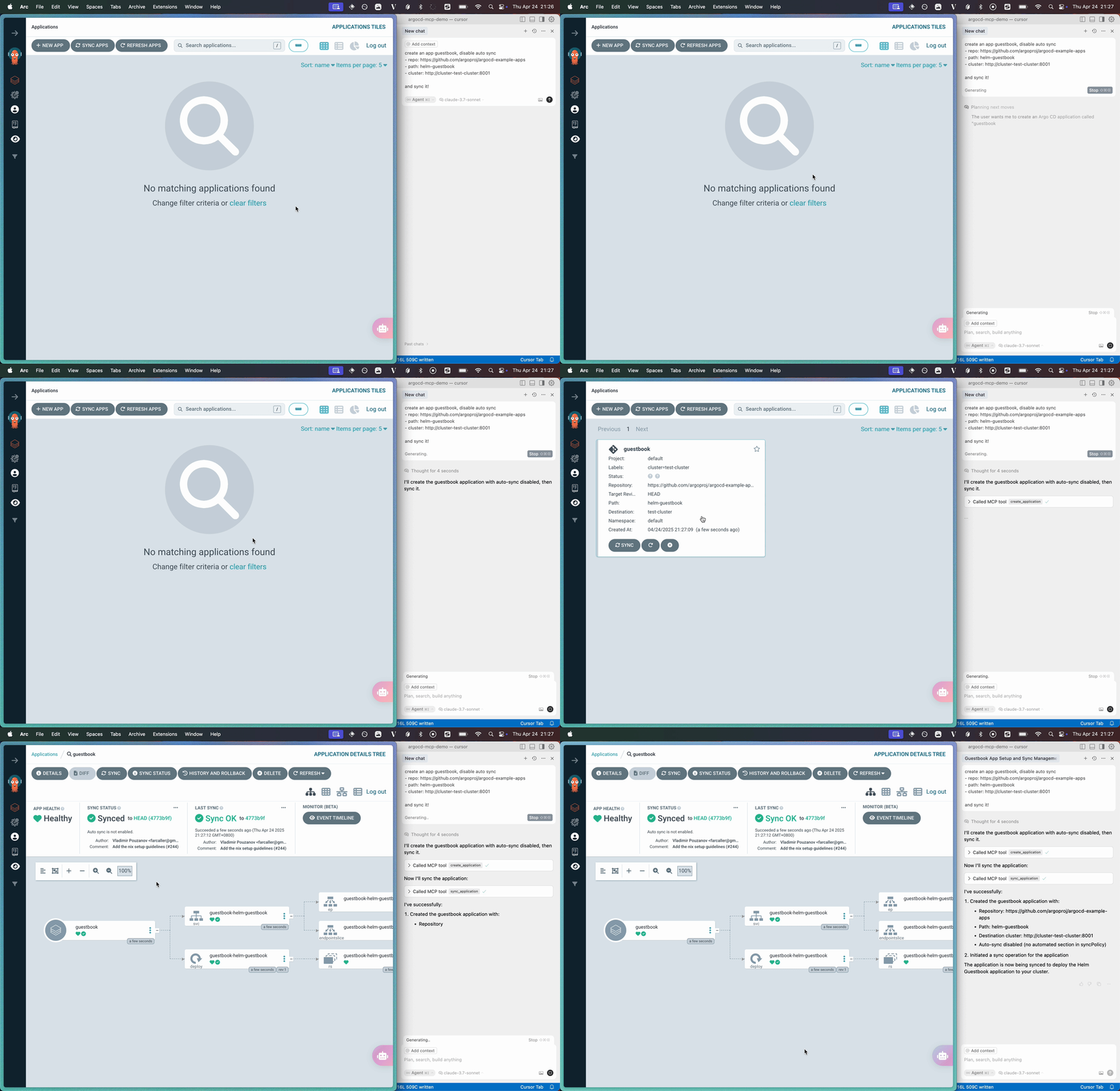
특징
전송 프로토콜 : 다양한 클라이언트와의 유연한 통합을 위해 stdio 및 SSE 전송 모드를 모두 지원합니다.
Argo CD API 통합 완료 : Argo CD 리소스 및 운영에 대한 포괄적인 액세스를 제공합니다.
AI Assistant Ready : AI 도우미가 자연어로 Argo CD와 상호 작용할 수 있도록 미리 구성된 도구
Related MCP server: OpsLevel MCP
설치
필수 조건
Node.js(v18 이상 권장)
pnpm 패키지 관리자(개발용)
API 액세스를 통한 Argo CD 인스턴스
Argo CD API 토큰( 지침은 문서 참조)
커서를 사용한 사용
MCP 지원을 위한 커서 설명서를 따르고 프로젝트에
.cursor/mcp.json파일을 만드세요.
지엑스피1
MCP를 사용하려면 에이전트 모드로 대화를 시작하세요.
VSCode와 함께 사용
VS Code에서 MCP 서버 사용 설명서를 따르고 프로젝트에
.vscode/mcp.json파일을 만듭니다.
{
"servers": {
"argocd-mcp-stdio": {
"type": "stdio",
"command": "npx",
"args": [
"argocd-mcp@latest",
"stdio"
],
"env": {
"ARGOCD_BASE_URL": "<argocd_url>",
"ARGOCD_API_TOKEN": "<argocd_token>"
}
}
}
}MCP를 지원하는 VS Code의 AI 비서와 대화를 시작하세요.
Claude Desktop과 함께 사용
Claude Desktop 설명서의 MCP를 따르고
claude_desktop_config.json구성 파일을 만듭니다.
{
"mcpServers": {
"argocd-mcp": {
"command": "npx",
"args": [
"argocd-mcp@latest",
"stdio"
],
"env": {
"ARGOCD_BASE_URL": "<argocd_url>",
"ARGOCD_API_TOKEN": "<argocd_token>"
}
}
}
}설정에서 이 구성 파일을 사용하도록 Claude Desktop을 구성합니다.
사용 가능한 도구
서버는 다음과 같은 ArgoCD 관리 도구를 제공합니다.
애플리케이션 관리
list_applications: 모든 애플리케이션을 나열하고 필터링합니다.get_application: 특정 애플리케이션에 대한 자세한 정보를 가져옵니다.create_application: 새로운 애플리케이션을 생성합니다update_application: 기존 애플리케이션 업데이트delete_application: 애플리케이션 삭제sync_application: 애플리케이션에서 동기화 작업을 트리거합니다.
자원 관리
get_application_resource_tree: 특정 애플리케이션의 리소스 트리를 가져옵니다.get_application_managed_resources: 특정 애플리케이션에 대한 관리되는 리소스를 가져옵니다.get_application_workload_logs: 애플리케이션 워크로드(Pod, 배포 등)에 대한 로그를 가져옵니다.get_resource_events: 애플리케이션에서 관리하는 리소스에 대한 이벤트를 가져옵니다.get_resource_actions: 리소스에 사용 가능한 작업 가져오기run_resource_action: 리소스에 대한 작업을 실행합니다.
개발을 위해
저장소를 복제합니다.
git clone https://github.com/akuity/argocd-mcp.git
cd argocd-mcp프로젝트 종속성 설치:
pnpm install핫 리로딩을 활성화하여 개발 서버를 시작합니다.
# For HTTP mode with hot reloading
pnpm run dev
# For SSE mode with hot reloading
pnpm run dev-sse서버가 실행되면 Visual Studio Code나 다른 MCP 클라이언트에서 MCP 서버를 활용할 수 있습니다.
ArgoCD 유형 업그레이드
최신 Argo CD API 사양에 따라 TypeScript 유형 정의를 업데이트하려면 다음을 수행합니다.
ArgoCD 릴리스 페이지 에서
swagger.json파일을 다운로드하세요. 예를 들어, ArgoCD v2.14.11의 swagger.json 링크는 다음과 같습니다.다운로드한
swagger.json파일을argocd-mcp프로젝트의 루트 디렉토리에 넣습니다.다음 명령을 실행하여 Swagger 정의에서 TypeScript 유형을 생성하세요. 이렇게 하면
src/types/argocd.d.ts파일이 생성되거나 덮어쓰여집니다.pnpm run generate-types새로 생성된
src/types/argocd-types.ts``src/types/argocd.d.tstypes.ts 파일을 업데이트합니다. 이 단계에서는 필요한 유형만 노출되도록 수동으로 검토해야 하는 경우가 많습니다.

Available Tools
14 toolscreate_applicationC
create_application creates a new ArgoCD application in the specified namespace. The application.metadata.namespace field determines where the Application resource will be created (e.g., "argocd", "argocd-apps", or any custom namespace).
| Name | Required | Description | Default |
|---|---|---|---|
| application | Yes |
TDQS
Does the description disclose side effects, auth requirements, rate limits, or destructive behavior?
No annotations provided; description only mentions creation without details on side effects, permissions, or failure modes. Carries full burden but provides minimal behavioral context.
Agents need to know what a tool does to the world before calling it. Descriptions should go beyond structured annotations to explain consequences.
Is the description appropriately sized, front-loaded, and free of redundancy?
Single sentence, front-loaded with verb and resource, with no extraneous content. Efficient but could benefit from structured sections.
Shorter descriptions cost fewer tokens and are easier for agents to parse. Every sentence should earn its place.
Given the tool's complexity, does the description cover enough for an agent to succeed on first attempt?
For a creation tool with complex nested input and no output schema, the description lacks return value info, success conditions, and error handling. Schema partially compensates but leaves gaps.
Complex tools with many parameters or behaviors need more documentation. Simple tools need less. This dimension scales expectations accordingly.
Does the description clarify parameter syntax, constraints, interactions, or defaults beyond what the schema provides?
The description adds minimal meaning beyond the schema, noting that namespace determines where the Application resource is created. Schema already defines structure, so baseline 3 is appropriate.
Input schemas describe structure but not intent. Descriptions should explain non-obvious parameter relationships and valid value ranges.
Does the description clearly state what the tool does and how it differs from similar tools?
The description clearly states the action (create) and resource (new ArgoCD application), and specifies the namespace. It implicitly distinguishes from sibling tools by action type, but does not explicitly contrast them.
Agents choose between tools based on descriptions. A clear purpose with a specific verb and resource helps agents select the right tool.
Does the description explain when to use this tool, when not to, or what alternatives exist?
No guidance on when to use this tool versus alternatives like update_application or sync_application. Missing prerequisites or context for use.
Agents often have multiple tools that could apply. Explicit usage guidance like "use X instead of Y when Z" prevents misuse.
delete_applicationC
delete_application deletes application. Specify applicationNamespace if the application is in a non-default namespace to avoid permission errors.
| Name | Required | Description | Default |
|---|---|---|---|
| applicationName | Yes | ||
| applicationNamespace | No | The namespace where the application is located. Required if application is not in the default namespace. | |
| cascade | No | Whether to cascade the deletion to child resources | |
| propagationPolicy | No | Deletion propagation policy (e.g., "Foreground", "Background", "Orphan") |
TDQS
Does the description disclose side effects, auth requirements, rate limits, or destructive behavior?
With no annotations, the description must disclose behavioral traits. It merely states the action and warns about namespace permissions, but omits critical details like irreversibility, effects on child resources, or required permissions for the deletion operation.
Agents need to know what a tool does to the world before calling it. Descriptions should go beyond structured annotations to explain consequences.
Is the description appropriately sized, front-loaded, and free of redundancy?
The description is extremely concise with two sentences: one states the core action, the other provides a practical tip. Both sentences earn their place without redundancy or filler.
Shorter descriptions cost fewer tokens and are easier for agents to parse. Every sentence should earn its place.
Given the tool's complexity, does the description cover enough for an agent to succeed on first attempt?
Given no annotations or output schema, the description should cover more context. It does not address return values, error conditions, prerequisites, or the irreversible nature of deletion. The description is too sparse for a destructive operation.
Complex tools with many parameters or behaviors need more documentation. Simple tools need less. This dimension scales expectations accordingly.
Does the description clarify parameter syntax, constraints, interactions, or defaults beyond what the schema provides?
Schema coverage is 75% (3 of 4 parameters described). The description adds minimal value beyond the schema: it reinforces the namespace parameter's purpose but does not clarify applicationName, cascade, or propagationPolicy. The added context is moderate.
Input schemas describe structure but not intent. Descriptions should explain non-obvious parameter relationships and valid value ranges.
Does the description clearly state what the tool does and how it differs from similar tools?
The description clearly states that the tool deletes an application, which is a specific verb-resource combination. It distinguishes from sibling tools like create_application or update_application. However, it does not elaborate on the scope or consequences of deletion, so it is not a 5.
Agents choose between tools based on descriptions. A clear purpose with a specific verb and resource helps agents select the right tool.
Does the description explain when to use this tool, when not to, or what alternatives exist?
The description only provides a tip about specifying namespace to avoid permission errors. It offers no guidance on when to use delete versus alternative tools (e.g., sync_application, update_application) or when deletion is appropriate.
Agents often have multiple tools that could apply. Explicit usage guidance like "use X instead of Y when Z" prevents misuse.
get_applicationB
get_application returns application by application name. Optionally specify the application namespace to get applications from non-default namespaces.
| Name | Required | Description | Default |
|---|---|---|---|
| applicationName | Yes | ||
| applicationNamespace | No | The namespace where the ArgoCD application resource will be created. This is the namespace of the Application resource itself, not the destination namespace for the application's resources. You can specify any valid Kubernetes namespace (e.g., 'argocd', 'argocd-apps', 'my-namespace', etc.). The default ArgoCD namespace is typically 'argocd', but you can use any namespace you prefer. |
TDQS
Does the description disclose side effects, auth requirements, rate limits, or destructive behavior?
No annotations are provided, and the description lacks details on behavior such as error handling, default namespace behavior, or that it is a read-only operation. Only the optional namespace is mentioned.
Agents need to know what a tool does to the world before calling it. Descriptions should go beyond structured annotations to explain consequences.
Is the description appropriately sized, front-loaded, and free of redundancy?
The description is a single sentence with 17 words, front-loading the purpose and key behavior. No unnecessary information.
Shorter descriptions cost fewer tokens and are easier for agents to parse. Every sentence should earn its place.
Given the tool's complexity, does the description cover enough for an agent to succeed on first attempt?
For a simple get operation with two parameters and no output schema, the description is adequate but could benefit from specifying default namespace, error responses, or return value structure.
Complex tools with many parameters or behaviors need more documentation. Simple tools need less. This dimension scales expectations accordingly.
Does the description clarify parameter syntax, constraints, interactions, or defaults beyond what the schema provides?
Schema coverage is 50%, with only the namespace parameter having a description. The tool description adds that namespace is optional and for non-default namespaces but does not explain the applicationName parameter format or constraints.
Input schemas describe structure but not intent. Descriptions should explain non-obvious parameter relationships and valid value ranges.
Does the description clearly state what the tool does and how it differs from similar tools?
The description clearly states the tool retrieves an application by name, with an optional namespace parameter. It distinguishes from siblings like list_applications by specifying retrieval of a single application by name.
Agents choose between tools based on descriptions. A clear purpose with a specific verb and resource helps agents select the right tool.
Does the description explain when to use this tool, when not to, or what alternatives exist?
The description mentions using the namespace parameter for non-default namespaces but does not provide explicit when-to-use or when-not-to-use guidance compared to other tools like get_application_events or list_applications.
Agents often have multiple tools that could apply. Explicit usage guidance like "use X instead of Y when Z" prevents misuse.
get_application_eventsC
get_application_events returns events for application by application name
| Name | Required | Description | Default |
|---|---|---|---|
| applicationName | Yes |
TDQS
Does the description disclose side effects, auth requirements, rate limits, or destructive behavior?
No annotations are present, and the description provides no behavioral details beyond the basic purpose. It does not disclose pagination, ordering, time range, or error behavior.
Agents need to know what a tool does to the world before calling it. Descriptions should go beyond structured annotations to explain consequences.
Is the description appropriately sized, front-loaded, and free of redundancy?
The description is a single sentence, which is concise and front-loaded with the action. However, for better clarity, it could be structured with bullet points or more explicit details.
Shorter descriptions cost fewer tokens and are easier for agents to parse. Every sentence should earn its place.
Given the tool's complexity, does the description cover enough for an agent to succeed on first attempt?
Given the low schema coverage, no output schema, and no annotations, the description is incomplete. It does not specify the return type (list of events) or any event structure, leaving the agent with insufficient context for correct invocation.
Complex tools with many parameters or behaviors need more documentation. Simple tools need less. This dimension scales expectations accordingly.
Does the description clarify parameter syntax, constraints, interactions, or defaults beyond what the schema provides?
The input schema has 0% description coverage. The description only repeats the parameter name context ('by application name'), adding no format, constraints, or usage details. It does not compensate for the missing schema descriptions.
Input schemas describe structure but not intent. Descriptions should explain non-obvious parameter relationships and valid value ranges.
Does the description clearly state what the tool does and how it differs from similar tools?
The description states it returns events for an application by name, which is a specific verb-resource combination. It distinguishes from siblings like get_application (returns the app itself) and list_applications (lists apps). However, it lacks detail on what type of events are returned.
Agents choose between tools based on descriptions. A clear purpose with a specific verb and resource helps agents select the right tool.
Does the description explain when to use this tool, when not to, or what alternatives exist?
No guidance is provided on when to use this tool versus alternatives such as get_resource_events. The description does not mention prerequisites or exclusions.
Agents often have multiple tools that could apply. Explicit usage guidance like "use X instead of Y when Z" prevents misuse.
get_application_managed_resourcesA
get_application_managed_resources returns managed resources for application by application name with optional filtering. Use filters to avoid token limits with large applications. Examples: kind="ConfigMap" for config maps only, namespace="production" for specific namespace, or combine multiple filters.
| Name | Required | Description | Default |
|---|---|---|---|
| applicationName | Yes | ||
| kind | No | Filter by Kubernetes resource kind (e.g., "ConfigMap", "Secret", "Deployment") | |
| namespace | No | Filter by Kubernetes namespace | |
| name | No | Filter by resource name | |
| version | No | Filter by resource API version | |
| group | No | Filter by API group | |
| appNamespace | No | Filter by Argo CD application namespace | |
| project | No | Filter by Argo CD project |
TDQS
Does the description disclose side effects, auth requirements, rate limits, or destructive behavior?
No annotations are provided, so the description carries the burden of transparency. It warns about token limits for large applications, which is a behavioral insight, but does not clarify read-only nature, authentication requirements, or response structure. Partial but lacking depth.
Agents need to know what a tool does to the world before calling it. Descriptions should go beyond structured annotations to explain consequences.
Is the description appropriately sized, front-loaded, and free of redundancy?
Three sentences with no wasted words: first states purpose, second advises filtering, third gives examples. Front-loaded and efficient.
Shorter descriptions cost fewer tokens and are easier for agents to parse. Every sentence should earn its place.
Given the tool's complexity, does the description cover enough for an agent to succeed on first attempt?
The description is adequate for a tool with high schema coverage and a clear return purpose. However, it lacks details about response format or pagination, which would be expected for a list of resources. No output schema is provided, so description should have filled that gap more.
Complex tools with many parameters or behaviors need more documentation. Simple tools need less. This dimension scales expectations accordingly.
Does the description clarify parameter syntax, constraints, interactions, or defaults beyond what the schema provides?
Schema description coverage is high (88%), and the description adds value by explaining why filters matter (token limits) and giving concrete examples (kind, namespace). This enhances understanding beyond the schema alone.
Input schemas describe structure but not intent. Descriptions should explain non-obvious parameter relationships and valid value ranges.
Does the description clearly state what the tool does and how it differs from similar tools?
The description clearly states the tool returns managed resources for a given application with optional filtering, using specific verb and resource. It distinguishes from sibling tools like get_application and get_resources by focusing on managed resources and filtering capability.
Agents choose between tools based on descriptions. A clear purpose with a specific verb and resource helps agents select the right tool.
Does the description explain when to use this tool, when not to, or what alternatives exist?
The description explicitly advises using filters to avoid token limits with large applications, providing concrete examples. It does not mention when not to use this tool versus alternatives, but the guidance is clear and practical for the primary use case.
Agents often have multiple tools that could apply. Explicit usage guidance like "use X instead of Y when Z" prevents misuse.
get_application_resource_treeC
get_application_resource_tree returns resource tree for application by application name
| Name | Required | Description | Default |
|---|---|---|---|
| applicationName | Yes |
TDQS
Does the description disclose side effects, auth requirements, rate limits, or destructive behavior?
No annotations are provided, and the description does not disclose behavioral traits such as read-only nature, rate limits, or authentication requirements. The description only states the basic operation.
Agents need to know what a tool does to the world before calling it. Descriptions should go beyond structured annotations to explain consequences.
Is the description appropriately sized, front-loaded, and free of redundancy?
The description is a single sentence with no unnecessary words, making it highly concise and to the point.
Shorter descriptions cost fewer tokens and are easier for agents to parse. Every sentence should earn its place.
Given the tool's complexity, does the description cover enough for an agent to succeed on first attempt?
For a simple tool with one parameter and no output schema, the description is adequate but incomplete. It lacks details about the structure or content of the returned resource tree.
Complex tools with many parameters or behaviors need more documentation. Simple tools need less. This dimension scales expectations accordingly.
Does the description clarify parameter syntax, constraints, interactions, or defaults beyond what the schema provides?
Schema description coverage is 0%, and the description adds no extra meaning to the parameter 'applicationName' beyond what the schema states (a required string). No format, case sensitivity, or examples are provided.
Input schemas describe structure but not intent. Descriptions should explain non-obvious parameter relationships and valid value ranges.
Does the description clearly state what the tool does and how it differs from similar tools?
The description clearly states the tool returns a resource tree for an application by name. However, it does not differentiate from sibling tools like get_application_managed_resources or get_resources, which may have overlapping purposes.
Agents choose between tools based on descriptions. A clear purpose with a specific verb and resource helps agents select the right tool.
Does the description explain when to use this tool, when not to, or what alternatives exist?
No guidance on when to use this tool versus alternatives (e.g., get_application_managed_resources, get_resources). The description lacks context on prerequisites or typical use cases.
Agents often have multiple tools that could apply. Explicit usage guidance like "use X instead of Y when Z" prevents misuse.
get_application_workload_logsC
get_application_workload_logs returns logs for application workload (Deployment, StatefulSet, Pod, etc.) by application name and resource ref and optionally container name
| Name | Required | Description | Default |
|---|---|---|---|
| applicationName | Yes | ||
| applicationNamespace | Yes | The namespace where the ArgoCD application resource will be created. This is the namespace of the Application resource itself, not the destination namespace for the application's resources. You can specify any valid Kubernetes namespace (e.g., 'argocd', 'argocd-apps', 'my-namespace', etc.). The default ArgoCD namespace is typically 'argocd', but you can use any namespace you prefer. | |
| resourceRef | Yes | ||
| container | Yes |
TDQS
Does the description disclose side effects, auth requirements, rate limits, or destructive behavior?
With no annotations provided, the description must disclose behavioral traits. It does not mention potential limits, authorization needs, or whether the operation is read-only or destructive. The description only states what the tool does, not how it behaves.
Agents need to know what a tool does to the world before calling it. Descriptions should go beyond structured annotations to explain consequences.
Is the description appropriately sized, front-loaded, and free of redundancy?
The description is a single sentence that captures the essence without extra words. It is front-loaded with the tool's purpose. However, it could be slightly more structured for readability.
Shorter descriptions cost fewer tokens and are easier for agents to parse. Every sentence should earn its place.
Given the tool's complexity, does the description cover enough for an agent to succeed on first attempt?
Given the absence of an output schema, the description should explain what type of logs are returned (e.g., format, pagination). It does not describe the return value, leaving ambiguity. The tool has complex parameters (nested object) and the description does not cover all details.
Complex tools with many parameters or behaviors need more documentation. Simple tools need less. This dimension scales expectations accordingly.
Does the description clarify parameter syntax, constraints, interactions, or defaults beyond what the schema provides?
Only 25% of schema parameters have descriptions. The description adds minimal meaning beyond parameter names (e.g., 'by application name and resource ref and optionally container name'). The nested resourceRef object lacks explanation of its fields despite a detailed schema.
Input schemas describe structure but not intent. Descriptions should explain non-obvious parameter relationships and valid value ranges.
Does the description clearly state what the tool does and how it differs from similar tools?
The description clearly states the tool retrieves logs for application workloads, specifying the resource types and key parameters. It is specific about the verb and resource, but does not explicitly differentiate from sibling tools like get_application_events or get_resource_events.
Agents choose between tools based on descriptions. A clear purpose with a specific verb and resource helps agents select the right tool.
Does the description explain when to use this tool, when not to, or what alternatives exist?
No guidance is provided on when to use this tool vs alternatives such as get_resource_events or get_application_events. There is no mention of prerequisites or context for use.
Agents often have multiple tools that could apply. Explicit usage guidance like "use X instead of Y when Z" prevents misuse.
get_resource_actionsC
get_resource_actions returns actions for a resource that is managed by an application
| Name | Required | Description | Default |
|---|---|---|---|
| applicationName | Yes | ||
| applicationNamespace | Yes | The namespace where the ArgoCD application resource will be created. This is the namespace of the Application resource itself, not the destination namespace for the application's resources. You can specify any valid Kubernetes namespace (e.g., 'argocd', 'argocd-apps', 'my-namespace', etc.). The default ArgoCD namespace is typically 'argocd', but you can use any namespace you prefer. | |
| resourceRef | Yes |
TDQS
Does the description disclose side effects, auth requirements, rate limits, or destructive behavior?
With no annotations provided, the description must fully disclose behavioral traits. It only mentions returning actions but does not confirm read-only nature, nor does it discuss permissions, side effects, or what happens if the resource is not found. The minimal information is insufficient for a safe agent invocation.
Agents need to know what a tool does to the world before calling it. Descriptions should go beyond structured annotations to explain consequences.
Is the description appropriately sized, front-loaded, and free of redundancy?
The description is a single sentence with no waste, achieving conciseness. However, it could be improved with additional context without becoming verbose, but overall it is appropriately sized.
Shorter descriptions cost fewer tokens and are easier for agents to parse. Every sentence should earn its place.
Given the tool's complexity, does the description cover enough for an agent to succeed on first attempt?
The tool has three parameters including a nested object, no output schema, and no annotations. The description does not explain the return format or behavior beyond 'returns actions'. Given the complexity, the description lacks completeness and should provide more detail.
Complex tools with many parameters or behaviors need more documentation. Simple tools need less. This dimension scales expectations accordingly.
Does the description clarify parameter syntax, constraints, interactions, or defaults beyond what the schema provides?
Schema coverage is only 33% (only applicationNamespace has a description). The tool description does not add any meaning beyond the schema for the other parameters (applicationName, resourceRef). Since the description fails to compensate for the low coverage, the score is low.
Input schemas describe structure but not intent. Descriptions should explain non-obvious parameter relationships and valid value ranges.
Does the description clearly state what the tool does and how it differs from similar tools?
The description clearly states that the tool returns actions for a resource managed by an application, using a specific verb and resource. However, it does not distinguish from sibling tools like run_resource_action or get_resource_events, so it loses a point for lack of differentiation.
Agents choose between tools based on descriptions. A clear purpose with a specific verb and resource helps agents select the right tool.
Does the description explain when to use this tool, when not to, or what alternatives exist?
No guidance is provided on when to use this tool versus alternatives, such as using it to list available actions before calling run_resource_action. This lack of context makes it harder for an AI agent to decide correctly.
Agents often have multiple tools that could apply. Explicit usage guidance like "use X instead of Y when Z" prevents misuse.
get_resource_eventsC
get_resource_events returns events for a resource that is managed by an application
| Name | Required | Description | Default |
|---|---|---|---|
| applicationName | Yes | ||
| applicationNamespace | Yes | The namespace where the ArgoCD application resource will be created. This is the namespace of the Application resource itself, not the destination namespace for the application's resources. You can specify any valid Kubernetes namespace (e.g., 'argocd', 'argocd-apps', 'my-namespace', etc.). The default ArgoCD namespace is typically 'argocd', but you can use any namespace you prefer. | |
| resourceUID | Yes | ||
| resourceNamespace | Yes | ||
| resourceName | Yes |
TDQS
Does the description disclose side effects, auth requirements, rate limits, or destructive behavior?
No annotations are present, so the description carries the full burden. It only states it 'returns events', implying read-only behavior but does not explicitly confirm this, nor does it disclose any authorization needs, side effects, or limitations.
Agents need to know what a tool does to the world before calling it. Descriptions should go beyond structured annotations to explain consequences.
Is the description appropriately sized, front-loaded, and free of redundancy?
The description is extremely concise, consisting of a single sentence. While it is not formally structured, it conveys the core purpose efficiently without unnecessary words.
Shorter descriptions cost fewer tokens and are easier for agents to parse. Every sentence should earn its place.
Given the tool's complexity, does the description cover enough for an agent to succeed on first attempt?
Given the tool has five required parameters, no output schema, and no annotations, the description is insufficient. It does not explain what constitutes an event, the return format, or any preconditions, leaving significant gaps for the agent.
Complex tools with many parameters or behaviors need more documentation. Simple tools need less. This dimension scales expectations accordingly.
Does the description clarify parameter syntax, constraints, interactions, or defaults beyond what the schema provides?
Schema description coverage is low (20%), with only 'applicationNamespace' having a meaningful description. The tool description adds no additional meaning beyond the schema for the other four parameters, failing to compensate for the lack of schema descriptions.
Input schemas describe structure but not intent. Descriptions should explain non-obvious parameter relationships and valid value ranges.
Does the description clearly state what the tool does and how it differs from similar tools?
The description clearly states it returns events for a resource managed by an application. However, it does not distinguish this from the sibling tool 'get_application_events', which might serve a similar purpose, potentially causing confusion.
Agents choose between tools based on descriptions. A clear purpose with a specific verb and resource helps agents select the right tool.
Does the description explain when to use this tool, when not to, or what alternatives exist?
No usage guidelines are provided. The description does not specify when to use this tool versus alternatives like 'get_application_events', nor does it mention any prerequisites or exclusions.
Agents often have multiple tools that could apply. Explicit usage guidance like "use X instead of Y when Z" prevents misuse.
get_resourcesA
get_resources return manifests for resources specified by resourceRefs. If resourceRefs is empty or not provided, fetches all resources managed by the application.
| Name | Required | Description | Default |
|---|---|---|---|
| applicationName | Yes | ||
| applicationNamespace | Yes | The namespace where the ArgoCD application resource will be created. This is the namespace of the Application resource itself, not the destination namespace for the application's resources. You can specify any valid Kubernetes namespace (e.g., 'argocd', 'argocd-apps', 'my-namespace', etc.). The default ArgoCD namespace is typically 'argocd', but you can use any namespace you prefer. | |
| resourceRefs | No |
TDQS
Does the description disclose side effects, auth requirements, rate limits, or destructive behavior?
No annotations provided. The description does not disclose side effects, permissions, or read-only nature. It only states it returns manifests, which is insufficient.
Agents need to know what a tool does to the world before calling it. Descriptions should go beyond structured annotations to explain consequences.
Is the description appropriately sized, front-loaded, and free of redundancy?
Single sentence, clear, no wasted words. Front-loaded with action and result.
Shorter descriptions cost fewer tokens and are easier for agents to parse. Every sentence should earn its place.
Given the tool's complexity, does the description cover enough for an agent to succeed on first attempt?
Given no output schema, description indicates returns manifests. Covers main behavior but lacks details on error handling or output format.
Complex tools with many parameters or behaviors need more documentation. Simple tools need less. This dimension scales expectations accordingly.
Does the description clarify parameter syntax, constraints, interactions, or defaults beyond what the schema provides?
Schema coverage is 33%. Description adds meaning for resourceRefs (optional, fetches all if empty) but does not clarify applicationName or applicationNamespace beyond schema.
Input schemas describe structure but not intent. Descriptions should explain non-obvious parameter relationships and valid value ranges.
Does the description clearly state what the tool does and how it differs from similar tools?
The description clearly states it returns manifests for resources specified by resourceRefs or all resources when empty. It distinguishes from sibling tools like list_applications.
Agents choose between tools based on descriptions. A clear purpose with a specific verb and resource helps agents select the right tool.
Does the description explain when to use this tool, when not to, or what alternatives exist?
The description implies when to use it (to get manifests) but does not explicitly compare to siblings. No guidance on when not to use or prerequisites.
Agents often have multiple tools that could apply. Explicit usage guidance like "use X instead of Y when Z" prevents misuse.
list_applicationsC
list_applications returns list of applications
| Name | Required | Description | Default |
|---|---|---|---|
| search | No | Search applications by name. This is a partial match on the application name and does not support glob patterns (e.g. "*"). Optional. | |
| limit | No | Maximum number of applications to return. Use this to reduce token usage when there are many applications. Optional. | |
| offset | No | Number of applications to skip before returning results. Use with limit for pagination. Optional. |
TDQS
Does the description disclose side effects, auth requirements, rate limits, or destructive behavior?
With no annotations, the description carries full burden but only states it returns a list, omitting details like ordering, default limits, or any side effects.
Agents need to know what a tool does to the world before calling it. Descriptions should go beyond structured annotations to explain consequences.
Is the description appropriately sized, front-loaded, and free of redundancy?
The description is a single sentence, which is concise, but it sacrifices informativeness; it is under-specified rather than efficiently compact.
Shorter descriptions cost fewer tokens and are easier for agents to parse. Every sentence should earn its place.
Given the tool's complexity, does the description cover enough for an agent to succeed on first attempt?
Given the presence of sibling tools for specific operations and the lack of an output schema, the description fails to clarify result ordering, pagination behavior, or default limits, leaving gaps.
Complex tools with many parameters or behaviors need more documentation. Simple tools need less. This dimension scales expectations accordingly.
Does the description clarify parameter syntax, constraints, interactions, or defaults beyond what the schema provides?
Input schema has 100% parameter description coverage, so baseline is 3. The description adds no extra meaning beyond what the schema already provides.
Input schemas describe structure but not intent. Descriptions should explain non-obvious parameter relationships and valid value ranges.
Does the description clearly state what the tool does and how it differs from similar tools?
The description merely restates the tool name, 'list_applications returns list of applications,' without specifying any filtering or scope, making it a tautology.
Agents choose between tools based on descriptions. A clear purpose with a specific verb and resource helps agents select the right tool.
Does the description explain when to use this tool, when not to, or what alternatives exist?
No guidance is provided on when to use this tool versus sibling tools like get_application or search functions, and no context for typical use cases is given.
Agents often have multiple tools that could apply. Explicit usage guidance like "use X instead of Y when Z" prevents misuse.
run_resource_actionC
run_resource_action runs an action on a resource
| Name | Required | Description | Default |
|---|---|---|---|
| applicationName | Yes | ||
| applicationNamespace | Yes | The namespace where the ArgoCD application resource will be created. This is the namespace of the Application resource itself, not the destination namespace for the application's resources. You can specify any valid Kubernetes namespace (e.g., 'argocd', 'argocd-apps', 'my-namespace', etc.). The default ArgoCD namespace is typically 'argocd', but you can use any namespace you prefer. | |
| resourceRef | Yes | ||
| action | Yes |
TDQS
Does the description disclose side effects, auth requirements, rate limits, or destructive behavior?
No annotations provided, so the description carries full burden. It does not disclose whether the action is destructive, requires permissions, or has side effects. The lack of behavioral details leaves the agent in the dark about the tool's impact.
Agents need to know what a tool does to the world before calling it. Descriptions should go beyond structured annotations to explain consequences.
Is the description appropriately sized, front-loaded, and free of redundancy?
The description is very short (one sentence), which is concise but at the expense of clarity. It could be improved by adding a few more sentences about purpose and usage without becoming verbose.
Shorter descriptions cost fewer tokens and are easier for agents to parse. Every sentence should earn its place.
Given the tool's complexity, does the description cover enough for an agent to succeed on first attempt?
Given the tool's complexity (4 required parameters, nested object, no output schema), the description is inadequate. It does not explain what actions are valid, what the tool returns, or how to construct the resourceRef. The agent would struggle to use this tool correctly.
Complex tools with many parameters or behaviors need more documentation. Simple tools need less. This dimension scales expectations accordingly.
Does the description clarify parameter syntax, constraints, interactions, or defaults beyond what the schema provides?
Schema description coverage is only 25% (only applicationNamespace has a description). The tool description adds no additional meaning to parameters; it merely repeats the tool name. The nested resourceRef object is not explained at all.
Input schemas describe structure but not intent. Descriptions should explain non-obvious parameter relationships and valid value ranges.
Does the description clearly state what the tool does and how it differs from similar tools?
Description states 'runs an action on a resource' but is extremely vague. It does not specify what kind of resource, what actions are possible, or how it differs from sibling tools like sync_application or get_resource_actions. The purpose is unclear without further inference.
Agents choose between tools based on descriptions. A clear purpose with a specific verb and resource helps agents select the right tool.
Does the description explain when to use this tool, when not to, or what alternatives exist?
No guidance on when to use this tool versus alternatives. The description lacks context about prerequisites (e.g., need to use get_resource_actions first to see available actions) or when not to use it.
Agents often have multiple tools that could apply. Explicit usage guidance like "use X instead of Y when Z" prevents misuse.
sync_applicationC
sync_application syncs application. Specify applicationNamespace if the application is in a non-default namespace to avoid permission errors.
| Name | Required | Description | Default |
|---|---|---|---|
| applicationName | Yes | ||
| applicationNamespace | No | The namespace where the application is located. Required if application is not in the default namespace. | |
| dryRun | No | Perform a dry run sync without applying changes | |
| prune | No | Remove resources that are no longer defined in the source | |
| revision | No | Sync to a specific revision instead of the latest | |
| syncOptions | No | Additional sync options (e.g., ["CreateNamespace=true", "PrunePropagationPolicy=foreground"]) |
TDQS
Does the description disclose side effects, auth requirements, rate limits, or destructive behavior?
No annotations are provided, and the description does not disclose any behavioral traits (e.g., whether the operation is destructive, permission requirements, side effects). The description is far too brief to compensate for the lack of annotations.
Agents need to know what a tool does to the world before calling it. Descriptions should go beyond structured annotations to explain consequences.
Is the description appropriately sized, front-loaded, and free of redundancy?
The description is short (two sentences) with no wasted words, but it is too brief given the complexity of the tool (6 parameters, sync operation). It could be more informative without sacrificing conciseness.
Shorter descriptions cost fewer tokens and are easier for agents to parse. Every sentence should earn its place.
Given the tool's complexity, does the description cover enough for an agent to succeed on first attempt?
Given no annotations, no output schema, and a moderate parameter count, the description is incomplete. It fails to explain what 'sync' entails, return behavior, errors, or any important context needed for correct use.
Complex tools with many parameters or behaviors need more documentation. Simple tools need less. This dimension scales expectations accordingly.
Does the description clarify parameter syntax, constraints, interactions, or defaults beyond what the schema provides?
Schema description coverage is high (83%), so the baseline is 3. The description adds some context for 'applicationNamespace' (permission errors), but adds no meaning beyond the schema for other parameters.
Input schemas describe structure but not intent. Descriptions should explain non-obvious parameter relationships and valid value ranges.
Does the description clearly state what the tool does and how it differs from similar tools?
The description clearly states the verb 'syncs' and the resource 'application'. It communicates the core function, but does not differentiate from sibling tools like 'update_application' or 'create_application', which could cause confusion.
Agents choose between tools based on descriptions. A clear purpose with a specific verb and resource helps agents select the right tool.
Does the description explain when to use this tool, when not to, or what alternatives exist?
The only usage guidance is about specifying 'applicationNamespace' for non-default namespaces to avoid errors. No guidance on when to use this tool versus alternatives, nor prerequisites or context.
Agents often have multiple tools that could apply. Explicit usage guidance like "use X instead of Y when Z" prevents misuse.
update_applicationD
update_application updates application
| Name | Required | Description | Default |
|---|---|---|---|
| applicationName | Yes | ||
| application | Yes |
TDQS
Does the description disclose side effects, auth requirements, rate limits, or destructive behavior?
No annotations are provided, and the description fails to disclose behavioral traits. For example, it does not specify if this is a full replace (PUT) or partial update (PATCH), whether it triggers a sync, or what happens to omitted fields. With zero annotation coverage, the description carries the full burden and fails entirely.
Agents need to know what a tool does to the world before calling it. Descriptions should go beyond structured annotations to explain consequences.
Is the description appropriately sized, front-loaded, and free of redundancy?
The description is only 3 words, but this is not concise—it is under-specified. It wastes the opportunity to provide any useful context. A good description should be front-loaded with purpose and key constraints, but this is virtually empty.
Shorter descriptions cost fewer tokens and are easier for agents to parse. Every sentence should earn its place.
Given the tool's complexity, does the description cover enough for an agent to succeed on first attempt?
Given the complex nested input schema (with required metadata, spec, etc.) and no output schema, the description is completely inadequate. The agent needs to know what fields are mutable, the effect of the update, and any side effects. None is provided.
Complex tools with many parameters or behaviors need more documentation. Simple tools need less. This dimension scales expectations accordingly.
Does the description clarify parameter syntax, constraints, interactions, or defaults beyond what the schema provides?
The description adds no information about the two required parameters (applicationName, application). Despite some inline schema descriptions for nested fields, the context signals 0% schema description coverage, meaning the tool's own description must compensate, but it does not mention any parameter meaning.
Input schemas describe structure but not intent. Descriptions should explain non-obvious parameter relationships and valid value ranges.
Does the description clearly state what the tool does and how it differs from similar tools?
The description is a tautology: 'update_application updates application'. It merely restates the tool name and the implied action without specifying what exactly is updated (e.g., ArgoCD application resource, configuration, etc.). No verb+resource clarity beyond the name.
Agents choose between tools based on descriptions. A clear purpose with a specific verb and resource helps agents select the right tool.
Does the description explain when to use this tool, when not to, or what alternatives exist?
No guidance on when to use this tool versus siblings like create_application or sync_application. Does not mention that it is for updating existing applications only, or what scenarios warrant an update vs. a sync.
Agents often have multiple tools that could apply. Explicit usage guidance like "use X instead of Y when Z" prevents misuse.
Tool Schema Changelog
Recent tool additions, removals, and schema changes observed during successful MCP inspections.
11 tool updates
v1.0.0- Changed
create_application2 fields changed- changed
Input schema / properties / application / properties / metadata / properties / namespace / descriptionPrevious value: -"The namespace of the application.\n Note that this may differ from the namespace of individual resources.\n Make sure to verify the application namespace in the Application resource — it is often argocd, but not always."New value: +"The namespace where the ArgoCD application resource will be created.\n This is the namespace of the Application resource itself, not the destination namespace for the application's resources.\n You can specify any valid Kubernetes namespace (e.g., 'argocd', 'argocd-apps', 'my-namespace', etc.).\n The default ArgoCD namespace is typically 'argocd', but you can use any namespace you prefer." - added
Input schema / properties / application / properties / metadata / properties / namespace / minLengthAdded value: +1
- Changed
delete_application3 fields changed- added
Input schema / properties / applicationNamespaceAdded value: +{ + "description": "The namespace where the application is located. Required if application is not in the default namespace.", + "minLength": 1, + "type": "string" +} - added
Input schema / properties / cascadeAdded value: +{ + "description": "Whether to cascade the deletion to child resources", + "type": "boolean" +} - added
Input schema / properties / propagationPolicyAdded value: +{ + "description": "Deletion propagation policy (e.g., \"Foreground\", \"Background\", \"Orphan\")", + "type": "string" +}
- Changed
get_application1 field changed- added
Input schema / properties / applicationNamespaceAdded value: +{ + "description": "The namespace where the ArgoCD application resource will be created.\n This is the namespace of the Application resource itself, not the destination namespace for the application's resources.\n You can specify any valid Kubernetes namespace (e.g., 'argocd', 'argocd-apps', 'my-namespace', etc.).\n The default ArgoCD namespace is typically 'argocd', but you can use any namespace you prefer.", + "minLength": 1, + "type": "string" +}
- Changed
get_application_workload_logs4 fields changed- changed
Input schema / properties / applicationNamespace / descriptionPrevious value: -"The namespace of the application.\n Note that this may differ from the namespace of individual resources.\n Make sure to verify the application namespace in the Application resource — it is often argocd, but not always."New value: +"The namespace where the ArgoCD application resource will be created.\n This is the namespace of the Application resource itself, not the destination namespace for the application's resources.\n You can specify any valid Kubernetes namespace (e.g., 'argocd', 'argocd-apps', 'my-namespace', etc.).\n The default ArgoCD namespace is typically 'argocd', but you can use any namespace you prefer." - added
Input schema / properties / applicationNamespace / minLengthAdded value: +1 - added
Input schema / properties / containerAdded value: +{ + "type": "string" +} - changed
Input schema / requiredPrevious value: -[ - "applicationName", - "applicationNamespace", - "resourceRef" -]New value: +[ + "applicationName", + "applicationNamespace", + "resourceRef", + "container" +]
- Changed
get_resource_actions2 fields changed- changed
Input schema / properties / applicationNamespace / descriptionPrevious value: -"The namespace of the application.\n Note that this may differ from the namespace of individual resources.\n Make sure to verify the application namespace in the Application resource — it is often argocd, but not always."New value: +"The namespace where the ArgoCD application resource will be created.\n This is the namespace of the Application resource itself, not the destination namespace for the application's resources.\n You can specify any valid Kubernetes namespace (e.g., 'argocd', 'argocd-apps', 'my-namespace', etc.).\n The default ArgoCD namespace is typically 'argocd', but you can use any namespace you prefer." - added
Input schema / properties / applicationNamespace / minLengthAdded value: +1
- Changed
get_resource_events2 fields changed- changed
Input schema / properties / applicationNamespace / descriptionPrevious value: -"The namespace of the application.\n Note that this may differ from the namespace of individual resources.\n Make sure to verify the application namespace in the Application resource — it is often argocd, but not always."New value: +"The namespace where the ArgoCD application resource will be created.\n This is the namespace of the Application resource itself, not the destination namespace for the application's resources.\n You can specify any valid Kubernetes namespace (e.g., 'argocd', 'argocd-apps', 'my-namespace', etc.).\n The default ArgoCD namespace is typically 'argocd', but you can use any namespace you prefer." - added
Input schema / properties / applicationNamespace / minLengthAdded value: +1
- Added
get_resources - Changed
list_applications2 fields changed- added
Input schema / properties / limitAdded value: +{ + "description": "Maximum number of applications to return. Use this to reduce token usage when there are many applications. Optional.", + "exclusiveMinimum": 0, + "type": "integer" +} - added
Input schema / properties / offsetAdded value: +{ + "description": "Number of applications to skip before returning results. Use with limit for pagination. Optional.", + "minimum": 0, + "type": "integer" +}
- Changed
run_resource_action2 fields changed- changed
Input schema / properties / applicationNamespace / descriptionPrevious value: -"The namespace of the application.\n Note that this may differ from the namespace of individual resources.\n Make sure to verify the application namespace in the Application resource — it is often argocd, but not always."New value: +"The namespace where the ArgoCD application resource will be created.\n This is the namespace of the Application resource itself, not the destination namespace for the application's resources.\n You can specify any valid Kubernetes namespace (e.g., 'argocd', 'argocd-apps', 'my-namespace', etc.).\n The default ArgoCD namespace is typically 'argocd', but you can use any namespace you prefer." - added
Input schema / properties / applicationNamespace / minLengthAdded value: +1
- Changed
sync_application5 fields changed- added
Input schema / properties / applicationNamespaceAdded value: +{ + "description": "The namespace where the application is located. Required if application is not in the default namespace.", + "minLength": 1, + "type": "string" +} - added
Input schema / properties / dryRunAdded value: +{ + "description": "Perform a dry run sync without applying changes", + "type": "boolean" +} - added
Input schema / properties / pruneAdded value: +{ + "description": "Remove resources that are no longer defined in the source", + "type": "boolean" +} - added
Input schema / properties / revisionAdded value: +{ + "description": "Sync to a specific revision instead of the latest", + "type": "string" +} - added
Input schema / properties / syncOptionsAdded value: +{ + "description": "Additional sync options (e.g., [\"CreateNamespace=true\", \"PrunePropagationPolicy=foreground\"])", + "items": { + "type": "string" + }, + "type": "array" +}
- Changed
update_application2 fields changed- changed
Input schema / properties / application / properties / metadata / properties / namespace / descriptionPrevious value: -"The namespace of the application.\n Note that this may differ from the namespace of individual resources.\n Make sure to verify the application namespace in the Application resource — it is often argocd, but not always."New value: +"The namespace where the ArgoCD application resource will be created.\n This is the namespace of the Application resource itself, not the destination namespace for the application's resources.\n You can specify any valid Kubernetes namespace (e.g., 'argocd', 'argocd-apps', 'my-namespace', etc.).\n The default ArgoCD namespace is typically 'argocd', but you can use any namespace you prefer." - added
Input schema / properties / application / properties / metadata / properties / namespace / minLengthAdded value: +1
13 tool updates
- First observed
create_application - First observed
delete_application - First observed
get_application - First observed
get_application_events - First observed
get_application_managed_resources - First observed
get_application_resource_tree - First observed
get_application_workload_logs - First observed
get_resource_actions - First observed
get_resource_events - First observed
list_applications - First observed
run_resource_action - First observed
sync_application - First observed
update_application
TDQS
Scored across 14 tools
Each tool targets a distinct aspect of ArgoCD application management. While get_application_events and get_resource_events could be confused, descriptions clarify their scope. Overall, purposes are clearly separated.
All tools use consistent snake_case with verb_noun pattern (e.g., create_application, get_application_events). The naming is predictable and follows a clear convention.
14 tools is well-scoped for an ArgoCD MCP server, covering CRUD operations, synchronization, logs, events, and resource management without being excessive.
The tool set covers core application lifecycle (CRUD, sync, logs, events) and resource management. Minor gaps like rollback or version history are missing, but the surface is largely complete for common tasks.
Maintenance
Related MCP Connectors
Model Context Protocol server for the Apideck Unified API. Connect any MCP-compatible agent framework to 100+ accounting systems, HRIS platforms, file storage providers, and more through one integration. More information https://www.apideck.com/mcp-server
An MCP server that let you interact with Cycloid.io Internal Development Portal and Platform
An MCP server that provides an API to LLMs to manage their JumpCloud resources.
The Cortex MCP server provides read-only access to real-time engineering context from the Cortex developer portal, allowing AI coding assistants to answer natural language questions about your organization's catalog (microservices, libraries, domains, teams, infrastructure), scorecards (engineering standards and best practices), initiatives (goals and deadlines), and Engineering Intelligence metrics. It includes tools for querying documentation, tracking personal entities, and accessing AI-assisted insights across the entire Cortex ecosystem.
Related MCP Servers
- AlicenseAqualityDmaintenanceAn MCP (Model Context Protocol) server that integrates with the ArgoCD API, enabling AI assistants and large language models to manage ArgoCD applications and resources through natural language interactions.1012MIT

OpsLevel MCPofficial
AlicenseNot gradedqualityFmaintenanceModel Context Protocol (MCP) server for OpsLevel12MIT- AlicenseBqualityCmaintenanceModel Context Protocol (MCP) server for the Rancher ecosystem: multi-cluster Kubernetes, Harvester HCI (VMs, storage, networks), and Fleet GitOps.1012Apache 2.0
- AlicenseBqualityCmaintenanceMCP server for Argo CD that provides multi-environment profiles, SSO or API key authentication, application search with cache, and REST API tools from the bundled OpenAPI catalog.2612 npmMIT