Glama
TermiX-official

Binance MCP Server

바이낸스 MCP 서버

개요

바이낸스 MCP 서버는 바이낸스 API와 연동되도록 설계된 백엔드 서비스입니다. 바이낸스 거래소와의 원활한 연동을 통해 사용자는 포트폴리오를 확인하고, 토큰을 전환하고, 시장 영향을 최소화하면서 거래를 실행할 수 있습니다. 이 서버는 모델 컨텍스트 프로토콜(MCP) 프레임워크를 활용하여 안전하고 체계적이며 효율적인 거래를 보장합니다.

주요 기능:

  • 계정 정보 및 거래를 위해 Binance 거래소 API와 상호 작용합니다.

  • 포트폴리오 구성 및 가치 평가 표시

  • 시장 영향 완화를 통해 스마트 토큰 변환 실행

  • 시장 주문 및 알고리즘 거래 전략 처리

  • 실시간 거래 데이터 및 계좌 정보 검색

  • 모델 컨텍스트 프로토콜 프레임워크를 사용하여 구조화된 트랜잭션 구현

  • Binance 통합을 위한 보안 인증 및 API 키 관리 제공

Related MCP server: BSC MCP Server

특징

  • [x] Binance API 통합 : 계정 정보 및 거래 작업을 위해 Binance 거래소에 연결

  • [x] 포트폴리오 관리 : 자세한 포트폴리오 구성, 시장 가치 및 비율 배분을 확인하세요.

  • [x] 포트폴리오 분석 : 시간 경과에 따른 성과를 모니터링하기 위한 선택적 과거 가치 추적

  • [x] 스마트 토큰 변환 : 지능형 주문 실행 전략을 통해 토큰 간 변환

  • [x] 시장 영향 완화 : 대량 주문에 대해 알고리즘 거래를 자동으로 사용하여 가격 하락을 방지합니다.

  • [x] 계정 관리 : 자세한 계정 정보, 잔액 및 거래 내역을 검색합니다.

  • [x] 시장 데이터 액세스 : 정보에 입각한 거래 결정을 위해 실시간 주문서 및 시장 데이터에 액세스합니다.

  • [x] 주문 실행 : 유연한 수량 사양으로 현물 시장 주문을 실행합니다.

  • [ ] 알고리즘 거래 지원 : 시장 영향을 최소화하기 위해 시간 가중 평균 가격(TWAP) 주문을 구현합니다.

  • [ ] 자동 거래 : 미리 정의된 전략에 따라 프로그래밍 방식으로 거래를 실행합니다.

  • [ ] 보안 인증 : Binance 서비스에 대한 API 키 및 보안 연결을 관리합니다.

  • [ ] 포괄적인 오류 처리 : 트랜잭션 실패 및 API 문제에 대한 자세한 오류 보고

요구 사항

Binance MCP 서버를 설정하기 전에 다음 사항이 설치되어 있는지 확인하세요.

  • Node.js(v16 이상)

  • npm 또는 yarn

  • 바이낸스 API 키 및 비밀번호(바이낸스 거래소 통합용)

  • 유효한 Binance Smart Chain(BSC) 지갑 개인 키(블록체인 거래용)

설치

저장소를 복제하고 종속성을 설치합니다.

지엑스피1

구성

서버를 구성하려면 루트 디렉토리에 .env 파일을 만들고 다음 변수를 지정합니다.

# Binance API Configuration
BINANCE_API_KEY=your_binance_api_key_here
BINANCE_API_SECRET=your_binance_api_secret_here

바이낸스 API 키 생성

바이낸스 API 연동을 사용하기 전에 API 키를 생성해야 합니다. API 키를 통해 여러 프로그래밍 언어를 통해 바이낸스 서버에 연결하고, 바이낸스에서 데이터를 가져오고, 외부 애플리케이션과 상호 작용할 수 있습니다. 지갑 및 거래 데이터를 확인하고, 거래를 하고, 타사 프로그램에서 자금을 입출금할 수 있습니다.

필수 조건:

  • 계정을 활성화하려면 Spot Wallet에 원하는 금액을 입금해야 합니다.

  • 본인 확인 완료

  • 계정에서 2단계 인증(2FA)을 활성화하세요

Binance API 키를 생성하는 단계:

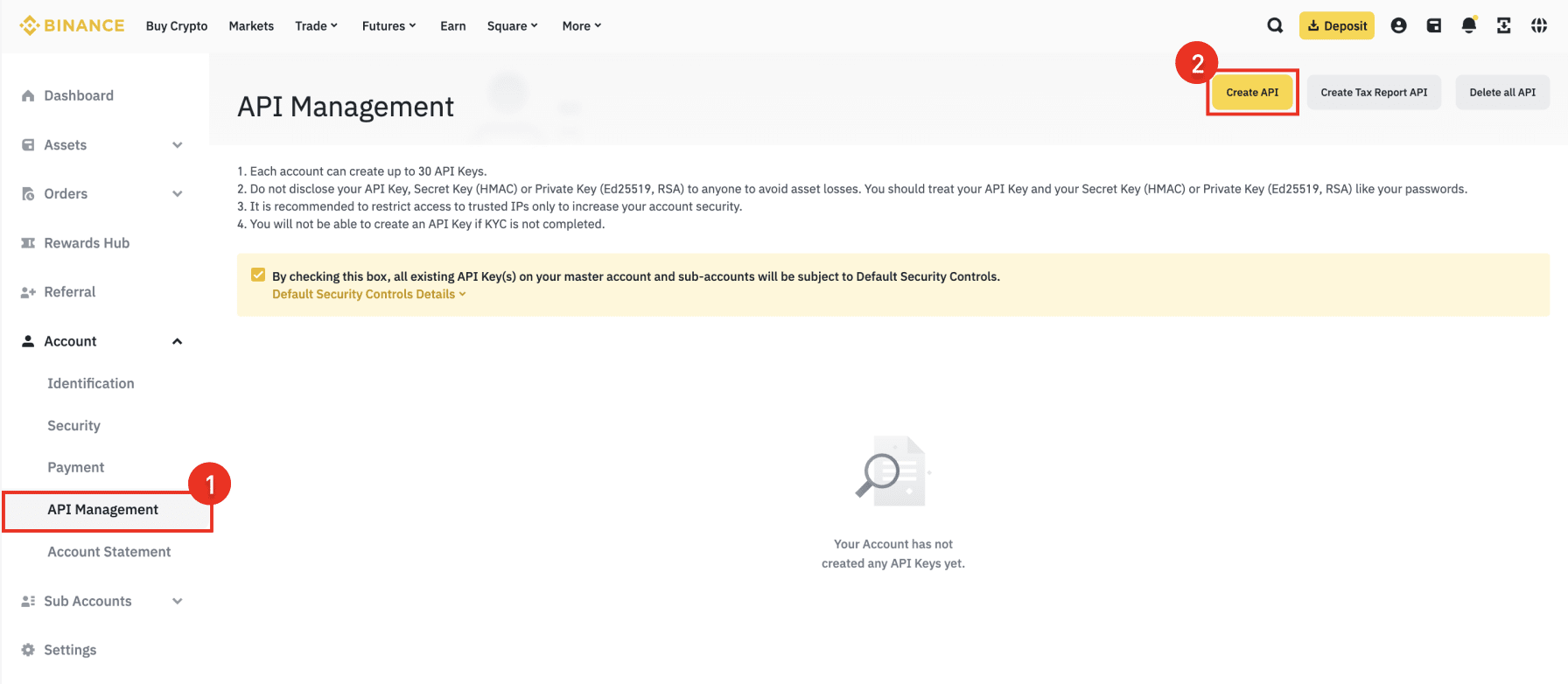
  1. 바이낸스 계정에 로그인하고 프로필 아이콘을 클릭한 다음 [계정]을 클릭하세요.바이낸스 홈페이지
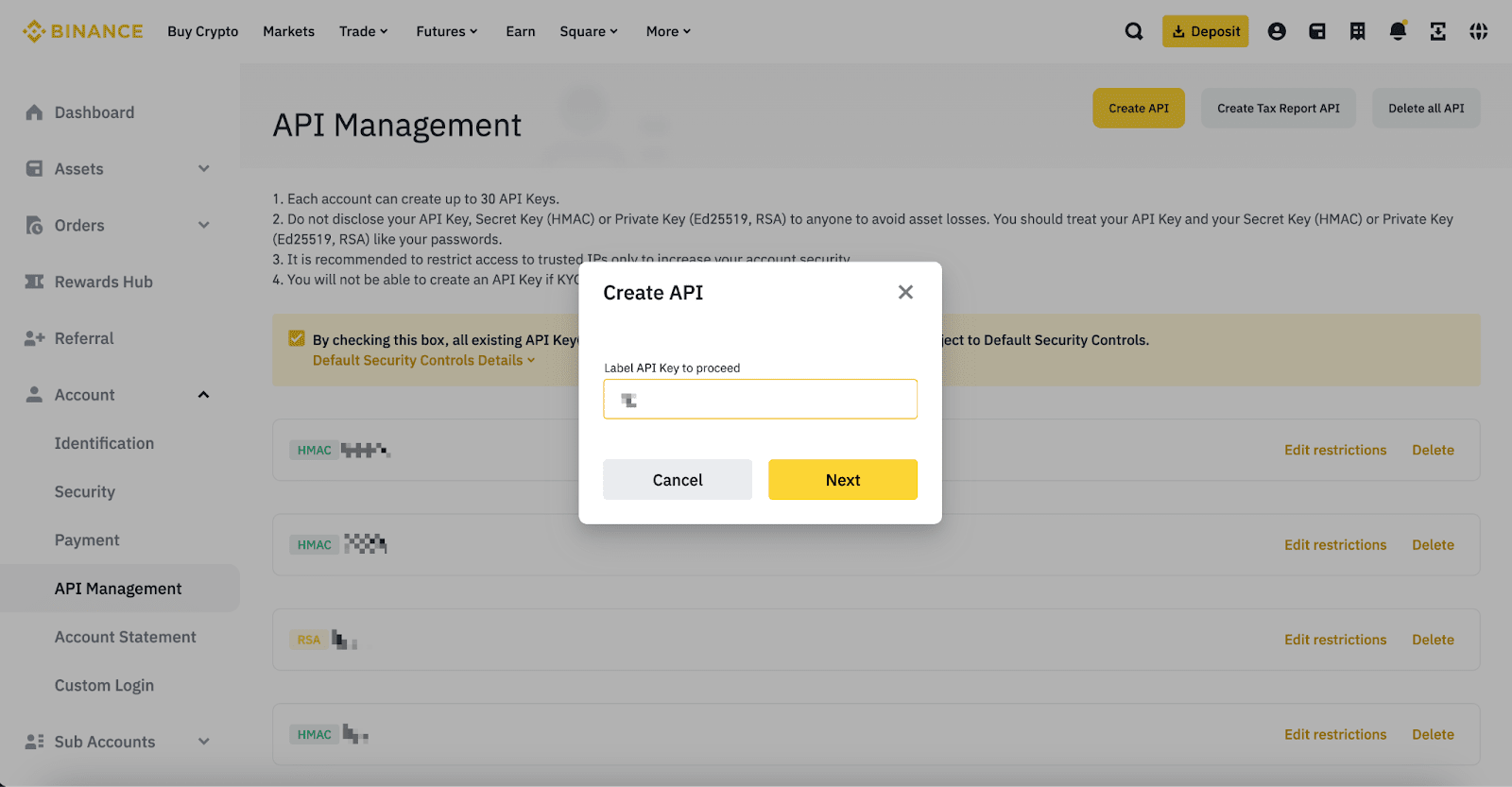
  2. [API 관리]로 이동한 후 [API 생성]을 클릭합니다.API 관리

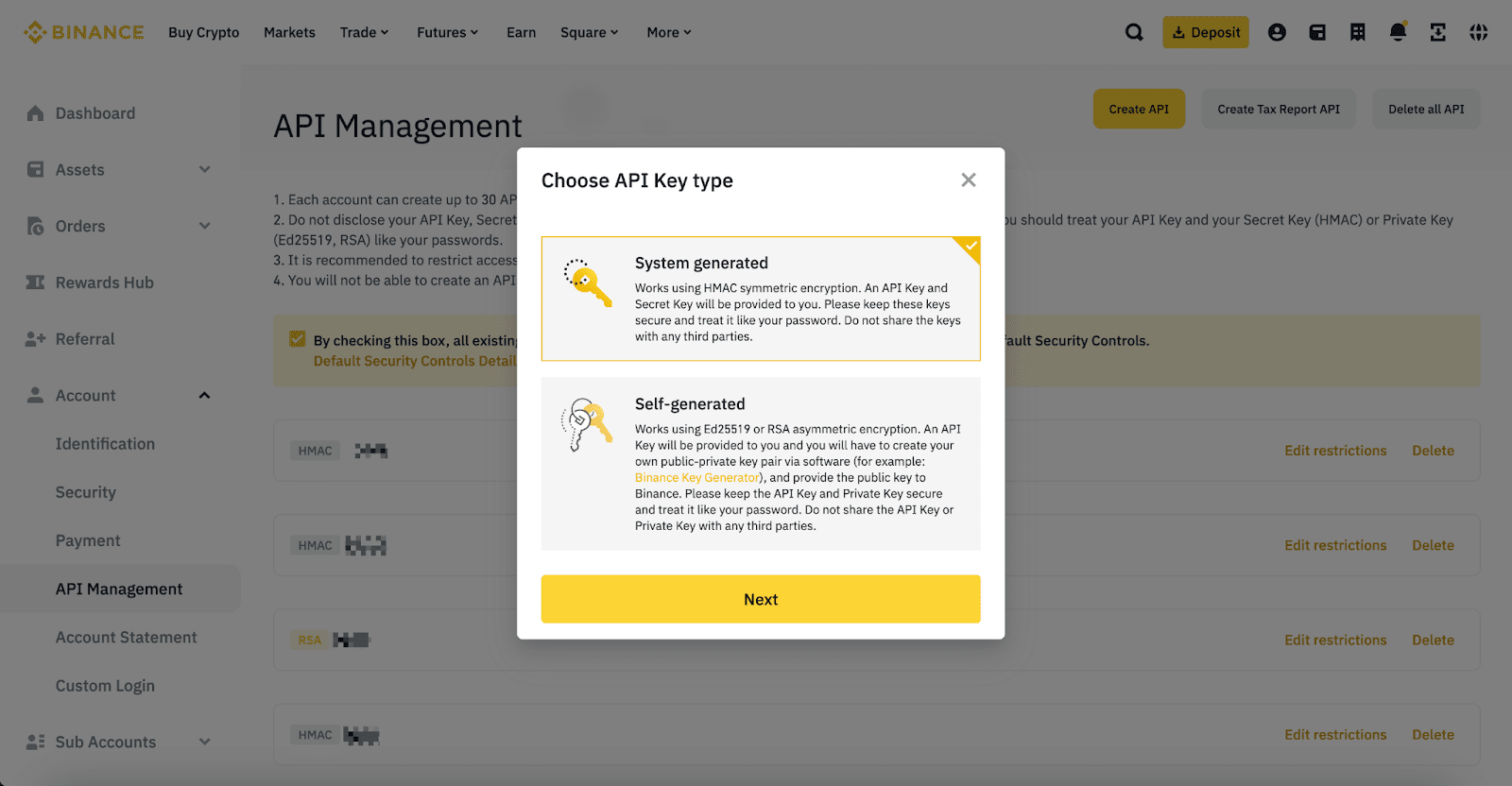
  3. 원하는 API 키 유형을 선택하세요:

    • 시스템 생성 API 키(HMAC 대칭 암호화) - API 키와 비밀 키를 받게 됩니다.

    • 자체 생성 API 키(Ed25519 또는 RSA 비대칭 암호화) - API 키를 받게 되지만, 공개-비공개 키 쌍을 직접 만들어야 합니다.API 키 유형
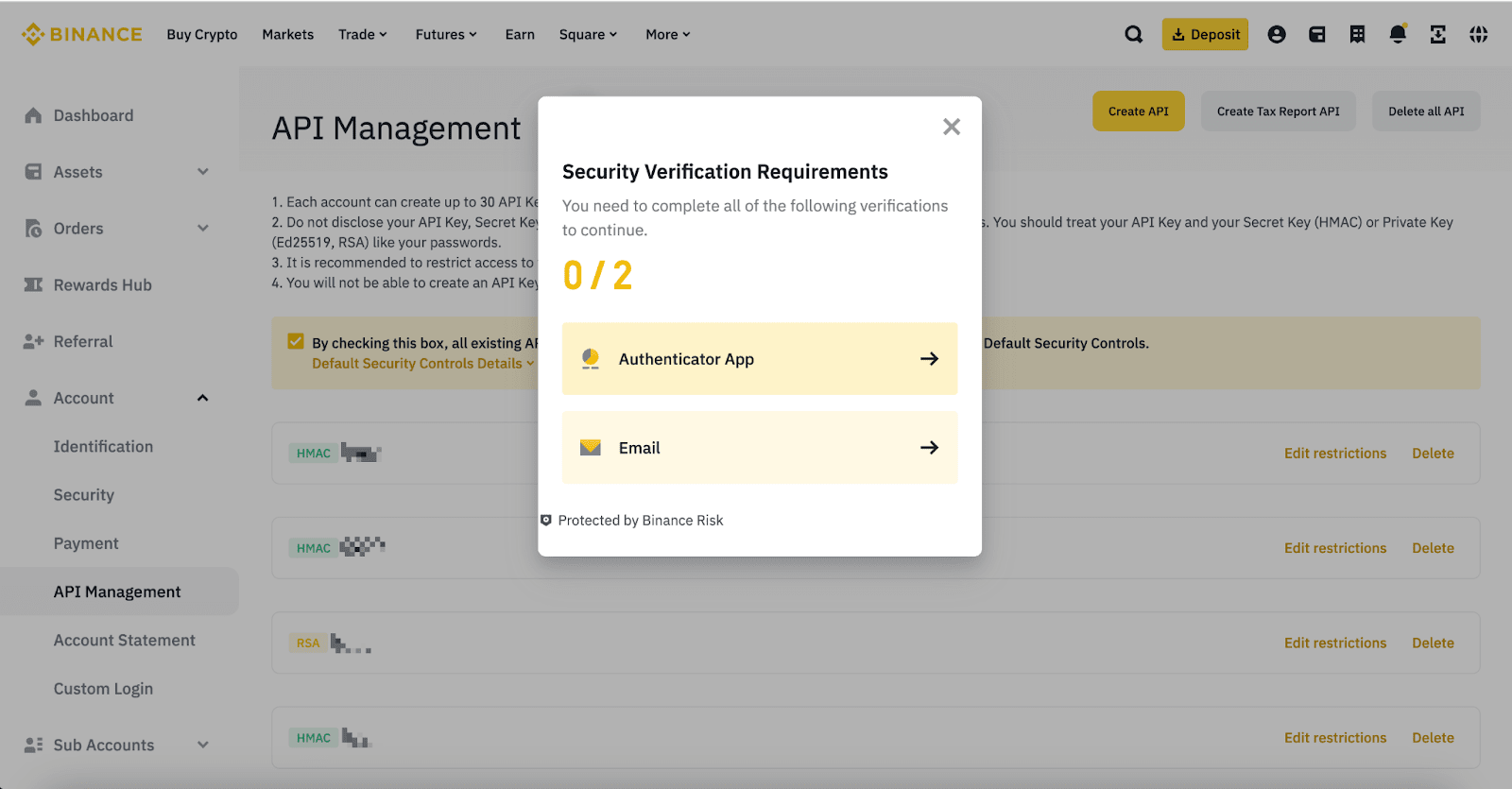
  4. API 키에 대한 라벨/이름을 입력하세요.API 키 생성

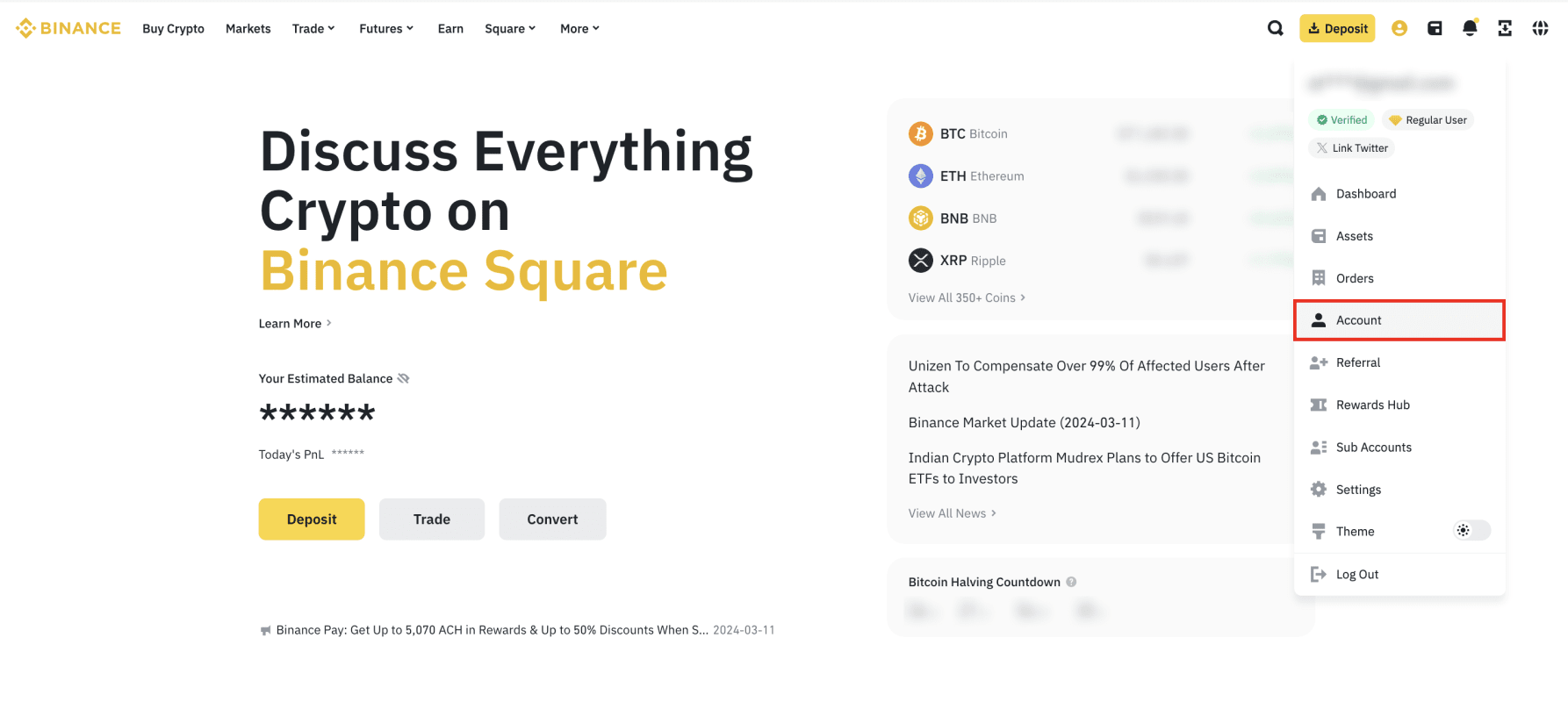
  5. 2FA 기기와 패스키를 사용하여 확인하세요.보안 관리

  6. 이제 API 키가 생성되었습니다.

Binance API에 대한 자세한 내용은 Binance API 설명서 를 참조하세요.

Claude Desktop과 통합

이 MCP 서버를 Claude Desktop과 통합하기 전에 다음이 설치되어 있는지 확인하세요.

  • 클로드 데스크탑

그런 다음 다음 명령을 사용하여 서버를 빌드합니다.

npm run build  

Claude Desktop에 이 MCP 서버를 추가하려면:

Claude Desktop 구성 파일을 다음 위치에서 만들거나 편집하세요.

  • macOS: ~/Library/Application Support/Claude/claude_desktop_config.json

  • Windows: %APPDATA%\Claude\claude_desktop_config.json

  • 리눅스: ~/.config/Claude/claude_desktop_config.json

다음 구성을 추가합니다.

{
    "mcpServers": {
        "binance-mcp": {
            "command": "node",
            "args": [
                "/Users/Username/Desktop/binance-mcp/build/index.js"
            ],
            "env": {
                "BINANCE_API_KEY": "BINANCE_API_KEY",
                "BINANCE_API_SECRET": "BINANCE_API_SECRET"
            },
            "disabled": false,
            "autoApprove": []
        }
    }
}

args 필드에 index.js 파일의 올바른 위치를 전달해야 합니다.

변경 사항을 적용하려면 Claude Desktop을 다시 시작하세요.

사용법 (Claude 외 MCP HOST 연결용)

서버 시작

MCP 서버를 시작하려면 다음을 실행하세요.

npm start  # or node index.js

기능

바이낸스 API 함수

  1. 바이낸스 계정 정보 받기 - binanceAccountInfo

    잔액, 거래 허가, 계정 상태를 포함하여 바이낸스 계정에 대한 포괄적인 정보를 검색합니다.

  2. 바이낸스 계정 스냅샷 받기 - binanceAccountSnapshot

    바이낸스 계정 현황을 스냅샷으로 받아보세요. 현재 BTC 가격 정보도 포함되어 있으며, 지난 30일간의 내역도 포함되어 있습니다.

  3. 바이낸스 주문장 확인 - binanceOrderBook

    {
        "symbol": "BTCUSDT"
    }

    지정된 거래 쌍에 대한 현재 주문장을 검색하여 최대 50단계까지 가능한 매수 및 매도 주문을 표시합니다.

  4. 현물 시장 주문하기 - binanceSpotPlaceOrder

    {
        "symbol": "BTCUSDT",
        "side": "BUY",
        "quantity": 0.001,
        // OR
        "quoteOrderQty": 100
    }

    가장 유리한 가격으로 즉시 체결되는 시장가 주문을 생성합니다. 기준 자산의 수량을 지정하려면 quantity 사용하고, quoteOrderQty 수량을 지정하려면 '견적 주문 수량'을 사용합니다. 소액 주문에 적합합니다.

  5. TWAP 주문하기 - binanceTimeWeightedAveragePriceFutureAlgo

    {
        "symbol": "BTCUSDT",
        "side": "BUY",
        "quantity": 1.0,
        "duration": 3600
    }

    시장 충격을 최소화하기 위해 지정된 기간 동안 점진적으로 체결되는 시간 가중 평균 가격(TWAP) 주문을 생성합니다. 큰 가격 변동을 초래할 수 있는 대량 주문에 적합합니다.

모델 컨텍스트 프로토콜(MCP)

모델 컨텍스트 프로토콜(MCP)은 애플리케이션이 AI 모델 및 블록체인 기반 컴퓨팅 시스템과 상호 작용하는 방식을 개선하도록 설계된 개방형 표준입니다. MCP는 자동화된 거래 및 분산 애플리케이션의 효율성을 향상시키는 구조화된 컨텍스트를 구축합니다.

MCP의 이점:

  • 표준화 : 애플리케이션 상호작용에 대한 통합된 접근 방식을 정의합니다.

  • 효율성 : 계산 오버헤드를 줄이고 거래 속도를 향상시킵니다.

  • 상호 운용성 : 다양한 플랫폼과 블록체인 생태계에서의 통합을 지원합니다.

오류 처리

트랜잭션이 실패하면 서버는 자세한 내용이 포함된 오류 메시지를 반환합니다. 콘솔 로그에서 더 자세한 디버깅 정보를 확인하세요. 일반적인 오류 시나리오는 다음과 같습니다.

  • 지갑에 자금이 부족합니다

  • 잘못된 수신자 주소입니다

  • 네트워크 혼잡 또는 RPC 문제

  • 바이낸스 API 인증 오류

  • 거래 한도 제한

특허

이 프로젝트는 MIT 라이선스에 따라 오픈 소스입니다.

기여, 버그 보고 또는 기능 요청이 있으시면 GitHub 에 이슈를 제출해 주세요.

Available Tools

1 tool
crypto-priceC

Get the current price of a cryptocurrency

ParametersJSON Schema
NameRequiredDescriptionDefault
symbolYes

TDQS

C2.8/5.0
Behavior2/5

Does the description disclose side effects, auth requirements, rate limits, or destructive behavior?

No annotations are provided, so the description carries full burden for behavioral disclosure. While 'Get' implies a read-only operation, the description doesn't address important behavioral aspects like rate limits, data freshness (how current is 'current'), error conditions, or authentication requirements. For a tool with zero annotation coverage, this represents a significant gap in transparency.

Agents need to know what a tool does to the world before calling it. Descriptions should go beyond structured annotations to explain consequences.

Conciseness5/5

Is the description appropriately sized, front-loaded, and free of redundancy?

The description is perfectly concise - a single sentence that states exactly what the tool does without any wasted words. It's front-loaded with the core functionality and contains no redundant information. Every word earns its place in this minimal but complete statement of purpose.

Shorter descriptions cost fewer tokens and are easier for agents to parse. Every sentence should earn its place.

Completeness2/5

Given the tool's complexity, does the description cover enough for an agent to succeed on first attempt?

For a tool with no annotations, no output schema, and 0% schema description coverage, the description is inadequate. While concise, it doesn't provide enough information about behavior, parameter usage, or return values. The agent would need to guess about important aspects like response format, error handling, and parameter constraints.

Complex tools with many parameters or behaviors need more documentation. Simple tools need less. This dimension scales expectations accordingly.

Parameters2/5

Does the description clarify parameter syntax, constraints, interactions, or defaults beyond what the schema provides?

The schema has 0% description coverage, with one undocumented parameter 'symbol'. The description mentions 'cryptocurrency' which provides some context for what 'symbol' might represent, but doesn't specify format (e.g., 'BTC', 'bitcoin', ticker symbols), valid values, or examples. This minimal compensation for the complete lack of schema documentation is insufficient.

Input schemas describe structure but not intent. Descriptions should explain non-obvious parameter relationships and valid value ranges.

Purpose4/5

Does the description clearly state what the tool does and how it differs from similar tools?

The description clearly states the action ('Get') and resource ('current price of a cryptocurrency'), making the purpose immediately understandable. It's specific enough to distinguish this tool from potential alternatives like historical price tools or exchange rate calculators. However, it doesn't explicitly differentiate from non-existent siblings, so it doesn't reach the highest score.

Agents choose between tools based on descriptions. A clear purpose with a specific verb and resource helps agents select the right tool.

Usage Guidelines2/5

Does the description explain when to use this tool, when not to, or what alternatives exist?

The description provides no guidance on when to use this tool versus alternatives, prerequisites, or limitations. It simply states what the tool does without context about appropriate use cases or constraints. Since there are no sibling tools mentioned, this omission is less critical but still leaves the agent without usage context.

Agents often have multiple tools that could apply. Explicit usage guidance like "use X instead of Y when Z" prevents misuse.

Tool Schema Changelog

Recent tool additions, removals, and schema changes observed during successful MCP inspections.

  1. 1 tool update
    • First observedcrypto-price

TDQS

B3/5.0

Scored across 1 tool

Disambiguation5/5

With only one tool, there is no possibility of ambiguity or overlap between tools. The tool's purpose is clearly defined as fetching cryptocurrency prices, making it impossible for an agent to confuse it with another tool.

Naming Consistency5/5

Since there is only one tool, naming consistency is inherently perfect. The tool name 'crypto-price' follows a clear noun-noun pattern that is straightforward and descriptive for its single function.

Tool Count2/5

A single tool is too few for a server named 'Binance MCP Server', which implies broader cryptocurrency exchange functionality. This minimal set feels thin and inadequate for the expected scope, such as trading, account management, or market data beyond just price.

Completeness2/5

The tool surface is severely incomplete for a Binance server, covering only price retrieval. Obvious gaps include trading operations, balance checks, order management, and other exchange features, which will likely cause agent failures in typical cryptocurrency tasks.

Maintenance

ActivityInactive
ResponsivenessUnresponsive

Related MCP Connectors

Related MCP Servers

  • A
    license
    Not graded
    quality
    D
    maintenance
    This server provides a robust interface for Binance spot trading operations, including secure management of API credentials, execution and management of spot orders, and monitoring of account balances and open orders.
    5 npm
    14
    MIT
  • -
    license
    Not graded
    quality
    Not graded
    maintenance
    A backend service that executes transactions across multiple blockchains, enabling users to manage wallets, transfer tokens, and interact with smart contracts using the Model Context Protocol framework.
    1
    -
  • -
    license
    Not graded
    quality
    Not graded
    maintenance
    Backend service that enables users to connect with Binance exchange for viewing portfolio data, converting tokens, and executing trades with minimal market impact through the Model Context Protocol framework.
    30 npm
    -