

F
licenseNot graded
qualityD
maintenanceA Model Context Protocol server that enables AI assistants to explore and interact with Cursor IDE's SQLite databases, providing access to project data, chat history, and composer information.
24
-





SAP HANA MCP 服务器 为 SAP HANA 和 SAP HANA Cloud 实现了 模型上下文协议 (Model Context Protocol)。AI 客户端可以发现模式、在防护机制下运行 SQL,并可选择合并 业务/领域元数据,以便代理能够一致地解释代码和表——而无需替换您作为记录系统的数据库。
文档 | 用途 |
本 README | 先决条件、安装、如何连接各客户端、功能摘要、配置速查表、故障排除 |
发布历史 — 按版本划分的功能和修复 ( | |
| |
权威环境变量参考:每个变量、默认值、硬性限制、HTTP 认证、安全说明 | |
复制粘贴:连接配置文件(单容器、MDC)、语义 JSON、分页指针 | |
本地 HTTP MCP: |
Related MCP server: mcp4odata
Node.js 18+
一台从运行服务器的机器上可以通过 SQL 端口访问的 SAP HANA 或 SAP HANA Cloud 数据库
一个 MCP 客户端 (Claude Desktop, Claude Code, VS Code, Cursor, Cline, Windsurf 或自定义 HTTP 客户端)
通过环境变量提供的 凭据 (参见 安全)
方法 | 使用场景 |
MCP 配置中的 | 默认 — 无需全局安装 |
| 您需要在 |
克隆 + | 开发或固定本地构建版本 |
HTTP 入口点 (从克隆版本):npm run start:http — 默认绑定 127.0.0.1:3100,路径 /mcp。参见 托管与 HTTP。
受众 | 传输方式 | 下一步 |
聊天 / 轻量用户 | stdio | |
开发人员 (Claude Code, VS Code, Cline, Cursor, Windsurf) | stdio | |
带有 AI 代理的业务应用 (您通过 HTTP 托管 MCP) | HTTP |
配置文件路径:
macOS: ~/Library/Application Support/Claude/claude_desktop_config.json
Windows: %APPDATA%\claude\claude_desktop_config.json
Linux: ~/.config/claude/claude_desktop_config.json
注册服务器;将连接设置放入 env (参见 配置;完整配置 JSON 见 configuration-samples.md)。下面的示例包含了用于 MDC 的 HANA_INSTANCE_NUMBER / HANA_DATABASE_NAME — 如果您使用单容器数据库,请移除它们。
{
  "mcpServers": {
    "HANA Database": {
      "command": "npx",
      "args": ["-y", "hana-mcp-server"],
      "env": {
        "HANA_HOST": "your-hana-host.com",
        "HANA_PORT": "443",
        "HANA_USER": "your-username",
        "HANA_PASSWORD": "your-password",
        "HANA_SCHEMA": "your-schema",
        "HANA_SSL": "true",
        "HANA_ENCRYPT": "true",
        "HANA_VALIDATE_CERT": "true",
        "HANA_CONNECTION_TYPE": "auto",
        "HANA_INSTANCE_NUMBER": "10",
        "HANA_DATABASE_NAME": "HQQ",
        "LOG_LEVEL": "info",
        "ENABLE_FILE_LOGGING": "true",
        "ENABLE_CONSOLE_LOGGING": "false"
      }
    }
  }
}
如果 CLI 在 PATH 中,您可以使用 "command": "hana-mcp-server" 并省略 args。
重启 Claude Desktop。
可选: HANA MCP UI — 使用 npx hana-mcp-ui 编辑环境变量并部署到 Claude Desktop。
仅限 stdio;使用与上述相同的 env 键。规范示例 — Claude Code (~/.claude.json 或项目 .mcp.json)。下面的 env 块包含了用于 MDC 租户 HANA 的 HANA_DATABASE_NAME;对于大多数单容器设置,请省略它。
{
  "mcpServers": {
    "hana": {
      "type": "stdio",
      "timeout": 600,
      "command": "npx",
      "args": ["-y", "hana-mcp-server"],
      "env": {
        "HANA_HOST": "<host>",
        "HANA_PORT": "31013",
        "HANA_USER": "<user>",
        "HANA_PASSWORD": "<password>",
        "HANA_SCHEMA": "SAPABAP1",
        "HANA_DATABASE_NAME": "HQQ",
        "HANA_SSL": "false",
        "HANA_ENCRYPT": "false",
        "HANA_VALIDATE_CERT": "false",
        "LOG_LEVEL": "info",
        "ENABLE_FILE_LOGGING": "true",
        "ENABLE_CONSOLE_LOGGING": "false"
      }
    }
  }
}
在 VS Code, Cline, Cursor 和 Windsurf 中使用相同的 command, args 和 env。在对 env 进行任何更改后,请在 IDE 中重启 MCP 服务器连接。
从本仓库的检出版本中运行 HTTP 传输 (在 npm install 之后)。已发布的 npx hana-mcp-server 路径仅支持 stdio。
npm run start:http通过 HTTP 使用 Cursor / 本地 IDE: 在运行 start:http 的 shell (或进程管理器) 中设置 HANA_*,然后添加一个 HTTP MCP 条目,其 url 为 http://127.0.0.1:3100/mcp ("type": "fetch" 或 "type": "http",取决于 Cursor 版本)。参见 docs/local-http-mcp.md 和 ./scripts/start-http-mcp.sh。
主题 | 详情 |
端点 |
|
调优 |
|
健康检查 |
|
CORS |
|
变量 | 角色 |
|
|
| 颁发者 / JWKS (在绑定了 XSUAA 的 SAP BTP 上省略) |
| 可选的预期 |
| 可选的作用域列表 |
SAP BTP: 绑定 XSUAA,设置 MCP_HTTP_AUTH_ENABLED=true,并分配角色集合。详情:ENVIRONMENT.md §7。
密钥: HANA_PASSWORD、JWT 材料以及带有嵌入式凭据的 URL 应放在环境变量或密钥管理器中 — 不要放入 git。
供应链: 在 CI 和共享桌面中,优先使用已发布包的 npx -y,而不是可变的全局安装。
HTTP: 对于 localhost 以外的任何内容,请启用 JWT 验证;将服务置于反向代理之后以进行 TLS 终止和网络策略控制。
更多说明:ENVIRONMENT.md §9。
领域 | 调用者获得什么 |
模式 | 分页的模式/表列表、列元数据、连接检查 |
SQL | 参数化执行;对 SELECT/WITH 的行数、列数和单元格大小的限制;在支持的情况下通过 |
资源 | 用于列表/读取的 |
领域知识 (可选) | 用于 |
变量适用于 stdio (客户端配置中的 env) 和 HTTP (进程环境变量)。更改后请重启。
名称、默认值和限制范围的权威来源: docs/ENVIRONMENT.md。 复制粘贴连接 JSON (单容器 / MDC): docs/configuration-samples.md#connection-profiles-env-json。
参数 | 描述 | 示例 |
| 主机名或 IP |
|
| 数据库用户 |
|
| 数据库密码 | (密钥) |
参数 | 默认值 | 说明 |
|
| MDC SQL 端口通常为 |
| — | 工具省略 |
|
|
|
| — | MDC 实例 ID (例如 |
| — | MDC 的 租户 名称 (例如 |
|
| 驱动程序的 TLS 和证书验证标志 |
参数 | 默认值 | 说明 |
|
|
|
|
|
|
|
| 对于 stdio,通常设为 |
*代码默认值;示例通常将文件日志记录设置为 true。
参数 | 默认值 | 用途 |
|
| 每个 |
|
| 每行返回的最大列数 |
|
| 截断过长的单元格文本 |
|
| 默认 |
|
| 列表工具:默认和最大页面大小 |
|
|
|
|
| 查询分页的快照 ID 生命周期 |
HANA_SEMANTICS_*)参数 | 默认值 | 用途 |
| — | 字典 JSON 的文件路径 (优先级高于 URL) |
| — | 相同格式的 HTTPS URL |
|
| 缓存 / 重新加载行为 |
症状 | 检查 |
连接被拒绝 |
|
认证失败 / 无客户端 | 密码、用户、租户上的 |
TLS 错误 |
|
对象错误或为空 | MDC:租户决定可见性;相同的模式名称在不同租户下可能不同 |
SQL 需要另一个数据库前缀 |
|
调试: LOG_LEVEL=debug, ENABLE_CONSOLE_LOGGING=true, 重启。
npx hana-mcp-ui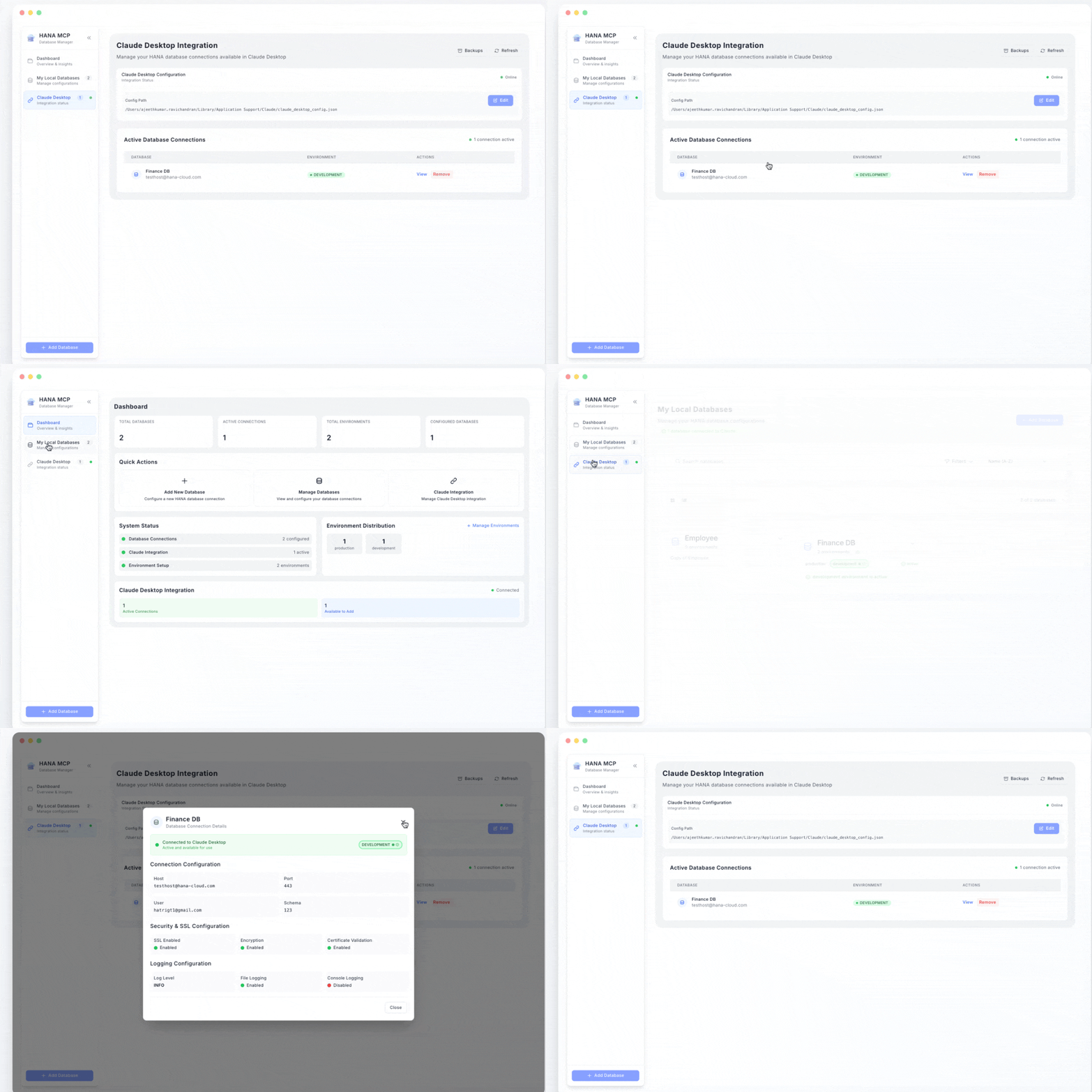
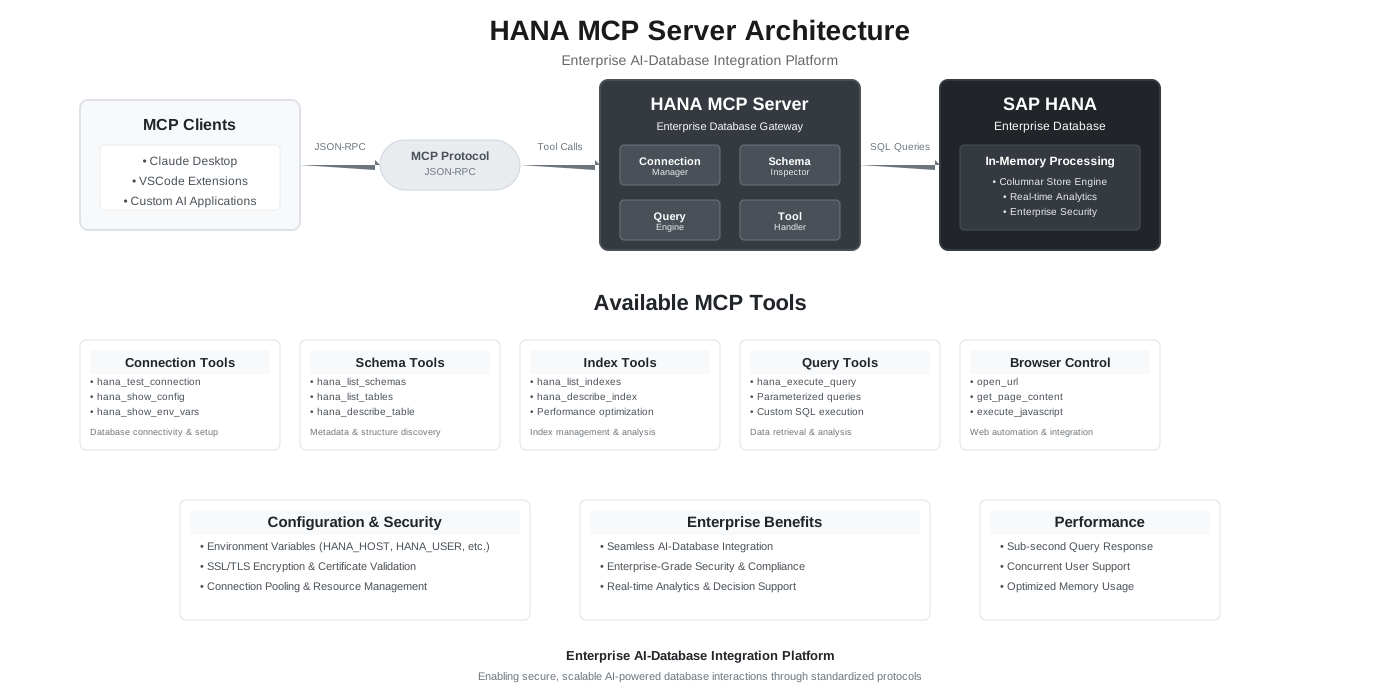
hana-mcp-server/
├── src/
│   ├── server/           # MCP lifecycle, resources, HTTP transport
│   ├── tools/            # Schema, table, query, index, config tools
│   ├── database/         # HANA client, connection manager, executor, query runner
│   ├── semantics/        # Optional semantics / domain JSON loader
│   ├── utils/            # Logger, config, validators, formatters
│   ├── query-snapshot-store.js
│   └── constants/        # MCP constants, tool definitions
├── tests/
├── docs/                 # README index, ENVIRONMENT.md, configuration-samples.md, diagrams
└── hana-mcp-server.js # stdio entry point运行时 | Node.js 18+ |
平台 | macOS, Linux, Windows |
依赖 |
|
问题: GitHub Issues
UI: HANA MCP UI
MIT — 参见 LICENSE。
Describe the structure of a specific index
| Name | Required | Description | Default |
|---|---|---|---|
| schema_name | No | Name of the schema containing the table (optional) | |
| table_name | Yes | Name of the table containing the index | |
| index_name | Yes | Name of the index to describe |
Does the description disclose side effects, auth requirements, rate limits, or destructive behavior?
With no annotations provided, the description carries the full burden of behavioral disclosure. It states the tool describes index structure but doesn't reveal any behavioral traits such as whether it's a read-only operation, potential performance impacts, error handling, or output format. This leaves significant gaps in understanding how the tool behaves beyond its basic purpose.
Agents need to know what a tool does to the world before calling it. Descriptions should go beyond structured annotations to explain consequences.
Is the description appropriately sized, front-loaded, and free of redundancy?
The description is extremely concise and front-loaded with a single, clear sentence that directly states the tool's purpose. There is no wasted language or unnecessary elaboration, making it efficient and easy to parse for an AI agent.
Shorter descriptions cost fewer tokens and are easier for agents to parse. Every sentence should earn its place.
Given the tool's complexity, does the description cover enough for an agent to succeed on first attempt?
Given the tool's complexity (describing database index structure) and lack of annotations and output schema, the description is insufficiently complete. It doesn't cover behavioral aspects, usage context, or what information is returned, leaving the agent with inadequate guidance for effective tool invocation in a database management scenario.
Complex tools with many parameters or behaviors need more documentation. Simple tools need less. This dimension scales expectations accordingly.
Does the description clarify parameter syntax, constraints, interactions, or defaults beyond what the schema provides?
The input schema has 100% description coverage, clearly documenting all three parameters (schema_name, table_name, index_name) with their types and optionality. The description adds no additional semantic context beyond what the schema provides, such as explaining relationships between parameters or usage examples, so it meets the baseline for high schema coverage without compensating value.
Input schemas describe structure but not intent. Descriptions should explain non-obvious parameter relationships and valid value ranges.
Does the description clearly state what the tool does and how it differs from similar tools?
The description clearly states the tool's purpose with a specific verb ('describe') and resource ('structure of a specific index'), making it easy to understand what it does. However, it doesn't explicitly differentiate from sibling tools like 'hana_describe_table' or 'hana_list_indexes', which would require mentioning it focuses on detailed structural metadata rather than listing or describing tables.
Agents choose between tools based on descriptions. A clear purpose with a specific verb and resource helps agents select the right tool.
Does the description explain when to use this tool, when not to, or what alternatives exist?
The description provides no guidance on when to use this tool versus alternatives. It doesn't mention sibling tools like 'hana_list_indexes' for listing indexes or 'hana_describe_table' for table details, nor does it specify prerequisites or contexts for usage, leaving the agent to infer appropriate scenarios.
Agents often have multiple tools that could apply. Explicit usage guidance like "use X instead of Y when Z" prevents misuse.
Describe the structure of a specific table
| Name | Required | Description | Default |
|---|---|---|---|
| schema_name | No | Name of the schema containing the table (optional) | |
| table_name | Yes | Name of the table to describe |
Does the description disclose side effects, auth requirements, rate limits, or destructive behavior?
No annotations are provided, so the description carries the full burden of behavioral disclosure. It states what the tool does but lacks critical details: it doesn't specify if this is a read-only operation, what permissions are required, what the output format looks like (e.g., column names, types, constraints), or any error conditions (e.g., invalid table names). For a tool with no annotation coverage, this is a significant gap in transparency.
Agents need to know what a tool does to the world before calling it. Descriptions should go beyond structured annotations to explain consequences.
Is the description appropriately sized, front-loaded, and free of redundancy?
The description is a single, efficient sentence that front-loads the core purpose ('Describe the structure of a specific table') with zero wasted words. It avoids redundancy and is appropriately sized for a simple tool, making it easy for an agent to parse quickly.
Shorter descriptions cost fewer tokens and are easier for agents to parse. Every sentence should earn its place.
Given the tool's complexity, does the description cover enough for an agent to succeed on first attempt?
Given the lack of annotations and output schema, the description is incomplete for effective tool use. It doesn't explain what 'describe' entails (e.g., returns metadata like columns and data types), potential side effects, or error handling. For a tool with no structured output information, the description should compensate by detailing return values or usage constraints, which it fails to do.
Complex tools with many parameters or behaviors need more documentation. Simple tools need less. This dimension scales expectations accordingly.
Does the description clarify parameter syntax, constraints, interactions, or defaults beyond what the schema provides?
Schema description coverage is 100%, with clear documentation for both parameters (schema_name and table_name). The description adds minimal value beyond the schema, as it only implies that table_name is the key input without providing additional context like format examples or relationships between parameters. This meets the baseline for high schema coverage but doesn't enhance understanding.
Input schemas describe structure but not intent. Descriptions should explain non-obvious parameter relationships and valid value ranges.
Does the description clearly state what the tool does and how it differs from similar tools?
The description clearly states the verb ('describe') and resource ('structure of a specific table'), making the purpose immediately understandable. It distinguishes this from siblings like hana_list_tables (which lists tables) and hana_describe_index (which describes indexes). However, it doesn't explicitly mention the database system (HANA) or differentiate from hana_execute_query, which could also provide structural information through queries.
Agents choose between tools based on descriptions. A clear purpose with a specific verb and resource helps agents select the right tool.
Does the description explain when to use this tool, when not to, or what alternatives exist?
The description provides no guidance on when to use this tool versus alternatives. It doesn't mention prerequisites (e.g., needing a valid table name), compare it to hana_list_tables for discovery or hana_execute_query for custom queries, or specify use cases like schema exploration or query planning. The agent must infer usage from the tool name and context alone.
Agents often have multiple tools that could apply. Explicit usage guidance like "use X instead of Y when Z" prevents misuse.
Execute a custom SQL query against the HANA database
| Name | Required | Description | Default |
|---|---|---|---|
| query | Yes | The SQL query to execute | |
| parameters | No | Optional parameters for the query (for prepared statements) |
Does the description disclose side effects, auth requirements, rate limits, or destructive behavior?
With no annotations provided, the description carries the full burden of behavioral disclosure. It states the tool executes a custom SQL query but lacks critical details: it doesn't specify if this is read-only or can perform mutations, potential risks like data modification or deletion, authentication requirements, or response handling (e.g., result format, error messages). This is inadequate for a tool that could have significant side effects.
Agents need to know what a tool does to the world before calling it. Descriptions should go beyond structured annotations to explain consequences.
Is the description appropriately sized, front-loaded, and free of redundancy?
The description is a single, efficient sentence that directly states the tool's function without unnecessary words. It is front-loaded and appropriately sized, making it easy to parse quickly.
Shorter descriptions cost fewer tokens and are easier for agents to parse. Every sentence should earn its place.
Given the tool's complexity, does the description cover enough for an agent to succeed on first attempt?
Given the complexity of executing custom SQL queries (which could involve reads, writes, or schema changes), no annotations, and no output schema, the description is insufficient. It doesn't address behavioral traits, return values, or error conditions, leaving significant gaps for an AI agent to understand how to use the tool safely and effectively.
Complex tools with many parameters or behaviors need more documentation. Simple tools need less. This dimension scales expectations accordingly.
Does the description clarify parameter syntax, constraints, interactions, or defaults beyond what the schema provides?
The input schema has 100% description coverage, clearly documenting both parameters ('query' and 'parameters'). The description adds no additional meaning beyond this, such as query syntax examples or parameter usage details. According to the rules, with high schema coverage, the baseline is 3 even without param info in the description.
Input schemas describe structure but not intent. Descriptions should explain non-obvious parameter relationships and valid value ranges.
Does the description clearly state what the tool does and how it differs from similar tools?
The description clearly states the action ('Execute') and target resource ('custom SQL query against the HANA database'), making the purpose unambiguous. However, it doesn't explicitly differentiate from sibling tools like hana_describe_table or hana_list_tables, which might also involve database queries but for specific purposes.
Agents choose between tools based on descriptions. A clear purpose with a specific verb and resource helps agents select the right tool.
Does the description explain when to use this tool, when not to, or what alternatives exist?
The description provides no guidance on when to use this tool versus alternatives. It doesn't mention prerequisites, such as needing a valid database connection, or contrast it with sibling tools like hana_list_tables for metadata queries versus this for custom SQL execution, leaving the agent to infer usage context.
Agents often have multiple tools that could apply. Explicit usage guidance like "use X instead of Y when Z" prevents misuse.
List all indexes for a specific table
| Name | Required | Description | Default |
|---|---|---|---|
| schema_name | No | Name of the schema containing the table (optional) | |
| table_name | Yes | Name of the table to list indexes for |
Does the description disclose side effects, auth requirements, rate limits, or destructive behavior?
No annotations are provided, so the description carries full burden for behavioral disclosure. It states it 'lists' indexes, implying a read-only operation, but doesn't clarify if this requires specific permissions, what format the output takes (e.g., list of names vs. detailed properties), or if there are limitations like pagination or performance considerations for large tables. The description adds minimal context beyond the basic action.
Agents need to know what a tool does to the world before calling it. Descriptions should go beyond structured annotations to explain consequences.
Is the description appropriately sized, front-loaded, and free of redundancy?
The description is a single, efficient sentence that directly states the tool's purpose without unnecessary words. It's front-loaded with the core action ('List all indexes'), making it easy to parse. Every word earns its place, with no redundancy or fluff.
Shorter descriptions cost fewer tokens and are easier for agents to parse. Every sentence should earn its place.
Given the tool's complexity, does the description cover enough for an agent to succeed on first attempt?
Given the lack of annotations and output schema, the description is incomplete for a tool that likely returns structured data about indexes. It doesn't hint at what information is included in the listing (e.g., index names, types, columns) or any behavioral aspects like error handling. For a database tool with potential complexity, more context is needed to guide effective use.
Complex tools with many parameters or behaviors need more documentation. Simple tools need less. This dimension scales expectations accordingly.
Does the description clarify parameter syntax, constraints, interactions, or defaults beyond what the schema provides?
Schema description coverage is 100%, with both parameters ('schema_name' and 'table_name') clearly documented in the schema. The description mentions 'for a specific table', aligning with the 'table_name' parameter, but adds no additional meaning about parameter usage, defaults, or constraints beyond what the schema provides. This meets the baseline for high schema coverage.
Input schemas describe structure but not intent. Descriptions should explain non-obvious parameter relationships and valid value ranges.
Does the description clearly state what the tool does and how it differs from similar tools?
The description clearly states the verb ('List') and resource ('all indexes for a specific table'), making the purpose immediately understandable. It distinguishes from siblings like 'hana_describe_index' (which likely provides detailed metadata) and 'hana_list_tables' (which lists tables rather than indexes). However, it doesn't explicitly mention the database system (HANA) or differentiate from 'hana_describe_table', which might also include index information.
Agents choose between tools based on descriptions. A clear purpose with a specific verb and resource helps agents select the right tool.
Does the description explain when to use this tool, when not to, or what alternatives exist?
The description provides no guidance on when to use this tool versus alternatives. It doesn't specify if this is for quick overviews vs. detailed analysis, or mention prerequisites like connection requirements. Siblings like 'hana_describe_index' and 'hana_describe_table' could potentially overlap in functionality, but no comparison is offered.
Agents often have multiple tools that could apply. Explicit usage guidance like "use X instead of Y when Z" prevents misuse.
List all schemas in the HANA database
| Name | Required | Description | Default |
|---|---|---|---|
No parameters | |||
Does the description disclose side effects, auth requirements, rate limits, or destructive behavior?
No annotations are provided, so the description carries the full burden of behavioral disclosure. It states the action ('List all schemas') but doesn't describe the return format (e.g., list of schema names, JSON structure), pagination, permissions needed, or error conditions. For a tool with zero annotation coverage, this is a significant gap in transparency.
Agents need to know what a tool does to the world before calling it. Descriptions should go beyond structured annotations to explain consequences.
Is the description appropriately sized, front-loaded, and free of redundancy?
The description is a single, efficient sentence with zero waste. It's front-loaded with the core action and resource, making it easy to parse. Every word earns its place, and there's no unnecessary elaboration.
Shorter descriptions cost fewer tokens and are easier for agents to parse. Every sentence should earn its place.
Given the tool's complexity, does the description cover enough for an agent to succeed on first attempt?
Given the tool's low complexity (0 parameters, no output schema), the description is minimally complete. It states what the tool does but lacks behavioral details (e.g., output format) that would be helpful for an agent. With no annotations or output schema, the description should ideally provide more context about the return value, but it's adequate for a simple list operation.
Complex tools with many parameters or behaviors need more documentation. Simple tools need less. This dimension scales expectations accordingly.
Does the description clarify parameter syntax, constraints, interactions, or defaults beyond what the schema provides?
The tool has 0 parameters, and schema description coverage is 100% (since there are no parameters). The description doesn't need to add parameter semantics, so it meets the baseline of 4 for zero-parameter tools. It correctly implies no inputs are required.
Input schemas describe structure but not intent. Descriptions should explain non-obvious parameter relationships and valid value ranges.
Does the description clearly state what the tool does and how it differs from similar tools?
The description clearly states the verb ('List') and resource ('all schemas in the HANA database'), making the purpose immediately understandable. It distinguishes from siblings like hana_list_tables and hana_list_indexes by specifying schemas rather than tables or indexes. However, it doesn't explicitly differentiate from other schema-related tools (none exist in siblings), so it's not a perfect 5.
Agents choose between tools based on descriptions. A clear purpose with a specific verb and resource helps agents select the right tool.
Does the description explain when to use this tool, when not to, or what alternatives exist?
The description provides no guidance on when to use this tool versus alternatives. It doesn't mention prerequisites (e.g., connection requirements), when not to use it, or how it relates to siblings like hana_describe_table or hana_execute_query. The agent must infer usage from the name alone.
Agents often have multiple tools that could apply. Explicit usage guidance like "use X instead of Y when Z" prevents misuse.
List all tables in a specific schema
| Name | Required | Description | Default |
|---|---|---|---|
| schema_name | No | Name of the schema to list tables from (optional) |
Does the description disclose side effects, auth requirements, rate limits, or destructive behavior?
With no annotations provided, the description carries full burden for behavioral disclosure. It states the tool lists tables but doesn't describe what the output looks like (e.g., format, pagination), whether it requires specific permissions, or any limitations (e.g., performance with large schemas). This leaves significant gaps for a tool that presumably returns data.
Agents need to know what a tool does to the world before calling it. Descriptions should go beyond structured annotations to explain consequences.
Is the description appropriately sized, front-loaded, and free of redundancy?
The description is a single, efficient sentence that front-loads the core purpose ('List all tables') without unnecessary words. Every part of the sentence contributes directly to understanding the tool's function, making it optimally concise.
Shorter descriptions cost fewer tokens and are easier for agents to parse. Every sentence should earn its place.
Given the tool's complexity, does the description cover enough for an agent to succeed on first attempt?
Given the lack of annotations and output schema, the description is incomplete. It doesn't address behavioral aspects like output format, error handling, or usage context relative to siblings. For a simple list tool, this might be minimally adequate, but the absence of output details and sibling differentiation is a notable gap.
Complex tools with many parameters or behaviors need more documentation. Simple tools need less. This dimension scales expectations accordingly.
Does the description clarify parameter syntax, constraints, interactions, or defaults beyond what the schema provides?
The schema description coverage is 100%, with the single parameter 'schema_name' documented as optional in the schema. The description adds minimal value beyond this, only implying the parameter's purpose without explaining edge cases (e.g., what happens if omitted, default behavior). Baseline 3 is appropriate given the schema does the heavy lifting.
Input schemas describe structure but not intent. Descriptions should explain non-obvious parameter relationships and valid value ranges.
Does the description clearly state what the tool does and how it differs from similar tools?
The description clearly states the action ('List all tables') and resource ('in a specific schema'), making the purpose immediately understandable. However, it doesn't differentiate from sibling tools like 'hana_list_schemas' or 'hana_describe_table' beyond the obvious scope difference, preventing a perfect score.
Agents choose between tools based on descriptions. A clear purpose with a specific verb and resource helps agents select the right tool.
Does the description explain when to use this tool, when not to, or what alternatives exist?
The description provides no guidance on when to use this tool versus alternatives like 'hana_list_schemas' (for listing schemas instead of tables) or 'hana_describe_table' (for detailed table info). It also doesn't mention prerequisites or exclusions, leaving usage context entirely implicit.
Agents often have multiple tools that could apply. Explicit usage guidance like "use X instead of Y when Z" prevents misuse.
Show the HANA database configuration
| Name | Required | Description | Default |
|---|---|---|---|
No parameters | |||
Does the description disclose side effects, auth requirements, rate limits, or destructive behavior?
No annotations are provided, so the description carries the full burden of behavioral disclosure. It states the tool shows configuration but doesn't describe what 'configuration' includes (e.g., settings, parameters, status), whether it's read-only or has side effects, or how results are formatted. For a tool with zero annotation coverage, this leaves significant gaps in understanding its behavior.
Agents need to know what a tool does to the world before calling it. Descriptions should go beyond structured annotations to explain consequences.
Is the description appropriately sized, front-loaded, and free of redundancy?
The description is a single, efficient sentence with zero waste. It's front-loaded with the core purpose and uses clear language. Every word earns its place, making it easy to parse quickly.
Shorter descriptions cost fewer tokens and are easier for agents to parse. Every sentence should earn its place.
Given the tool's complexity, does the description cover enough for an agent to succeed on first attempt?
Given the lack of annotations and output schema, the description is incomplete for a tool that likely returns configuration details. It doesn't specify what 'configuration' entails, potential output formats, or any behavioral traits. For a tool with no structured data to rely on, this minimal description fails to provide sufficient context for effective use.
Complex tools with many parameters or behaviors need more documentation. Simple tools need less. This dimension scales expectations accordingly.
Does the description clarify parameter syntax, constraints, interactions, or defaults beyond what the schema provides?
The tool has 0 parameters, and schema description coverage is 100%, so there are no parameters to document. The description doesn't need to compensate for any gaps, and it appropriately doesn't mention parameters. A baseline of 4 is applied since no parameter information is required.
Input schemas describe structure but not intent. Descriptions should explain non-obvious parameter relationships and valid value ranges.
Does the description clearly state what the tool does and how it differs from similar tools?
The description clearly states the tool's purpose as 'Show the HANA database configuration' with a specific verb ('Show') and resource ('HANA database configuration'). It distinguishes itself from siblings like hana_list_tables or hana_execute_query by focusing on configuration rather than data or structure. However, it doesn't explicitly differentiate from hana_show_env_vars, which might share conceptual similarity.
Agents choose between tools based on descriptions. A clear purpose with a specific verb and resource helps agents select the right tool.
Does the description explain when to use this tool, when not to, or what alternatives exist?
The description provides no guidance on when to use this tool versus alternatives. It doesn't mention prerequisites, context (e.g., for troubleshooting or setup), or comparisons to siblings like hana_show_env_vars or hana_describe_table. Without this, users must infer usage from the tool name alone.
Agents often have multiple tools that could apply. Explicit usage guidance like "use X instead of Y when Z" prevents misuse.
Show all HANA-related environment variables (for debugging)
| Name | Required | Description | Default |
|---|---|---|---|
No parameters | |||
Does the description disclose side effects, auth requirements, rate limits, or destructive behavior?
With no annotations provided, the description carries full burden for behavioral disclosure. It states the tool shows environment variables for debugging, implying read-only behavior, but doesn't explicitly confirm this is a safe operation, doesn't mention authentication requirements, rate limits, or what format the output takes. The description provides basic intent but lacks important behavioral details.
Agents need to know what a tool does to the world before calling it. Descriptions should go beyond structured annotations to explain consequences.
Is the description appropriately sized, front-loaded, and free of redundancy?
The description is perfectly concise at just 8 words, with the core purpose stated first ('Show all HANA-related environment variables') and the additional context ('for debugging') efficiently appended parenthetically. Every word earns its place with zero redundancy or unnecessary elaboration.
Shorter descriptions cost fewer tokens and are easier for agents to parse. Every sentence should earn its place.
Given the tool's complexity, does the description cover enough for an agent to succeed on first attempt?
For a zero-parameter, read-oriented tool with no output schema, the description provides adequate but minimal context. It explains what the tool does and suggests a debugging use case, but doesn't describe the output format, scope limitations, or relationship to other debugging tools. Given the simplicity of the tool, the description is complete enough but could benefit from more operational detail.
Complex tools with many parameters or behaviors need more documentation. Simple tools need less. This dimension scales expectations accordingly.
Does the description clarify parameter syntax, constraints, interactions, or defaults beyond what the schema provides?
The tool has 0 parameters with 100% schema description coverage, so the schema already fully documents the parameter situation. The description appropriately doesn't discuss parameters since none exist, maintaining focus on the tool's purpose. This meets the baseline expectation for zero-parameter tools.
Input schemas describe structure but not intent. Descriptions should explain non-obvious parameter relationships and valid value ranges.
Does the description clearly state what the tool does and how it differs from similar tools?
The description clearly states the verb ('Show') and resource ('all HANA-related environment variables'), making the purpose immediately understandable. It distinguishes from siblings like hana_show_config by specifying 'environment variables' rather than configuration files. The parenthetical '(for debugging)' adds helpful context but doesn't fully differentiate from all siblings.
Agents choose between tools based on descriptions. A clear purpose with a specific verb and resource helps agents select the right tool.
Does the description explain when to use this tool, when not to, or what alternatives exist?
The description provides minimal guidance with '(for debugging)' suggesting a diagnostic context, but offers no explicit when-to-use rules, no exclusions, and no comparison to alternatives like hana_show_config. There's no mention of prerequisites, timing considerations, or when this tool would be preferred over other debugging methods.
Agents often have multiple tools that could apply. Explicit usage guidance like "use X instead of Y when Z" prevents misuse.
Test connection to HANA database
| Name | Required | Description | Default |
|---|---|---|---|
No parameters | |||
Does the description disclose side effects, auth requirements, rate limits, or destructive behavior?
With no annotations provided, the description carries the full burden of behavioral disclosure. It states the action ('Test connection') but doesn't explain what this entails—e.g., whether it performs authentication checks, network pings, returns success/failure status, or has side effects like logging. For a tool with zero annotation coverage, this is a significant gap in transparency.
Agents need to know what a tool does to the world before calling it. Descriptions should go beyond structured annotations to explain consequences.
Is the description appropriately sized, front-loaded, and free of redundancy?
The description is a single, clear sentence with no wasted words. It's front-loaded with the core purpose and efficiently communicates the essential action without unnecessary elaboration, making it highly concise and well-structured.
Shorter descriptions cost fewer tokens and are easier for agents to parse. Every sentence should earn its place.
Given the tool's complexity, does the description cover enough for an agent to succeed on first attempt?
Given the tool's simplicity (0 parameters, no output schema, no annotations), the description is minimally adequate. It states what the tool does but lacks details on behavior, output, or usage context. For a connection-testing tool, more information on what 'test' means and what results to expect would improve completeness, but it meets the basic threshold.
Complex tools with many parameters or behaviors need more documentation. Simple tools need less. This dimension scales expectations accordingly.
Does the description clarify parameter syntax, constraints, interactions, or defaults beyond what the schema provides?
The tool has 0 parameters, and the schema description coverage is 100%, so there are no parameters to document. The description doesn't need to add parameter semantics, and it appropriately doesn't mention any. A baseline of 4 is applied for zero-parameter tools, as there's nothing to compensate for.
Input schemas describe structure but not intent. Descriptions should explain non-obvious parameter relationships and valid value ranges.
Does the description clearly state what the tool does and how it differs from similar tools?
The description clearly states the tool's purpose with a specific verb ('Test') and resource ('connection to HANA database'), making it immediately understandable. However, it doesn't explicitly differentiate from sibling tools like 'hana_show_config' or 'hana_show_env_vars' which might also provide connection-related information, so it doesn't reach the highest score.
Agents choose between tools based on descriptions. A clear purpose with a specific verb and resource helps agents select the right tool.
Does the description explain when to use this tool, when not to, or what alternatives exist?
The description provides no guidance on when to use this tool versus alternatives. It doesn't mention prerequisites, timing (e.g., before executing queries), or how it differs from siblings like 'hana_show_config' that might show connection details. This lack of context leaves the agent with minimal usage direction.
Agents often have multiple tools that could apply. Explicit usage guidance like "use X instead of Y when Z" prevents misuse.
Recent tool additions, removals, and schema changes observed during successful MCP inspections.
hana_describe_indexhana_describe_tablehana_execute_queryhana_list_indexeshana_list_schemashana_list_tableshana_show_confighana_show_env_varshana_test_connectionScored across 9 tools
Each tool has a clearly distinct purpose targeting specific database operations like describing structures, listing resources, executing queries, or showing configuration. There is no overlap in functionality that would cause confusion between tools.
All tools follow a consistent 'hana_verb_noun' pattern with snake_case throughout, using clear verbs like describe, list, execute, show, and test. This predictable naming makes the tool set easy to navigate and understand.
With 9 tools, this server is well-scoped for database interaction, covering essential operations like connection testing, schema exploration, query execution, and configuration viewing. Each tool earns its place without feeling excessive or insufficient.
The tool set provides strong coverage for database exploration and querying, including CRUD-like operations via custom SQL. Minor gaps exist, such as no explicit tools for creating or modifying database objects, but agents can work around this using the execute_query tool for most needs.
Remote data science agents for Snowflake, Databricks & BigQuery in Claude/Cursor via MCP
A Model Context Protocol server for Wix AI tools
Enable secure connectivity between Sentry issues and debugging data, and LLM clients, using a Model Context Protocol (MCP) server.
A comprehensive Model Context Protocol (MCP) server that enables AI assistants to interact with yo…