
Click on "Install Server".
Wait a few minutes for the server to deploy. Once ready, it will show a "Started" state.
In the chat, type
@followed by the MCP server name and your instructions, e.g., "@Network Scanner MCPscan the local network for all devices"
That's it! The server will respond to your query, and you can continue using it as needed.
Here is a step-by-step guide with screenshots.
Network Scanner MCP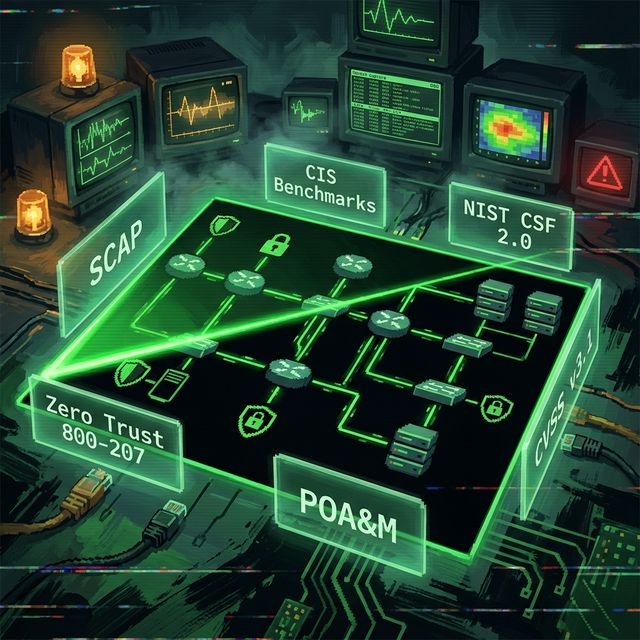
Network discovery and port scanning for infrastructure mapping.
Part of the Agentic System - a 24/7 autonomous AI framework with persistent memory.
Environmental awareness for the AGI cluster through network device discovery, port scanning, and service detection.
Features
Device Discovery
ARP Network Scanning: Discover all devices on the local network
MAC Vendor Lookup: Identify device manufacturers
Hostname Resolution: Resolve device hostnames via reverse DNS
Device History: Track when devices first/last appeared
Anomaly Detection: Alert when unknown devices join
Port Scanning & Service Detection
Port Scanning: Scan specific ports or common service ports
Service Fingerprinting: Identify services by port and banner
Quick Scan Mode: Fast scan of common ports (22, 80, 443, etc.)
Full Port Scan: Comprehensive scan of ports 1-1024
Banner Grabbing: Capture service banners for identification
Cluster Monitoring
Cluster Node Status: Monitor AGI cluster node connectivity
Health Checks: Ping-based reachability testing with latency
Alert Daemon: Continuous monitoring with voice and cluster alerts
Node Recovery Detection: Alerts when nodes come back online
Alerting
Voice Alerts: TTS alerts via edge-tts
Node-Chat Integration: Broadcast alerts to cluster nodes
Alert History: Persistent alert log with history
Defense & Federal Compliance
SCAP Compliance Output
XCCDF 1.2: Generates Extensible Configuration Checklist Description Format results per NIST SP 800-126 Rev. 3
OVAL 5.11: Produces Open Vulnerability and Assessment Language definitions for automated assessment
CPE 2.3: Common Platform Enumeration for asset identification with vendor/product/version resolution
CCE References: Common Configuration Enumeration identifiers linked to check results
CIS Benchmark Checking
Unused high-risk ports detection (telnet, FTP, rlogin, etc.)
Default credential detection via banner analysis
TLS 1.2+ enforcement verification (per NIST SP 800-52 Rev. 2)
SNMP community string brute-force testing (SNMPv2c packet construction)
SSH configuration audit (protocol version, server currency)
NTP synchronization verification (UDP NTP client probe)
Syslog forwarding configuration check
Access control list posture assessment
Each check returns: benchmark_id, title, description, level (L1/L2), status, rationale, remediation
NIST CSF Asset Inventory
ID.AM-1: Physical devices and systems inventoried with type classification
ID.AM-2: Software platforms and applications catalogued from port/banner data
ID.AM-3: Organizational data flows mapped (direction, encryption status)
ID.AM-4: External information systems identified via RFC 1918 boundary analysis
ID.AM-5: Resources prioritized by classification (PUBLIC/INTERNAL/CONFIDENTIAL/RESTRICTED) and risk score
Multi-factor risk scoring: exposure (30%), criticality (25%), vulnerability (25%), patch status (20%)
Zero Trust Architecture Assessment (NIST SP 800-207 + DISA ZTA)
Pillar 1 - Identity: Authentication strength, MFA indicators, centralized identity services
Pillar 2 - Device: Inventory completeness, device health, endpoint management coverage
Pillar 3 - Network: Micro-segmentation, encrypted transport ratio, lateral movement risk
Pillar 4 - Application: HTTPS coverage, API security, web application posture
Pillar 5 - Data: Database exposure, data-in-transit encryption, storage security
Maturity scoring per CISA ZT Maturity Model: TRADITIONAL / ADVANCED / OPTIMAL
DoD ZTA Reference Architecture alignment assessment
OMB M-22-09 Federal Zero Trust Strategy gap analysis
Phased transformation roadmap generation
NIST SP 800-53 Rev. 5 Control Mapping
Maps findings to: CA-7, CM-8, RA-5, SC-7, SI-4, PM-5, AC-17
Control satisfaction assessment: satisfied / partially_satisfied / not_satisfied
FIPS 199 baseline coverage (LOW / MODERATE / HIGH)
POA&M generation with severity-based SLAs (30/90/180 days)
Phased remediation milestones per NIST SP 800-37 Rev. 2
Multi-Framework Vulnerability Scoring
CVSS v3.1: Complete base, temporal, and environmental score computation per FIRST specification
SSVC: Stakeholder-Specific Vulnerability Categorization using CISA decision tree (Track/Track*/Attend/Act)
KEV: Known Exploited Vulnerabilities cross-reference with ransomware indicators
Mission Impact: Defense-grade impact assessment considering service criticality and asset classification
Composite priority scoring combining all frameworks
Installation
cd ${AGENTIC_SYSTEM_PATH:-/opt/agentic}/mcp-servers/network-scanner-mcp
source ${AGENTIC_SYSTEM_PATH:-/opt/agentic}/.venv/bin/activate

# Install the package
pip install -e .

# For development (includes tests)
pip install -e ".[dev]"

# Install system dependencies (Fedora)
sudo dnf install arp-scan

# For voice alerts (optional)
pip install edge-tts
sudo dnf install mpv
Configuration
MCP Server Configuration
Add to ~/.claude.json:
{
  "mcpServers": {
    "network-scanner": {
      "command": "${AGENTIC_SYSTEM_PATH:-/opt/agentic}/.venv/bin/python",
      "args": ["-m", "network_scanner_mcp.server"],
      "cwd": "${AGENTIC_SYSTEM_PATH:-/opt/agentic}/mcp-servers/network-scanner-mcp/src"
    }
  }
}
Environment Variables
Variable | Default | Description |
|
| Data storage directory |
| Auto-detected | Network interface to use |
| Auto-detected | Default subnet for scans |
|
| Logging level |
|
| Enable file logging |
| None | JSON string of cluster nodes |
Alert Daemon Environment Variables
Variable | Default | Description |
|
| Seconds between scans |
|
| Enable voice alerts |
|
| Enable cluster alerts |
|
| Alert on new device detection |
|
| Alert when cluster nodes go offline |
|
| Voice for TTS alerts |
|
| Maximum alerts to retain |
Cluster Nodes Configuration
Create cluster_nodes.json in the data directory:
{
  "192.0.2.146": {
    "name": "orchestrator",
    "role": "orchestrator",
    "type": "cluster_node"
  },
  "192.0.2.196": {
    "name": "builder",
    "role": "builder",
    "type": "cluster_node"
  },
  "192.0.2.233": {
    "name": "researcher",
    "role": "researcher",
    "type": "cluster_node"
  }
}
Or set via environment variable:
export CLUSTER_NODES_JSON='{"192.0.2.146": {"name": "orchestrator", "role": "orchestrator"}}'MCP Tools
Device Discovery
Tool | Description |
| ARP scan for all devices on subnet |
| Find only new devices since last scan |
| List unidentified devices |
Device Information
Tool | Description |
| Details about device (by IP or MAC) |
| Historical data for devices |
| Label a device as trusted |
| Remove device from known list |
Network Topology
Tool | Description |
| Full topology with categorization |
Port Scanning
Tool | Description |
| Scan ports on specific device |
| Quick scan all devices for services |
Cluster Monitoring
Tool | Description |
| Status of configured cluster nodes |
| Ping all nodes and report health |
Defense & Federal Compliance
Tool | Description |
| Generate SCAP-compliant results (XCCDF, OVAL, CPE) |
| Run CIS benchmark assessment |
| NIST CSF-aligned asset inventory with risk scoring |
| Zero Trust posture assessment (NIST 800-207/DISA ZTA) |
| Map findings to NIST 800-53 controls |
| Defense-grade vulnerability prioritization (CVSS+SSVC+KEV) |
| Generate Plan of Action & Milestones |
Utilities
Tool | Description |
| Ping device for reachability |
| Resolve hostname via DNS |
| Get scanner status and configuration |
| Export IPs for security-scanner-mcp |
Usage Examples
Basic Network Discovery
# Scan the network
scan_network()

# Scan with hostname resolution
scan_network(resolve_names=True)

# Check for new devices
detect_new_devices()

# Find unknown devices
get_unknown_devices()
Device Management
# Mark your phone as known
mark_device_known(
    mac="00:00:00:00:00:63",
    label="Marc's iPhone",
    device_type="trusted"
)

# Get device details
get_device_info("192.0.2.217")
get_device_info("00:00:00:00:00:63")

# View device history
get_device_history()
Port Scanning
# Quick port scan (common ports)
scan_device_ports("192.0.2.217", quick=True)

# Scan specific ports
scan_device_ports("192.0.2.217", ports="22,80,443,8080")

# Full port scan (1-1024)
scan_device_ports("192.0.2.217", ports="all")

# Discover services on all devices
discover_services()
Cluster Monitoring
# Check cluster node status
get_cluster_nodes()

# Full health check with latency
check_cluster_health()
Network Topology
# Get full network topology
topology = get_network_topology()

# Returns categorized lists:
# - cluster_nodes: Configured cluster nodes
# - known_devices: Devices marked as trusted
# - unknown_devices: Unidentified devices
Alert Daemon
The alert daemon provides continuous network monitoring with alerts.
Running the Daemon
# Run directly
python -m network_scanner_mcp.alert_daemon

# Or use the installed script
network-scanner-daemon
Systemd Service
Install as a systemd service:
sudo cp network-scanner-daemon.service /etc/systemd/system/
sudo systemctl daemon-reload
sudo systemctl enable network-scanner-daemon
sudo systemctl start network-scanner-daemon
Check status:
sudo systemctl status network-scanner-daemon
journalctl -u network-scanner-daemon -f
Alert Types
Type | Trigger | Priority |
| Unknown device detected | High |
| Cluster node unreachable | Critical |
| Cluster node back online | Normal |
Data Storage
All data is stored in the configured data directory (default: ${AGENTIC_SYSTEM_PATH:-/opt/agentic}/databases/network-scanner/):
File | Description |
| All discovered devices with metadata |
| Devices marked as known/trusted |
| Cluster node configuration |
| Alert log (last 1000 alerts) |
| Queued alerts for delivery |
| MCP server logs (if enabled) |
| Alert daemon logs |
Integration
Enhanced Memory MCP
Device discoveries can be stored in enhanced-memory for pattern analysis and learning.
Node-Chat MCP
Alerts are broadcast to cluster nodes via node-chat when enabled.
Security Scanner MCP
Use export_for_security_scan() to get IP lists for vulnerability scanning with security-scanner-mcp.
Development
Running Tests
# Install dev dependencies
pip install -e ".[dev]"

# Run tests
pytest

# Run with coverage
pytest --cov=network_scanner_mcp --cov-report=html

# Run specific test file
pytest tests/test_utils.py -v
Code Structure
src/network_scanner_mcp/
├── __init__.py                  # Package exports
├── server.py                    # MCP server with tools
├── scanner.py                   # Scanning functionality
├── alert_daemon.py              # Continuous monitoring daemon
├── utils.py                     # Shared utilities
└── compliance/                  # Defense & federal compliance
    ├── __init__.py              # Compliance module exports
    ├── scap_output.py           # SCAP output (XCCDF, OVAL, CPE)
    ├── cis_benchmarks.py        # CIS Benchmark checking
    ├── nist_csf_inventory.py    # NIST CSF asset inventory
    ├── zero_trust.py            # Zero Trust assessment (800-207)
    ├── nist_800_53.py           # NIST 800-53 control mapping + POA&M
    └── vuln_scoring.py          # CVSS v3.1, SSVC, KEV scoring
Requirements
Python 3.10+
Root/sudo access for ARP scanning
Network interface access
System Dependencies
arp-scan- Required for ARP scanningedge-tts- Optional for voice alertsmpv- Optional for audio playback
Changelog
v0.3.0
Added SCAP-compliant output (XCCDF 1.2, OVAL 5.11, CPE 2.3)
Added CIS Benchmark checking with 8 network device hardening checks
Added NIST CSF asset inventory (ID.AM-1 through ID.AM-5) with risk scoring
Added Zero Trust Architecture assessment (NIST 800-207, DISA ZTA, CISA ZT Maturity Model)
Added NIST SP 800-53 Rev. 5 control mapping (7 control families)
Added POA&M generation per NIST SP 800-37 Rev. 2
Added multi-framework vulnerability scoring (CVSS v3.1, SSVC, KEV, mission impact)
7 new MCP tools for defense and federal compliance
Asset classification: PUBLIC, INTERNAL, CONFIDENTIAL, RESTRICTED
DoD ZTA Reference Architecture and OMB M-22-09 alignment
v0.2.0
Added port scanning and service detection
Added hostname resolution
Implemented proper node-chat integration
Refactored with shared utilities module
Added comprehensive type hints
Added thread-safe device registry
Removed unused dependencies
Added unit tests
Fixed data format inconsistencies
Auto-detect network interface
v0.1.0
Initial release
ARP scanning
Device history tracking
Basic cluster monitoring
Alert daemon
Part of the AGI Agentic System - Environmental Awareness Component
Part of the MCP Ecosystem
This server integrates with other MCP servers for comprehensive AGI capabilities:
Server | Purpose |
4-tier persistent memory with semantic search | |
Persistent task queues and goal decomposition | |
Full AGI orchestration with 21 tools | |
Distributed task routing across nodes | |
Inter-node AI communication | |
Production-only policy enforcement |
See agentic-system-oss for the complete framework.
This server cannot be installed
Resources
Unclaimed servers have limited discoverability.
Looking for Admin?
If you are the server author, to access and configure the admin panel.