


A
licenseNot graded
qualityNot graded
maintenanceAn open-source implementation of the Model Context Protocol (MCP) that bridges AI agents with enterprise systems, enabling secure access to real-world data and capabilities.
6
-

Der Wanaku MCP Router ist ein Router für KI-fähige Anwendungen, der auf dem Model Context Protocol (MCP) basiert.
Bei diesem Protokoll handelt es sich um ein offenes Protokoll, das standardisiert, wie Anwendungen LLMs Kontext bereitstellen.
Der Projektname leitet sich vom Wort Guanaco ab, einer in Südamerika heimischen Kamelidenart.
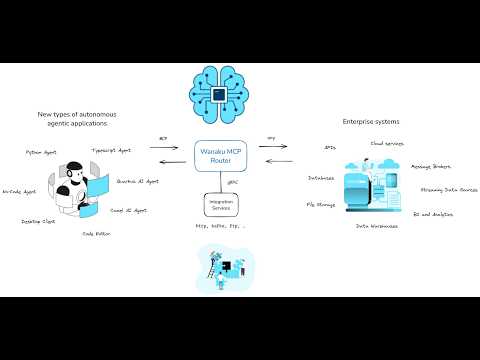
Bitte folgen Sie der Gebrauchsanleitung, um zu erfahren, wie Sie Wanaku verwenden.
Related MCP server: LocalMCP
Wenn Sie das Projekt umsetzen möchten, lesen Sie die Bauanleitung .
Wenn Sie zum Projekt beitragen möchten, lesen Sie den Leitfaden für Beiträge .
This server cannot be deployed
Let AI agents query data and act across all your business apps via MCP.
Zero-setup MCP gateway securely connecting AI to your tools with authentication and workflows
Data-ontology maps of your business systems, served to AI agents over MCP.
Connect MCP clients to 2,000+ AI models without managing provider API keys.