
A
licenseB
qualityA
maintenanceA basic implementation of persistent memory using a local knowledge graph. This lets Claude remember information about the user across chats.
9
163,576 npm
90,629
-

mcp-knowledge-graphСервер памяти графа знаний
Улучшенная реализация постоянной памяти с использованием локального графа знаний с настраиваемым --memory-path .
Это позволяет моделям ИИ запоминать информацию о пользователе в чатах. Это работает с любой моделью ИИ, которая поддерживает протокол контекста модели (MCP) или возможности вызова функций.
[!ПРИМЕЧАНИЕ] Это ответвление оригинального сервера памяти , и оно не предназначено для использования метода установки эфемерной памяти npx.
mcp-knowledge-graph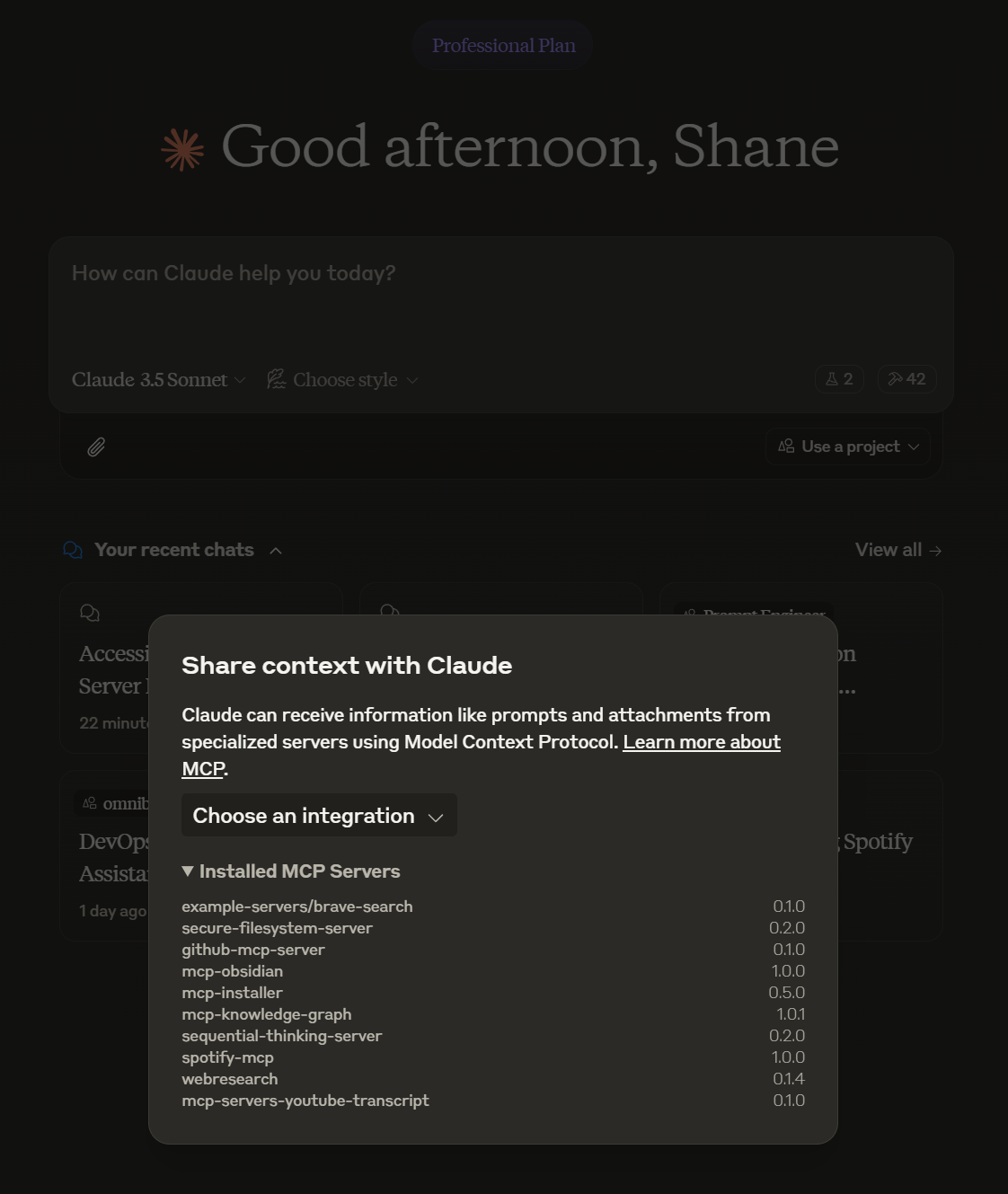

Related MCP server: Knowledge Graph Memory Server
Сущности являются основными узлами в графе знаний. Каждая сущность имеет:
Уникальное имя (идентификатор)
Тип сущности (например, «лицо», «организация», «событие»)
Список наблюдений
Пример:
{
  "name": "John_Smith",
  "entityType": "person",
  "observations": ["Speaks fluent Spanish"]
}
Отношения определяют направленные связи между сущностями. Они всегда хранятся в активном залоге и описывают, как сущности взаимодействуют или относятся друг к другу.
Пример:
{
  "from": "John_Smith",
  "to": "ExampleCorp",
  "relationType": "works_at"
}
Наблюдения — это отдельные фрагменты информации о сущности. Они:
Сохраняется как строки
Прикреплено к определенным субъектам
Могут быть добавлены или удалены независимо друг от друга.
Должен быть атомарным (один факт на наблюдение)
Пример:
{
  "entityName": "John_Smith",
  "observations": [
    "Speaks fluent Spanish",
    "Graduated in 2019",
    "Prefers morning meetings"
  ]
}создать_сущности
Создайте несколько новых сущностей в графе знаний
Входные данные: entities (массив объектов)
Каждый объект содержит:
name (строка): Идентификатор сущности
entityType (строка): Классификация типов
observations (string[]): Связанные наблюдения
Игнорирует сущности с существующими именами
создать_отношения
Создать несколько новых отношений между сущностями
Вход: relations (массив объектов)
Каждый объект содержит:
from (string): Имя исходной сущности
to (строка): Имя целевого объекта
relationType (строка): Тип отношений в активном залоге
Пропускает дублирующиеся отношения
добавить_наблюдения
Добавить новые наблюдения к существующим сущностям
Вход: observations (массив объектов)
Каждый объект содержит:
entityName (строка): Целевая сущность
contents (string[]): Новые наблюдения для добавления
Возвращает добавленные наблюдения для каждой сущности
Не удается, если объект не существует
удалить_сущности
Удалить сущности и их связи
Ввод: entityNames (string[])
Каскадное удаление связанных отношений
Тихая операция, если объект не существует
удалить_наблюдения
Удалить определенные наблюдения из сущностей
Вход: deletions (массив объектов)
Каждый объект содержит:
entityName (строка): Целевая сущность
observations (string[]): Наблюдения для удаления
Бесшумная работа, если нет наблюдения
удалить_отношения
Удалить определенные отношения из графика
Вход: relations (массив объектов)
Каждый объект содержит:
from (string): Имя исходной сущности
to (строка): Имя целевого объекта
relationType (строка): Тип отношения
Тихая операция, если связь не существует
читать_граф
Прочитать всю схему знаний
Ввод не требуется
Возвращает полную структуру графа со всеми сущностями и отношениями
поисковые_узлы
Поиск узлов на основе запроса
Ввод: query (строка)
Поиск по:
Имена сущностей
Типы сущностей
Содержание наблюдения
Возвращает соответствующие сущности и их отношения
открытые_узлы
Извлечь определенные узлы по имени
Ввод: names (string[])
Возврат:
Запрошенные сущности
Отношения между запрашиваемыми субъектами
Пропускает несуществующие узлы без уведомления
Этот сервер можно использовать с любой платформой искусственного интеллекта, которая поддерживает протокол контекста модели (MCP) или возможности вызова функций, включая Claude, GPT, Llama и другие.
Добавьте это в ваш claude_desktop_config.json:
{
  "mcpServers": {
    "memory": {
      "command": "npx",
      "args": [
        "-y",
        "mcp-knowledge-graph",
        "--memory-path",
        "/Users/shaneholloman/Dropbox/shane/db/memory.jsonl"
      ],
      "autoapprove": [
        "create_entities",
        "create_relations",
        "add_observations",
        "delete_entities",
        "delete_observations",
        "delete_relations",
        "read_graph",
        "search_nodes",
        "open_nodes"
      ]
    },
  }
}Любая платформа ИИ, поддерживающая вызов функций или стандарт MCP, может подключиться к этому серверу. Конкретная конфигурация будет зависеть от платформы, но сервер предоставляет стандартные инструменты через интерфейс MCP.
Вы можете указать собственный путь для файла памяти:
{
  "mcpServers": {
    "memory": {
      "command": "npx",
      "args": [
        "-y",
        "mcp-knowledge-graph",
        "--memory-path",
        "/Users/shaneholloman/Dropbox/shane/db/memory.jsonl"
      ],
      "autoapprove": [
        "create_entities",
        "create_relations",
        "add_observations",
        "delete_entities",
        "delete_observations",
        "delete_relations",
        "read_graph",
        "search_nodes",
        "open_nodes"
      ]
    },
  }
}
Если путь не указан, по умолчанию будет использоваться файл memory.jsonl в установочном каталоге сервера.
Запрос на использование памяти зависит от варианта использования и используемой вами модели ИИ. Изменение запроса поможет модели определить частоту и типы создаваемых воспоминаний.
Вот пример подсказки для персонализации чата, которую можно адаптировать для любой модели ИИ. Для пользователей Claude вы можете использовать эту подсказку в поле "Custom Instructions" проекта Claude.ai . Для других моделей адаптируйте ее к соответствующим форматам инструкций.
Follow these steps for each interaction:

1. User Identification:
   - You should assume that you are interacting with default_user
   - If you have not identified default_user, proactively try to do so.

2. Memory Retrieval:
   - Always begin your chat by saying only "Remembering..." and retrieve all relevant information from your knowledge graph
   - Always refer to your knowledge graph as your "memory"

3. Memory Gathering:
   - While conversing with the user, be attentive to any new information that falls into these categories:
     a) Basic Identity (age, gender, location, job title, education level, etc.)
     b) Behaviors (interests, habits, etc.)
     c) Preferences (communication style, preferred language, etc.)
     d) Goals (goals, targets, aspirations, etc.)
     e) Relationships (personal and professional relationships up to 3 degrees of separation)

4. Memory Update:
   - If any new information was gathered during the interaction, update your memory as follows:
     a) Create entities for recurring organizations, people, and significant events
     b) Connect them to the current entities using relations
c) Store facts about them as observationsЭтот сервер реализует стандарт Model Context Protocol (MCP), что делает его совместимым с любой моделью ИИ, которая поддерживает вызов функций. Структура графа знаний и API не зависят от модели, что позволяет осуществлять гибкую интеграцию с различными платформами ИИ.
Для интеграции с другими моделями:
Настройте модель для доступа к серверу MCP
Убедитесь, что модель может выполнять вызовы функций к открытым инструментам.
Адаптируйте системную подсказку к формату инструкций конкретной модели
Используйте одни и те же операции графа знаний независимо от модели
Этот сервер MCP лицензирован по лицензии MIT. Это означает, что вы можете свободно использовать, изменять и распространять программное обеспечение в соответствии с условиями лицензии MIT. Для получения более подробной информации см. файл LICENSE в репозитории проекта.
Add new facts to an existing memory. Use this to append information to something already stored.
IMPORTANT: Memory must already exist - use aim_memory_store first. Throws error if not found.
RETURNS: Array of {entityName, addedObservations} showing what was added (duplicates are ignored).
DATABASE: Adds to entities in the specified 'context' database, or master database if not specified.
EXAMPLES:
aim_memory_add_facts({observations: [{entityName: "John", contents: ["Lives in Seattle", "Works in tech"]}]})
aim_memory_add_facts({context: "work", observations: [{entityName: "Q4_Project", contents: ["Behind schedule", "Need more resources"]}]})
| Name | Required | Description | Default |
|---|---|---|---|
| context | No | Optional memory context. Observations will be added to entities in the specified context's knowledge graph. | |
| location | No | Optional storage location override. 'project' forces project-local .aim directory, 'global' forces global directory. If not specified, uses automatic detection. | |
| observations | Yes |
Does the description disclose side effects, auth requirements, rate limits, or destructive behavior?
Despite no annotations, the description discloses key behaviors: duplicates are ignored, returns an array of {entityName, addedObservations}, and database context (adds to specified or master database). No contradictions.
Agents need to know what a tool does to the world before calling it. Descriptions should go beyond structured annotations to explain consequences.
Is the description appropriately sized, front-loaded, and free of redundancy?
Description is concise with a clear structure: purpose, important note, return value, database context, and examples. Every sentence adds value without redundancy.
Shorter descriptions cost fewer tokens and are easier for agents to parse. Every sentence should earn its place.
Given the tool's complexity, does the description cover enough for an agent to succeed on first attempt?
Given no output schema, the description adequately explains return format and behavior. It covers error handling, database context, and duplicate handling. Sufficient for correct invocation.
Complex tools with many parameters or behaviors need more documentation. Simple tools need less. This dimension scales expectations accordingly.
Does the description clarify parameter syntax, constraints, interactions, or defaults beyond what the schema provides?
Schema coverage is 67% with descriptions, but the description adds value by explaining the return format for observations and providing examples that clarify parameter usage. The baseline is 3 due to schema coverage, but examples elevate it to 4.
Input schemas describe structure but not intent. Descriptions should explain non-obvious parameter relationships and valid value ranges.
Does the description clearly state what the tool does and how it differs from similar tools?
The description clearly states the tool adds new facts to an existing memory, distinguishing it from sibling tools like aim_memory_store (creates new memory) and aim_memory_remove_facts (removes facts). The verb 'add' and resource 'facts' are specific.
Agents choose between tools based on descriptions. A clear purpose with a specific verb and resource helps agents select the right tool.
Does the description explain when to use this tool, when not to, or what alternatives exist?
Explicitly states that memory must already exist and to use aim_memory_store first, plus that it throws an error if not found. Provides clear when-to-use and preconditions. Examples further guide usage.
Agents often have multiple tools that could apply. Explicit usage guidance like "use X instead of Y when Z" prevents misuse.
Forget memories. Removes memories and their associated links.
DATABASE SELECTION: Entities are deleted from the specified database's knowledge graph.
LOCATION OVERRIDE: Use the 'location' parameter to force deletion from 'project' (.aim directory) or 'global' (configured directory). Leave blank for auto-detection.
EXAMPLES:
Master database (default): aim_memory_forget({entityNames: ["OldProject"]})
Work database: aim_memory_forget({context: "work", entityNames: ["CompletedTask", "CancelledMeeting"]})
Master database in global location: aim_memory_forget({location: "global", entityNames: ["OldProject"]})
Personal database in project location: aim_memory_forget({context: "personal", location: "project", entityNames: ["ExpiredReminder"]})
| Name | Required | Description | Default |
|---|---|---|---|
| context | No | Optional memory context. Entities will be deleted from the specified context's knowledge graph. | |
| location | No | Optional storage location override. 'project' forces project-local .aim directory, 'global' forces global directory. If not specified, uses automatic detection. | |
| entityNames | Yes | An array of entity names to delete |
Does the description disclose side effects, auth requirements, rate limits, or destructive behavior?
With no annotations, the description must cover behavioral traits. It explains that entities are deleted from the knowledge graph and that associated links are also removed. It discusses location override and auto-detection. However, it does not mention irreversibility or return status, which would enhance transparency.
Agents need to know what a tool does to the world before calling it. Descriptions should go beyond structured annotations to explain consequences.
Is the description appropriately sized, front-loaded, and free of redundancy?
The description is well-structured with clear sections for database selection and location override, and includes four examples. While it is a bit lengthy, the information is organized and front-loaded, making it easy to parse.
Shorter descriptions cost fewer tokens and are easier for agents to parse. Every sentence should earn its place.
Given the tool's complexity, does the description cover enough for an agent to succeed on first attempt?
The description covers the operation and parameter details thoroughly but lacks information about the return value or what happens after deletion (e.g., success/failure reporting). Given no output schema, additional context on the outcome would improve completeness for an agent.
Complex tools with many parameters or behaviors need more documentation. Simple tools need less. This dimension scales expectations accordingly.
Does the description clarify parameter syntax, constraints, interactions, or defaults beyond what the schema provides?
All three parameters are described in the schema, and the description adds significant value: context usage is clarified (optional, for specific contexts), location parameter includes explanation of enum values and override behavior, and entityNames is shown in examples with appropriate syntax. The description goes beyond schema definitions.
Input schemas describe structure but not intent. Descriptions should explain non-obvious parameter relationships and valid value ranges.
Does the description clearly state what the tool does and how it differs from similar tools?
The description uses a specific verb 'forget' and resource 'memories', clearly indicating deletion. It differentiates from siblings like aim_memory_store, aim_memory_get, and aim_memory_remove_facts by specifying that it removes both memories and their associated links.
Agents choose between tools based on descriptions. A clear purpose with a specific verb and resource helps agents select the right tool.
Does the description explain when to use this tool, when not to, or what alternatives exist?
The description explains when to use the tool with database selection methods (context, location override) and provides multiple examples covering different scenarios (default, work database, global location, etc.). It does not explicitly mention when not to use, but the context and examples sufficiently guide usage.
Agents often have multiple tools that could apply. Explicit usage guidance like "use X instead of Y when Z" prevents misuse.
Retrieve specific memories by exact name. Use this when you know exactly what you're looking for.
VS aim_memory_search: Use aim_memory_get for exact name lookup. Use aim_memory_search for fuzzy matching or when you don't know exact names.
RETURNS: Requested entities and relations between them. Non-existent names are silently ignored.
FORMAT OPTIONS:
"json" (default): Structured JSON for programmatic use
"pretty": Human-readable text format
EXAMPLES:
aim_memory_get({names: ["John", "TechConf2024"]}) - JSON format
aim_memory_get({names: ["Shane"], format: "pretty"}) - Human-readable
aim_memory_get({context: "work", names: ["Q4_Project"], format: "pretty"})
| Name | Required | Description | Default |
|---|---|---|---|
| context | No | Optional memory context. Retrieves entities from the specified context's knowledge graph or master database if not specified. | |
| location | No | Optional storage location override. 'project' for .aim directory, 'global' for configured directory. | |
| names | Yes | An array of entity names to retrieve | |
| format | No | Output format. 'json' (default) for structured data, 'pretty' for human-readable text. |
Does the description disclose side effects, auth requirements, rate limits, or destructive behavior?
No annotations provided, so description carries burden. Discloses silent ignoring of missing names and format options. For a read-only tool, this is sufficient, though could mention safety or auth.
Agents need to know what a tool does to the world before calling it. Descriptions should go beyond structured annotations to explain consequences.
Is the description appropriately sized, front-loaded, and free of redundancy?
Well-structured with clear sections, examples, and sibling differentiation. No wasted words.
Shorter descriptions cost fewer tokens and are easier for agents to parse. Every sentence should earn its place.
Given the tool's complexity, does the description cover enough for an agent to succeed on first attempt?
Covers all parameters, format, examples, sibling comparison, and return values (entities and relations). Complete for a retrieval tool with no output schema.
Complex tools with many parameters or behaviors need more documentation. Simple tools need less. This dimension scales expectations accordingly.
Does the description clarify parameter syntax, constraints, interactions, or defaults beyond what the schema provides?
Schema coverage is 100%. Description adds value with examples and explanation of format options and context parameter, going beyond schema.
Input schemas describe structure but not intent. Descriptions should explain non-obvious parameter relationships and valid value ranges.
Does the description clearly state what the tool does and how it differs from similar tools?
Clearly states it retrieves specific memories by exact name. Distinguishes from sibling aim_memory_search by specifying exact vs fuzzy matching.
Agents choose between tools based on descriptions. A clear purpose with a specific verb and resource helps agents select the right tool.
Does the description explain when to use this tool, when not to, or what alternatives exist?
Explicitly says when to use (exact name known) and when not (use aim_memory_search for fuzzy). Also notes non-existent names are silently ignored.
Agents often have multiple tools that could apply. Explicit usage guidance like "use X instead of Y when Z" prevents misuse.
Link two memories together with a relationship. Use this to connect related information.
RELATION STRUCTURE: Each link has 'from' (subject), 'relationType' (verb), and 'to' (object).
Use active voice verbs: "manages", "works_at", "knows", "attended", "created"
Read as: "from relationType to" (e.g., "Alice manages Q4_Project")
Avoid passive: use "manages" not "is_managed_by"
IMPORTANT: Both 'from' and 'to' entities must already exist in the same database.
RETURNS: Array of created relations (duplicates are ignored).
DATABASE: Relations are created in the specified 'context' database, or master database if not specified.
EXAMPLES:
aim_memory_link({relations: [{from: "John", to: "TechConf2024", relationType: "attended"}]})
aim_memory_link({context: "work", relations: [{from: "Alice", to: "Q4_Project", relationType: "manages"}]})
Multiple: aim_memory_link({relations: [{from: "John", to: "Alice", relationType: "knows"}, {from: "John", to: "Acme_Corp", relationType: "works_at"}]})
| Name | Required | Description | Default |
|---|---|---|---|
| context | No | Optional memory context. Relations will be created in the specified context's knowledge graph. | |
| location | No | Optional storage location override. 'project' forces project-local .aim directory, 'global' forces global directory. If not specified, uses automatic detection. | |
| relations | Yes |
Does the description disclose side effects, auth requirements, rate limits, or destructive behavior?
No annotations are provided, so the description carries full responsibility. It discloses key behaviors: duplicates are ignored, returns an array of created relations, requires existing entities, and uses active voice. It does not cover error handling or side effects, but the described behaviors are sufficient for safe invocation.
Agents need to know what a tool does to the world before calling it. Descriptions should go beyond structured annotations to explain consequences.
Is the description appropriately sized, front-loaded, and free of redundancy?
The description is well-organized with clear sections: purpose, relation structure, important note, returns, database info, and examples. Every sentence adds value, though it is slightly verbose in places. It is front-loaded with key information.
Shorter descriptions cost fewer tokens and are easier for agents to parse. Every sentence should earn its place.
Given the tool's complexity, does the description cover enough for an agent to succeed on first attempt?
Given no output schema and moderate complexity, the description covers preconditions (entities must exist), return type (array of relations), and includes multiple examples. It does not explicitly tie into sibling tools, but it is complete enough for an agent to use correctly. Minor omissions like error behavior on missing entities are acceptable given the tool's simplicity.
Complex tools with many parameters or behaviors need more documentation. Simple tools need less. This dimension scales expectations accordingly.
Does the description clarify parameter syntax, constraints, interactions, or defaults beyond what the schema provides?
Schema coverage is 67%, placing the burden on the description to add meaning. The description enhances parameter semantics by providing example values for relationType, explaining the relation structure (from-relationType-to), and recommending active voice. This goes beyond the schema's basic descriptions.
Input schemas describe structure but not intent. Descriptions should explain non-obvious parameter relationships and valid value ranges.
Does the description clearly state what the tool does and how it differs from similar tools?
The description explicitly states the tool's purpose: 'Link two memories together with a relationship.' and 'Use this to connect related information.' It clearly differentiates from sibling tools like aim_memory_add_facts (which adds facts) and aim_memory_unlink (which removes links) by focusing on creating associations. Examples further clarify the intended use.
Agents choose between tools based on descriptions. A clear purpose with a specific verb and resource helps agents select the right tool.
Does the description explain when to use this tool, when not to, or what alternatives exist?
The description provides clear usage context: how to structure relations with active voice, required preconditions (entities must exist), and where relations are stored (context database or master). It does not explicitly compare to alternatives or state when not to use, but the examples and structure guide usage effectively.
Agents often have multiple tools that could apply. Explicit usage guidance like "use X instead of Y when Z" prevents misuse.
List all available memory databases and show current storage location.
DATABASE TYPES:
"default": The master database (memory.jsonl) - used when no context is specified
Named databases: Created via context parameter (e.g., "work" -> memory-work.jsonl)
RETURNS: {project_databases: [...], global_databases: [...], current_location: "..."}
project_databases: Databases in .aim directory (if project detected)
global_databases: Databases in global --memory-path directory
current_location: Where operations will default to
Use this to discover what databases exist before querying them.
EXAMPLES:
aim_memory_list_stores() - Shows all available databases and current storage location
| Name | Required | Description | Default |
|---|---|---|---|
No parameters | |||
Does the description disclose side effects, auth requirements, rate limits, or destructive behavior?
With no annotations, the description carries the full burden. It discloses database types, naming conventions, and the structure of the return object. No behavioral traits like side effects or permissions are mentioned, but the tool appears read-only and harmless.
Agents need to know what a tool does to the world before calling it. Descriptions should go beyond structured annotations to explain consequences.
Is the description appropriately sized, front-loaded, and free of redundancy?
The description is well-structured with clear sections (DATABASE TYPES, RETURNS, EXAMPLES). Every sentence adds meaningful information, and the format is easily scannable. No fluff.
Shorter descriptions cost fewer tokens and are easier for agents to parse. Every sentence should earn its place.
Given the tool's complexity, does the description cover enough for an agent to succeed on first attempt?
Given the tool has no parameters and no output schema, the description fully covers what the tool does, what it returns, and provides an example usage. It is sufficient for an agent to invoke correctly without additional context.
Complex tools with many parameters or behaviors need more documentation. Simple tools need less. This dimension scales expectations accordingly.
Does the description clarify parameter syntax, constraints, interactions, or defaults beyond what the schema provides?
The input schema has zero parameters, so the baseline is 4. Description adds value by explaining database types and the return format, which helps the agent understand the output without needing explicit parameter documentation.
Input schemas describe structure but not intent. Descriptions should explain non-obvious parameter relationships and valid value ranges.
Does the description clearly state what the tool does and how it differs from similar tools?
Description uses specific verb 'list' and clearly identifies the resource as 'available memory databases and show current storage location'. It distinguishes itself from sibling tools that perform mutations or queries on individual memories.
Agents choose between tools based on descriptions. A clear purpose with a specific verb and resource helps agents select the right tool.
Does the description explain when to use this tool, when not to, or what alternatives exist?
Explicitly states 'Use this to discover what databases exist before querying them', providing clear context for when to invoke this tool. No exclusions or alternatives are given, but the single use case is well-defined.
Agents often have multiple tools that could apply. Explicit usage guidance like "use X instead of Y when Z" prevents misuse.
Read all memories in a database. Returns every stored memory and their links.
FORMAT OPTIONS:
"json" (default): Structured JSON for programmatic use
"pretty": Human-readable text format
DATABASE: Reads from the specified 'context' database, or master database if not specified.
EXAMPLES:
aim_memory_read_all({}) - JSON format
aim_memory_read_all({format: "pretty"}) - Human-readable
aim_memory_read_all({context: "work", format: "pretty"}) - Work database, pretty
| Name | Required | Description | Default |
|---|---|---|---|
| context | No | Optional memory context. Reads from the specified context's knowledge graph or master database if not specified. | |
| location | No | Optional storage location override. 'project' for .aim directory, 'global' for configured directory. | |
| format | No | Output format. 'json' (default) for structured data, 'pretty' for human-readable text. |
Does the description disclose side effects, auth requirements, rate limits, or destructive behavior?
No annotations are provided. The description does not disclose potential performance impacts for large databases or that this is a read-only operation (though implied by name). It adds some context via format options but misses behavioral traits like rate limits or idempotency.
Agents need to know what a tool does to the world before calling it. Descriptions should go beyond structured annotations to explain consequences.
Is the description appropriately sized, front-loaded, and free of redundancy?
The description is well-structured with sections for format options, database info, and examples. It is concise with no redundant sentences; every part adds value.
Shorter descriptions cost fewer tokens and are easier for agents to parse. Every sentence should earn its place.
Given the tool's complexity, does the description cover enough for an agent to succeed on first attempt?
The description explains what is returned (memories and links) and provides format options. Without an output schema, it is somewhat vague about the structure, but the examples and format choices compensate. It is sufficient for a read-all tool.
Complex tools with many parameters or behaviors need more documentation. Simple tools need less. This dimension scales expectations accordingly.
Does the description clarify parameter syntax, constraints, interactions, or defaults beyond what the schema provides?
The input schema has 100% coverage, but the description enhances understanding by explaining the format parameter with examples and clarifying the context parameter's effect. It goes beyond the schema by providing usage examples.
Input schemas describe structure but not intent. Descriptions should explain non-obvious parameter relationships and valid value ranges.
Does the description clearly state what the tool does and how it differs from similar tools?
The description clearly states the tool reads all memories and returns them with their links. The verb 'Read' and resource 'all memories' are specific. It distinguishes from sibling tools like aim_memory_get (likely single memory) and aim_memory_search.
Agents choose between tools based on descriptions. A clear purpose with a specific verb and resource helps agents select the right tool.
Does the description explain when to use this tool, when not to, or what alternatives exist?
The description provides explicit guidance on database selection (context) and format options (json/pretty) with examples. It implies when to use: when you need all memories. However, it does not explicitly state when not to use or compare with alternatives.
Agents often have multiple tools that could apply. Explicit usage guidance like "use X instead of Y when Z" prevents misuse.
Remove specific facts from a memory. Keeps the memory but removes selected observations.
DATABASE SELECTION: Observations are deleted from entities within the specified database's knowledge graph.
LOCATION OVERRIDE: Use the 'location' parameter to force deletion from 'project' (.aim directory) or 'global' (configured directory). Leave blank for auto-detection.
EXAMPLES:
Master database (default): aim_memory_remove_facts({deletions: [{entityName: "John", observations: ["Outdated info"]}]})
Work database: aim_memory_remove_facts({context: "work", deletions: [{entityName: "Project", observations: ["Old deadline"]}]})
Master database in global location: aim_memory_remove_facts({location: "global", deletions: [{entityName: "John", observations: ["Outdated info"]}]})
Health database in project location: aim_memory_remove_facts({context: "health", location: "project", deletions: [{entityName: "Exercise", observations: ["Injured knee"]}]})
| Name | Required | Description | Default |
|---|---|---|---|
| context | No | Optional memory context. Observations will be deleted from entities in the specified context's knowledge graph. | |
| location | No | Optional storage location override. 'project' forces project-local .aim directory, 'global' forces global directory. If not specified, uses automatic detection. | |
| deletions | Yes |
Does the description disclose side effects, auth requirements, rate limits, or destructive behavior?
No annotations are provided, so the description carries the full burden. It clearly states that the memory is kept while only selected observations are removed. It explains the database selection behavior and location override logic. However, it does not mention error handling (e.g., if observations don't exist) or permissions, but the core behavior is well disclosed.
Agents need to know what a tool does to the world before calling it. Descriptions should go beyond structured annotations to explain consequences.
Is the description appropriately sized, front-loaded, and free of redundancy?
The description is well-structured with sections (DATABASE SELECTION, LOCATION OVERRIDE, EXAMPLES) and uses bullet-like formatting. It avoids tautology and provides necessary context. While slightly lengthy due to examples, each part adds value. Could be more concise, but it's organized and front-loaded.
Shorter descriptions cost fewer tokens and are easier for agents to parse. Every sentence should earn its place.
Given the tool's complexity, does the description cover enough for an agent to succeed on first attempt?
Given the tool has 3 parameters, no output schema, and no annotations, the description covers the main behaviors: what the tool does, database/location selection, and multiple examples. It lacks explicit details on error cases or return values, but it is sufficient for an agent to invoke the tool correctly in most scenarios.
Complex tools with many parameters or behaviors need more documentation. Simple tools need less. This dimension scales expectations accordingly.
Does the description clarify parameter syntax, constraints, interactions, or defaults beyond what the schema provides?
Schema description coverage is 67% (context and location have descriptions, deletions does not at top level). The description adds value by explaining the deletions parameter through examples and stating that it removes selected observations. It clarifies the structure (array of objects with entityName and observations) and provides multiple usage patterns, enhancing understanding beyond the schema.
Input schemas describe structure but not intent. Descriptions should explain non-obvious parameter relationships and valid value ranges.
Does the description clearly state what the tool does and how it differs from similar tools?
The description clearly states 'Remove specific facts from a memory. Keeps the memory but removes selected observations.' This distinguishes it from siblings like aim_memory_forget (which likely removes entire memory) and aim_memory_add_facts (adds). The verb 'remove' and resource 'facts from a memory' are specific and unambiguous.
Agents choose between tools based on descriptions. A clear purpose with a specific verb and resource helps agents select the right tool.
Does the description explain when to use this tool, when not to, or what alternatives exist?
The description provides explicit guidance on when to use the location override and includes examples for different contexts (master, work, health) and locations (project, global). It implies the tool is for selective deletion without removing the entire memory, but does not explicitly state when not to use it compared to siblings like aim_memory_forget. The database selection section also adds context.
Agents often have multiple tools that could apply. Explicit usage guidance like "use X instead of Y when Z" prevents misuse.
Search memories by keyword. Use this when you don't know the exact name of what you're looking for.
WHAT IT SEARCHES: Matches query (case-insensitive) against:
Memory names (e.g., "John" matches "John_Smith")
Memory types (e.g., "person" matches all person memories)
Facts/observations (e.g., "Seattle" matches memories mentioning Seattle)
VS aim_memory_get: Use aim_memory_search for fuzzy matching. Use aim_memory_get when you know exact names.
FORMAT OPTIONS:
"json" (default): Structured JSON for programmatic use
"pretty": Human-readable text format
EXAMPLES:
aim_memory_search({query: "John"}) - JSON format
aim_memory_search({query: "project", format: "pretty"}) - Human-readable
aim_memory_search({context: "work", query: "Shane", format: "pretty"})
| Name | Required | Description | Default |
|---|---|---|---|
| context | No | Optional database name. Searches within this database or master database if not specified. | |
| location | No | Optional storage location override. 'project' for .aim directory, 'global' for configured directory. | |
| query | Yes | Search text to match against entity names, entity types, and observation content (case-insensitive) | |
| format | No | Output format. 'json' (default) for structured data, 'pretty' for human-readable text. |
Does the description disclose side effects, auth requirements, rate limits, or destructive behavior?
No annotations provided, but description fully covers behavioral traits: case-insensitive matching, fields searched, format options. No destructive hints needed.
Agents need to know what a tool does to the world before calling it. Descriptions should go beyond structured annotations to explain consequences.
Is the description appropriately sized, front-loaded, and free of redundancy?
Well-structured with headings (WHAT IT SEARCHES, VS, FORMAT OPTIONS, EXAMPLES). Informative but could be slightly more concise; however, organization is excellent.
Shorter descriptions cost fewer tokens and are easier for agents to parse. Every sentence should earn its place.
Given the tool's complexity, does the description cover enough for an agent to succeed on first attempt?
No output schema, but description covers purpose, usage, parameter semantics, and examples adequately. For a search tool with 4 parameters (100% schema coverage), it is complete.
Complex tools with many parameters or behaviors need more documentation. Simple tools need less. This dimension scales expectations accordingly.
Does the description clarify parameter syntax, constraints, interactions, or defaults beyond what the schema provides?
Schema coverage is 100%, baseline 3. Description adds examples and clarifies search behavior beyond schema, e.g., how context and location work. Adds significant value.
Input schemas describe structure but not intent. Descriptions should explain non-obvious parameter relationships and valid value ranges.
Does the description clearly state what the tool does and how it differs from similar tools?
The description clearly states it searches memories by keyword, specifies what it matches (names, types, facts), and distinguishes from sibling tool aim_memory_get for exact name matching.
Agents choose between tools based on descriptions. A clear purpose with a specific verb and resource helps agents select the right tool.
Does the description explain when to use this tool, when not to, or what alternatives exist?
Explicitly states when to use ('when you don't know the exact name') and contrasts with aim_memory_get. Provides examples and format options for different use cases.
Agents often have multiple tools that could apply. Explicit usage guidance like "use X instead of Y when Z" prevents misuse.
Store new memories. Use this to remember people, projects, concepts, or any information worth persisting.
AIM (AI Memory) provides persistent memory for AI assistants. The 'aim_memory_' prefix groups all memory tools together.
WHAT'S STORED: Memories have a name, type (person/project/concept/etc.), and observations (facts about them).
DATABASES: Use the 'context' parameter to organize memories into separate graphs:
Leave blank: Uses the master database (default for general information)
Any name: Creates/uses a named database ('work', 'personal', 'health', 'research', etc.)
New databases are created automatically - no setup required
IMPORTANT: Use consistent, simple names - prefer 'work' over 'work-stuff'
STORAGE LOCATIONS: Files are stored as JSONL (e.g., memory.jsonl, memory-work.jsonl):
Project-local: .aim directory in project root (auto-detected if exists)
Global: User's configured --memory-path directory
Use 'location' parameter to override: 'project' or 'global'
RETURNS: Array of created entities.
EXAMPLES:
Master database (default): aim_memory_store({entities: [{name: "John", entityType: "person", observations: ["Met at conference"]}]})
Work database: aim_memory_store({context: "work", entities: [{name: "Q4_Project", entityType: "project", observations: ["Due December 2024"]}]})
Master database in global location: aim_memory_store({location: "global", entities: [{name: "John", entityType: "person", observations: ["Met at conference"]}]})
Work database in project location: aim_memory_store({context: "work", location: "project", entities: [{name: "Q4_Project", entityType: "project", observations: ["Due December 2024"]}]})
| Name | Required | Description | Default |
|---|---|---|---|
| context | No | Optional memory context. Defaults to master database if not specified. Use any descriptive name ('work', 'personal', 'health', 'basket-weaving', etc.) - new contexts created automatically. | |
| location | No | Optional storage location override. 'project' forces project-local .aim directory, 'global' forces global directory. If not specified, uses automatic detection. | |
| entities | Yes |
Does the description disclose side effects, auth requirements, rate limits, or destructive behavior?
The description thoroughly discloses behavioral traits: it explains the structure of memories (name, type, observations), the use of 'context' for databases, storage mechanisms (JSONL files, .aim directory, global), and return value (array of created entities). Since no annotations are provided, the description fully covers transparency.
Agents need to know what a tool does to the world before calling it. Descriptions should go beyond structured annotations to explain consequences.
Is the description appropriately sized, front-loaded, and free of redundancy?
The description is well-structured with clear sections (WHAT'S STORED, DATABASES, etc.) and front-loaded with the core purpose. While concise for the complexity, it could be slightly trimmed without losing information.
Shorter descriptions cost fewer tokens and are easier for agents to parse. Every sentence should earn its place.
Given the tool's complexity, does the description cover enough for an agent to succeed on first attempt?
Given the tool's complexity (3 parameters, nested array) and absence of output schema, the description covers all necessary aspects: purpose, parameters, usage patterns, storage details, return values, and examples. It is complete and self-contained.
Complex tools with many parameters or behaviors need more documentation. Simple tools need less. This dimension scales expectations accordingly.
Does the description clarify parameter syntax, constraints, interactions, or defaults beyond what the schema provides?
The description adds significant meaning beyond the input schema. For 'context', it explains master database and naming conventions. For 'location', it clarifies project/global and automatic detection. For 'entities', it details the nested object structure. Schema coverage is high, but the description enhances understanding with practical guidance.
Input schemas describe structure but not intent. Descriptions should explain non-obvious parameter relationships and valid value ranges.
Does the description clearly state what the tool does and how it differs from similar tools?
The description clearly states the tool's purpose: 'Store new memories... remember people, projects, concepts, or any information worth persisting.' It specifies the verb (store) and resource (memories), and the sibling tools (like aim_memory_add_facts or aim_memory_forget) have different purposes, making it distinguishable.
Agents choose between tools based on descriptions. A clear purpose with a specific verb and resource helps agents select the right tool.
Does the description explain when to use this tool, when not to, or what alternatives exist?
The description provides guidance on when to use the tool (to remember information) and includes examples for different scenarios (master database, named context, location). However, it does not explicitly state when not to use it or directly reference sibling tools for alternatives.
Agents often have multiple tools that could apply. Explicit usage guidance like "use X instead of Y when Z" prevents misuse.
Remove links between memories. Keeps the memories but removes their connections.
DATABASE SELECTION: Relations are deleted from the specified database's knowledge graph.
LOCATION OVERRIDE: Use the 'location' parameter to force deletion from 'project' (.aim directory) or 'global' (configured directory). Leave blank for auto-detection.
EXAMPLES:
Master database (default): aim_memory_unlink({relations: [{from: "John", to: "OldCompany", relationType: "worked_at"}]})
Work database: aim_memory_unlink({context: "work", relations: [{from: "Alice", to: "CancelledProject", relationType: "manages"}]})
Master database in global location: aim_memory_unlink({location: "global", relations: [{from: "John", to: "OldCompany", relationType: "worked_at"}]})
Personal database in project location: aim_memory_unlink({context: "personal", location: "project", relations: [{from: "Me", to: "OldHobby", relationType: "enjoys"}]})
| Name | Required | Description | Default |
|---|---|---|---|
| context | No | Optional memory context. Relations will be deleted from the specified context's knowledge graph. | |
| location | No | Optional storage location override. 'project' forces project-local .aim directory, 'global' forces global directory. If not specified, uses automatic detection. | |
| relations | Yes | An array of relations to delete |
Does the description disclose side effects, auth requirements, rate limits, or destructive behavior?
With no annotations, the description carries the full burden. It states the behavioral effect (removes links, keeps memories) and covers parameter behavior via examples. However, it lacks details on reversibility, error cases (e.g., non-existent relations), or permission requirements, leaving some transparency gaps.
Agents need to know what a tool does to the world before calling it. Descriptions should go beyond structured annotations to explain consequences.
Is the description appropriately sized, front-loaded, and free of redundancy?
The description is well-structured with sections for database selection, location override, and examples. It is front-loaded with the main purpose. While it is somewhat verbose, all content adds clarity, and the examples are particularly helpful.
Shorter descriptions cost fewer tokens and are easier for agents to parse. Every sentence should earn its place.
Given the tool's complexity, does the description cover enough for an agent to succeed on first attempt?
Given the tool's moderate complexity (3 parameters, no output schema, no annotations), the description covers the main function, parameter usage, and key scenarios. It lacks details on return values or error handling, but the provided information is sufficient for correct invocation in typical cases.
Complex tools with many parameters or behaviors need more documentation. Simple tools need less. This dimension scales expectations accordingly.
Does the description clarify parameter syntax, constraints, interactions, or defaults beyond what the schema provides?
Schema coverage is 100%, so baseline is 3. The description adds value by explaining the location parameter with a 'LOCATION OVERRIDE' section and illustrating context and location usage through multiple examples, providing more context than the schema alone.
Input schemas describe structure but not intent. Descriptions should explain non-obvious parameter relationships and valid value ranges.
Does the description clearly state what the tool does and how it differs from similar tools?
The description explicitly states 'Remove links between memories' and clarifies that it keeps the memories but removes connections. This clearly differentiates it from siblings like aim_memory_add_facts and aim_memory_remove_facts, which add or remove facts rather than links.
Agents choose between tools based on descriptions. A clear purpose with a specific verb and resource helps agents select the right tool.
Does the description explain when to use this tool, when not to, or what alternatives exist?
The description provides database selection guidance and location override details, with examples showing different contexts. However, it does not explicitly state when not to use this tool or directly name alternative tools for comparison, leaving some ambiguity for agents unfamiliar with the domain.
Agents often have multiple tools that could apply. Explicit usage guidance like "use X instead of Y when Z" prevents misuse.
Recent tool additions, removals, and schema changes observed during successful MCP inspections.
v1.3.2aim_memory_add_factsaim_memory_forgetaim_memory_getaim_memory_linkaim_memory_list_storesaim_memory_read_allaim_memory_remove_factsaim_memory_searchaim_memory_storeaim_memory_unlinkScored across 10 tools
Each tool has a distinct action—store, retrieve, search, list, link, unlink, etc.—with no overlapping purposes. The descriptions clearly differentiate similar tools like get vs search and read_all vs list_stores.
All tools use the consistent prefix 'aim_memory_' followed by a clear snake_case action verb (store, add_facts, get, search, read_all, list_stores, forget, remove_facts, link, unlink). No mixing of styles.
10 tools cover the essential operations for a knowledge graph memory system—CRUD for entities and relations, plus search and listing. This is well-scoped without being excessive or sparse.
The tool set covers creation, retrieval, search, listing, linking, and deletion of entities and facts. Missing is a direct update for entity names or types (requires forget+re-store), but this is a minor gap given the add/remove facts functionality.
Persistent, outcome-grounded episodic memory for Claude. 14ms CPU retrieval, no GPU, no vector DB.
Persistent memory for AI assistants: store, search, and connect knowledge across conversations.
Persistent memory for Claude Code and Cursor. Stop re-explaining your project every session.
Persistent AI memory shared across Claude, ChatGPT, coding agents, and compatible MCP clients.