Glama

Pipepie

Self-hosted, encrypted tunnel for webhooks, AI pipelines, and local development. End-to-end Noise encryption, pipeline tracing, web dashboard.

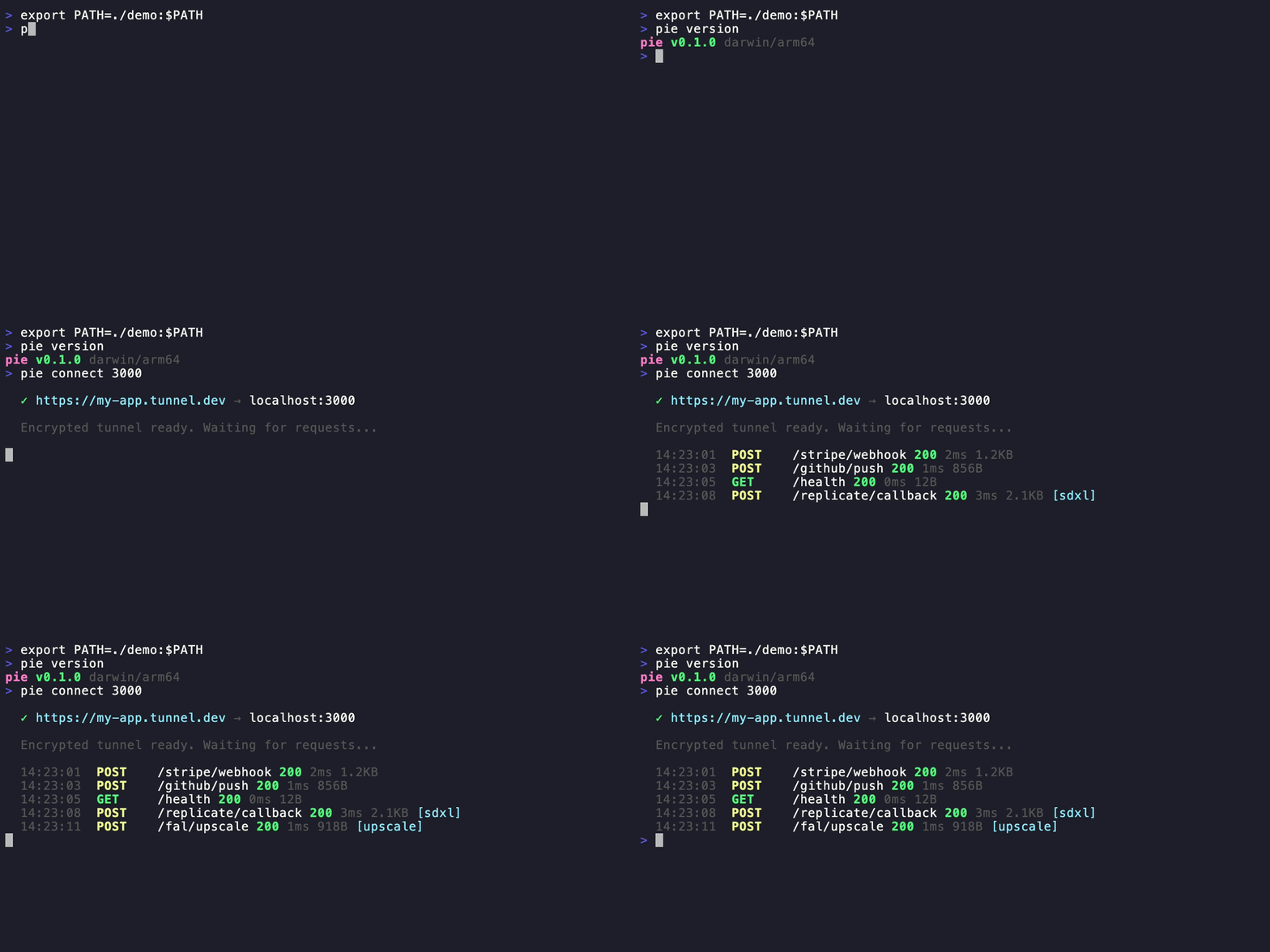
pipepie connect

pie connect 3000
# ✓ https://my-app.tunnel.dev → localhost:3000

Why Pipepie?

  • End-to-end encrypted — Noise NK protocol. The relay server never sees your data.

  • AI-first — auto-detects Replicate, fal.ai, RunPod, Modal, OpenAI webhooks. Pipeline tracing with timeline visualization.

  • Self-hosted — your server, your domain, your data. No vendor lock-in.

  • Fast — 577 req/s parallel, 2ms overhead. Protobuf + zstd + yamux.

  • MCP server built-inpie mcp gives Claude, Cursor, and AI tools direct access to tunnels, requests, and pipeline traces.

  • Beautiful CLI — Dracula theme, interactive forms, 17 commands.

  • Zero-config startpie setup on server, pie login on client, done.

Install

# Homebrew
brew install pipepie/tap/pipepie

# Script
curl -sSL https://raw.githubusercontent.com/pipepie/pipepie/main/install.sh | sh

# Or build from source
git clone https://github.com/pipepie/pipepie && cd pipepie && make build

Quick Start

Server (your VPS, one time)

pie setup

Interactive wizard handles DNS, firewall, TLS (Let's Encrypt auto or Cloudflare), nginx detection, systemd service — everything.

Client (your dev machine)

# Save server connection (key from pie setup)
pie login --server tunnel.mysite.com:9443 --key a7f3bc21...

# Tunnel any local port
pie connect 3000

AI Tool Presets

pie connect --ollama       # Ollama (port 11434, auth enabled)
pie connect --comfyui      # ComfyUI (port 8188, WebSocket)
pie connect --n8n          # n8n workflows (port 5678)
pie connect --tma          # Telegram Mini App (port 5173)

Features

Tunneling

pie connect 3000                    # HTTP tunnel
pie connect 3000 --name my-app     # Stable subdomain
pie connect --tcp 5432              # TCP (databases, gRPC)
pie connect 3000 --auth secret      # Password-protected URL
pie up                              # Multi-tunnel from pipepie.yaml

Webhook Inspection

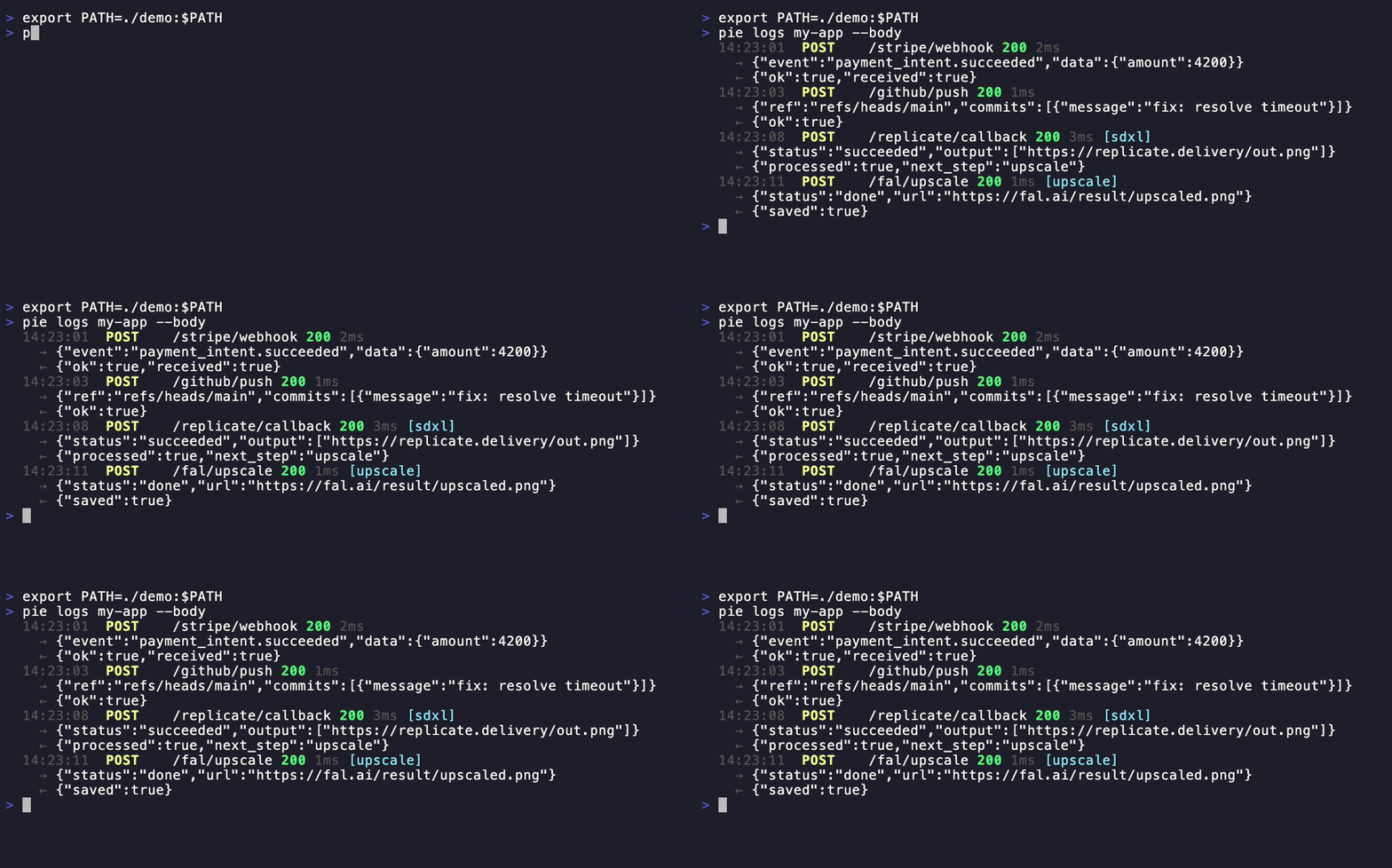
pipepie logs

pie logs my-app --follow --body     # Stream with request/response bodies
pie inspect <request-id>            # Full headers, body, metadata
pie replay <request-id>             # Re-send a captured webhook
pie dashboard                       # Open web UI in browser

AI Pipeline Tracing

Pipepie auto-detects webhooks from AI providers — no configuration needed:

Provider

Detection

What's extracted

Replicate

webhook-id header + payload

Job ID, status, predict_time

fal.ai

x-fal-signature header

Request ID, status

RunPod

UPPERCASE status in payload

Run ID, execution time

Modal

call_id in payload

Call ID, status

OpenAI

batch_ prefix in ID

Batch ID, model

MCP

JSON-RPC 2.0 method field

Tool name, call ID

Webhooks from the same pipeline are auto-correlated into traces:

pie traces my-app                   # Terminal timeline view
pie dashboard                       # Web UI with Jaeger-style bars

Or use headers for manual correlation:

curl -X POST https://my-app.tunnel.dev/webhook \
  -H "X-Pipepie-Pipeline: image-gen" \
  -H "X-Pipepie-Step: generate" \
  -H "X-Pipepie-Trace-ID: trace-001"

Multi-Service Config

# pipepie.yaml
server: tunnel.mysite.com:9443
key: a7f3bc21...

tunnels:
  api:
    subdomain: my-api
    forward: http://localhost:3000
  frontend:
    subdomain: my-app
    port: 5173

pipeline:
  name: image-gen
  steps:
    - name: replicate-sdxl
      webhook: /replicate
      forward: localhost:3000/on-image
    - name: fal-upscale
      webhook: /fal
      forward: localhost:3000/on-upscale
pie up

Multi-Account

pie login --server work.example.com:9443 --key abc...
pie login --server personal.example.com:9443 --key def...

pie account                         # List all, see active
pie account use work.example.com    # Switch
pie logout personal.example.com     # Remove

Server Management

pipepie status

pie setup                           # Interactive setup wizard
pie server --config pipepie.yaml    # Start server
pie doctor --config pipepie.yaml    # Diagnose configuration
pie status                          # Tunnel overview
pie status --json                   # JSON output for scripts

Architecture

Client (pie connect)                    Server (pie server)
     │                                       │
     │◄──── Noise NK handshake ────►│
     │       (ChaChaPoly + BLAKE2b)          │
     │                                       │
     │◄──── yamux multiplexing ────►│
     │       (parallel streams)              │
     │                                       │
     │◄──── Protobuf + zstd ──────►│
     │       (binary, compressed)            │
     │                                       │
  localhost:3000              https://sub.domain.com

Noise NK — server authenticated by public key. Know the key = have access. yamux — multiplexed streams, no head-of-line blocking. Protobuf — binary wire format, ~10x smaller than JSON. zstd — bodies >1KB auto-compressed. SSE/streaming — pass-through without buffering (Vercel AI SDK, Ollama compatible).

MCP Server (Claude, Cursor, AI tools)

Pipepie includes a built-in Model Context Protocol server. Your AI tools can inspect webhooks, replay requests, manage tunnels, and debug pipelines — directly from the chat.

# Claude Code (one command)
claude mcp add --transport stdio pipepie -- pie mcp

Add to claude_desktop_config.json or Cursor MCP settings:

{
  "mcpServers": {
    "pipepie": {
      "command": "pie",
      "args": ["mcp"]
    }
  }
}

13 tools available:

Tool

What it does

overview

Dashboard with all tunnels, stats, success rates

list_tunnels

All registered tunnels with online/offline status

tunnel_status

Check if a specific tunnel is online

connect

Start a tunnel (e.g. port 3000 → public URL)

disconnect

Stop a running tunnel

active_tunnels

List tunnels running in this session

list_requests

Recent webhook requests for a tunnel

inspect_request

Full request details: headers, body, response

replay_request

Re-send a captured webhook

pipeline_traces

AI pipeline execution traces

trace_timeline

Step-by-step timeline for a trace

create_tunnel

Register a new subdomain

delete_tunnel

Remove a tunnel and its data

CLI Reference

Command

Description

pie connect [port]

Create a tunnel

pie connect --tcp [port]

TCP tunnel

pie connect --ollama

Ollama preset

pie connect --comfyui

ComfyUI preset

pie connect --n8n

n8n preset

pie connect --tma

Telegram Mini App preset

pie login

Add server connection

pie logout

Remove account

pie account

List & switch accounts

pie dashboard

Open web UI in browser

pie status

Show tunnels and activity

pie logs [name]

Stream requests

pie inspect [id]

Full request details

pie replay [id]

Replay a webhook

pie traces [name]

Pipeline trace timelines

pie up

Multi-tunnel from pipepie.yaml

pie setup

Server setup wizard

pie server

Start relay server

pie doctor

Diagnose server config

pie mcp

Start MCP server for AI tools

pie update

Self-update to latest

pie version

Version + update check

Performance

Metric

Result

Latency

2ms overhead

Sequential

119 req/s

Parallel (20 workers)

577 req/s

1MB body

16ms

What makes Pipepie different

  • Self-hosted & open source — your infrastructure, your data, no third-party traffic inspection

  • End-to-end encrypted — Noise NK protocol, the relay server never sees plaintext

  • AI-native — auto-detects 6 providers, pipeline tracing, MCP support

  • Complete toolkit — tunneling + inspection + replay + dashboard in one binary

  • Free forever — no bandwidth limits, no session timeouts, no paid tiers for core features

License

AGPL-3.0 — free to use, modify, and self-host. If you modify and offer as a service, you must open-source your changes.

Latest Blog Posts

MCP directory API

We provide all the information about MCP servers via our MCP API.

curl -X GET 'https://glama.ai/api/mcp/v1/servers/pipepie/pipepie'

If you have feedback or need assistance with the MCP directory API, please join our Discord server