tui-mcp
What Chrome DevTools MCP is for the browser, tui-mcp is for the terminal.
Launch any terminal app in a managed pty, take screenshots, read text, send keystrokes. The app thinks it's running in a real terminal. Works with any TUI framework or no framework at all - vim, htop, bubbletea, textual, ink, inquirer, trend, ncurses, whatever.
How is this different from a bash tool?
A bash tool runs discrete commands - each invocation is fire-and-forget. The process exits, the output comes back. tui-mcp maintains a persistent, interactive session. The pty stays alive between calls. This matters when:
The tool has state - you're in a mysql shell, you've USEd a database, you're in a transaction. A bash tool can't hold that session open between calls.
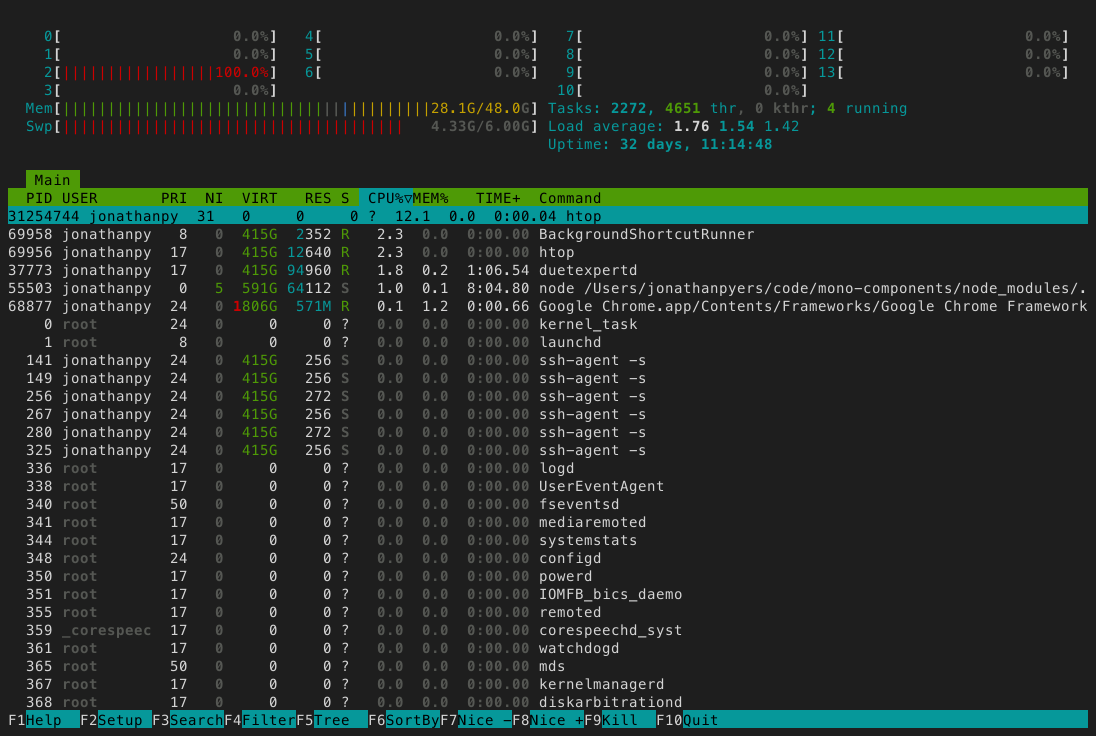
The tool has UI - htop, vim, k9s, lazygit. A bash tool gets garbage back because these apps paint full-screen interfaces with ANSI escape codes. tui-mcp renders them into a readable screenshot or text snapshot through xterm emulation.
The interaction is multi-step - SSH prompts for a password, then a 2FA code, then you're in. An interactive installer asks questions. git rebase -i drops you into an editor. These are conversational flows that a stateless bash tool can't handle.
You need to watch something - tail a log, monitor a build, wait for a deploy to finish. The session stays open, the agent can snapshot whenever it wants to check progress.
The tool requires a TTY - some CLIs behave differently (or refuse to run) without a real terminal. node-pty gives them a real pty with xterm-256color, so everything works as expected.
A bash tool is exec(). tui-mcp is "sit down at a terminal and use it like a human." One runs commands, the other operates software.
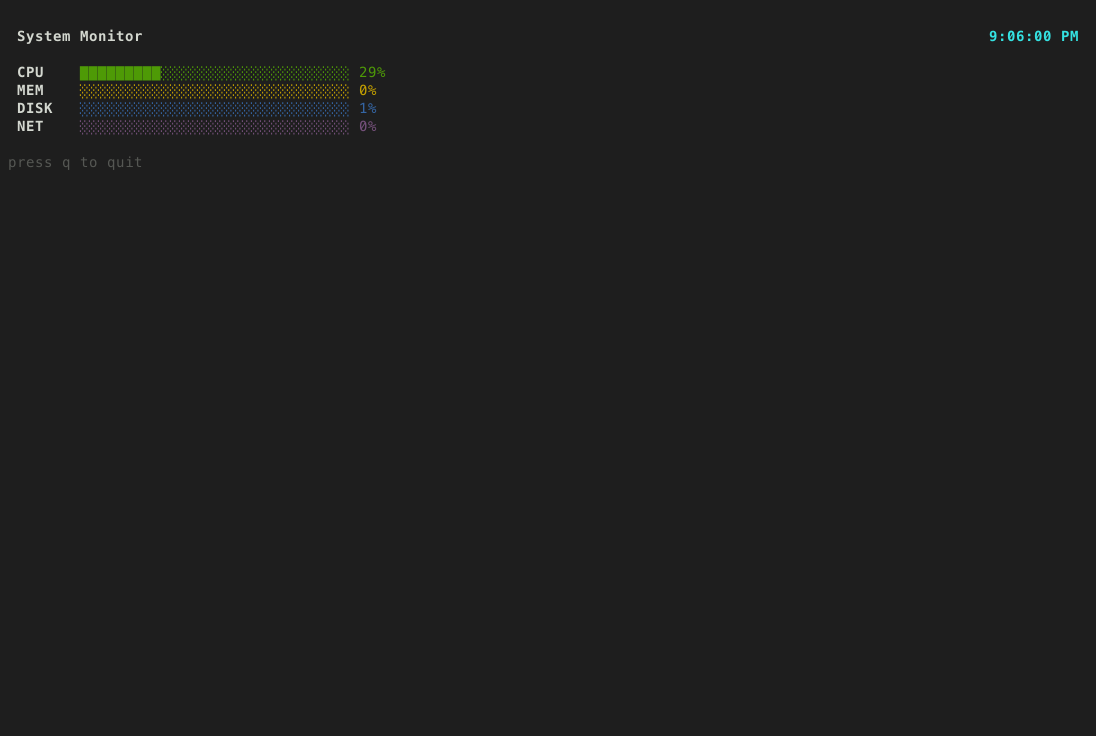
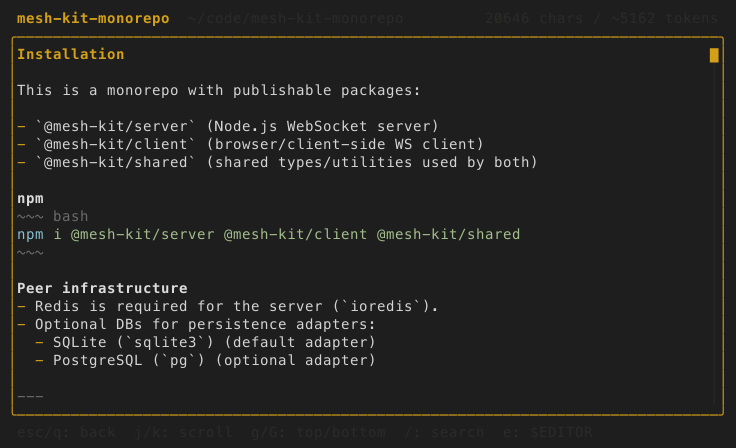
Some example outputs of the screenshot tool:
Related MCP server: mcp-server-terminal
Setup
claude mcp add --scope user tui-mcp -- npx tui-mcp
Tools
Tool | Description |
launch | Spawn a TUI app in a managed pty |
kill | Terminate a session |
list_sessions | List sessions, including recently exited ones |
status | Get one session's state and exit code |
resize | Resize the terminal |
screenshot | Capture terminal as PNG |
snapshot | Capture terminal as plain text |
scrollback | Read the buffer including scrolled-off history |
output | Read the raw pty byte stream (escape sequences included) |
read_region | Read a rectangular area of the buffer |
cursor | Get cursor position |
send_keys | Send a keystroke or combo (Enter, Ctrl+C, Ctrl+Up, q) |
send_text | Type a string of characters |
send_mouse | Send mouse events |
wait_for_text | Wait for a regex pattern to appear |
wait_for_idle | Wait until the terminal stops changing |
wait_for_exit | Wait for the process to exit and get its exit code |
Interesting use cases
remote ops: agent SSHs into a production box, tails logs, greps for errors, restarts a service, watches it come back up. it's reading the same terminal output a human SRE would see. no custom APIs needed.
legacy system interaction: ncurses admin panels, mysql cli, redis-cli, psql - the agent can drive all of these. stuff that will never get a REST API.
multi-session orchestration: agent launches 3-4 sessions simultaneously. one running a dev server, one running tests, one tailing logs, one in a debugger. it's basically pair programming with an extra set of hands.
interactive debuggers: gdb, lldb, pdb, node --inspect. the agent can set breakpoints, step through code, inspect variables.
infrastructure as conversation: kubectl, terraform, docker, aws cli. agent doesn't need the kubernetes MCP server or the AWS MCP server. it just uses the CLIs directly, same as a human would.
Most MCP servers wrap one specific tool or API. tui-mcp wraps the terminal itself, which is the universal interface that all tools already speak. It's MCP's eval().
Monitor
Watch and control all active sessions from your terminal:
Session list on the left, live ANSI-rendered terminal preview on the right. The monitor discovers every running tui-mcp server on the machine and aggregates their sessions.
Keys:
j/k or arrows to move through servers and their sessions, g/G for top/bottom, mouse click and scroll also work
enter on a session attaches - everything you type passes through to its pty, ctrl+\ detaches
enter on a server opens the launch panel targeting it
s fetches the session's full scrollback into a scrollable view, esc returns to live
l launches a new session on the selected row's server (ctrl+s cycles the target)
x twice within 3 seconds kills the selected session
q quits
Attach, launch, kill, and scrollback need the server to be 1.2 or newer; sessions on older servers are marked ro (read-only) and can still be watched.
How it works
your app  <-->  node-pty  <-->  xterm-headless  <-->  MCP tools
                (pty)        (terminal emulator)    (screenshot, send_keys, etc.)
The app runs in a real pseudo-terminal via node-pty. Its output is parsed by xterm-headless (the same terminal emulator that powers VS Code's terminal, but without a DOM). The MCP tools read and interact with that parsed buffer.


