
NS UI
by nikolas-sapa
README.md
# ns-ui
[](LICENSE)
[](package.json)
[](package.json)
[](CONTRIBUTING.md)
[](https://design.helpmarq.com)
[](https://github.com/nikolas-sapa/ns-ui/actions/workflows/ci.yml)
<!-- generated:count start -->542<!-- generated:count end --> React components you install by URL, no package to depend on. Every one is
built around a single interaction and gated by a Playwright suite that refuses
to pass a component whose hover looks identical to its resting state.
Install one:
```bash
npx shadcn add https://design.helpmarq.com/r/gallery-coverflow-caustic.json
```
Use it:
```tsx
import { CausticCoverflow } from "@/components/ui/gallery-coverflow-caustic";
export default function Page() {
return <CausticCoverflow />;
}
```
Two collections. `core` (<!-- generated:core start -->416<!-- generated:core end -->) is restrained and production-facing, Geist-dark.
`loud` (<!-- generated:loud start -->126<!-- generated:loud end -->) is a deliberately flashy showcase.
Browse them live at **[design.helpmarq.com](https://design.helpmarq.com)**.
| | |
|---|---|
| 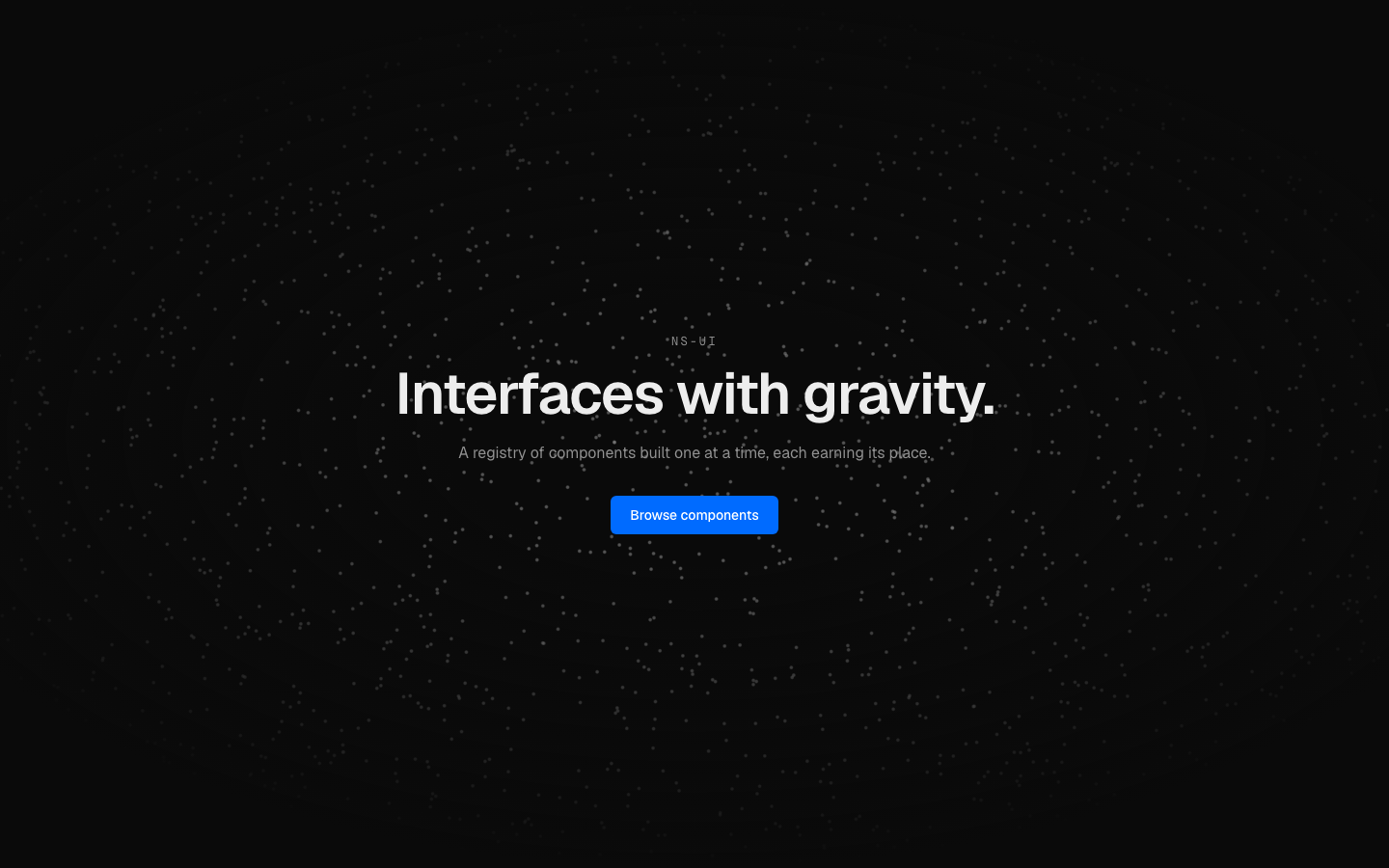 | 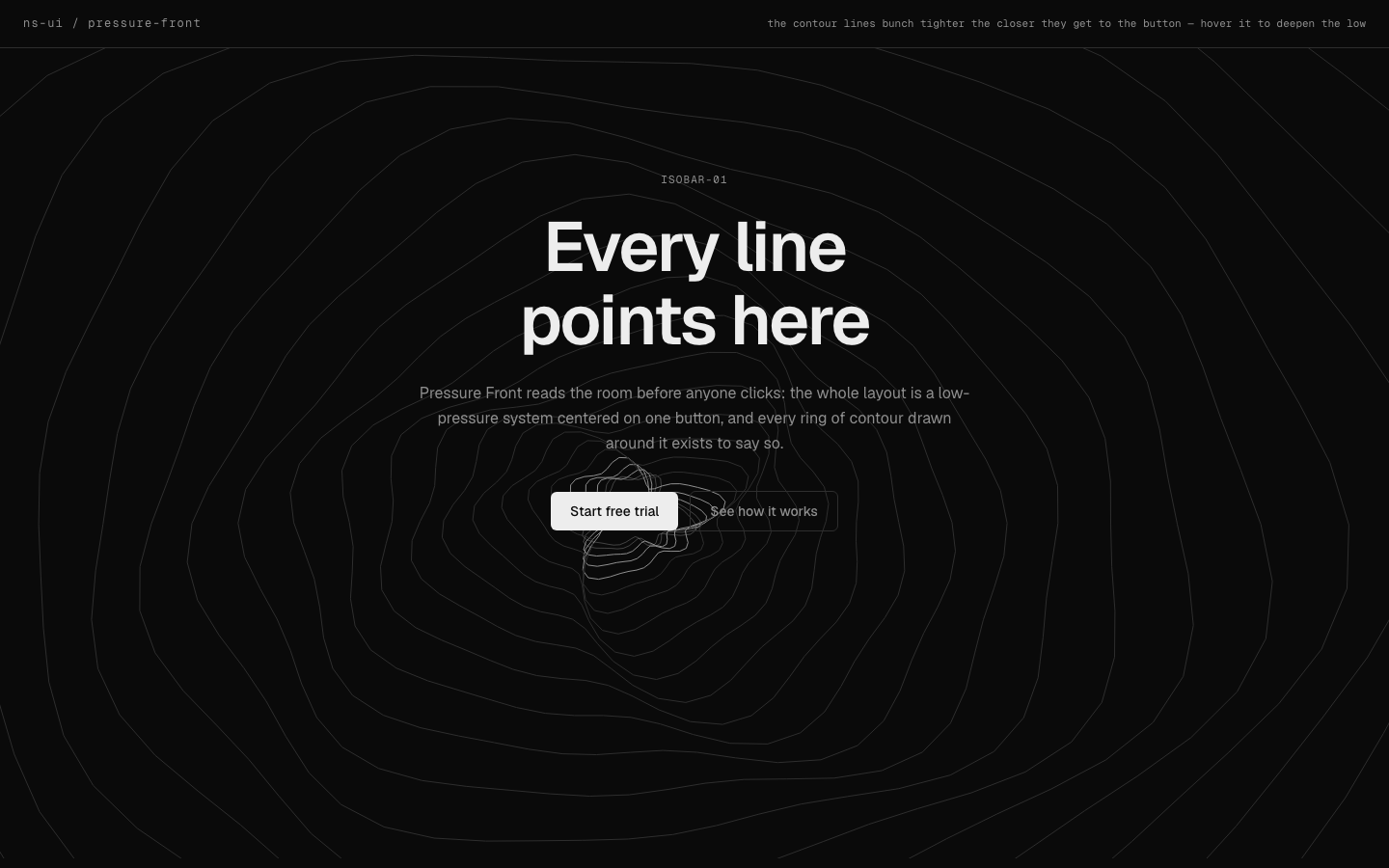 |
| **hero-particles-webgl**: a field that answers the cursor | **hero-isobar-contours**: contour lines that bunch toward the CTA |
| 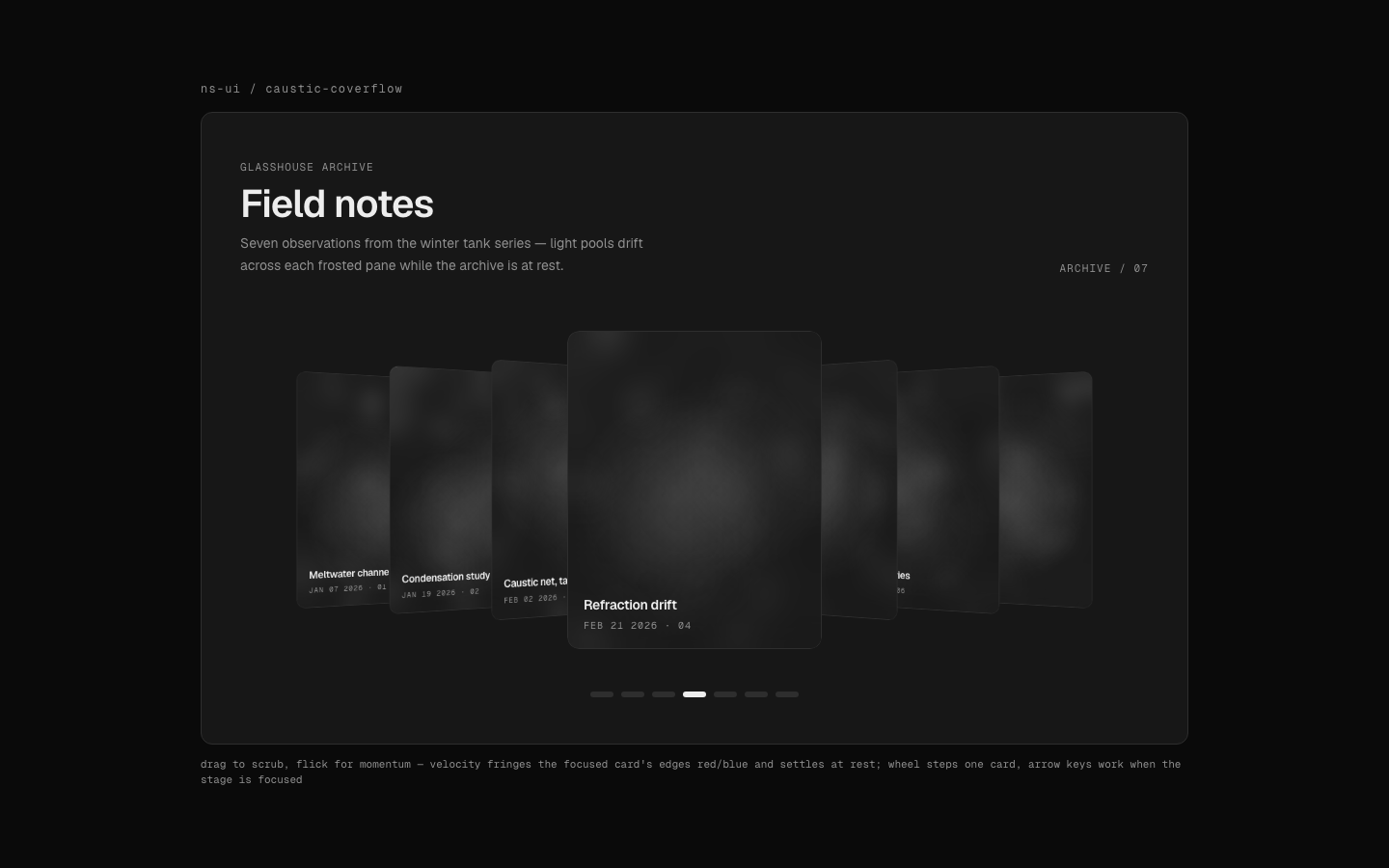 | 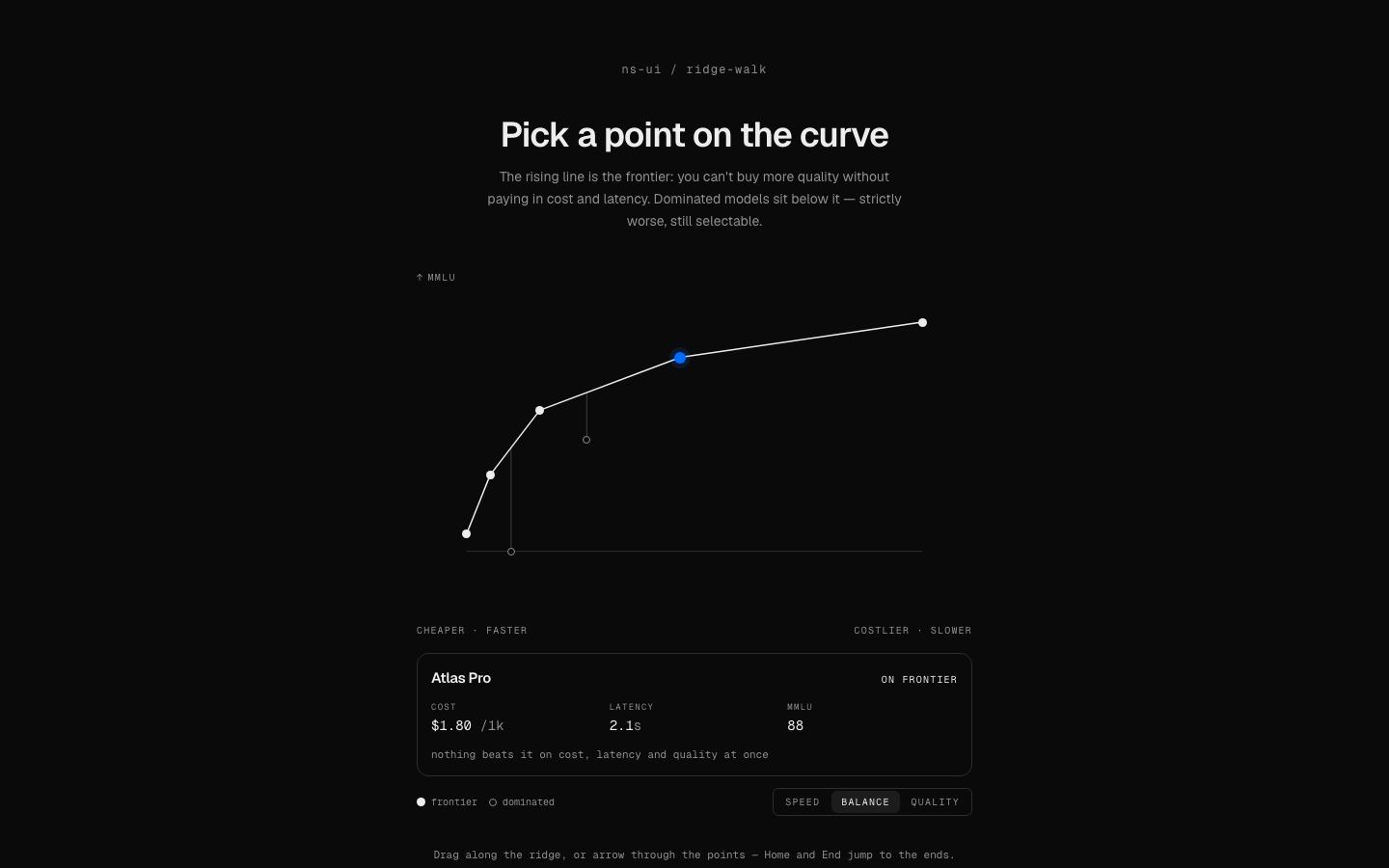 |
| **gallery-coverflow-caustic**: drag to scrub, flick for momentum | **picker-pareto-frontier**: pick a point on a pareto frontier |
| 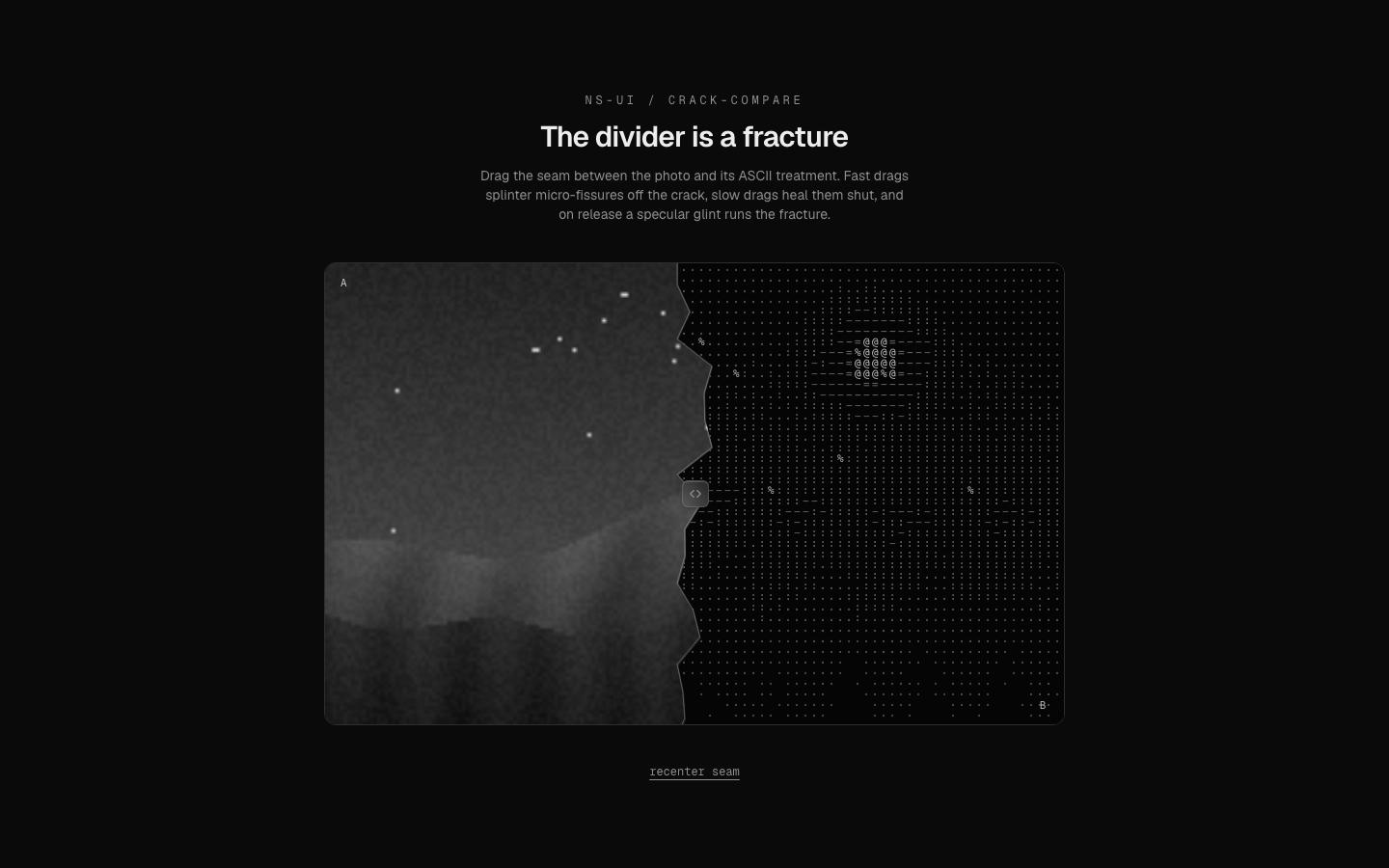 | 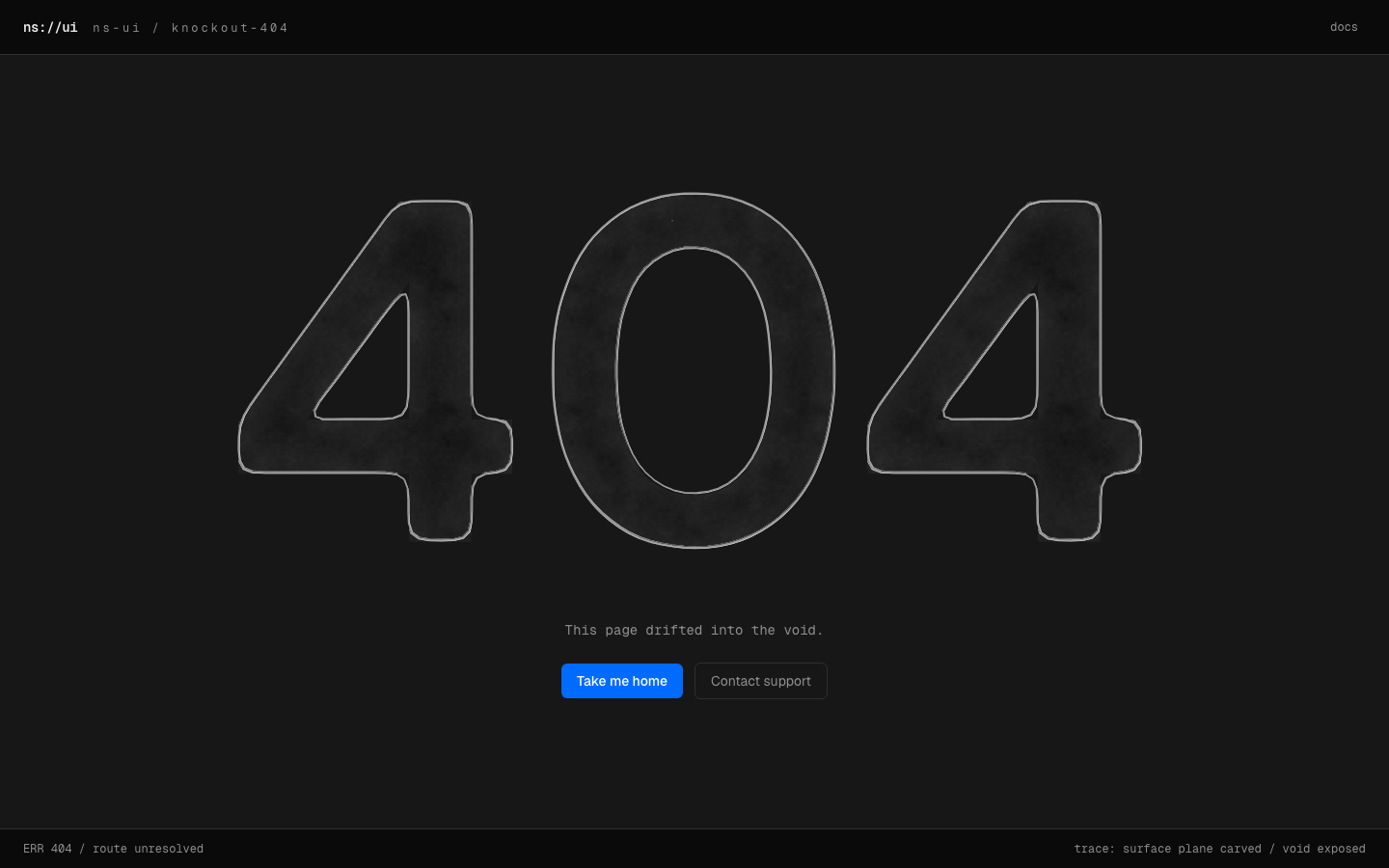 |
| **compare-crack-seam**: the before/after divider is a fracture | **not-found-knockout**: type carved out of the surface |
## Install
Prerequisites: Node and npm, and a project that `shadcn` has already
configured, meaning it has a `components.json` at its root. If you do not have
one, use the new-project path below first. Every command in this section was
run end to end on Node v25.8.1 against `shadcn@latest`.
Any shadcn-configured project, zero config:
```bash
npx shadcn add https://design.helpmarq.com/r/<name>.json
```
Real output, from a project created by the new-project path below:
```
- Checking registry.
✔ Checking registry.
- Updating files.
✔ Created 1 file:
- components/ui/gallery-coverflow-caustic.tsx
- Updating app/globals.css
✔ Updating app/globals.css
```
That drops the source at `components/ui/<name>.tsx` and installs the
component's npm dependencies. There is no `ns-ui` package and nothing to keep
in sync. The code is yours to edit.
New project, from an empty directory:
```bash
npx shadcn init -d -n my-app
cd my-app
npx shadcn add https://design.helpmarq.com/r/gallery-coverflow-caustic.json
```
`-n` is what makes this non-interactive. Without it, `shadcn init` has no
project to configure and stops on a "What is your project named?" prompt. The
flag scaffolds a Next.js app into `my-app/`, so the `add` runs from inside it.
`init` also writes `components/ui/button.tsx` and `lib/utils.ts` of its own,
which are shadcn's, not this registry's. Already in a configured project? Skip
straight to `npx shadcn add`.
### The exported symbol is not the slug
`gallery-coverflow-caustic.tsx` exports `CausticCoverflow`. Importing the
slug-cased name is the first thing that breaks after a copy-paste install.
Open the installed file and read its `export` lines, or ask the CLI:
```bash
npx @nikolas.sapa/ns-ui info gallery-coverflow-caustic
```
```
Gallery Coverflow Caustic (gallery-coverflow-caustic)
Gallery
...
Props:
items?: CausticCoverflowItem[] = DEFAULT_ITEMS
initialIndex?: number
cardWidth?: number = 264
cardHeight?: number = 330
className?: string
aria-label?: string = "Coverflow gallery"
Install: npx shadcn add https://design.helpmarq.com/r/gallery-coverflow-caustic.json
```
Every prop on that component is optional, so `<CausticCoverflow />` with no
props compiles. Checked with `tsc --noEmit` against a fresh install, clean.
That is the house style, not a promise about every component in the registry:
read the signature before assuming it for a different one.
### When install does not work
Three failures, each reproduced by running it:
**It prints `Select a component library` and waits.** You are in a directory
that is not a shadcn project. The command does not error, it drops into an
interactive prompt, which looks like a hang in any non-interactive shell or
agent. Run the new-project path instead, or `cd` into the project that has
`components.json`.
**`The item at https://... was not found. It may not exist at the registry.`**
The slug is wrong, not the registry. Find the real one with
`npx @nikolas.sapa/ns-ui search <word>`, or check the component's page on the
site. The same error suggests trying an older `shadcn`, which is a red
herring for this case.
**`ℹ Skipped 1 file: (files might be identical, use --overwrite to
overwrite)`.** You already installed it. This is success, not failure. Pass
`--overwrite` only if you want your local edits to that file discarded.
**`npx` installs an older version than the one published.** If your npm has
`minimum-release-age` set, a recent publish is filtered out and `npx` quietly
resolves an older version rather than failing. Measured on this machine:
`npx @nikolas.sapa/ns-ui@latest --version` printed `0.8.1` while `0.10.0` was
the newest published version. Wait out the window or override the policy
locally.
## For agents
```
GET https://design.helpmarq.com/llms.txt
```
One fetch returns the whole catalog as plain text: every component, its props,
the situation it suits, and its exact install command. No tool definitions, no
pagination. An agent that can make an HTTP request can pick the right
component and install it in two steps.
`llms-full.txt` at the same origin adds the full behavioral description per
component, hand-written rather than derived from tags, for the cases where
several components share a UI role and a model has to tell them apart.
`/registry.json` serves the standard shadcn registry index for tools that
expect it.
Prefer tools over a one-time fetch (an agent working across a whole session,
not just picking one component up front)? **[`mcp/`](mcp/)** is an MCP server
over the same catalog: `search_components`, `get_component` (full prop
signature + real source), `list_categories`, `install_command`, and
`get_conventions` (the token/theming contract). `npx -y @nikolas.sapa/ns-ui-mcp`,
stdio transport, per-client config at
**[design.helpmarq.com/connect](https://design.helpmarq.com/connect)** or
[`mcp/README.md`](mcp/README.md).
There's also a thin CLI, **[`cli/`](cli/)** (`@nikolas.sapa/ns-ui`): `npx
@nikolas.sapa/ns-ui add <name>` installs a component, `search`/`list`/`info`/
`categories` cover the rest of the catalog from a terminal. See
[`cli/README.md`](cli/README.md).
## The gate
`scripts/verify.ts` is why the registry stays small. It drives every component
through headless Chromium, screenshots each state against each theme, and
hard-fails on:
- a console error, or a blank render
- hover byte-identical to default, or focus identical to an unfocused baseline
(an interaction that does not actually interact)
- dark and light byte-identical (a component that ignored the theme)
- an interactive control with no accessible name, `role=switch|checkbox|radio`
without `aria-checked`, a visible dialog with no accessible name, or controls
Tab cannot reach
- a popover or menu that opens but lands clipped invisible behind an ancestor's
`overflow: hidden`, caught by hit-testing the opened element rather than
measuring its box
The screenshots it produces are committed, so the claims above are auditable in
the repo rather than asserted here.
## Run it locally
```bash
npm install
npm run dev # / lists components, /components/<name> renders one
```
Node 22.18 or newer (`engines` in `package.json`).
The gate is a separate step and does not run against `npm run dev`. Turbopack
serves corrupted chunks under the gate's parallel load, measured at 15 to 50
percent false failures against dev versus 0 of 12 against a production build.
Build first, serve the build, then point `verify` at it:
```bash
npm run build
BASE_URL=http://localhost:3400 npm run verify # every component
BASE_URL=http://localhost:3400 npm run verify <name> # one component
```
`npm run verify` runs `node scripts/verify.ts`. Run it that way, not with
`npx tsx scripts/verify.ts`, which fails with `__name is not defined`. Full
recipe, including the pm2 process that serves port 3400, is in
[`docs/review-workflow.md`](docs/review-workflow.md).
### Environment variables
Copy `.env.example` to `.env` and fill in what you need. Everything is
optional locally. The app still runs and the email form still renders, it
just returns an error on submit if the EmailOctopus vars are unset.
| Variable | Purpose |
|---|---|
| `NEXT_PUBLIC_REGISTRY_ORIGIN` | Overrides the public origin install commands and `llms.txt` resolve against. Defaults to `https://design.helpmarq.com`. |
| `EMAILOCTOPUS_API_KEY` | Bearer key for the EmailOctopus v2 API, used by the email capture form (`lib/actions/subscribe.ts`). Server-only, never exposed to the client. |
| `EMAILOCTOPUS_LIST_ID` | The EmailOctopus list contacts are added to. |
Adding a component means creating a folder with
`component.tsx`, `demo.tsx` and `meta.json`; registration is automatic. See
[CONTRIBUTING.md](CONTRIBUTING.md), and [AGENTS.md](AGENTS.md) if you are an
agent working inside this repo.
## Saved library
Signed-in users can bookmark components from the catalog. The account's Saved
view shows working interactive previews, copyable install commands, and private
folders for organizing saves. See [`docs/saved-library.md`](docs/saved-library.md).
## License
MIT. See [LICENSE](LICENSE).