
A
licenseNot graded
qualityF
maintenanceA Model Context Protocol (MCP) server that enables LLMs to interact directly with MongoDB databases. Query collections, inspect schemas, and manage data seamlessly through natural language.
22
175
MIT

Un servidor de Protocolo de Contexto de Modelo que permite a los LLM interactuar con bases de datos MongoDB. Este servidor proporciona capacidades para inspeccionar esquemas de colección y ejecutar operaciones MongoDB a través de una interfaz estandarizada.
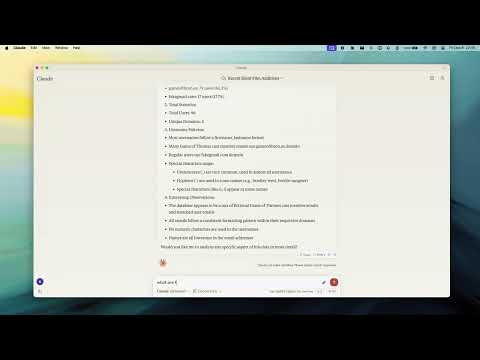
Related MCP server: MongoDB MCP Server for LLMs
Conversión inteligente entre identificadores de cadena y ObjectId de MongoDB
Configurable con el parámetro objectIdMode :
"auto" : Convertir según los nombres de campo (predeterminado)
"none" : Sin conversión
"force" : fuerza todos los campos de ID de cadena a ObjectId
Variables de entorno :
MCP_MONGODB_URI : URI de conexión de MongoDB
MCP_MONGODB_READONLY : Habilita el modo de solo lectura cuando se establece en "verdadero"
Opciones de línea de comandos :
--read-only o -r : Conectarse en modo de solo lectura
Protección contra operaciones de escritura (actualizar, insertar, crear índice)
Utiliza la preferencia de lectura secundaria de MongoDB para un rendimiento óptimo
Ideal para conectarse de forma segura a bases de datos de producción
Operaciones de lectura :
Consultar documentos con análisis de plan de ejecución opcional
Ejecutar canalizaciones de agregación
Contar documentos que coinciden con los criterios
Obtener información del esquema de colección
Operaciones de escritura (cuando no está en modo de solo lectura):
Actualizar documentos
Insertar nuevos documentos
Crear índices
Finalización de colecciones para una mejor interacción LLM
Inferencia de esquemas para una mejor comprensión del contexto
Análisis de recopilación de datos para obtener información
npm install -g mcp-mongo-server# Clone repository
git clone https://github.com/kiliczsh/mcp-mongo-server.git
cd mcp-mongo-server
# Install dependencies
npm install
# Build
npm run build
# Development with auto-rebuild
npm run watch# Start server with MongoDB URI
npx -y mcp-mongo-server mongodb://muhammed:kilic@localhost:27017/database
# Connect in read-only mode
npx -y mcp-mongo-server mongodb://muhammed:kilic@localhost:27017/database --read-onlyPuede configurar el servidor usando variables de entorno, lo que es particularmente útil para pipelines de CI/CD, contenedores Docker o cuando no desea exponer detalles de conexión en los argumentos del comando:
# Set MongoDB connection URI
export MCP_MONGODB_URI="mongodb://muhammed:kilic@localhost:27017/database"

# Enable read-only mode
export MCP_MONGODB_READONLY="true"

# Run server (will use environment variables if no URI is provided)
npx -y mcp-mongo-server
Uso de variables de entorno en la configuración de Claude Desktop:
{
  "mcpServers": {
    "mongodb-env": {
      "command": "npx",
      "args": [
        "-y",
        "mcp-mongo-server"
      ],
      "env": {
        "MCP_MONGODB_URI": "mongodb://muhammed:kilic@localhost:27017/database",
        "MCP_MONGODB_READONLY": "true"
      }
    }
  }
}
Uso de variables de entorno con Docker:
# Build
docker build -t mcp-mongo-server .

# Run
docker run -it -d -e MCP_MONGODB_URI="mongodb://muhammed:kilic@localhost:27017/database" -e MCP_MONGODB_READONLY="true" mcp-mongo-server

# or edit docker-compose.yml and run
docker-compose up -dAgregue la configuración del servidor al archivo de configuración de Claude Desktop:
MacOS : ~/Library/Application Support/Claude/claude_desktop_config.json Windows : %APPDATA%/Claude/claude_desktop_config.json
{
  "mcpServers": {
    "mongodb": {
      "command": "npx",
      "args": [
        "-y",
        "mcp-mongo-server",
        "mongodb://muhammed:kilic@localhost:27017/database"
      ]
    },
    "mongodb-readonly": {
      "command": "npx",
      "args": [
        "-y",
        "mcp-mongo-server",
        "mongodb://muhammed:kilic@localhost:27017/database",
        "--read-only"
      ]
    }
  }
}{
"mcpServers": {
"mongodb": {
"command": "npx",
"args": [
"-y",
"mcp-mongo-server"
],
"env": {
"MCP_MONGODB_URI": "mongodb://muhammed:kilic@localhost:27017/database"
}
},
"mongodb-readonly": {
"command": "npx",
"args": [
"-y",
"mcp-mongo-server"
],
"env": {
"MCP_MONGODB_URI": "mongodb://muhammed:kilic@localhost:27017/database",
"MCP_MONGODB_READONLY": "true"
}
}
}
}{
"mcpServers": {
"mongodb": {
"command": "npx",
"args": [
"-y",
"github:kiliczsh/mcp-mongo-server",
"mongodb://muhammed:kilic@localhost:27017/database"
]
},
"mongodb-readonly": {
"command": "npx",
"args": [
"-y",
"github:kiliczsh/mcp-mongo-server",
"mongodb://muhammed:kilic@localhost:27017/database",
"--read-only"
]
}
}
}El servidor MongoDB MCP se puede utilizar con Windsurf y Cursor de forma similar a Claude Desktop.
Añade el servidor a tu configuración de Windsurf:
{
  "mcpServers": {
    "mongodb": {
      "command": "npx",
      "args": [
        "-y",
        "mcp-mongo-server",
        "mongodb://muhammed:kilic@localhost:27017/database"
      ]
    }
  }
}Para Cursor, agregue la configuración del servidor a sus configuraciones:
{
  "mcpServers": {
    "mongodb": {
      "command": "npx",
      "args": [
        "-y",
        "mcp-mongo-server",
        "mongodb://muhammed:kilic@localhost:27017/database"
      ]
    }
  }
}
También puede utilizar el enfoque de variables de entorno con Windsurf y Cursor, siguiendo el mismo patrón que se muestra en la configuración de Claude Desktop.
Uso de herrería :
npx -y @smithery/cli install mcp-mongo-server --client claudeUsando mcp-get :
npx @michaellatman/mcp-get@latest install mcp-mongo-serverconsulta : Ejecutar consultas MongoDB
{
  collection: "users",
  filter: { age: { $gt: 30 } },
  projection: { name: 1, email: 1 },
  limit: 20,
  explain: "executionStats"  // Optional
}
agregado : ejecutar canalizaciones de agregación
{
  collection: "orders",
  pipeline: [
    { $match: { status: "completed" } },
    { $group: { _id: "$customerId", total: { $sum: "$amount" } } }
  ],
  explain: "queryPlanner"  // Optional
}
count : contar documentos coincidentes
{
  collection: "products",
  query: { category: "electronics" }
}actualización : Modificar documentos
{
  collection: "posts",
  filter: { _id: "60d21b4667d0d8992e610c85" },
  update: { $set: { title: "Updated Title" } },
  upsert: false,
  multi: false
}
Insertar : Agregar nuevos documentos
{
  collection: "comments",
  documents: [
    { author: "user123", text: "Great post!" },
    { author: "user456", text: "Thanks for sharing" }
  ]
}
createIndex : Crea índices de colección
{
  collection: "users",
  indexes: [
    {
      key: { email: 1 },
      unique: true,
      name: "email_unique_idx"
    }
  ]
}serverInfo : Obtener detalles del servidor MongoDB
{
  includeDebugInfo: true  // Optional
}Dado que los servidores MCP se comunican a través de stdio, la depuración puede ser complicada. Utilice el Inspector MCP para una mejor visibilidad:
npm run inspectorEsto proporcionará una URL para acceder a las herramientas de depuración en su navegador.
Este servidor MCP cuenta con la licencia MIT. Esto significa que puede usar, modificar y distribuir el software libremente, sujeto a los términos y condiciones de la licencia MIT. Para más detalles, consulte el archivo de LICENCIA en el repositorio del proyecto.
Execute a MongoDB aggregation pipeline with optional execution plan analysis
| Name | Required | Description | Default |
|---|---|---|---|
| explain | No | Optional: Get aggregation execution information (queryPlanner, executionStats, or allPlansExecution) | |
| pipeline | Yes | Aggregation pipeline stages | |
| collection | Yes | Name of the collection to aggregate | |
| objectIdMode | No | Control how 24-character hex strings are handled | auto |
Does the description disclose side effects, auth requirements, rate limits, or destructive behavior?
No annotations provided, so description carries full burden. It does not disclose whether the tool is read-only, can write via stages like $merge, or any potential side effects, performance implications, or required permissions.
Agents need to know what a tool does to the world before calling it. Descriptions should go beyond structured annotations to explain consequences.
Is the description appropriately sized, front-loaded, and free of redundancy?
Single sentence of 12 words directly states the core functionality. No extraneous information, efficiently front-loads the action and optional feature.
Shorter descriptions cost fewer tokens and are easier for agents to parse. Every sentence should earn its place.
Given the tool's complexity, does the description cover enough for an agent to succeed on first attempt?
Despite being a complex tool (aggregation pipeline), the description lacks details on output format, error handling, potential performance costs, or the impact of the objectIdMode parameter. No output schema compounds the incompleteness.
Complex tools with many parameters or behaviors need more documentation. Simple tools need less. This dimension scales expectations accordingly.
Does the description clarify parameter syntax, constraints, interactions, or defaults beyond what the schema provides?
All four parameters are fully described in the input schema (100% coverage). The description adds minimal extra context, only mentioning 'optional execution plan analysis' which maps to the explain parameter. No further clarification on pipeline construction or objectIdMode behavior.
Input schemas describe structure but not intent. Descriptions should explain non-obvious parameter relationships and valid value ranges.
Does the description clearly state what the tool does and how it differs from similar tools?
Description clearly states the tool executes a MongoDB aggregation pipeline with optional execution plan analysis. It uses specific verb 'execute' and resource 'aggregation pipeline', distinguishing it from sibling tools like query, count, or insert.
Agents choose between tools based on descriptions. A clear purpose with a specific verb and resource helps agents select the right tool.
Does the description explain when to use this tool, when not to, or what alternatives exist?
No guidance on when to use this tool versus alternatives such as 'query' or 'count'. The description does not mention scenarios or limitations, leaving the agent to infer usage context.
Agents often have multiple tools that could apply. Explicit usage guidance like "use X instead of Y when Z" prevents misuse.
Count documents in a collection matching a query
| Name | Required | Description | Default |
|---|---|---|---|
| hint | No | Index hint | |
| skip | No | Docs to skip before counting | |
| limit | No | Max documents to count | |
| query | No | Query filter to count | |
| collation | No | Collation rules for comparison | |
| maxTimeMS | No | Max execution time | |
| collection | Yes | Collection name | |
| readConcern | No | Read concern option | |
| objectIdMode | No | Control how 24-character hex strings are handled | auto |
Does the description disclose side effects, auth requirements, rate limits, or destructive behavior?
With no annotations provided, the description carries full burden for behavioral disclosure. It only states the basic operation without detailing any side effects (none expected for a count), return format, or constraints (e.g., counting behavior with skip/limit). The agent cannot infer that this is a read-only operation or what the output structure is.
Agents need to know what a tool does to the world before calling it. Descriptions should go beyond structured annotations to explain consequences.
Is the description appropriately sized, front-loaded, and free of redundancy?
The description is a single, efficient sentence that directly states the core function. However, it is overly terse and lacks structured details that would aid the agent, such as separating purpose from usage notes. Score reflects conciseness but slight under-information.
Shorter descriptions cost fewer tokens and are easier for agents to parse. Every sentence should earn its place.
Given the tool's complexity, does the description cover enough for an agent to succeed on first attempt?
Given 9 parameters, no output schema, and no annotations, the description is insufficiently complete. It omits essential information like the return type (a count number), whether the count is approximate or exact, and behavior with optional parameters like skip/limit. A more complete description would provide contextual completeness.
Complex tools with many parameters or behaviors need more documentation. Simple tools need less. This dimension scales expectations accordingly.
Does the description clarify parameter syntax, constraints, interactions, or defaults beyond what the schema provides?
The input schema has 100% coverage with descriptions for all 9 parameters. The description adds no additional parameter semantics beyond what is already in the schema. Per guidelines, baseline is 3 when schema coverage is high, and no extra value is provided.
Input schemas describe structure but not intent. Descriptions should explain non-obvious parameter relationships and valid value ranges.
Does the description clearly state what the tool does and how it differs from similar tools?
The description clearly states the verb 'count' and the resource 'documents in a collection matching a query', which accurately defines the tool's purpose. However, it does not explicitly distinguish this tool from sibling tools like 'aggregate' or 'query', which could also perform counting.
Agents choose between tools based on descriptions. A clear purpose with a specific verb and resource helps agents select the right tool.
Does the description explain when to use this tool, when not to, or what alternatives exist?
The description provides no guidance on when to use this tool versus alternatives (e.g., 'aggregate' for more complex aggregations). There are no examples, prerequisites, or exclusions mentioned, leaving the agent without sufficient context to choose appropriately.
Agents often have multiple tools that could apply. Explicit usage guidance like "use X instead of Y when Z" prevents misuse.
Create one or more indexes on a MongoDB collection
| Name | Required | Description | Default |
|---|---|---|---|
| indexes | Yes | Array of index specifications | |
| collection | Yes | Name of the collection to create indexes on | |
| commitQuorum | No | Number of members required to create the index | |
| objectIdMode | No | Control how 24-character hex strings are handled | auto |
| writeConcern | No | Write concern for index creation |
Does the description disclose side effects, auth requirements, rate limits, or destructive behavior?
No annotations are provided, so the description must carry the burden of behavioral disclosure. It only states the action without mentioning side effects like blocking operations, performance implications, or permission requirements. This is inadequate for a mutation tool that can significantly affect database behavior.
Agents need to know what a tool does to the world before calling it. Descriptions should go beyond structured annotations to explain consequences.
Is the description appropriately sized, front-loaded, and free of redundancy?
The description is a single concise sentence that is front-loaded with the core action. However, it is extremely brief given the tool's complexity. It earns its place but could benefit from a bit more structure.
Shorter descriptions cost fewer tokens and are easier for agents to parse. Every sentence should earn its place.
Given the tool's complexity, does the description cover enough for an agent to succeed on first attempt?
With 5 parameters including nested objects and no output schema, the description is insufficient. It does not explain that multiple indexes can be created, the return behavior, or important aspects like background building. The agent lacks key information for correct usage.
Complex tools with many parameters or behaviors need more documentation. Simple tools need less. This dimension scales expectations accordingly.
Does the description clarify parameter syntax, constraints, interactions, or defaults beyond what the schema provides?
Schema description coverage is 100% with each parameter having a description. The tool description adds no additional semantics beyond the schema. Baseline of 3 is appropriate as the schema does the heavy lifting.
Input schemas describe structure but not intent. Descriptions should explain non-obvious parameter relationships and valid value ranges.
Does the description clearly state what the tool does and how it differs from similar tools?
The description clearly states the purpose: creating one or more indexes on a MongoDB collection. The verb 'create' and resource 'indexes on a MongoDB collection' are specific, and the tool is distinct from siblings like 'aggregate' or 'insert' that do not create indexes.
Agents choose between tools based on descriptions. A clear purpose with a specific verb and resource helps agents select the right tool.
Does the description explain when to use this tool, when not to, or what alternatives exist?
No guidance is provided on when to use this tool versus alternatives, or prerequisites for index creation. The description lacks context about when indexes should be created or potential impacts, leaving the agent without decision support.
Agents often have multiple tools that could apply. Explicit usage guidance like "use X instead of Y when Z" prevents misuse.
Insert one or more documents into a MongoDB collection
| Name | Required | Description | Default |
|---|---|---|---|
| ordered | No | If true, perform ordered insert. If false, insert unordered | |
| documents | Yes | Array of documents to insert | |
| collection | Yes | Name of the collection to insert into | |
| objectIdMode | No | Control how 24-character hex strings are handled | auto |
| writeConcern | No | Write concern for the insert operation | |
| bypassDocumentValidation | No | Allow insert to bypass schema validation |
Does the description disclose side effects, auth requirements, rate limits, or destructive behavior?
No annotations provided, so description must disclose behavior. It lacks details on handling duplicate _id errors, return values, or performance implications. Only states basic insert action.
Agents need to know what a tool does to the world before calling it. Descriptions should go beyond structured annotations to explain consequences.
Is the description appropriately sized, front-loaded, and free of redundancy?
One short sentence with no waste, but could be more informative without being verbose. Front-loads the core action.
Shorter descriptions cost fewer tokens and are easier for agents to parse. Every sentence should earn its place.
Given the tool's complexity, does the description cover enough for an agent to succeed on first attempt?
With 6 parameters including nested objects and no output schema, the description is insufficient. It should mention error handling, return format, and parameter default behaviors.
Complex tools with many parameters or behaviors need more documentation. Simple tools need less. This dimension scales expectations accordingly.
Does the description clarify parameter syntax, constraints, interactions, or defaults beyond what the schema provides?
Schema coverage is 100%, so baseline is 3. Description adds no extra meaning beyond the schema; it doesn't explain parameters like ordered, objectIdMode, or writeConcern.
Input schemas describe structure but not intent. Descriptions should explain non-obvious parameter relationships and valid value ranges.
Does the description clearly state what the tool does and how it differs from similar tools?
The description clearly states the verb 'Insert' and the resource 'MongoDB collection', with 'one or more documents' specifying scope. It distinguishes from siblings like query (read) and update (modify) with a specific insert action.
Agents choose between tools based on descriptions. A clear purpose with a specific verb and resource helps agents select the right tool.
Does the description explain when to use this tool, when not to, or what alternatives exist?
No guidance on when to use this tool versus alternatives (e.g., update for modifying, query for reading). No prerequisites or context about required permissions or collection existence.
Agents often have multiple tools that could apply. Explicit usage guidance like "use X instead of Y when Z" prevents misuse.
List all collections in the MongoDB database
| Name | Required | Description | Default |
|---|---|---|---|
| filter | No | Filter for collections | |
| nameOnly | No | If true, return only collection names | |
| objectIdMode | No | Control how 24-character hex strings are handled | auto |
Does the description disclose side effects, auth requirements, rate limits, or destructive behavior?
No annotations provided, so the description carries full burden. It describes 'list' implying read-only, but fails to disclose behavior like pagination, authentication requirements, or how parameters like 'objectIdMode' affect execution.
Agents need to know what a tool does to the world before calling it. Descriptions should go beyond structured annotations to explain consequences.
Is the description appropriately sized, front-loaded, and free of redundancy?
A single concise sentence that gets to the point. However, it could front-load more critical information like the database context, but for a simple tool it is appropriately sized.
Shorter descriptions cost fewer tokens and are easier for agents to parse. Every sentence should earn its place.
Given the tool's complexity, does the description cover enough for an agent to succeed on first attempt?
No output schema exists, and the description does not explain return values (e.g., list of names vs full documents). The 'nameOnly' parameter hints at different outputs, but this is not clarified. For a list tool with multiple parameters, more detail is needed.
Complex tools with many parameters or behaviors need more documentation. Simple tools need less. This dimension scales expectations accordingly.
Does the description clarify parameter syntax, constraints, interactions, or defaults beyond what the schema provides?
Schema description coverage is 100%, so baseline is 3. The description adds no extra meaning beyond the schema; it simply restates the tool's purpose without detailing parameter usage or constraints.
Input schemas describe structure but not intent. Descriptions should explain non-obvious parameter relationships and valid value ranges.
Does the description clearly state what the tool does and how it differs from similar tools?
The description clearly states the specific verb 'List' and resource 'collections in the MongoDB database', which distinguishes it from sibling tools like 'aggregate' or 'insert' that perform different operations.
Agents choose between tools based on descriptions. A clear purpose with a specific verb and resource helps agents select the right tool.
Does the description explain when to use this tool, when not to, or what alternatives exist?
No guidance on when to use this tool vs alternatives. It does not mention contexts where other tools like 'query' might be more appropriate, nor any conditions for using this tool.
Agents often have multiple tools that could apply. Explicit usage guidance like "use X instead of Y when Z" prevents misuse.
Execute a MongoDB query with optional execution plan analysis
| Name | Required | Description | Default |
|---|---|---|---|
| limit | No | Maximum number of documents to return | |
| filter | No | MongoDB query filter | |
| explain | No | Optional: Get query execution information | |
| collection | Yes | Name of the collection to query | |
| projection | No | Fields to include/exclude | |
| objectIdMode | No | Control how 24-character hex strings are handled | auto |
Does the description disclose side effects, auth requirements, rate limits, or destructive behavior?
With no annotations provided, the description must disclose behaviors. It only states execution of a query, but does not specify if this is read-only, side effects, permission needs, or performance implications.
Agents need to know what a tool does to the world before calling it. Descriptions should go beyond structured annotations to explain consequences.
Is the description appropriately sized, front-loaded, and free of redundancy?
Single sentence that is direct and front-loaded with the core action. No unnecessary words, and the optional analysis is mentioned immediately.
Shorter descriptions cost fewer tokens and are easier for agents to parse. Every sentence should earn its place.
Given the tool's complexity, does the description cover enough for an agent to succeed on first attempt?
Despite having 6 parameters and no output schema, the description does not explain return values, pagination, or behavior for required parameters. It is too minimal for a complex MongoDB query operation.
Complex tools with many parameters or behaviors need more documentation. Simple tools need less. This dimension scales expectations accordingly.
Does the description clarify parameter syntax, constraints, interactions, or defaults beyond what the schema provides?
Schema description coverage is 100%, so each parameter is already documented. The description adds minor value by linking 'execution plan analysis' to the explain parameter, but does not provide additional semantic context.
Input schemas describe structure but not intent. Descriptions should explain non-obvious parameter relationships and valid value ranges.
Does the description clearly state what the tool does and how it differs from similar tools?
The description clearly states the tool executes a MongoDB query with optional execution plan analysis. The verb 'Execute' and resource 'MongoDB query' are specific, and the mention of execution plan analysis distinguishes it from basic query tools.
Agents choose between tools based on descriptions. A clear purpose with a specific verb and resource helps agents select the right tool.
Does the description explain when to use this tool, when not to, or what alternatives exist?
No guidance on when to use this tool versus siblings like aggregate or count. The description does not mention appropriate scenarios, prerequisites, or exclusions.
Agents often have multiple tools that could apply. Explicit usage guidance like "use X instead of Y when Z" prevents misuse.
Get MongoDB server information including version, storage engine, and other details
| Name | Required | Description | Default |
|---|---|---|---|
| includeDebugInfo | No | Include additional debug information about the server |
Does the description disclose side effects, auth requirements, rate limits, or destructive behavior?
No annotations exist, so the description carries full burden. It correctly implies a read-only, non-destructive operation but does not disclose any specific behavioral traits such as authentication needs or rate limits. The effect of the optional parameter is not elaborated beyond the schema.
Agents need to know what a tool does to the world before calling it. Descriptions should go beyond structured annotations to explain consequences.
Is the description appropriately sized, front-loaded, and free of redundancy?
The description is a single, efficient sentence that conveys the core purpose. It is front-loaded and concise, though it could be slightly more structured.
Shorter descriptions cost fewer tokens and are easier for agents to parse. Every sentence should earn its place.
Given the tool's complexity, does the description cover enough for an agent to succeed on first attempt?
For a simple info tool with one optional parameter and no output schema, the description is mostly complete, stating the type of information returned. It lacks details about return format or explicit read-only guarantee, but is still adequate.
Complex tools with many parameters or behaviors need more documentation. Simple tools need less. This dimension scales expectations accordingly.
Does the description clarify parameter syntax, constraints, interactions, or defaults beyond what the schema provides?
Schema coverage is 100% and the parameter already has a description. The tool description adds no additional meaning about the parameter beyond what the schema provides, so a baseline score of 3 is appropriate.
Input schemas describe structure but not intent. Descriptions should explain non-obvious parameter relationships and valid value ranges.
Does the description clearly state what the tool does and how it differs from similar tools?
The description clearly states the tool gets MongoDB server information and lists examples like version and storage engine, distinguishing it from sibling tools that perform data operations (query, insert, etc.).
Agents choose between tools based on descriptions. A clear purpose with a specific verb and resource helps agents select the right tool.
Does the description explain when to use this tool, when not to, or what alternatives exist?
The description gives a clear purpose but does not explicitly state when or when not to use this tool versus alternatives. Context from sibling tools suggests usage, but no direct guidance is provided.
Agents often have multiple tools that could apply. Explicit usage guidance like "use X instead of Y when Z" prevents misuse.
Update documents in a MongoDB collection
| Name | Required | Description | Default |
|---|---|---|---|
| multi | No | Update multiple documents that match the filter | |
| filter | Yes | Filter to select documents to update | |
| update | Yes | Update operations to apply ($set, $unset, $inc, etc.) | |
| upsert | No | Create a new document if no documents match the filter | |
| collection | Yes | Name of the collection to update | |
| objectIdMode | No | Control how 24-character hex strings are handled | auto |
Does the description disclose side effects, auth requirements, rate limits, or destructive behavior?
With no annotations, the description solely must clarify behavior. It only states the operation type (update) but omits details like whether the tool returns the updated document, handles no-matches, or requires authentication. The rich schema parameters (multi, upsert) are not elaborated beyond their definitions.
Agents need to know what a tool does to the world before calling it. Descriptions should go beyond structured annotations to explain consequences.
Is the description appropriately sized, front-loaded, and free of redundancy?
The description is a single short sentence, which is concise but at the cost of informative detail. It does not front-load key behavioral cues (e.g., upsert support) and is thus minimal rather than optimally structured.
Shorter descriptions cost fewer tokens and are easier for agents to parse. Every sentence should earn its place.
Given the tool's complexity, does the description cover enough for an agent to succeed on first attempt?
For a tool with 6 parameters, nested objects, and no output schema, the description lacks completeness. It does not explain return values, error scenarios, or behavior of multi/upsert combinations, leaving significant gaps for an agent to use correctly.
Complex tools with many parameters or behaviors need more documentation. Simple tools need less. This dimension scales expectations accordingly.
Does the description clarify parameter syntax, constraints, interactions, or defaults beyond what the schema provides?
Schema coverage is 100%, so each parameter has a description. The tool description adds no extra parameter context, meeting the baseline for high coverage. However, no additional semantic elaboration is provided for complex parameters like 'update' (MongoDB operators) or 'objectIdMode'.
Input schemas describe structure but not intent. Descriptions should explain non-obvious parameter relationships and valid value ranges.
Does the description clearly state what the tool does and how it differs from similar tools?
The description clearly states the tool updates documents in a MongoDB collection using a clear verb-resource structure. However, it does not distinguish this tool from siblings like 'insert' (creates) or 'query' (reads), leaving some ambiguity about the specific operation scope.
Agents choose between tools based on descriptions. A clear purpose with a specific verb and resource helps agents select the right tool.
Does the description explain when to use this tool, when not to, or what alternatives exist?
The description provides no guidance on when to use this tool versus alternatives such as 'insert' for new documents or 'aggregate' for transformations. There is no mention of prerequisites, idempotency, or context-specific conditions.
Agents often have multiple tools that could apply. Explicit usage guidance like "use X instead of Y when Z" prevents misuse.
Recent tool additions, removals, and schema changes observed during successful MCP inspections. Dates show when Glama detected each change.
v1.0.0aggregatecountcreateIndexinsertlistCollectionsqueryserverInfoupdateEach tool targets a distinct database operation: aggregation, counting, indexing, inserting, listing collections, querying, server info, and updating. No two tools have overlapping purposes.
All tool names use lowercase with camelCase for multi-word terms (e.g., 'createIndex', 'listCollections', 'serverInfo'), following a consistent pattern of verb or verb_noun.
8 tools cover core MongoDB operations (CRUD, aggregation, indexing, metadata) without being too few or excessive for a general-purpose database server.
The set lacks a tool for deleting documents or collections, which is a fundamental operation. Without 'delete' or 'remove', agents cannot complete typical data lifecycle actions, leaving a significant gap.
Unclaimed servers have limited discoverability.
If you are the server author, to access and configure the admin panel.
Model Context Protocol server for the Apideck Unified API. Connect any MCP-compatible agent framework to 100+ accounting systems, HRIS platforms, file storage providers, and more through one integration. More information https://www.apideck.com/mcp-server
A Model Context Protocol server for Wix AI tools
A comprehensive Model Context Protocol (MCP) server that enables AI assistants to interact with yo…
The Mercado Pago MCP Server implements the Model Context Protocol to provide AI agents and LLMs with access to Mercado Pago's APIs and tools within compatible development environments. It acts as an intermediary that translates Mercado Pago resources into executable functions (tools) that AI applications can invoke to perform actions and automate flows. The server simplifies integration, enables using documentation to implement or improve code, and optimizes operations through natural language interactions without manual implementations.
We provide all the information about MCP servers via our MCP API.
curl -X GET 'https://glama.ai/api/mcp/v1/servers/kiliczsh/mcp-mongo-server'
If you have feedback or need assistance with the MCP directory API, please join our Discord server