
mcp-openai-images-audio
by eduard256
README.md
# mcp-openai-images-audio
<p align="center">
<img src="https://raw.githubusercontent.com/eduard256/mcp-openai-images-audio/main/docs/hero.webp" alt="mcp-openai-images-audio — One tool. Done right. gpt-image-2" width="600">
</p>
[`v0.1.1`](https://github.com/eduard256/mcp-openai-images-audio/releases/tag/v0.1.1)
MCP server that exposes OpenAI's `gpt-image-2` and `gpt-image-1.5` to Claude Code as a single tool. Generate, edit, or compose images straight from a chat. Files are written to disk; the model never returns base64 to your context.
This isn't a wrapper for everything OpenAI does. It's one tool: `image`. That's intentional.
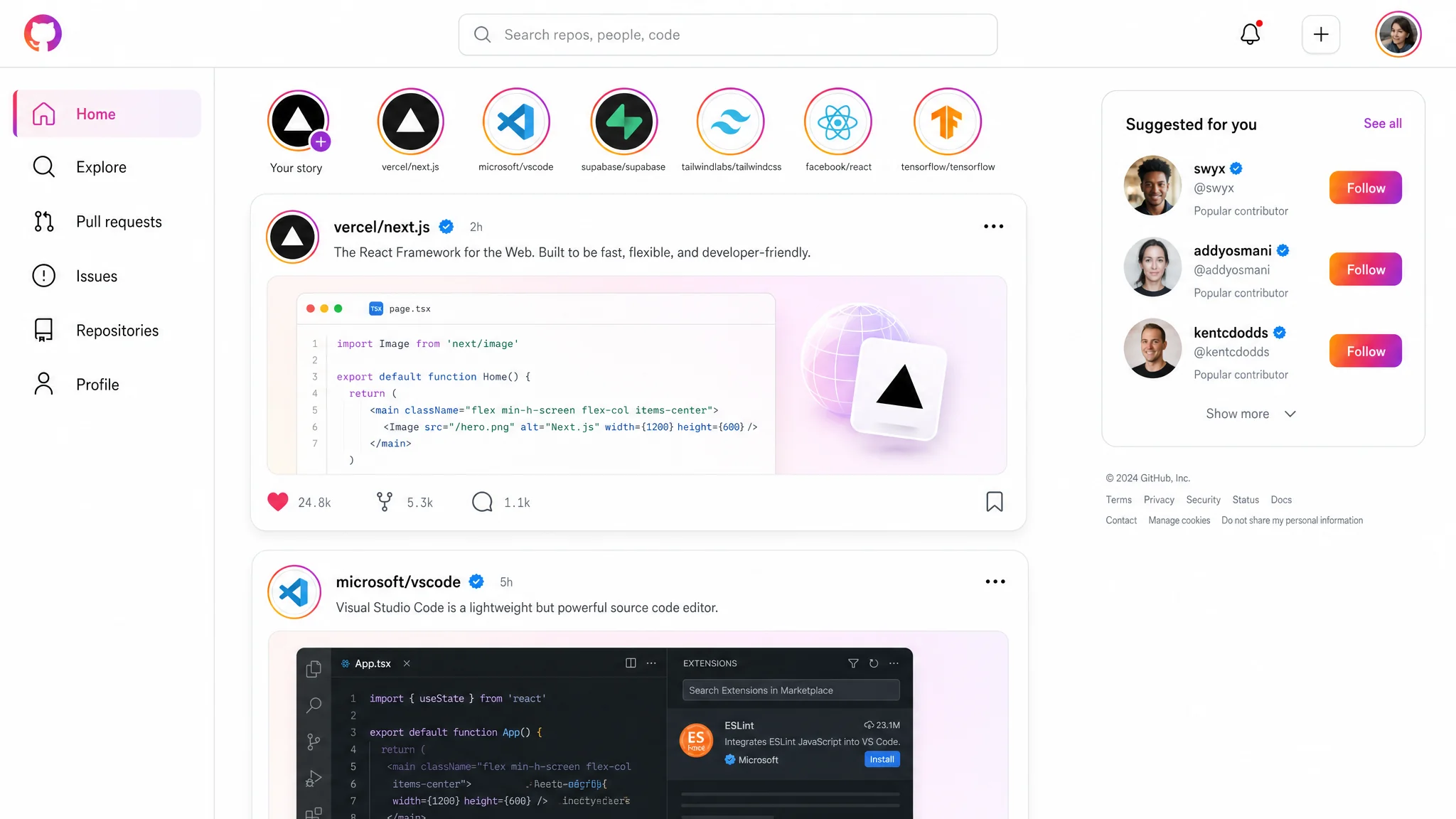
One call, `size: 2048x1152`, `quality: high`, no references — produced this UI mockup. Real readable typography, real-looking code preview, accurate Instagram visual language. That's the level you should expect.
## Install
```bash
pip install mcp-openai-images-audio
```
Or run directly without installing:
```bash
uvx mcp-openai-images-audio
```
## Connect to Claude Code
```bash
claude mcp add openai-images \
--scope user \
-e OPENAI_API_KEY=sk-... \
-- uvx mcp-openai-images-audio
```
**Important:**
1. **Organization verification is mandatory** for `gpt-image-2`. Verify at https://platform.openai.com/settings/organization/general. Takes a few minutes, propagates within 15 minutes.
2. The API key needs billing credit. Without it you get a 400 with `billing_hard_limit_reached`.
3. The server runs over stdio. No HTTP, no separate process to keep alive — Claude Code starts and stops it for you.
## How the tool works
One tool, three modes selected by `references_paths`:
- empty / not passed → `/v1/images/generations` (text → new image)
- 1 path → `/v1/images/edits` (modify that image)
- 2..16 paths → `/v1/images/edits` (compose with labeled references)
The server picks the model on its own:
- `background='transparent'` → `gpt-image-1.5` (gpt-image-2 currently rejects alpha — confirmed regression in OpenAI's docs)
- everything else → `gpt-image-2`
The actual model used is reported in the response.
## Parameters
| Param | Required | Notes |
|---|---|---|
| `prompt` | yes | English. Structure matters — see the prompting guide. |
| `output_path` | yes | Absolute path. Parent must exist. File must NOT exist. Extension picks format: `.png` / `.jpg` / `.jpeg` / `.webp`. |
| `size` | yes | One of: `1024x1024`, `1536x1024`, `1024x1536`, `2048x2048`, `2048x1152`, `1152x2048`, `3840x2160`, `2160x3840`. No default — pick deliberately. |
| `references_paths` | no | List of absolute paths, up to 16 files, each ≤50 MB. |
| `quality` | no | `low` / `medium` / `high`. Omit for default (auto). |
| `input_fidelity` | no | `low` / `high`. Pass `high` for face-preserving edits. |
| `background` | no | `auto` (default) / `opaque` / `transparent`. |
The server hard-codes `moderation=low`, `n=1`, `output_compression=100`. Not configurable.
## Prompting guide
Before the first call, Claude reads the resource `image-guide://full`. It covers:
- prompt structure (medium → subject → scene → composition → lighting → texture → constraints)
- photorealism rules (camera language, anti-words like "8K", "masterpiece")
- text rendering inside images
- edit/compose modes with role labeling
- `size` selection per use case
- when to set `quality` and `input_fidelity`
- the **transparent-background trap** — if you write "transparent background" in the prompt instead of passing `background='transparent'`, the model paints the editor checkerboard pattern into RGB. The image looks transparent in a thumbnail but isn't.
The server detects the checkerboard trap after writing the file and returns `alpha_appears_baked: true`. Don't trust the visual preview without checking that flag.
## Response
```json
{
"path": "/abs/path.png",
"bytes": 1219063,
"size": "1024x1024",
"model": "gpt-image-2",
"mode": "generate",
"has_alpha": false,
"alpha_used": null,
"tokens_used": 289,
"estimated_cost_usd": 0.0117
}
```
If transparency was requested, `alpha_appears_baked` is also included. If anything looks wrong, a `warnings` array is added with human-readable text.
## Logs
Each call appends one JSON line to `~/.cache/mcp-openai-images-audio/log.jsonl`. The log rotates at 10 MB; one previous file is kept as `log.jsonl.1`.
```bash
tail -f ~/.cache/mcp-openai-images-audio/log.jsonl
```
## Recommendations
- For **UI mockups with readable text**, use `size: 3840x2160` and `quality: high`. Smaller sizes blur small fonts.
- For **logos / icons** that need transparency, set `background: 'transparent'` — the server will route to `gpt-image-1.5` automatically. Don't try to ask for transparency in the prompt.
- For **portrait edits**, pass `input_fidelity: 'high'`. Otherwise the face drifts across iterations.
- For **drafts**, use `quality: 'low'` (~$0.006/image). Promote to `high` only when the result has to be final.
- Don't pass `quality` at all for most cases. The default is good enough.
- The model gives most weight to the first ~50 words of the prompt. Put the medium and subject up front.
## Pricing notes
Cost depends on size and quality. Typical 1024×1024 cases:
- `quality: low` → ~$0.006
- `quality: medium` → ~$0.05
- `quality: high` → ~$0.21
4K is roughly 4× the price of 2048×1152. The tool reports `estimated_cost_usd` per call; treat it as approximate — it tracks OpenAI's published per-token rates.
## Build from source
```bash
git clone https://github.com/eduard256/mcp-openai-images-audio.git
cd mcp-openai-images-audio
uv sync
uv run mcp-openai-images-audio
```
Tests:
```bash
uv run --extra dev pytest
```
## Known limitations
1. `gpt-image-2` does not support `background: transparent`. The server falls back to `gpt-image-1.5` automatically. Quality on transparent calls is therefore `gpt-image-1.5` quality, not the flagship.
2. `n` is hard-coded to 1. To get multiple variants, call the tool multiple times in parallel.
3. No `tts` / `audio` tool yet despite the package name. Coming in a later version.
4. No streaming partial images. The tool returns when the file is fully written.
## License
MIT
TDQS
A4.7/5.0
Scored across 1 tool
Disambiguation5/5
Only one tool exists, so there is no ambiguity or overlap in tool selection.
Naming Consistency5/5
With a single tool, naming consistency is inherently perfect.
Tool Count3/5
One tool for a domain that could benefit from separate tools (e.g., generate, edit, compose) is borderline. The tool uses modes via parameters, which is acceptable but minimal.
Completeness4/5
The tool covers generate, edit, and compose operations, plus background transparency. Minor gaps exist (e.g., no explicit inpainting or variations) but overall the surface is reasonable for a single-tool server.
Maintenance
ActivityInactive
ResponsivenessNo issues