Quickstart
npx burnish -- npx -y @burnishdev/example-server
That's it. Burnish spawns the example MCP server, reads its tool list, opens your browser, and renders every tool as an interactive form. The example server ships with a dozen tools — creating bug reports, listing team members, searching records — so you can click through, fill in forms, and see results rendered as cards, tables, and charts without writing a line of your own MCP code.
Want to try it against a different server? Point burnish at any stdio or SSE MCP server — see What you can point it at below.
Try the hosted demo: burnish-demo.fly.dev
Related MCP server: Promethean OS MCP
Why Burnish?
Zero LLM. No OpenAI key, no Anthropic key, no inference cost. Ever. Explorer mode is 100% deterministic — schemas in, forms out, results rendered.
Zero config. Point npx burnish at an MCP server command and it runs. No JSON files, no accounts, no Docker.
Zero data leaving your machine. The CLI runs locally and talks only to the MCP server you pointed it at. No analytics pixels, no telemetry by default.
Compared to the alternatives
| Burnish | MCP Inspector | Composio / Rube | Smithery | n8n |
Works without LLM | ✅ | ✅ | ❌ | ➖ | ❌ |
Rich visualization | ✅ Cards, tables, charts | ❌ Raw JSON | ➖ Limited | ➖ Registry only | ➖ Node output |
Any MCP server | ✅ | ✅ | ➖ 500 pre-wrapped | ➖ Browse only | ➖ Custom nodes |
Auto-generated forms | ✅ From schema | ❌ Manual JSON | ➖ Pre-built only | ❌ | ➖ Node config UI |
Local / private | ✅ Fully | ✅ | ❌ Cloud | ❌ Cloud | ➖ Self-host (heavy) |
Zero setup | ✅ npx burnish | ✅ npx | ❌ Account required | ➖ Browse only | ❌ Docker required |
Composable | ✅ Any server combo | ❌ Single server | ❌ Locked ecosystem | ➖ | ➖ Workflow builder |
✅ Full support · ➖ Partial / limited · ❌ Not supported
What you can point it at
# The Burnish example server — richest default demo
npx burnish -- npx -y @burnishdev/example-server

# Any published stdio MCP server
npx burnish -- npx -y @modelcontextprotocol/server-filesystem /tmp

# GitHub (needs a PAT)
GITHUB_PERSONAL_ACCESS_TOKEN=ghp_... \
  npx burnish -- npx -y @modelcontextprotocol/server-github

# An SSE / HTTP MCP server
npx burnish --sse https://your-mcp-server.example.com/sse

# A multi-server config file
npx burnish --config ./mcp-servers.json
All configured servers connect at startup. Their tools are available immediately — discoverable, documented, and executable from the browser.
For MCP server owners
Let your users explore your server without cloning anything. Drop this into your README:
[](https://github.com/danfking/burnish)
```bash
npx burnish -- npx @your-org/your-mcp-server
```
Want your tool results to render as cards, tables, and charts instead of raw JSON? See the Output Format Guide.
Links
Features
Connect. Browse. Execute. Everything is driven by the server's tool schemas.
Instant tool discovery — every tool listed with its description and input schema
Auto-generated forms — JSON Schema in, interactive form out
Rich results — responses rendered as cards, tables, charts, stat bars, not raw JSON
Fully private — runs locally, no external calls, no telemetry by default
Zero config — npx burnish and you're running
Drill-down navigation — collapsible sections and session persistence
Framework-agnostic — standard web components, no React/Vue/Angular lock-in
Themeable — --burnish-* CSS custom properties
No build step — import components from CDN as ES modules
Component reference
10 Lit 3 web components, each driven by JSON attributes. Every example below is live in the hosted demo — click "Try it" to open the tool directly.
Component | Preview | Key Attributes | Purpose | Live example |
<burnish-card>
| 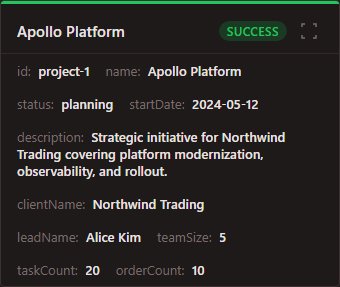
| title, status, body, meta (JSON), item-id
| Individual items with drill-down | Try it |
<burnish-stat-bar>
| 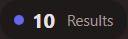
| items (JSON: [{label, value, color?}])
| Summary metrics / filter pills | Try it |
<burnish-table>
| 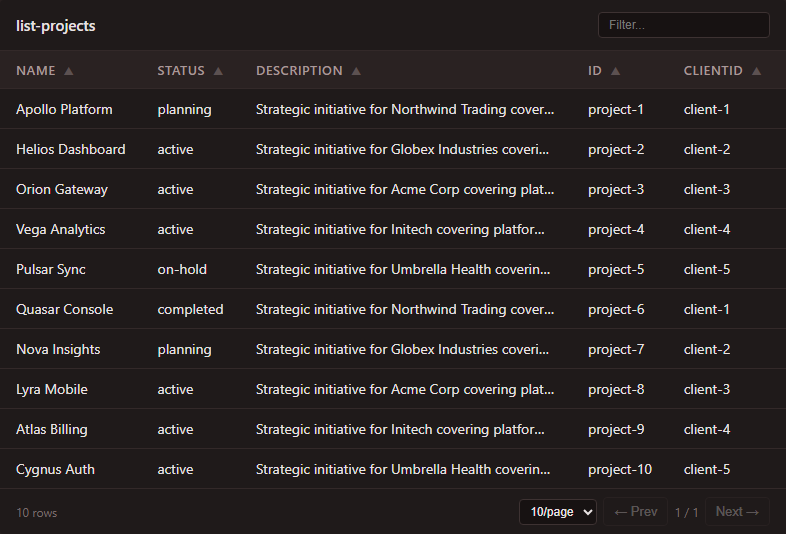
| title, columns (JSON), rows (JSON), status-field
| Tabular data with status coloring | Try it |
<burnish-chart>
| 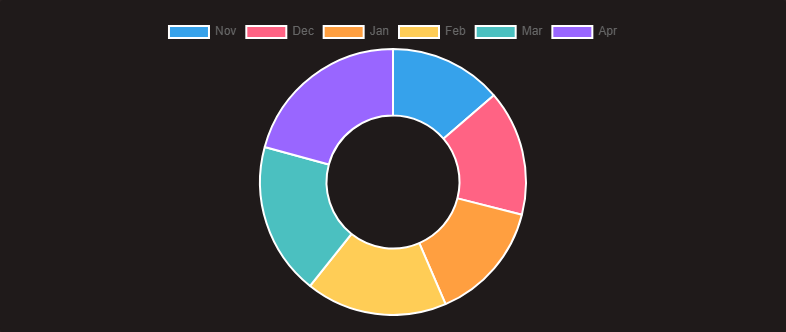
| type (line/bar/doughnut), config (JSON)
| Chart.js visualizations | Try it |
<burnish-section>
| 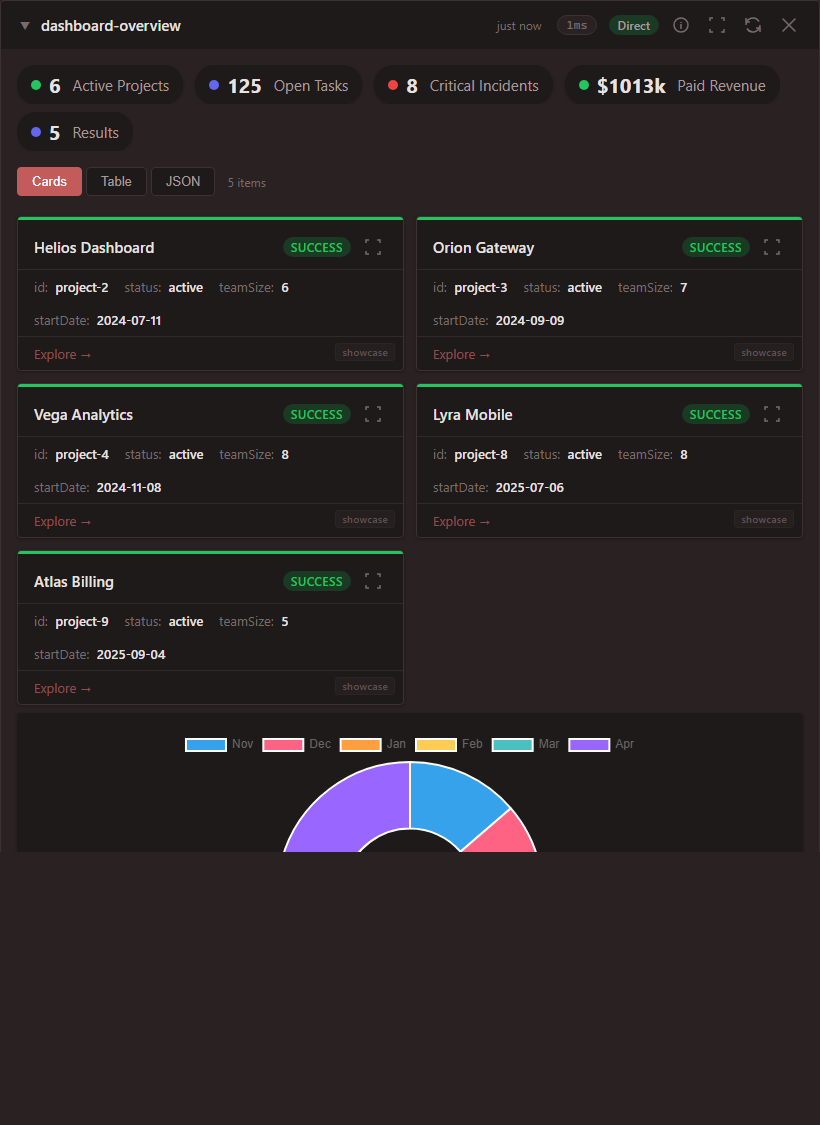
| label, count, status, collapsed
| Collapsible grouping container | Try it |
<burnish-metric>
| 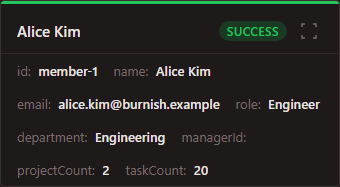
| label, value, unit, trend (up/down/flat)
| Single KPI display | Try it |
<burnish-message>
| 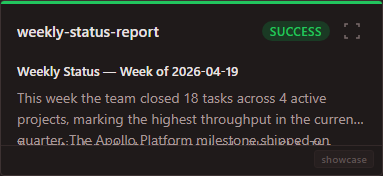
| role (user/assistant), content, streaming
| Chat bubbles | Try it |
<burnish-form>
| 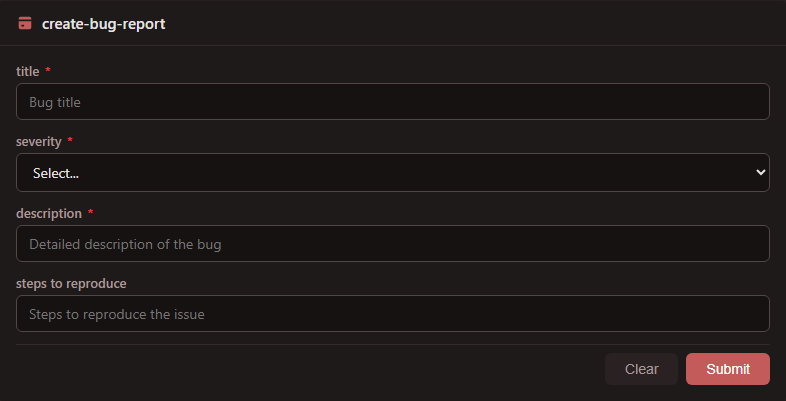
| title, tool-id, fields (JSON)
| User input / tool execution | Try it |
<burnish-actions>
| 
| actions (JSON: [{label, action, prompt, icon?}])
| Contextual next-step buttons | Try it |
<burnish-pipeline>
| 
| steps (JSON: [{server, tool, status}])
| Real-time tool chain visualization | Try it |
Status values: success, warning, error, muted, info — mapped to semantic colors via CSS custom properties.
Action types: read (auto-invoke, safe) and write (shows form, requires user confirmation).
SDK integration
Middleware
Add Burnish Explorer to your MCP server with one line:
import { withBurnishUI } from "burnish/middleware";
await withBurnishUI(server, { port: 3001 });
Schema export
npx burnish export -- npx @your-org/your-server > schema.json
Use in your own project
CDN (no build step)
<script type="module"
  src="https://esm.sh/@burnishdev/components@0.4.1"></script>
<link rel="stylesheet"
  href="https://cdn.jsdelivr.net/npm/@burnishdev/components@0.4.1/src/tokens.css" />

<burnish-card
  title="API Gateway"
  status="success"
  body="All systems operational"
  meta='[{"label":"Uptime","value":"99.9%"},{"label":"Latency","value":"42ms"}]'
  item-id="api-gw-1">
</burnish-card>
npm
npm install @burnishdev/components
import '@burnishdev/components';

// Components auto-register with burnish-* prefix.
// Custom prefix:
import { BurnishCard } from '@burnishdev/components';
customElements.define('my-card', class extends BurnishCard {});
Renderer
npm install @burnishdev/renderer
import { findStreamElements, appendStreamElement } from '@burnishdev/renderer';

const elements = findStreamElements(chunk);
for (const el of elements) {
  appendStreamElement(container, stack, el, safeAttrs, sanitize);
}
Configuration
MCP servers
Configure in apps/demo/mcp-servers.json when running from source, or pass --config to the CLI:
{
  "mcpServers": {
    "example": {
      "command": "npx",
      "args": ["-y", "@burnishdev/example-server"]
    },
    "filesystem": {
      "command": "npx",
      "args": ["-y", "@modelcontextprotocol/server-filesystem", "/path/to/dir"]
    },
    "github": {
      "command": "npx",
      "args": ["-y", "@modelcontextprotocol/server-github"],
      "env": {
        "GITHUB_PERSONAL_ACCESS_TOKEN": "${GITHUB_PERSONAL_ACCESS_TOKEN}"
      }
    }
  }
}
All configured servers connect at startup. Their tools are available immediately.
Development
git clone https://github.com/danfking/burnish.git
cd burnish
pnpm install          # Install all dependencies
pnpm build            # Build all packages
pnpm dev              # Start the demo
pnpm test             # Run Playwright tests
pnpm clean            # Clean all build artifacts
burnish/
├── packages/
│   ├── components/       @burnishdev/components — 10 Lit web components
│   ├── renderer/         @burnishdev/renderer — streaming parser + sanitizer
│   ├── app/              @burnishdev/app — drill-down logic + stream orchestration
│   ├── server/           @burnishdev/server — MCP hub + guards + intent resolver
│   ├── example-server/   @burnishdev/example-server — showcase MCP server (34 tools)
│   └── cli/              burnish CLI — npx burnish launcher + middleware
├── apps/
│   └── demo/
│       ├── server/       Hono API
│       └── public/       SPA shell (ES modules, no framework)
└── package.json          pnpm workspace root
Prerequisites
How it works
    ┌──────────────────────────────────┐
    │        MCP Servers                │
    │  (filesystem, GitHub, DB, ...)    │
    └──────────────┬───────────────────┘
                   │ tool calls / results
                   ▼
    ┌──────────────────────────┐
    │  Schema-Driven UI        │
    │                          │
    │  • List tools             │
    │  • Generate forms         │
    │  • Map results → comps    │
    └──────────┬───────────────┘
               │
               ▼
    ┌──────────────────────────┐
    │  Streaming Renderer      │
    │                          │
    │  • Parse tags on arrival  │
    │  • Sanitize (DOMPurify)  │
    │  • Append to DOM         │
    └──────────┬───────────────┘
               │
               ▼
    ┌──────────────────────────┐
    │  Web Components (Lit 3)  │
    │                          │
    │  • Shadow DOM isolation  │
    │  • JSON attribute parsing│
    │  • Event-driven drill-   │
    │    down navigation       │
    └──────────────────────────┘
Burnish reads the MCP server's tool list, generates forms from JSON Schema, and maps results directly to components — no LLM in the loop. Everything runs locally.
Coming soon: Navigator
Navigator is the planned LLM-powered natural-language layer over Explorer mode — ask a question and Burnish picks the right tools across your connected servers, rendering the answer with the same components you see today. Explorer mode (what you use now) stays free, local, and zero-LLM.
Join the waitlist →
Privacy & Telemetry
Burnish collects opt-in, anonymous telemetry to measure real adoption (see issue #382). It is off by default. On the first interactive run of the CLI you'll see a prompt asking whether to enable it — pressing Enter or anything other than y keeps it off.
What we send (only if you opt in):
v — burnish CLI version
os — OS family: darwin, linux, win32, or other
node — Node.js major version
bucket — coarse invocation-count bucket: 1, 2-5, 6-20, or 21+
id — a random install ID (UUID) generated once on first opt-in
schema_version — payload schema version (currently "1")
What we never send: server URLs, tool names, schemas, arguments, file paths, hostnames, usernames, IP addresses we can see beyond the TCP connection, or any content from your MCP servers. There is no per-tool or per-schema tracking.
How to opt out at any time:
Set the environment variable BURNISH_TELEMETRY=0 (also accepts false, off, no). This overrides any stored choice.
Or delete / edit the stored choice file:
Telemetry is a single fire-and-forget HTTPS POST to https://burnish-demo.fly.dev/telemetry/v1/ping with a short timeout. If the endpoint is unreachable, the CLI behaves identically — nothing is retried or queued. Telemetry is skipped entirely in non-interactive and CI environments when no choice has been stored.
License
AGPL-3.0 — Daniel King (@danfking)

