
Glama
<!-- markdownlint-disable MD041 -->
<!-- markdownlint-disable-next-line MD033 -->
<div align="center">
  <!-- markdownlint-disable-next-line MD033 -->
  <img src="src/views/assets/gowa.svg" alt="GoWA Logo" width="200" height="200">

## Golang WhatsApp - Built with Go for efficient memory use

</div>

[![smithery badge](https://smithery.ai/badge/@samihalawa/whatsapp-go-mcp)](https://smithery.ai/server/@samihalawa/whatsapp-go-mcp)
[![Patreon](https://img.shields.io/badge/Support%20on-Patreon-orange.svg)](https://www.patreon.com/c/aldinokemal)
**If you're using this tools to generate income, consider supporting its development by becoming a Patreon member!**
Your support helps ensure the library stays maintained and receives regular updates!
___

![release version](https://img.shields.io/github/v/release/aldinokemal/go-whatsapp-web-multidevice)
![Build Image](https://github.com/aldinokemal/go-whatsapp-web-multidevice/actions/workflows/build-docker-image.yaml/badge.svg)
![Binary Release](https://github.com/aldinokemal/go-whatsapp-web-multidevice/actions/workflows/release.yml/badge.svg)

## Support for `ARM` & `AMD` Architecture along with `MCP` Support

Download:

- [Release](https://github.com/aldinokemal/go-whatsapp-web-multidevice/releases/latest)
- [Docker Hub](https://hub.docker.com/r/aldinokemal2104/go-whatsapp-web-multidevice/tags)
- [GitHub Container Registry](https://github.com/aldinokemal/go-whatsapp-web-multidevice/pkgs/container/go-whatsapp-web-multidevice)

## Support n8n package (n8n.io)

- [n8n package](https://www.npmjs.com/package/@aldinokemal2104/n8n-nodes-gowa)
- Go to Settings -> Community Nodes -> Input `@aldinokemal2104/n8n-nodes-gowa` -> Install

## Breaking Changes

- `v6`
  - For REST mode, you need to run `<binary> rest` instead of `<binary>`
    - for example: `./whatsapp rest` instead of ~~./whatsapp~~
  - For MCP mode, you need to run `<binary> mcp`
    - for example: `./whatsapp mcp`
- `v7`
  - Starting version 7.x we are using goreleaser to build the binary, so you can download the binary
      from [release](https://github.com/aldinokemal/go-whatsapp-web-multidevice/releases/latest)

## Feature

- Send WhatsApp message via http API, [docs/openapi.yml](./docs/openapi.yaml) for more details
- **MCP (Model Context Protocol) Server Support** - Integrate with AI agents and tools using standardized protocol
- Mention someone
  - `@phoneNumber`
  - example: `Hello @628974812XXXX, @628974812XXXX`
- Post Whatsapp Status
- Compress image before send
- Compress video before send
- Change OS name become your app (it's the device name when connect via mobile)
  - `--os=Chrome` or `--os=MyApplication`
- Basic Auth (able to add multi credentials)
  - `--basic-auth=kemal:secret,toni:password,userName:secretPassword`, or you can simplify
  - `-b=kemal:secret,toni:password,userName:secretPassword`
- Subpath deployment support
  - `--base-path="/gowa"` (allows deployment under a specific path like `/gowa/sub/path`)
- Customizable port and debug mode
  - `--port 8000`
  - `--debug true`
- Auto reply message
  - `--autoreply="Don't reply this message"`
- Auto mark read incoming messages
  - `--auto-mark-read=true` (automatically marks incoming messages as read)
- Webhook for received message
  - `--webhook="http://yourwebhook.site/handler"`, or you can simplify
  - `-w="http://yourwebhook.site/handler"`
  - for more detail, see [Webhook Payload Documentation](./docs/webhook-payload.md)
- Webhook Secret
  Our webhook will be sent to you with an HMAC header and a sha256 default key `secret`.

  You may modify this by using the option below:
  - `--webhook-secret="secret"`
- **Webhook Payload Documentation**
  For detailed webhook payload schemas, security implementation, and integration examples,
  see [Webhook Payload Documentation](./docs/webhook-payload.md)

## Configuration

You can configure the application using either command-line flags (shown above) or environment variables. Configuration
can be set in three ways (in order of priority):

1. Command-line flags (highest priority)
2. Environment variables
3. `.env` file (lowest priority)

### Environment Variables

You can configure the application using environment variables. Configuration can be set in three ways (in order of
priority):

1. Command-line flags (highest priority)
2. Environment variables
3. `.env` file (lowest priority)

To use environment variables:

1. Copy `.env.example` to `.env` in your project root (`cp src/.env.example src/.env`)
2. Modify the values in `.env` according to your needs
3. Or set the same variables as system environment variables

#### Available Environment Variables

| Variable                      | Description                                 | Default                                      | Example                                     |
|-------------------------------|---------------------------------------------|----------------------------------------------|---------------------------------------------|
| `APP_PORT`                    | Application port                            | `3000`                                       | `APP_PORT=8080`                             |
| `APP_DEBUG`                   | Enable debug logging                        | `false`                                      | `APP_DEBUG=true`                            |
| `APP_OS`                      | OS name (device name in WhatsApp)           | `Chrome`                                     | `APP_OS=MyApp`                              |
| `APP_BASIC_AUTH`              | Basic authentication credentials            | -                                            | `APP_BASIC_AUTH=user1:pass1,user2:pass2`    |
| `APP_BASE_PATH`               | Base path for subpath deployment            | -                                            | `APP_BASE_PATH=/gowa`                       |
| `DB_URI`                      | Database connection URI                     | `file:storages/whatsapp.db?_foreign_keys=on` | `DB_URI=postgres://user:pass@host/db`       |
| `WHATSAPP_AUTO_REPLY`         | Auto-reply message                          | -                                            | `WHATSAPP_AUTO_REPLY="Auto reply message"`  |
| `WHATSAPP_AUTO_MARK_READ`     | Auto-mark incoming messages as read         | `false`                                      | `WHATSAPP_AUTO_MARK_READ=true`              |
| `WHATSAPP_WEBHOOK`            | Webhook URL(s) for events (comma-separated) | -                                            | `WHATSAPP_WEBHOOK=https://webhook.site/xxx` |
| `WHATSAPP_WEBHOOK_SECRET`     | Webhook secret for validation               | `secret`                                     | `WHATSAPP_WEBHOOK_SECRET=super-secret-key`  |
| `WHATSAPP_ACCOUNT_VALIDATION` | Enable account validation                   | `true`                                       | `WHATSAPP_ACCOUNT_VALIDATION=false`         |
| `WHATSAPP_CHAT_STORAGE`       | Enable chat storage                         | `true`                                       | `WHATSAPP_CHAT_STORAGE=false`               |

Note: Command-line flags will override any values set in environment variables or `.env` file.

- For more command `./whatsapp --help`

## Requirements

### System Requirements

- **Go 1.24.0 or higher** (for building from source)
- **FFmpeg** (for media processing)

### Platform Support

- Linux (x86_64, ARM64)
- macOS (Intel, Apple Silicon)
- Windows (x86_64) - WSL recommended

### Dependencies (without docker)

- Mac OS:
  - `brew install ffmpeg`
  - `export CGO_CFLAGS_ALLOW="-Xpreprocessor"`
- Linux:
  - `sudo apt update`
  - `sudo apt install ffmpeg`
- Windows (not recomended, prefer using [WSL](https://docs.microsoft.com/en-us/windows/wsl/install)):
  - install ffmpeg, [download here](https://www.ffmpeg.org/download.html#build-windows)
  - add to ffmpeg to [environment variable](https://www.google.com/search?q=windows+add+to+environment+path)

## How to use

### Basic

1. Clone this repo: `git clone https://github.com/aldinokemal/go-whatsapp-web-multidevice`
2. Open the folder that was cloned via cmd/terminal.
3. run `cd src`
4. run `go run . rest` (for REST API mode)
5. Open `http://localhost:3000`

### Docker (you don't need to install in required)

1. Clone this repo: `git clone https://github.com/aldinokemal/go-whatsapp-web-multidevice`
2. Open the folder that was cloned via cmd/terminal.
3. run `docker-compose up -d --build`
4. open `http://localhost:3000`

### Build your own binary

1. Clone this repo `git clone https://github.com/aldinokemal/go-whatsapp-web-multidevice`
2. Open the folder that was cloned via cmd/terminal.
3. run `cd src`
4. run
    1. Linux & MacOS: `go build -o whatsapp`
    2. Windows (CMD / PowerShell): `go build -o whatsapp.exe`
5. run
    1. Linux & MacOS: `./whatsapp rest` (for REST API mode)
        1. run `./whatsapp --help` for more detail flags
    2. Windows: `.\whatsapp.exe rest` (for REST API mode)
        1. run `.\whatsapp.exe --help` for more detail flags
6. open `http://localhost:3000` in browser

### MCP Server (Model Context Protocol)

This application can also run as an MCP server, allowing AI agents and tools to interact with WhatsApp through a
standardized protocol.

1. Clone this repo `git clone https://github.com/aldinokemal/go-whatsapp-web-multidevice`
2. Open the folder that was cloned via cmd/terminal.
3. run `cd src`
4. run `go run . mcp` or build the binary and run `./whatsapp mcp`
5. The MCP server will start on `http://localhost:8080` by default

#### MCP Server Options

- `--host localhost` - Set the host for MCP server (default: localhost)
- `--port 8080` - Set the port for MCP server (default: 8080)

#### Available MCP Tools

- `whatsapp_send_text` - Send text messages
- `whatsapp_send_contact` - Send contact cards
- `whatsapp_send_link` - Send links with captions
- `whatsapp_send_location` - Send location coordinates

#### MCP Endpoints

- SSE endpoint: `http://localhost:8080/sse`
- Message endpoint: `http://localhost:8080/message`

### MCP Configuration

Make sure you have the MCP server running: `./whatsapp mcp`

For AI tools that support MCP with SSE (like Cursor), add this configuration:

```json
{
  "mcpServers": {
    "whatsapp": {
      "url": "http://localhost:8080/sse"
    }
  }
}

Production Mode REST (docker)

Using Docker Hub:

docker run --detach --publish=3000:3000 --name=whatsapp --restart=always --volume=$(docker volume create --name=whatsapp):/app/storages aldinokemal2104/go-whatsapp-web-multidevice rest --autoreply="Dont't reply this message please"

Using GitHub Container Registry:

docker run --detach --publish=3000:3000 --name=whatsapp --restart=always --volume=$(docker volume create --name=whatsapp):/app/storages ghcr.io/aldinokemal/go-whatsapp-web-multidevice rest --autoreply="Dont't reply this message please"

Production Mode REST (docker compose)

create docker-compose.yml file with the following configuration:

Using Docker Hub:

services:
  whatsapp:
    image: aldinokemal2104/go-whatsapp-web-multidevice
    container_name: whatsapp
    restart: always
    ports:
      - "3000:3000"
    volumes:
      - whatsapp:/app/storages
    command:
      - rest
      - --basic-auth=admin:admin
      - --port=3000
      - --debug=true
      - --os=Chrome
      - --account-validation=false

volumes:
  whatsapp:

Using GitHub Container Registry:

services:
  whatsapp:
    image: ghcr.io/aldinokemal/go-whatsapp-web-multidevice
    container_name: whatsapp
    restart: always
    ports:
      - "3000:3000"
    volumes:
      - whatsapp:/app/storages
    command:
      - rest
      - --basic-auth=admin:admin
      - --port=3000
      - --debug=true
      - --os=Chrome
      - --account-validation=false

volumes:
  whatsapp:

or with env file (Docker Hub):

services:
  whatsapp:
    image: aldinokemal2104/go-whatsapp-web-multidevice
    container_name: whatsapp
    restart: always
    ports:
      - "3000:3000"
    volumes:
      - whatsapp:/app/storages
    environment:
      - APP_BASIC_AUTH=admin:admin
      - APP_PORT=3000
      - APP_DEBUG=true
      - APP_OS=Chrome
      - APP_ACCOUNT_VALIDATION=false

volumes:
  whatsapp:

or with env file (GitHub Container Registry):

services:
  whatsapp:
    image: ghcr.io/aldinokemal/go-whatsapp-web-multidevice
    container_name: whatsapp
    restart: always
    ports:
      - "3000:3000"
    volumes:
      - whatsapp:/app/storages
    environment:
      - APP_BASIC_AUTH=admin:admin
      - APP_PORT=3000
      - APP_DEBUG=true
      - APP_OS=Chrome
      - APP_ACCOUNT_VALIDATION=false

volumes:
  whatsapp:

Production Mode (binary)

You can fork or edit this source code !

Current API

MCP (Model Context Protocol) API

  • MCP server provides standardized tools for AI agents to interact with WhatsApp

  • Supports Server-Sent Events (SSE) transport

  • Available tools: whatsapp_send_text, whatsapp_send_contact, whatsapp_send_link, whatsapp_send_location

  • Compatible with MCP-enabled AI tools and agents

HTTP REST API

Feature

Menu

Method

URL

✅

Login with Scan QR

GET

/app/login

✅

Login With Pair Code

GET

/app/login-with-code

✅

Logout

GET

/app/logout

✅

Reconnect

GET

/app/reconnect

✅

Devices

GET

/app/devices

✅

User Info

GET

/user/info

✅

User Avatar

GET

/user/avatar

✅

User Change Avatar

POST

/user/avatar

✅

User Change PushName

POST

/user/pushname

✅

User My Groups

GET

/user/my/groups

✅

User My Newsletter

GET

/user/my/newsletters

✅

User My Privacy Setting

GET

/user/my/privacy

✅

User My Contacts

GET

/user/my/contacts

✅

User Check

GET

/user/check

✅

User Business Profile

GET

/user/business-profile

✅

Send Message

POST

/send/message

✅

Send Image

POST

/send/image

✅

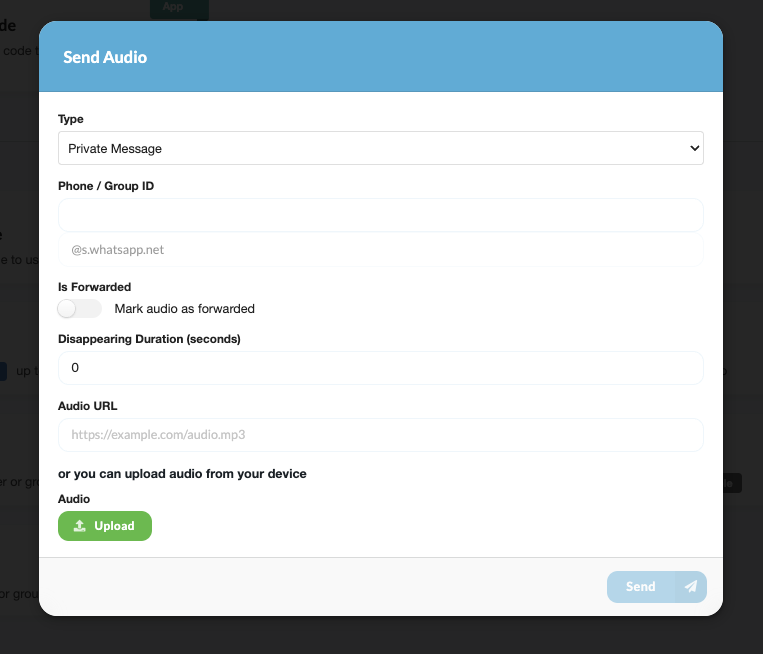
Send Audio

POST

/send/audio

✅

Send File

POST

/send/file

✅

Send Video

POST

/send/video

✅

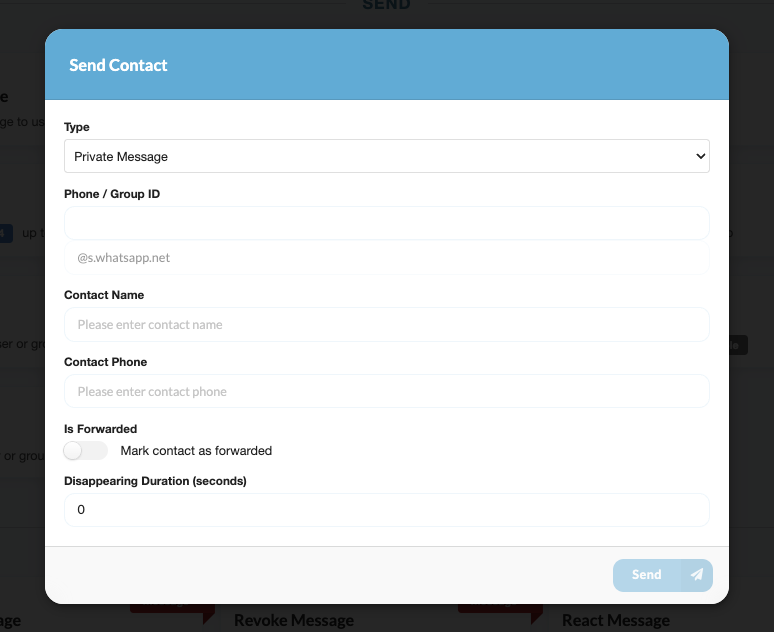
Send Contact

POST

/send/contact

✅

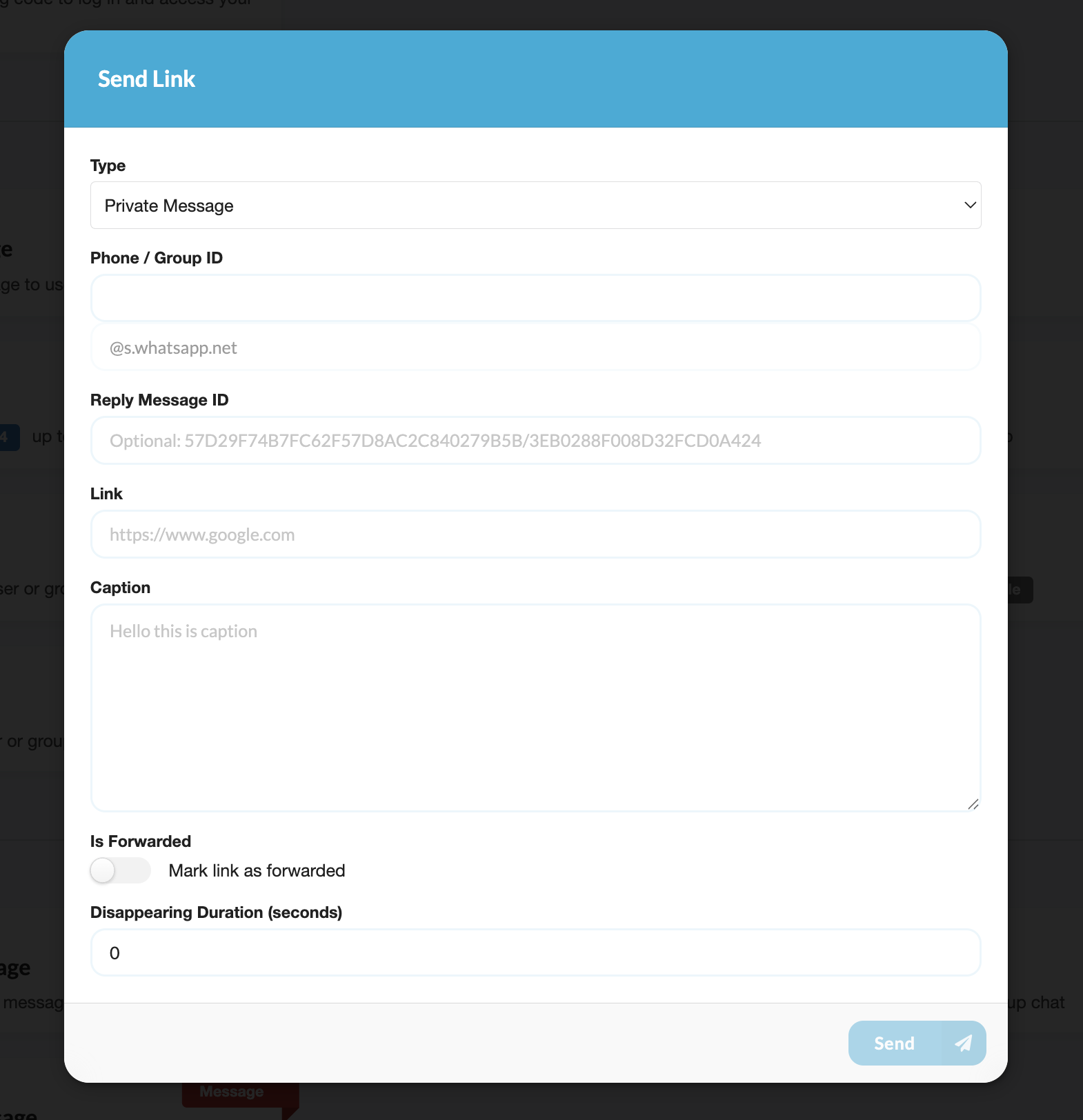
Send Link

POST

/send/link

✅

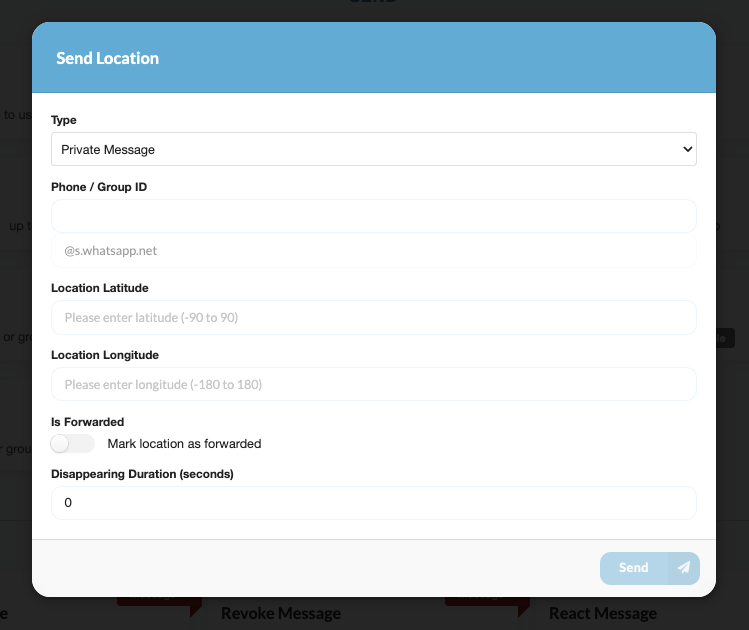
Send Location

POST

/send/location

✅

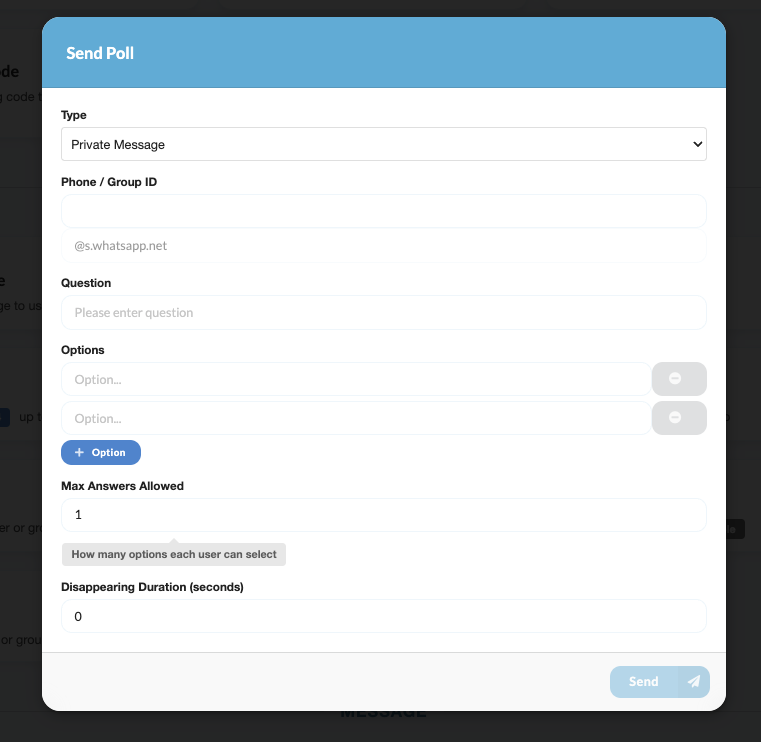
Send Poll / Vote

POST

/send/poll

✅

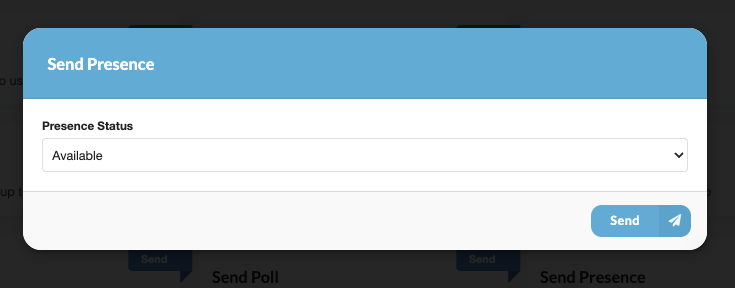
Send Presence

POST

/send/presence

✅

Send Chat Presence (Typing Indicator)

POST

/send/chat-presence

✅

Revoke Message

POST

/message/:message_id/revoke

✅

React Message

POST

/message/:message_id/reaction

✅

Delete Message

POST

/message/:message_id/delete

✅

Edit Message

POST

/message/:message_id/update

✅

Read Message (DM)

POST

/message/:message_id/read

✅

Star Message

POST

/message/:message_id/star

✅

Unstar Message

POST

/message/:message_id/unstar

✅

Join Group With Link

POST

/group/join-with-link

✅

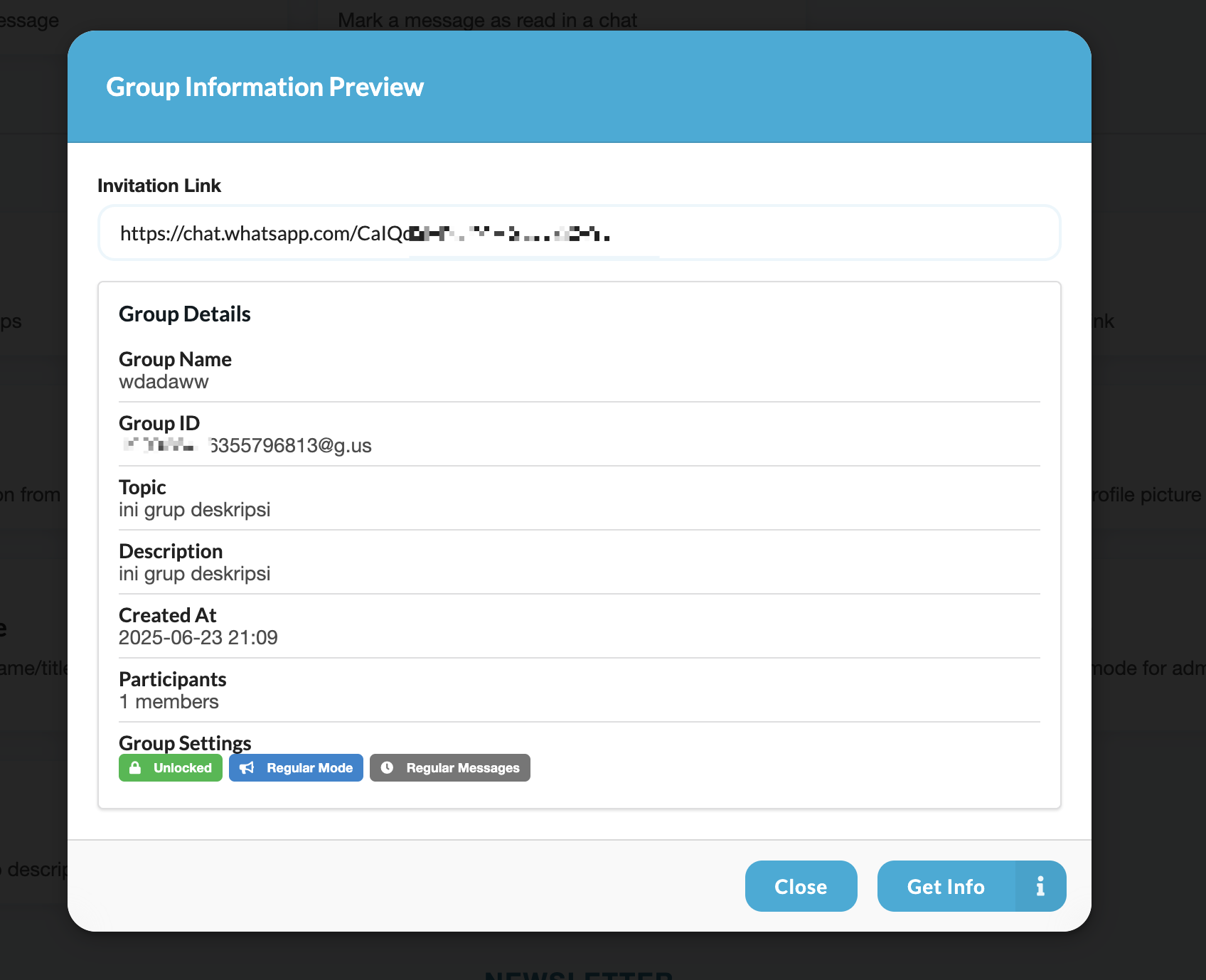
Group Info From Link

GET

/group/info-from-link

✅

Group Info

GET

/group/info

✅

Leave Group

POST

/group/leave

✅

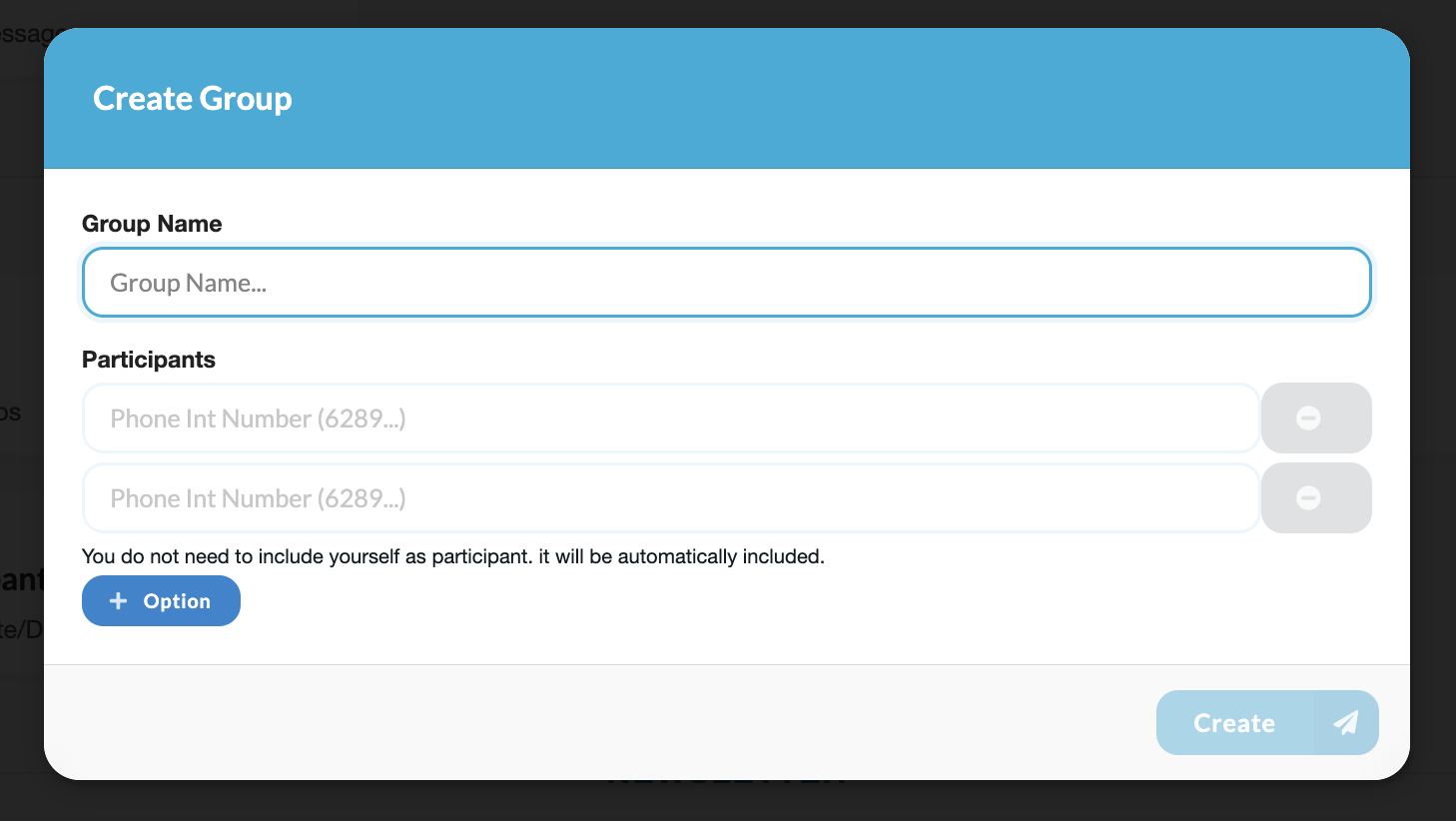
Create Group

POST

/group

✅

Add Participants in Group

POST

/group/participants

✅

Remove Participant in Group

POST

/group/participants/remove

✅

Promote Participant in Group

POST

/group/participants/promote

✅

Demote Participant in Group

POST

/group/participants/demote

✅

List Requested Participants in Group

GET

/group/participant-requests

✅

Approve Requested Participant in Group

POST

/group/participant-requests/approve

✅

Reject Requested Participant in Group

POST

/group/participant-requests/reject

✅

Set Group Photo

POST

/group/photo

✅

Set Group Name

POST

/group/name

✅

Set Group Locked

POST

/group/locked

✅

Set Group Announce

POST

/group/announce

✅

Set Group Topic

POST

/group/topic

✅

Get Group Invite Link

GET

/group/invite-link

✅

Unfollow Newsletter

POST

/newsletter/unfollow

✅

Get Chat List

GET

/chats

✅

Get Chat Messages

GET

/chat/:chat_jid/messages

✅

Label Chat

POST

/chat/:chat_jid/label

✅

Pin Chat

POST

/chat/:chat_jid/pin

✅ = Available
❌ = Not Available Yet

Related MCP server: MCP WPPConnect Server

User Interface

MCP UI

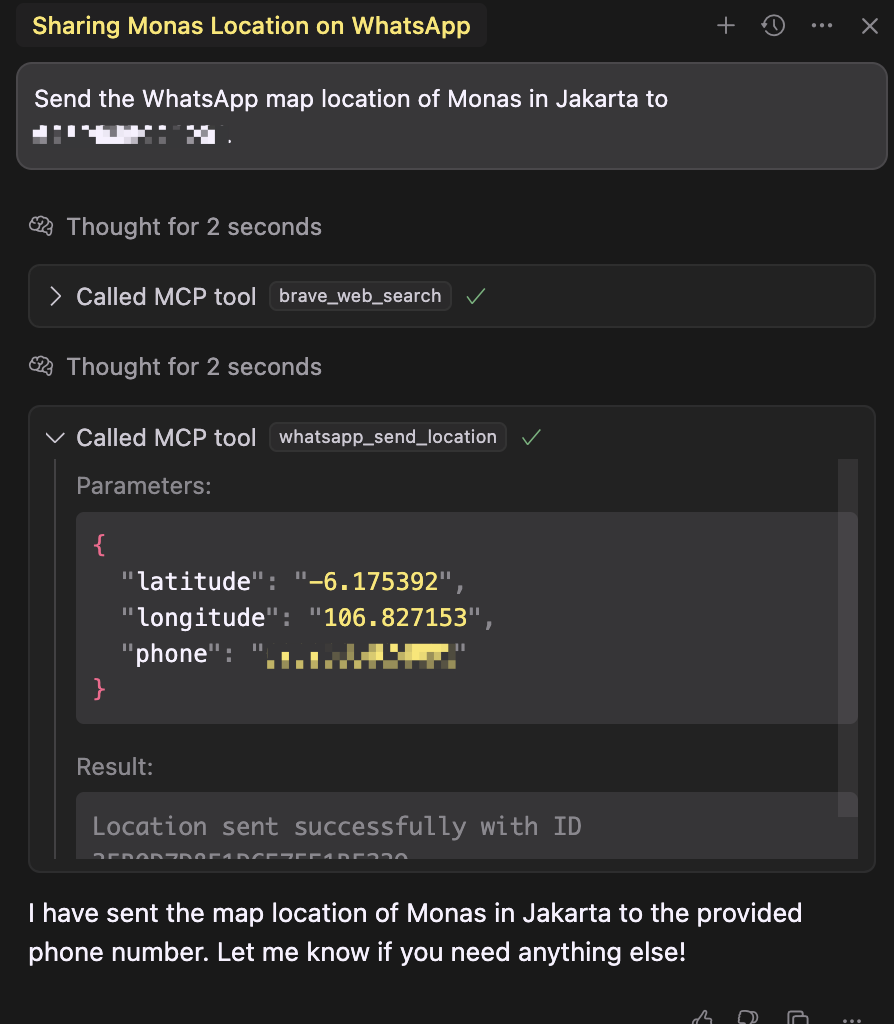
  • Setup MCP (tested in cursor) Setup MCP

  • Test MCP Test MCP

  • Successfully setup MCP Success MCP

HTTP REST API UI

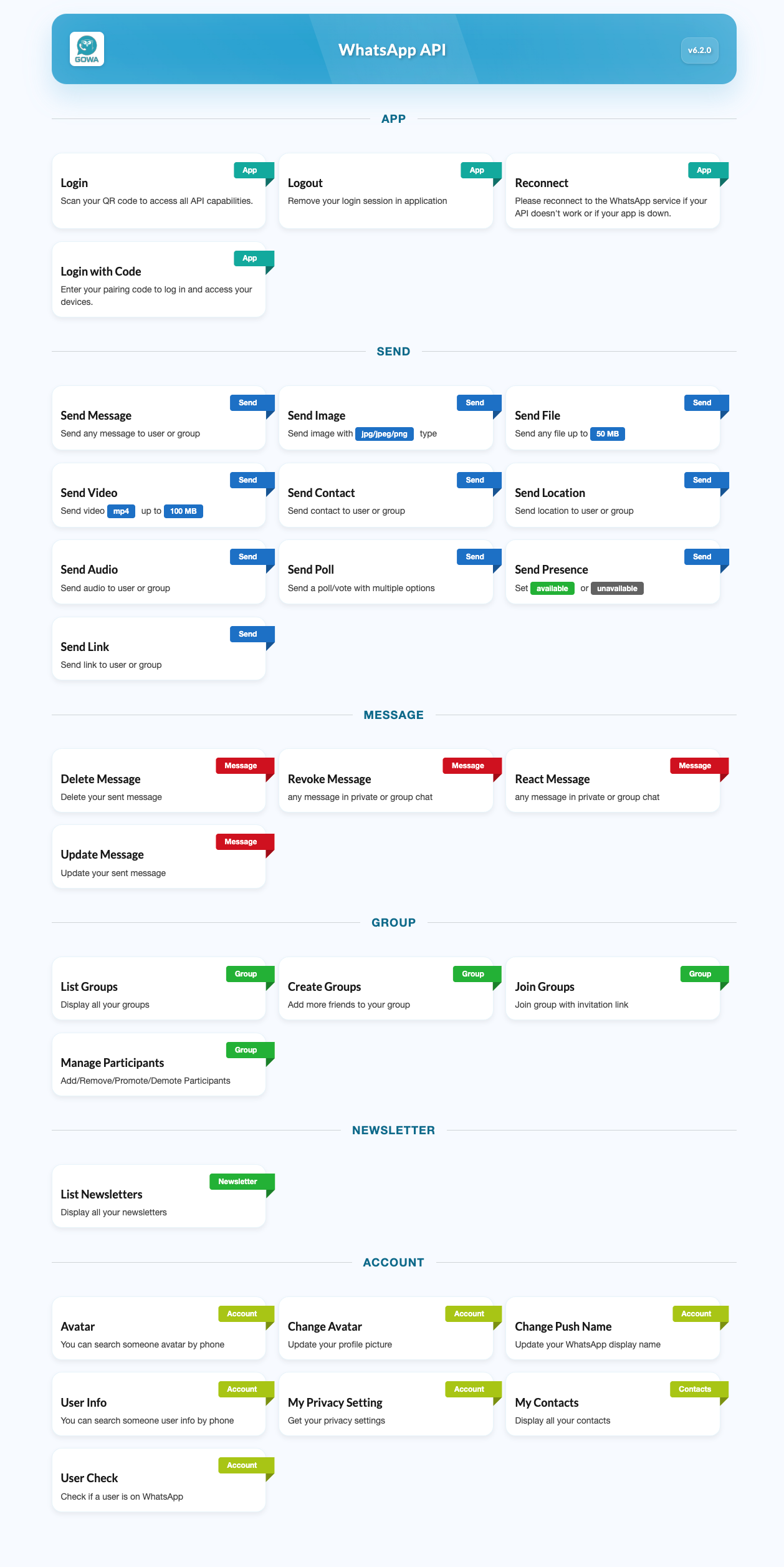
Description

Image

Homepage

Homepage

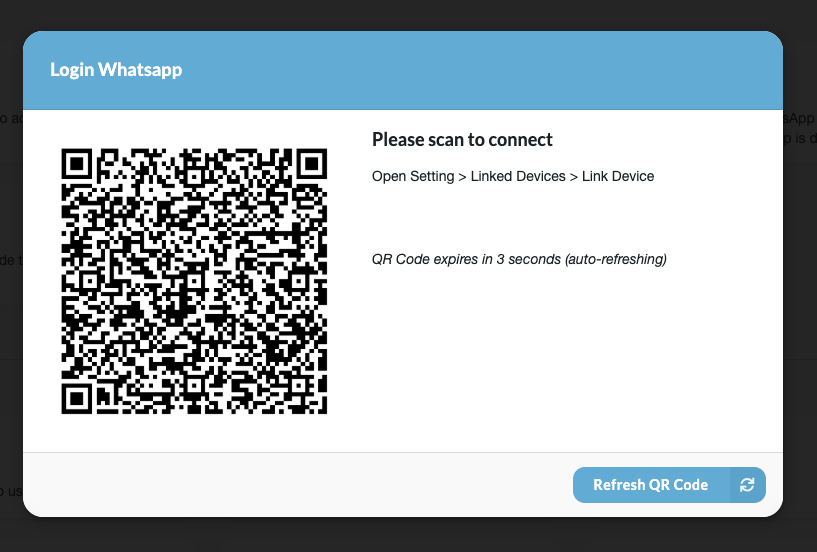
Login

Login

Login With Code

Login With Code

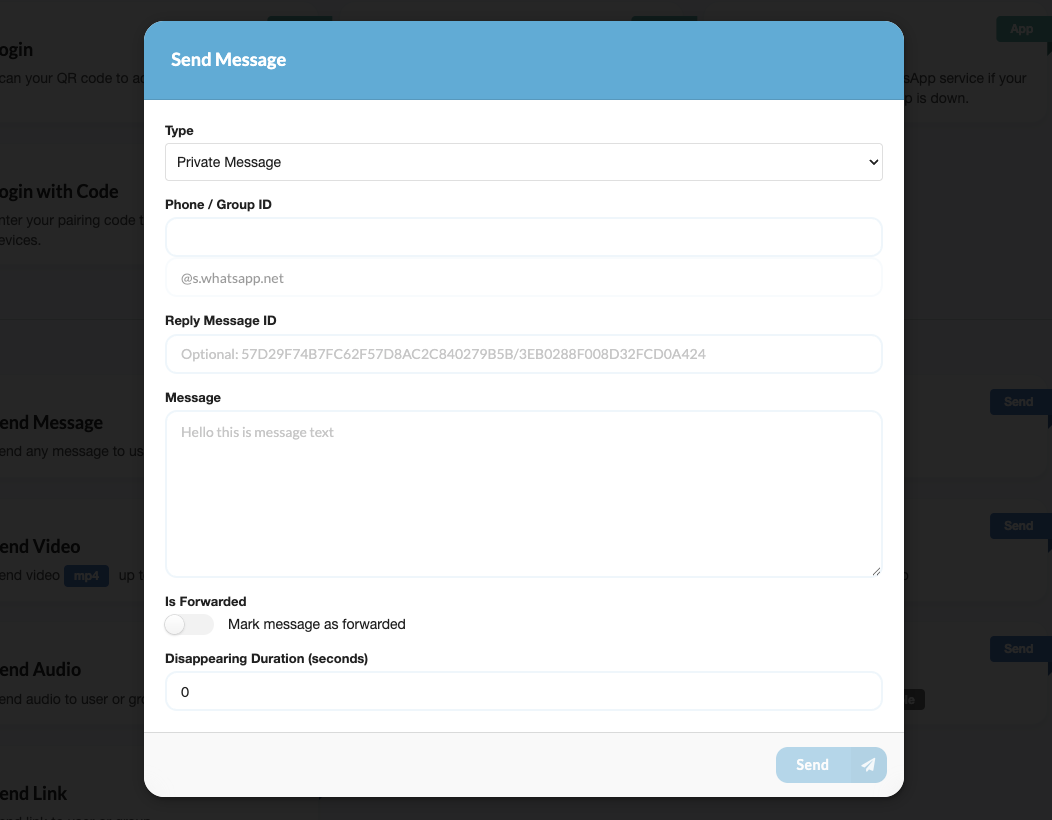
Send Message

Send Message

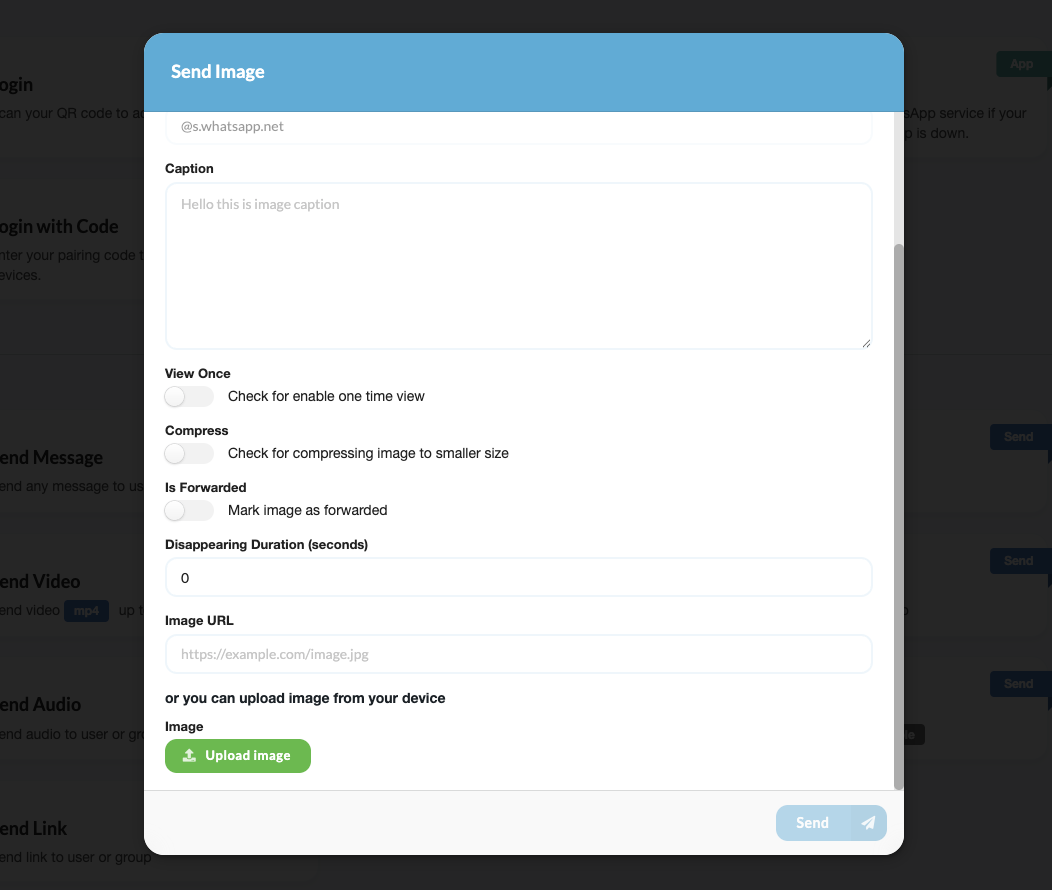
Send Image

Send Image

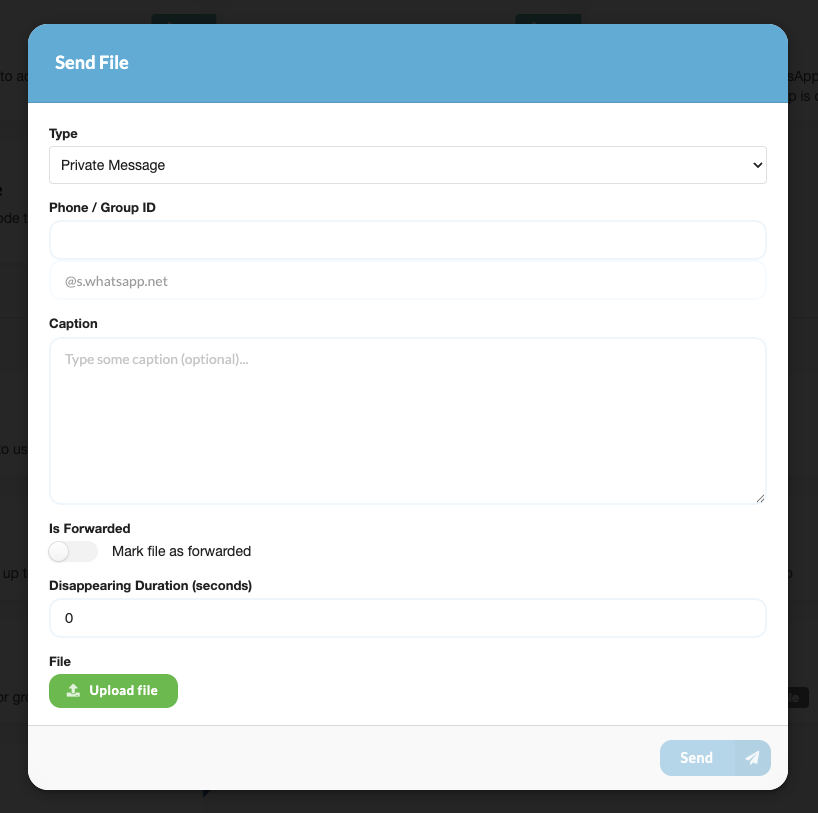
Send File

Send File

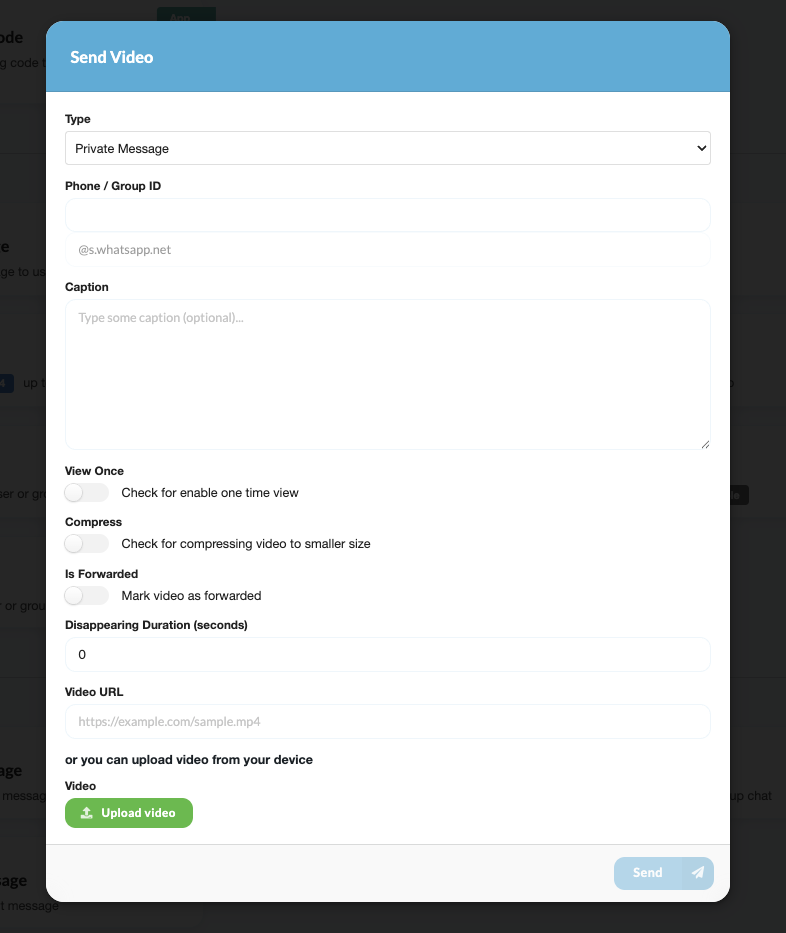
Send Video

Send Video

Send Contact

Send Contact

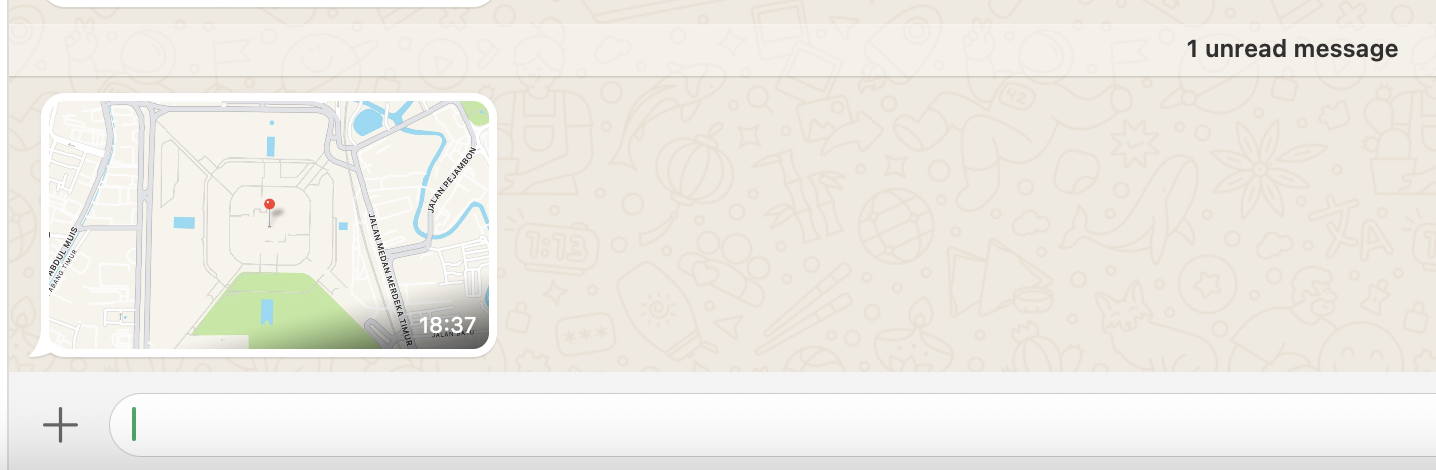
Send Location

Send Location

Send Audio

Send Audio

Send Poll

Send Poll

Send Presence

Send Presence

Send Link

Send Link

My Group

My Group

Group Info From Link

Group Info From Link

Create Group

Create Group

Join Group with Link

Join Group with Link

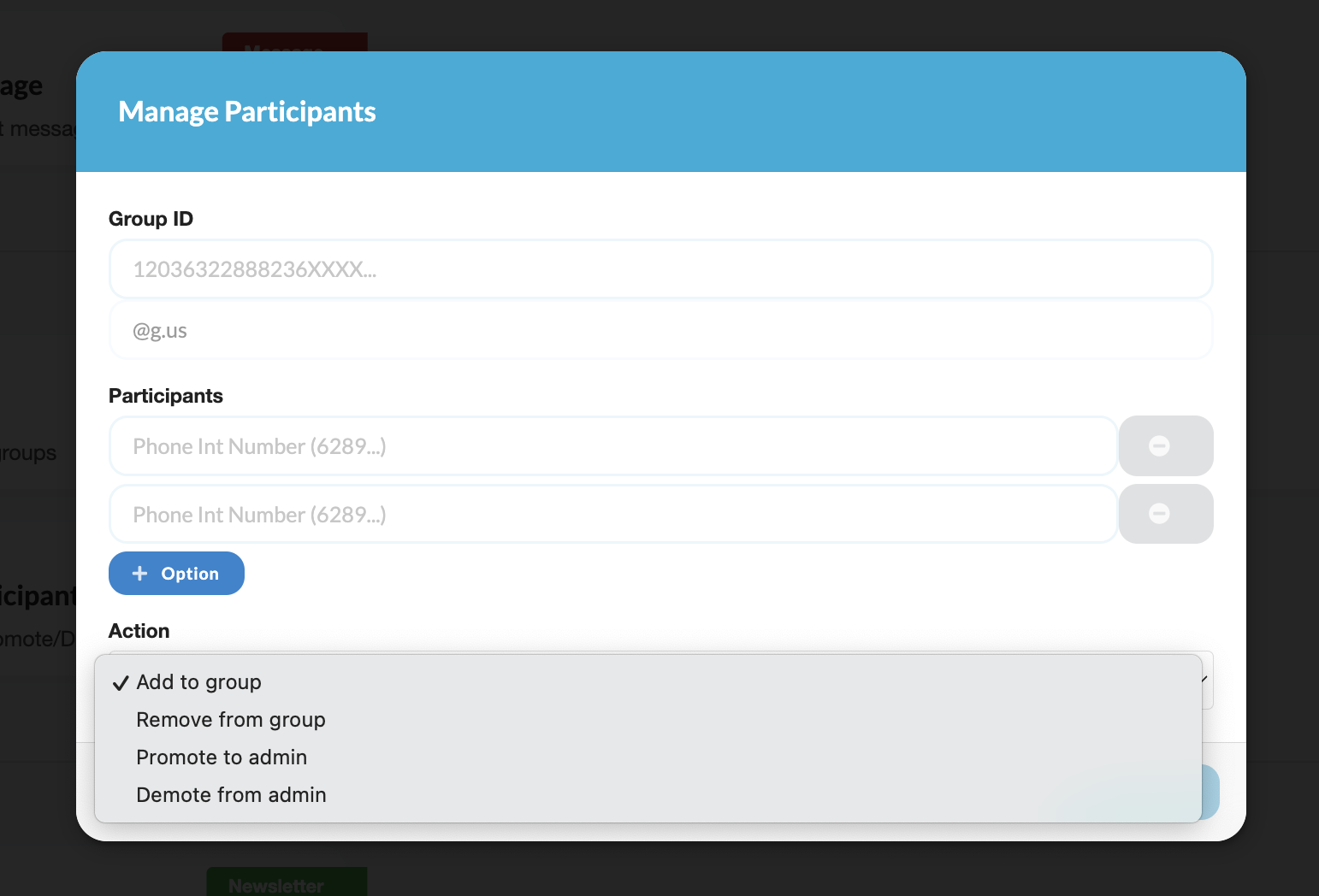
Manage Participant

Manage Participant

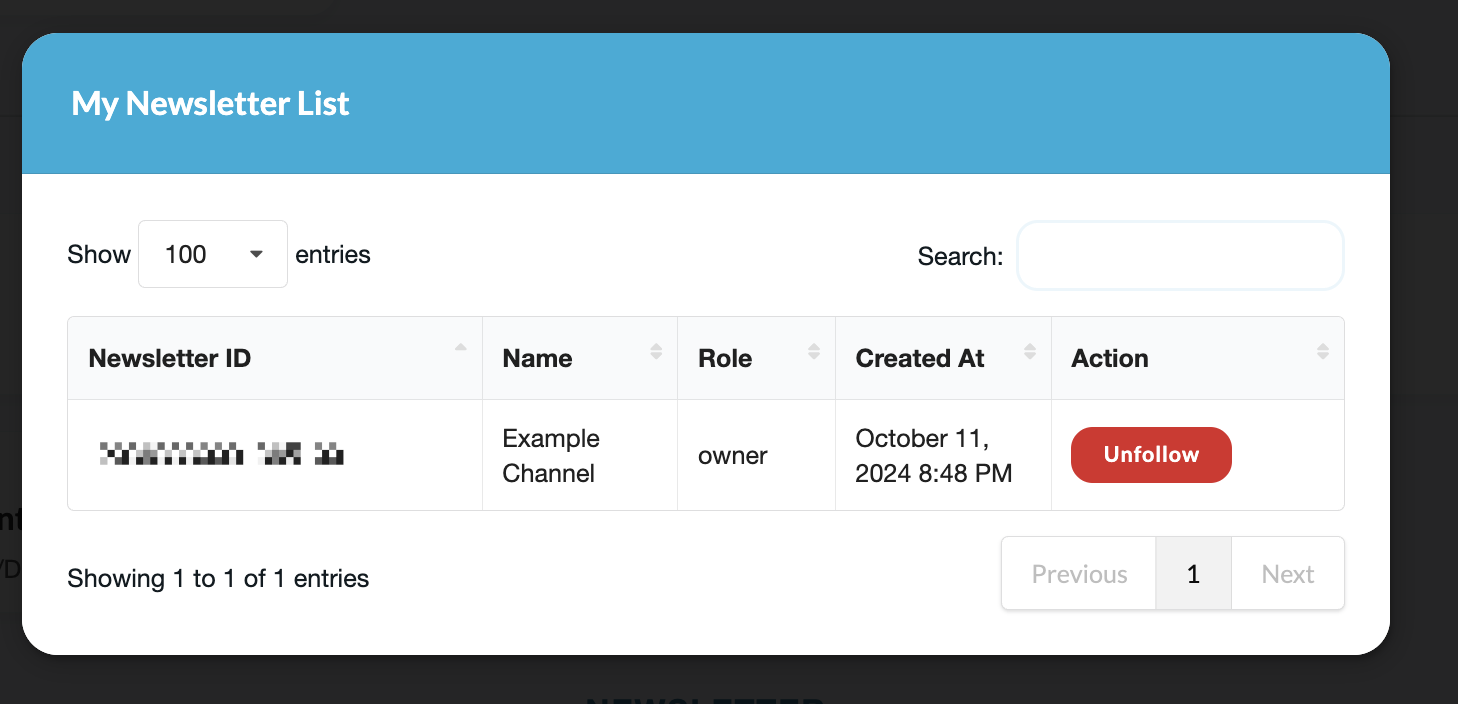
My Newsletter

My Newsletter

My Contacts

My Contacts

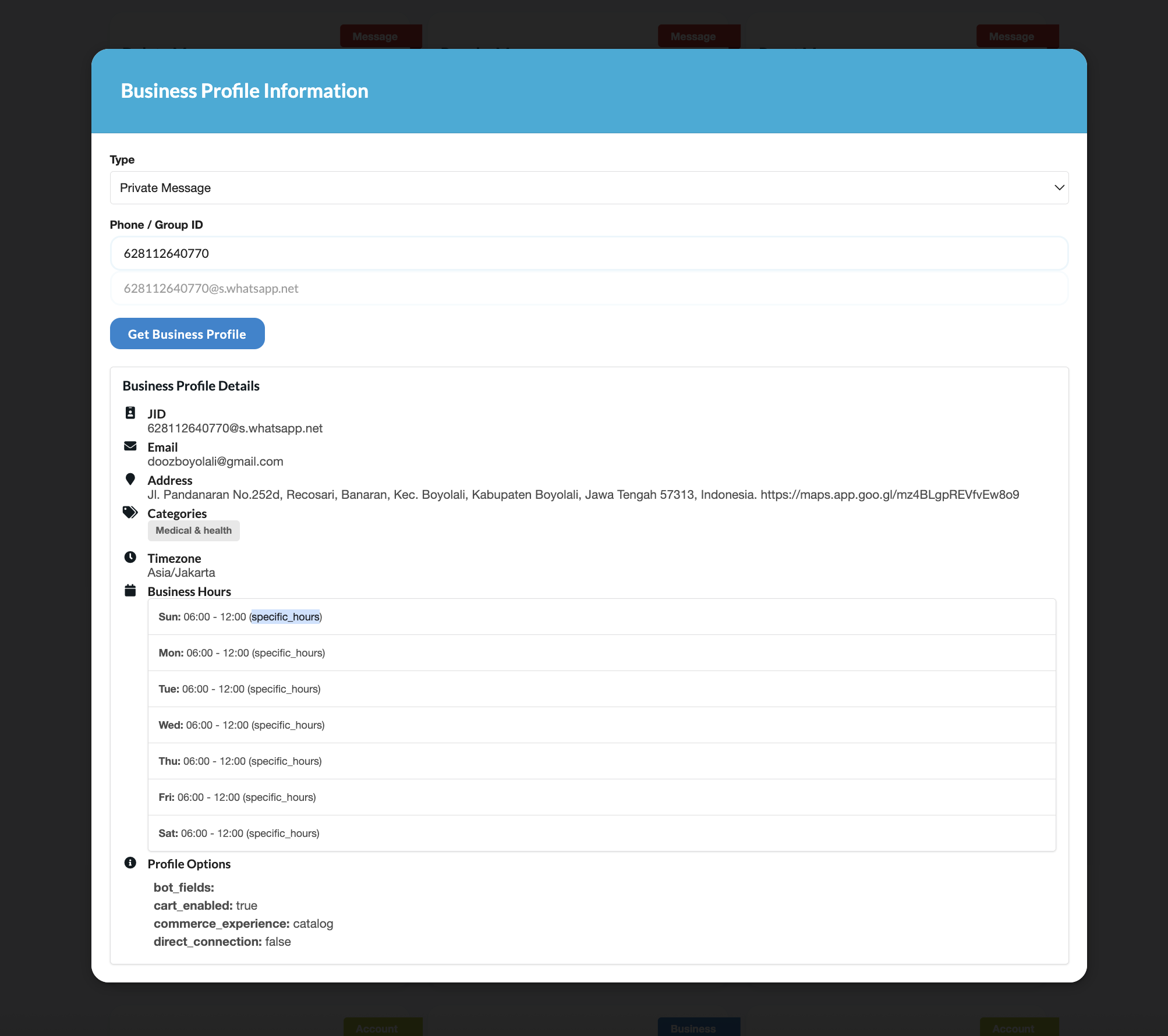
Business Profile

Business Profile

Mac OS NOTE

  • Please do this if you have an error (invalid flag in pkg-config --cflags: -Xpreprocessor) export CGO_CFLAGS_ALLOW="-Xpreprocessor"

Important

  • This project is unofficial and not affiliated with WhatsApp.

  • Please use official WhatsApp API to avoid any issues.

  • We only able to run MCP or REST API, this is limitation from whatsmeow library. independent MCP will be available in the future.

Related MCP Connectors

  • WhatsMCP connects Claude and other MCP-compatible AI agents directly to WhatsApp. Send and receive text, images, documents, and voice notes; manage groups (create, add/remove members, promote admins); look up contacts and profiles; follow channels; and read call and message history — all through a standard MCP interface. For voice use cases, WhatsMCP offers SIP-based calling plans (inbound-only, or full inbound/outbound) so AI voice agents can answer and place WhatsApp calls, plus low-latency WebSocket integrations with voice agent providers like ElevenLabs. Multiple WhatsApp accounts can be paired and managed per workspace, with webhook support for real-time inbound message delivery to your own infrastructure.

  • WhatsApp for AI agents — your own number or the official Cloud API: messages, media, templates.

  • Drive WhatsApp from any MCP client: pair devices, send text and media, manage contacts and groups.

  • Messaging tools for AI agents: send messages, manage chats, groups and channels.

Related MCP Servers

  • A
    license
    C
    quality
    F
    maintenance
    A Model Context Protocol server that connects your personal WhatsApp account to AI agents like Claude, enabling them to search messages, view contacts, retrieve chat history, and send messages via WhatsApp.
    7
    11 npm
    74
    ISC
  • F
    license
    Not graded
    quality
    Not graded
    maintenance
    Enables WhatsApp automation through MCP protocol, allowing users to manage sessions, send messages, handle groups/communities, and access contacts through natural language interactions with AI agents.
    7 npm
    -
  • A
    license
    A
    quality
    Not graded
    maintenance
    Connects AI agents to the WhatsApp Business Cloud API, allowing them to send messages, manage templates, and retrieve account analytics. It facilitates automated customer interaction and marketing campaign management through the Model Context Protocol.
    16
    -